PH AND BUFFER
Acid Base Blance
A.L.MUNDIA
ACID BASE BALANCE
PH
It is the negative log of the hydrogen ion concentration.
ph= -log[H+]
It is a unit of measure which describe the degree of acidity or alkalinity.
Its measured on a scale of 0-14
7 is neutral, <7 is acidic (high con. H+), >7 is basic (high con. OH-) alkali
Acid
Any substance that forms H+ ions in solution (proton donors)
e.g carbonic acid releases H+ ions
Base
Any substance which combines with H+ ions in solution (proton
acceptor)
e.g bicarbonate(HCO3-) accepts H+ ions
Normal pH: 7.35 – 7.45
Acidosis
Physiological state resulting from abnormally low plasma pH
Alkalosis
Physiological state resulting from abnormally high plasma pH
Acidemia
Alkalemia
BUFFER
Buffer solution is a solution which resist changes in pH when a small
amount of acid or base is added.
Typically a mixture of a weak acid and a salt of its conjugate base or
weak base and a salt of its conjugate acid
Acidic buffer eg CH3COOH + CH3COONa
Basic buffer eg NH4OH + NH4Cl
Handerson Hasselbalch equation
HA  H+ + A-
Ka = [H+][A-]/[HA]
pH = pka + log[A+]/[HA]
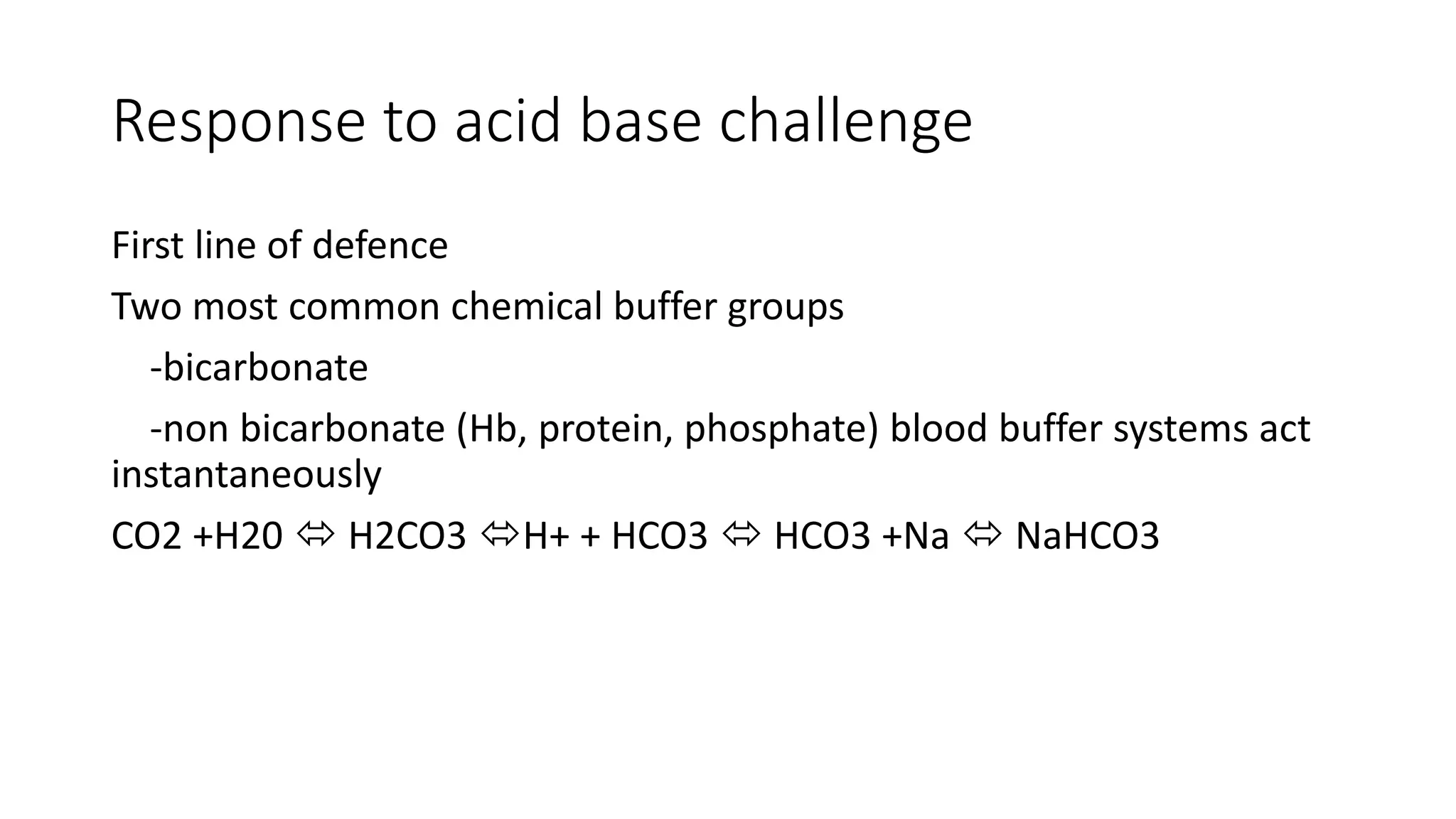
Response to acid base challenge
First line of defence
Two most common chemical buffer groups
-bicarbonate
-non bicarbonate (Hb, protein, phosphate) blood buffer systems act
instantaneously
CO2 +H20  H2CO3 H+ + HCO3  HCO3 +Na  NaHCO3
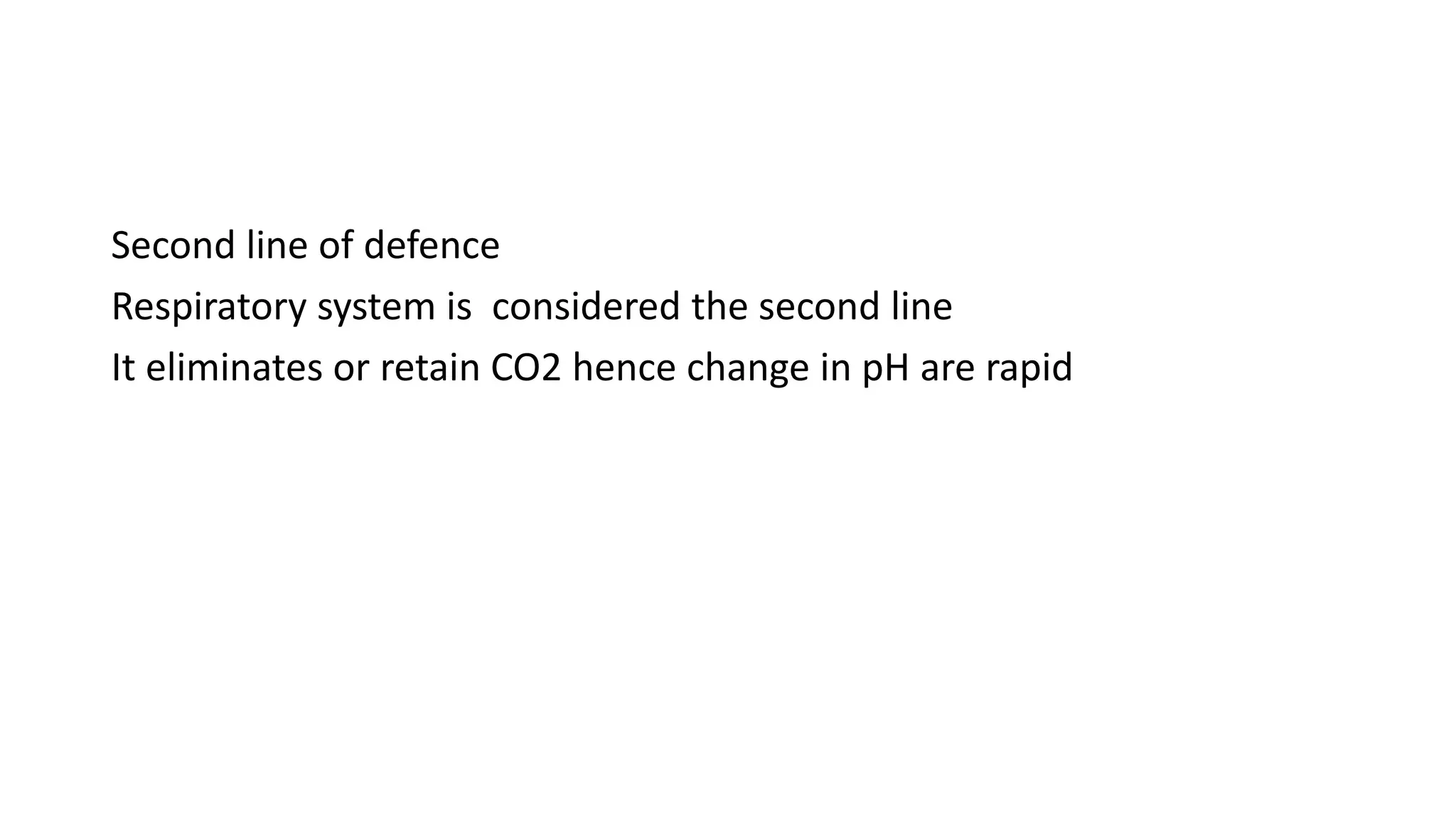
Second line of defence
Respiratory system is considered the second line
It eliminates or retain CO2 hence change in pH are rapid
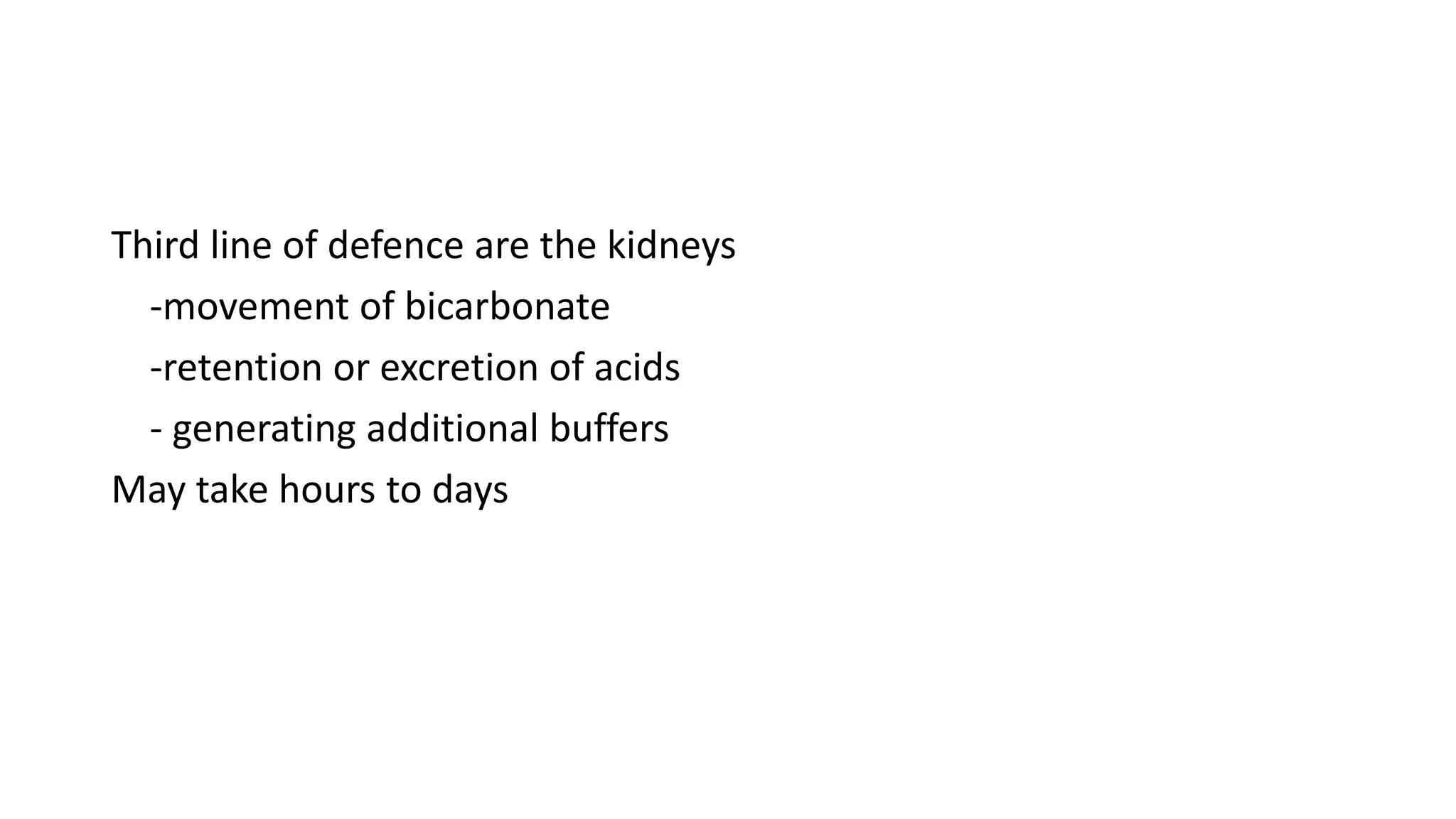
Third line of defence are the kidneys
-movement of bicarbonate
-retention or excretion of acids
- generating additional buffers
May take hours to days
PH.                       AND BUFFER.pptx

PH. AND BUFFER.pptx

  • 1.
    PH AND BUFFER AcidBase Blance A.L.MUNDIA
  • 2.
    ACID BASE BALANCE PH Itis the negative log of the hydrogen ion concentration. ph= -log[H+] It is a unit of measure which describe the degree of acidity or alkalinity. Its measured on a scale of 0-14 7 is neutral, <7 is acidic (high con. H+), >7 is basic (high con. OH-) alkali
  • 3.
    Acid Any substance thatforms H+ ions in solution (proton donors) e.g carbonic acid releases H+ ions Base Any substance which combines with H+ ions in solution (proton acceptor) e.g bicarbonate(HCO3-) accepts H+ ions
  • 4.
    Normal pH: 7.35– 7.45 Acidosis Physiological state resulting from abnormally low plasma pH Alkalosis Physiological state resulting from abnormally high plasma pH Acidemia Alkalemia
  • 5.
    BUFFER Buffer solution isa solution which resist changes in pH when a small amount of acid or base is added. Typically a mixture of a weak acid and a salt of its conjugate base or weak base and a salt of its conjugate acid Acidic buffer eg CH3COOH + CH3COONa Basic buffer eg NH4OH + NH4Cl
  • 6.
    Handerson Hasselbalch equation HA H+ + A- Ka = [H+][A-]/[HA] pH = pka + log[A+]/[HA]
  • 7.
    Response to acidbase challenge First line of defence Two most common chemical buffer groups -bicarbonate -non bicarbonate (Hb, protein, phosphate) blood buffer systems act instantaneously CO2 +H20  H2CO3 H+ + HCO3  HCO3 +Na  NaHCO3
  • 8.
    Second line ofdefence Respiratory system is considered the second line It eliminates or retain CO2 hence change in pH are rapid
  • 9.
    Third line ofdefence are the kidneys -movement of bicarbonate -retention or excretion of acids - generating additional buffers May take hours to days