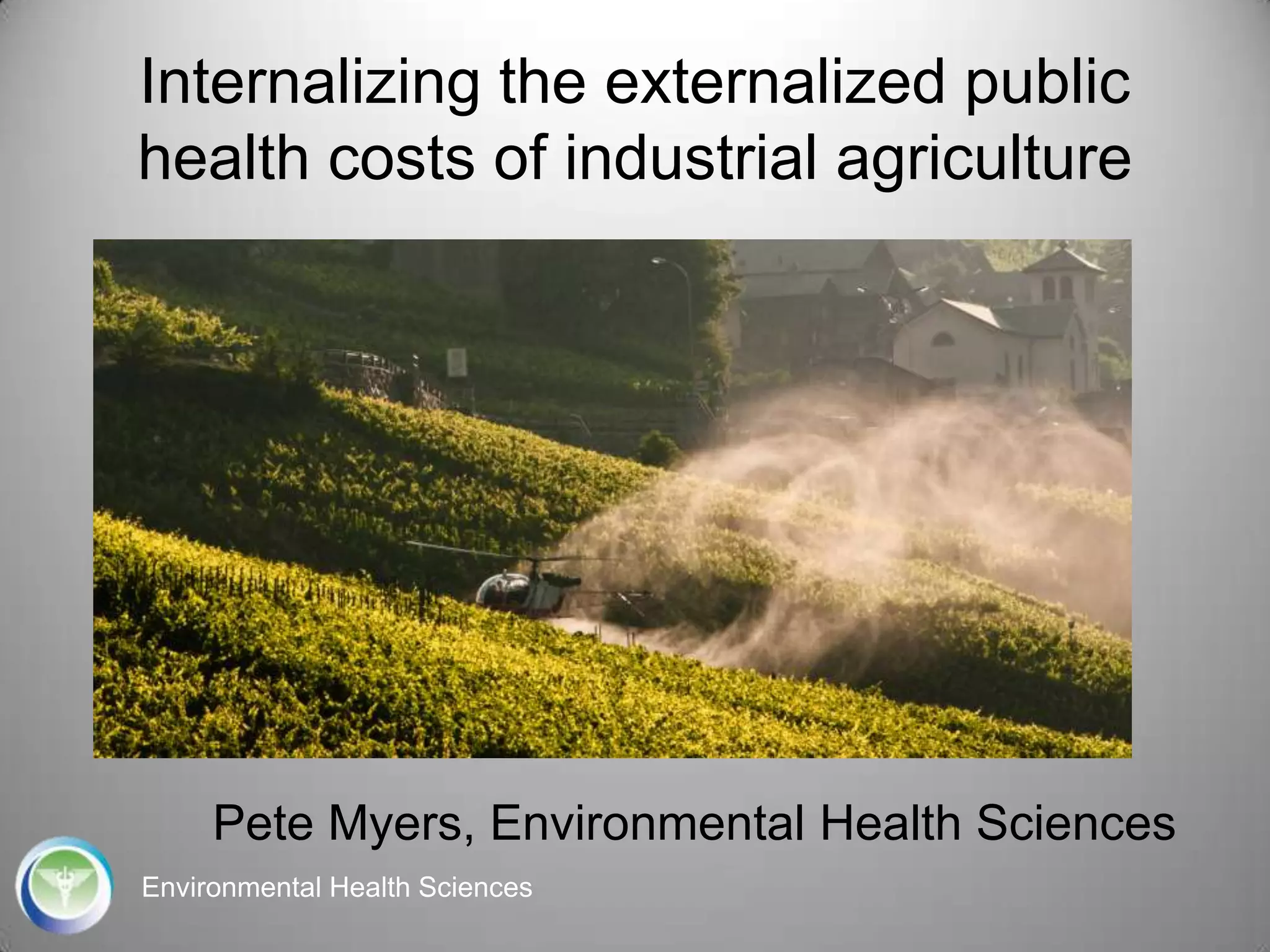
Internalizing the externalized public
health costs of industrial agriculture

Pete Myers, Environmental Health Sciences
Environmental Health Sciences
What do we know?
The costs are real
But what we now „know‟ vastly underestimates true costs
Only the tiniest fraction of ag chemicals have been
studied for health effects by independent scientists
Only a small fraction of plausible health
endpoints have been assessed
Only a handful of studies have tried to connect
those health effects with economic costs

Environmental Health Sciences
What do we know?
But there is an even larger
elephant in the room

A revolution in science has
unfolded over the past 20
years indicating health
consequences far bigger and
more common than
traditional estimates even
hinted.

Environmental Health Sciences
Revolution in science

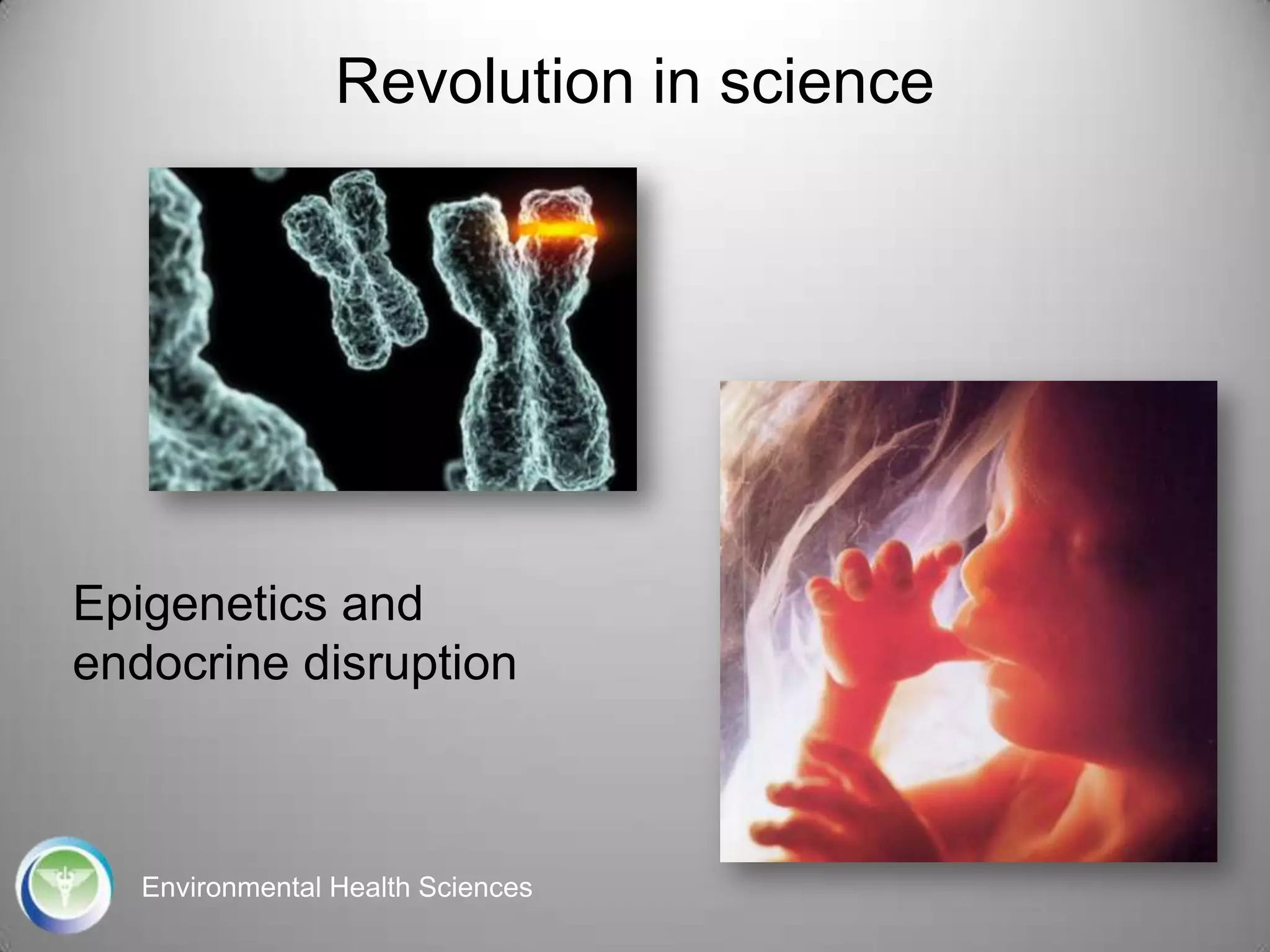
Epigenetics and
endocrine disruption

Environmental Health Sciences
The United Nations is serious about it

Environmental Health Sciences
Revolution in science
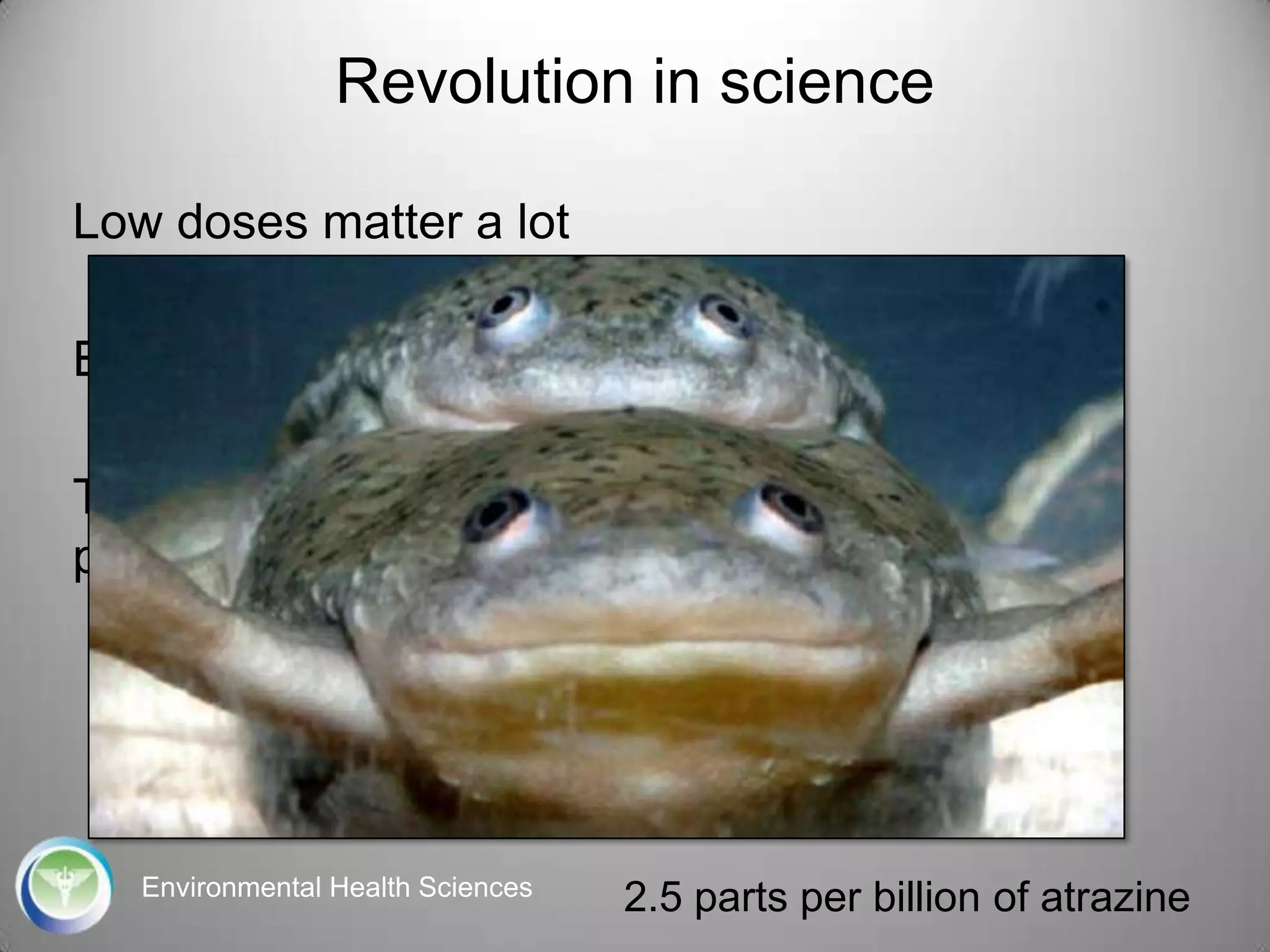
Low doses matter a lot
Events in the womb don‟t stay in the womb
The tools we have used to assess safety are
profoundly misguided

Environmental Health Sciences

2.5 parts per billion of atrazine
Environmental Health Sciences
Low levels matter
Not “just” affecting farmworkers

Environmental Health Sciences
Moving forward
Confident the numbers are big
Next steps
Some estimates possible now

Identify priority health endpoints
Establish most plausible chemical drivers
Develop the economic analyses

Environmental Health Sciences

Pete Myers

  • 1.
    Internalizing the externalizedpublic health costs of industrial agriculture Pete Myers, Environmental Health Sciences Environmental Health Sciences
  • 2.
    What do weknow? The costs are real But what we now „know‟ vastly underestimates true costs Only the tiniest fraction of ag chemicals have been studied for health effects by independent scientists Only a small fraction of plausible health endpoints have been assessed Only a handful of studies have tried to connect those health effects with economic costs Environmental Health Sciences
  • 3.
    What do weknow? But there is an even larger elephant in the room A revolution in science has unfolded over the past 20 years indicating health consequences far bigger and more common than traditional estimates even hinted. Environmental Health Sciences
  • 4.
    Revolution in science Epigeneticsand endocrine disruption Environmental Health Sciences
  • 5.
    The United Nationsis serious about it Environmental Health Sciences
  • 6.
    Revolution in science Lowdoses matter a lot Events in the womb don‟t stay in the womb The tools we have used to assess safety are profoundly misguided Environmental Health Sciences 2.5 parts per billion of atrazine
  • 7.
  • 8.
    Low levels matter Not“just” affecting farmworkers Environmental Health Sciences
  • 9.
    Moving forward Confident thenumbers are big Next steps Some estimates possible now Identify priority health endpoints Establish most plausible chemical drivers Develop the economic analyses Environmental Health Sciences

Editor's Notes

  • #2 The use of agricultural chemicals has public health consequences that are not incorporated into the price we pay on supermarket shelves.
  • #3 Pimental in 2005 estimated public health costs of pesticide use in the US to be $1.2BPeople die.People get cancer.Babies are born with birth defectsChildren grow up with IQ points significantly beneath their genetic potentialFertility is impairedElder lives are diminished with pesticide related diseases like Parkinsons.Families and society are burdened with the financial costs of needed health careWe are scratching the tip of a proverbial icebergWe simply don’t have the data to do a true full cost accountingIt is appalling how ignorant we are.But we have enough to get started.
  • #7 Low doses? Doses that many toxicologists until quite recently dismissed as irrelevant. Parts per billion. Biological responses even down to parts per trillionTools: tests have been done one chemical at a time but we know that there are cocktail effects… mixtures of chemicals add up to strong consequences yet all testing… almost all safety testing… has been done one chemical at a timeAnd the tests used rarely are directly relevant to the range of public health problems that have become epidemic, such as heart disease and type two diabetes, which is where the big health costs are.