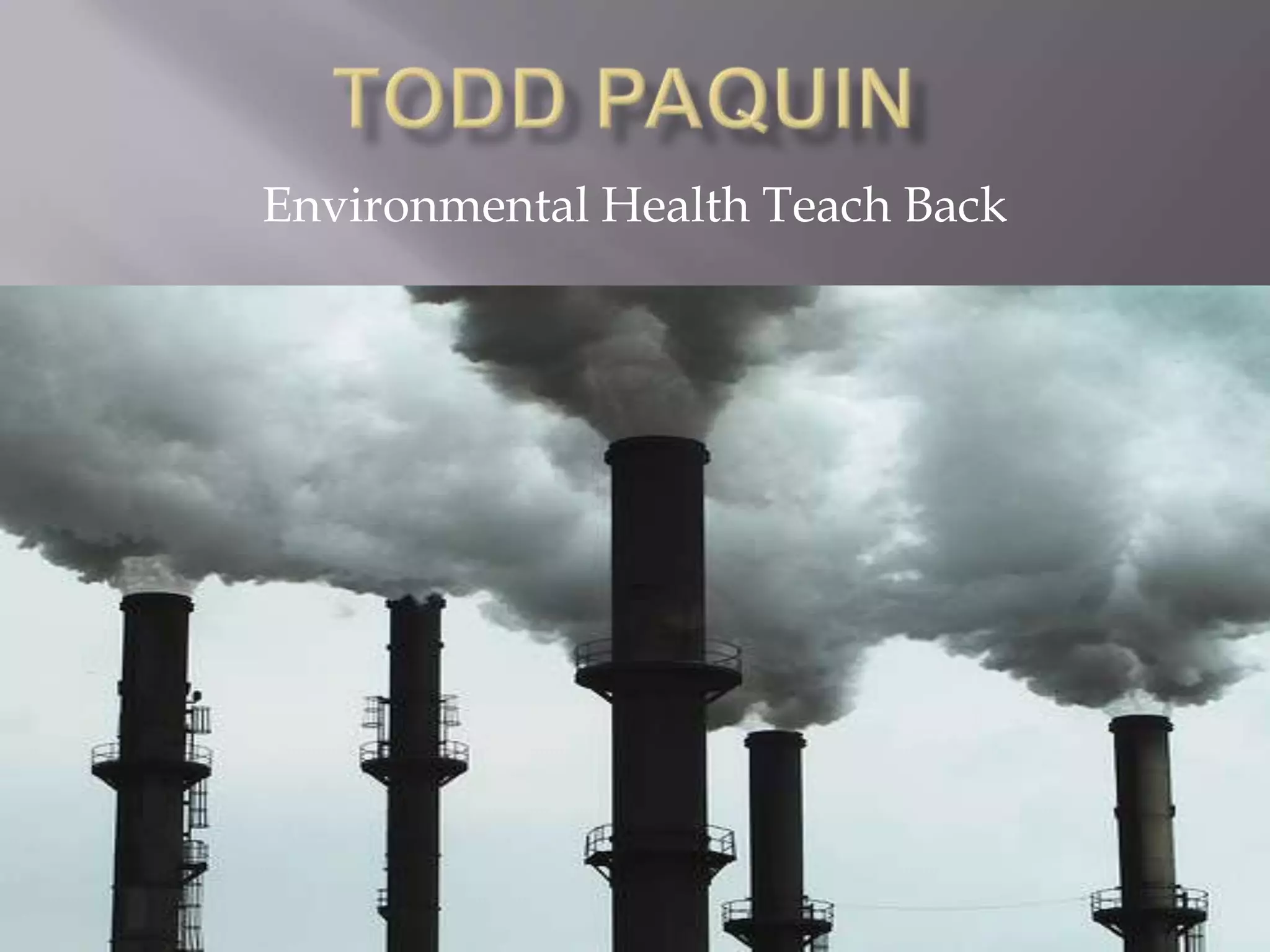
Environmental Health Teach Back
 “Every day I see research linking chemicals that
pollute our environment with adverse effects on
women’s reproductive health, from infertility to
birth [impairments] to early puberty in girls…I am
convinced that countries that do not protect the
Earth will not protect their women, and countries
that do not protect their women will never protect
the earth. The time has come for the U.S. to enact
policies that do both.”
 -Allison Ojanen-Goldsmith, in “Young Feminists-
Poison
 A loose definition of Environmental Health
would be how the environment we live in
affects our health. Whether it be positive or
negative
 An example of how our environment affects
our health would be the difference in city life to
country life
 We absorb chemicals and toxins from a number
of different things.
 Through our home, the workplace, and
through the environment from the air, skin
products, and substances we consume
 Lead (used in plumbing pipes and car
batteries) It is a neurotoxin which affects nerve
cells
 Mercury (used in thermometers, thermostats,
auto parts, batteries, dental fillings, and eye
make-up) Mercury can damage the central
nervous system, the endocrine system, the
heart, lungs, immune system, and the kidneys
 Pesticides (used in crops and pest control
around homes) EPA estimated that over 1.2
billion pounds of pesticides are used annually
in the United States alone
 Can be linked to many problems in health
 Effects the reproductive system (Such as:
infertility, miscarriages, and multiple types of
cancer)
 Endocrine Disrupting Chemicals (EDC’s)
 EDC’s are industrial chemicals that mimic
naturally occurring hormones
 These EDC’s can block vital functions in our
thyroid, metabolism, sexual function, and
immune system
 Dioxins ( used in industrial processes to use up
or burn chlorine)
 One of the most common chemicals affecting
Americans today. Occurs primarily through
eating food
 Dioxins can cause cancer and reproductive
disorders
 BPA (Bisphenol A)
 Organic Compound widely used in hard plastic
products
 7 billions pounds of BPA are produced in the U.S.
each year
 Considered to be an endocrine disrupting chemical
but has a laundry list of negative effects. (Such as
serious chronic disorders, cancers, and heart
disease)
 These hazards affect many facets of our health
causing diseases such as cancers, neurological
disorders, allergies, and behavioral changes
 One major impact environmental pollution has
is on that of the female reproductive system
 Children experience worse effects more often than
adults do when exposed to these damaging
substances
 Why? Because they are smaller and have
underdeveloped immune systems
 Environmental contaminants can cause greater
damage to all organs and systems in children
 Some of the worst chemicals today are found in
children's’ food and toys
 Leukemia, brain cancer, and other cancers
linked to environmental carcinogens have
increased more than 20 percent since 1975
 Most children are exposed even before they’re
born
 A fathers sperm or a mother’s eggs could
potentially affect an embryo’s development if
exposed to chemicals
 If women are exposed to chemicals in the
environment they can work their way into the
breast milk and thus into the child who is being
fed
 Although chemicals have been known to be in
breast milk the protective qualities tremendously
out weight the negative effects
 Breast milk is always a much healthier route than
the use of formula
 Too often individuals rather than the
government or industries are expected to take
primary responsibility for health and safety
 Instead of fixing whatever the problem may be,
the industry will tell an individual they need to
be more careful
 Some substances that cause health problems in
the work place are not regulated at all what so
ever
 More research on environmental hazards to
better understand the effects
 Communities that are at higher risk of
contaminants need to be better protected and
trained on this subject
 Government funding needs to be applied
 Form worker based health and safety
committees
 Women who are pregnant and have a job that
exposes them to potentially hazardous
chemicals should be given the option to take
leave from work with pay or be stationed
elsewhere
 Find less hazardous materials to substitute for
those that are hazardous
 Although everyone is affected by these
environmental hazards some bear more weight
than others.
 People from lower income and people of color
are affected by these hazards more than others
 Groups have been formed to create equality on
the environment
 Help people (mostly minorities) who are
affected by environmental hazards more than
others
 Over half of Asians/Pacific Islanders and
Native Americans live near uncontrolled waste
sites
 What can the government do to increase
awareness and protection for the public in regards
to environmental hazards?

Womens health issues teach back ch25

  • 1.
  • 2.
     “Every dayI see research linking chemicals that pollute our environment with adverse effects on women’s reproductive health, from infertility to birth [impairments] to early puberty in girls…I am convinced that countries that do not protect the Earth will not protect their women, and countries that do not protect their women will never protect the earth. The time has come for the U.S. to enact policies that do both.”  -Allison Ojanen-Goldsmith, in “Young Feminists- Poison
  • 3.
     A loosedefinition of Environmental Health would be how the environment we live in affects our health. Whether it be positive or negative  An example of how our environment affects our health would be the difference in city life to country life
  • 4.
     We absorbchemicals and toxins from a number of different things.  Through our home, the workplace, and through the environment from the air, skin products, and substances we consume
  • 5.
     Lead (usedin plumbing pipes and car batteries) It is a neurotoxin which affects nerve cells  Mercury (used in thermometers, thermostats, auto parts, batteries, dental fillings, and eye make-up) Mercury can damage the central nervous system, the endocrine system, the heart, lungs, immune system, and the kidneys
  • 6.
     Pesticides (usedin crops and pest control around homes) EPA estimated that over 1.2 billion pounds of pesticides are used annually in the United States alone  Can be linked to many problems in health  Effects the reproductive system (Such as: infertility, miscarriages, and multiple types of cancer)
  • 7.
     Endocrine DisruptingChemicals (EDC’s)  EDC’s are industrial chemicals that mimic naturally occurring hormones  These EDC’s can block vital functions in our thyroid, metabolism, sexual function, and immune system
  • 8.
     Dioxins (used in industrial processes to use up or burn chlorine)  One of the most common chemicals affecting Americans today. Occurs primarily through eating food  Dioxins can cause cancer and reproductive disorders
  • 9.
     BPA (BisphenolA)  Organic Compound widely used in hard plastic products  7 billions pounds of BPA are produced in the U.S. each year  Considered to be an endocrine disrupting chemical but has a laundry list of negative effects. (Such as serious chronic disorders, cancers, and heart disease)
  • 10.
     These hazardsaffect many facets of our health causing diseases such as cancers, neurological disorders, allergies, and behavioral changes  One major impact environmental pollution has is on that of the female reproductive system
  • 11.
     Children experienceworse effects more often than adults do when exposed to these damaging substances  Why? Because they are smaller and have underdeveloped immune systems  Environmental contaminants can cause greater damage to all organs and systems in children  Some of the worst chemicals today are found in children's’ food and toys
  • 12.
     Leukemia, braincancer, and other cancers linked to environmental carcinogens have increased more than 20 percent since 1975  Most children are exposed even before they’re born  A fathers sperm or a mother’s eggs could potentially affect an embryo’s development if exposed to chemicals
  • 13.
     If womenare exposed to chemicals in the environment they can work their way into the breast milk and thus into the child who is being fed  Although chemicals have been known to be in breast milk the protective qualities tremendously out weight the negative effects  Breast milk is always a much healthier route than the use of formula
  • 14.
     Too oftenindividuals rather than the government or industries are expected to take primary responsibility for health and safety  Instead of fixing whatever the problem may be, the industry will tell an individual they need to be more careful  Some substances that cause health problems in the work place are not regulated at all what so ever
  • 15.
     More researchon environmental hazards to better understand the effects  Communities that are at higher risk of contaminants need to be better protected and trained on this subject  Government funding needs to be applied
  • 16.
     Form workerbased health and safety committees  Women who are pregnant and have a job that exposes them to potentially hazardous chemicals should be given the option to take leave from work with pay or be stationed elsewhere  Find less hazardous materials to substitute for those that are hazardous
  • 17.
     Although everyoneis affected by these environmental hazards some bear more weight than others.  People from lower income and people of color are affected by these hazards more than others  Groups have been formed to create equality on the environment
  • 18.
     Help people(mostly minorities) who are affected by environmental hazards more than others  Over half of Asians/Pacific Islanders and Native Americans live near uncontrolled waste sites
  • 19.
     What canthe government do to increase awareness and protection for the public in regards to environmental hazards?