How to Write a Stanza Poem

       Schwartz 2011-12
Writing a Stanza Poem

• Before starting on with your stanza poem,
  it would not be a bad idea to get an
  understanding of what is a stanza and
  what it makes it an essential element
  in poem writing.
• A stanza is similar to a paragraph in an
  essay so selecting a stanza type for your
  poem means that you are limiting yourself
  to a particular set of rules of poetry writing;
  number of lines,
  rhyming structure and meter.
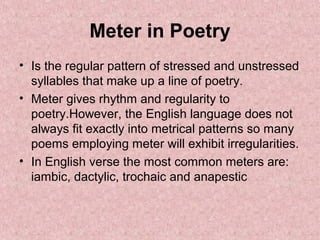
Meter in Poetry
• Is the regular pattern of stressed and unstressed
  syllables that make up a line of poetry.
• Meter gives rhythm and regularity to
  poetry.However, the English language does not
  always fit exactly into metrical patterns so many
  poems employing meter will exhibit irregularities.
• In English verse the most common meters are:
  iambic, dactylic, trochaic and anapestic
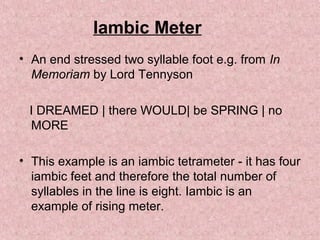
Iambic Meter
• An end stressed two syllable foot e.g. from In
  Memoriam by Lord Tennyson

 I DREAMED | there WOULD| be SPRING | no
 MORE

• This example is an iambic tetrameter - it has four
  iambic feet and therefore the total number of
  syllables in the line is eight. Iambic is an
  example of rising meter.
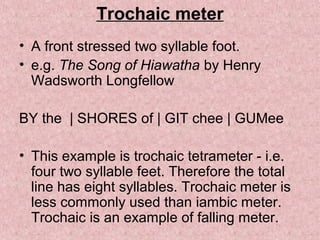
Trochaic meter
• A front stressed two syllable foot.
• e.g. The Song of Hiawatha by Henry
  Wadsworth Longfellow

BY the | SHORES of | GIT chee | GUMee

• This example is trochaic tetrameter - i.e.
  four two syllable feet. Therefore the total
  line has eight syllables. Trochaic meter is
  less commonly used than iambic meter.
  Trochaic is an example of falling meter.
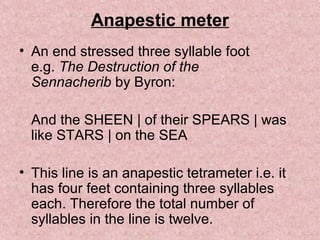
Anapestic meter
• An end stressed three syllable foot
  e.g. The Destruction of the
  Sennacherib by Byron:

  And the SHEEN | of their SPEARS | was
  like STARS | on the SEA

• This line is an anapestic tetrameter i.e. it
  has four feet containing three syllables
  each. Therefore the total number of
  syllables in the line is twelve.
Select a Theme

• Poem writing is basically “a word dance” where
  you need to choreograph words, phrases and
  sentences and set them to a particular style of
  rhyming structure.
• Before beginning with your word dance, you
  need to set up a theme to follow.
• A theme is akin to a central idea around which a
  poem is built. It could be an object (tree, cloud,
  room etc.) or a concept (a love poem or dark
  poetry etc.)
Decide Your Style and Form

• Knowledge about a haiku or a sonnet is not
  mandatory for drafting a good poem. A person,
  totally clueless about different forms of
  poetry might be able to pen down a master piece
  if he or she knows how to manage the flow of
  words, acquired from inspiration.
• Select the rhyming structure that suits you best.
• Try to format a few sentence on the basis of
  your rhyming structure.
• Lock it in.
Collect and Pen Down Your
       Random Thoughts

• Note down the abstract verses, words and
  small bits as they come.
• Jot down and play around by adjusting
  and readjusting your letters.
• Let loose of your imagination and you will
  form new ideas as you work with your
  sentences.
Filter, Select and Modify Words

• Find synonyms and related words by
  making use of dictionary, thesaurus and a
  synonyms dictionary for your existing
  words.
• Insert them in your verses or make
  readjustments for them to fit in.
• Rephrase your verses so they form a
  better pattern.
Your Assignment
• Make as many notes as possible using the
  displayed photo as inspiration
• Write a four stanza poem which refelcts
  the photo, its theme and your own
  imagination
• Your poem DOES NOT have to rhyme
• When finished writing your poem, either
  type it out or write it on a clean piece of
  paper or stationary, in pen.

How to write a stanza poem

  • 1.
    How to Writea Stanza Poem Schwartz 2011-12
  • 2.
    Writing a StanzaPoem • Before starting on with your stanza poem, it would not be a bad idea to get an understanding of what is a stanza and what it makes it an essential element in poem writing.
  • 3.
    • A stanzais similar to a paragraph in an essay so selecting a stanza type for your poem means that you are limiting yourself to a particular set of rules of poetry writing; number of lines, rhyming structure and meter.
  • 4.
    Meter in Poetry •Is the regular pattern of stressed and unstressed syllables that make up a line of poetry. • Meter gives rhythm and regularity to poetry.However, the English language does not always fit exactly into metrical patterns so many poems employing meter will exhibit irregularities. • In English verse the most common meters are: iambic, dactylic, trochaic and anapestic
  • 5.
    Iambic Meter • Anend stressed two syllable foot e.g. from In Memoriam by Lord Tennyson I DREAMED | there WOULD| be SPRING | no MORE • This example is an iambic tetrameter - it has four iambic feet and therefore the total number of syllables in the line is eight. Iambic is an example of rising meter.
  • 6.
    Trochaic meter • Afront stressed two syllable foot. • e.g. The Song of Hiawatha by Henry Wadsworth Longfellow BY the | SHORES of | GIT chee | GUMee • This example is trochaic tetrameter - i.e. four two syllable feet. Therefore the total line has eight syllables. Trochaic meter is less commonly used than iambic meter. Trochaic is an example of falling meter.
  • 7.
    Anapestic meter • Anend stressed three syllable foot e.g. The Destruction of the Sennacherib by Byron: And the SHEEN | of their SPEARS | was like STARS | on the SEA • This line is an anapestic tetrameter i.e. it has four feet containing three syllables each. Therefore the total number of syllables in the line is twelve.
  • 8.
    Select a Theme •Poem writing is basically “a word dance” where you need to choreograph words, phrases and sentences and set them to a particular style of rhyming structure. • Before beginning with your word dance, you need to set up a theme to follow. • A theme is akin to a central idea around which a poem is built. It could be an object (tree, cloud, room etc.) or a concept (a love poem or dark poetry etc.)
  • 9.
    Decide Your Styleand Form • Knowledge about a haiku or a sonnet is not mandatory for drafting a good poem. A person, totally clueless about different forms of poetry might be able to pen down a master piece if he or she knows how to manage the flow of words, acquired from inspiration. • Select the rhyming structure that suits you best. • Try to format a few sentence on the basis of your rhyming structure. • Lock it in.
  • 10.
    Collect and PenDown Your Random Thoughts • Note down the abstract verses, words and small bits as they come. • Jot down and play around by adjusting and readjusting your letters. • Let loose of your imagination and you will form new ideas as you work with your sentences.
  • 11.
    Filter, Select andModify Words • Find synonyms and related words by making use of dictionary, thesaurus and a synonyms dictionary for your existing words. • Insert them in your verses or make readjustments for them to fit in. • Rephrase your verses so they form a better pattern.
  • 12.
    Your Assignment • Makeas many notes as possible using the displayed photo as inspiration • Write a four stanza poem which refelcts the photo, its theme and your own imagination • Your poem DOES NOT have to rhyme • When finished writing your poem, either type it out or write it on a clean piece of paper or stationary, in pen.