




PPE: FOOT AND LEG
PROTECTION
OVERVIEW:
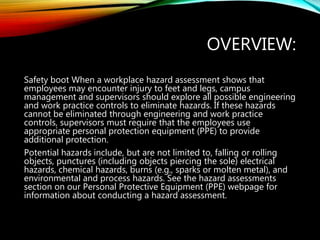
Safety boot When a workplace hazard assessment shows that
employees may encounter injury to feet and legs, campus
management and supervisors should explore all possible engineering
and work practice controls to eliminate hazards. If these hazards
cannot be eliminated through engineering and work practice
controls, supervisors must require that the employees use
appropriate personal protection equipment (PPE) to provide
additional protection.
Potential hazards include, but are not limited to, falling or rolling
objects, punctures (including objects piercing the sole) electrical
hazards, chemical hazards, burns (e.g., sparks or molten metal), and
environmental and process hazards. See the hazard assessments
section on our Personal Protective Equipment (PPE) webpage for
information about conducting a hazard assessment.
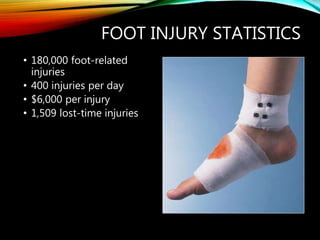
FOOT INJURY STATISTICS
• 180,000 foot-related
injuries
• 400 injuries per day
• $6,000 per injury
• 1,509 lost-time injuries
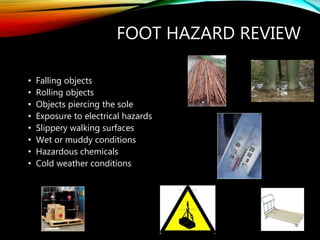
FOOT HAZARD REVIEW
• Falling objects
• Rolling objects
• Objects piercing the sole
• Exposure to electrical hazards
• Slippery walking surfaces
• Wet or muddy conditions
• Hazardous chemicals
• Cold weather conditions
PROTECTIVE EQUIPMENT FOR THE
FEET AND LEGS COMMONLY
INCLUDES:
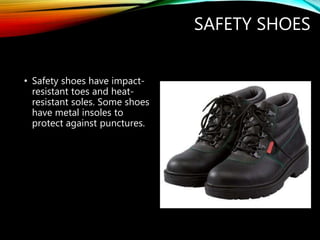
SAFETY SHOES
• Safety shoes have impact-
resistant toes and heat-
resistant soles. Some shoes
have metal insoles to
protect against punctures.
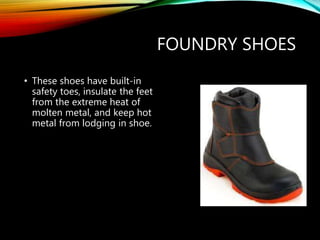
FOUNDRY SHOES
• These shoes have built-in
safety toes, insulate the feet
from the extreme heat of
molten metal, and keep hot
metal from lodging in shoe.
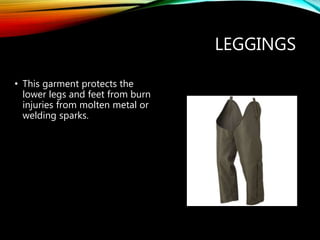
LEGGINGS
• This garment protects the
lower legs and feet from burn
injuries from molten metal or
welding sparks.
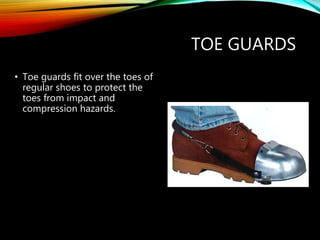
TOE GUARDS
• Toe guards fit over the toes of
regular shoes to protect the
toes from impact and
compression hazards.
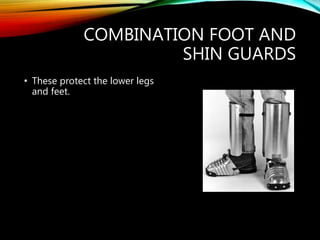
COMBINATION FOOT AND
SHIN GUARDS
• These protect the lower legs
and feet.
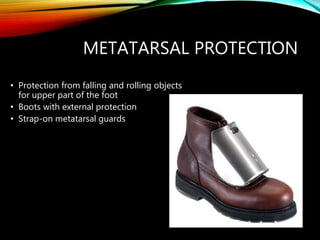
METATARSAL PROTECTION
• Protection from falling and rolling objects
for upper part of the foot
• Boots with external protection
• Strap-on metatarsal guards
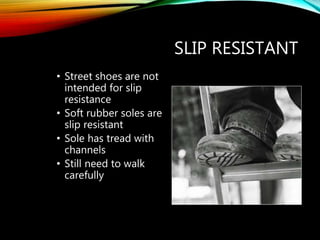
SLIP RESISTANT
• Street shoes are not
intended for slip
resistance
• Soft rubber soles are
slip resistant
• Sole has tread with
channels
• Still need to walk
carefully
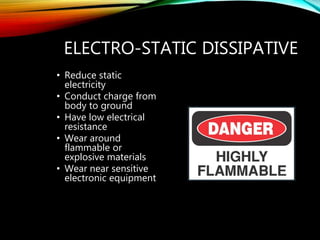
ELECTRO-STATIC DISSIPATIVE
• Reduce static
electricity
• Conduct charge from
body to ground
• Have low electrical
resistance
• Wear around
flammable or
explosive materials
• Wear near sensitive
electronic equipment
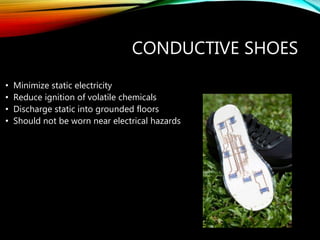
CONDUCTIVE SHOES
• Minimize static electricity
• Reduce ignition of volatile chemicals
• Discharge static into grounded floors
• Should not be worn near electrical hazards
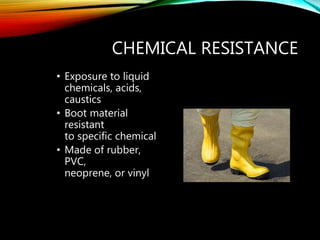
CHEMICAL RESISTANCE
• Exposure to liquid
chemicals, acids,
caustics
• Boot material
resistant
to specific chemical
• Made of rubber,
PVC,
neoprene, or vinyl
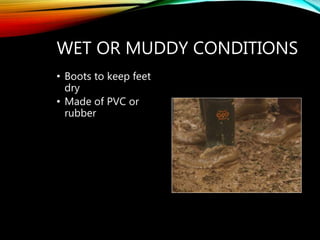
WET OR MUDDY CONDITIONS
• Boots to keep feet
dry
• Made of PVC or
rubber
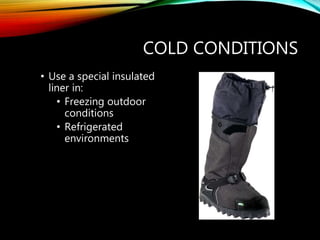
COLD CONDITIONS
• Use a special insulated
liner in:
• Freezing outdoor
conditions
• Refrigerated
environments
AREAS AND PERSONNEL
AFFECTED
Anyone exposed to a workplace hazard that could injure the
feet or legs need to be protected from that hazard. Areas and
personnel most likely to need foot/leg protection include:
-Certain art studios and workshops staff and students
-Physical plant/facilities staff
-Auxiliaries staff
-Custodial staff
Consider the list of occupations from Appendix B of OSHA’s
PPE standard for general industry. Their list for foot protection
(item 10, Selection guidelines for foot protection) includes:
“shipping and receiving clerks, stock clerks, carpenters,
electricians, machinists, mechanics and repairers, plumbers and
pipe fitters, structural metal workers, assemblers, drywall
installers and lathers, packers, wrappers, craters, punch and
stamping press operators, sawyers, welders, laborers, freight
handlers, gardeners and grounds-keepers, timber cutting and
logging workers, stock handlers and warehouse laborers.”
TRAINING AND EMPLOYEE
INFORMATION
Employees must get information and training that enable
them to be apprised of the hazards present in their work, and
to understand the correct use of personal protective
equipment. The minimal training requirements to be met are
in 29 CFR 1910.132(f). In summary, campuses must train each
employee who must use PPE to know and demonstrate the
following items prior to using the PPE:
-When PPE is necessary.
-What PPE is necessary.
-How to properly put on (don), take off (doff), adjust and wear the
PPE.
-The limitations of the PPE.
ADDITIONAL TRAINING OR
RETRAINING
Additional training or retraining of employees needs to be
done when a previously trained employee is not
demonstrating the proper understanding and skill level in the
use of PPE, or when there are changes in the workplace or in
the type of required PPE that make prior training obsolete.
KEY POINTS TO REMEMBER
• Know the foot hazards in your workplace
• Wear footwear with appropriate protective features for the
job
• Know the capabilities and limitations of protective footwear
• Check comfort, fit, and support of footwear
• Clean, store, and inspect footwear
BIBLIOGRAPHY
http://www.epi-tuiuti.com.br/produtos/epi/calcados-de-seguranca/
http://mapadaobra.com.br/profissional-de-obra/torne-se-um-
especialista/botas-de-seguranca
http://www.fiocruz.br/biosseguranca/Bis/lab_virtual/epiprotecaomembros
inferiores.html
http://www.cursonr10online.com/voce-conhece-todos-os-epis-de-
protecao-dos-pes#prettyPhoto
https://www.ncsu.edu/ehs/www99/right/handsMan/worker/ppe/
https://www.lean-news.com/workplace-safety-foot-protection/
creators:
• Jean Lopes;
• Joyce Lemos;
• Karolayne Magalhães;
• Rodrigo Moraes.
Institution:
IFRJ-CPAR
class:
MEC 151

personal protective equipment

  • 1.
    PPE: FOOT ANDLEG PROTECTION
  • 2.
    OVERVIEW: Safety boot Whena workplace hazard assessment shows that employees may encounter injury to feet and legs, campus management and supervisors should explore all possible engineering and work practice controls to eliminate hazards. If these hazards cannot be eliminated through engineering and work practice controls, supervisors must require that the employees use appropriate personal protection equipment (PPE) to provide additional protection. Potential hazards include, but are not limited to, falling or rolling objects, punctures (including objects piercing the sole) electrical hazards, chemical hazards, burns (e.g., sparks or molten metal), and environmental and process hazards. See the hazard assessments section on our Personal Protective Equipment (PPE) webpage for information about conducting a hazard assessment.
  • 3.
    FOOT INJURY STATISTICS •180,000 foot-related injuries • 400 injuries per day • $6,000 per injury • 1,509 lost-time injuries
  • 4.
    FOOT HAZARD REVIEW •Falling objects • Rolling objects • Objects piercing the sole • Exposure to electrical hazards • Slippery walking surfaces • Wet or muddy conditions • Hazardous chemicals • Cold weather conditions
  • 5.
    PROTECTIVE EQUIPMENT FORTHE FEET AND LEGS COMMONLY INCLUDES:
  • 6.
    SAFETY SHOES • Safetyshoes have impact- resistant toes and heat- resistant soles. Some shoes have metal insoles to protect against punctures.
  • 7.
    FOUNDRY SHOES • Theseshoes have built-in safety toes, insulate the feet from the extreme heat of molten metal, and keep hot metal from lodging in shoe.
  • 8.
    LEGGINGS • This garmentprotects the lower legs and feet from burn injuries from molten metal or welding sparks.
  • 9.
    TOE GUARDS • Toeguards fit over the toes of regular shoes to protect the toes from impact and compression hazards.
  • 10.
    COMBINATION FOOT AND SHINGUARDS • These protect the lower legs and feet.
  • 11.
    METATARSAL PROTECTION • Protectionfrom falling and rolling objects for upper part of the foot • Boots with external protection • Strap-on metatarsal guards
  • 12.
    SLIP RESISTANT • Streetshoes are not intended for slip resistance • Soft rubber soles are slip resistant • Sole has tread with channels • Still need to walk carefully
  • 13.
    ELECTRO-STATIC DISSIPATIVE • Reducestatic electricity • Conduct charge from body to ground • Have low electrical resistance • Wear around flammable or explosive materials • Wear near sensitive electronic equipment
  • 14.
    CONDUCTIVE SHOES • Minimizestatic electricity • Reduce ignition of volatile chemicals • Discharge static into grounded floors • Should not be worn near electrical hazards
  • 15.
    CHEMICAL RESISTANCE • Exposureto liquid chemicals, acids, caustics • Boot material resistant to specific chemical • Made of rubber, PVC, neoprene, or vinyl
  • 16.
    WET OR MUDDYCONDITIONS • Boots to keep feet dry • Made of PVC or rubber
  • 17.
    COLD CONDITIONS • Usea special insulated liner in: • Freezing outdoor conditions • Refrigerated environments
  • 18.
    AREAS AND PERSONNEL AFFECTED Anyoneexposed to a workplace hazard that could injure the feet or legs need to be protected from that hazard. Areas and personnel most likely to need foot/leg protection include: -Certain art studios and workshops staff and students -Physical plant/facilities staff -Auxiliaries staff -Custodial staff
  • 19.
    Consider the listof occupations from Appendix B of OSHA’s PPE standard for general industry. Their list for foot protection (item 10, Selection guidelines for foot protection) includes: “shipping and receiving clerks, stock clerks, carpenters, electricians, machinists, mechanics and repairers, plumbers and pipe fitters, structural metal workers, assemblers, drywall installers and lathers, packers, wrappers, craters, punch and stamping press operators, sawyers, welders, laborers, freight handlers, gardeners and grounds-keepers, timber cutting and logging workers, stock handlers and warehouse laborers.”
  • 20.
    TRAINING AND EMPLOYEE INFORMATION Employeesmust get information and training that enable them to be apprised of the hazards present in their work, and to understand the correct use of personal protective equipment. The minimal training requirements to be met are in 29 CFR 1910.132(f). In summary, campuses must train each employee who must use PPE to know and demonstrate the following items prior to using the PPE:
  • 21.
    -When PPE isnecessary. -What PPE is necessary. -How to properly put on (don), take off (doff), adjust and wear the PPE. -The limitations of the PPE.
  • 22.
    ADDITIONAL TRAINING OR RETRAINING Additionaltraining or retraining of employees needs to be done when a previously trained employee is not demonstrating the proper understanding and skill level in the use of PPE, or when there are changes in the workplace or in the type of required PPE that make prior training obsolete.
  • 23.
    KEY POINTS TOREMEMBER • Know the foot hazards in your workplace • Wear footwear with appropriate protective features for the job • Know the capabilities and limitations of protective footwear • Check comfort, fit, and support of footwear • Clean, store, and inspect footwear
  • 24.
  • 25.
    creators: • Jean Lopes; •Joyce Lemos; • Karolayne Magalhães; • Rodrigo Moraes. Institution: IFRJ-CPAR class: MEC 151