Persistent Storage
w/ Kubernetes & OpenShift
© 2015
Mark Turansky - mturansk@redhat.com
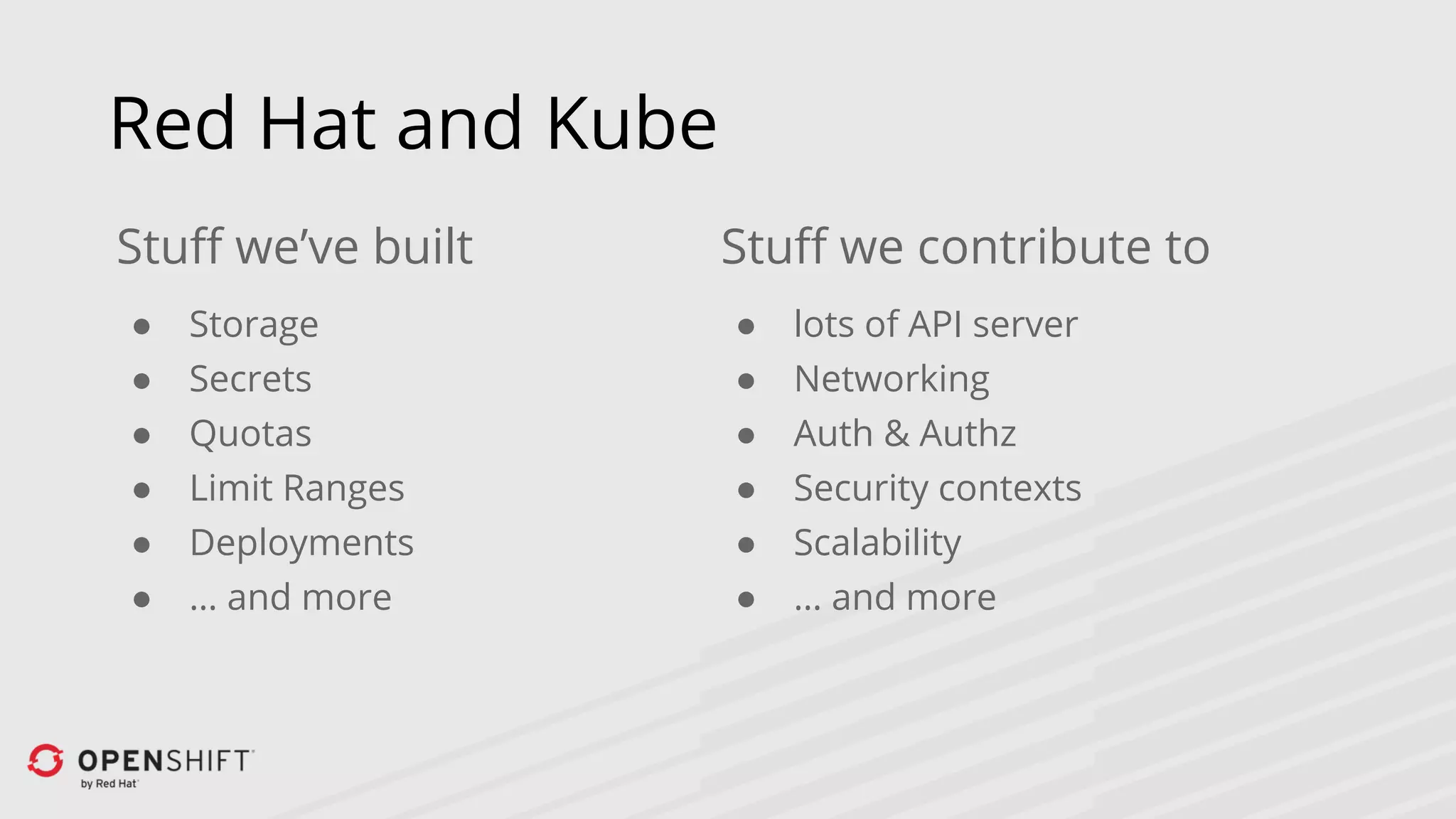
Red Hat and Kube
Stuff we’ve built
● Storage
● Secrets
● Quotas
● Limit Ranges
● Deployments
● … and more
Stuff we contribute to
● lots of API server
● Networking
● Auth & Authz
● Security contexts
● Scalability
● … and more
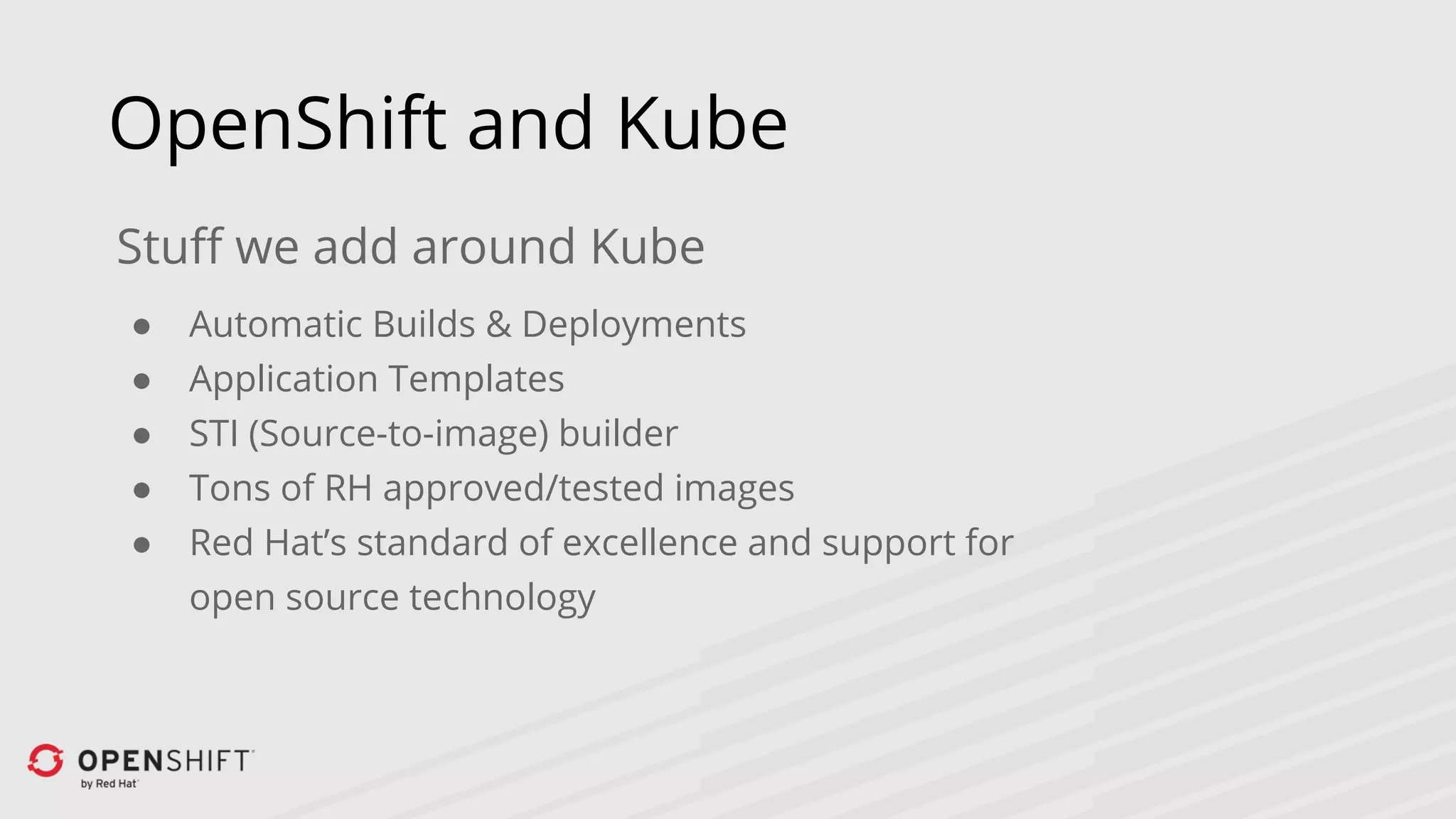
OpenShift and Kube
Stuff we add around Kube
● Automatic Builds & Deployments
● Application Templates
● STI (Source-to-image) builder
● Tons of RH approved/tested images
● Red Hat’s standard of excellence and support for
open source technology
Managing compute != managing storage
Pets vs. Cattle
Pets
● Have names and identity
● You care about them
● You nurse them back to
health when sick
Cattle
● Have numbers
● Are just like other cattle
● You don’t care about them
● You get a new ones
Persistent Storage
Goals
● Allow admins to describe storage
● Allow users to request storage
● No tight coupling to any disk, server, network,
or storage device
Two API objects
PersistentVolume (PV)
PersistentVolumeClaim (PVC)
PersistentVolume
● A PV is a real piece of networked storage in the cluster
provisioned by an administrator.
● PVs are resources like nodes are resources
● Long lifecycle independent of any pod
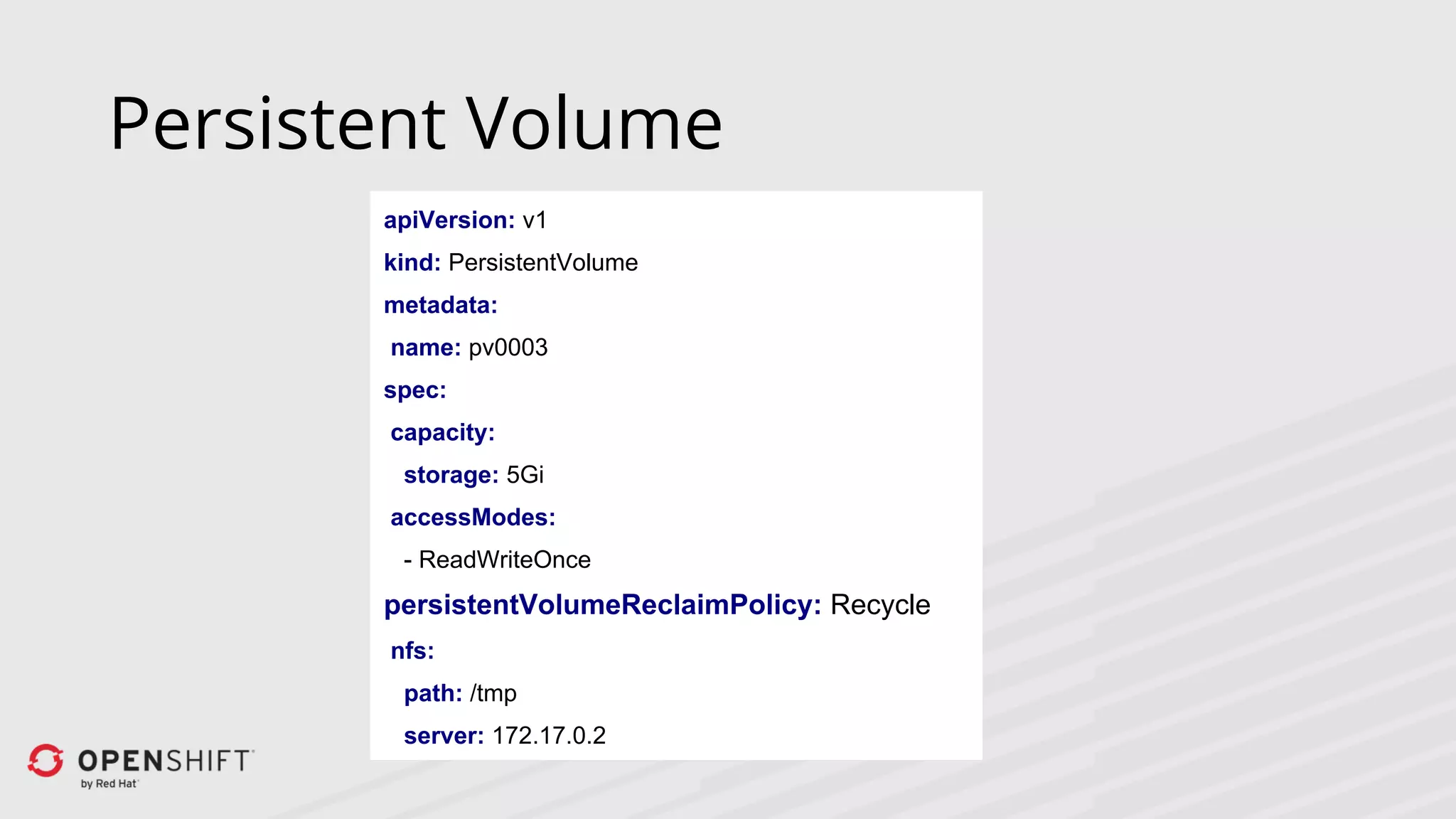
Persistent Volume
apiVersion: v1
kind: PersistentVolume
metadata:
name: pv0003
spec:
capacity:
storage: 5Gi
accessModes:
- ReadWriteOnce
persistentVolumeReclaimPolicy: Recycle
nfs:
path: /tmp
server: 172.17.0.2
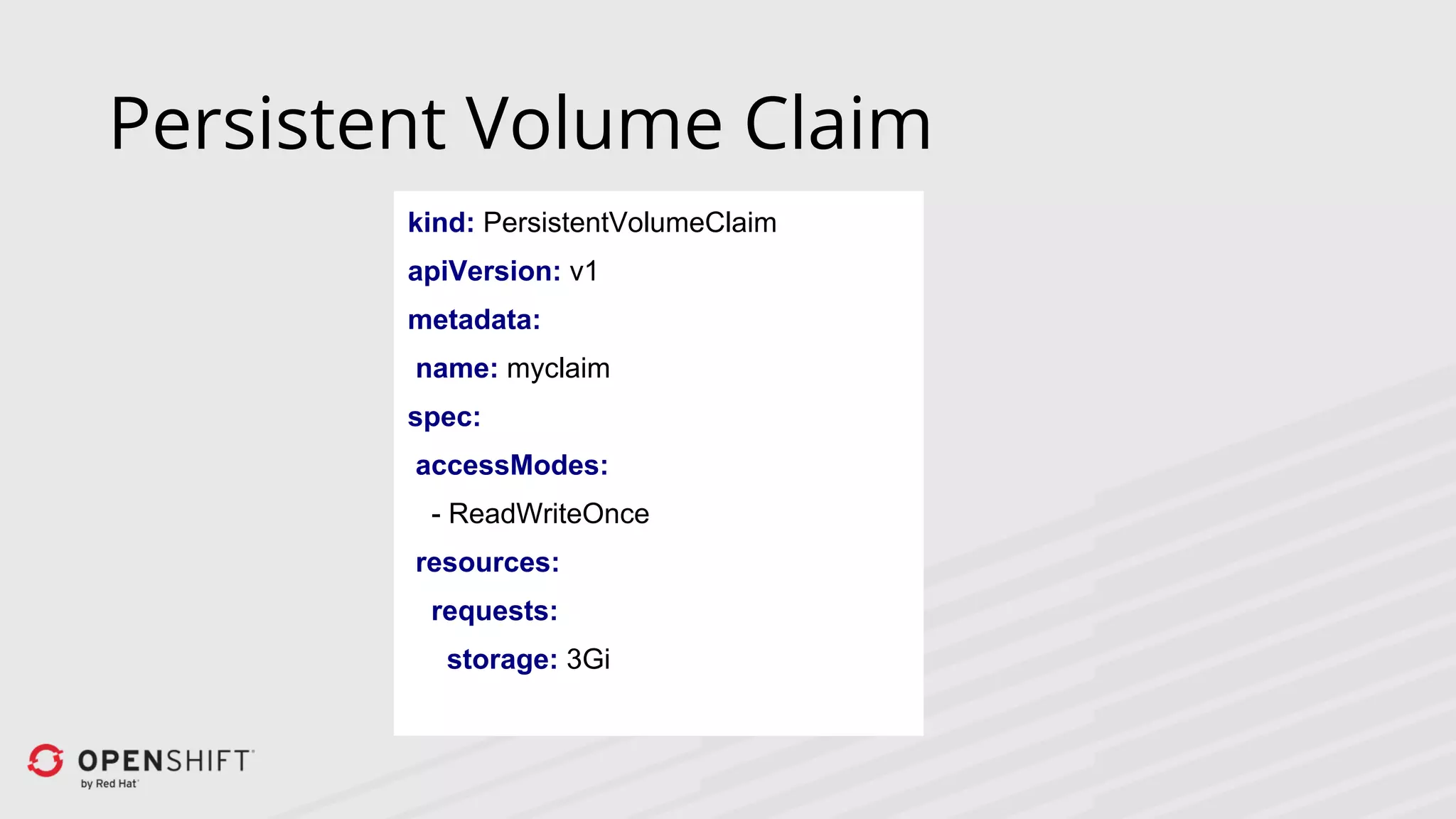
Persistent Volume Claim
● A request for storage by a user
● Allows specific resource requests (e.g, size, access modes)
● Used like a claim check
Persistent Volume Claim
kind: PersistentVolumeClaim
apiVersion: v1
metadata:
name: myclaim
spec:
accessModes:
- ReadWriteOnce
resources:
requests:
storage: 3Gi
Storage Lifecycle
● Provisioning
● Binding
● Using
● Releasing
● Reclaiming
Provisioning
● Dynamic
● Scripted
● Manual
Binding
● Claims matched to volumes
● Always more, never less
● Claim can be unbound indefinitely
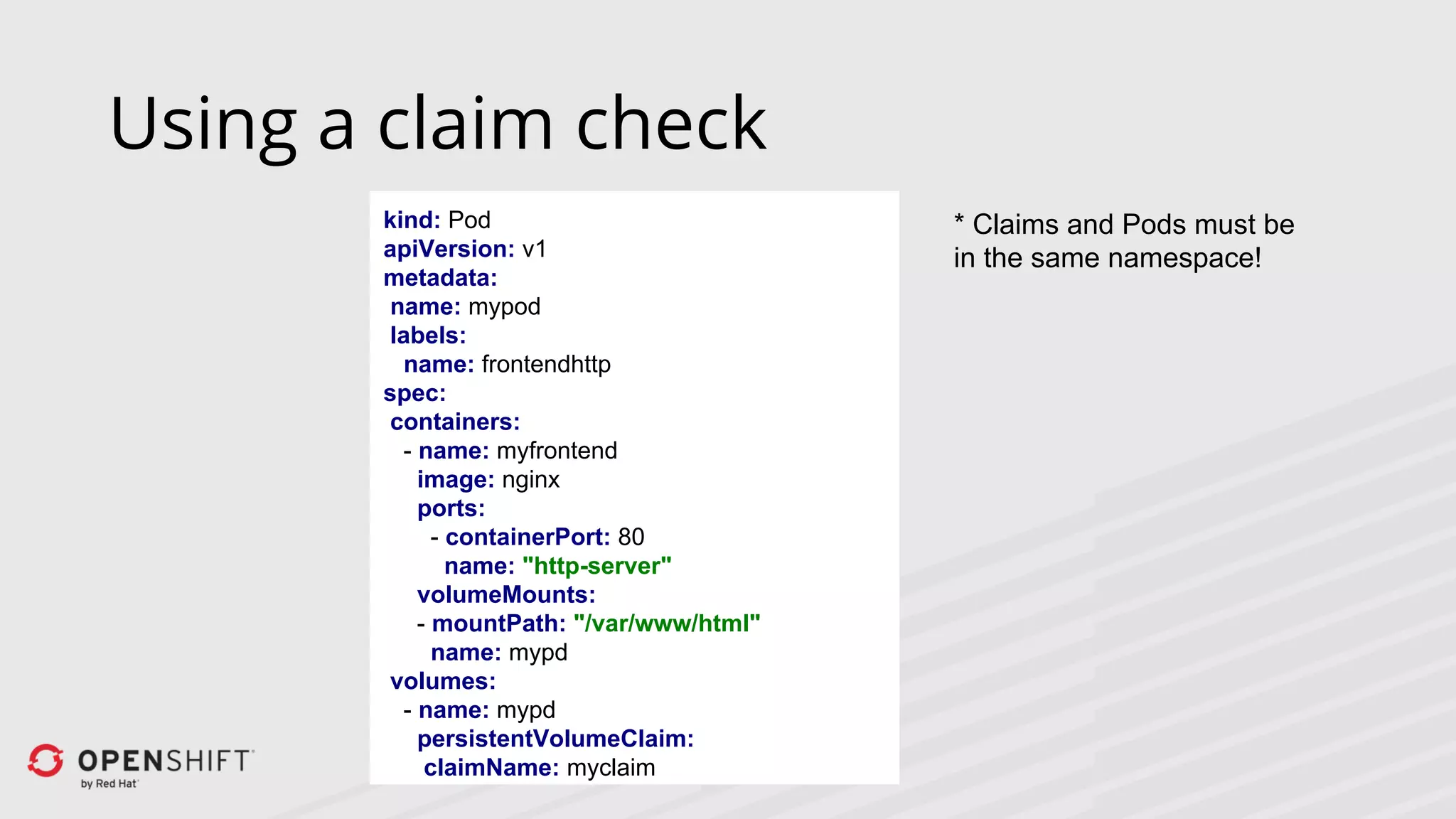
Using a claim check
kind: Pod
apiVersion: v1
metadata:
name: mypod
labels:
name: frontendhttp
spec:
containers:
- name: myfrontend
image: nginx
ports:
- containerPort: 80
name: "http-server"
volumeMounts:
- mountPath: "/var/www/html"
name: mypd
volumes:
- name: mypd
persistentVolumeClaim:
claimName: myclaim
* Claims and Pods must be
in the same namespace!
Re-use your claim
$ oc delete pod mypod
● Deleting a pod does not delete your claim
● Re-use your claim in another pod
Releasing
$ oc delete pvc myclaim
● Delete your claim to release your storage
● Volume is “released” but not available for another claim
● Recycling policy can scrub the volume to clean previous
claimant’s data
Reclaiming
● Reclaim policy per volume
● Scrubbing is configurable (PR #9870)
● Delete/Recreate via dynamic provisioning
● PVs are “Retain” by default and can be manually reclaimed
Types of persistent volumes
● GCEPersistentDisk
● AWSElasticBlockStore
● NFS
● Glusterfs
● iSCSI
● RBD (Ceph block device)
● HostPath (for testing)
● Fiber Channel
● Cephfs
● Cinder & Manila
Demo!
Wordpress + MySQL
Both require persistent storage
https://github.com/openshift/origin/tree/master/examples/wordpress
Roadmap
● Robust security between pods, volumes, and containers
● Scalable storage and nominal services
● Dynamic provisioning
https://github.com/openshift/origin
Red Hat & Project Atomic
swag and raffles and smart people
Booth #310
github: markturansky
irc: markturansky
#openshift-dev
#google-containers

Persistent Storage with Containers with Kubernetes & OpenShift

  • 1.
    Persistent Storage w/ Kubernetes& OpenShift © 2015 Mark Turansky - mturansk@redhat.com
  • 2.
    Red Hat andKube Stuff we’ve built ● Storage ● Secrets ● Quotas ● Limit Ranges ● Deployments ● … and more Stuff we contribute to ● lots of API server ● Networking ● Auth & Authz ● Security contexts ● Scalability ● … and more
  • 3.
    OpenShift and Kube Stuffwe add around Kube ● Automatic Builds & Deployments ● Application Templates ● STI (Source-to-image) builder ● Tons of RH approved/tested images ● Red Hat’s standard of excellence and support for open source technology
  • 4.
    Managing compute !=managing storage
  • 5.
    Pets vs. Cattle Pets ●Have names and identity ● You care about them ● You nurse them back to health when sick Cattle ● Have numbers ● Are just like other cattle ● You don’t care about them ● You get a new ones
  • 6.
    Persistent Storage Goals ● Allowadmins to describe storage ● Allow users to request storage ● No tight coupling to any disk, server, network, or storage device
  • 7.
    Two API objects PersistentVolume(PV) PersistentVolumeClaim (PVC)
  • 8.
    PersistentVolume ● A PVis a real piece of networked storage in the cluster provisioned by an administrator. ● PVs are resources like nodes are resources ● Long lifecycle independent of any pod
  • 9.
    Persistent Volume apiVersion: v1 kind:PersistentVolume metadata: name: pv0003 spec: capacity: storage: 5Gi accessModes: - ReadWriteOnce persistentVolumeReclaimPolicy: Recycle nfs: path: /tmp server: 172.17.0.2
  • 10.
    Persistent Volume Claim ●A request for storage by a user ● Allows specific resource requests (e.g, size, access modes) ● Used like a claim check
  • 11.
    Persistent Volume Claim kind:PersistentVolumeClaim apiVersion: v1 metadata: name: myclaim spec: accessModes: - ReadWriteOnce resources: requests: storage: 3Gi
  • 12.
    Storage Lifecycle ● Provisioning ●Binding ● Using ● Releasing ● Reclaiming
  • 13.
  • 14.
    Binding ● Claims matchedto volumes ● Always more, never less ● Claim can be unbound indefinitely
  • 15.
    Using a claimcheck kind: Pod apiVersion: v1 metadata: name: mypod labels: name: frontendhttp spec: containers: - name: myfrontend image: nginx ports: - containerPort: 80 name: "http-server" volumeMounts: - mountPath: "/var/www/html" name: mypd volumes: - name: mypd persistentVolumeClaim: claimName: myclaim * Claims and Pods must be in the same namespace!
  • 16.
    Re-use your claim $oc delete pod mypod ● Deleting a pod does not delete your claim ● Re-use your claim in another pod
  • 17.
    Releasing $ oc deletepvc myclaim ● Delete your claim to release your storage ● Volume is “released” but not available for another claim ● Recycling policy can scrub the volume to clean previous claimant’s data
  • 18.
    Reclaiming ● Reclaim policyper volume ● Scrubbing is configurable (PR #9870) ● Delete/Recreate via dynamic provisioning ● PVs are “Retain” by default and can be manually reclaimed
  • 19.
    Types of persistentvolumes ● GCEPersistentDisk ● AWSElasticBlockStore ● NFS ● Glusterfs ● iSCSI ● RBD (Ceph block device) ● HostPath (for testing) ● Fiber Channel ● Cephfs ● Cinder & Manila
  • 20.
    Demo! Wordpress + MySQL Bothrequire persistent storage https://github.com/openshift/origin/tree/master/examples/wordpress
  • 21.
    Roadmap ● Robust securitybetween pods, volumes, and containers ● Scalable storage and nominal services ● Dynamic provisioning
  • 22.
    https://github.com/openshift/origin Red Hat &Project Atomic swag and raffles and smart people Booth #310 github: markturansky irc: markturansky #openshift-dev #google-containers