Periodic Table
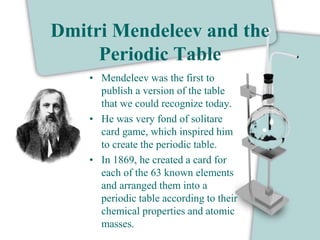
Dmitri Mendeleev and the 
Periodic Table 
• Mendeleev was the first to 
publish a version of the table 
that we could recognize today. 
• He was very fond of solitare 
card game, which inspired him 
to create the periodic table. 
• In 1869, he created a card for 
each of the 63 known elements 
and arranged them into a 
periodic table according to their 
chemical properties and atomic 
masses.
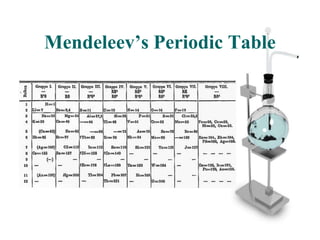
Mendeleev’s Periodic Table
The Modern Periodic Table 
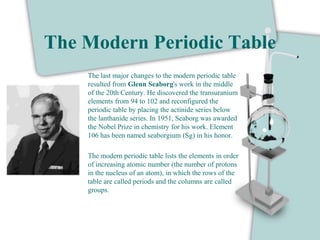
The last major changes to the modern periodic table 
resulted from Glenn Seaborg's work in the middle 
of the 20th Century. He discovered the transuranium 
elements from 94 to 102 and reconfigured the 
periodic table by placing the actinide series below 
the lanthanide series. In 1951, Seaborg was awarded 
the Nobel Prize in chemistry for his work. Element 
106 has been named seaborgium (Sg) in his honor. 
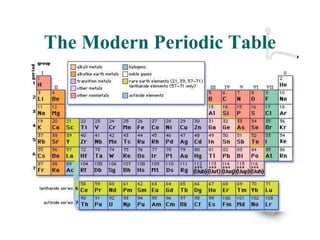
The modern periodic table lists the elements in order 
of increasing atomic number (the number of protons 
in the nucleus of an atom), in which the rows of the 
table are called periods and the columns are called 
groups.
The Modern Periodic Table

Periodic table history

  • 1.
  • 2.
    Dmitri Mendeleev andthe Periodic Table • Mendeleev was the first to publish a version of the table that we could recognize today. • He was very fond of solitare card game, which inspired him to create the periodic table. • In 1869, he created a card for each of the 63 known elements and arranged them into a periodic table according to their chemical properties and atomic masses.
  • 3.
  • 4.
    The Modern PeriodicTable The last major changes to the modern periodic table resulted from Glenn Seaborg's work in the middle of the 20th Century. He discovered the transuranium elements from 94 to 102 and reconfigured the periodic table by placing the actinide series below the lanthanide series. In 1951, Seaborg was awarded the Nobel Prize in chemistry for his work. Element 106 has been named seaborgium (Sg) in his honor. The modern periodic table lists the elements in order of increasing atomic number (the number of protons in the nucleus of an atom), in which the rows of the table are called periods and the columns are called groups.
  • 5.