PERIODIC TABLE


    Presented by Jordan Yun
HISTORY OF THE PERIODIC TABLE
                    Mendeleev is the “father” of the
                    Periodic Table


                    Picture of the Periodic Table in
                    1869


                    This table was not accurate, he
                    changed multiple elements
                    around to make them fit just right


                    The Periodic Table was worked
                    on by multiple other scientists to
                    get it the way it looks today
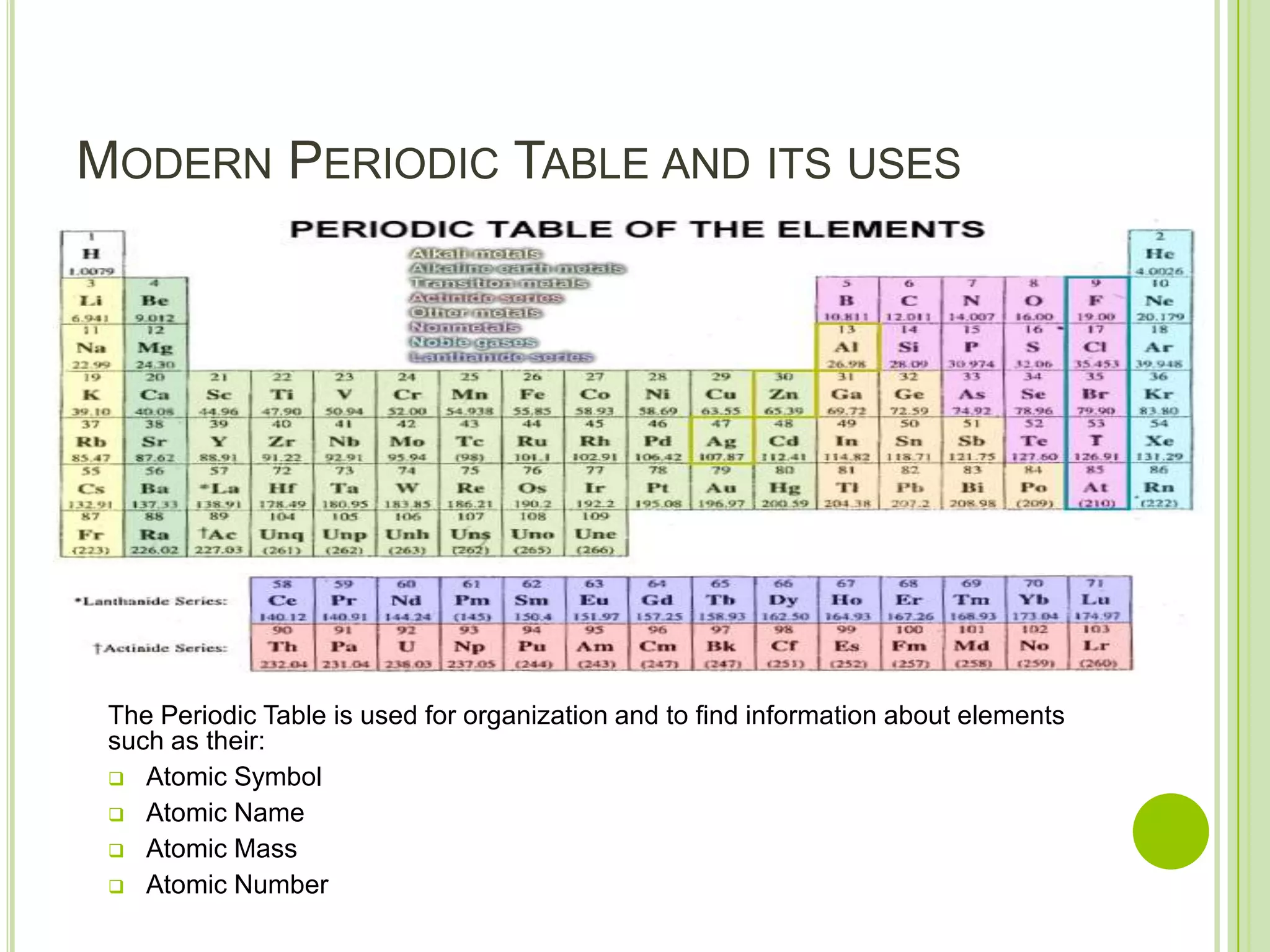
MODERN PERIODIC TABLE AND ITS USES


 The Periodic Table is used for organization and to find information about elements
 such as their:
  Atomic Symbol
  Atomic Name
  Atomic Mass
  Atomic Number
HOW TO READ THE PERIODIC TABLE
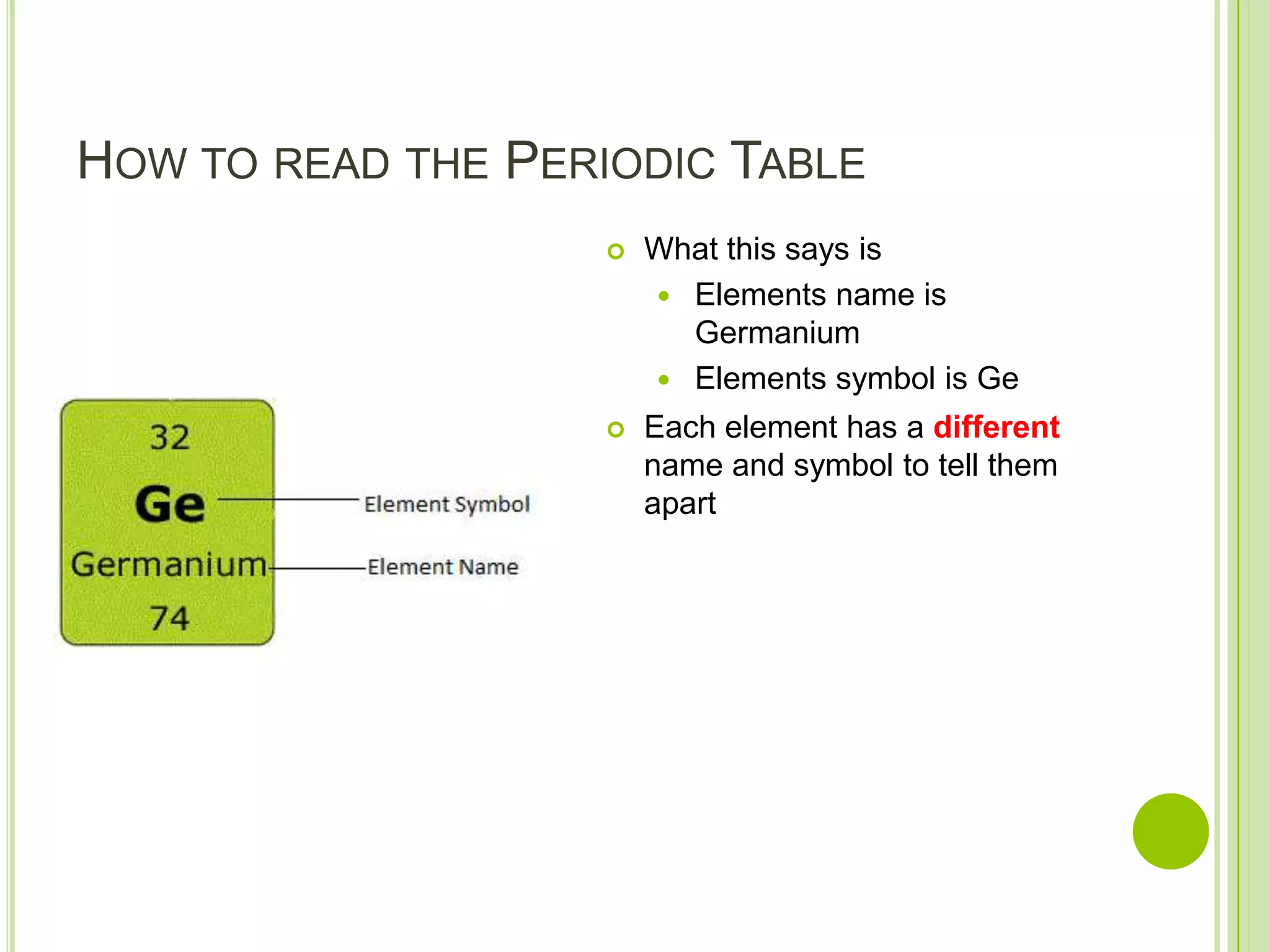
                       What this says is
                         Elements name is
                          Germanium
                         Elements symbol is Ge
                       Each element has a different
                        name and symbol to tell them
                        apart
HOW TO READ THE PERIODIC TABLE
   The atomic mass is how
    much the element weighs

   All elements masses are
    different!!
HOW TO READ THE PERIODIC TABLE
                       The atomic number is how
                        many Protons are in the
                        nucleus

                       Each element also has a
                        different atomic number
HOW TO READ THE PERIODIC TABLE


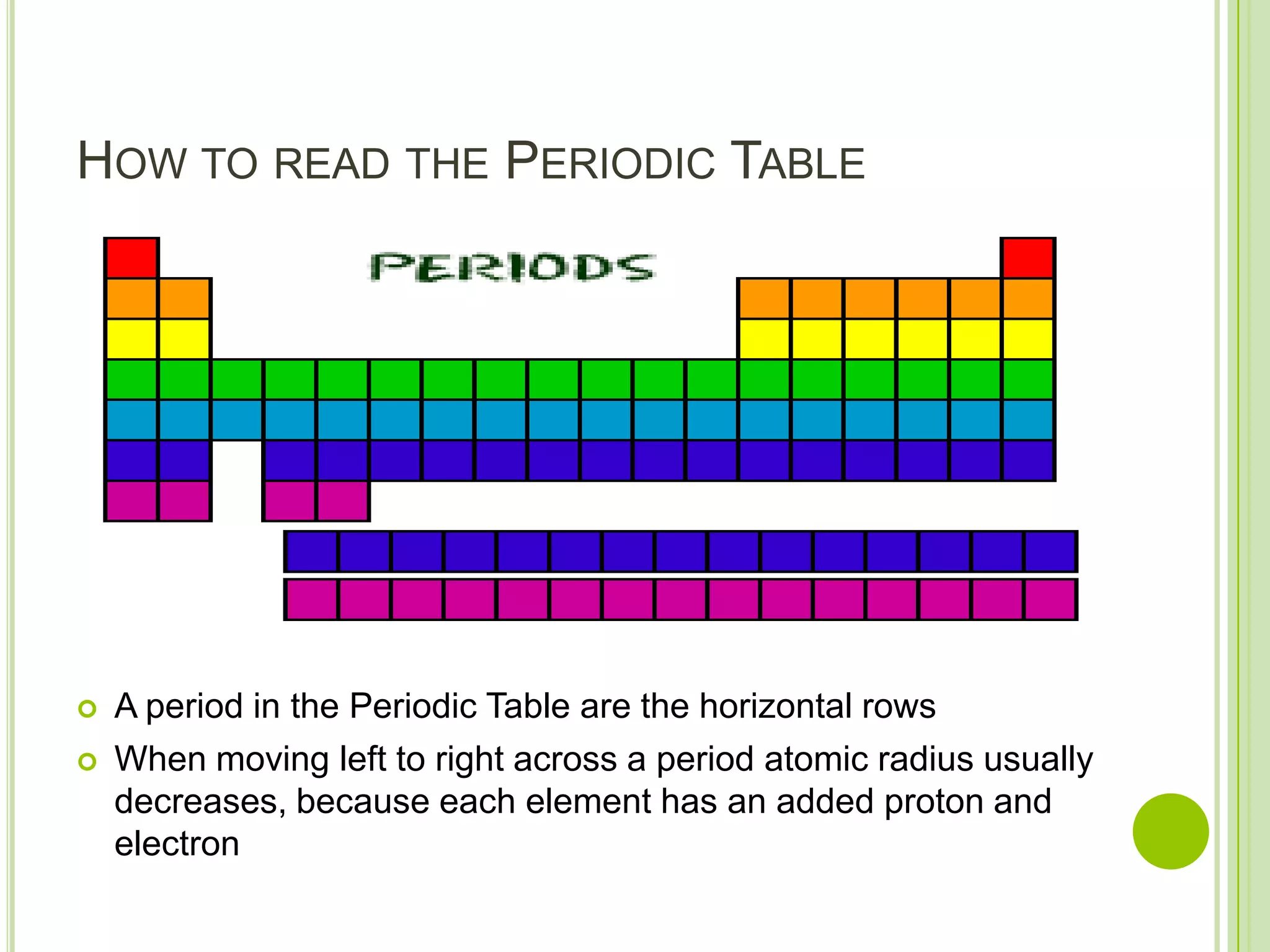
   A period in the Periodic Table are the horizontal rows
   When moving left to right across a period atomic radius usually
    decreases, because each element has an added proton and
    electron
HOW TO READ THE PERIODIC TABLE


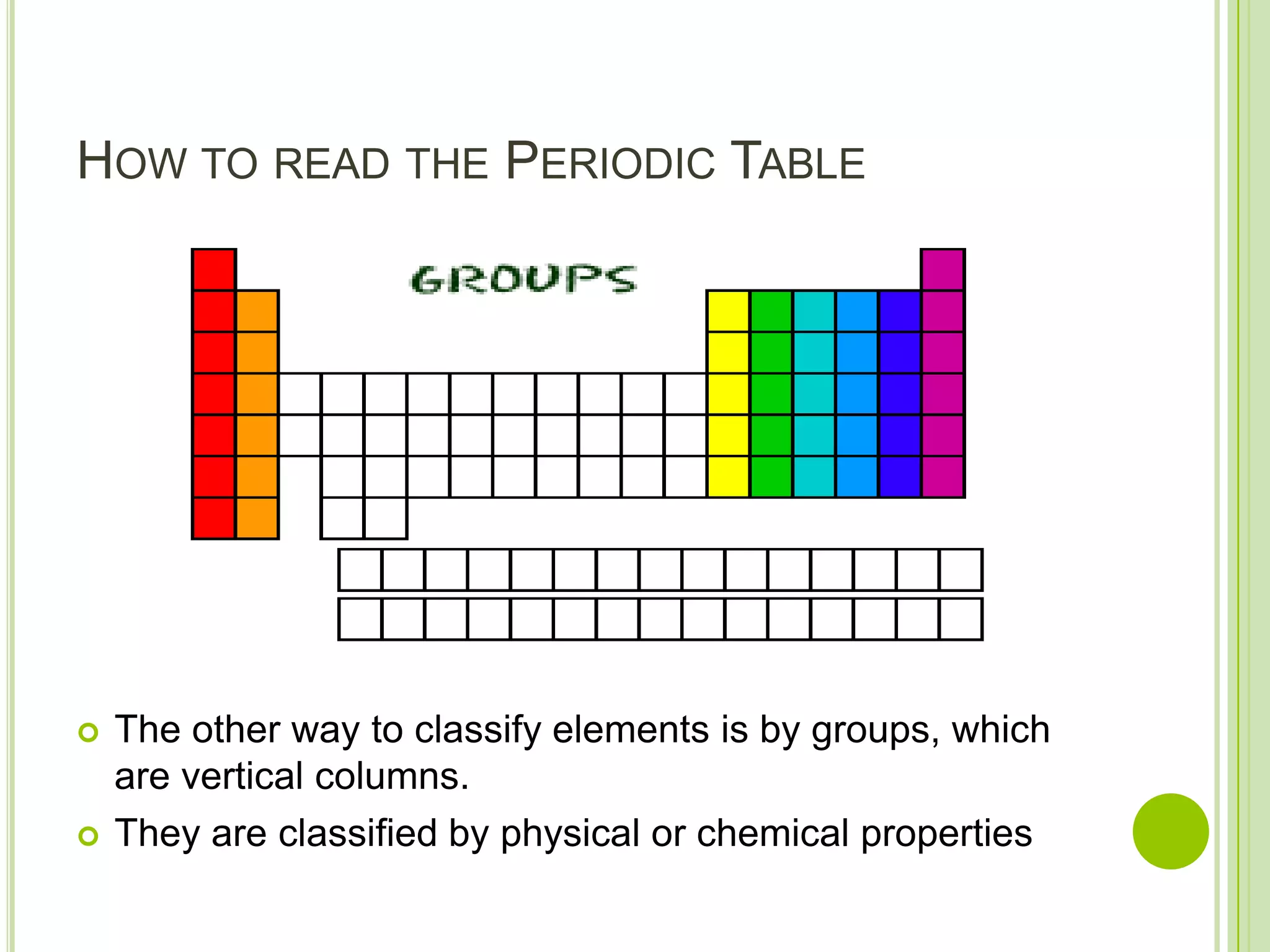
   The other way to classify elements is by groups, which
    are vertical columns.
   They are classified by physical or chemical properties
HOW TO READ THE PERIODIC TABLE


   Groups can also be called families, and each have a different name.
   Examples:
        Halogens
        Noble Gasses
REVIEW QUESTION
   What is the Atomic
    Number, Mass, Name
    and Symbol for the
    element in yellow?
ANSWERS
 Atomic Number – 26
 Atomic Mass – 55.85

 Atomic Name – Iron

 Atomic Symbol – Fe
REFERENCES
   http://www.wou.edu/las/physci/ch412/perhist.htm
   http://www.middleschoolscience.com/periodictablefamilies.pdf
   http://www.discoveryeducation.com/teachers/free-lesson-
    plans/elements-of-chemistry-the-periodic-table.cfm
   http://www.infoplease.com/images/ESCI026PERTAB002.gif
   http://library.thinkquest.org/C006669/media/Chem/img/periodictblecolor.g
    if
   http://www.aip.org/history/curie/images/table1869-reprint.gif
   http://www.chem4kids.com/files/art/elem_pertable2.gif
   http://www.chem4kids.com/files/art/elem_pertable3.gif

Periodic table

  • 1.
    PERIODIC TABLE Presented by Jordan Yun
  • 2.
    HISTORY OF THEPERIODIC TABLE Mendeleev is the “father” of the Periodic Table Picture of the Periodic Table in 1869 This table was not accurate, he changed multiple elements around to make them fit just right The Periodic Table was worked on by multiple other scientists to get it the way it looks today
  • 3.
    MODERN PERIODIC TABLEAND ITS USES The Periodic Table is used for organization and to find information about elements such as their:  Atomic Symbol  Atomic Name  Atomic Mass  Atomic Number
  • 4.
    HOW TO READTHE PERIODIC TABLE  What this says is  Elements name is Germanium  Elements symbol is Ge  Each element has a different name and symbol to tell them apart
  • 5.
    HOW TO READTHE PERIODIC TABLE  The atomic mass is how much the element weighs  All elements masses are different!!
  • 6.
    HOW TO READTHE PERIODIC TABLE  The atomic number is how many Protons are in the nucleus  Each element also has a different atomic number
  • 7.
    HOW TO READTHE PERIODIC TABLE  A period in the Periodic Table are the horizontal rows  When moving left to right across a period atomic radius usually decreases, because each element has an added proton and electron
  • 8.
    HOW TO READTHE PERIODIC TABLE  The other way to classify elements is by groups, which are vertical columns.  They are classified by physical or chemical properties
  • 9.
    HOW TO READTHE PERIODIC TABLE  Groups can also be called families, and each have a different name.  Examples:  Halogens  Noble Gasses
  • 10.
    REVIEW QUESTION  What is the Atomic Number, Mass, Name and Symbol for the element in yellow?
  • 11.
    ANSWERS  Atomic Number– 26  Atomic Mass – 55.85  Atomic Name – Iron  Atomic Symbol – Fe
  • 12.
    REFERENCES  http://www.wou.edu/las/physci/ch412/perhist.htm  http://www.middleschoolscience.com/periodictablefamilies.pdf  http://www.discoveryeducation.com/teachers/free-lesson- plans/elements-of-chemistry-the-periodic-table.cfm  http://www.infoplease.com/images/ESCI026PERTAB002.gif  http://library.thinkquest.org/C006669/media/Chem/img/periodictblecolor.g if  http://www.aip.org/history/curie/images/table1869-reprint.gif  http://www.chem4kids.com/files/art/elem_pertable2.gif  http://www.chem4kids.com/files/art/elem_pertable3.gif