PERFORMANCE
APPRAISAL
INTRODUCTION
▪ Performance appraisal is a process of evaluating the performance of employees,
sharing that information with them and searching for ways to improve their
performance.
▪ Performance appraisal can be defined as a systematic evaluation of
an employee's current, or past performance as well as future potentials by
supervisors or those familiar with his/her performance.
▪ Performance is also know as Performance assessment or sometimes synonymous
to performance management.
FEATURES
▪ The appraised is a systematic process.
▪ Find out how employee is performing the job and tries to establish a plan for further
improvement.
▪ The appraisal is carried out periodically.
▪ Not job evaluation.
▪ Not limited to ‘calling the fouls’
▪ May be formal or informal
QUESTIONS IN PERFORMANCE APPRAISAL
▪ What do we Evaluate?
▪ Who will Evaluate?
▪ When to Appraise?
PERFORMANCE
APPRAISAL
ERRORS
▪ Leniency/Strictness Error
▪ Contrast Error
▪ Central Tendency Error
▪ Recency Error
▪ Halo Error
▪ Spill-Over Error
▪ Perceptual Error
▪ Rater Effect Or Similar-to-me Error
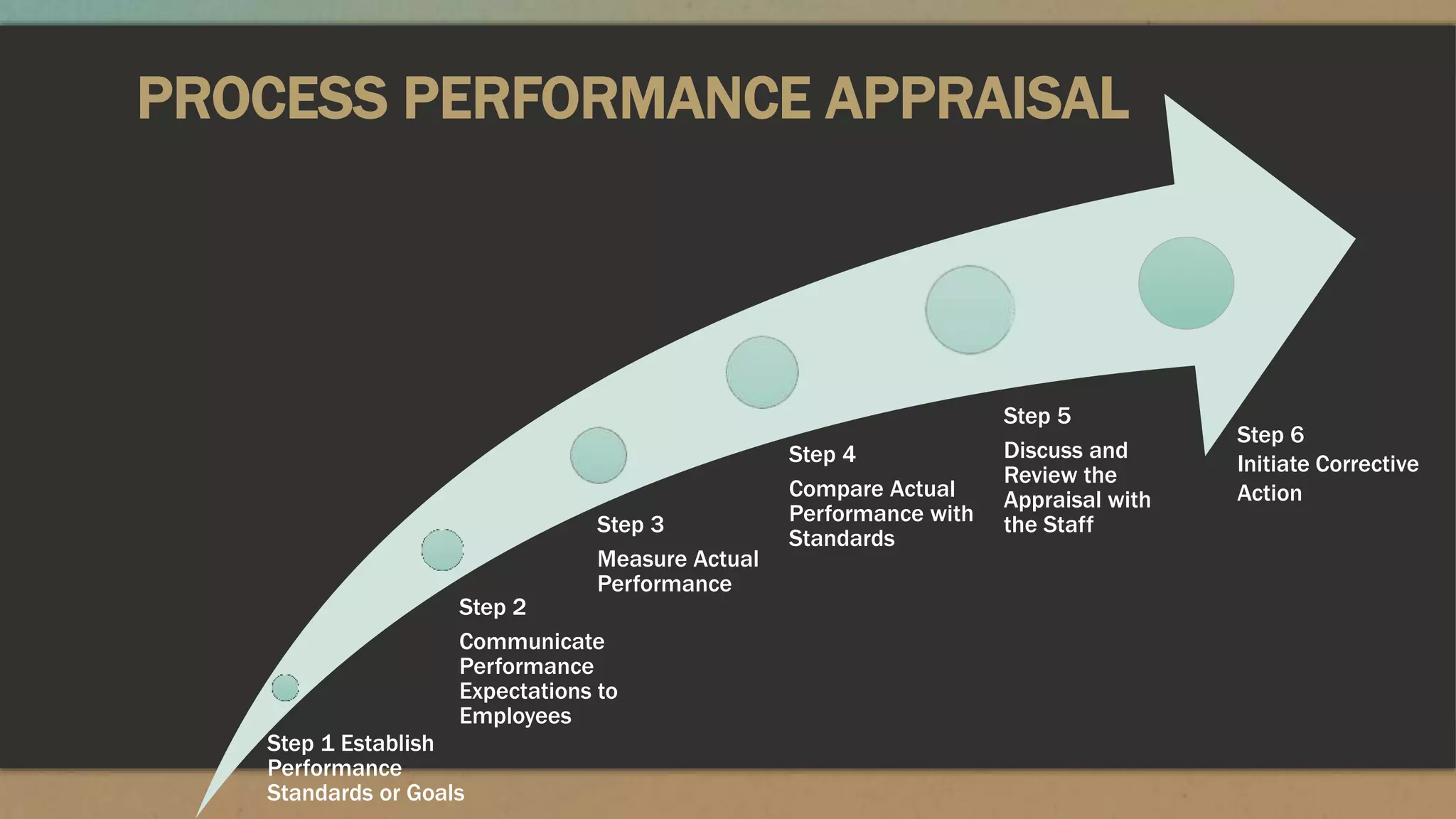
PROCESS PERFORMANCE APPRAISAL
Step 1 Establish
Performance
Standards or Goals
Step 2
Communicate
Performance
Expectations to
Employees
Step 3
Measure Actual
Performance
Step 4
Compare Actual
Performance with
Standards
Step 5
Discuss and
Review the
Appraisal with
the Staff
Step 6
Initiate Corrective
Action
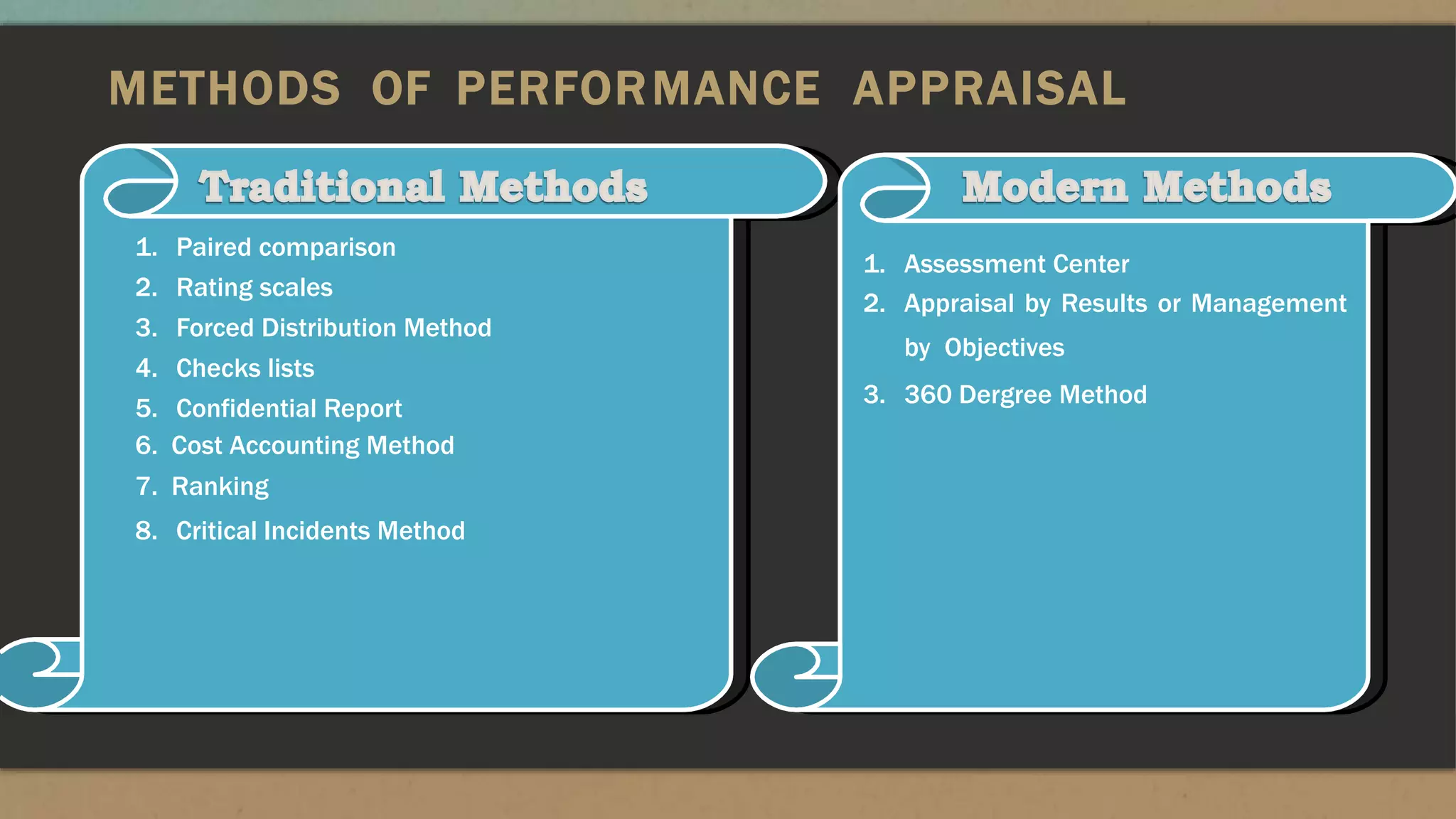
1. Paired comparison
2. Rating scales
3. Forced Distribution Method
4. Checks lists
5. Confidential Report
6. Cost Accounting Method
7. Ranking
8. Critical Incidents Method
1. Assessment Center
2. Appraisal by Results or Management
by Objectives
3. 360 Dergree Method
METHODS OF PERFORMANCE APPRAISAL
RATING
SCALE
METHOD
CHECKLIST
METHOD
FORCE
DISTRIBUTION
METHOD
No.
of
employees 10% 20% 40% 20% 10%
poor Below
average
average good Excellent
Force distribution curve
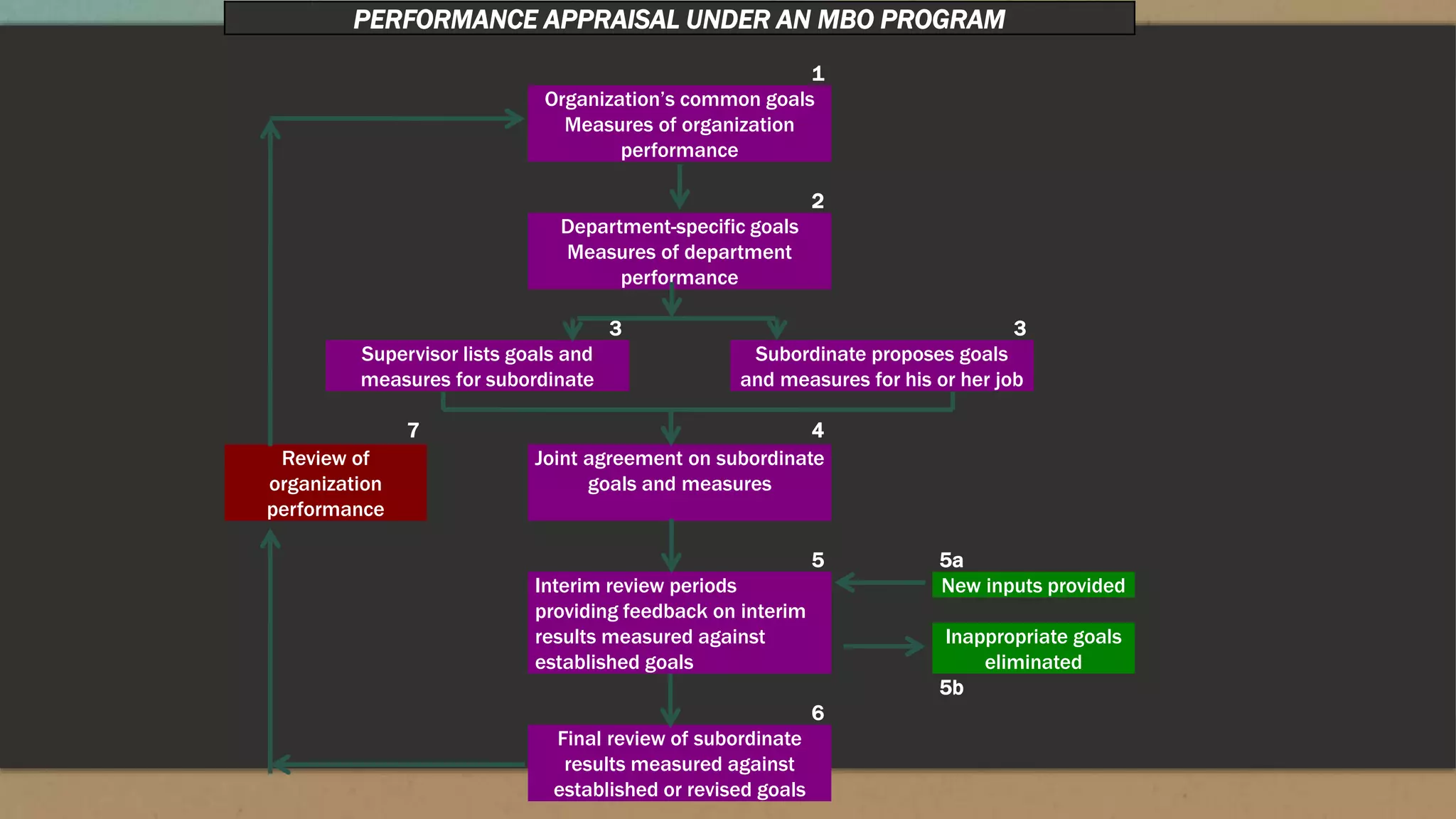
PERFORMANCE APPRAISAL UNDER AN MBO PROGRAM
1
Organization’s common goals
Measures of organization
performance
2
Department-specific goals
Measures of department
performance
3 3
Supervisor lists goals and
measures for subordinate
Subordinate proposes goals
and measures for his or her job
7 4
Review of
organization
performance
Joint agreement on subordinate
goals and measures
5 5a
Interim review periods
providing feedback on interim
results measured against
established goals
New inputs provided
Inappropriate goals
eliminated
5b
6
Final review of subordinate
results measured against
established or revised goals
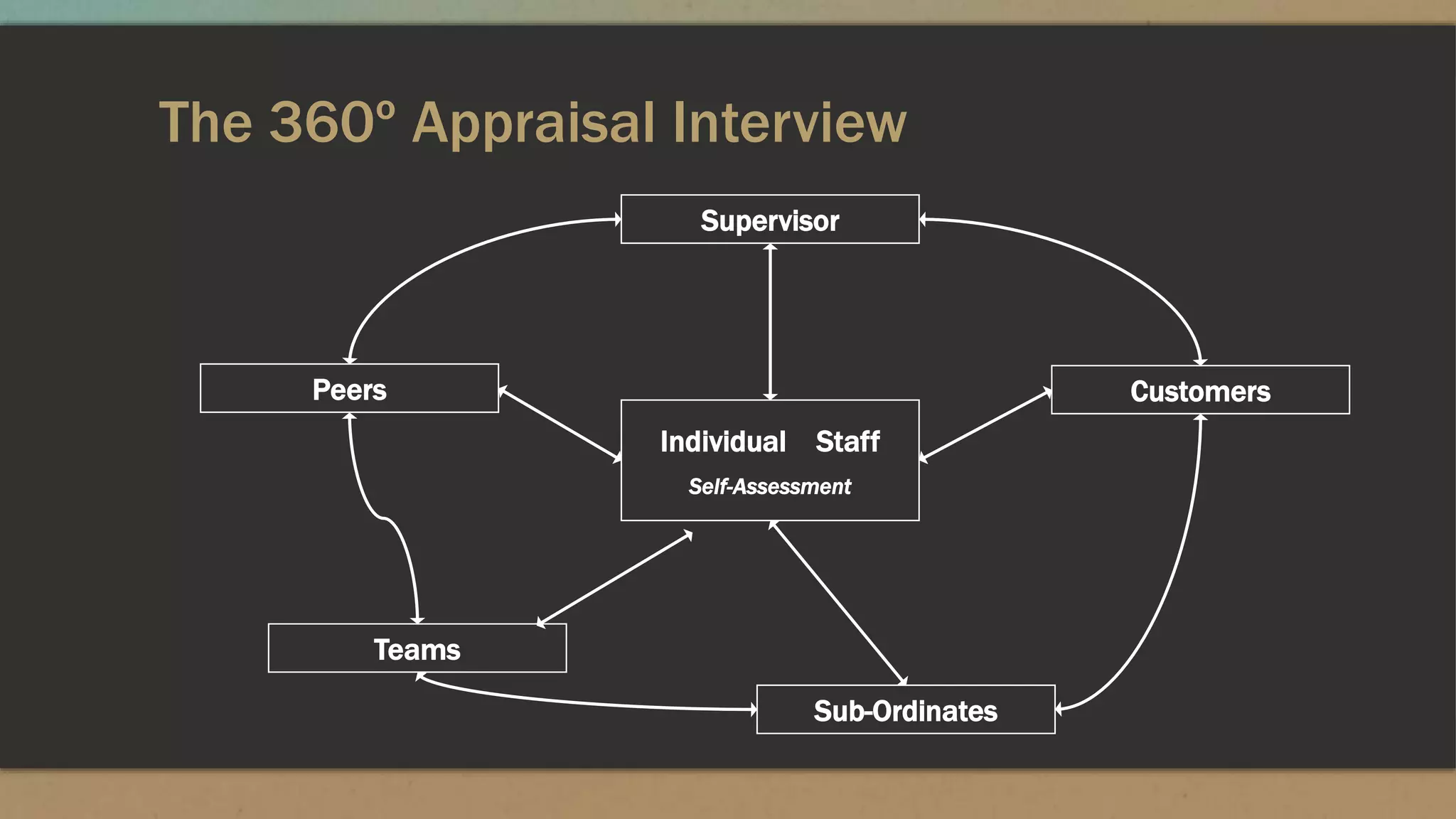
The 360º Appraisal Interview
Individual Staff
Self-Assessment
Supervisor
Peers
Teams
Sub-Ordinates
Customers
ESSENTIAL
CHARACTERSTICS
OF EFFECTIVE
APPRAISAL
SYSTEM
1. Reliability & Validity
2. Job Relatedness
3. Standardisation
4. Practical Viability
5. Legal Sanction
6. Training to Appraisers
7. Employee Access to Result
8. Due Process
CONCLUSION
Any Confusion?
THANK
YOU!Have A Nice Day!

Performance Appraisal - HRM

  • 1.
  • 2.
    INTRODUCTION ▪ Performance appraisalis a process of evaluating the performance of employees, sharing that information with them and searching for ways to improve their performance. ▪ Performance appraisal can be defined as a systematic evaluation of an employee's current, or past performance as well as future potentials by supervisors or those familiar with his/her performance. ▪ Performance is also know as Performance assessment or sometimes synonymous to performance management.
  • 3.
    FEATURES ▪ The appraisedis a systematic process. ▪ Find out how employee is performing the job and tries to establish a plan for further improvement. ▪ The appraisal is carried out periodically. ▪ Not job evaluation. ▪ Not limited to ‘calling the fouls’ ▪ May be formal or informal
  • 4.
    QUESTIONS IN PERFORMANCEAPPRAISAL ▪ What do we Evaluate? ▪ Who will Evaluate? ▪ When to Appraise?
  • 5.
    PERFORMANCE APPRAISAL ERRORS ▪ Leniency/Strictness Error ▪Contrast Error ▪ Central Tendency Error ▪ Recency Error ▪ Halo Error ▪ Spill-Over Error ▪ Perceptual Error ▪ Rater Effect Or Similar-to-me Error
  • 6.
    PROCESS PERFORMANCE APPRAISAL Step1 Establish Performance Standards or Goals Step 2 Communicate Performance Expectations to Employees Step 3 Measure Actual Performance Step 4 Compare Actual Performance with Standards Step 5 Discuss and Review the Appraisal with the Staff Step 6 Initiate Corrective Action
  • 7.
    1. Paired comparison 2.Rating scales 3. Forced Distribution Method 4. Checks lists 5. Confidential Report 6. Cost Accounting Method 7. Ranking 8. Critical Incidents Method 1. Assessment Center 2. Appraisal by Results or Management by Objectives 3. 360 Dergree Method METHODS OF PERFORMANCE APPRAISAL
  • 8.
  • 9.
  • 10.
    FORCE DISTRIBUTION METHOD No. of employees 10% 20%40% 20% 10% poor Below average average good Excellent Force distribution curve
  • 11.
    PERFORMANCE APPRAISAL UNDERAN MBO PROGRAM 1 Organization’s common goals Measures of organization performance 2 Department-specific goals Measures of department performance 3 3 Supervisor lists goals and measures for subordinate Subordinate proposes goals and measures for his or her job 7 4 Review of organization performance Joint agreement on subordinate goals and measures 5 5a Interim review periods providing feedback on interim results measured against established goals New inputs provided Inappropriate goals eliminated 5b 6 Final review of subordinate results measured against established or revised goals
  • 12.
    The 360º AppraisalInterview Individual Staff Self-Assessment Supervisor Peers Teams Sub-Ordinates Customers
  • 13.
    ESSENTIAL CHARACTERSTICS OF EFFECTIVE APPRAISAL SYSTEM 1. Reliability& Validity 2. Job Relatedness 3. Standardisation 4. Practical Viability 5. Legal Sanction 6. Training to Appraisers 7. Employee Access to Result 8. Due Process
  • 14.
  • 15.
  • 16.