Performance Analysis of Internet of Things Protocols
Based Fog/Cloud over High Traffic
Istabraq M. Al-Joboury and Emad H. Al-Hemiary
Al-Nahrain University
College of Information Engineering
Department of Networks Engineering
Baghdad, Iraq
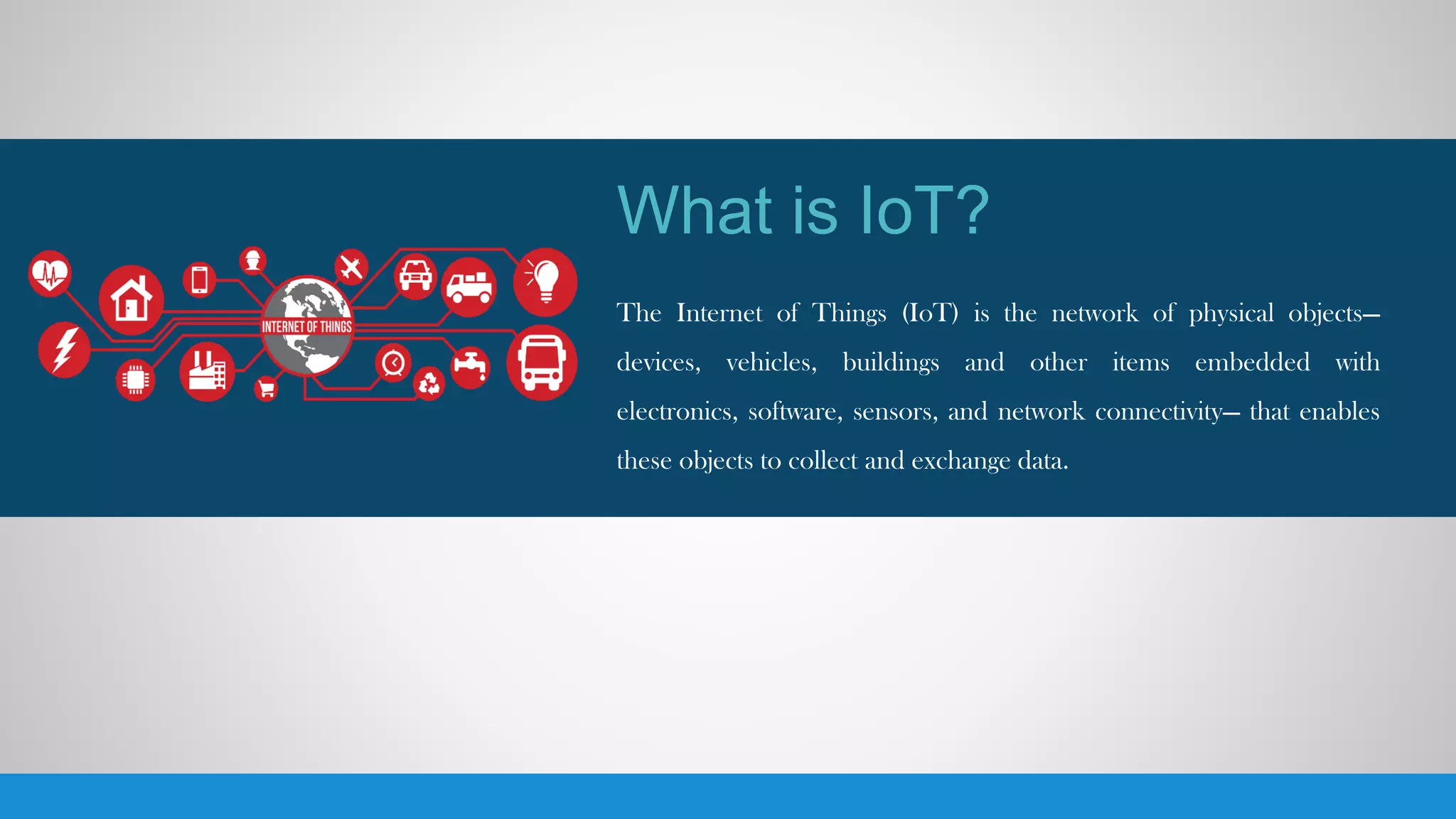
The Internet of Things (IoT) is the network of physical objects—
devices, vehicles, buildings and other items embedded with
electronics, software, sensors, and network connectivity— that enables
these objects to collect and exchange data.
What is IoT?
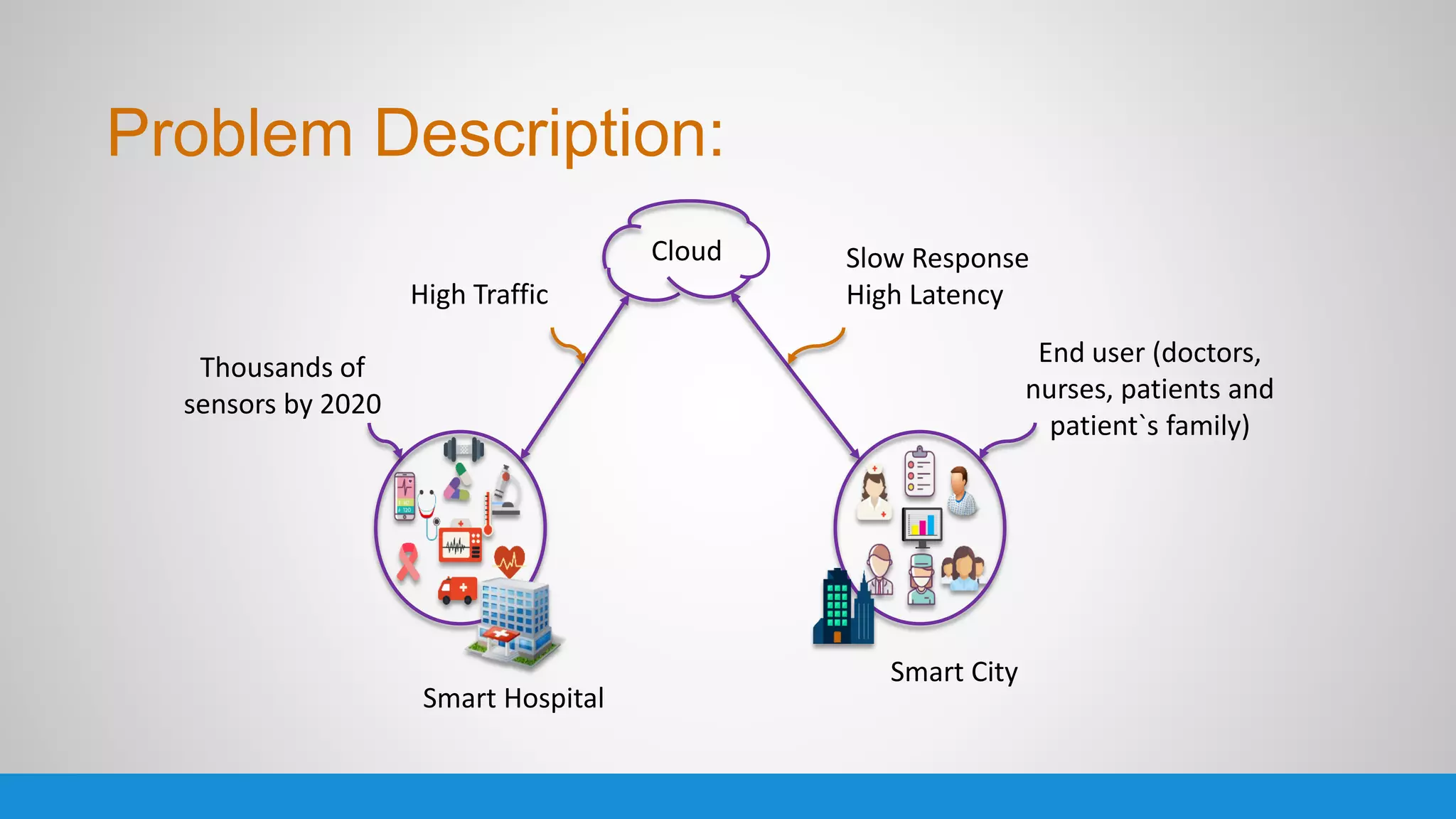
Thousands of
sensors by 2020
End user (doctors,
nurses, patients and
patient`s family)
High Traffic
Slow Response
High Latency
Cloud
Smart Hospital
Smart City
Problem Description:
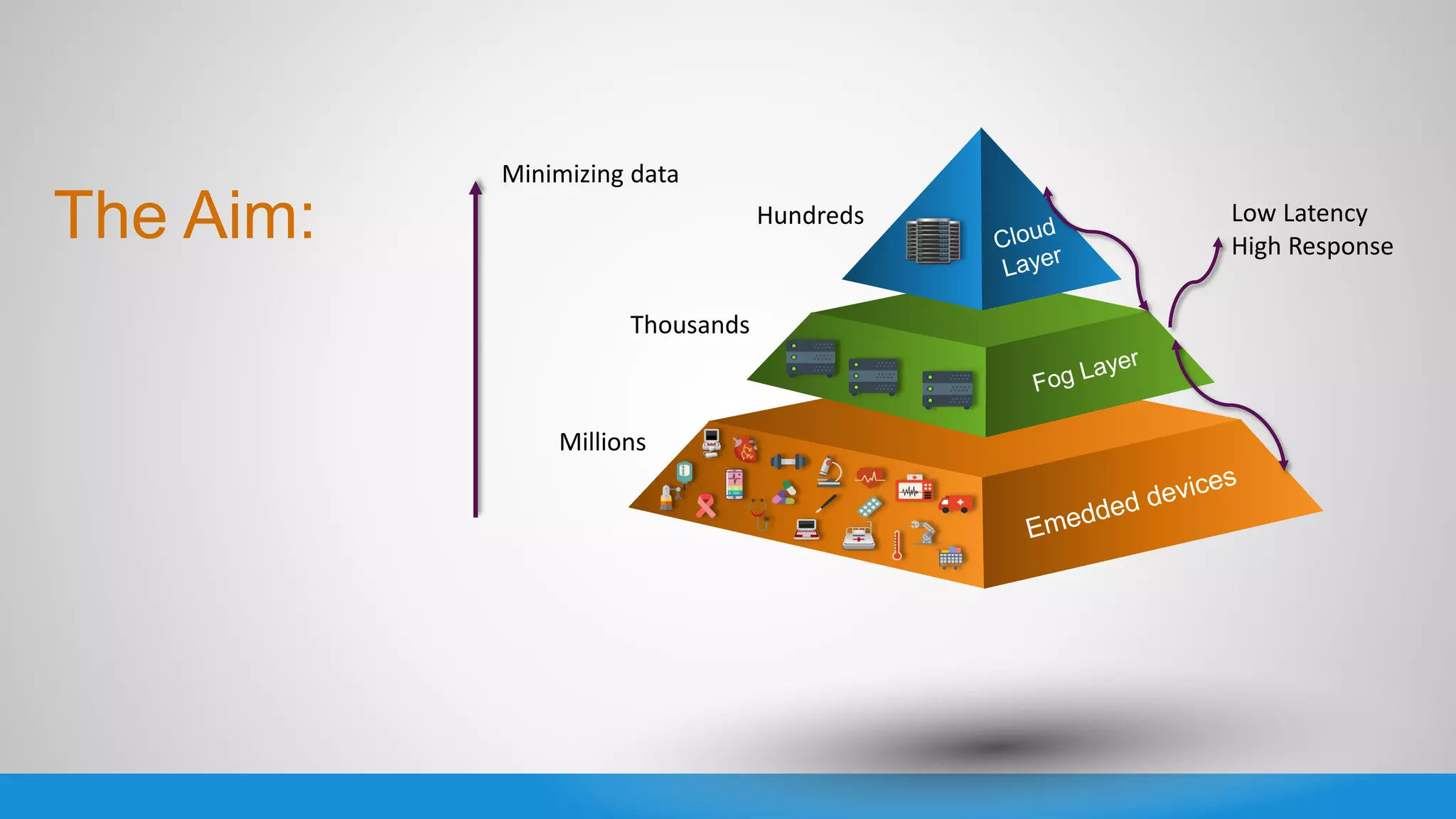
Millions
Thousands
Hundreds
Minimizing data
The Aim: Low Latency
High Response
Fog Cloud
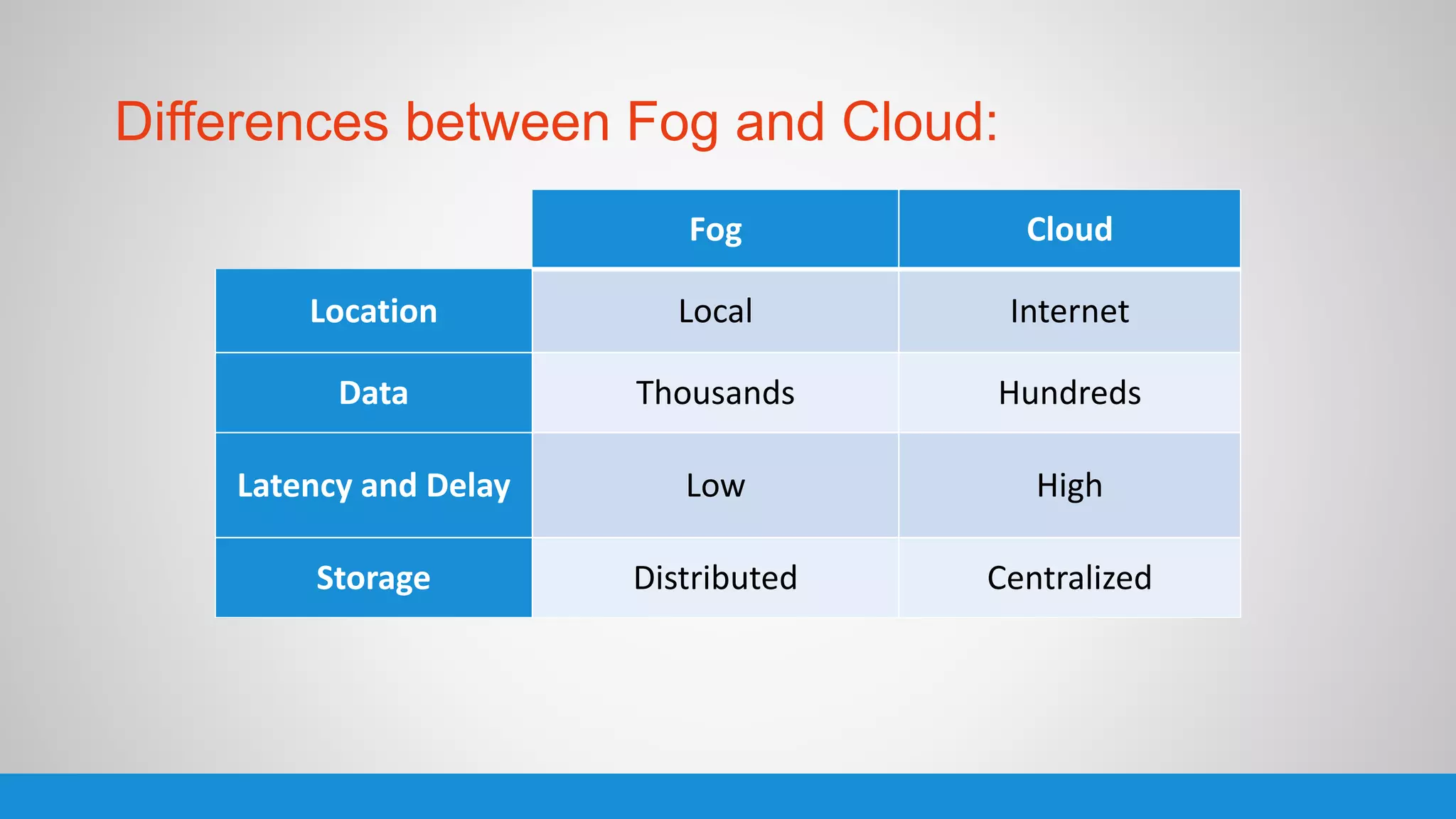
Location Local Internet
Data Thousands Hundreds
Latency and Delay Low High
Storage Distributed Centralized
Differences between Fog and Cloud:
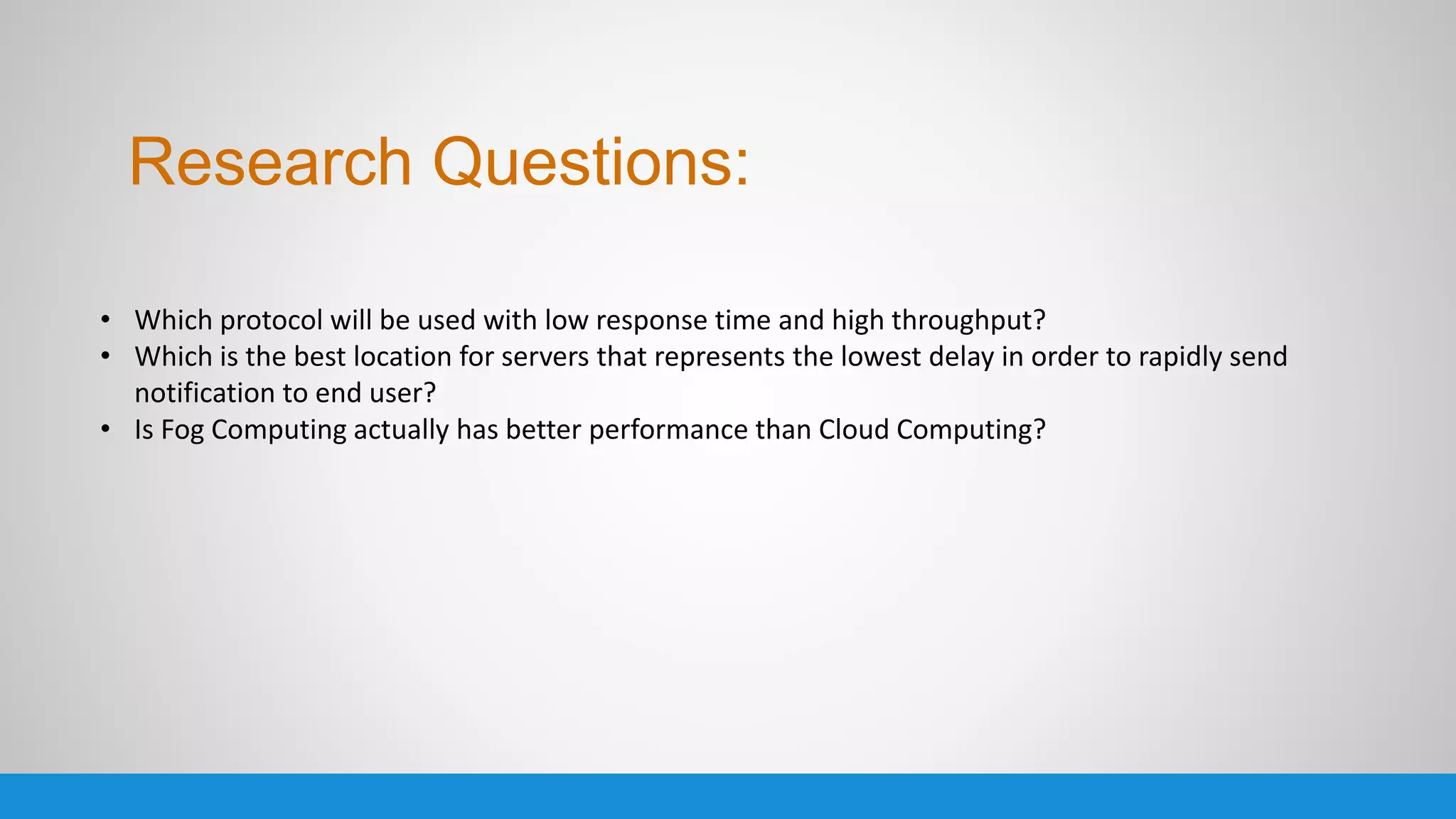
• Which protocol will be used with low response time and high throughput?
• Which is the best location for servers that represents the lowest delay in order to rapidly send
notification to end user?
• Is Fog Computing actually has better performance than Cloud Computing?
Research Questions:
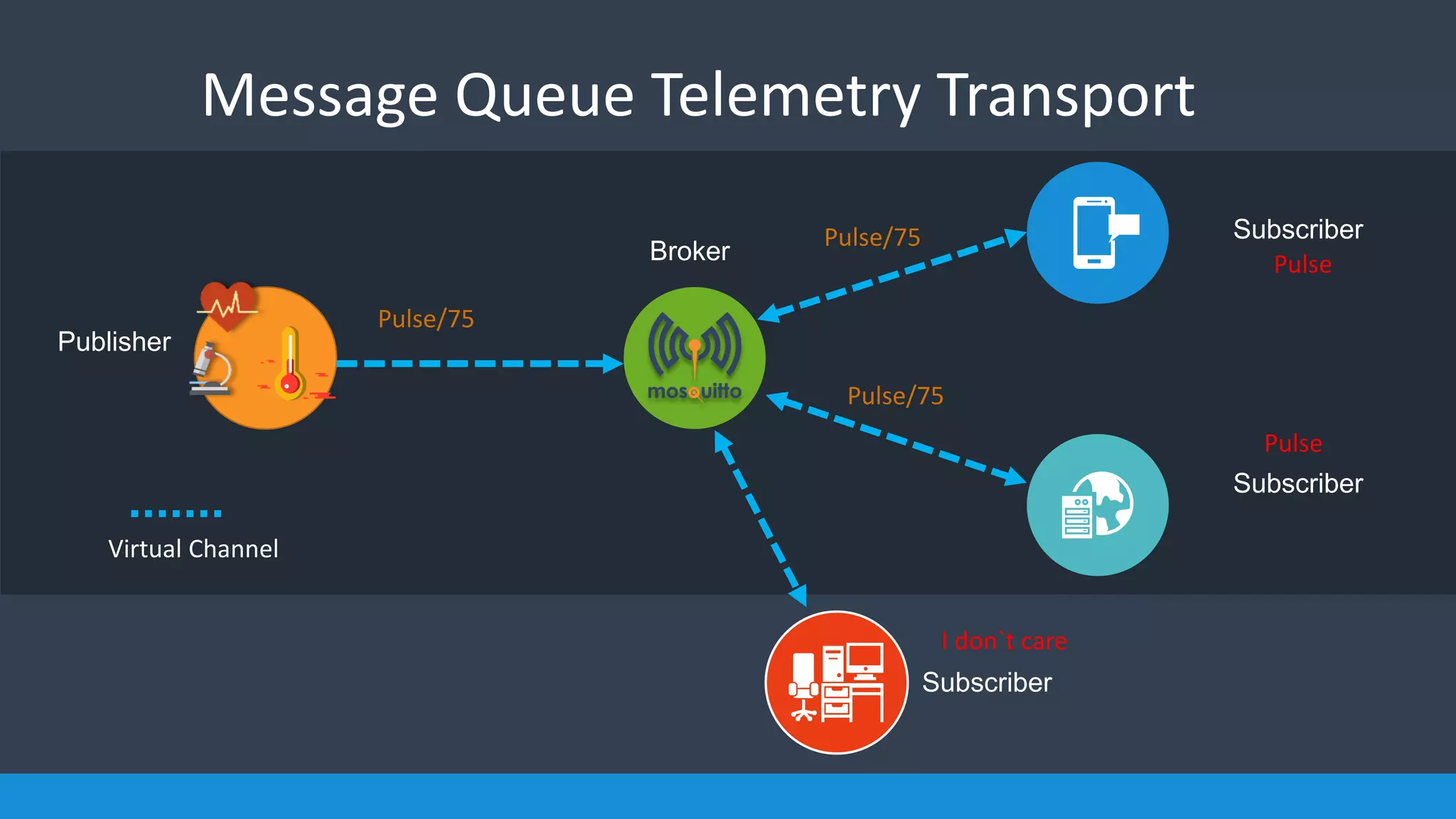
Publisher
Broker
Subscriber
Subscriber
Message Queue Telemetry Transport
Pulse/75
Pulse/75
Pulse/75
Virtual Channel
Pulse
Pulse
Subscriber
I don`t care
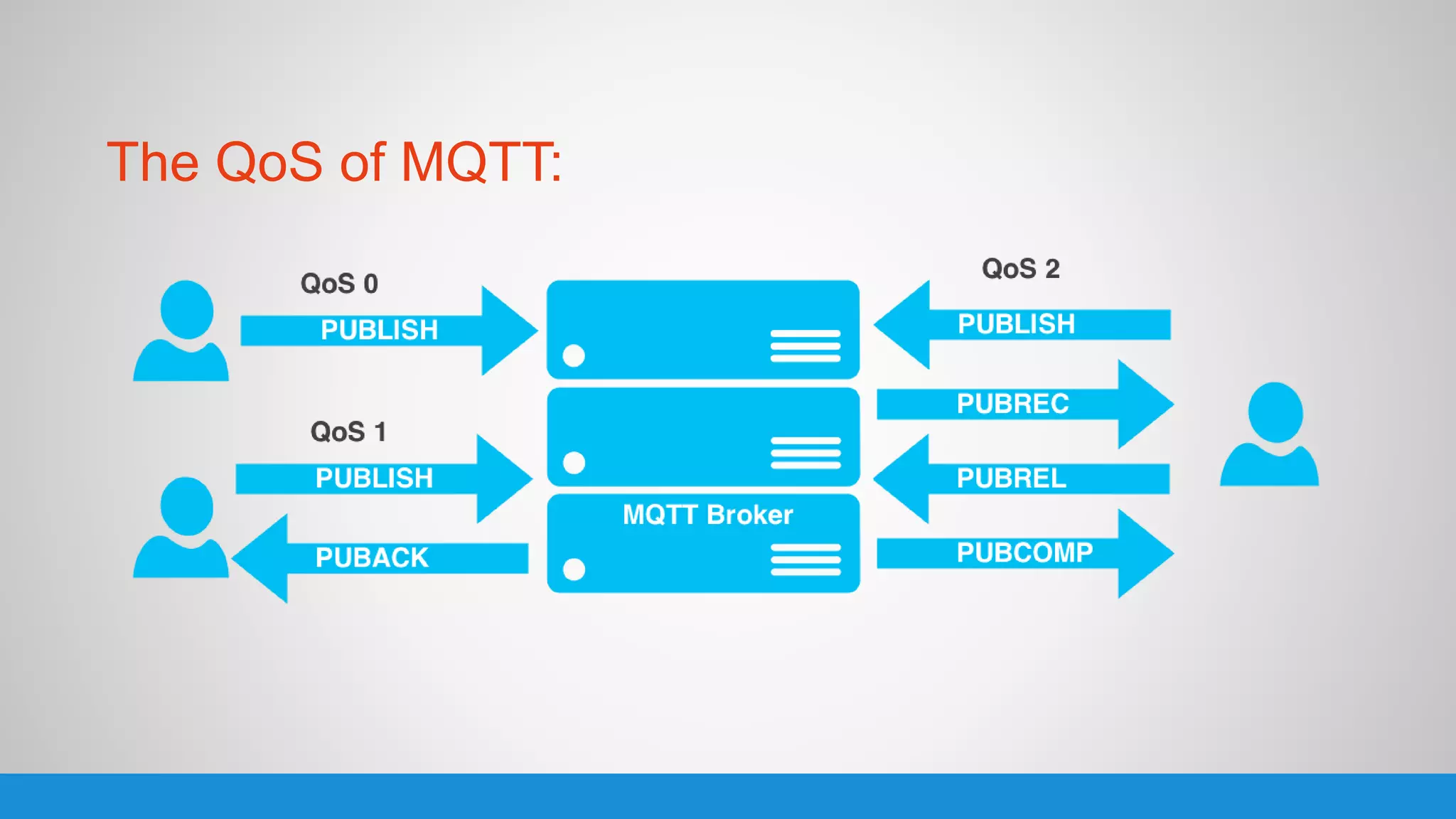
The QoS of MQTT:
MQTT HTTP
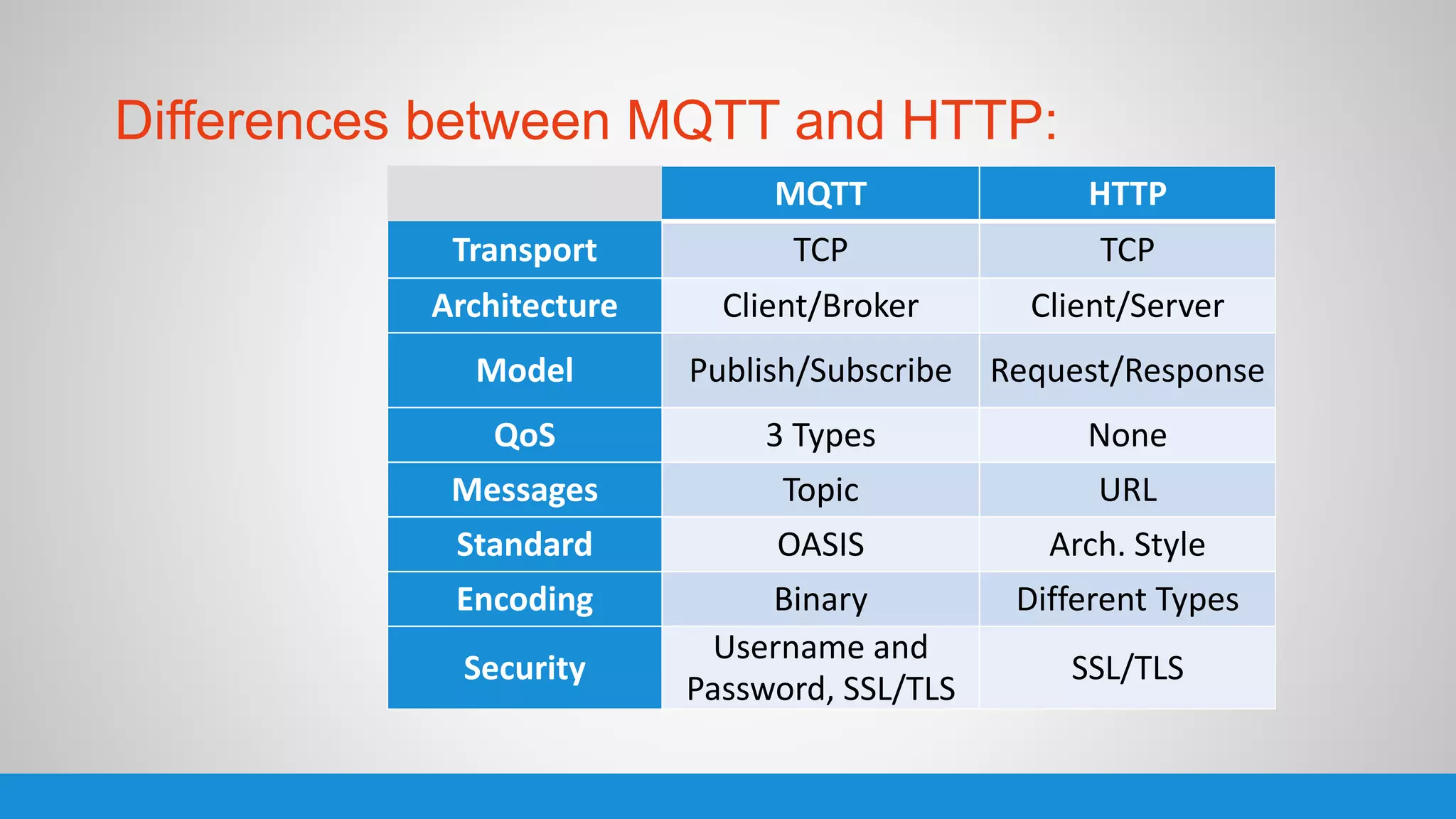
Transport TCP TCP
Architecture Client/Broker Client/Server
Model Publish/Subscribe Request/Response
QoS 3 Types None
Messages Topic URL
Standard OASIS Arch. Style
Encoding Binary Different Types
Security
Username and
Password, SSL/TLS
SSL/TLS
Differences between MQTT and HTTP:
AP
Cisco switch
HP ProLiant 380 G7
MongoDB
Mosquitto Broker
Node.js Subscriber
Embedded
devices
Gateways
Fog layer
Internet
Core Network
Cloud layer
NodeMCU
Cisco Router
Traffic generator
from Tsung
Publisher
HP ProLiant 380 G8
MongoDB subscriber
and broker Mosquitto
at the same region with Fog
server
test.mosquitto.org
public broker Mosquitto at different country
End user
Subscriber from
Fog server
Real heart sensor
Publisher
MQTT
Protocol
1
2
3
Traffic generator
from Tsung
AP
Cisco switch
Embedded
devices
Gateways
Fog layer
Internet
Core Network
Cloud layer
End user
get notify from
Fog server
Real heart sensor
NodeMCU
Cisco Router
HP ProLiant 380 G8
LAMP
at the same region with Fog
server
dweet.io and freeboard.io
at different country
HP ProLiant 380 G7
LAMP
HTTP
Protocol
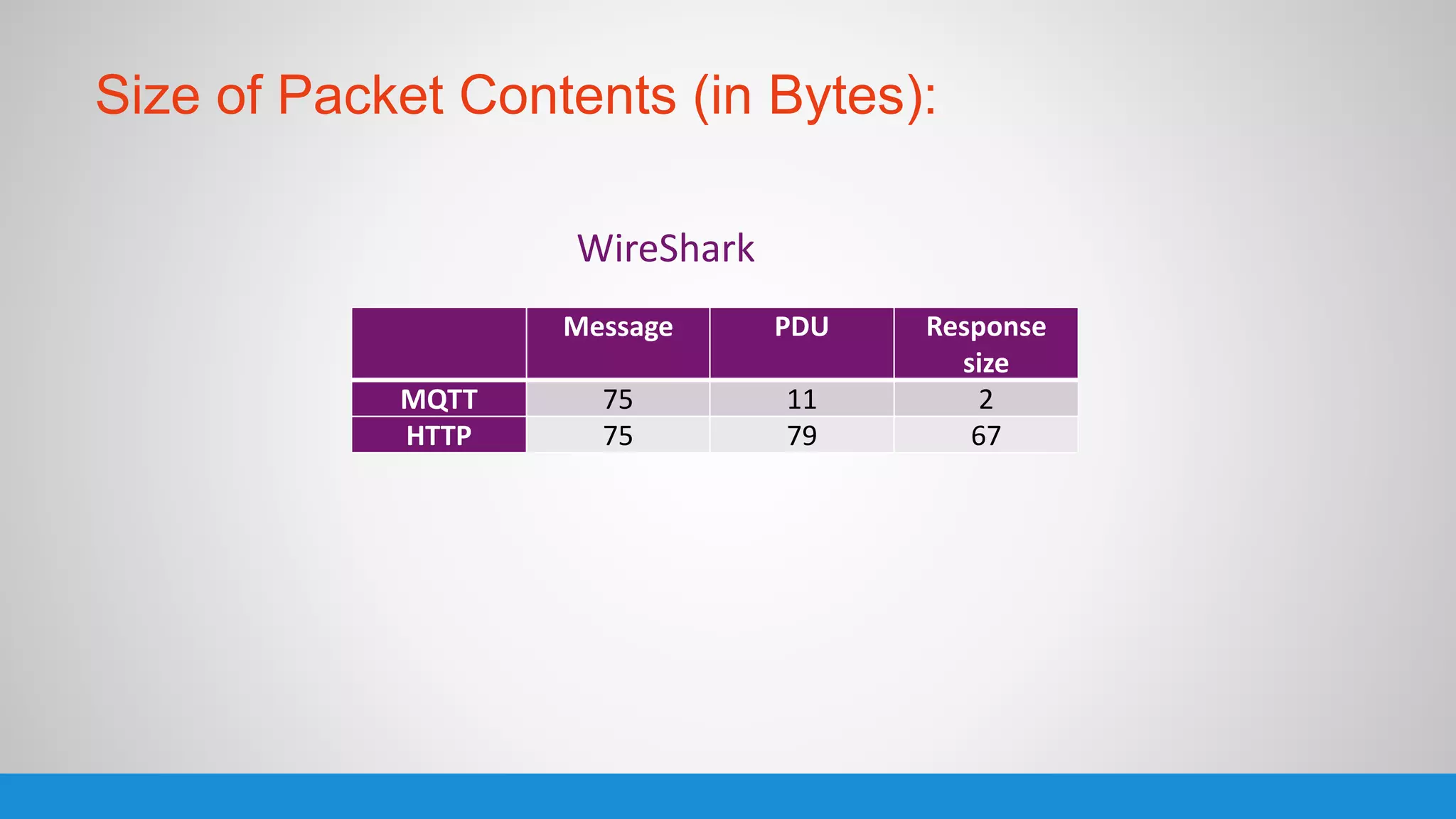
Size of Packet Contents (in Bytes):
Message PDU Response
size
MQTT 75 11 2
HTTP 75 79 67
WireShark
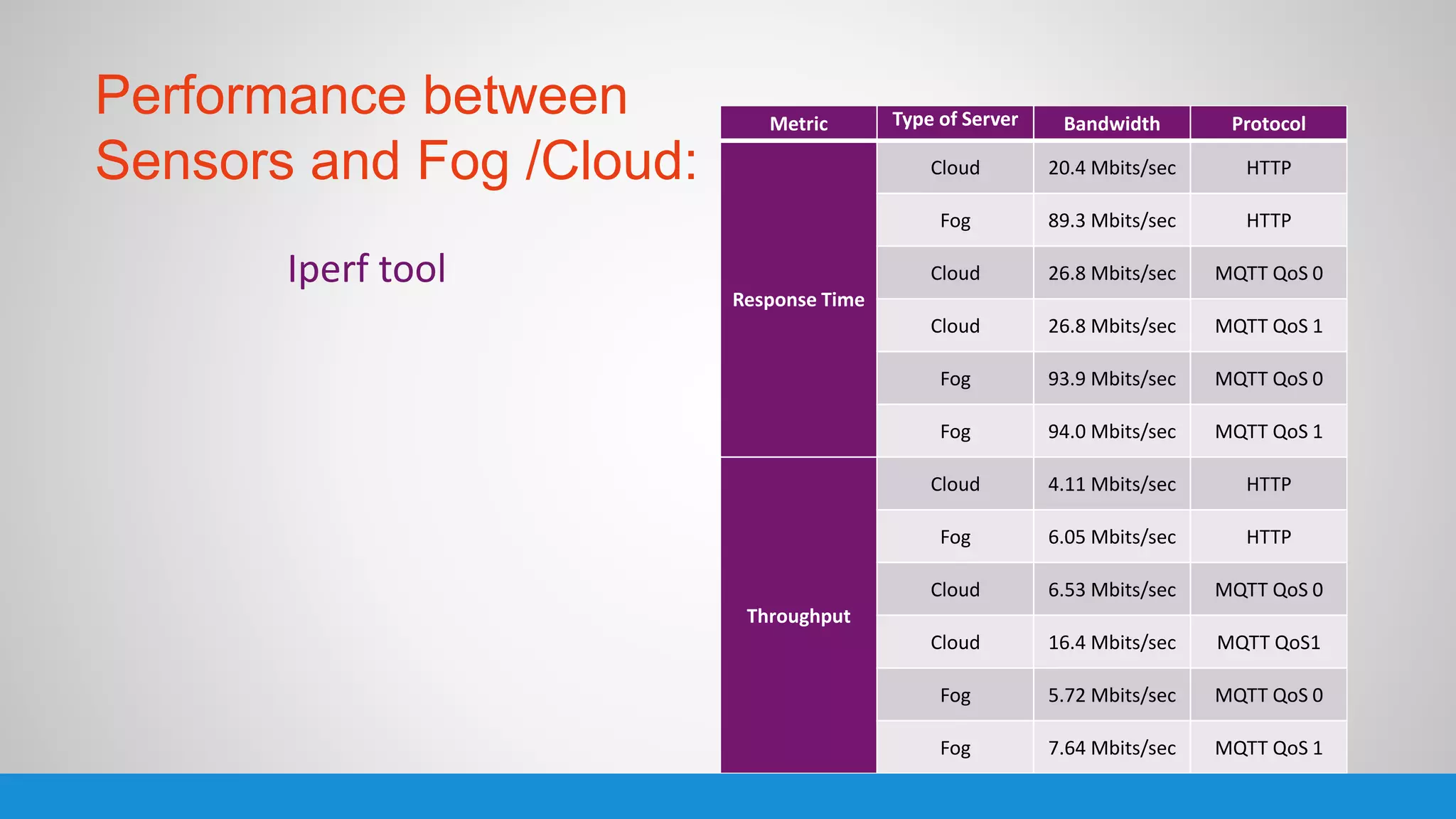
Metric Type of Server Bandwidth Protocol
Response Time
Cloud 20.4 Mbits/sec HTTP
Fog 89.3 Mbits/sec HTTP
Cloud 26.8 Mbits/sec MQTT QoS 0
Cloud 26.8 Mbits/sec MQTT QoS 1
Fog 93.9 Mbits/sec MQTT QoS 0
Fog 94.0 Mbits/sec MQTT QoS 1
Throughput
Cloud 4.11 Mbits/sec HTTP
Fog 6.05 Mbits/sec HTTP
Cloud 6.53 Mbits/sec MQTT QoS 0
Cloud 16.4 Mbits/sec MQTT QoS1
Fog 5.72 Mbits/sec MQTT QoS 0
Fog 7.64 Mbits/sec MQTT QoS 1
Performance between
Sensors and Fog /Cloud:
Iperf tool
1
10
100
1000
10000
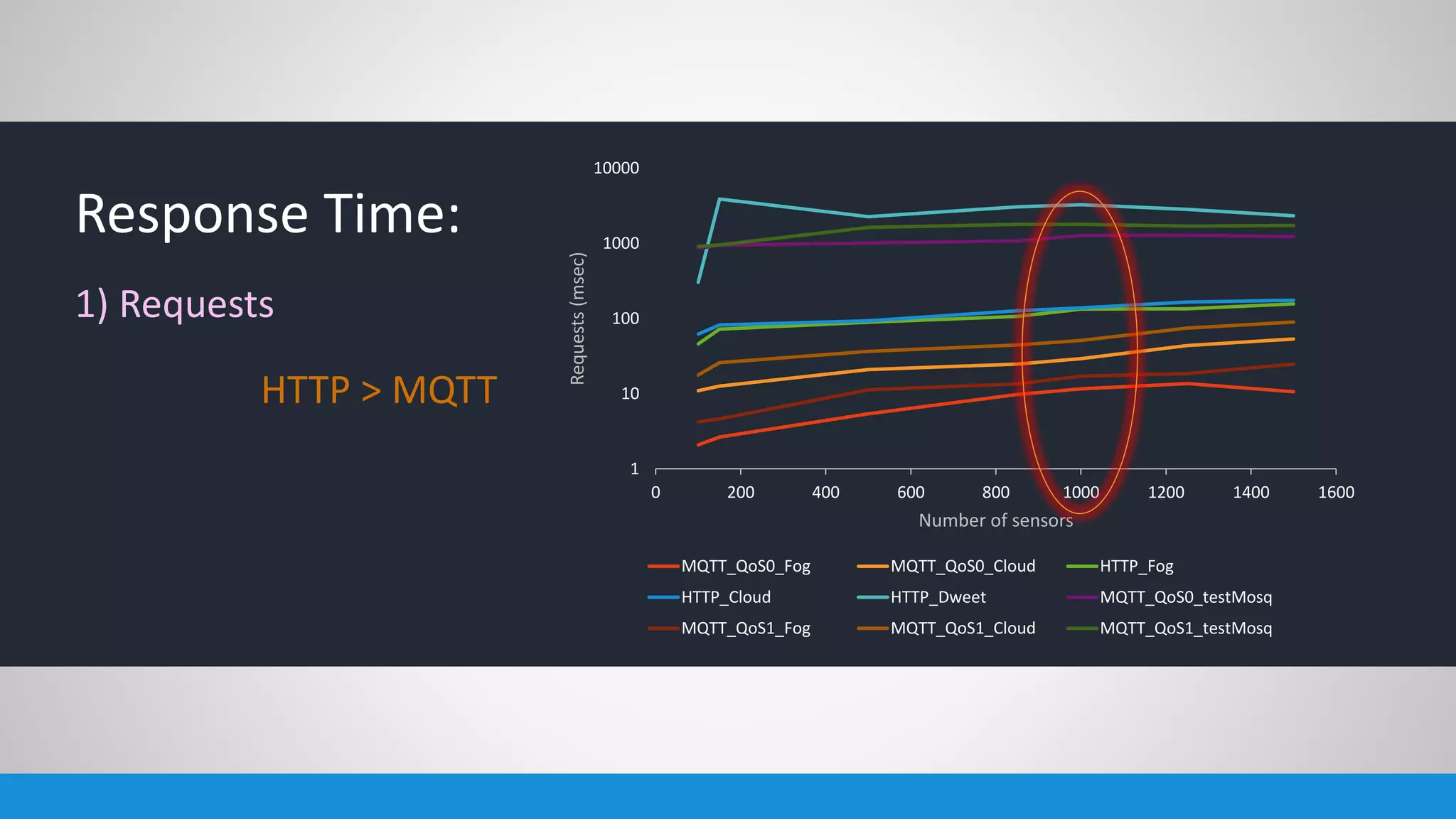
0 200 400 600 800 1000 1200 1400 1600
Requests(msec)
Number of sensors
MQTT_QoS0_Fog MQTT_QoS0_Cloud HTTP_Fog
HTTP_Cloud HTTP_Dweet MQTT_QoS0_testMosq
MQTT_QoS1_Fog MQTT_QoS1_Cloud MQTT_QoS1_testMosq
Response Time:
1) Requests
HTTP > MQTT
1
10
100
1000
10000
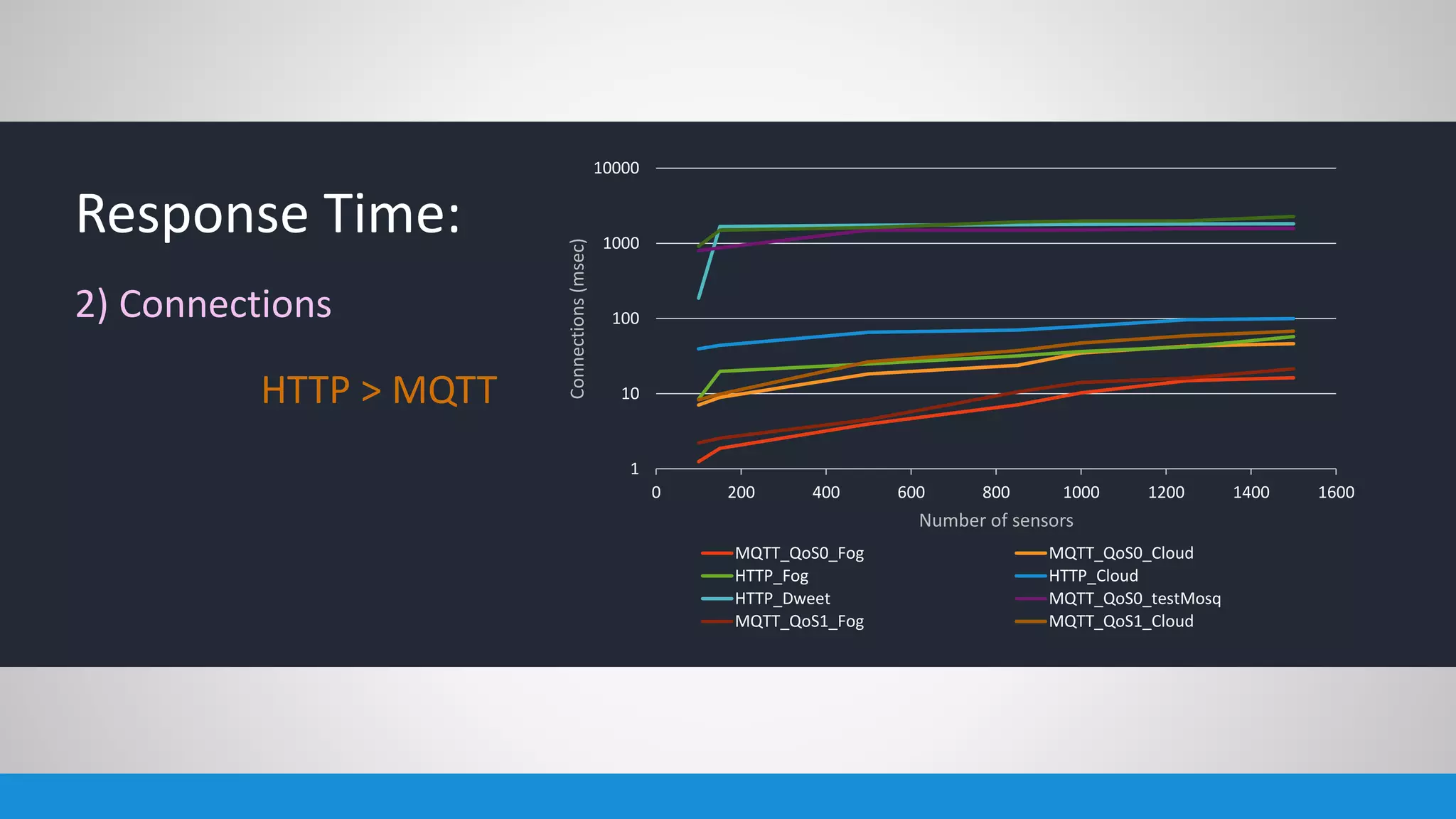
0 200 400 600 800 1000 1200 1400 1600
Connections(msec)
Number of sensors
MQTT_QoS0_Fog MQTT_QoS0_Cloud
HTTP_Fog HTTP_Cloud
HTTP_Dweet MQTT_QoS0_testMosq
MQTT_QoS1_Fog MQTT_QoS1_Cloud
Response Time:
2) Connections
HTTP > MQTT
1
10
100
1000
10000
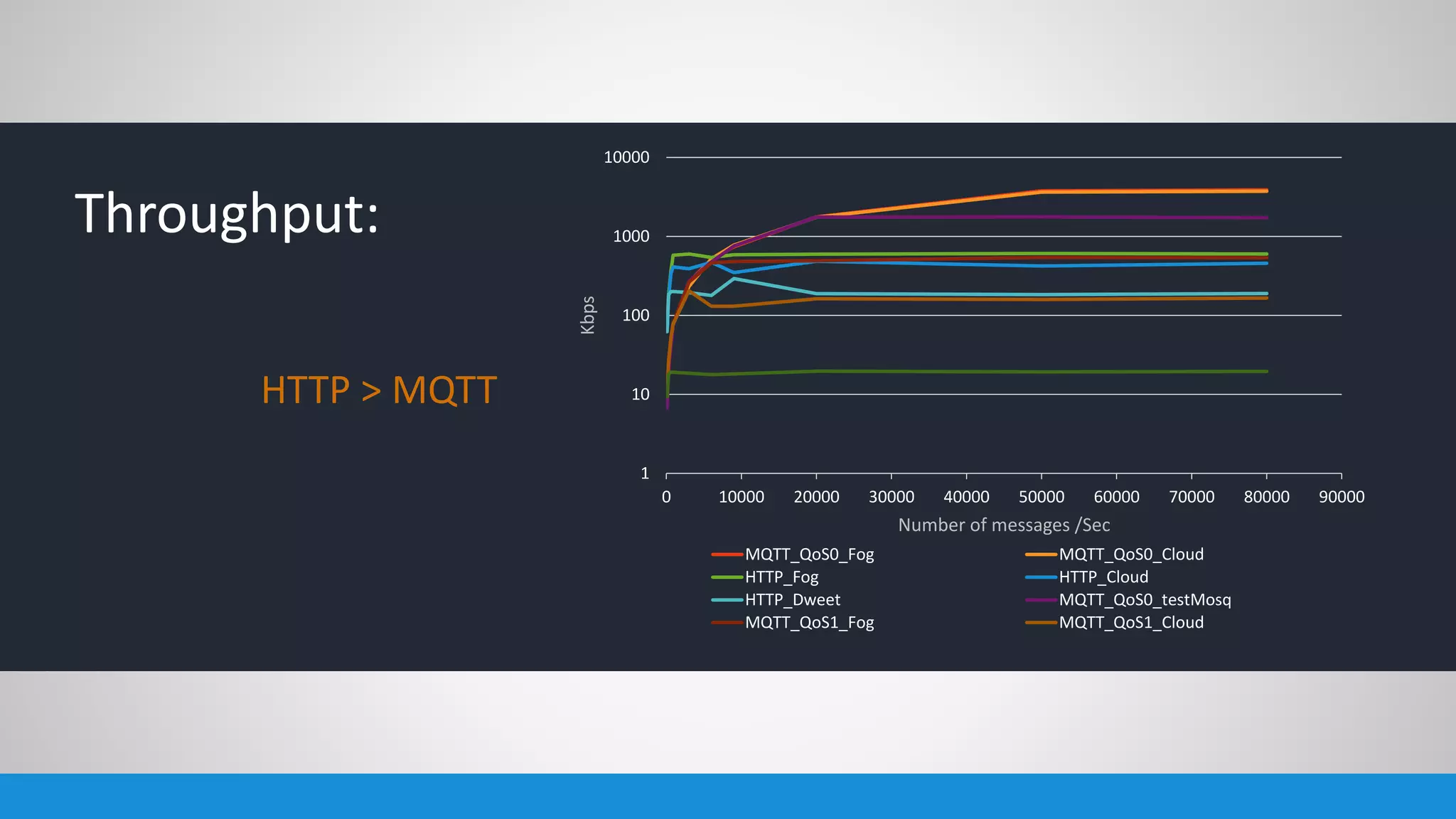
0 10000 20000 30000 40000 50000 60000 70000 80000 90000
Kbps
Number of messages /Sec
MQTT_QoS0_Fog MQTT_QoS0_Cloud
HTTP_Fog HTTP_Cloud
HTTP_Dweet MQTT_QoS0_testMosq
MQTT_QoS1_Fog MQTT_QoS1_Cloud
Throughput:
HTTP > MQTT
1
10
100
1000
10000
100000
0 10000 20000 30000 40000 50000 60000 70000 80000 90000
Kbps
Number of messages /Sec
MQTT_QoS0_Fog MQTT_QoS0_Cloud
HTTP_Fog HTTP_Cloud
HTTP_Dweet MQTT_QoS0_testMosq
MQTT_QoS1_Fog MQTT_QoS1_Cloud
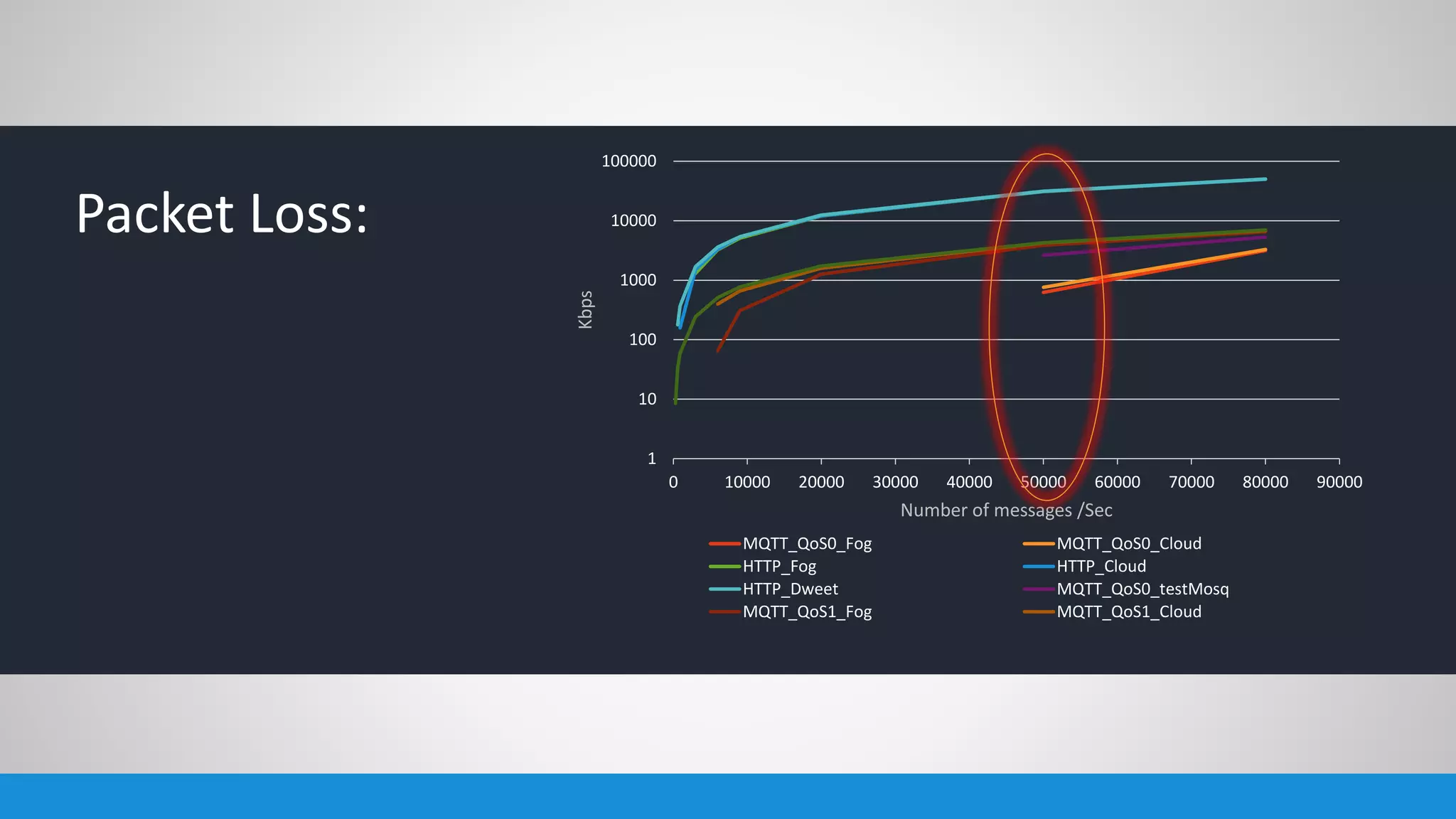
Packet Loss:
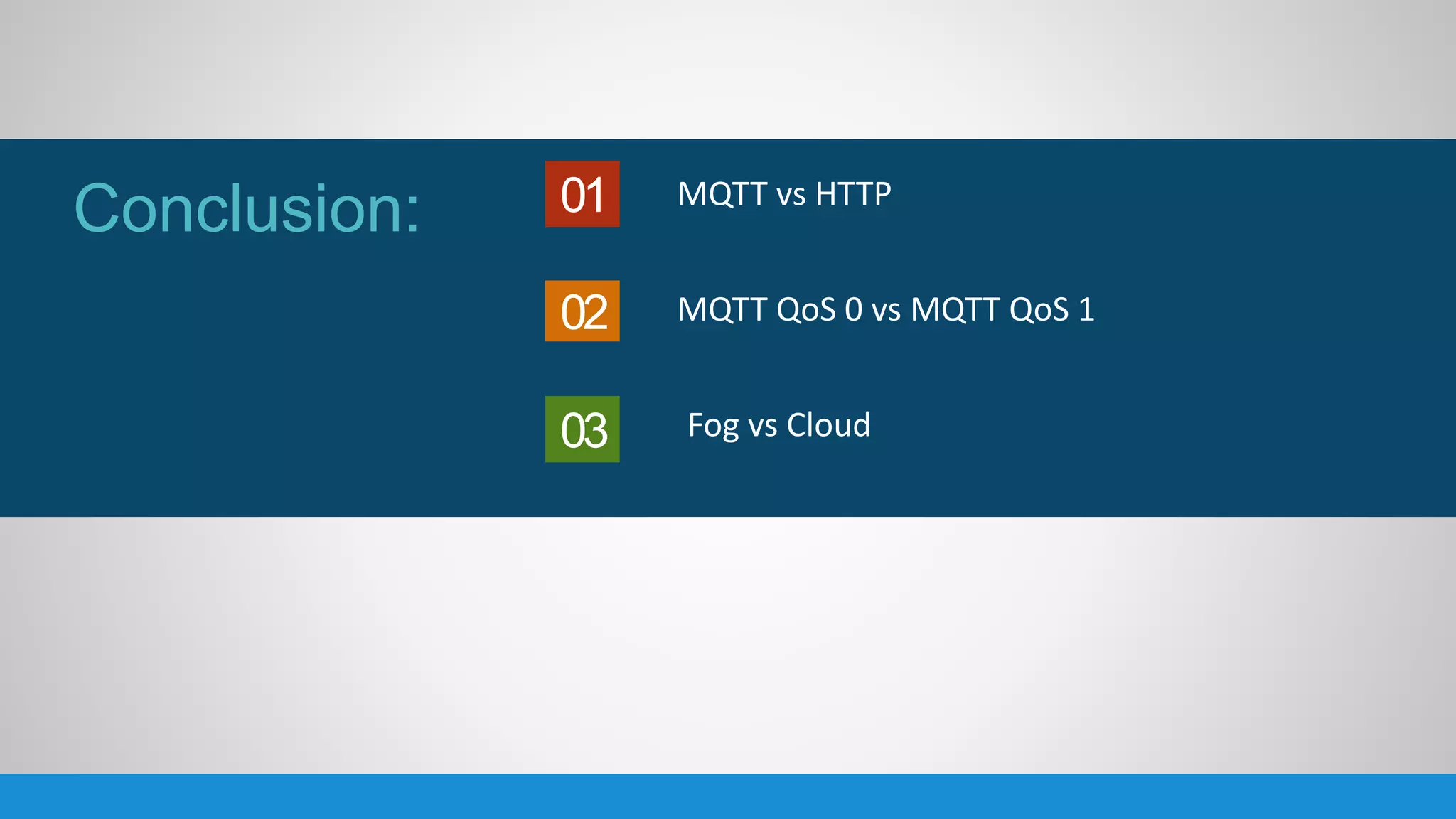
Conclusion: MQTT vs HTTP
Fog vs Cloud
01
02
03
MQTT QoS 0 vs MQTT QoS 1
Thank you
estabriq_94@coie-nahrain.edu.iq
emad@coie-nahrain.edu.iq

Performance Analysis of Internet of Things Protocols Based Fog/Cloud over High Traffic

  • 1.
    Performance Analysis ofInternet of Things Protocols Based Fog/Cloud over High Traffic Istabraq M. Al-Joboury and Emad H. Al-Hemiary Al-Nahrain University College of Information Engineering Department of Networks Engineering Baghdad, Iraq
  • 2.
    The Internet ofThings (IoT) is the network of physical objects— devices, vehicles, buildings and other items embedded with electronics, software, sensors, and network connectivity— that enables these objects to collect and exchange data. What is IoT?
  • 3.
    Thousands of sensors by2020 End user (doctors, nurses, patients and patient`s family) High Traffic Slow Response High Latency Cloud Smart Hospital Smart City Problem Description:
  • 4.
  • 5.
    Fog Cloud Location LocalInternet Data Thousands Hundreds Latency and Delay Low High Storage Distributed Centralized Differences between Fog and Cloud:
  • 6.
    • Which protocolwill be used with low response time and high throughput? • Which is the best location for servers that represents the lowest delay in order to rapidly send notification to end user? • Is Fog Computing actually has better performance than Cloud Computing? Research Questions:
  • 7.
    Publisher Broker Subscriber Subscriber Message Queue TelemetryTransport Pulse/75 Pulse/75 Pulse/75 Virtual Channel Pulse Pulse Subscriber I don`t care
  • 8.
  • 9.
    MQTT HTTP Transport TCPTCP Architecture Client/Broker Client/Server Model Publish/Subscribe Request/Response QoS 3 Types None Messages Topic URL Standard OASIS Arch. Style Encoding Binary Different Types Security Username and Password, SSL/TLS SSL/TLS Differences between MQTT and HTTP:
  • 10.
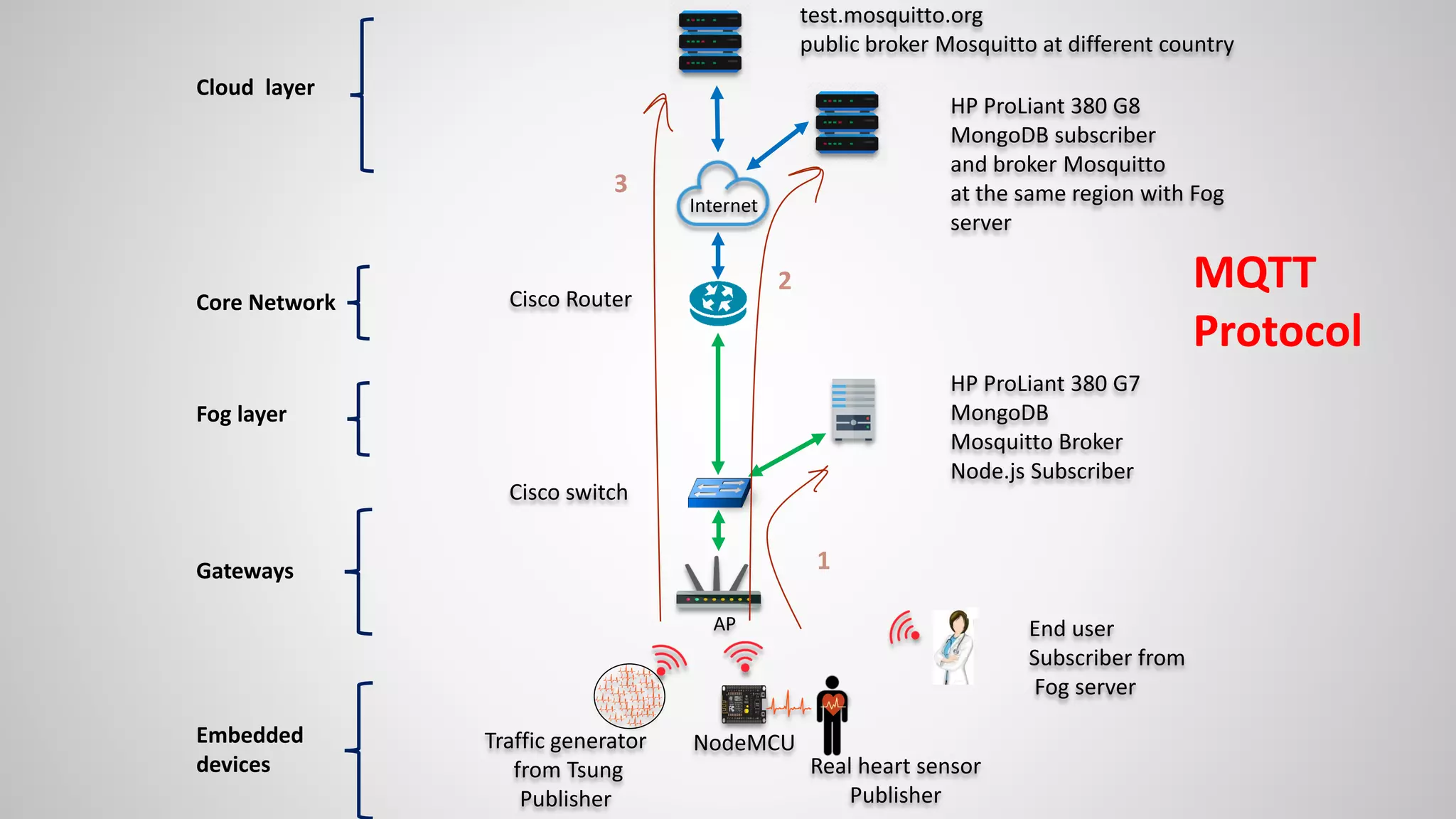
    AP Cisco switch HP ProLiant380 G7 MongoDB Mosquitto Broker Node.js Subscriber Embedded devices Gateways Fog layer Internet Core Network Cloud layer NodeMCU Cisco Router Traffic generator from Tsung Publisher HP ProLiant 380 G8 MongoDB subscriber and broker Mosquitto at the same region with Fog server test.mosquitto.org public broker Mosquitto at different country End user Subscriber from Fog server Real heart sensor Publisher MQTT Protocol 1 2 3
  • 11.
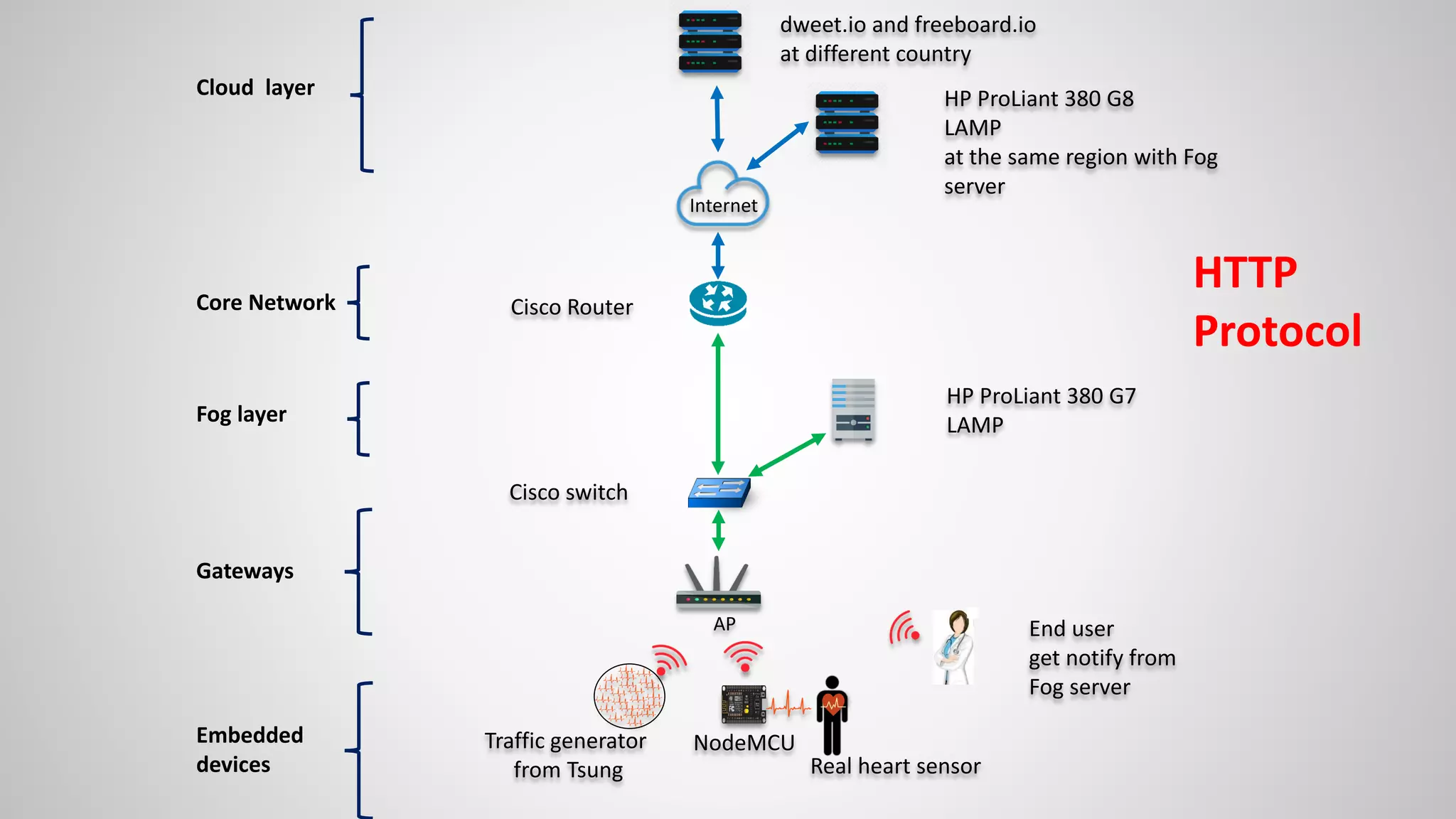
    Traffic generator from Tsung AP Ciscoswitch Embedded devices Gateways Fog layer Internet Core Network Cloud layer End user get notify from Fog server Real heart sensor NodeMCU Cisco Router HP ProLiant 380 G8 LAMP at the same region with Fog server dweet.io and freeboard.io at different country HP ProLiant 380 G7 LAMP HTTP Protocol
  • 12.
    Size of PacketContents (in Bytes): Message PDU Response size MQTT 75 11 2 HTTP 75 79 67 WireShark
  • 13.
    Metric Type ofServer Bandwidth Protocol Response Time Cloud 20.4 Mbits/sec HTTP Fog 89.3 Mbits/sec HTTP Cloud 26.8 Mbits/sec MQTT QoS 0 Cloud 26.8 Mbits/sec MQTT QoS 1 Fog 93.9 Mbits/sec MQTT QoS 0 Fog 94.0 Mbits/sec MQTT QoS 1 Throughput Cloud 4.11 Mbits/sec HTTP Fog 6.05 Mbits/sec HTTP Cloud 6.53 Mbits/sec MQTT QoS 0 Cloud 16.4 Mbits/sec MQTT QoS1 Fog 5.72 Mbits/sec MQTT QoS 0 Fog 7.64 Mbits/sec MQTT QoS 1 Performance between Sensors and Fog /Cloud: Iperf tool
  • 14.
    1 10 100 1000 10000 0 200 400600 800 1000 1200 1400 1600 Requests(msec) Number of sensors MQTT_QoS0_Fog MQTT_QoS0_Cloud HTTP_Fog HTTP_Cloud HTTP_Dweet MQTT_QoS0_testMosq MQTT_QoS1_Fog MQTT_QoS1_Cloud MQTT_QoS1_testMosq Response Time: 1) Requests HTTP > MQTT
  • 15.
    1 10 100 1000 10000 0 200 400600 800 1000 1200 1400 1600 Connections(msec) Number of sensors MQTT_QoS0_Fog MQTT_QoS0_Cloud HTTP_Fog HTTP_Cloud HTTP_Dweet MQTT_QoS0_testMosq MQTT_QoS1_Fog MQTT_QoS1_Cloud Response Time: 2) Connections HTTP > MQTT
  • 16.
    1 10 100 1000 10000 0 10000 2000030000 40000 50000 60000 70000 80000 90000 Kbps Number of messages /Sec MQTT_QoS0_Fog MQTT_QoS0_Cloud HTTP_Fog HTTP_Cloud HTTP_Dweet MQTT_QoS0_testMosq MQTT_QoS1_Fog MQTT_QoS1_Cloud Throughput: HTTP > MQTT
  • 17.
    1 10 100 1000 10000 100000 0 10000 2000030000 40000 50000 60000 70000 80000 90000 Kbps Number of messages /Sec MQTT_QoS0_Fog MQTT_QoS0_Cloud HTTP_Fog HTTP_Cloud HTTP_Dweet MQTT_QoS0_testMosq MQTT_QoS1_Fog MQTT_QoS1_Cloud Packet Loss:
  • 18.
    Conclusion: MQTT vsHTTP Fog vs Cloud 01 02 03 MQTT QoS 0 vs MQTT QoS 1
  • 19.