Using Verbs Correctly – Part Two
Perfect Tenses
Grade Seven
The Present Perfect is Used:
• When an activity happened at an unspecified
time in the past (before the present)
• When an activity has been repeated several
times before now
• When an activity was very recently completed
before now
• When an activity is not completed in the past
Perfect Tenses – Present Perfect
• The present perfect tense is formed by adding
the helping verb “has” or “have” to the past
participle of the verb.
Ex. has graduated
Ex. have stopped
Perfect Tenses – Present Perfect
has
graduated
have
stopped
Present Perfect Tense
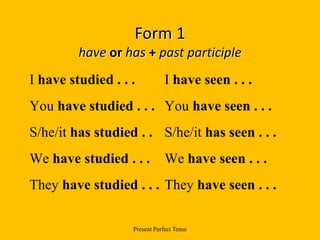
Form 1
have or has + past participle
I have studied . . . I have seen . . .
You have studied . . . You have seen . . .
S/he/it has studied . . S/he/it has seen . . .
We have studied . . . We have seen . . .
They have studied . . . They have seen . . .
Present Perfect Tense
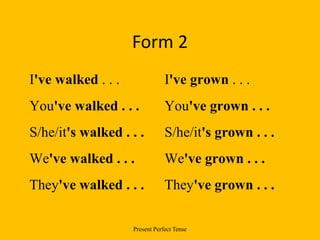
Form 2
I've walked . . . I've grown . . .
You've walked . . . You've grown . . .
S/he/it's walked . . . S/he/it's grown . . .
We've walked . . . We've grown . . .
They've walked . . . They've grown . . .
Present Perfect Tense
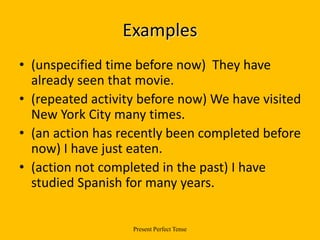
Examples
• (unspecified time before now) They have
already seen that movie.
• (repeated activity before now) We have visited
New York City many times.
• (an action has recently been completed before
now) I have just eaten.
• (action not completed in the past) I have
studied Spanish for many years.
Present Perfect Tense
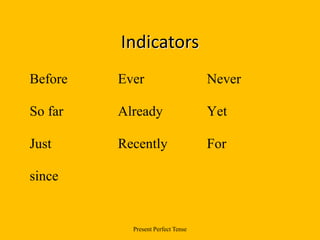
Indicators
Before Ever Never
So far Already Yet
Just Recently For
since
Present Perfect Tense
Diagram 1--time on a line
Present Perfect Tense
Diagram 2--time on a line
Past Perfect
• This tense is not used a lot. It can often be
used interchangeably with the simple past
because these tenses do not differ much in
meaning. The past perfect tense refers to
activities that happened before a specific time
in the past.
• Example, He had visited her many times
before she died.
• Form: had + past participle
Perfect Tenses – Past Perfect
• The past perfect tense shows and action or
state of being that is happening before a time
in the past.
• The past perfect tense is formed by adding the
helping verb “had” to the past participle of
the verb.
Ex. had driven
Ex. had won
Perfect Tenses – Past Perfect
had driven had won
• When George died, he and Anne had been
married for nearly fifty years.
• After Sofie had finished her work, she went to
lunch.
• She had just left the room when the police
arrived.
Future Perfect
• The future perfect expresses the idea that an
activity will occur before some future time.
• Example: She will have finished dinner before
the game starts.
• Form: will + have + past participle
Perfect Tenses – Future Tense
• The future perfect tense shows an action or
state of being that happens before a specific
time to come.
• The future perfect tense is formed by adding
the helping verbs “will have” or “shall have”
to the past participle of the verb.
Ex. shall have grown
Ex. will have received
Perfect Tenses – Future Perfect
shall have grown will have received
• You will have finished your report by this time
next week.
• Won't they have arrived by 5:00?
• By the time you read this I will have left.

Perfect Tenses.pptx

  • 1.
    Using Verbs Correctly– Part Two Perfect Tenses Grade Seven
  • 2.
    The Present Perfectis Used: • When an activity happened at an unspecified time in the past (before the present) • When an activity has been repeated several times before now • When an activity was very recently completed before now • When an activity is not completed in the past
  • 3.
    Perfect Tenses –Present Perfect • The present perfect tense is formed by adding the helping verb “has” or “have” to the past participle of the verb. Ex. has graduated Ex. have stopped
  • 4.
    Perfect Tenses –Present Perfect has graduated have stopped
  • 5.
    Present Perfect Tense Form1 have or has + past participle I have studied . . . I have seen . . . You have studied . . . You have seen . . . S/he/it has studied . . S/he/it has seen . . . We have studied . . . We have seen . . . They have studied . . . They have seen . . .
  • 6.
    Present Perfect Tense Form2 I've walked . . . I've grown . . . You've walked . . . You've grown . . . S/he/it's walked . . . S/he/it's grown . . . We've walked . . . We've grown . . . They've walked . . . They've grown . . .
  • 7.
    Present Perfect Tense Examples •(unspecified time before now) They have already seen that movie. • (repeated activity before now) We have visited New York City many times. • (an action has recently been completed before now) I have just eaten. • (action not completed in the past) I have studied Spanish for many years.
  • 8.
    Present Perfect Tense Indicators BeforeEver Never So far Already Yet Just Recently For since
  • 9.
  • 10.
  • 11.
    Past Perfect • Thistense is not used a lot. It can often be used interchangeably with the simple past because these tenses do not differ much in meaning. The past perfect tense refers to activities that happened before a specific time in the past. • Example, He had visited her many times before she died. • Form: had + past participle
  • 12.
    Perfect Tenses –Past Perfect • The past perfect tense shows and action or state of being that is happening before a time in the past. • The past perfect tense is formed by adding the helping verb “had” to the past participle of the verb. Ex. had driven Ex. had won
  • 13.
    Perfect Tenses –Past Perfect had driven had won
  • 14.
    • When Georgedied, he and Anne had been married for nearly fifty years. • After Sofie had finished her work, she went to lunch. • She had just left the room when the police arrived.
  • 15.
    Future Perfect • Thefuture perfect expresses the idea that an activity will occur before some future time. • Example: She will have finished dinner before the game starts. • Form: will + have + past participle
  • 16.
    Perfect Tenses –Future Tense • The future perfect tense shows an action or state of being that happens before a specific time to come. • The future perfect tense is formed by adding the helping verbs “will have” or “shall have” to the past participle of the verb. Ex. shall have grown Ex. will have received
  • 17.
    Perfect Tenses –Future Perfect shall have grown will have received
  • 18.
    • You willhave finished your report by this time next week. • Won't they have arrived by 5:00? • By the time you read this I will have left.