People and Society

New views on people and life
 during the Enlightenment
Views on people and society before the
           Enlightenment
 • Most leaders were absolute monarchs - kings who held
   all the power - had little respect for the average person.
 • Religious leaders told people that the purpose of this life
   was to do good deeds in order to get to heaven. Many
   aspects of life had religious ties.
 • The average person had no say in government or the
   creation of laws.
 • Only wealthy men had access to a good education.
 • Children were viewed as small adults.
 • Women were seen as inferior to men.
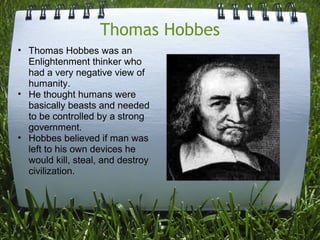
Thomas Hobbes
• Thomas Hobbes was an
  Enlightenment thinker who
  had a very negative view of
  humanity.
• He thought humans were
  basically beasts and needed
  to be controlled by a strong
  government.
• Hobbes believed if man was
  left to his own devices he
  would kill, steal, and destroy
  civilization.
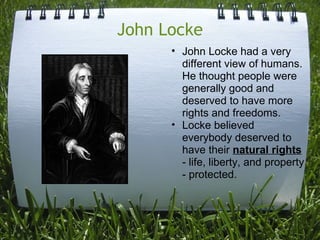
John Locke
      • John Locke had a very
        different view of humans.
        He thought people were
        generally good and
        deserved to have more
        rights and freedoms.
      • Locke believed
        everybody deserved to
        have their natural rights
        - life, liberty, and property
        - protected.
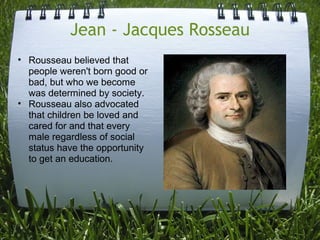
Jean - Jacques Rosseau
• Rousseau believed that
  people weren't born good or
  bad, but who we become
  was determined by society.
• Rousseau also advocated
  that children be loved and
  cared for and that every
  male regardless of social
  status have the opportunity
  to get an education.
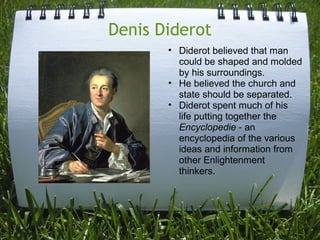
Denis Diderot
       • Diderot believed that man
         could be shaped and molded
         by his surroundings.
       • He believed the church and
         state should be separated.
       • Diderot spent much of his
         life putting together the
         Encyclopedie - an
         encyclopedia of the various
         ideas and information from
         other Enlightenment
         thinkers.
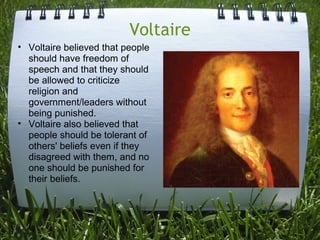
Voltaire
• Voltaire believed that people
  should have freedom of
  speech and that they should
  be allowed to criticize
  religion and
  government/leaders without
  being punished.
• Voltaire also believed that
  people should be tolerant of
  others' beliefs even if they
  disagreed with them, and no
  one should be punished for
  their beliefs.
Key Points
• Enlightenment thinkers had a lot of ideas that were different from
  the thoughts of the Middle Ages.
• Some thinkers had a positive view of mankind while others had a
  negative view.
• New ideas about children and education emerged.
• Diderot and Voltaire as well as other Enlightenment thinkers
  believed that church and state/government should be separated.
  They believed that government should be secular - having no
  religious affiliations/connections.
• Many Enlightenment thinkers believed the common person
  should have more rights and freedoms.
• More focus on the individual person rather than society as a
  whole.

People and society[1]

  • 1.
    People and Society Newviews on people and life during the Enlightenment
  • 2.
    Views on peopleand society before the Enlightenment • Most leaders were absolute monarchs - kings who held all the power - had little respect for the average person. • Religious leaders told people that the purpose of this life was to do good deeds in order to get to heaven. Many aspects of life had religious ties. • The average person had no say in government or the creation of laws. • Only wealthy men had access to a good education. • Children were viewed as small adults. • Women were seen as inferior to men.
  • 3.
    Thomas Hobbes • ThomasHobbes was an Enlightenment thinker who had a very negative view of humanity. • He thought humans were basically beasts and needed to be controlled by a strong government. • Hobbes believed if man was left to his own devices he would kill, steal, and destroy civilization.
  • 4.
    John Locke • John Locke had a very different view of humans. He thought people were generally good and deserved to have more rights and freedoms. • Locke believed everybody deserved to have their natural rights - life, liberty, and property - protected.
  • 5.
    Jean - JacquesRosseau • Rousseau believed that people weren't born good or bad, but who we become was determined by society. • Rousseau also advocated that children be loved and cared for and that every male regardless of social status have the opportunity to get an education.
  • 6.
    Denis Diderot • Diderot believed that man could be shaped and molded by his surroundings. • He believed the church and state should be separated. • Diderot spent much of his life putting together the Encyclopedie - an encyclopedia of the various ideas and information from other Enlightenment thinkers.
  • 7.
    Voltaire • Voltaire believedthat people should have freedom of speech and that they should be allowed to criticize religion and government/leaders without being punished. • Voltaire also believed that people should be tolerant of others' beliefs even if they disagreed with them, and no one should be punished for their beliefs.
  • 8.
    Key Points • Enlightenmentthinkers had a lot of ideas that were different from the thoughts of the Middle Ages. • Some thinkers had a positive view of mankind while others had a negative view. • New ideas about children and education emerged. • Diderot and Voltaire as well as other Enlightenment thinkers believed that church and state/government should be separated. They believed that government should be secular - having no religious affiliations/connections. • Many Enlightenment thinkers believed the common person should have more rights and freedoms. • More focus on the individual person rather than society as a whole.