Pengantar Kimia Medisinal
I Gusti Ayu Agung Septiari
Objectives to study Medicinal Chemistry
▪ What is Medicinal Chemistry?
▪ Why is Medicinal Chemistry?
▪ What in Medicinal Chemistry?
▪ How is Medicinal Chemistry?
▪ What after Medicinal Chemistry?
Medicinal chemistry (IUPAC): “it concerns the
discovery, the development, the identification
and the interpretation of the mode of action of
biologically active compounds at the molecular
level”
In other words,
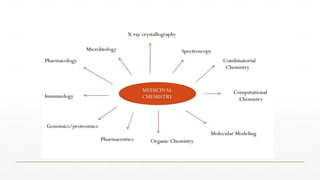
Medicinal chemistry is an interdisciplinary
research area incorporating different branches of
chemistry and biology in the research for better and
new drugs(Drug Discovery).
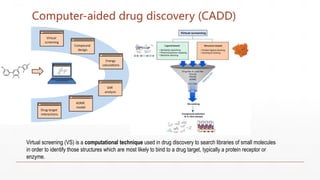
Computer-aided drug discovery (CADD)
Virtual screening (VS) is a computational technique used in drug discovery to search libraries of small molecules
in order to identify those structures which are most likely to bind to a drug target, typically a protein receptor or
enzyme.
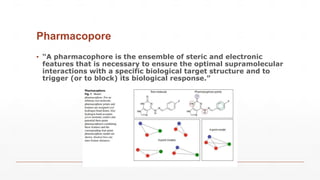
Pharmacopore
▪ “A pharmacophore is the ensemble of steric and electronic
features that is necessary to ensure the optimal supramolecular
interactions with a specific biological target structure and to
trigger (or to block) its biological response.”
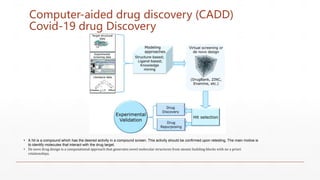
Computer-aided drug discovery (CADD)
Covid-19 drug Discovery
• A hit is a compound which has the desired activity in a compound screen. This activity should be confirmed upon retesting. The main motive is
to identify molecules that interact with the drug target.
• De novo drug design is a computational approach that generates novel molecular structures from atomic building blocks with no a priori
relationships.
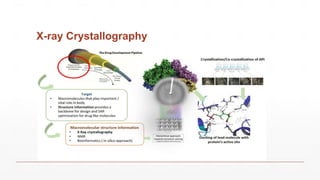
X-ray Crystallography
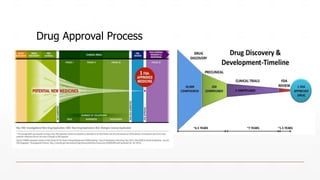
Drug Approval Process
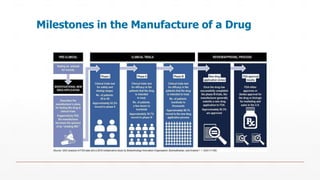
Milestones in the Manufacture of a Drug
Role of Medicinal Chemist
▪ Synthesis (semi-synthesis/total synthesis using retro-analytical approach) and
characterization (analytical data) of new compounds (leads).
▪ Biological assay of the synthesized compounds and determine their effect on
biological processes.
▪ Manipulation of structure of the compound for optimum effect and minimum side
effects (optimization of lead).
▪ Study of pharmacokinetic and pharmacodynamic property of drug.
▪ Optimization of synthetic route for bulk production
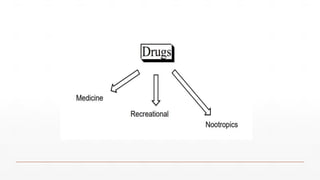
Drug Vs Medicine
▪ There is no sharp demarcation to define Drug and medicine.
▪ These are the chemical substances that are used to prevent or cure diseases in
humans, animals and plants.
▪ A compound during its studies in the drug development process, is 15 better to
called as Drug, whereas Medicine is that chemical species which is only after its
approval from the concern authority, and which can be prescribed.
▪ Drug is also used by the media and the general public to describe the substances
taken for their psychotic rather than medicinal effects.
▪ A medicine or medication is a substance taken to cure and/or improve any
symptoms of an illness. OR
▪ A medicine may be used as preventive medicine that has future benefits but does
not treat any existing or pre-existing diseases or symptoms.
▪ Dispensing of medication is often regulated by governments into three categories:
Over-the-counter (OTC)
Prescription only medicines (POM)
Behind-the-counter (BTC)
▪ Over-the counter (OTC) : Drugs legally allowed to be sold,
e.g. without the prescription of a registered medical practitioner. Vitamins and minerals, Cough and cold,
Gastrointestinal, Analgesics /Dermatological. Aspirin, paracetamol.
▪ Prescription only medicines (POM): Drugs which are not allowed to be sold without
the prescription of a registered medical practitioner.
e.g. antibiotics.
▪ Behind-the counter (BTC): Drugs that are allowed to sold without prescription of
RMP but also limits the bulk buying of such drugs. These products are accessed by
patients only after discussion with the pharmacist and presenting proof of
identification (ID). Sedatives, contraception pill Plan B (levonorgestrel).
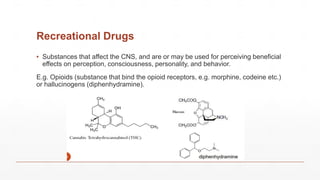
Recreational Drugs
▪ Substances that affect the CNS, and are or may be used for perceiving beneficial
effects on perception, consciousness, personality, and behavior.
E.g. Opioids (substance that bind the opioid receptors, e.g. morphine, codeine etc.)
or hallucinogens (diphenhydramine).
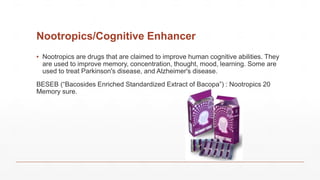
Nootropics/Cognitive Enhancer
▪ Nootropics are drugs that are claimed to improve human cognitive abilities. They
are used to improve memory, concentration, thought, mood, learning. Some are
used to treat Parkinson's disease, and Alzheimer's disease.
BESEB (“Bacosides Enriched Standardized Extract of Bacopa”) : Nootropics 20
Memory sure.
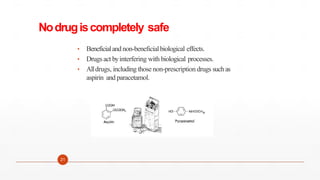
Nodrugiscompletely safe
• Beneficialand non-beneficialbiological effects.
• Drugs act byinterfering with biological processes.
• Alldrugs, including those non-prescription drugs suchas
aspirin and paracetamol.
21
• Beneficialand non-beneficialbiological effects
• The unwanted effects are commonly referred to asside effects.
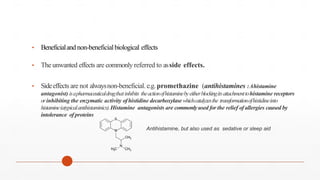
• Sideeffects are not alwaysnon-beneficial.e.g.promethazine (antihistamines :Ahistamine
antagonist) isapharmaceuticaldrugthatinhibits theactionofhistaminebyeitherblockingitsattachmenttohistamine receptors
orinhibiting the enzymatic activity ofhistidine decarboxylase whichcatalyzesthe transformationofhistidineinto
histamine(atypicalantihistaminics).Histamine antagonists are commonlyused for the relief ofallergies caused by
intolerance of proteins
Antihistamine, but also used as sedative or sleep aid
Drug resistance or tolerance (tachyphylaxis)
• Repeated use ofadrug - (increase in enzymes, e.g.,repeateduseof
barbiturate)
• Downregulationofreceptors - (breakdownof receptors, e.g., continuous
use of gonadotropin releasing factor)
• Drug-resistant strains of microorganisms.
Drug discovery and design: a historical outline
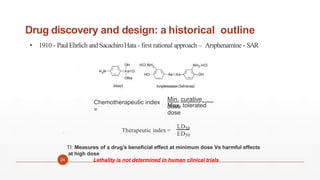
• 1910 - PaulEhrlich andSacachiroHata- first rational approach – Arsphenamine - SAR
24

Chemotherapeutic index
=
Min. curative
dose
Max. tolerated
dose
Therapeutic index =
LD50
ED50
TI: Measures of a drug’s beneficial effect at minimum dose Vs harmful effects
at high dose
Lethality is not determined in human clinical trials
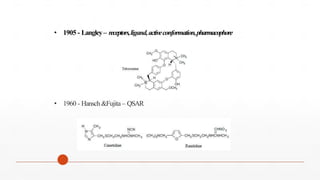
• 1905 - Langley– receptors,ligand,activeconformation,pharmacophore
• 1960 - Hansch&Fujita– QSAR
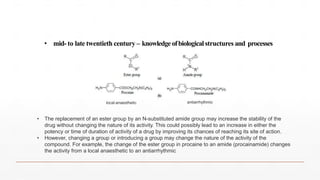
• mid- to late twentieth century – knowledge ofbiologicalstructures and processes
local anaesthetic antiarrhythmic
• The replacement of an ester group by an N-substituted amide group may increase the stability of the
drug without changing the nature of its activity. This could possibly lead to an increase in either the
potency or time of duration of activity of a drug by improving its chances of reaching its site of action.
• However, changing a group or introducing a group may change the nature of the activity of the
compound. For example, the change of the ester group in procaine to an amide (procainamide) changes
the activity from a local anaesthetic to an antiarrhythmic
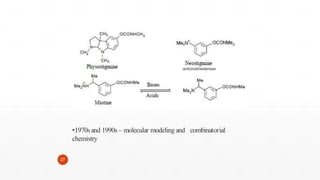
anticholinesterase
•1970s and 1990s – molecular modeling and combinatorial
chemistry
27
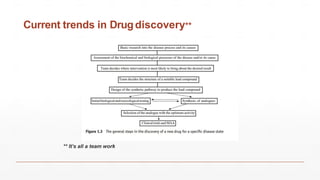
Current trends in Drugdiscovery**
28
** It’s all a team work
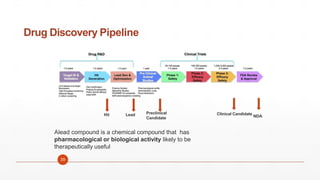
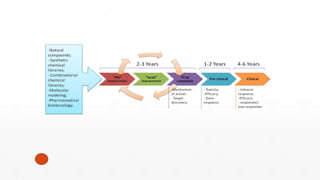
Drug Discovery Pipeline
Hit Lead Preclinical
Candidate
Clinical Candidate
NDA
39
Alead compound is a chemical compound that has
pharmacological or biological activity likely to be
therapeutically useful
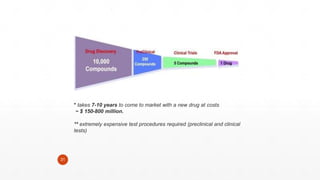
* takes 7-10 years to come to market with a new drug at costs
~ $ 150-800 million.
** extremely expensive test procedures required (preclinical and clinical
tests)
31
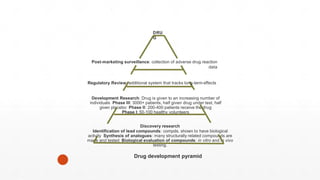
DRU
G
Drug development pyramid
Post-marketing surveillance: collection of adverse drug reaction
data
Regulatory Review: additional system that tracks long-term effects
Development Research: Drug is given to an increasing number of
individuals Phase III: 3000+ patients, half given drug under test, half
given placebo Phase II: 200-400 patients receive the drug
Phase I: 50-100 healthy volunteers
Discovery research
Identification of lead compounds: compds. shown to have biological
activity Synthesis of analogues: many structurally related compounds are
made and tested Biological evaluation of compounds: in vitro and in vivo
testing.
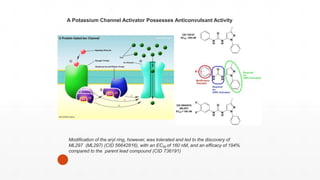
A Potassium Channel Activator Possesses Anticonvulsant Activity
Modification of the aryl ring, however, was tolerated and led to the discovery of
ML297 (ML297) (CID 56642816), with an EC50 of 160 nM, and an efficacy of 194%
compared to the parent lead compound (CID 736191)
Clinical trial
Aclinical trial (also called clinical research) is a research study using human volunteers designed to
determine the safety and effectiveness of a drug, biologic (such as a vaccine), device (such as a
prothesis)or other treatment or behavioral intervention.
• Phase I : tests on healthy volunteers (pharmacokinetics, pharmacodynamics,
toxicity).
• Phase II : tests on a limited number of persons with specific disease(efficacy).
• Phase III :globaltests on broadclinicalbasis(definitesafety,optimal dosage).
• Phase IV:registration, marketsupport.
37
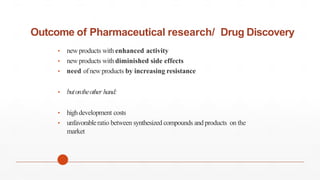
Outcome of Pharmaceutical research/ Drug Discovery
• newproducts with enhanced activity
• newproducts with diminished side effects
• need ofnewproducts by increasing resistance
• butontheother hand:
• highdevelopment costs
• unfavorableratio between synthesized compounds andproducts on the
market
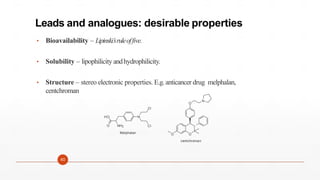
Leads and analogues: desirable properties
• Bioavailability – Lipinski’
sruleoffive.
• Solubility – lipophilicity andhydrophilicity.
• Structure – stereo electronic properties. E.g.anticancer drug melphalan,
centchroman
N
Cl
Cl
O
HO
NH2
Melphalan O
O
N
O
centchroman
40
Therule of Five
▪ The activity of a drug is related to its bioavailability
▪ Consequently, for a compound to be suitable as a lead it must be bioavailable.
▪ In order to assess a compound’s bioavailability, it must be either available off the
shelf or be synthesized.
▪ Synthesis of a compound could result in the synthesis of an inactive compound,
which could be expensive both in time and money.
▪ In order to avoid unnecessary work and expense in synthesizing inactive
molecules, Lipinski et al. proposed a set of four rules that would predict whether a
molecule was likely to be orally bioavailable.
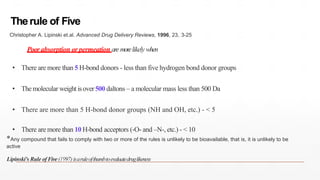
Therule of Five
Christopher A. Lipinski et.al. Advanced Drug Delivery Reviews, 1996, 23, 3-25
Poorabsorption or permeation are morelikely when
• There are more than 5 H-bond donors - less than five hydrogen bond donor groups
• Themolecular weight isover500 daltons – a molecular mass less than 500 Da
• There are more than 5 H-bond donor groups (NH and OH, etc.) - < 5
• There are more than 10 H-bond acceptors (-O- and –N-, etc.) - < 10
*Any compound that fails to comply with two or more of the rules is unlikely to be bioavailable, that is, it is unlikely to be
active
Lipinski's Rule ofFive(1997)isaruleofthumbtoevaluatedruglikeness
35
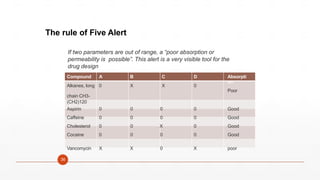
The rule of Five Alert
If two parameters are out of range, a “poor absorption or
permeability is possible”. This alert is a very visible tool for the
drug design
Compound
Alkanes, long
A
0
B
X
C
X
D
0
Absorpti
on
Poor
chain CH3-
(CH2)120
Aspirin 0 0 0 0 Good
Caffeine 0 0 0 0 Good
Cholesterol 0 0 X 0 Good
Cocaine 0 0 0 0 Good
Vancomycin X X 0 X poor
36
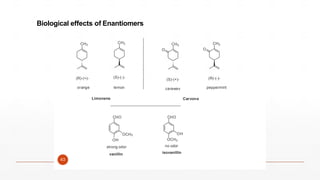
CH3
CH3 CH3 CH3
O O
(R)-(+)- (S)-(-)-
(S)-(+)- (R)-(-)-
orange lemon caraway peppermint
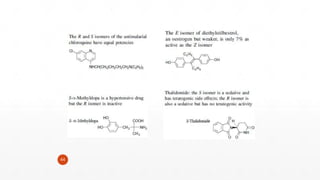
Biological effects of Enantiomers
Limonene Carvone
CHO
OCH3
CHO
OH
strong odor
vanillin
43
OH
OCH3
no odor
isovanillin
44
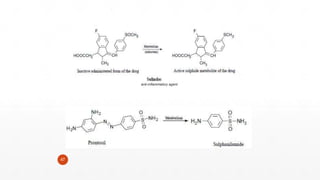
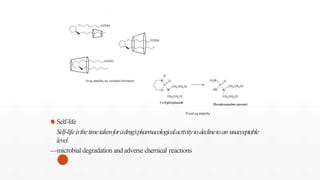
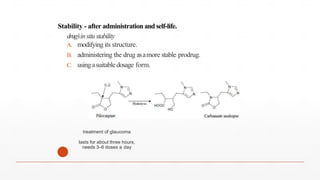
Stability - after administration and self-life.
drug’
sinsitustability
A. modifyingits structure.
B. administering the drug asamore stable prodrug.
C. usingasuitabledosage form.
treatment of glaucoma
lasts for about three hours,
needs 3–6 doses a day
45
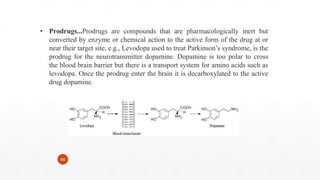
• Prodrugs...Prodrugs are compounds that are pharmacologically inert but
converted by enzyme or chemical action to the active form of the drug at or
near their target site, e.g., Levodopa used to treat Parkinson’s syndrome, is the
prodrug for the neurotransmitter dopamine. Dopamine is too polar to cross
the blood brain barrier but there is a transport system for amino acids such as
levodopa. Once the prodrug enter the brain it is decarboxylated to the active
drug dopamine.
46
anti-inflammatory agent
47
Drug stability by complex formation
Prodrug stability
Self-life
Self-lifeisthetimetakenforadrug’
spharmacologicalactivitytodeclinetoan unacceptable
level.
---microbialdegradation andadversechemical reactions
Sourcesof leads and drugs
• Originallydrugsandleadswerederivedfromnatural sources
Now-
• Localfolkremedies (Ethnopharmacology).
• byserendipitously discovered (
penicillin,Minoxidil,cisplatinetc.)
• bystructure-activity relationships (most)
• byrational drug design(sincethe 80‘s)
• High-throughput screening ofcompounds (sincethe90‘s)
• Databases andother literature sourcesoforganic compounds.
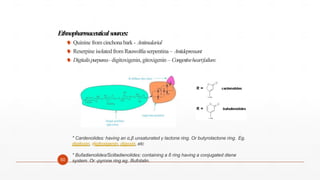
Ethnopharmaceuticalsources:
 Quinine from cinchonabark - Antimalarial
 Reserpine isolated from Rauwolfiaserpentina – Antidepressant
 Digitalispurpurea- digitoxigenin,gitoxigenin– Congestiveheartfailure.
50
* Cardenolides: having an α,β unsaturated γ lactone ring. Or butyrolactone ring. Eg.
digitoxin, digitoxigenin, digoxin, etc
* Bufadienolides/Scilladienolides: containing a δ ring having a conjugated diene
system. Or -pyrone ring eg. Bufotalin.
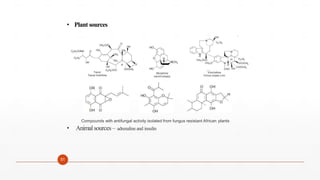
• Plant sources
Taxol
Taxus breifolia
Vincirstine
Vinca rosea Linn
Morphine
opium poppy
Compounds with antifungal activity isolated from fungus resistant African plants
• Animalsources– adrenalineand insulin
51
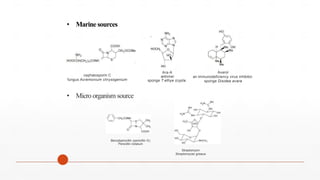
• Marine sources
Avarol
an immunodeficiency virus inhibitor.
sponge Disidea avara
Ara-A
antiviral
sponge T ethya crypta.
cephalosporin C
fungus Acremonium chrysogenium
• Micro organism source
Benzylpenicillin (penicillin G)
Penicillin notatum
Streptomycin
Streptomyces griseus
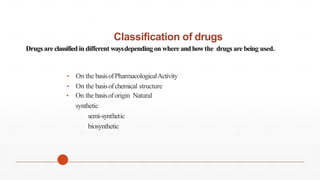
Classification of drugs
Drugs are classified in different waysdependingon where andhowthe drugs are being used.
• On the basisofPharmacologicalActivity
• On the basisofchemical structure
• On the basisoforigin Natural
synthetic
semi-synthetic
biosynthetic
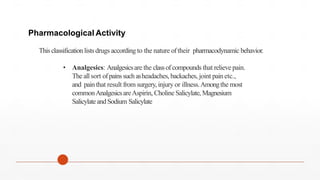
Thisclassification lists drugs according to the nature oftheir pharmacodynamic behavior.
Pharmacological Activity
• Analgesics: Analgesicsare the classofcompounds that relieve pain.
The allsort ofpainssuchasheadaches,backaches, joint painetc.,
and painthat result from surgery, injury or illness.Amongthe most
commonAnalgesicsareAspirin, Choline Salicylate, Magnesium
Salicylateand Sodium Salicylate
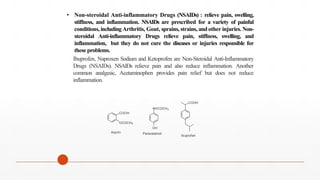
• Non-steroidal Anti-inflammatory Drugs (NSAIDs) : relieve pain, swelling,
stiffness, and inflammation. NSAIDs are prescribed for a variety of painful
conditions, including Arthritis, Gout, sprains, strains, and other injuries. Non-
steroidal Anti-inflammatory Drugs relieve pain, stiffness, swelling, and
inflammation, but they do not cure the diseases or injuries responsible for
these problems.
Ibuprofen, Naproxen Sodium and Ketoprofen are Non-Steroidal Anti-Inflammatory
Drugs (NSAIDs). NSAIDs relieve pain and also reduce inflammation. Another
common analgesic, Acetaminophen provides pain relief but does not reduce
inflammation.
NHCOCH3
COOH
OCOCH3
OH
COOH
Ibuprofen
Paracetamol
Asprin
Vasodilators : Vasodilators are substances that act directly on muscles in blood vessel
walls to make blood vessels widen (dilate). Vasodilators are used to treat high blood
pressure (hypertension).
By widening the arteries, these drugs allow blood to flow through more easily,
reducing blood pressure.
E.g. Minoxidil, sodium nitroprusside, glyceryl trinitrate
Diuretics : Substances that increases the removal of fluids from the body. Diuretics
are used for many reasons. They may be indicated for people who suffer from
edema, an intense accumulation of fluids in the body's tissues, and those who suffer
from high blood pressure or other heart related diseases.
E.g. Indapamide
Hypnotic : drugs are a class of psychoactive drugs whose primary function is to
induce sleep and to be used in the treatment
surgical anesthesia.
E.g. Benzodiazepines, Nonbenzodiazepines
• Antiseptics: Antiseptics are substances that slowor stop the growth ofgerms
and helpprevent infectionsin minor cuts, scrapes, and burns. Antiseptics are
appliedto the skinto keepbacteria from getting into wounds andcausing
infection.AlthoughAntiseptics do not usually kill bacteria, they do weaken
them andslowtheir growth.
57
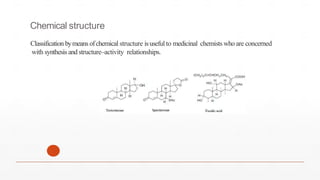
Chemical structure
Classification bymeans ofchemical structure isuseful to medicinal chemists whoare concerned
with synthesis andstructure–activity relationships.
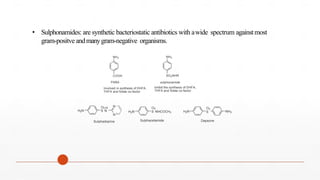
• Sulphonamides: are synthetic bacteriostatic antibiotics with awide spectrum againstmost
gram-positve andmanygram-negative organisms.
NH2 NH2
COOH
PABA
Involved in synthesis of DHFA,
THFA and folate co-factor
SO2NHR
sulphonamide
inhibit the synthesis of DHFA,
THFA and folate co-factor
N
N
O2 H
S N
H2N
Sulphadiazine
O2
S NHCOCH3
H2N
Sulphacetamide
O2
S
H2N NH2
Dapsone
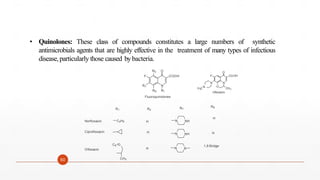
• Quinolones: These class of compounds constitutes a large numbers of synthetic
antimicrobials agents that are highly effective in the treatment of many types of infectious
disease,particularly those caused bybacteria.
COOH
R5 O
F
R7
N
O
COOH
F
N
O
3
H CN CH3
60
N
R8 R1
Fluoroquinolones
R1 R5
R7
R8
Norfloxacin
Ciprofloxacin
Ofloxacin
C2H5 NH
N
H
H
NH
N
H H
C8 O
CH3
N
N
H
1,8 Bridge
Ofloxacin
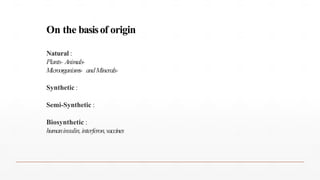
On the basisof origin
Natural :
Plants- Animals-
Microorganisms- andMinerals-
Synthetic :
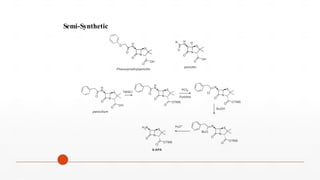
Semi-Synthetic :
Biosynthetic :
humaninsulin,interferon,vaccines
61
N
S
O
OH
H
N
O
O
O
Phenoxymethylpenicillin
N
S
OH
H
N
O
O
R H
O
penicillin
H
S
H
N S
N
Semi-Synthetic
N
S
O
OH
N
O
O
TMSCl
N
O
O
O
PCl5
Pyridine
OTMS
N
OTMS
O
Cl
O
BuOH
N
S
O
OTMS
N
O
BuO
N
S
OTMS
2
H N
O
H3O+
O
6-APA
penicillium
O
H
O
CH3
H3C
O
O H
O
H
CH3
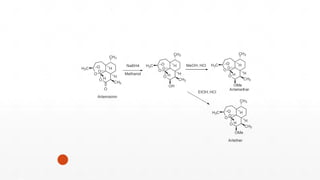
Methanol
H
CH3
O
O O
O H
NaBH4 H3C
OH
H
CH3
H
CH3
O
O
O
O H
H3C
H
CH3
MeOH, HCl
OMe
Artemether
H
CH3
O
O O
O H
H3C
H
CH3
EtOH, HCl
OMe
Artether
Artemisinin
TUGAS 1 (NIM GANJIL)
• Membahas tentang:
1. Perjalanan singkat penemuan obat
Rapamycin/Sirolimus dan pengembangannya
sebagai obat
2. Rapamycin (struktur kimia,struktur kristal-ikatan
ligand dengan respetor (PDB), target
biologis/reseptor, derivate rapamycin
(everolimus dan temserolimus/pada struktur apa
yang berubah).
3. Mekanisme kerja Rapamycin dan efek-efeknya.
*Jika diperlukan lengkapi dengan gambar untuk
menjelaskan struktur
*Font 12, Times New Roman, spasi 1,5, maksimal 5
halaman tidak termasuk gambar dan daftar pustaka.
Isikan cover dilengkapi nama dan NIM.
* Cantumkan catatan kaki dan daftar Pustaka
(Harvard style)
TUGAS 2 (NIM GENAP)
• Membahas tentang:
1. Peranan Computer-aided drug discovery (CAAD) pada pengembangan obat
2. Jelaskan secara terstruktur dengan bahasa yang mudah dimengerti konsep secara
umum, workflow, kendala dalam CAAD.
3. Jelaskan mengenai pengembangan salah satu obat secara spesifik dengan CAAD
*Cari beberapa artikel saintifik kemudian disadur (lakukan literature review)
*Jika diperlukan lengkapi dengan gambar untuk menjelaskan struktur
*Font 12, Times New Roman, spasi 1,5, maksimal 5 halaman tidak termasuk gambar dan
daftar pustaka. Isikan cover dilengkapi nama dan NIM.
* Cantumkan catatan kaki dan daftar Pustaka (Harvard style)
TERIMAKASIH

Pengantar Kimia Medisinal.pptx

  • 1.
    Pengantar Kimia Medisinal IGusti Ayu Agung Septiari
  • 2.
    Objectives to studyMedicinal Chemistry ▪ What is Medicinal Chemistry? ▪ Why is Medicinal Chemistry? ▪ What in Medicinal Chemistry? ▪ How is Medicinal Chemistry? ▪ What after Medicinal Chemistry?
  • 3.
    Medicinal chemistry (IUPAC):“it concerns the discovery, the development, the identification and the interpretation of the mode of action of biologically active compounds at the molecular level” In other words, Medicinal chemistry is an interdisciplinary research area incorporating different branches of chemistry and biology in the research for better and new drugs(Drug Discovery).
  • 5.
    Computer-aided drug discovery(CADD) Virtual screening (VS) is a computational technique used in drug discovery to search libraries of small molecules in order to identify those structures which are most likely to bind to a drug target, typically a protein receptor or enzyme.
  • 6.
    Pharmacopore ▪ “A pharmacophoreis the ensemble of steric and electronic features that is necessary to ensure the optimal supramolecular interactions with a specific biological target structure and to trigger (or to block) its biological response.”
  • 7.
    Computer-aided drug discovery(CADD) Covid-19 drug Discovery • A hit is a compound which has the desired activity in a compound screen. This activity should be confirmed upon retesting. The main motive is to identify molecules that interact with the drug target. • De novo drug design is a computational approach that generates novel molecular structures from atomic building blocks with no a priori relationships.
  • 8.
  • 9.
  • 10.
    Milestones in theManufacture of a Drug
  • 11.
    Role of MedicinalChemist ▪ Synthesis (semi-synthesis/total synthesis using retro-analytical approach) and characterization (analytical data) of new compounds (leads). ▪ Biological assay of the synthesized compounds and determine their effect on biological processes. ▪ Manipulation of structure of the compound for optimum effect and minimum side effects (optimization of lead). ▪ Study of pharmacokinetic and pharmacodynamic property of drug. ▪ Optimization of synthetic route for bulk production
  • 12.
    Drug Vs Medicine ▪There is no sharp demarcation to define Drug and medicine. ▪ These are the chemical substances that are used to prevent or cure diseases in humans, animals and plants. ▪ A compound during its studies in the drug development process, is 15 better to called as Drug, whereas Medicine is that chemical species which is only after its approval from the concern authority, and which can be prescribed. ▪ Drug is also used by the media and the general public to describe the substances taken for their psychotic rather than medicinal effects.
  • 14.
    ▪ A medicineor medication is a substance taken to cure and/or improve any symptoms of an illness. OR ▪ A medicine may be used as preventive medicine that has future benefits but does not treat any existing or pre-existing diseases or symptoms. ▪ Dispensing of medication is often regulated by governments into three categories: Over-the-counter (OTC) Prescription only medicines (POM) Behind-the-counter (BTC)
  • 15.
    ▪ Over-the counter(OTC) : Drugs legally allowed to be sold, e.g. without the prescription of a registered medical practitioner. Vitamins and minerals, Cough and cold, Gastrointestinal, Analgesics /Dermatological. Aspirin, paracetamol. ▪ Prescription only medicines (POM): Drugs which are not allowed to be sold without the prescription of a registered medical practitioner. e.g. antibiotics. ▪ Behind-the counter (BTC): Drugs that are allowed to sold without prescription of RMP but also limits the bulk buying of such drugs. These products are accessed by patients only after discussion with the pharmacist and presenting proof of identification (ID). Sedatives, contraception pill Plan B (levonorgestrel).
  • 16.
    Recreational Drugs ▪ Substancesthat affect the CNS, and are or may be used for perceiving beneficial effects on perception, consciousness, personality, and behavior. E.g. Opioids (substance that bind the opioid receptors, e.g. morphine, codeine etc.) or hallucinogens (diphenhydramine).
  • 17.
    Nootropics/Cognitive Enhancer ▪ Nootropicsare drugs that are claimed to improve human cognitive abilities. They are used to improve memory, concentration, thought, mood, learning. Some are used to treat Parkinson's disease, and Alzheimer's disease. BESEB (“Bacosides Enriched Standardized Extract of Bacopa”) : Nootropics 20 Memory sure.
  • 18.
    Nodrugiscompletely safe • Beneficialandnon-beneficialbiological effects. • Drugs act byinterfering with biological processes. • Alldrugs, including those non-prescription drugs suchas aspirin and paracetamol. 21
  • 19.
    • Beneficialand non-beneficialbiologicaleffects • The unwanted effects are commonly referred to asside effects. • Sideeffects are not alwaysnon-beneficial.e.g.promethazine (antihistamines :Ahistamine antagonist) isapharmaceuticaldrugthatinhibits theactionofhistaminebyeitherblockingitsattachmenttohistamine receptors orinhibiting the enzymatic activity ofhistidine decarboxylase whichcatalyzesthe transformationofhistidineinto histamine(atypicalantihistaminics).Histamine antagonists are commonlyused for the relief ofallergies caused by intolerance of proteins Antihistamine, but also used as sedative or sleep aid
  • 20.
    Drug resistance ortolerance (tachyphylaxis) • Repeated use ofadrug - (increase in enzymes, e.g.,repeateduseof barbiturate) • Downregulationofreceptors - (breakdownof receptors, e.g., continuous use of gonadotropin releasing factor) • Drug-resistant strains of microorganisms.
  • 21.
    Drug discovery anddesign: a historical outline • 1910 - PaulEhrlich andSacachiroHata- first rational approach – Arsphenamine - SAR 24  Chemotherapeutic index = Min. curative dose Max. tolerated dose Therapeutic index = LD50 ED50 TI: Measures of a drug’s beneficial effect at minimum dose Vs harmful effects at high dose Lethality is not determined in human clinical trials
  • 22.
    • 1905 -Langley– receptors,ligand,activeconformation,pharmacophore • 1960 - Hansch&Fujita– QSAR
  • 23.
    • mid- tolate twentieth century – knowledge ofbiologicalstructures and processes local anaesthetic antiarrhythmic • The replacement of an ester group by an N-substituted amide group may increase the stability of the drug without changing the nature of its activity. This could possibly lead to an increase in either the potency or time of duration of activity of a drug by improving its chances of reaching its site of action. • However, changing a group or introducing a group may change the nature of the activity of the compound. For example, the change of the ester group in procaine to an amide (procainamide) changes the activity from a local anaesthetic to an antiarrhythmic
  • 24.
    anticholinesterase •1970s and 1990s– molecular modeling and combinatorial chemistry 27
  • 25.
    Current trends inDrugdiscovery** 28 ** It’s all a team work
  • 26.
    Drug Discovery Pipeline HitLead Preclinical Candidate Clinical Candidate NDA 39 Alead compound is a chemical compound that has pharmacological or biological activity likely to be therapeutically useful
  • 27.
    * takes 7-10years to come to market with a new drug at costs ~ $ 150-800 million. ** extremely expensive test procedures required (preclinical and clinical tests) 31
  • 28.
    DRU G Drug development pyramid Post-marketingsurveillance: collection of adverse drug reaction data Regulatory Review: additional system that tracks long-term effects Development Research: Drug is given to an increasing number of individuals Phase III: 3000+ patients, half given drug under test, half given placebo Phase II: 200-400 patients receive the drug Phase I: 50-100 healthy volunteers Discovery research Identification of lead compounds: compds. shown to have biological activity Synthesis of analogues: many structurally related compounds are made and tested Biological evaluation of compounds: in vitro and in vivo testing.
  • 30.
    A Potassium ChannelActivator Possesses Anticonvulsant Activity Modification of the aryl ring, however, was tolerated and led to the discovery of ML297 (ML297) (CID 56642816), with an EC50 of 160 nM, and an efficacy of 194% compared to the parent lead compound (CID 736191)
  • 31.
    Clinical trial Aclinical trial(also called clinical research) is a research study using human volunteers designed to determine the safety and effectiveness of a drug, biologic (such as a vaccine), device (such as a prothesis)or other treatment or behavioral intervention. • Phase I : tests on healthy volunteers (pharmacokinetics, pharmacodynamics, toxicity). • Phase II : tests on a limited number of persons with specific disease(efficacy). • Phase III :globaltests on broadclinicalbasis(definitesafety,optimal dosage). • Phase IV:registration, marketsupport. 37
  • 32.
    Outcome of Pharmaceuticalresearch/ Drug Discovery • newproducts with enhanced activity • newproducts with diminished side effects • need ofnewproducts by increasing resistance • butontheother hand: • highdevelopment costs • unfavorableratio between synthesized compounds andproducts on the market
  • 33.
    Leads and analogues:desirable properties • Bioavailability – Lipinski’ sruleoffive. • Solubility – lipophilicity andhydrophilicity. • Structure – stereo electronic properties. E.g.anticancer drug melphalan, centchroman N Cl Cl O HO NH2 Melphalan O O N O centchroman 40
  • 34.
    Therule of Five ▪The activity of a drug is related to its bioavailability ▪ Consequently, for a compound to be suitable as a lead it must be bioavailable. ▪ In order to assess a compound’s bioavailability, it must be either available off the shelf or be synthesized. ▪ Synthesis of a compound could result in the synthesis of an inactive compound, which could be expensive both in time and money. ▪ In order to avoid unnecessary work and expense in synthesizing inactive molecules, Lipinski et al. proposed a set of four rules that would predict whether a molecule was likely to be orally bioavailable.
  • 35.
    Therule of Five ChristopherA. Lipinski et.al. Advanced Drug Delivery Reviews, 1996, 23, 3-25 Poorabsorption or permeation are morelikely when • There are more than 5 H-bond donors - less than five hydrogen bond donor groups • Themolecular weight isover500 daltons – a molecular mass less than 500 Da • There are more than 5 H-bond donor groups (NH and OH, etc.) - < 5 • There are more than 10 H-bond acceptors (-O- and –N-, etc.) - < 10 *Any compound that fails to comply with two or more of the rules is unlikely to be bioavailable, that is, it is unlikely to be active Lipinski's Rule ofFive(1997)isaruleofthumbtoevaluatedruglikeness 35
  • 36.
    The rule ofFive Alert If two parameters are out of range, a “poor absorption or permeability is possible”. This alert is a very visible tool for the drug design Compound Alkanes, long A 0 B X C X D 0 Absorpti on Poor chain CH3- (CH2)120 Aspirin 0 0 0 0 Good Caffeine 0 0 0 0 Good Cholesterol 0 0 X 0 Good Cocaine 0 0 0 0 Good Vancomycin X X 0 X poor 36
  • 37.
    CH3 CH3 CH3 CH3 OO (R)-(+)- (S)-(-)- (S)-(+)- (R)-(-)- orange lemon caraway peppermint Biological effects of Enantiomers Limonene Carvone CHO OCH3 CHO OH strong odor vanillin 43 OH OCH3 no odor isovanillin
  • 38.
  • 39.
    Stability - afteradministration and self-life. drug’ sinsitustability A. modifyingits structure. B. administering the drug asamore stable prodrug. C. usingasuitabledosage form. treatment of glaucoma lasts for about three hours, needs 3–6 doses a day 45
  • 40.
    • Prodrugs...Prodrugs arecompounds that are pharmacologically inert but converted by enzyme or chemical action to the active form of the drug at or near their target site, e.g., Levodopa used to treat Parkinson’s syndrome, is the prodrug for the neurotransmitter dopamine. Dopamine is too polar to cross the blood brain barrier but there is a transport system for amino acids such as levodopa. Once the prodrug enter the brain it is decarboxylated to the active drug dopamine. 46
  • 41.
  • 42.
    Drug stability bycomplex formation Prodrug stability Self-life Self-lifeisthetimetakenforadrug’ spharmacologicalactivitytodeclinetoan unacceptable level. ---microbialdegradation andadversechemical reactions
  • 43.
    Sourcesof leads anddrugs • Originallydrugsandleadswerederivedfromnatural sources Now- • Localfolkremedies (Ethnopharmacology). • byserendipitously discovered ( penicillin,Minoxidil,cisplatinetc.) • bystructure-activity relationships (most) • byrational drug design(sincethe 80‘s) • High-throughput screening ofcompounds (sincethe90‘s) • Databases andother literature sourcesoforganic compounds.
  • 44.
    Ethnopharmaceuticalsources:  Quinine fromcinchonabark - Antimalarial  Reserpine isolated from Rauwolfiaserpentina – Antidepressant  Digitalispurpurea- digitoxigenin,gitoxigenin– Congestiveheartfailure. 50 * Cardenolides: having an α,β unsaturated γ lactone ring. Or butyrolactone ring. Eg. digitoxin, digitoxigenin, digoxin, etc * Bufadienolides/Scilladienolides: containing a δ ring having a conjugated diene system. Or -pyrone ring eg. Bufotalin.
  • 45.
    • Plant sources Taxol Taxusbreifolia Vincirstine Vinca rosea Linn Morphine opium poppy Compounds with antifungal activity isolated from fungus resistant African plants • Animalsources– adrenalineand insulin 51
  • 46.
    • Marine sources Avarol animmunodeficiency virus inhibitor. sponge Disidea avara Ara-A antiviral sponge T ethya crypta. cephalosporin C fungus Acremonium chrysogenium • Micro organism source Benzylpenicillin (penicillin G) Penicillin notatum Streptomycin Streptomyces griseus
  • 47.
    Classification of drugs Drugsare classified in different waysdependingon where andhowthe drugs are being used. • On the basisofPharmacologicalActivity • On the basisofchemical structure • On the basisoforigin Natural synthetic semi-synthetic biosynthetic
  • 48.
    Thisclassification lists drugsaccording to the nature oftheir pharmacodynamic behavior. Pharmacological Activity • Analgesics: Analgesicsare the classofcompounds that relieve pain. The allsort ofpainssuchasheadaches,backaches, joint painetc., and painthat result from surgery, injury or illness.Amongthe most commonAnalgesicsareAspirin, Choline Salicylate, Magnesium Salicylateand Sodium Salicylate
  • 49.
    • Non-steroidal Anti-inflammatoryDrugs (NSAIDs) : relieve pain, swelling, stiffness, and inflammation. NSAIDs are prescribed for a variety of painful conditions, including Arthritis, Gout, sprains, strains, and other injuries. Non- steroidal Anti-inflammatory Drugs relieve pain, stiffness, swelling, and inflammation, but they do not cure the diseases or injuries responsible for these problems. Ibuprofen, Naproxen Sodium and Ketoprofen are Non-Steroidal Anti-Inflammatory Drugs (NSAIDs). NSAIDs relieve pain and also reduce inflammation. Another common analgesic, Acetaminophen provides pain relief but does not reduce inflammation. NHCOCH3 COOH OCOCH3 OH COOH Ibuprofen Paracetamol Asprin
  • 50.
    Vasodilators : Vasodilatorsare substances that act directly on muscles in blood vessel walls to make blood vessels widen (dilate). Vasodilators are used to treat high blood pressure (hypertension). By widening the arteries, these drugs allow blood to flow through more easily, reducing blood pressure. E.g. Minoxidil, sodium nitroprusside, glyceryl trinitrate Diuretics : Substances that increases the removal of fluids from the body. Diuretics are used for many reasons. They may be indicated for people who suffer from edema, an intense accumulation of fluids in the body's tissues, and those who suffer from high blood pressure or other heart related diseases. E.g. Indapamide Hypnotic : drugs are a class of psychoactive drugs whose primary function is to induce sleep and to be used in the treatment surgical anesthesia. E.g. Benzodiazepines, Nonbenzodiazepines
  • 51.
    • Antiseptics: Antisepticsare substances that slowor stop the growth ofgerms and helpprevent infectionsin minor cuts, scrapes, and burns. Antiseptics are appliedto the skinto keepbacteria from getting into wounds andcausing infection.AlthoughAntiseptics do not usually kill bacteria, they do weaken them andslowtheir growth. 57
  • 52.
    Chemical structure Classification bymeansofchemical structure isuseful to medicinal chemists whoare concerned with synthesis andstructure–activity relationships.
  • 53.
    • Sulphonamides: aresynthetic bacteriostatic antibiotics with awide spectrum againstmost gram-positve andmanygram-negative organisms. NH2 NH2 COOH PABA Involved in synthesis of DHFA, THFA and folate co-factor SO2NHR sulphonamide inhibit the synthesis of DHFA, THFA and folate co-factor N N O2 H S N H2N Sulphadiazine O2 S NHCOCH3 H2N Sulphacetamide O2 S H2N NH2 Dapsone
  • 54.
    • Quinolones: Theseclass of compounds constitutes a large numbers of synthetic antimicrobials agents that are highly effective in the treatment of many types of infectious disease,particularly those caused bybacteria. COOH R5 O F R7 N O COOH F N O 3 H CN CH3 60 N R8 R1 Fluoroquinolones R1 R5 R7 R8 Norfloxacin Ciprofloxacin Ofloxacin C2H5 NH N H H NH N H H C8 O CH3 N N H 1,8 Bridge Ofloxacin
  • 55.
    On the basisoforigin Natural : Plants- Animals- Microorganisms- andMinerals- Synthetic : Semi-Synthetic : Biosynthetic : humaninsulin,interferon,vaccines 61
  • 56.
  • 57.
    O H O CH3 H3C O O H O H CH3 Methanol H CH3 O O O OH NaBH4 H3C OH H CH3 H CH3 O O O O H H3C H CH3 MeOH, HCl OMe Artemether H CH3 O O O O H H3C H CH3 EtOH, HCl OMe Artether Artemisinin
  • 58.
    TUGAS 1 (NIMGANJIL) • Membahas tentang: 1. Perjalanan singkat penemuan obat Rapamycin/Sirolimus dan pengembangannya sebagai obat 2. Rapamycin (struktur kimia,struktur kristal-ikatan ligand dengan respetor (PDB), target biologis/reseptor, derivate rapamycin (everolimus dan temserolimus/pada struktur apa yang berubah). 3. Mekanisme kerja Rapamycin dan efek-efeknya. *Jika diperlukan lengkapi dengan gambar untuk menjelaskan struktur *Font 12, Times New Roman, spasi 1,5, maksimal 5 halaman tidak termasuk gambar dan daftar pustaka. Isikan cover dilengkapi nama dan NIM. * Cantumkan catatan kaki dan daftar Pustaka (Harvard style)
  • 59.
    TUGAS 2 (NIMGENAP) • Membahas tentang: 1. Peranan Computer-aided drug discovery (CAAD) pada pengembangan obat 2. Jelaskan secara terstruktur dengan bahasa yang mudah dimengerti konsep secara umum, workflow, kendala dalam CAAD. 3. Jelaskan mengenai pengembangan salah satu obat secara spesifik dengan CAAD *Cari beberapa artikel saintifik kemudian disadur (lakukan literature review) *Jika diperlukan lengkapi dengan gambar untuk menjelaskan struktur *Font 12, Times New Roman, spasi 1,5, maksimal 5 halaman tidak termasuk gambar dan daftar pustaka. Isikan cover dilengkapi nama dan NIM. * Cantumkan catatan kaki dan daftar Pustaka (Harvard style)
  • 60.