PCORI’s Mission and
Mandate to Fund CER
Joe Selby, MD, MPH, Executive Director, PCORI
Rare Diseases Roundtable
September 11, 2013
Housekeeping
PCORI is committed to transparency
 All sessions are being broadcast live via webinar
Webinar comments
 No public comment sessions today
 If opportunity arises, we will add your comments to the
discussion
Please be mindful of your microphone
 Remember to turn off when finished speaking
Break Schedule
 10:45 am and noon
Wi-Fi is available in the room today
“The purpose of the Institute is to assist patients, clinicians,
purchasers, and policy-makers in making informed health
decisions by advancing the quality and relevance of evidence
concerning the manner in which through research and
evidence synthesis that considers variations in patient
subpopulations and the dissemination of research findings
with respect to the relative health outcomes, clinical
effectiveness, and appropriateness of medical treatments,
services.”
Source: Affordable Care Act. Subtitle D—Patient-Centered Outcomes
Research Institute PUBLIC LAW 111–148—MAR. 23, 2010
3
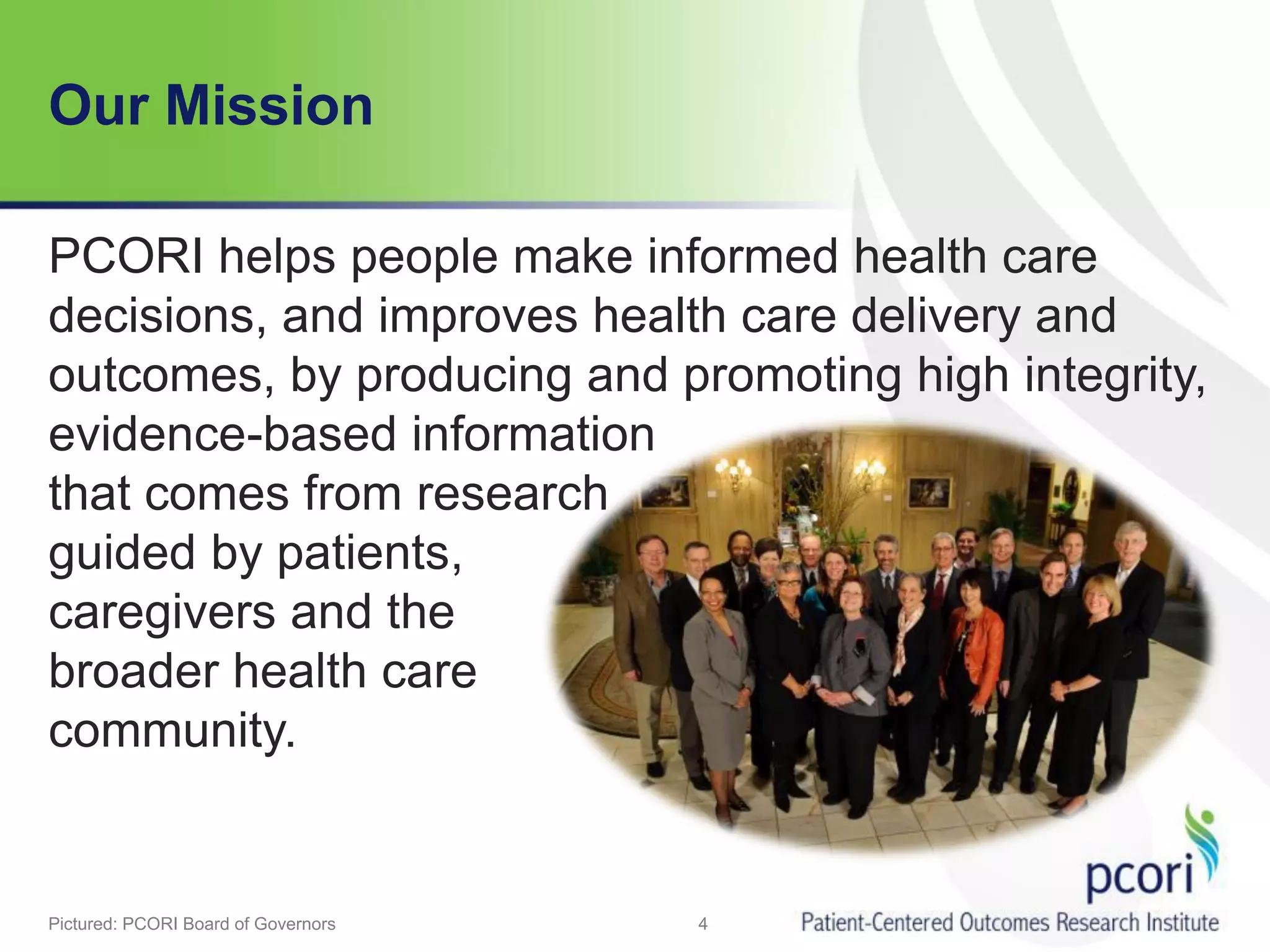
Our Mission
PCORI helps people make informed health care
decisions, and improves health care delivery and
outcomes, by producing and promoting high integrity,
evidence-based information
that comes from research
guided by patients,
caregivers and the
broader health care
community.
4Pictured: PCORI Board of Governors
Our Work Answers Patients’ Questions
Given my personal characteristics, conditions and
preferences…
“What should I
expect will
happen to me?”
“What are my
options and
what are the
potential
benefits and
harms of those
options?”
“What can I do
to improve the
outcomes that
are most
important to
me?”
“How can
clinicians and the
care delivery
systems they work
in help me make
the best decisions
about my health
and healthcare?”
5
“Research shall be designed, as appropriate, to take into
account the potential for differences in the effectiveness of
health care treatments, services, and items as used with
various subpopulations, such as racial and ethnic minorities,
women, age, and groups of individuals with different
comorbidities, genetic and molecular sub-types, or quality of
life preferences and include members of such subpopulations as
subjects in the research as feasible and appropriate.”
Source: Affordable Care Act. Subtitle D—Patient-Centered Outcomes
Research Institute PUBLIC LAW 111–148—MAR. 23, 2010
6
Our National Priorities for Research
Assessment of Prevention,
Diagnosis, and Treatment
Options
Improving Healthcare
Systems
Communication &
Dissemination Research
Addressing Disparities
Accelerating PCOR and
Methodological Research
7
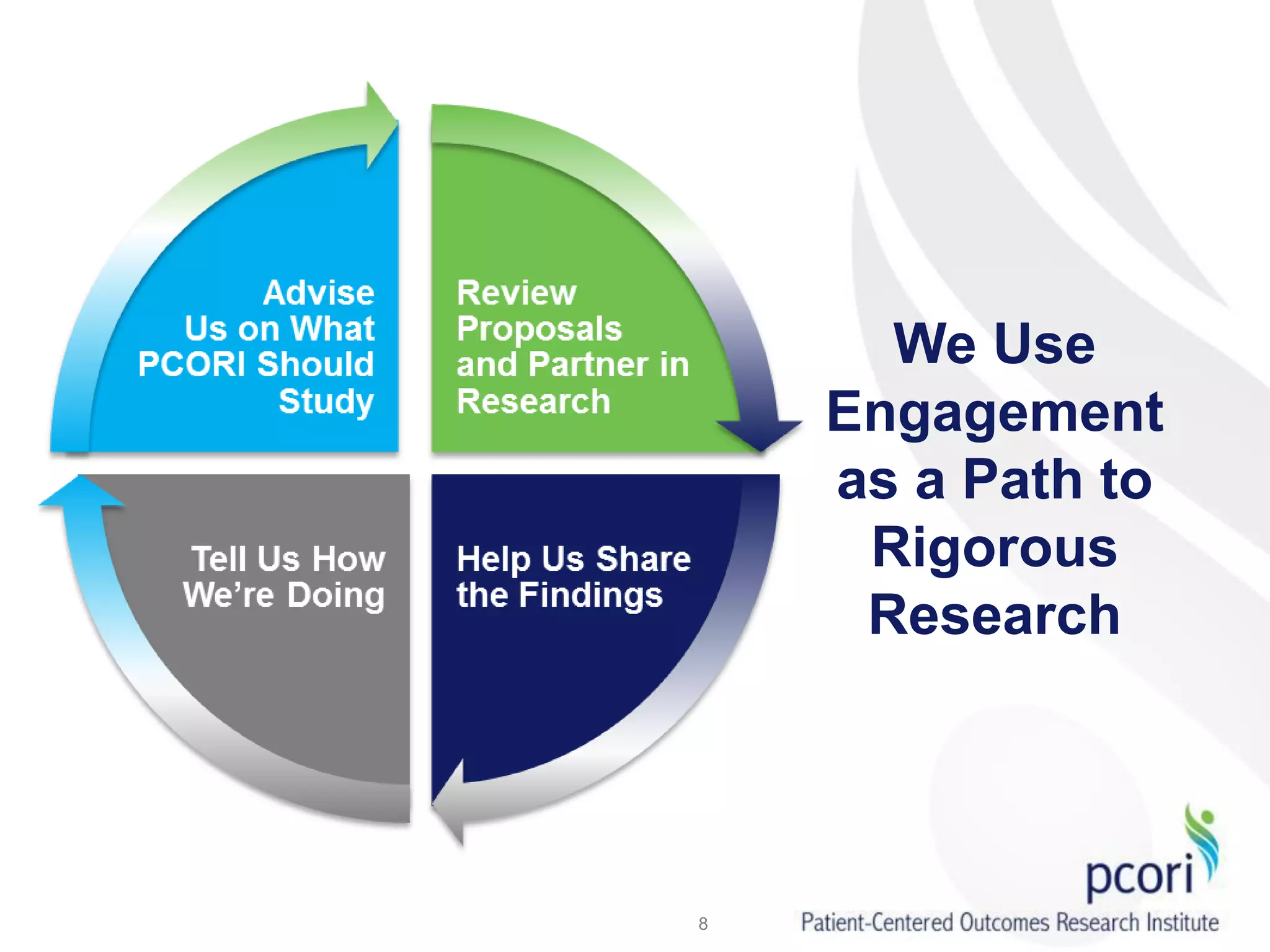
We Use
Engagement
as a Path to
Rigorous
Research
8
How We Promote Participation in Research
Engagement
Awards
Matching
Challenge
Pilot
Projects
Pilot Projects: address a broad range of
questions about methods for engaging
patients in various aspects of the
research and dissemination process.
Matching Challenge: two challenge
winners created innovative ways to
connect patients and researchers as
partners in research.
Engagement Awards: Pipeline to
Proposal Awards will build a national
community of patients and
stakeholders who have the expertise and
passion to participate in PCORI
research, and create partnerships within
that community that lead to high-quality
research proposals.
9
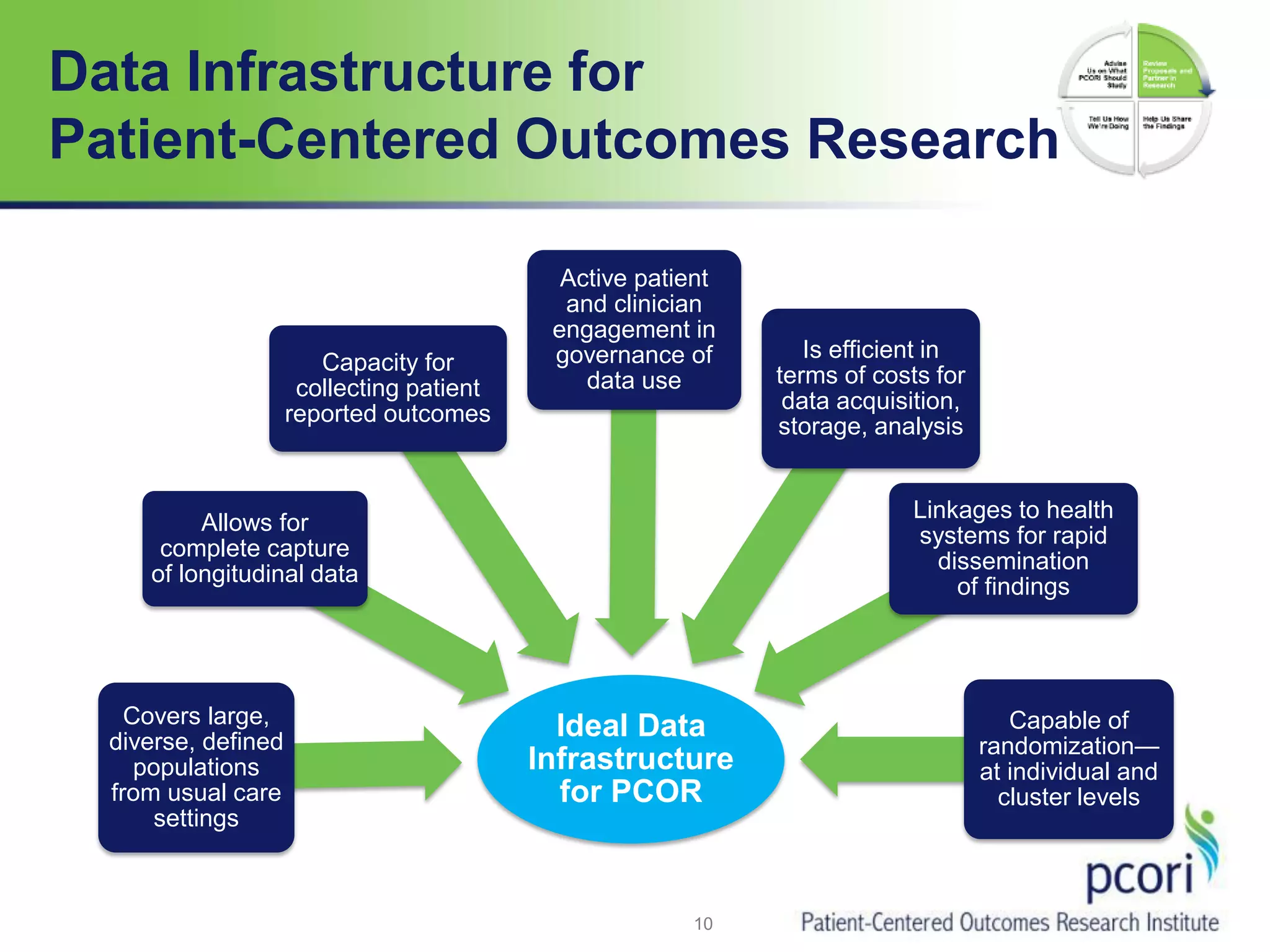
Data Infrastructure for
Patient-Centered Outcomes Research
Ideal Data
Infrastructure
for PCOR
Covers large,
diverse, defined
populations
from usual care
settings
Allows for
complete capture
of longitudinal data
Capacity for
collecting patient
reported outcomes
Active patient
and clinician
engagement in
governance of
data use
Is efficient in
terms of costs for
data acquisition,
storage, analysis
Linkages to health
systems for rapid
dissemination
of findings
Capable of
randomization—
at individual and
cluster levels
10
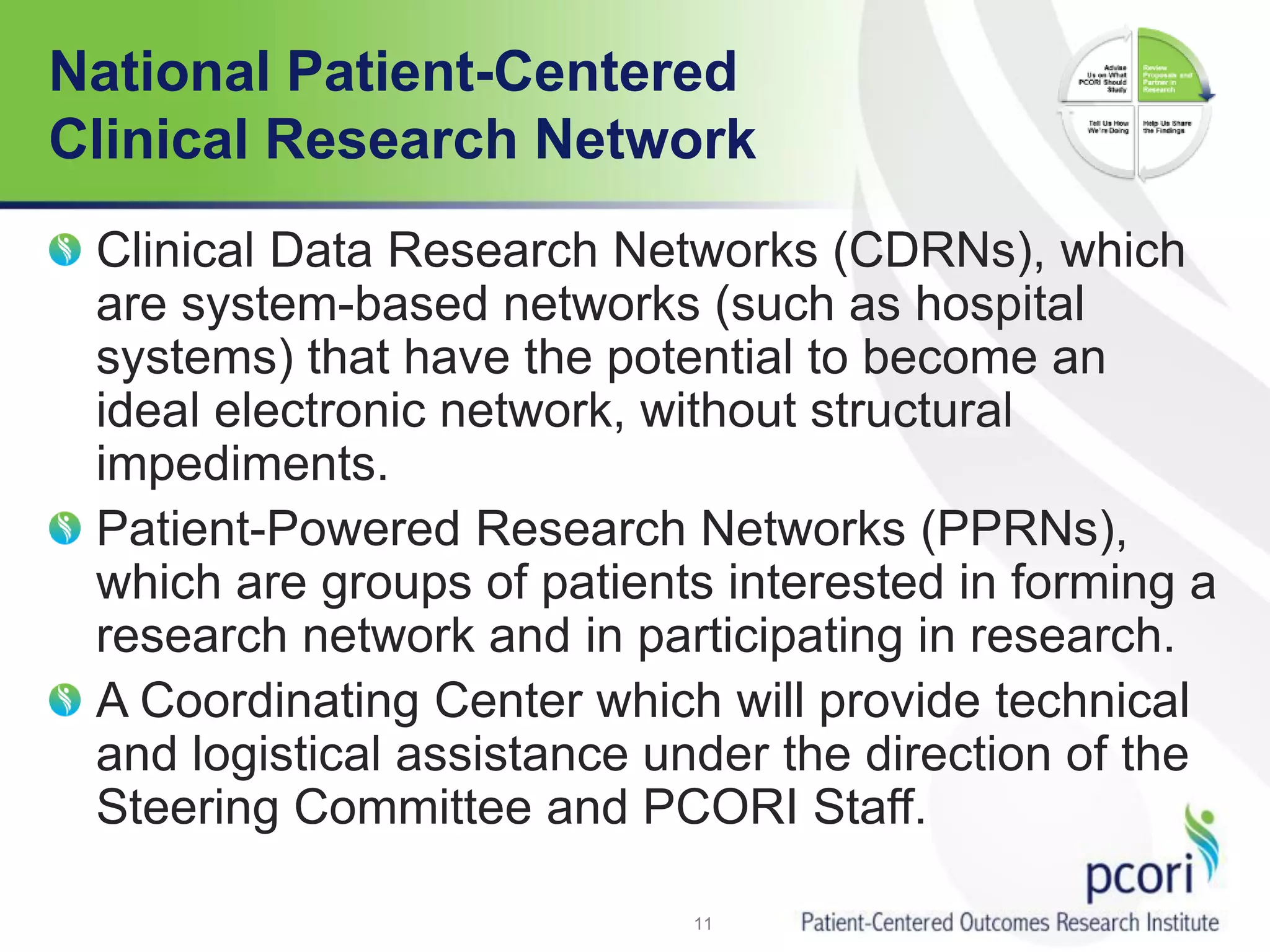
National Patient-Centered
Clinical Research Network
Clinical Data Research Networks (CDRNs), which
are system-based networks (such as hospital
systems) that have the potential to become an
ideal electronic network, without structural
impediments.
Patient-Powered Research Networks (PPRNs),
which are groups of patients interested in forming a
research network and in participating in research.
A Coordinating Center which will provide technical
and logistical assistance under the direction of the
Steering Committee and PCORI Staff.
11
12
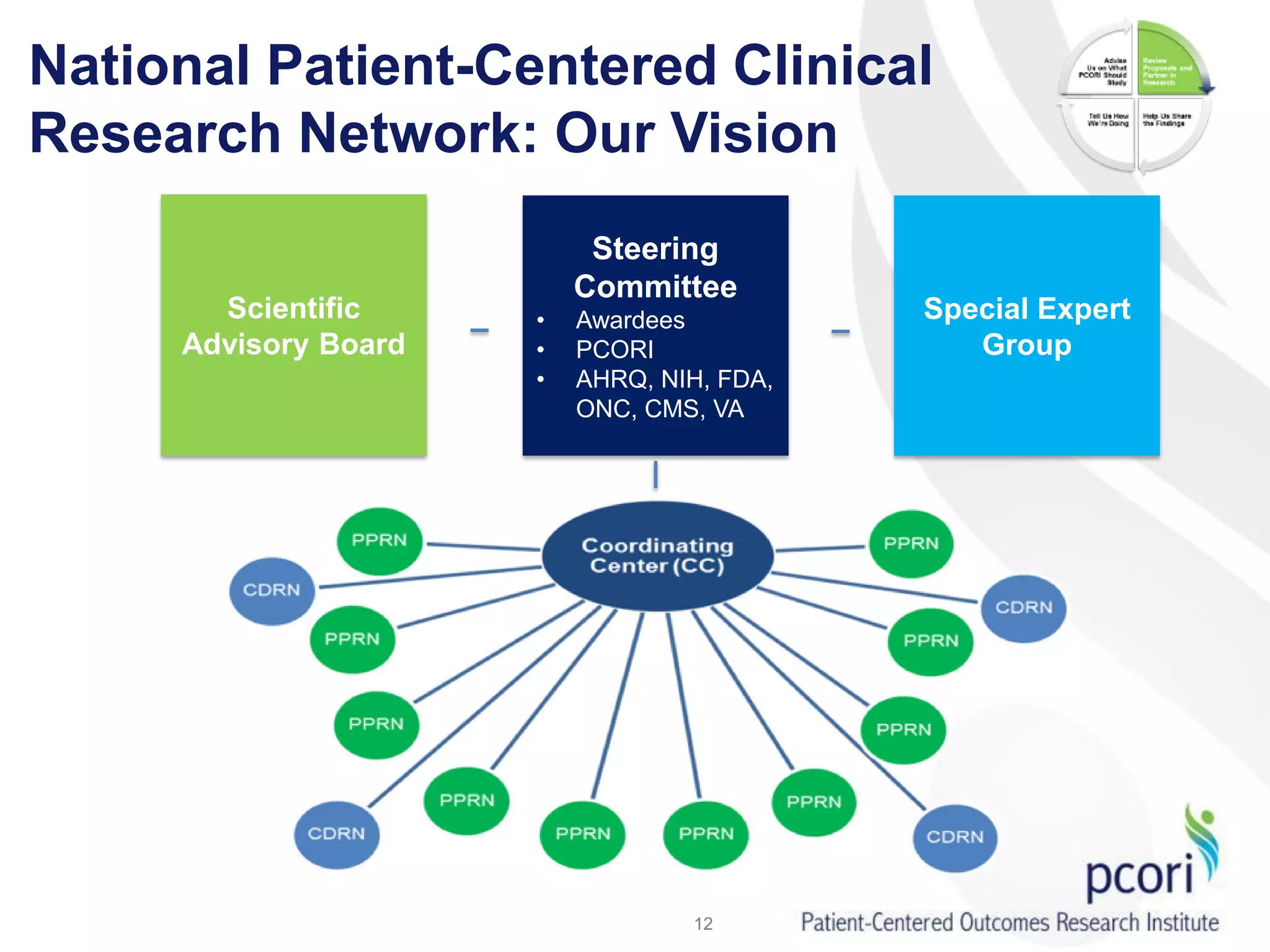
National Patient-Centered Clinical
Research Network: Our Vision
Steering
Committee
• Awardees
• PCORI
• AHRQ, NIH, FDA,
ONC, CMS, VA
Scientific
Advisory Board
Special Expert
Group
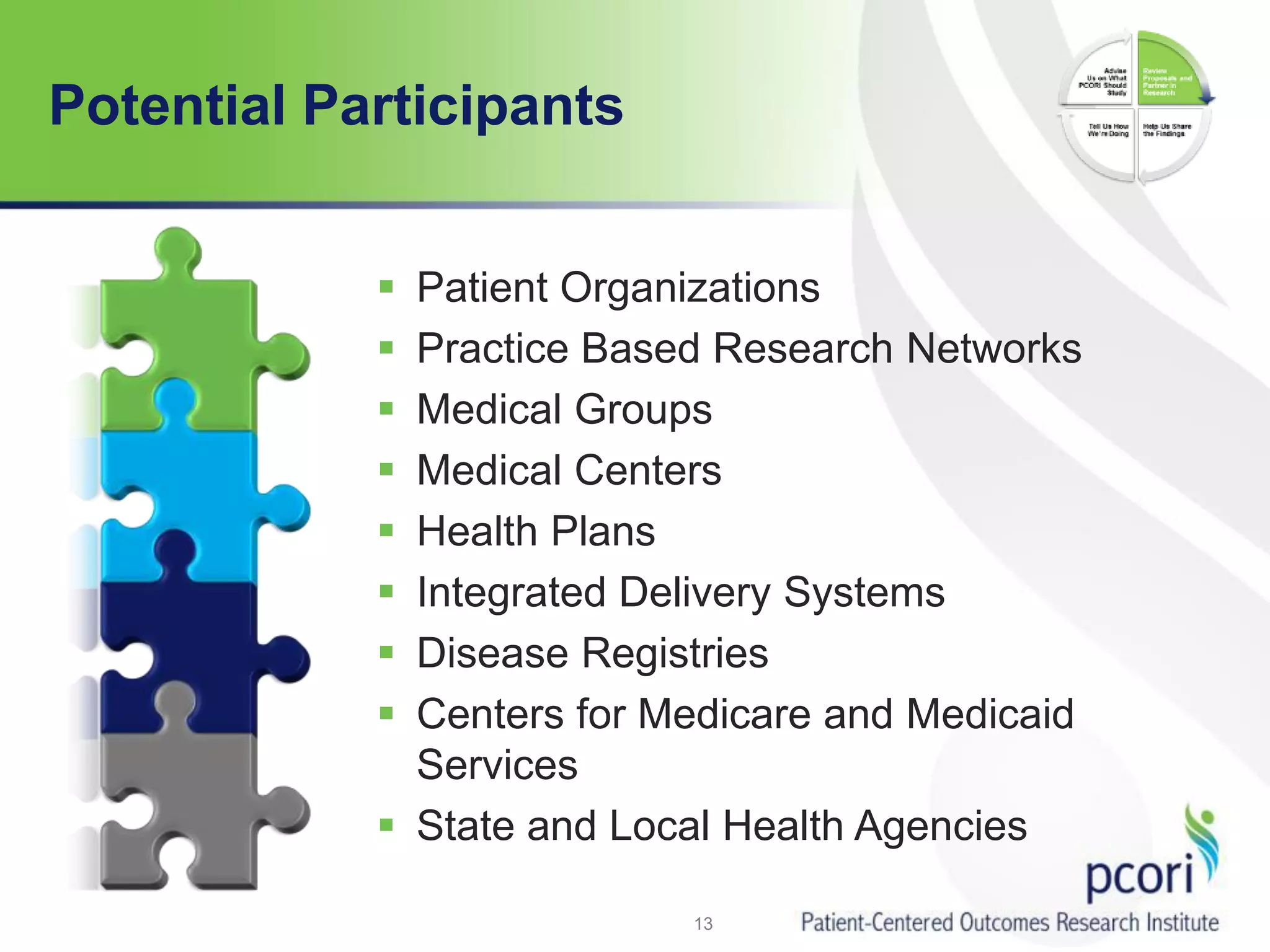
Potential Participants
 Patient Organizations
 Practice Based Research Networks
 Medical Groups
 Medical Centers
 Health Plans
 Integrated Delivery Systems
 Disease Registries
 Centers for Medicare and Medicaid
Services
 State and Local Health Agencies
13

PCORI Mission and Mandate to Fund CER

  • 1.
    PCORI’s Mission and Mandateto Fund CER Joe Selby, MD, MPH, Executive Director, PCORI Rare Diseases Roundtable September 11, 2013
  • 2.
    Housekeeping PCORI is committedto transparency  All sessions are being broadcast live via webinar Webinar comments  No public comment sessions today  If opportunity arises, we will add your comments to the discussion Please be mindful of your microphone  Remember to turn off when finished speaking Break Schedule  10:45 am and noon Wi-Fi is available in the room today
  • 3.
    “The purpose ofthe Institute is to assist patients, clinicians, purchasers, and policy-makers in making informed health decisions by advancing the quality and relevance of evidence concerning the manner in which through research and evidence synthesis that considers variations in patient subpopulations and the dissemination of research findings with respect to the relative health outcomes, clinical effectiveness, and appropriateness of medical treatments, services.” Source: Affordable Care Act. Subtitle D—Patient-Centered Outcomes Research Institute PUBLIC LAW 111–148—MAR. 23, 2010 3
  • 4.
    Our Mission PCORI helpspeople make informed health care decisions, and improves health care delivery and outcomes, by producing and promoting high integrity, evidence-based information that comes from research guided by patients, caregivers and the broader health care community. 4Pictured: PCORI Board of Governors
  • 5.
    Our Work AnswersPatients’ Questions Given my personal characteristics, conditions and preferences… “What should I expect will happen to me?” “What are my options and what are the potential benefits and harms of those options?” “What can I do to improve the outcomes that are most important to me?” “How can clinicians and the care delivery systems they work in help me make the best decisions about my health and healthcare?” 5
  • 6.
    “Research shall bedesigned, as appropriate, to take into account the potential for differences in the effectiveness of health care treatments, services, and items as used with various subpopulations, such as racial and ethnic minorities, women, age, and groups of individuals with different comorbidities, genetic and molecular sub-types, or quality of life preferences and include members of such subpopulations as subjects in the research as feasible and appropriate.” Source: Affordable Care Act. Subtitle D—Patient-Centered Outcomes Research Institute PUBLIC LAW 111–148—MAR. 23, 2010 6
  • 7.
    Our National Prioritiesfor Research Assessment of Prevention, Diagnosis, and Treatment Options Improving Healthcare Systems Communication & Dissemination Research Addressing Disparities Accelerating PCOR and Methodological Research 7
  • 8.
    We Use Engagement as aPath to Rigorous Research 8
  • 9.
    How We PromoteParticipation in Research Engagement Awards Matching Challenge Pilot Projects Pilot Projects: address a broad range of questions about methods for engaging patients in various aspects of the research and dissemination process. Matching Challenge: two challenge winners created innovative ways to connect patients and researchers as partners in research. Engagement Awards: Pipeline to Proposal Awards will build a national community of patients and stakeholders who have the expertise and passion to participate in PCORI research, and create partnerships within that community that lead to high-quality research proposals. 9
  • 10.
    Data Infrastructure for Patient-CenteredOutcomes Research Ideal Data Infrastructure for PCOR Covers large, diverse, defined populations from usual care settings Allows for complete capture of longitudinal data Capacity for collecting patient reported outcomes Active patient and clinician engagement in governance of data use Is efficient in terms of costs for data acquisition, storage, analysis Linkages to health systems for rapid dissemination of findings Capable of randomization— at individual and cluster levels 10
  • 11.
    National Patient-Centered Clinical ResearchNetwork Clinical Data Research Networks (CDRNs), which are system-based networks (such as hospital systems) that have the potential to become an ideal electronic network, without structural impediments. Patient-Powered Research Networks (PPRNs), which are groups of patients interested in forming a research network and in participating in research. A Coordinating Center which will provide technical and logistical assistance under the direction of the Steering Committee and PCORI Staff. 11
  • 12.
    12 National Patient-Centered Clinical ResearchNetwork: Our Vision Steering Committee • Awardees • PCORI • AHRQ, NIH, FDA, ONC, CMS, VA Scientific Advisory Board Special Expert Group
  • 13.
    Potential Participants  PatientOrganizations  Practice Based Research Networks  Medical Groups  Medical Centers  Health Plans  Integrated Delivery Systems  Disease Registries  Centers for Medicare and Medicaid Services  State and Local Health Agencies 13