Patient Privacy
HIPPA and Patient Privacy Education

 • This e-learning module has been designed to inform staff about
   patient privacy and the rules surrounding HIPPA.
 • This module will describe what is considered protected health
   information and the organizational compliance expectations.
 • Trust between our patients and the organization is paramount for
   quality outcomes and effective patient care. When the organization
   and its staff fail to protect a patient’s privacy, there can be significant
   organizational and employee consequences.
 • At the conclusion of this e-learning module, the employee’s
   knowledge will be tested via multiple choice questions. A 100%
   score is required for successful completion. HIPPA compliance and
   patient privacy must be exercised 100% of the time, by 100% of our
   employees.
HIPPA
The Health Insurance Portability and Accountability
Act of 1996


  • Key Points for HIPPA and Patient Privacy
      – Provide strong Federal protections for privacy
        rights
      – Preserve quality health care
       ♦Provide strong Federal protections for
       privacy rights
       ♦Preserve quality health care
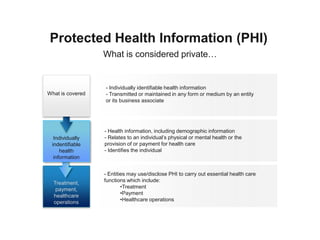
Protected Health Information (PHI)
                  What is considered private…


                  - Individually identifiable health information
What is covered   - Transmitted or maintained in any form or medium by an entity
                  or its business associate


                  - Health information, including demographic information
  Individually    - Relates to an individual’s physical or mental health or the
 indentifiable    provision of or payment for health care
     health       - Identifies the individual
  information


                  - Entities may use/disclose PHI to carry out essential health care
  Treatment,      functions which include:
   payment,               •Treatment
  healthcare              •Payment
  operations              •Healthcare operations
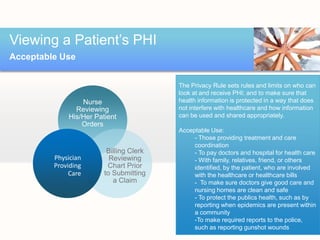
Viewing a Patient’s PHI
Acceptable Use


                                         The Privacy Rule sets rules and limits on who can
                                         look at and receive PHI; and to make sure that
                 Nurse                   health information is protected in a way that does
               Reviewing                 not interfere with healthcare and how information
             His/Her Patient             can be used and shared appropriately.
                 Orders
                                         Acceptable Use:
                                              - Those providing treatment and care
                                              coordination
                         Billing Clerk        - To pay doctors and hospital for health care
         Physician        Reviewing           - With family, relatives, friend, or others
         Providing       Chart Prior          identified, by the patient, who are involved
              Care      to Submitting         with the healthcare or healthcare bills
                           a Claim            - To make sure doctors give good care and
                                              nursing homes are clean and safe
                                              - To protect the publics health, such as by
                                              reporting when epidemics are present within
                                              a community
                                              -To make required reports to the police,
                                              such as reporting gunshot wounds
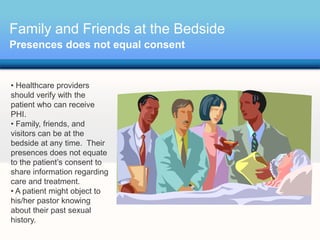
Family and Friends at the Bedside
Presences does not equal consent


• Healthcare providers
should verify with the
patient who can receive
PHI.
• Family, friends, and
visitors can be at the
bedside at any time. Their
presences does not equate
to the patient’s consent to
share information regarding
care and treatment.
• A patient might object to
his/her pastor knowing
about their past sexual
history.
•Conversations
   Be aware of your surroundings
       -Do not discuss patient information in public
       cooridoors, elevators, or in the cafeteria. You
       never know who might over hear your
       conversation.

   What happens in the facility, stays in the facility
     -Do not discuss who you see in the facility
     receiving care with family or friends.
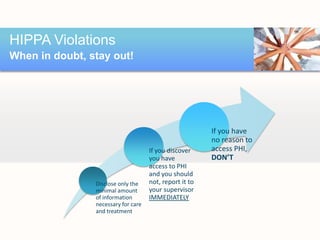
HIPPA Violations
When in doubt, stay out!


                                                         If you have
                                                         no reason to
                                     If you discover     access PHI,
                                     you have            DON’T
                                     access to PHI
                                     and you should
                Disclose only the    not, report it to
                minimal amount       your supervisor
                of information       IMMEDIATELY
                necessary for care
                and treatment
HIPPA VIOLATIONS
Consequences for non-compliance


                          Employee disciplinary action may include a written
                          warning, suspension, or termination of employment.

                          All breaches of patient privacy are subject to review
                          and further action by the U.S. Office of Civil Rights.

                          The U.S. Office of Civil Rights is the agency
                          responsible for investigating complaints and HIPPA
                          violations.

                          Criminal penalties for wrongful disclosures include:
                               - Up to $50,000 & 1 year imprisonment
                               - Up to $100,000 & 5 years if done under false
                               pretenses
                               - Up to $250,000 & 10 years if intent to sell,
                               transfer, or use for commercial advantage,
                               personal gain or malicious harm
Reporting Violations and
Breaches
• If you discover a breach
  in PHI or patient
  confidentiality,
  immediately report it to
  your supervisor.
• You may also report any
  breach to the facility’s
  HIPPA Compliance
  Officer, or anonymously
  to the organization’s 24-
  hour ethics line.
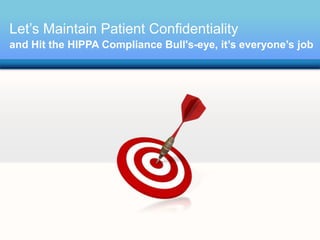
Let’s Maintain Patient Confidentiality
and Hit the HIPPA Compliance Bull's-eye, it’s everyone’s job
THANK YOU!


Reference: U.S. Department of Health and Human Services.
                                  www.hhs.gov/ocr/hipaa/

Patient privacy

  • 1.
  • 2.
    HIPPA and PatientPrivacy Education • This e-learning module has been designed to inform staff about patient privacy and the rules surrounding HIPPA. • This module will describe what is considered protected health information and the organizational compliance expectations. • Trust between our patients and the organization is paramount for quality outcomes and effective patient care. When the organization and its staff fail to protect a patient’s privacy, there can be significant organizational and employee consequences. • At the conclusion of this e-learning module, the employee’s knowledge will be tested via multiple choice questions. A 100% score is required for successful completion. HIPPA compliance and patient privacy must be exercised 100% of the time, by 100% of our employees.
  • 3.
    HIPPA The Health InsurancePortability and Accountability Act of 1996 • Key Points for HIPPA and Patient Privacy – Provide strong Federal protections for privacy rights – Preserve quality health care ♦Provide strong Federal protections for privacy rights ♦Preserve quality health care
  • 4.
    Protected Health Information(PHI) What is considered private… - Individually identifiable health information What is covered - Transmitted or maintained in any form or medium by an entity or its business associate - Health information, including demographic information Individually - Relates to an individual’s physical or mental health or the indentifiable provision of or payment for health care health - Identifies the individual information - Entities may use/disclose PHI to carry out essential health care Treatment, functions which include: payment, •Treatment healthcare •Payment operations •Healthcare operations
  • 5.
    Viewing a Patient’sPHI Acceptable Use The Privacy Rule sets rules and limits on who can look at and receive PHI; and to make sure that Nurse health information is protected in a way that does Reviewing not interfere with healthcare and how information His/Her Patient can be used and shared appropriately. Orders Acceptable Use: - Those providing treatment and care coordination Billing Clerk - To pay doctors and hospital for health care Physician Reviewing - With family, relatives, friend, or others Providing Chart Prior identified, by the patient, who are involved Care to Submitting with the healthcare or healthcare bills a Claim - To make sure doctors give good care and nursing homes are clean and safe - To protect the publics health, such as by reporting when epidemics are present within a community -To make required reports to the police, such as reporting gunshot wounds
  • 6.
    Family and Friendsat the Bedside Presences does not equal consent • Healthcare providers should verify with the patient who can receive PHI. • Family, friends, and visitors can be at the bedside at any time. Their presences does not equate to the patient’s consent to share information regarding care and treatment. • A patient might object to his/her pastor knowing about their past sexual history.
  • 7.
    •Conversations Be aware of your surroundings -Do not discuss patient information in public cooridoors, elevators, or in the cafeteria. You never know who might over hear your conversation. What happens in the facility, stays in the facility -Do not discuss who you see in the facility receiving care with family or friends.
  • 8.
    HIPPA Violations When indoubt, stay out! If you have no reason to If you discover access PHI, you have DON’T access to PHI and you should Disclose only the not, report it to minimal amount your supervisor of information IMMEDIATELY necessary for care and treatment
  • 9.
    HIPPA VIOLATIONS Consequences fornon-compliance Employee disciplinary action may include a written warning, suspension, or termination of employment. All breaches of patient privacy are subject to review and further action by the U.S. Office of Civil Rights. The U.S. Office of Civil Rights is the agency responsible for investigating complaints and HIPPA violations. Criminal penalties for wrongful disclosures include: - Up to $50,000 & 1 year imprisonment - Up to $100,000 & 5 years if done under false pretenses - Up to $250,000 & 10 years if intent to sell, transfer, or use for commercial advantage, personal gain or malicious harm
  • 10.
    Reporting Violations and Breaches •If you discover a breach in PHI or patient confidentiality, immediately report it to your supervisor. • You may also report any breach to the facility’s HIPPA Compliance Officer, or anonymously to the organization’s 24- hour ethics line.
  • 11.
    Let’s Maintain PatientConfidentiality and Hit the HIPPA Compliance Bull's-eye, it’s everyone’s job
  • 12.
    THANK YOU! Reference: U.S.Department of Health and Human Services. www.hhs.gov/ocr/hipaa/