1
Louisiana Department of Health and Hospitals
Basic HIPAA Privacy Training: Policies and Procedures
01/09/2009
2
OBJECTIVES
 At the end of this session, the participants will be
able to:
 Define and explain the HIPAA
 Identify which information is governed by the HIPAA rule
 Define Protected Health Information (PHI)
 Explain verification requirements
 Explain rules governing obtaining permission to disclose
PHI
 Discuss the employee’s role if they are aware of a HIPAA
violation
3
What Is HIPAA?
 HIPAA (pronounced hippa) is a federal law.
 It’s a set of rules and regulations that affect the
health care industry.
 They focus on the privacy and security of health
care information.
 Health care providers must comply, as HIPAA
covers:
 Health Plans
 Health Care Providers
4
What Does The Privacy Rule Say?
 Sets rules for how private information can be used.
 Keeps clients/participants more informed.
 Limits access by others.
 Requires client/participant permission.
 Allows access by clients/participants.
 Requires that rules be followed.
 Increases safeguards.
 Enforces penalties.
5
 Information about health care or payment for health
care, such as:
 Why a person is visiting the clinic or center;
 The type of treatment a person is receiving; or
 The fact that a person is receiving Medicaid.
 That:
 Identifies the person; or
 Could possibly identify the person.
 Examples of of such information include a
client/participant’s name, address, social security
number, medical record number, or photograph.
Individually Identifiable Health Information
6
Protected Health Information (PHI)
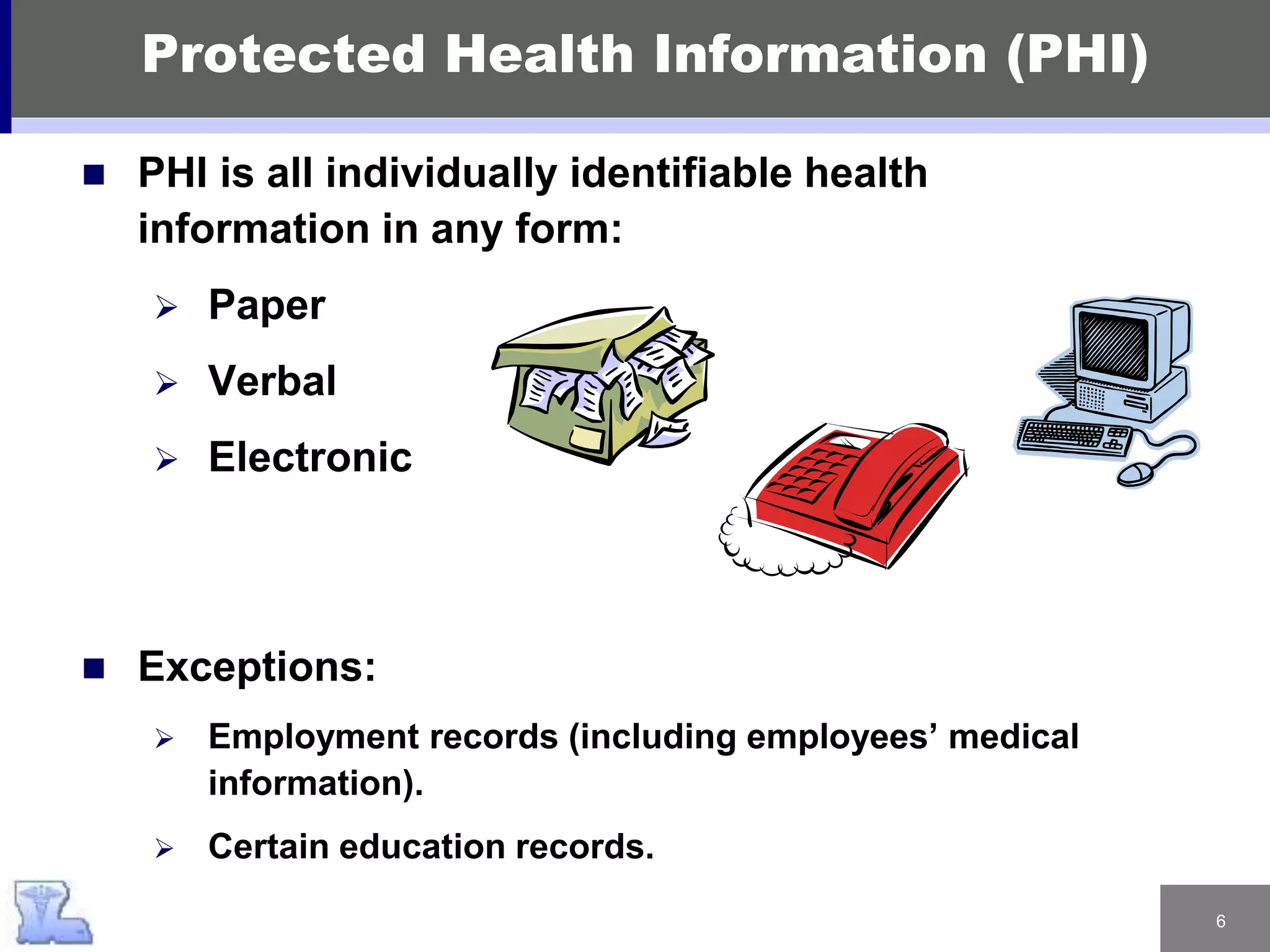
 PHI is all individually identifiable health
information in any form:
 Paper
 Verbal
 Electronic
 Exceptions:
 Employment records (including employees’ medical
information).
 Certain education records.
7
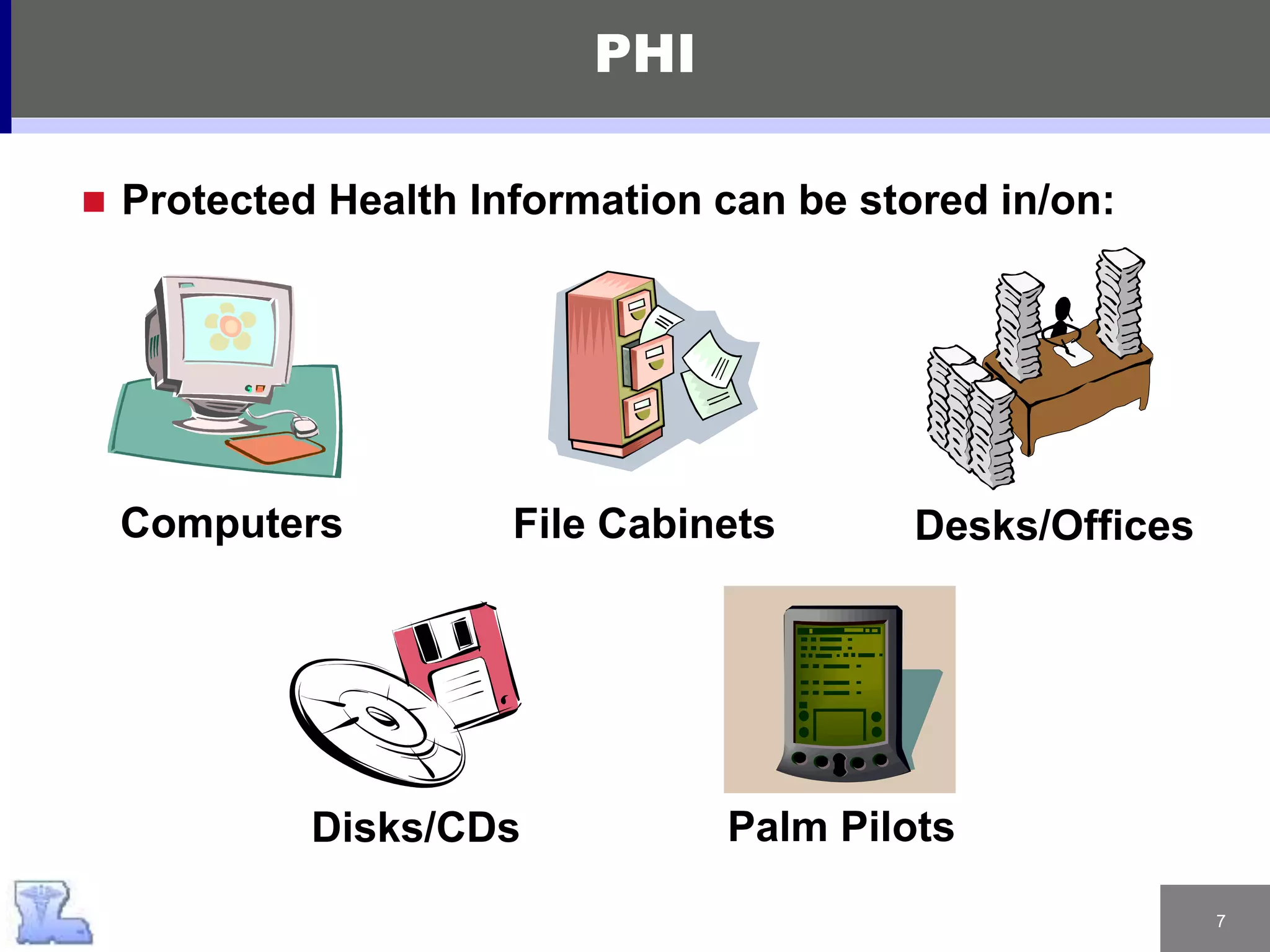
PHI
Computers File Cabinets Desks/Offices
 Protected Health Information can be stored in/on:
Disks/CDs Palm Pilots
8
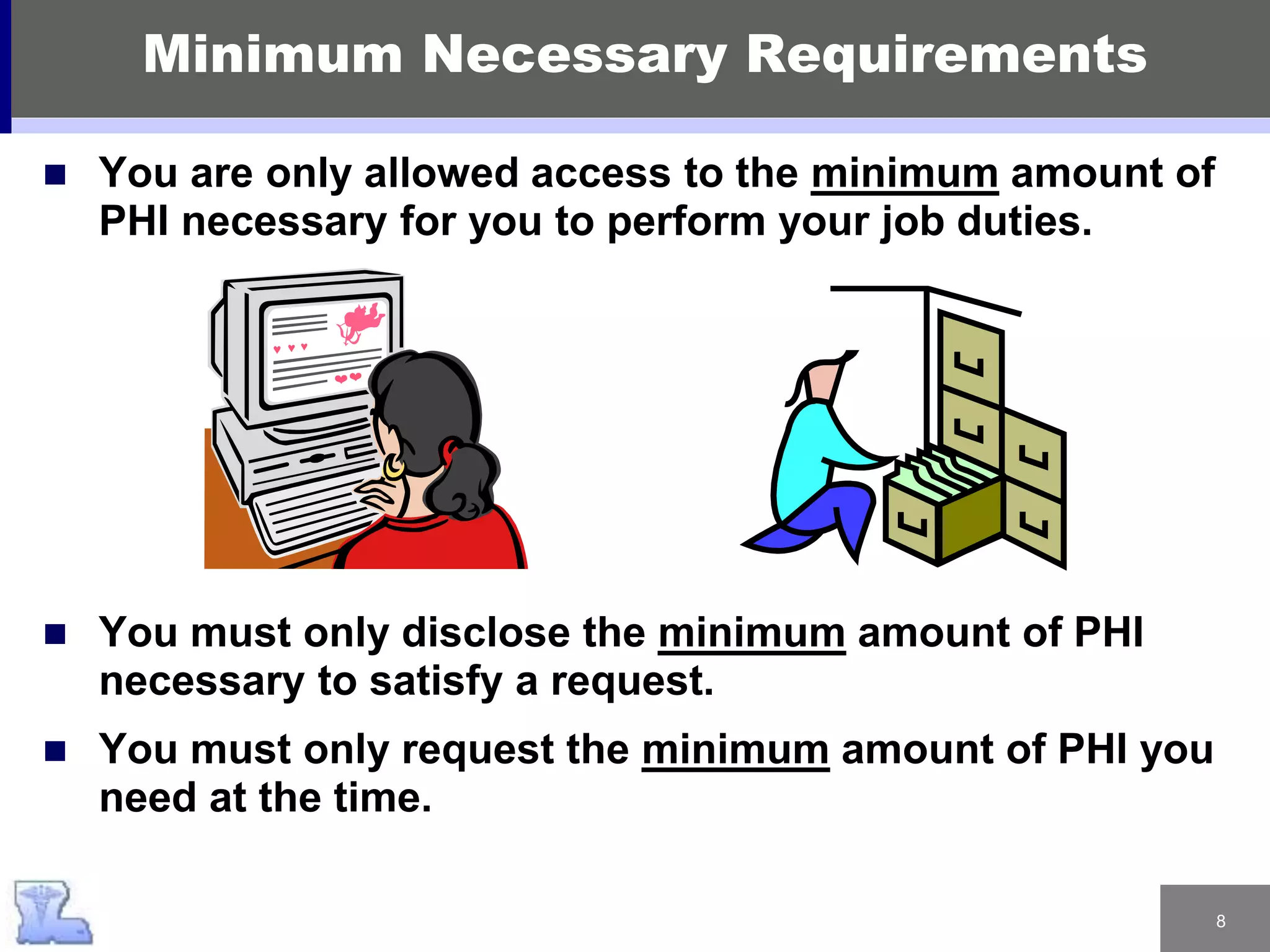
 You are only allowed access to the minimum amount of
PHI necessary for you to perform your job duties.
 You must only disclose the minimum amount of PHI
necessary to satisfy a request.
 You must only request the minimum amount of PHI you
need at the time.
Minimum Necessary Requirements
9
 The minimum necessary rule does not apply to:
 Disclosures to, or requests by, a health care provider for
treatment;
 Uses or disclosures made to the client/participant;
 Uses or disclosures that the client authorized;
 Disclosure made to the Secretary of HHS; and
 Disclosures required by law.
Minimum Necessary – Not Applicable
10
 Prior to disclosing PHI, you must:
 Verify the identity of the person requesting PHI and the authority
of that person to have access to PHI; and
 When required, get some kind of proof from the person making
the request.
Verification Requirements
11
Permission To Use or Disclose PHI?
 Client/participant authorization is not needed
before you disclose his or her PHI for treatment,
payment, and/or health care operations (TPO) .
 For Abuse Reports and Investigations.
 Generally, however, you do need specific, written
authorization from the client/participant before you
can use or disclose his or her PHI for other reasons
(unless specifically permitted by the Privacy Rule).
12
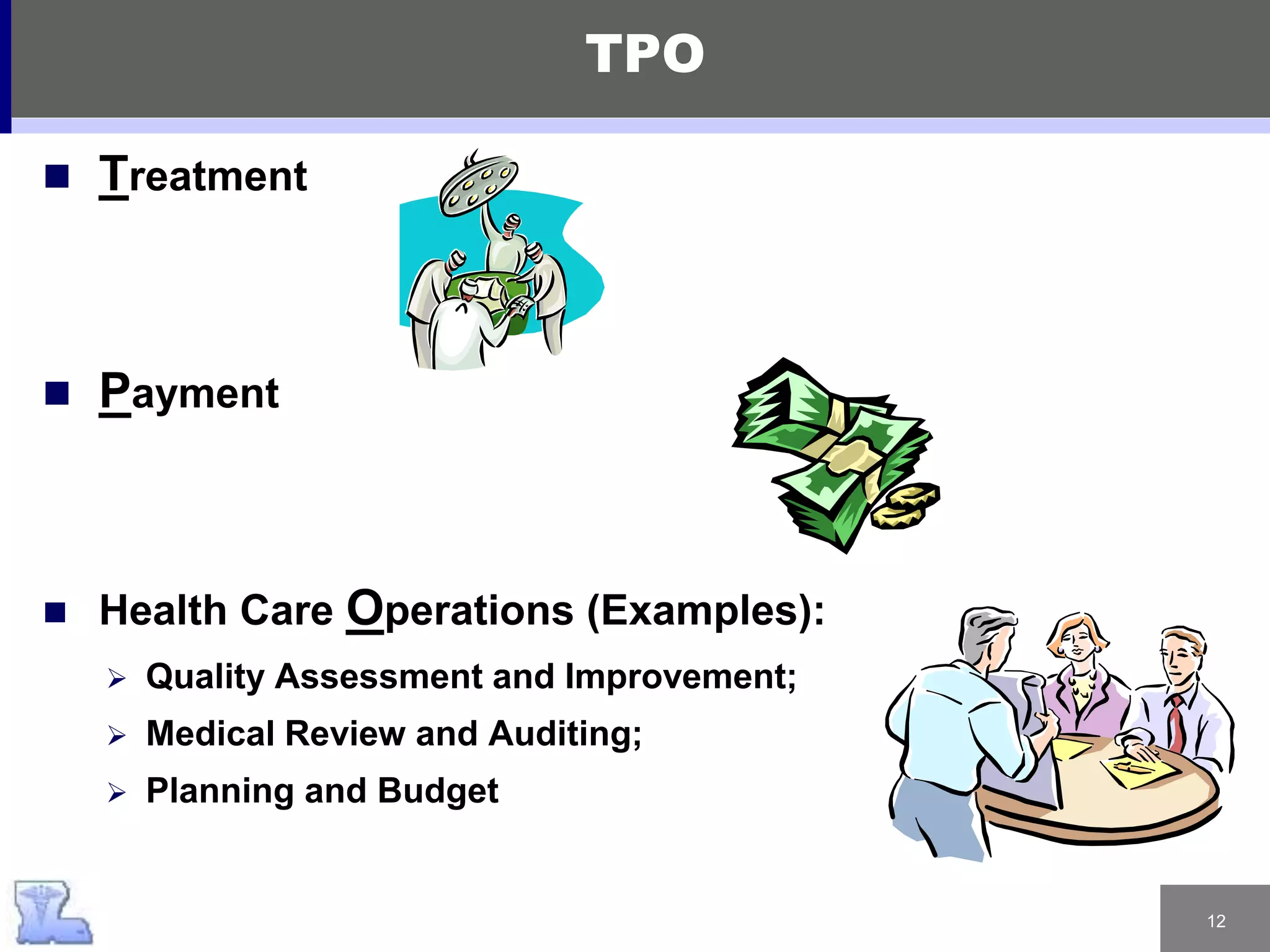
 Treatment
 Payment
 Health Care Operations (Examples):
 Quality Assessment and Improvement;
 Medical Review and Auditing;
 Planning and Budget
TPO
13
THINGS TO THINK ABOUT
 Situations that often lead to violations of
confidentiality
 Discussing work with family and friends
 Informal discussions with colleagues
 Hallway, elevator, lunch break, grocery store
 Social gathering
 Office parties, etc
 Incoming phone calls
 Attentive repairman
14
Administrative Requirements
 Failure to comply with HIPAA is a violation of
federal law.
 You could even be fined and jailed if you break
the law.
15
If You See A Problem…
 If you see or hear about someone who is in violation
of HIPAA requirements and procedures, you should
tell your supervisor.
 All reports should be investigated.
16
Prohibition on Retaliatory Acts
 An employer is bound by law to protect a
workforce member from harassment or retaliatory
actions if he or she reports a suspected privacy
violation.
17
Crime Victims
 You are allowed to disclose PHI to law enforcement
without the client/participant’s authorization when:
 The PHI disclosed is about the person suspected of a
criminal act; and
 The PHI disclosed is limited to information relevant to
identifying the suspect and the nature of any injury.
18
Remember…
 If you are unsure about how to proceed
in a certain situation involving PHI, ask
your supervisor.
19
Remember…
 Do not discuss any PHI you see or hear while
performing your job with anyone unless necessary!
20
Remember…
 There are significant penalties for misuse of PHI.
21
THE END

CONFIDENTIALITYANDHIPAA.ppt

  • 1.
    1 Louisiana Department ofHealth and Hospitals Basic HIPAA Privacy Training: Policies and Procedures 01/09/2009
  • 2.
    2 OBJECTIVES  At theend of this session, the participants will be able to:  Define and explain the HIPAA  Identify which information is governed by the HIPAA rule  Define Protected Health Information (PHI)  Explain verification requirements  Explain rules governing obtaining permission to disclose PHI  Discuss the employee’s role if they are aware of a HIPAA violation
  • 3.
    3 What Is HIPAA? HIPAA (pronounced hippa) is a federal law.  It’s a set of rules and regulations that affect the health care industry.  They focus on the privacy and security of health care information.  Health care providers must comply, as HIPAA covers:  Health Plans  Health Care Providers
  • 4.
    4 What Does ThePrivacy Rule Say?  Sets rules for how private information can be used.  Keeps clients/participants more informed.  Limits access by others.  Requires client/participant permission.  Allows access by clients/participants.  Requires that rules be followed.  Increases safeguards.  Enforces penalties.
  • 5.
    5  Information abouthealth care or payment for health care, such as:  Why a person is visiting the clinic or center;  The type of treatment a person is receiving; or  The fact that a person is receiving Medicaid.  That:  Identifies the person; or  Could possibly identify the person.  Examples of of such information include a client/participant’s name, address, social security number, medical record number, or photograph. Individually Identifiable Health Information
  • 6.
    6 Protected Health Information(PHI)  PHI is all individually identifiable health information in any form:  Paper  Verbal  Electronic  Exceptions:  Employment records (including employees’ medical information).  Certain education records.
  • 7.
    7 PHI Computers File CabinetsDesks/Offices  Protected Health Information can be stored in/on: Disks/CDs Palm Pilots
  • 8.
    8  You areonly allowed access to the minimum amount of PHI necessary for you to perform your job duties.  You must only disclose the minimum amount of PHI necessary to satisfy a request.  You must only request the minimum amount of PHI you need at the time. Minimum Necessary Requirements
  • 9.
    9  The minimumnecessary rule does not apply to:  Disclosures to, or requests by, a health care provider for treatment;  Uses or disclosures made to the client/participant;  Uses or disclosures that the client authorized;  Disclosure made to the Secretary of HHS; and  Disclosures required by law. Minimum Necessary – Not Applicable
  • 10.
    10  Prior todisclosing PHI, you must:  Verify the identity of the person requesting PHI and the authority of that person to have access to PHI; and  When required, get some kind of proof from the person making the request. Verification Requirements
  • 11.
    11 Permission To Useor Disclose PHI?  Client/participant authorization is not needed before you disclose his or her PHI for treatment, payment, and/or health care operations (TPO) .  For Abuse Reports and Investigations.  Generally, however, you do need specific, written authorization from the client/participant before you can use or disclose his or her PHI for other reasons (unless specifically permitted by the Privacy Rule).
  • 12.
    12  Treatment  Payment Health Care Operations (Examples):  Quality Assessment and Improvement;  Medical Review and Auditing;  Planning and Budget TPO
  • 13.
    13 THINGS TO THINKABOUT  Situations that often lead to violations of confidentiality  Discussing work with family and friends  Informal discussions with colleagues  Hallway, elevator, lunch break, grocery store  Social gathering  Office parties, etc  Incoming phone calls  Attentive repairman
  • 14.
    14 Administrative Requirements  Failureto comply with HIPAA is a violation of federal law.  You could even be fined and jailed if you break the law.
  • 15.
    15 If You SeeA Problem…  If you see or hear about someone who is in violation of HIPAA requirements and procedures, you should tell your supervisor.  All reports should be investigated.
  • 16.
    16 Prohibition on RetaliatoryActs  An employer is bound by law to protect a workforce member from harassment or retaliatory actions if he or she reports a suspected privacy violation.
  • 17.
    17 Crime Victims  Youare allowed to disclose PHI to law enforcement without the client/participant’s authorization when:  The PHI disclosed is about the person suspected of a criminal act; and  The PHI disclosed is limited to information relevant to identifying the suspect and the nature of any injury.
  • 18.
    18 Remember…  If youare unsure about how to proceed in a certain situation involving PHI, ask your supervisor.
  • 19.
    19 Remember…  Do notdiscuss any PHI you see or hear while performing your job with anyone unless necessary!
  • 20.
    20 Remember…  There aresignificant penalties for misuse of PHI.
  • 21.