
WHAT IS PATIENT COUNSELLING?
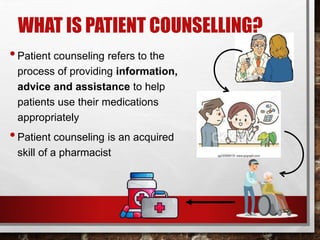
•Patient counseling refers to the
process of providing information,
advice and assistance to help
patients use their medications
appropriately
•Patient counseling is an acquired
skill of a pharmacist
OBJECTIVES
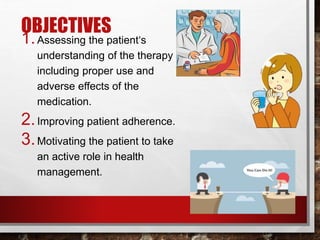
1.Assessing the patient‘s
understanding of the therapy
including proper use and
adverse effects of the
medication.
2.Improving patient adherence.
3.Motivating the patient to take
an active role in health
management.
•Studies have shown that patient counseling can
improve patient care in various ways
1.Reducing medication errors.
2.Increasing patients understanding and
management of their medical condition.
3.Minimizing incidence of adverse drug reactions
and drug-drug interactions.
4.Improving patient outcomes and satisfaction with
care.
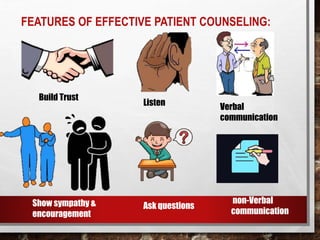
FEATURES OF EFFECTIVE PATIENT COUNSELING:
Build Trust
Listen Verbal
communication
non-Verbal
communication
Ask questions
Show sympathy &
encouragement
WHY PHARMACISTS SHOULD
COUNSEL PATIENTS?
• Improved therapeutic outcomes and decreased adverse effects
• Improved patient adherence to the treatment plan
• decreased medication errors and misuse
• Enhanced patient self-management by involving the patient in
designing the therapeutic plan.
• Potential for decreased health care costs due to appropriate use
of medications and prevention of adverse events.
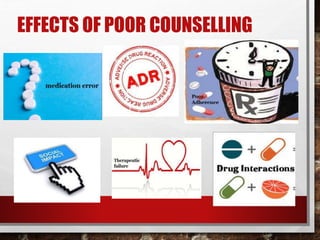
EFFECTS OF POOR COUNSELLING
STEPS INVOLVED IN PATIENT COUNSELLING
• INTRODUCTION
• UNDERSTANDING THE PATIENT
• UNDERSTANDING PATIENTS MEDICAL CONDITION
• COUNSELLING ABOUT PRESCRIBED MEDICATIONS
• COUNSELLING ABOUT MAJOR SIDE EFFECTS
• COUNSELLING ABOUT DRUG INTERACTION
• PRECAUTIONS
• REFILL INFORMATION
• ENSURE ABOUT UNDERSTANDING OF PATIENT
• ASKING ANY QUERIES
KEY POINTS COVER DURING COUNSELLING
• NAME , STRENGTH DOSAGE, ROUTE OF ADMINISTRATION,
PURPOSE, EXPECTED BENEFITS OF MEDICATIONS
• HOW AND WHEN TO TAKE MEDICATIONS
• ADVERSE EFFECTS ASSOCIATED WITH THE USE OF
MEDICATIONS
• PRECAUTIONS, CONTRAINDICATIONS, DRUG
INTERACTIONS
• REFILL INFORMATION AND FOLLOW UP
• ASK PATIENTS IF HE HAS ANY QUESTIONS
PATIENT COUNSELLING.pptx

PATIENT COUNSELLING.pptx

  • 2.
    WHAT IS PATIENTCOUNSELLING? •Patient counseling refers to the process of providing information, advice and assistance to help patients use their medications appropriately •Patient counseling is an acquired skill of a pharmacist
  • 3.
    OBJECTIVES 1.Assessing the patient‘s understandingof the therapy including proper use and adverse effects of the medication. 2.Improving patient adherence. 3.Motivating the patient to take an active role in health management.
  • 4.
    •Studies have shownthat patient counseling can improve patient care in various ways 1.Reducing medication errors. 2.Increasing patients understanding and management of their medical condition. 3.Minimizing incidence of adverse drug reactions and drug-drug interactions. 4.Improving patient outcomes and satisfaction with care.
  • 5.
    FEATURES OF EFFECTIVEPATIENT COUNSELING: Build Trust Listen Verbal communication non-Verbal communication Ask questions Show sympathy & encouragement
  • 6.
    WHY PHARMACISTS SHOULD COUNSELPATIENTS? • Improved therapeutic outcomes and decreased adverse effects • Improved patient adherence to the treatment plan • decreased medication errors and misuse • Enhanced patient self-management by involving the patient in designing the therapeutic plan. • Potential for decreased health care costs due to appropriate use of medications and prevention of adverse events.
  • 7.
    EFFECTS OF POORCOUNSELLING
  • 8.
    STEPS INVOLVED INPATIENT COUNSELLING • INTRODUCTION • UNDERSTANDING THE PATIENT • UNDERSTANDING PATIENTS MEDICAL CONDITION • COUNSELLING ABOUT PRESCRIBED MEDICATIONS • COUNSELLING ABOUT MAJOR SIDE EFFECTS • COUNSELLING ABOUT DRUG INTERACTION • PRECAUTIONS • REFILL INFORMATION • ENSURE ABOUT UNDERSTANDING OF PATIENT • ASKING ANY QUERIES
  • 9.
    KEY POINTS COVERDURING COUNSELLING • NAME , STRENGTH DOSAGE, ROUTE OF ADMINISTRATION, PURPOSE, EXPECTED BENEFITS OF MEDICATIONS • HOW AND WHEN TO TAKE MEDICATIONS • ADVERSE EFFECTS ASSOCIATED WITH THE USE OF MEDICATIONS • PRECAUTIONS, CONTRAINDICATIONS, DRUG INTERACTIONS • REFILL INFORMATION AND FOLLOW UP • ASK PATIENTS IF HE HAS ANY QUESTIONS