Sarah Gioconda
EDU 274
28 September 2012

GLOBAL COMPETITIVENESS
WHAT DOES IT MEAN TO BE GLOBALLY
COMPETITIVE?
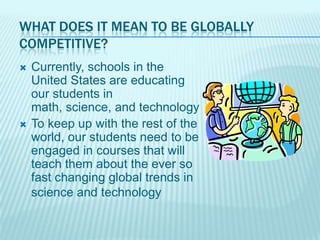
   Currently, schools in the
    United States are educating
    our students in
    math, science, and technology
   To keep up with the rest of the
    world, our students need to be
    engaged in courses that will
    teach them about the ever so
    fast changing global trends in
    science and technology
INTERNATIONAL RANKINGS


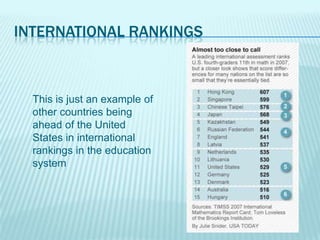
  This is just an example of
  other countries being
  ahead of the United
  States in international
  rankings in the education
  system
TRENDS IN TOP RANKED COUNTRIES
   The United States education system has been
    pushed to the back of recent international rankings
   Our preceding countries are educating their
    students under completely different circumstances
    and have better test scores to prove it.
   The United States are the only country that uses
    multiple choice tests on a regular basis. Other
    countries use essay style question tests because it
    allows the students to think critically and creatively
SINGAPORE
   Singapore is a relatively new nation with a surprisingly high ranking in
    global competitiveness
   Because Singapore is so new, they felt they had to produce an
    education system that would give the people in their community the
    ability to get involved with the fast changing economy
   English is the primary language for education
   They are so successful and competitive today that parents are signing
    their children up as early as age six for 2nd language classes
   Students are required to be bilingual; English, and either Malay, Indian,
    and Mandarin Chinese must be taken in school
   “Streaming” is a process which divides the students up into types of
    schools, each designed for a different college pathway
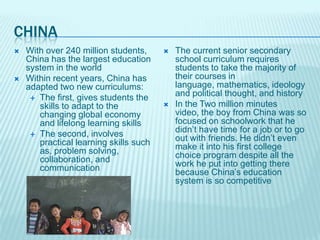
CHINA
   With over 240 million students,        The current senior secondary
    China has the largest education         school curriculum requires
    system in the world                     students to take the majority of
   Within recent years, China has          their courses in
    adapted two new curriculums:            language, mathematics, ideology
      The first, gives students the
                                            and political thought, and history
       skills to adapt to the              In the Two million minutes
       changing global economy              video, the boy from China was so
       and lifelong learning skills         focused on schoolwork that he
      The second, involves
                                            didn’t have time for a job or to go
       practical learning skills such       out with friends. He didn’t even
       as, problem solving,                 make it into his first college
       collaboration, and                   choice program despite all the
       communication                        work he put into getting there
                                            because China’s education
                                            system is so competitive
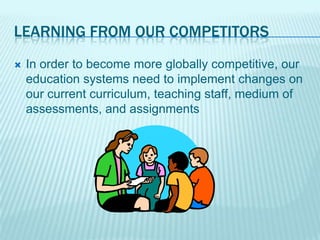
LEARNING FROM OUR COMPETITORS
   In order to become more globally competitive, our
    education systems need to implement changes on
    our current curriculum, teaching staff, medium of
    assessments, and assignments
CIRRICULUM

What we need:
   Current Events- to keep students aware of the changing
    world around them
   Science and Technology- to allow students to dig deeper in
    understanding and discovery
   Foreign Language- learning (an) additional language is
    helpful to students for perusing careers that communicate in
    other countries
   Different Cultures- students need to be able to respect other
    countries and understand their way of life
CIRRICULUM (CON’T)

 Redesign high school curriculum's to challenge
  students further and motivate academic
  competitiveness
 Have a curriculum that is more focused on the
  deeper/detailed meaning of fewer subjects
  rather than broad covering of many subjects
 Promote individual development in research
  assignments that allow students to address the
  global economy
TEACHERS/EDUCATORS
   In the United States, it is very easy to get a teaching degree
   We need to be sure that the teachers going into our schools
    have the correct skills to teach our youth
   The teaching program in Singapore was much more in
    depth and the teachers are regularly evaluated to make sure
    they are performing up to potential
   Students need to be given the skills and attitudes that will
    help them be successful and active in the global economy
   Students should be encouraged to actively participate,
    which teaches them analytical thinking, problem solving,
    and enhances their creativity
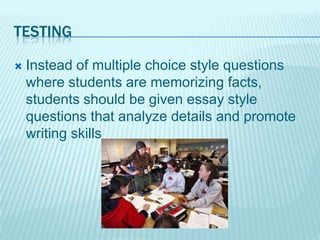
TESTING

   Instead of multiple choice style questions
    where students are memorizing facts,
    students should be given essay style
    questions that analyze details and promote
    writing skills
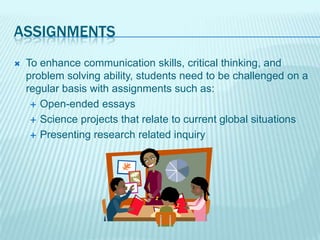
ASSIGNMENTS
   To enhance communication skills, critical thinking, and
    problem solving ability, students need to be challenged on a
    regular basis with assignments such as:
      Open-ended essays

      Science projects that relate to current global situations

      Presenting research related inquiry
REFRENCES
Readings:
Darling-Hammond, Linda, and Laura McCloskey. “What Would It Mean to be
          Internationally Competitive?” Assessment for Learning Around the World.
          90.04 (2008): 263-272. Print
Learning From Singapore: The Findings of a Delegation of North Carolinians That Examined
          Education and the Economy. 2008. 1-32. Print.

Mazurek, Kas, and Margret Winzer. Schooling Around the World. Boston: Pearson
          Education, 2006. 72-83. Print
Stewart, Vivien. “Becoming Citizens of the World.” Prepared Graduate. 64.7 (2007): 8-14.
          Print

Pictures:
http://media.oregonlive.com/education_impact/photo/10983803-large.jpg
httpwww.usatoday.com/news/education/story/2012-02-16/us-schools-global-
    ranking/53110494/1://
http://www.bbc.co.uk/news/business-17585201
http://www.mapsofworld.com/images/world-countries-flags/singapore-flag.gif

Passport 1 Sarah Gioconda

  • 1.
    Sarah Gioconda EDU 274 28September 2012 GLOBAL COMPETITIVENESS
  • 2.
    WHAT DOES ITMEAN TO BE GLOBALLY COMPETITIVE?  Currently, schools in the United States are educating our students in math, science, and technology  To keep up with the rest of the world, our students need to be engaged in courses that will teach them about the ever so fast changing global trends in science and technology
  • 3.
    INTERNATIONAL RANKINGS This is just an example of other countries being ahead of the United States in international rankings in the education system
  • 4.
    TRENDS IN TOPRANKED COUNTRIES  The United States education system has been pushed to the back of recent international rankings  Our preceding countries are educating their students under completely different circumstances and have better test scores to prove it.  The United States are the only country that uses multiple choice tests on a regular basis. Other countries use essay style question tests because it allows the students to think critically and creatively
  • 5.
    SINGAPORE  Singapore is a relatively new nation with a surprisingly high ranking in global competitiveness  Because Singapore is so new, they felt they had to produce an education system that would give the people in their community the ability to get involved with the fast changing economy  English is the primary language for education  They are so successful and competitive today that parents are signing their children up as early as age six for 2nd language classes  Students are required to be bilingual; English, and either Malay, Indian, and Mandarin Chinese must be taken in school  “Streaming” is a process which divides the students up into types of schools, each designed for a different college pathway
  • 6.
    CHINA  With over 240 million students,  The current senior secondary China has the largest education school curriculum requires system in the world students to take the majority of  Within recent years, China has their courses in adapted two new curriculums: language, mathematics, ideology  The first, gives students the and political thought, and history skills to adapt to the  In the Two million minutes changing global economy video, the boy from China was so and lifelong learning skills focused on schoolwork that he  The second, involves didn’t have time for a job or to go practical learning skills such out with friends. He didn’t even as, problem solving, make it into his first college collaboration, and choice program despite all the communication work he put into getting there because China’s education system is so competitive
  • 7.
    LEARNING FROM OURCOMPETITORS  In order to become more globally competitive, our education systems need to implement changes on our current curriculum, teaching staff, medium of assessments, and assignments
  • 8.
    CIRRICULUM What we need:  Current Events- to keep students aware of the changing world around them  Science and Technology- to allow students to dig deeper in understanding and discovery  Foreign Language- learning (an) additional language is helpful to students for perusing careers that communicate in other countries  Different Cultures- students need to be able to respect other countries and understand their way of life
  • 9.
    CIRRICULUM (CON’T)  Redesignhigh school curriculum's to challenge students further and motivate academic competitiveness  Have a curriculum that is more focused on the deeper/detailed meaning of fewer subjects rather than broad covering of many subjects  Promote individual development in research assignments that allow students to address the global economy
  • 10.
    TEACHERS/EDUCATORS  In the United States, it is very easy to get a teaching degree  We need to be sure that the teachers going into our schools have the correct skills to teach our youth  The teaching program in Singapore was much more in depth and the teachers are regularly evaluated to make sure they are performing up to potential  Students need to be given the skills and attitudes that will help them be successful and active in the global economy  Students should be encouraged to actively participate, which teaches them analytical thinking, problem solving, and enhances their creativity
  • 11.
    TESTING  Instead of multiple choice style questions where students are memorizing facts, students should be given essay style questions that analyze details and promote writing skills
  • 12.
    ASSIGNMENTS  To enhance communication skills, critical thinking, and problem solving ability, students need to be challenged on a regular basis with assignments such as:  Open-ended essays  Science projects that relate to current global situations  Presenting research related inquiry
  • 13.
    REFRENCES Readings: Darling-Hammond, Linda, andLaura McCloskey. “What Would It Mean to be Internationally Competitive?” Assessment for Learning Around the World. 90.04 (2008): 263-272. Print Learning From Singapore: The Findings of a Delegation of North Carolinians That Examined Education and the Economy. 2008. 1-32. Print. Mazurek, Kas, and Margret Winzer. Schooling Around the World. Boston: Pearson Education, 2006. 72-83. Print Stewart, Vivien. “Becoming Citizens of the World.” Prepared Graduate. 64.7 (2007): 8-14. Print Pictures: http://media.oregonlive.com/education_impact/photo/10983803-large.jpg httpwww.usatoday.com/news/education/story/2012-02-16/us-schools-global- ranking/53110494/1:// http://www.bbc.co.uk/news/business-17585201 http://www.mapsofworld.com/images/world-countries-flags/singapore-flag.gif