Bolivarian Republic of Venezuela
Ministry of Popular Power for Higher Education
I.U.P. ''Santiago Mariño''
Extension-Porlamar. Edo. Nueva Esparta
Made by:
Doriana Rojas
C.I. 20,537,308
Subject: English II
Porlamar, January 19, 2015
PASSIVE VOICE
 Definition.
The passive voice is a grammatical voice that is common in many languages.
The passive is used in a clause whose subject or patient expresses the theme of
the main verb. That means that the subject is subjected to an action or changed
status. A sentence whose subject is marked as grammatical subject is called
passive sentence. Conversely, a prayer in which the subject has the role of agent
is called active prayer, and his word is expressed in active voice. Many languages
have both active and passive voice; this allows greater flexibility in the construction
of a sentence, and the semantic agent or the patient can take the role of syntactic
subject.
Transforming an active verb to liability is a process of decreasing valence
("detransitivizing process"), because it transforms transitive verbs intransitive
verbs.
The use of the passive voice allows speakers to organize parts of speech by
placing figures other than the agent in subject position. This can be used to
highlight the patient, vessel or another thematic role. The passive voice can also
be useful when the semantic patient is the subject of an ongoing discussion. The
passive voice can also be used to avoid specifying the agent of an action.
 Features.
"The passive voice in English is generally used in written records in scientific
articles and papers, but also in newspapers or other formal documents.
We usually focus on the actors who star actions, HOWEVER, the passive voice
allows us to speak of objects, processes or persons who are liable for actions
taken by others, and thus give prominence to our discourse. "
It is said that a sentence is in the passive voice when the significance of the verb
is received by the grammatical person that relates:
EJM: San Juan de Pasto was founded by Sebastián de Belalcázar.
 Types of passive depending tenses.
In English there are 2 types of passive:
• direct passive object
• passive indirect object
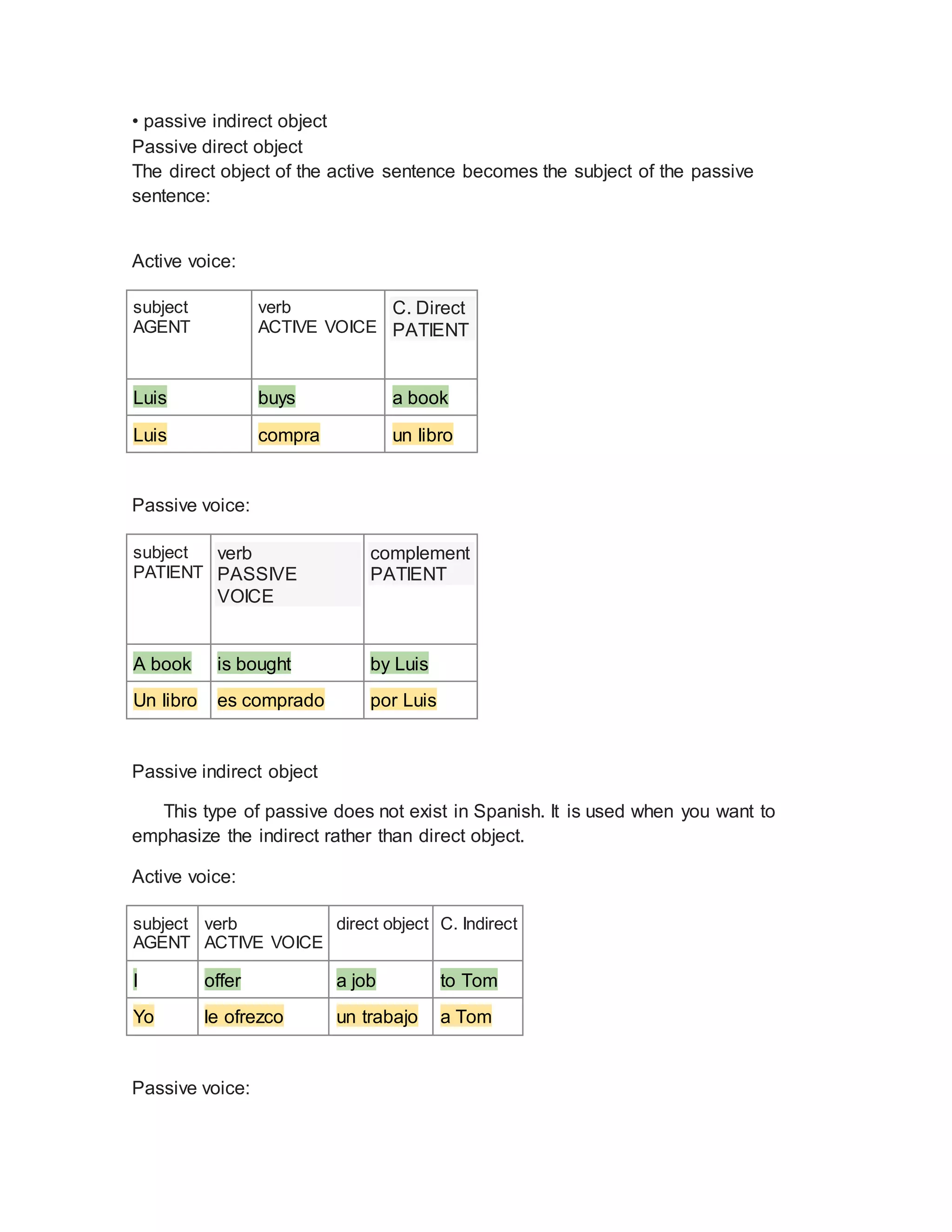
Passive direct object
The direct object of the active sentence becomes the subject of the passive
sentence:
Active voice:
subject
AGENT
verb
ACTIVE VOICE
C. Direct
PATIENT
Luis buys a book
Luis compra un libro
Passive voice:
subject
PATIENT
verb
PASSIVE
VOICE
complement
PATIENT
A book is bought by Luis
Un libro es comprado por Luis
Passive indirect object
This type of passive does not exist in Spanish. It is used when you want to
emphasize the indirect rather than direct object.
Active voice:
subject
AGENT
verb
ACTIVE VOICE
direct object C. Indirect
I offer a job to Tom
Yo le ofrezco un trabajo a Tom
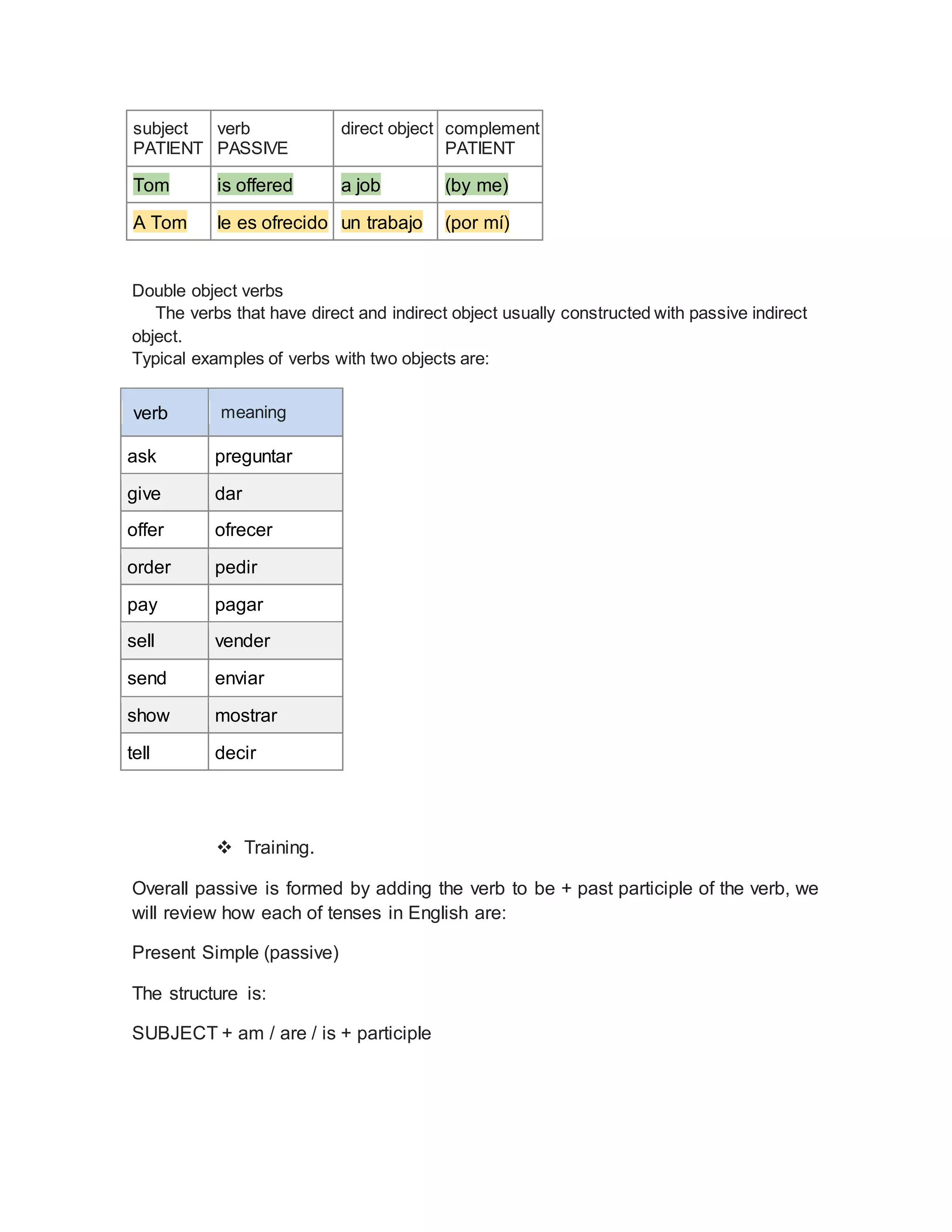
Passive voice:
subject
PATIENT
verb
PASSIVE
direct object complement
PATIENT
Tom is offered a job (by me)
A Tom le es ofrecido un trabajo (por mí)
Double object verbs
The verbs that have direct and indirect object usually constructed with passive indirect
object.
Typical examples of verbs with two objects are:
verb meaning
ask preguntar
give dar
offer ofrecer
order pedir
pay pagar
sell vender
send enviar
show mostrar
tell decir
 Training.
Overall passive is formed by adding the verb to be + past participle of the verb, we
will review how each of tenses in English are:
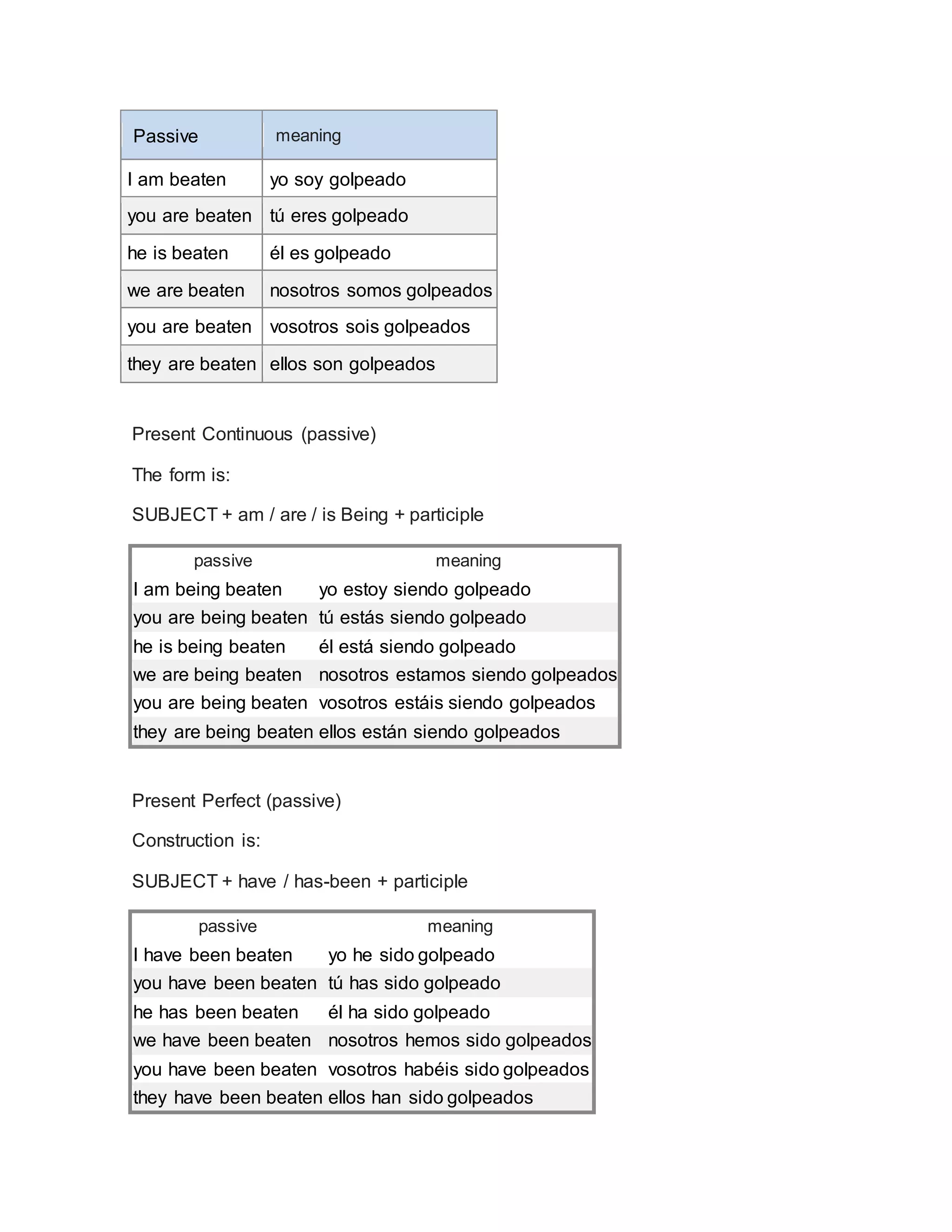
Present Simple (passive)
The structure is:
SUBJECT + am / are / is + participle
Passive meaning
I am beaten yo soy golpeado
you are beaten tú eres golpeado
he is beaten él es golpeado
we are beaten nosotros somos golpeados
you are beaten vosotros sois golpeados
they are beaten ellos son golpeados
Present Continuous (passive)
The form is:
SUBJECT + am / are / is Being + participle
passive meaning
I am being beaten yo estoy siendo golpeado
you are being beaten tú estás siendo golpeado
he is being beaten él está siendo golpeado
we are being beaten nosotros estamos siendo golpeados
you are being beaten vosotros estáis siendo golpeados
they are being beaten ellos están siendo golpeados
Present Perfect (passive)
Construction is:
SUBJECT + have / has-been + participle
passive meaning
I have been beaten yo he sido golpeado
you have been beaten tú has sido golpeado
he has been beaten él ha sido golpeado
we have been beaten nosotros hemos sido golpeados
you have been beaten vosotros habéis sido golpeados
they have been beaten ellos han sido golpeados
Future Simple (passive)
The structure is:
SUBJECT + will be + participle
passive meaning
I will be beaten yo seré golpeado
you will be beaten tú serás golpeado
he will be beaten él será golpeado
we will be beaten nosotros seremos golpeados
you will be beaten vosotros seréis golpeados
they will be beaten ellos serán golpeados
Progressive Future (passive)
The structure is:
SUBJECT + will be + participle
passive meaning
I will be being beaten yo estaré siendo golpeado
you will be being beaten tú estaré siendo golpeado
he will be being beaten él estará siendo golpeado
we will be being beaten nosotros estaremos siendo golpeados
you will be being beaten vosotros estaréis siendo golpeados
they will be being beaten ellos estarán siendo golpeados
Future going to (passive)
The structure is:
SUBJECT + am / are / is going to be + participle
passive meaning
I am going to be beaten yo voy a ser golpeado
you are going to be beaten tú vas a ser golpeado
he is going to be beaten él va a ser golpeado
we are going to be beaten nosotros vamos a ser golpeados
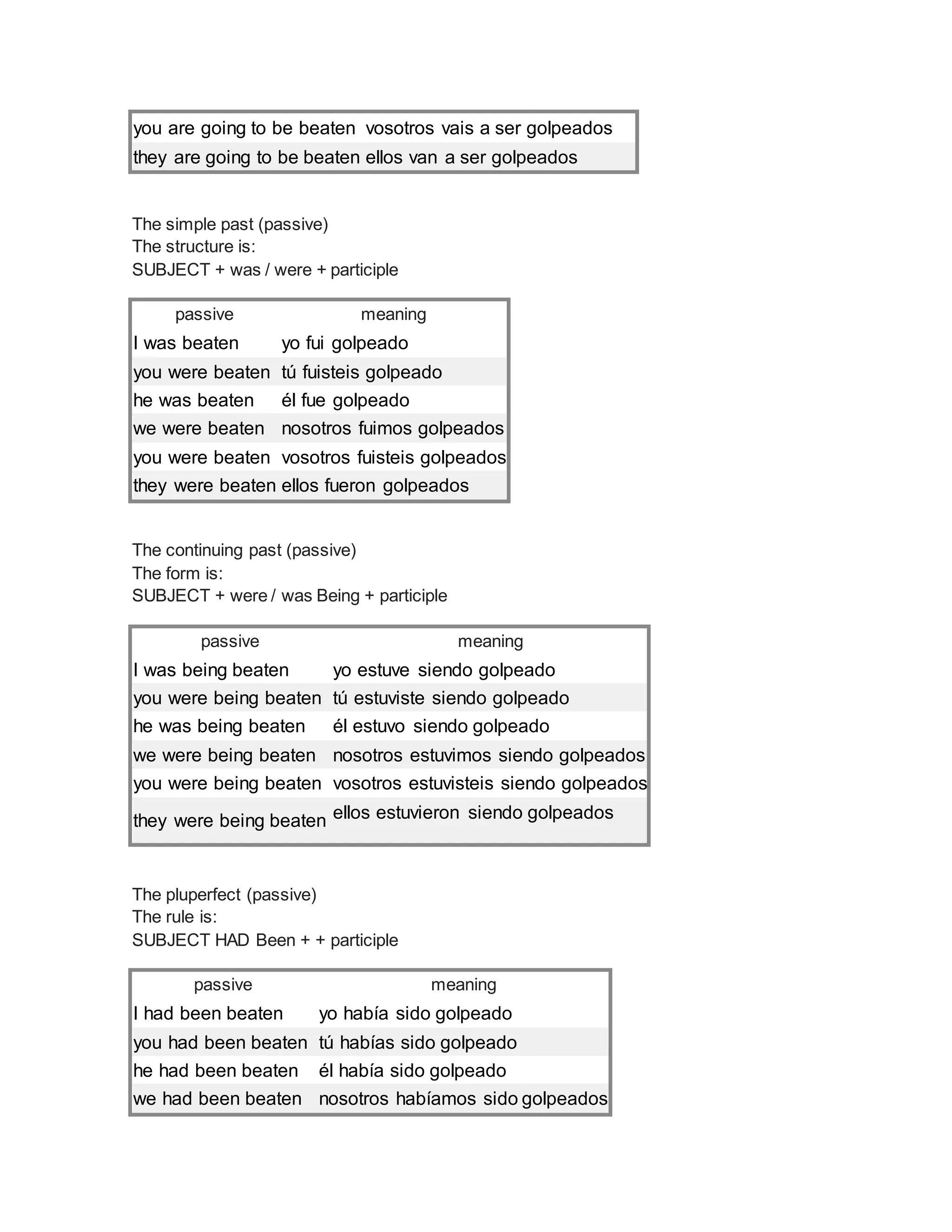
you are going to be beaten vosotros vais a ser golpeados
they are going to be beaten ellos van a ser golpeados
The simple past (passive)
The structure is:
SUBJECT + was / were + participle
passive meaning
I was beaten yo fui golpeado
you were beaten tú fuisteis golpeado
he was beaten él fue golpeado
we were beaten nosotros fuimos golpeados
you were beaten vosotros fuisteis golpeados
they were beaten ellos fueron golpeados
The continuing past (passive)
The form is:
SUBJECT + were / was Being + participle
passive meaning
I was being beaten yo estuve siendo golpeado
you were being beaten tú estuviste siendo golpeado
he was being beaten él estuvo siendo golpeado
we were being beaten nosotros estuvimos siendo golpeados
you were being beaten vosotros estuvisteis siendo golpeados
they were being beaten ellos estuvieron siendo golpeados
The pluperfect (passive)
The rule is:
SUBJECT HAD Been + + participle
passive meaning
I had been beaten yo había sido golpeado
you had been beaten tú habías sido golpeado
he had been beaten él había sido golpeado
we had been beaten nosotros habíamos sido golpeados
you had been beaten vosotros habíais sido golpeados
they had been beaten ellos habían sido golpeados
The continuous pluperfect (passive)
The form is:
SUBJECT HAD Been + Being + participle
passive meaning
I had been being beaten yo había estado siendo golpeado
you had been being beaten tú habías estado siendo golpeado
he had been being beaten él había estado siendo golpeado
we had been being beaten nosotros habíamos estado siendo golpeados
you had been being beaten vosotros habíais estado siendo golpeados
they had been being beaten ellos habían estado siendo golpeados
 The passive with modal verbs.
The architecture is:
SUBJECT + VERB MODAL + be + participle
can
The file can not be saved
You could be eaten by a lion
may
A car may be stolen
The accident might be caused by poor visibility
Must
Respect must be earned

Passive voive

  • 1.
    Bolivarian Republic ofVenezuela Ministry of Popular Power for Higher Education I.U.P. ''Santiago Mariño'' Extension-Porlamar. Edo. Nueva Esparta Made by: Doriana Rojas C.I. 20,537,308 Subject: English II Porlamar, January 19, 2015
  • 2.
    PASSIVE VOICE  Definition. Thepassive voice is a grammatical voice that is common in many languages. The passive is used in a clause whose subject or patient expresses the theme of the main verb. That means that the subject is subjected to an action or changed status. A sentence whose subject is marked as grammatical subject is called passive sentence. Conversely, a prayer in which the subject has the role of agent is called active prayer, and his word is expressed in active voice. Many languages have both active and passive voice; this allows greater flexibility in the construction of a sentence, and the semantic agent or the patient can take the role of syntactic subject. Transforming an active verb to liability is a process of decreasing valence ("detransitivizing process"), because it transforms transitive verbs intransitive verbs. The use of the passive voice allows speakers to organize parts of speech by placing figures other than the agent in subject position. This can be used to highlight the patient, vessel or another thematic role. The passive voice can also be useful when the semantic patient is the subject of an ongoing discussion. The passive voice can also be used to avoid specifying the agent of an action.  Features. "The passive voice in English is generally used in written records in scientific articles and papers, but also in newspapers or other formal documents. We usually focus on the actors who star actions, HOWEVER, the passive voice allows us to speak of objects, processes or persons who are liable for actions taken by others, and thus give prominence to our discourse. " It is said that a sentence is in the passive voice when the significance of the verb is received by the grammatical person that relates: EJM: San Juan de Pasto was founded by Sebastián de Belalcázar.  Types of passive depending tenses. In English there are 2 types of passive: • direct passive object
  • 3.
    • passive indirectobject Passive direct object The direct object of the active sentence becomes the subject of the passive sentence: Active voice: subject AGENT verb ACTIVE VOICE C. Direct PATIENT Luis buys a book Luis compra un libro Passive voice: subject PATIENT verb PASSIVE VOICE complement PATIENT A book is bought by Luis Un libro es comprado por Luis Passive indirect object This type of passive does not exist in Spanish. It is used when you want to emphasize the indirect rather than direct object. Active voice: subject AGENT verb ACTIVE VOICE direct object C. Indirect I offer a job to Tom Yo le ofrezco un trabajo a Tom Passive voice:
  • 4.
    subject PATIENT verb PASSIVE direct object complement PATIENT Tomis offered a job (by me) A Tom le es ofrecido un trabajo (por mí) Double object verbs The verbs that have direct and indirect object usually constructed with passive indirect object. Typical examples of verbs with two objects are: verb meaning ask preguntar give dar offer ofrecer order pedir pay pagar sell vender send enviar show mostrar tell decir  Training. Overall passive is formed by adding the verb to be + past participle of the verb, we will review how each of tenses in English are: Present Simple (passive) The structure is: SUBJECT + am / are / is + participle
  • 5.
    Passive meaning I ambeaten yo soy golpeado you are beaten tú eres golpeado he is beaten él es golpeado we are beaten nosotros somos golpeados you are beaten vosotros sois golpeados they are beaten ellos son golpeados Present Continuous (passive) The form is: SUBJECT + am / are / is Being + participle passive meaning I am being beaten yo estoy siendo golpeado you are being beaten tú estás siendo golpeado he is being beaten él está siendo golpeado we are being beaten nosotros estamos siendo golpeados you are being beaten vosotros estáis siendo golpeados they are being beaten ellos están siendo golpeados Present Perfect (passive) Construction is: SUBJECT + have / has-been + participle passive meaning I have been beaten yo he sido golpeado you have been beaten tú has sido golpeado he has been beaten él ha sido golpeado we have been beaten nosotros hemos sido golpeados you have been beaten vosotros habéis sido golpeados they have been beaten ellos han sido golpeados
  • 6.
    Future Simple (passive) Thestructure is: SUBJECT + will be + participle passive meaning I will be beaten yo seré golpeado you will be beaten tú serás golpeado he will be beaten él será golpeado we will be beaten nosotros seremos golpeados you will be beaten vosotros seréis golpeados they will be beaten ellos serán golpeados Progressive Future (passive) The structure is: SUBJECT + will be + participle passive meaning I will be being beaten yo estaré siendo golpeado you will be being beaten tú estaré siendo golpeado he will be being beaten él estará siendo golpeado we will be being beaten nosotros estaremos siendo golpeados you will be being beaten vosotros estaréis siendo golpeados they will be being beaten ellos estarán siendo golpeados Future going to (passive) The structure is: SUBJECT + am / are / is going to be + participle passive meaning I am going to be beaten yo voy a ser golpeado you are going to be beaten tú vas a ser golpeado he is going to be beaten él va a ser golpeado we are going to be beaten nosotros vamos a ser golpeados
  • 7.
    you are goingto be beaten vosotros vais a ser golpeados they are going to be beaten ellos van a ser golpeados The simple past (passive) The structure is: SUBJECT + was / were + participle passive meaning I was beaten yo fui golpeado you were beaten tú fuisteis golpeado he was beaten él fue golpeado we were beaten nosotros fuimos golpeados you were beaten vosotros fuisteis golpeados they were beaten ellos fueron golpeados The continuing past (passive) The form is: SUBJECT + were / was Being + participle passive meaning I was being beaten yo estuve siendo golpeado you were being beaten tú estuviste siendo golpeado he was being beaten él estuvo siendo golpeado we were being beaten nosotros estuvimos siendo golpeados you were being beaten vosotros estuvisteis siendo golpeados they were being beaten ellos estuvieron siendo golpeados The pluperfect (passive) The rule is: SUBJECT HAD Been + + participle passive meaning I had been beaten yo había sido golpeado you had been beaten tú habías sido golpeado he had been beaten él había sido golpeado we had been beaten nosotros habíamos sido golpeados
  • 8.
    you had beenbeaten vosotros habíais sido golpeados they had been beaten ellos habían sido golpeados The continuous pluperfect (passive) The form is: SUBJECT HAD Been + Being + participle passive meaning I had been being beaten yo había estado siendo golpeado you had been being beaten tú habías estado siendo golpeado he had been being beaten él había estado siendo golpeado we had been being beaten nosotros habíamos estado siendo golpeados you had been being beaten vosotros habíais estado siendo golpeados they had been being beaten ellos habían estado siendo golpeados  The passive with modal verbs. The architecture is: SUBJECT + VERB MODAL + be + participle can The file can not be saved You could be eaten by a lion may A car may be stolen The accident might be caused by poor visibility Must Respect must be earned