Adverbs
What are adverbs?
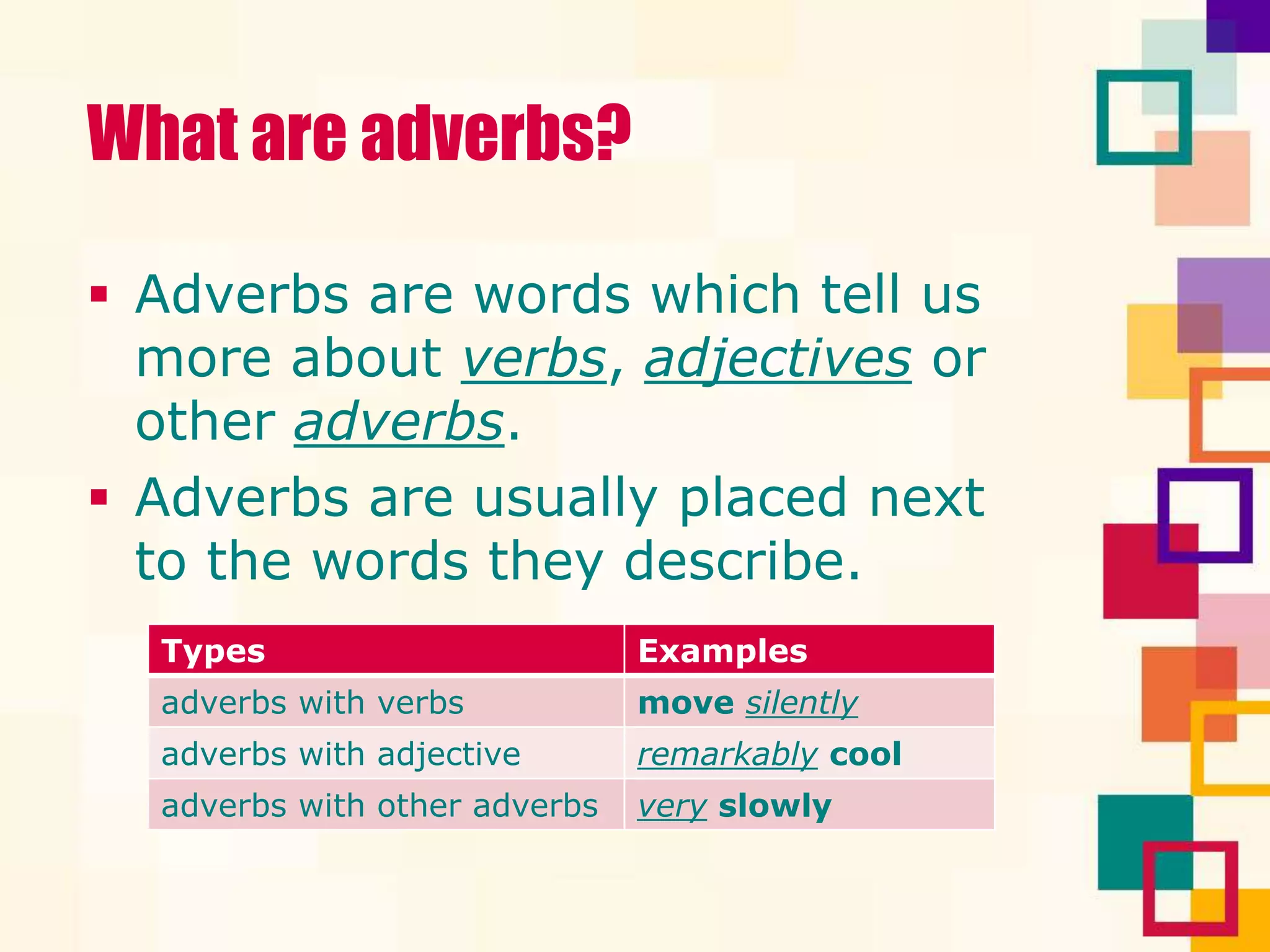
 Adverbs are words which tell us
more about verbs, adjectives or
other adverbs.
 Adverbs are usually placed next
to the words they describe.
Types Examples
adverbs with verbs move silently
adverbs with adjective remarkably cool
adverbs with other adverbs very slowly
Forming adverbs
 Adverbs can be formed from
adjectives by adding –ly.
Adjective Adverbs
(+ly)
Adverbs
(ily)
angry - angrily
happy - happily
kind Kindly -
quiet quietly -
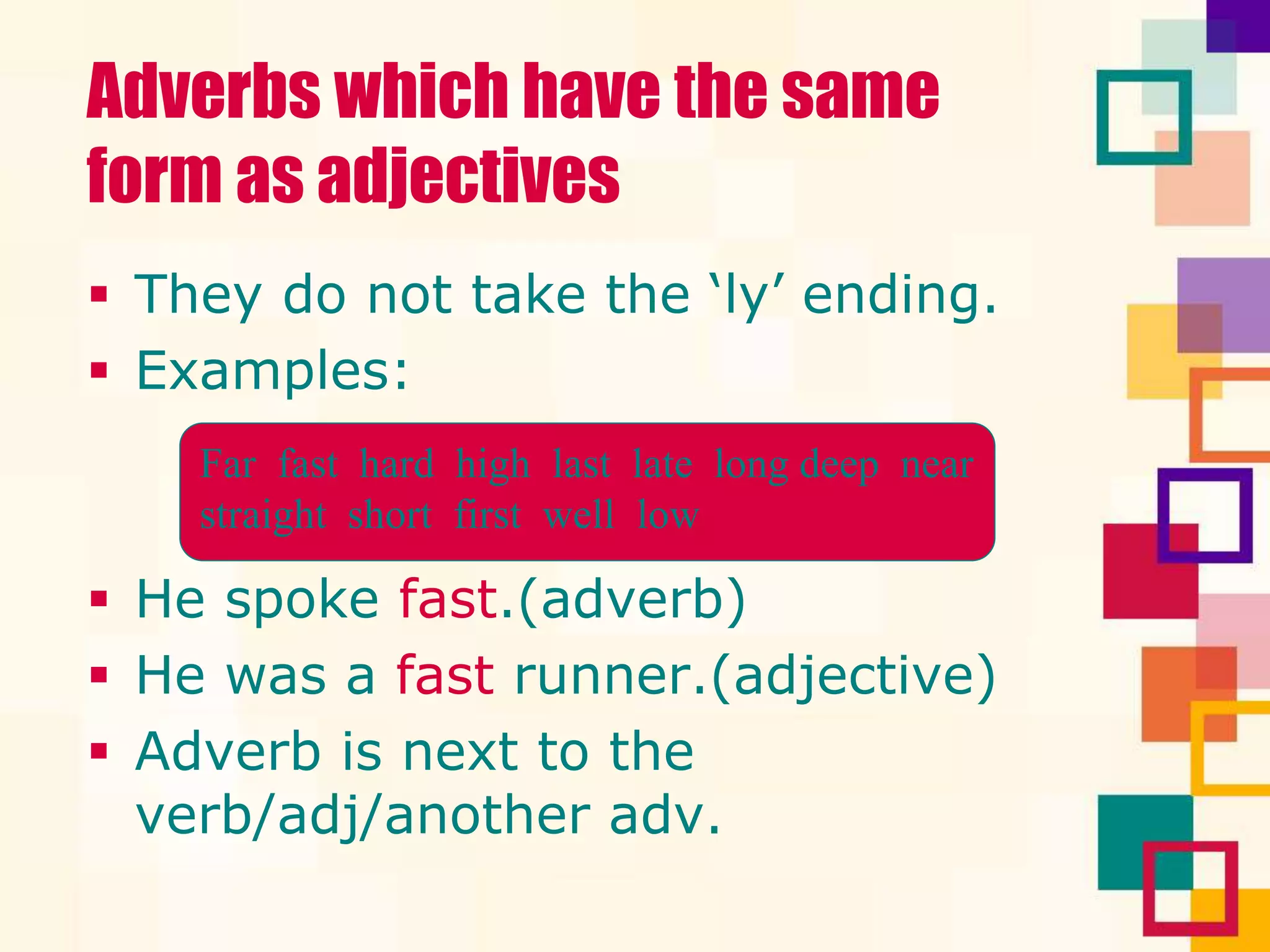
Adverbs which have the same
form as adjectives
 They do not take the ‘ly’ ending.
 Examples:
 He spoke fast.(adverb)
 He was a fast runner.(adjective)
 Adverb is next to the
verb/adj/another adv.
Far fast hard high last late long deep near
straight short first well low
Position of adverbs
 When the sentence has an object,
we cannot place an adverb
between the verb and it’s object.
 Example:
 He crossed the road.
 Carefully he crossed the road.
 He crossed the road carefully.
 He carefully crossed the road.
subject verb object
Adverbs of manner
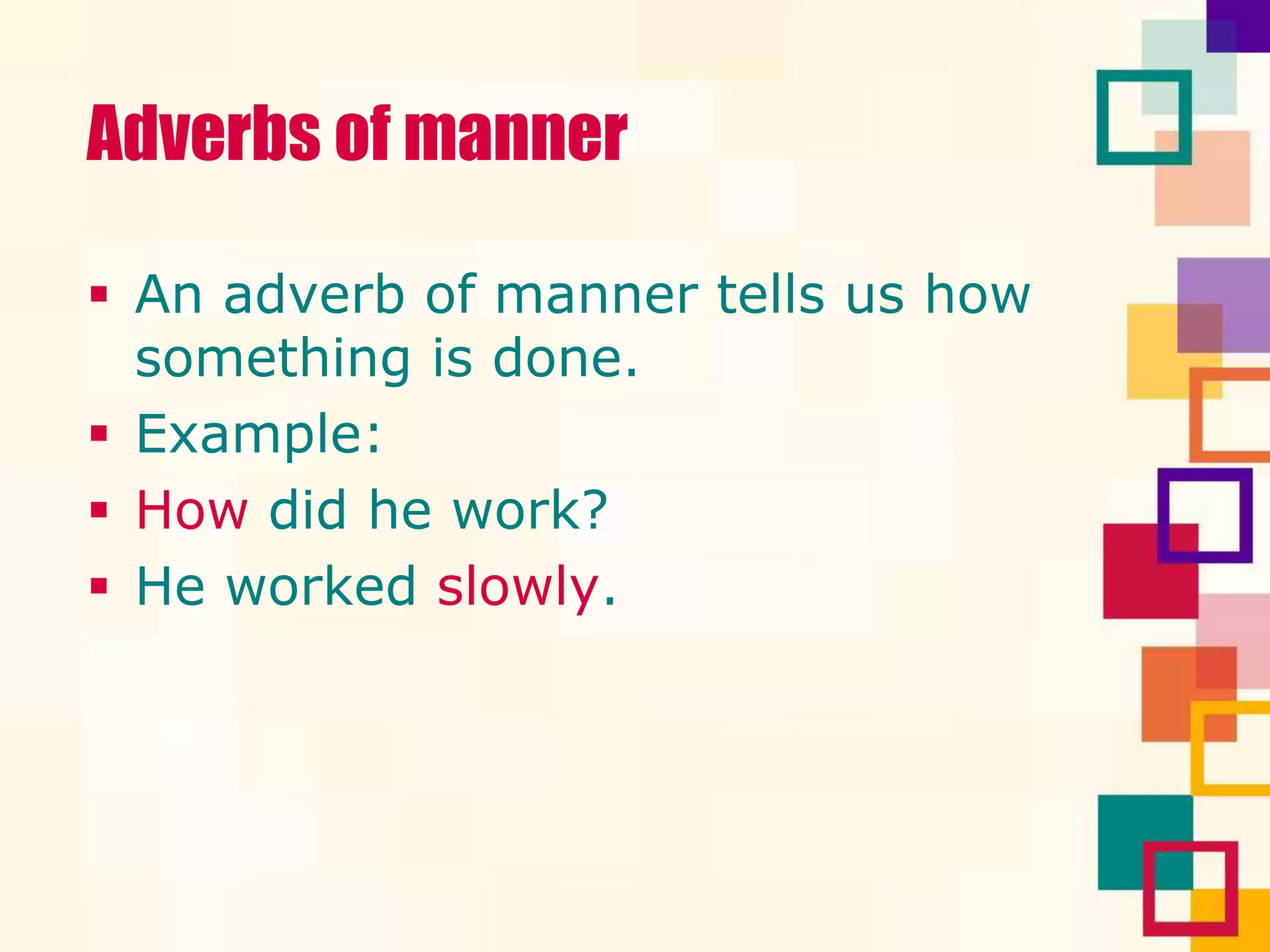
 An adverb of manner tells us how
something is done.
 Example:
 How did he work?
 He worked slowly.
Adverbs of time
 An adverb of time tells us when
something happen.
 Example:
 When will your aunt arrive?
 My aunt will arrive tomorrow.
 The following are some adverbs
of time. Again just now recently
Adverbs of place
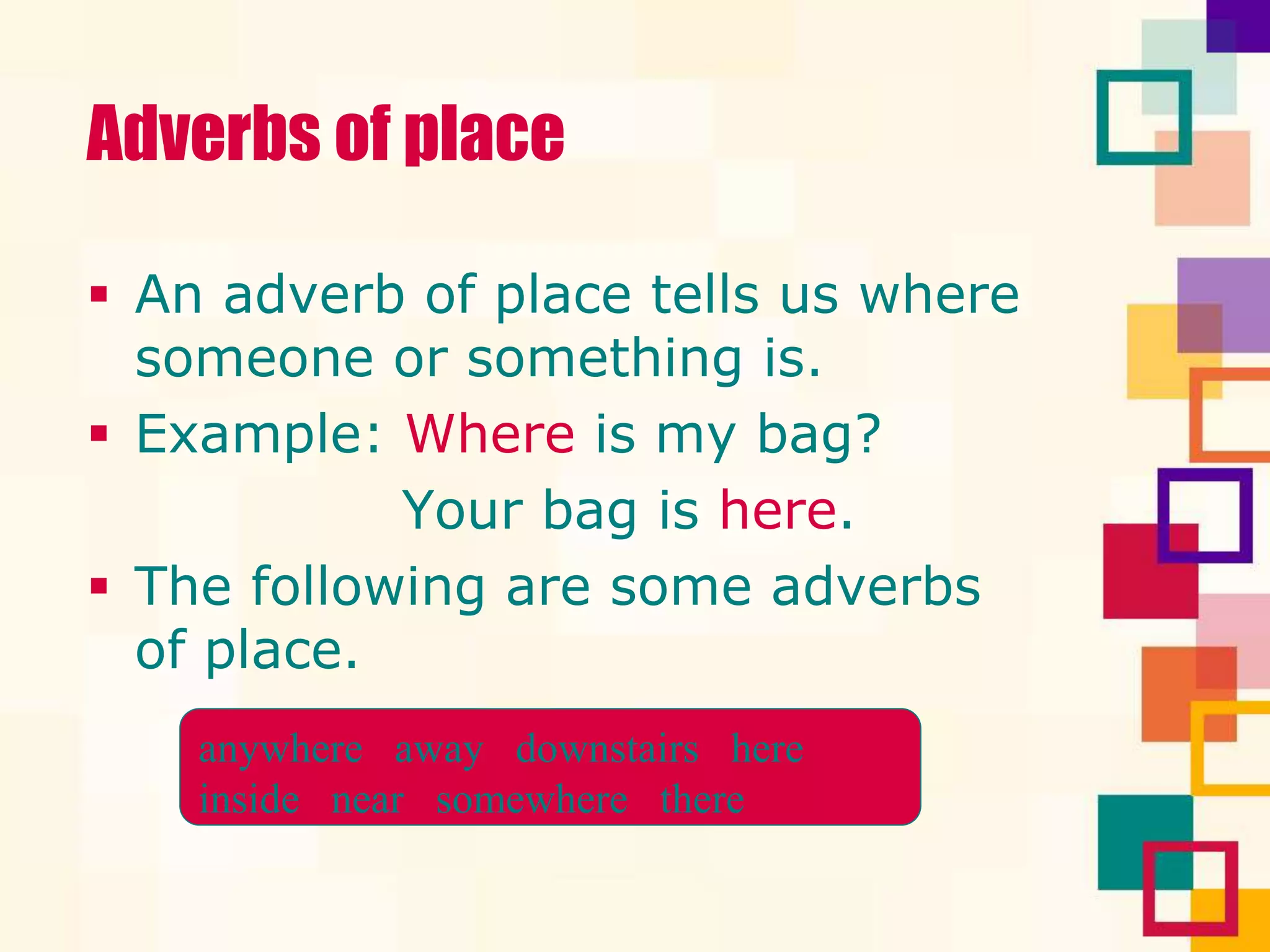
 An adverb of place tells us where
someone or something is.
 Example: Where is my bag?
Your bag is here.
 The following are some adverbs
of place.
anywhere away downstairs here
inside near somewhere there

Adverb

  • 1.
  • 2.
    What are adverbs? Adverbs are words which tell us more about verbs, adjectives or other adverbs.  Adverbs are usually placed next to the words they describe. Types Examples adverbs with verbs move silently adverbs with adjective remarkably cool adverbs with other adverbs very slowly
  • 3.
    Forming adverbs  Adverbscan be formed from adjectives by adding –ly. Adjective Adverbs (+ly) Adverbs (ily) angry - angrily happy - happily kind Kindly - quiet quietly -
  • 4.
    Adverbs which havethe same form as adjectives  They do not take the ‘ly’ ending.  Examples:  He spoke fast.(adverb)  He was a fast runner.(adjective)  Adverb is next to the verb/adj/another adv. Far fast hard high last late long deep near straight short first well low
  • 5.
    Position of adverbs When the sentence has an object, we cannot place an adverb between the verb and it’s object.  Example:  He crossed the road.  Carefully he crossed the road.  He crossed the road carefully.  He carefully crossed the road. subject verb object
  • 6.
    Adverbs of manner An adverb of manner tells us how something is done.  Example:  How did he work?  He worked slowly.
  • 7.
    Adverbs of time An adverb of time tells us when something happen.  Example:  When will your aunt arrive?  My aunt will arrive tomorrow.  The following are some adverbs of time. Again just now recently
  • 8.
    Adverbs of place An adverb of place tells us where someone or something is.  Example: Where is my bag? Your bag is here.  The following are some adverbs of place. anywhere away downstairs here inside near somewhere there