Partograph
Partograph
• Is a monitoring and decision making tool for service
providers to monitor active labour
• Graphic recording of the progress of labor and
assessment of maternal and fetal well being
• All labor record is on a single sheet of paper and gives
a picture of the progress of labour maternal and foetal
condition at a glance
• Tool to monitor labour and identify complications early,
decide to manage them or make timely referrals
2
PartographContd…
Partogram tells us three things:-
1 How well is the labour progressing
2 How is mother coping with labour stress
3 How is baby coping with labour stress
PartographContd…
 It is the graph of the progress of labour
 Progress of labour is measured by:-
1. Contractions–duration and frequency in 10 minutes
2. Dilatation of the cervix every 4 hours
Filling a Partograph
Identification data
• Name
• Age
• Parity
• Registration number
• Date and time of
admission
• Time of rupture of
membranes
Partograph
5
Partograph-CervicalDilatation
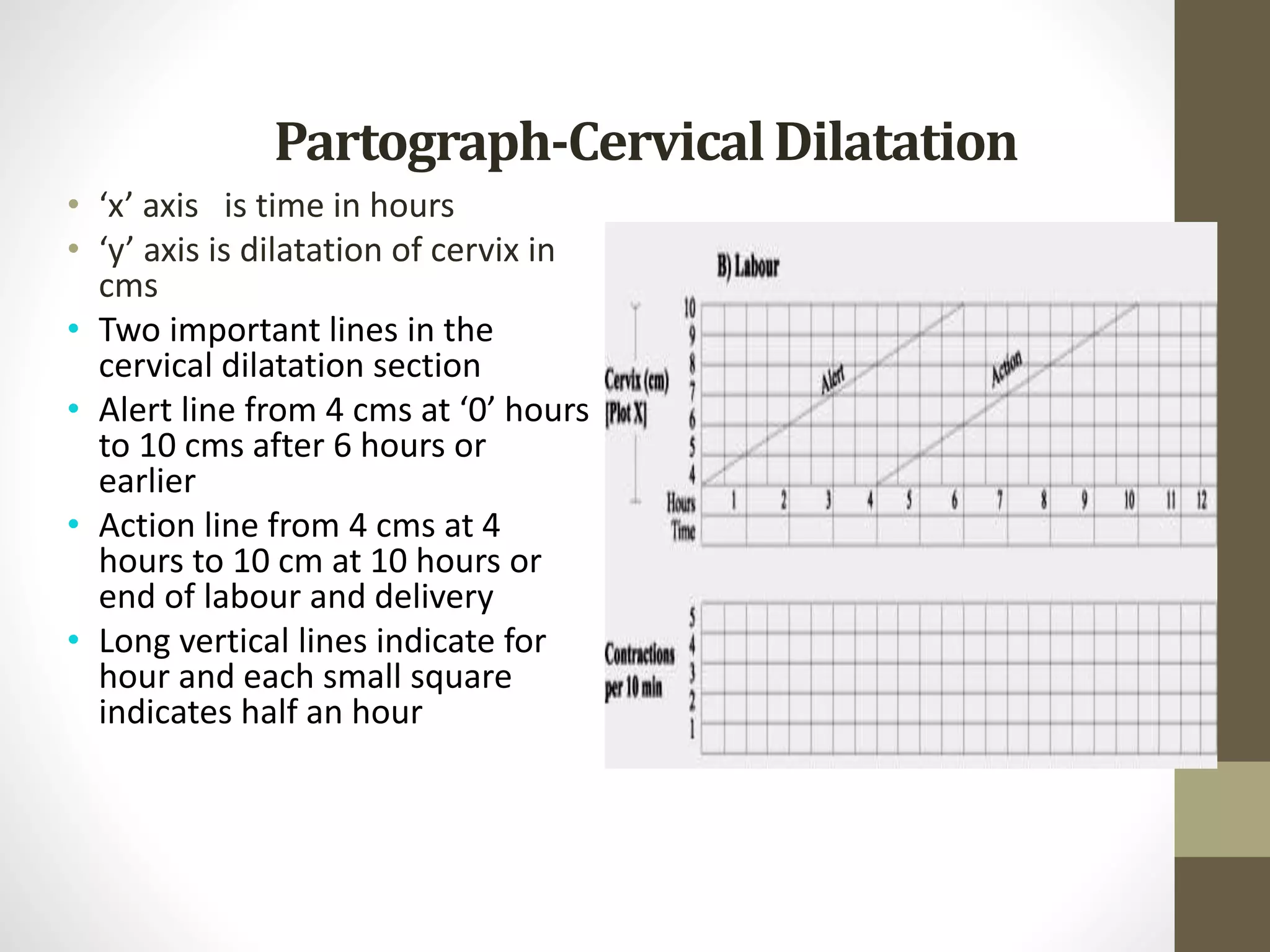
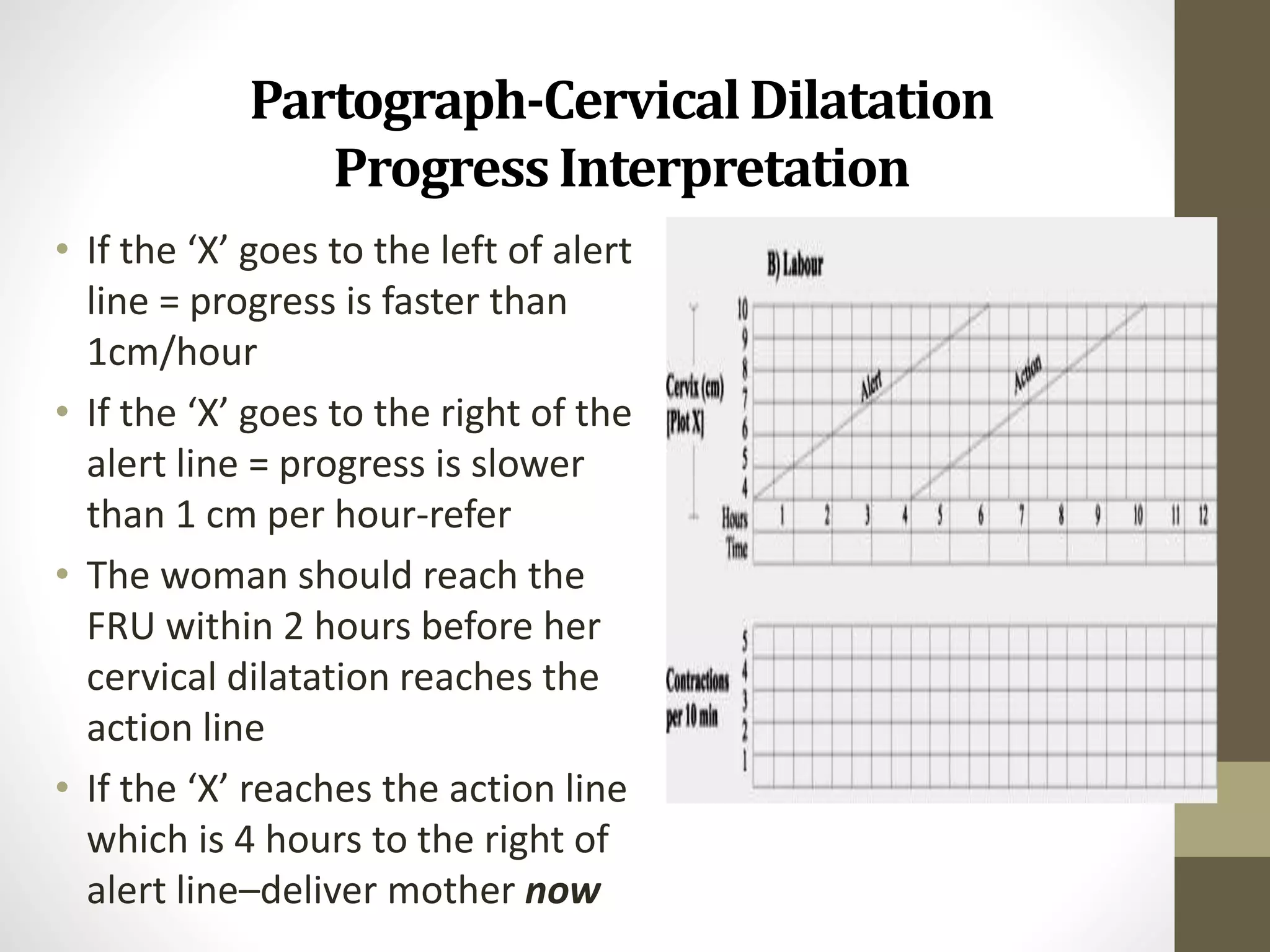
• ‘x’ axis is time in hours
• ‘y’ axis is dilatation of cervix in
cms
• Two important lines in the
cervical dilatation section
• Alert line from 4 cms at ‘0’ hours
to 10 cms after 6 hours or
earlier
• Action line from 4 cms at 4
hours to 10 cm at 10 hours or
end of labour and delivery
• Long vertical lines indicate for
hour and each small square
indicates half an hour
Partograph-Cervical Dilatation
Progress of Labor
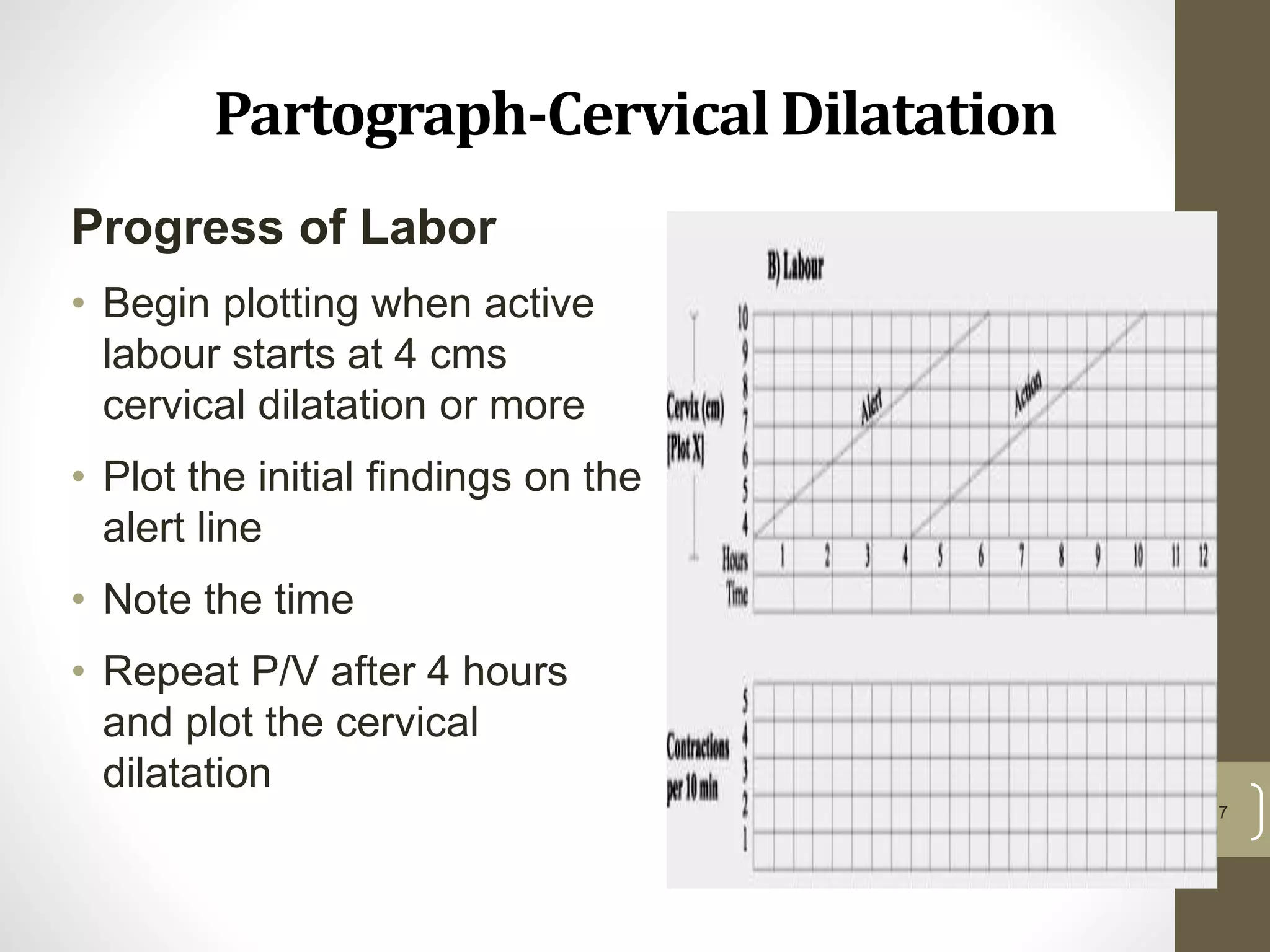
• Begin plotting when active
labour starts at 4 cms
cervical dilatation or more
• Plot the initial findings on the
alert line
• Note the time
• Repeat P/V after 4 hours
and plot the cervical
dilatation
7
Partograph-CervicalDilatationNormal
Progress
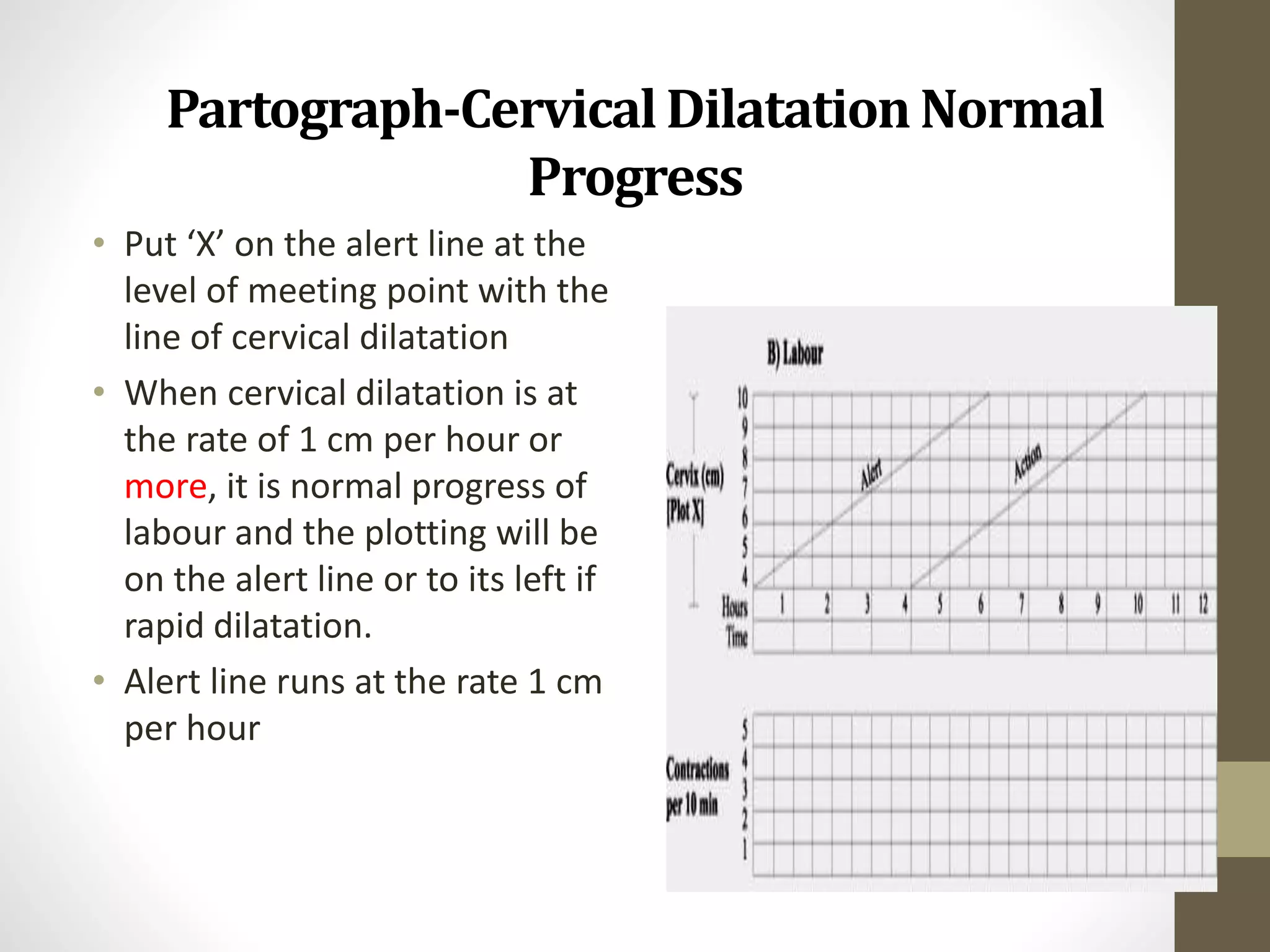
• Put ‘X’ on the alert line at the
level of meeting point with the
line of cervical dilatation
• When cervical dilatation is at
the rate of 1 cm per hour or
more, it is normal progress of
labour and the plotting will be
on the alert line or to its left if
rapid dilatation.
• Alert line runs at the rate 1 cm
per hour
Partograph-CervicalDilatation
ProgressInterpretation
• If the ‘X’ goes to the left of alert
line = progress is faster than
1cm/hour
• If the ‘X’ goes to the right of the
alert line = progress is slower
than 1 cm per hour-refer
• The woman should reach the
FRU within 2 hours before her
cervical dilatation reaches the
action line
• If the ‘X’ reaches the action line
which is 4 hours to the right of
alert line–deliver mother now
Slow Progress-Why and What To Do
• Intact membranes and head < 3/5 palpable per
abdomen, perform ARM
• Intact membranes and head > 3/5 palpable in PHC, refer
to higher facility
• Clear liquor draining, but poor contractions, oxytocin
infusion at higher facility
Plotting Contractions
Chart the contractions every half an hour
• Number of contractions in 10 mins
• Duration in seconds.
• Less than 20 seconds
• Between 20 and 40 seconds
• More than 40 seconds
11
Plotting Maternal Condition
• Graphs of maternal condition
• Record maternal pulse every
half hour and mark with a dot ‘•’
• Record maternal BP every 4
hours using a vertical arrow,
with upper end signifying
systolic BP and lower end
diastolic BP
• Record the temperature every
4 hours and note on
temperature graph in digits as
degree C.
12
Plotting Foetal Condition
• Count fetal heart rate every half
hour for one full minute after a
contraction
• Plot on the meeting point of the
vertical line of time and horizontal
line of FHR with a ‘•’. Join the dots
of new reading with the previous
one
• Normal heart rate 120 to 160/min
• Two dark horizontal lines in the FHR
section indicate the range of normal
FHR. Fetal distress: FHR <120/min
or >160/min-Arrange for referral
13
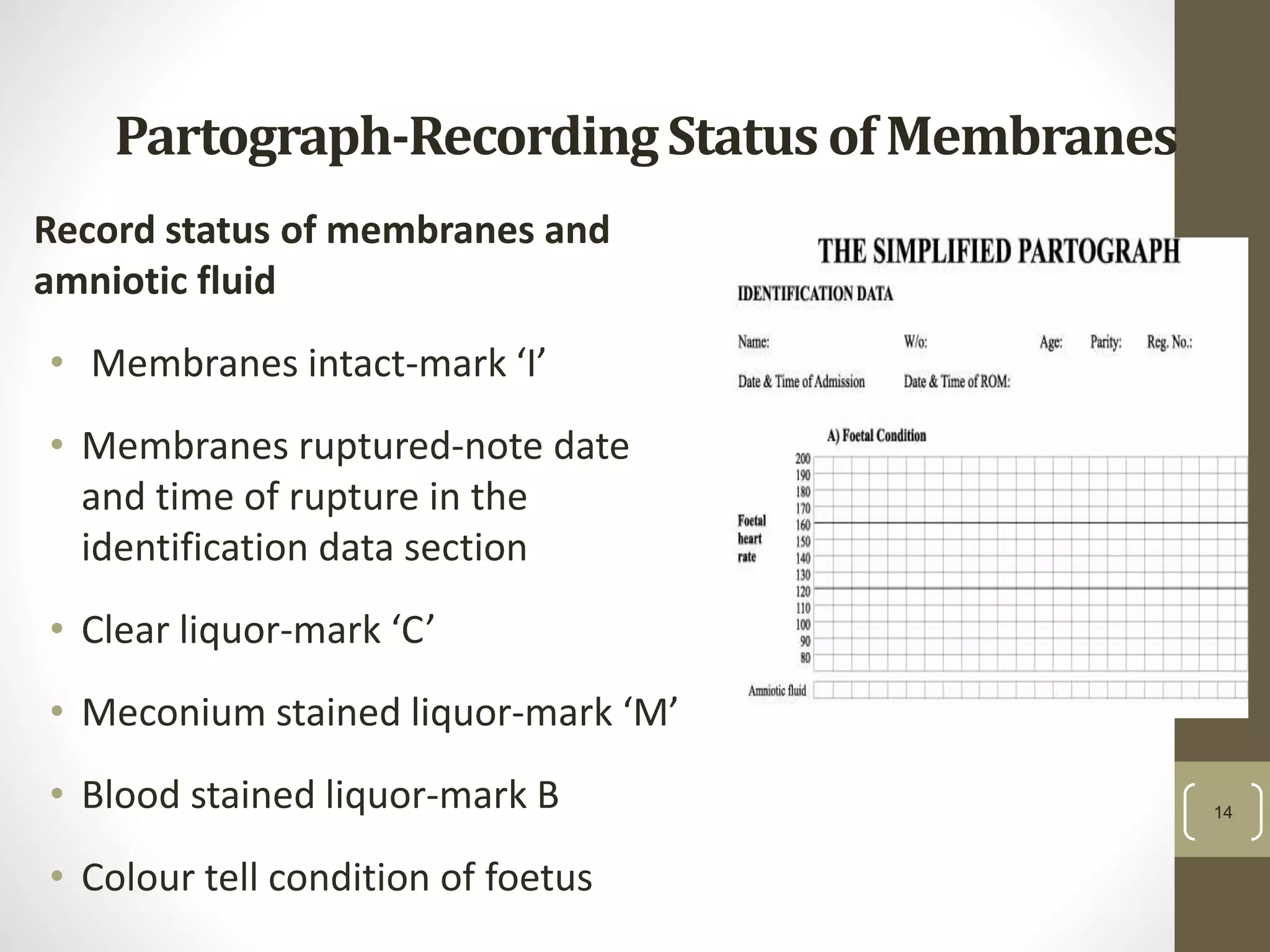
Partograph-RecordingStatus of Membranes
Record status of membranes and
amniotic fluid
• Membranes intact-mark ‘I’
• Membranes ruptured-note date
and time of rupture in the
identification data section
• Clear liquor-mark ‘C’
• Meconium stained liquor-mark ‘M’
• Blood stained liquor-mark B
• Colour tell condition of foetus
14
Partograph Interpretation and Indications for
Referral to FRU
• FHR is <120 or > 160 beats/min
• Meconium and/or blood stained amniotic fluid
• When cervical dilatation plotting crosses the alert line
and moves towards the right side of the alert line
• Contractions not increasing in duration, intensity and
frequency
• Pulse rapid > 110/min or BP >140/90 mmHg or temp >
380C
15
Radha Gangaram 26 Years G3P2L2A0 XYZ1
11/06/09,5:00Hrs 11/06/09, 04:00 Hrs
C C C C C C C
9 AM 1 PM
12 AM
11 AM
10 AM
36.8 C 37 C
C
Thank you
Skills lab – Day - 1

PARTOGRAPH FOR BEGINEERS

  • 1.
  • 2.
    Partograph • Is amonitoring and decision making tool for service providers to monitor active labour • Graphic recording of the progress of labor and assessment of maternal and fetal well being • All labor record is on a single sheet of paper and gives a picture of the progress of labour maternal and foetal condition at a glance • Tool to monitor labour and identify complications early, decide to manage them or make timely referrals 2
  • 3.
    PartographContd… Partogram tells usthree things:- 1 How well is the labour progressing 2 How is mother coping with labour stress 3 How is baby coping with labour stress
  • 4.
    PartographContd…  It isthe graph of the progress of labour  Progress of labour is measured by:- 1. Contractions–duration and frequency in 10 minutes 2. Dilatation of the cervix every 4 hours
  • 5.
    Filling a Partograph Identificationdata • Name • Age • Parity • Registration number • Date and time of admission • Time of rupture of membranes Partograph 5
  • 6.
    Partograph-CervicalDilatation • ‘x’ axisis time in hours • ‘y’ axis is dilatation of cervix in cms • Two important lines in the cervical dilatation section • Alert line from 4 cms at ‘0’ hours to 10 cms after 6 hours or earlier • Action line from 4 cms at 4 hours to 10 cm at 10 hours or end of labour and delivery • Long vertical lines indicate for hour and each small square indicates half an hour
  • 7.
    Partograph-Cervical Dilatation Progress ofLabor • Begin plotting when active labour starts at 4 cms cervical dilatation or more • Plot the initial findings on the alert line • Note the time • Repeat P/V after 4 hours and plot the cervical dilatation 7
  • 8.
    Partograph-CervicalDilatationNormal Progress • Put ‘X’on the alert line at the level of meeting point with the line of cervical dilatation • When cervical dilatation is at the rate of 1 cm per hour or more, it is normal progress of labour and the plotting will be on the alert line or to its left if rapid dilatation. • Alert line runs at the rate 1 cm per hour
  • 9.
    Partograph-CervicalDilatation ProgressInterpretation • If the‘X’ goes to the left of alert line = progress is faster than 1cm/hour • If the ‘X’ goes to the right of the alert line = progress is slower than 1 cm per hour-refer • The woman should reach the FRU within 2 hours before her cervical dilatation reaches the action line • If the ‘X’ reaches the action line which is 4 hours to the right of alert line–deliver mother now
  • 10.
    Slow Progress-Why andWhat To Do • Intact membranes and head < 3/5 palpable per abdomen, perform ARM • Intact membranes and head > 3/5 palpable in PHC, refer to higher facility • Clear liquor draining, but poor contractions, oxytocin infusion at higher facility
  • 11.
    Plotting Contractions Chart thecontractions every half an hour • Number of contractions in 10 mins • Duration in seconds. • Less than 20 seconds • Between 20 and 40 seconds • More than 40 seconds 11
  • 12.
    Plotting Maternal Condition •Graphs of maternal condition • Record maternal pulse every half hour and mark with a dot ‘•’ • Record maternal BP every 4 hours using a vertical arrow, with upper end signifying systolic BP and lower end diastolic BP • Record the temperature every 4 hours and note on temperature graph in digits as degree C. 12
  • 13.
    Plotting Foetal Condition •Count fetal heart rate every half hour for one full minute after a contraction • Plot on the meeting point of the vertical line of time and horizontal line of FHR with a ‘•’. Join the dots of new reading with the previous one • Normal heart rate 120 to 160/min • Two dark horizontal lines in the FHR section indicate the range of normal FHR. Fetal distress: FHR <120/min or >160/min-Arrange for referral 13
  • 14.
    Partograph-RecordingStatus of Membranes Recordstatus of membranes and amniotic fluid • Membranes intact-mark ‘I’ • Membranes ruptured-note date and time of rupture in the identification data section • Clear liquor-mark ‘C’ • Meconium stained liquor-mark ‘M’ • Blood stained liquor-mark B • Colour tell condition of foetus 14
  • 15.
    Partograph Interpretation andIndications for Referral to FRU • FHR is <120 or > 160 beats/min • Meconium and/or blood stained amniotic fluid • When cervical dilatation plotting crosses the alert line and moves towards the right side of the alert line • Contractions not increasing in duration, intensity and frequency • Pulse rapid > 110/min or BP >140/90 mmHg or temp > 380C 15
  • 16.
    Radha Gangaram 26Years G3P2L2A0 XYZ1 11/06/09,5:00Hrs 11/06/09, 04:00 Hrs C C C C C C C 9 AM 1 PM 12 AM 11 AM 10 AM 36.8 C 37 C C
  • 17.

Editor's Notes