Pros and Cons of Business Models  By Val A. Slastnikov, Business Models Expert © 2010 Digitizer Group. All rights reserved
PART ONE (The Boring Part)
Business Model  Definition, Components and Types
Definition The term  BUSINESS MODEL  describes a broad range of informal and formal models that are used by enterprises to represent various aspects of business, including its purpose, offerings, strategies, infrastructure, organizational structures, trading practices and operational processes and policies.  - Wikipedia, Online Encyclopedia
Explanation BUSINESS MODEL:  a  conceptual tool  that contains a big set of elements and their relationships and allows expressing the business logic of a specific firm.  BUSINESS MODEL:  a  description of the value  a company offers to one or several segments of customers and of the architecture of the firm and its network of partners for creating, marketing, and delivering this value and relationship capital, to generate profitable and sustainable revenue streams.
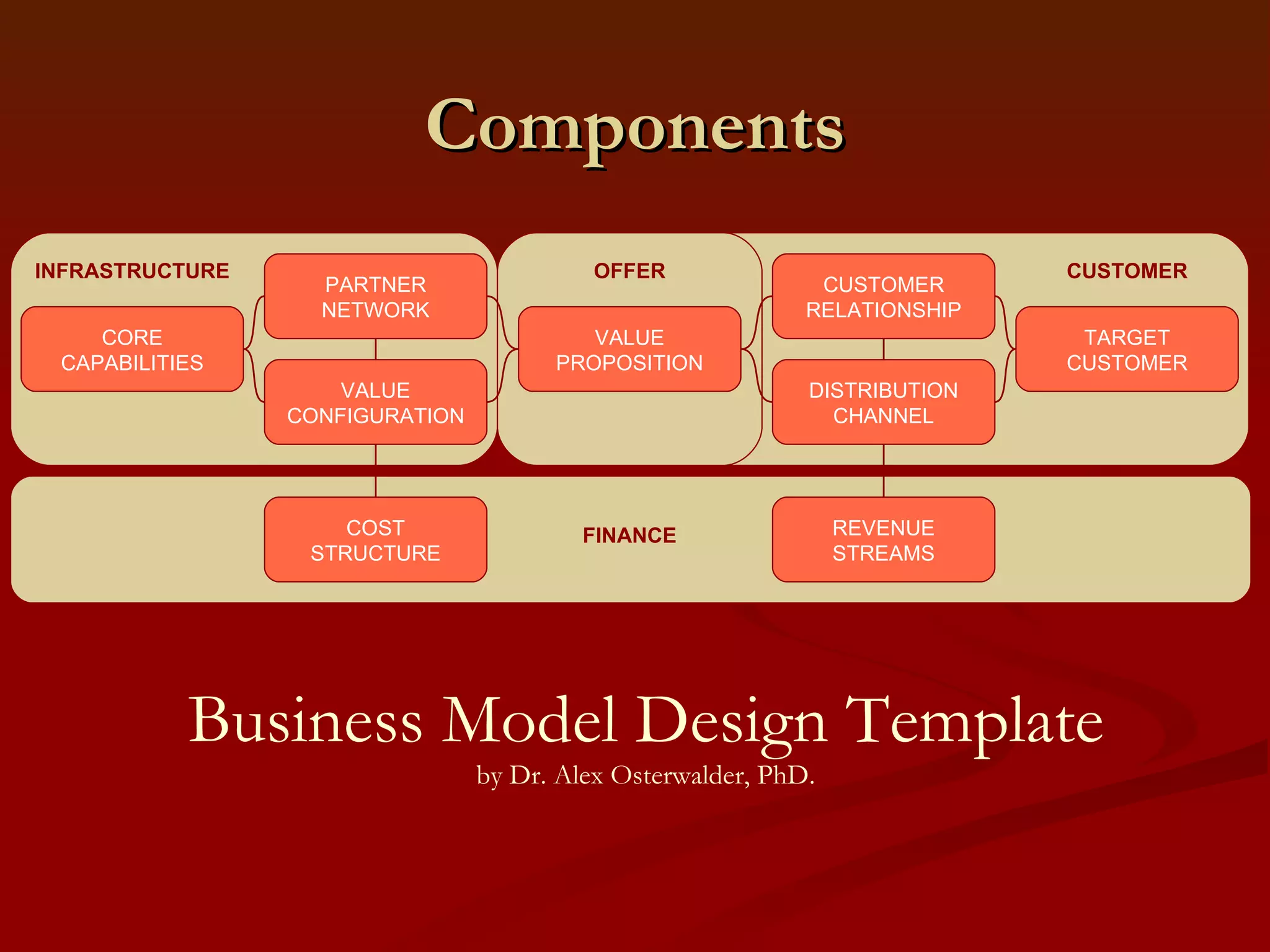
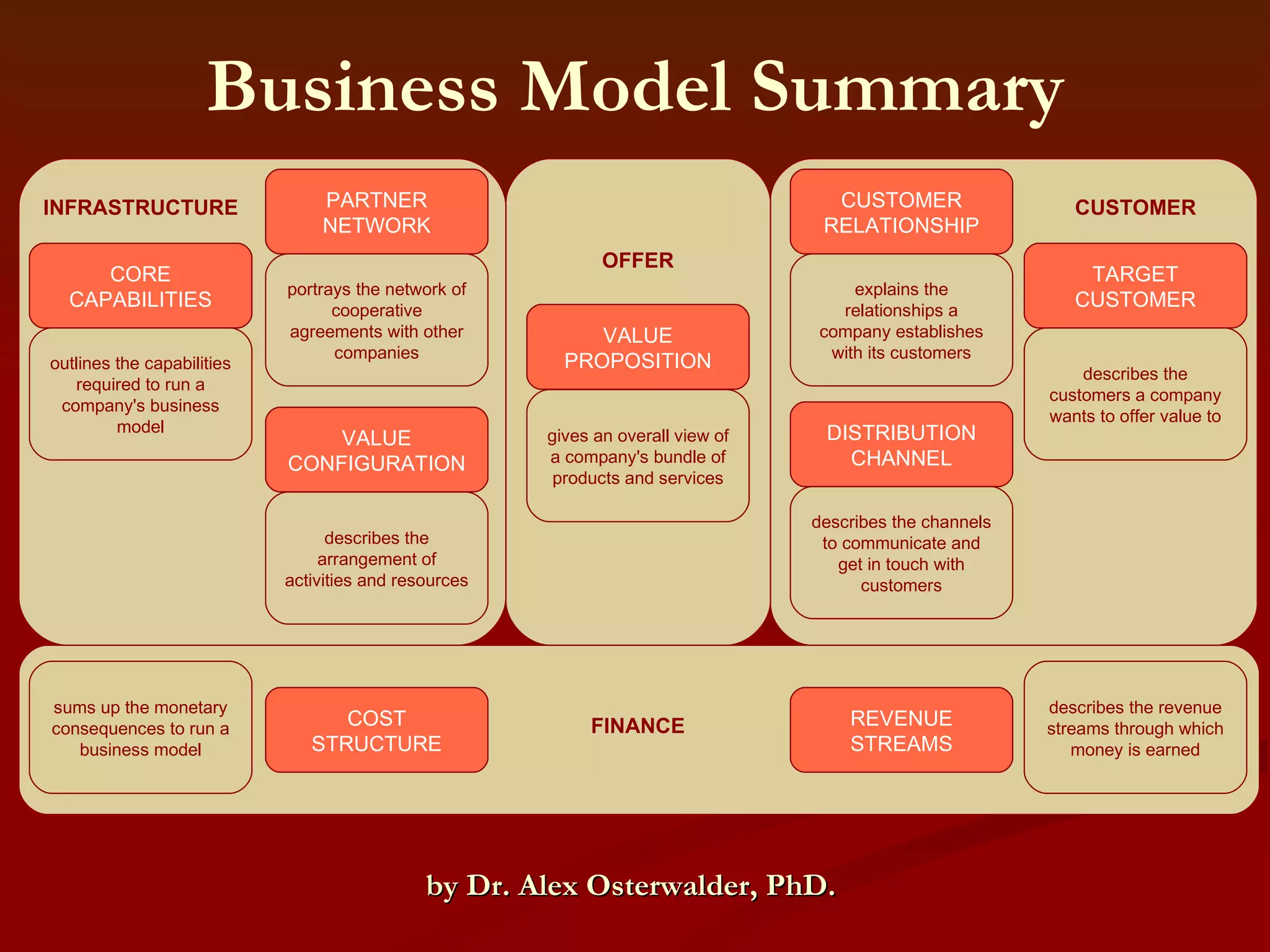
Business as a Model VALUE PROPOSITION COST STRUCTURE CUSTOMER RELATIONSHIP TARGET CUSTOMER DISTRIBUTION CHANNEL VALUE CONFIGURATION CORE CAPABILITIES PARTNER NETWORK REVENUE STREAMS INFRASTRUCTURE CUSTOMER OFFER FINANCE Business Model Design Template by Dr. Alex Osterwalder, PhD.
Business as a System FINANCE Business Flowchart by Rich Schefren Input Output Suppliers & Vendors Customers & Affiliates Your Business Systems Tasks Processes
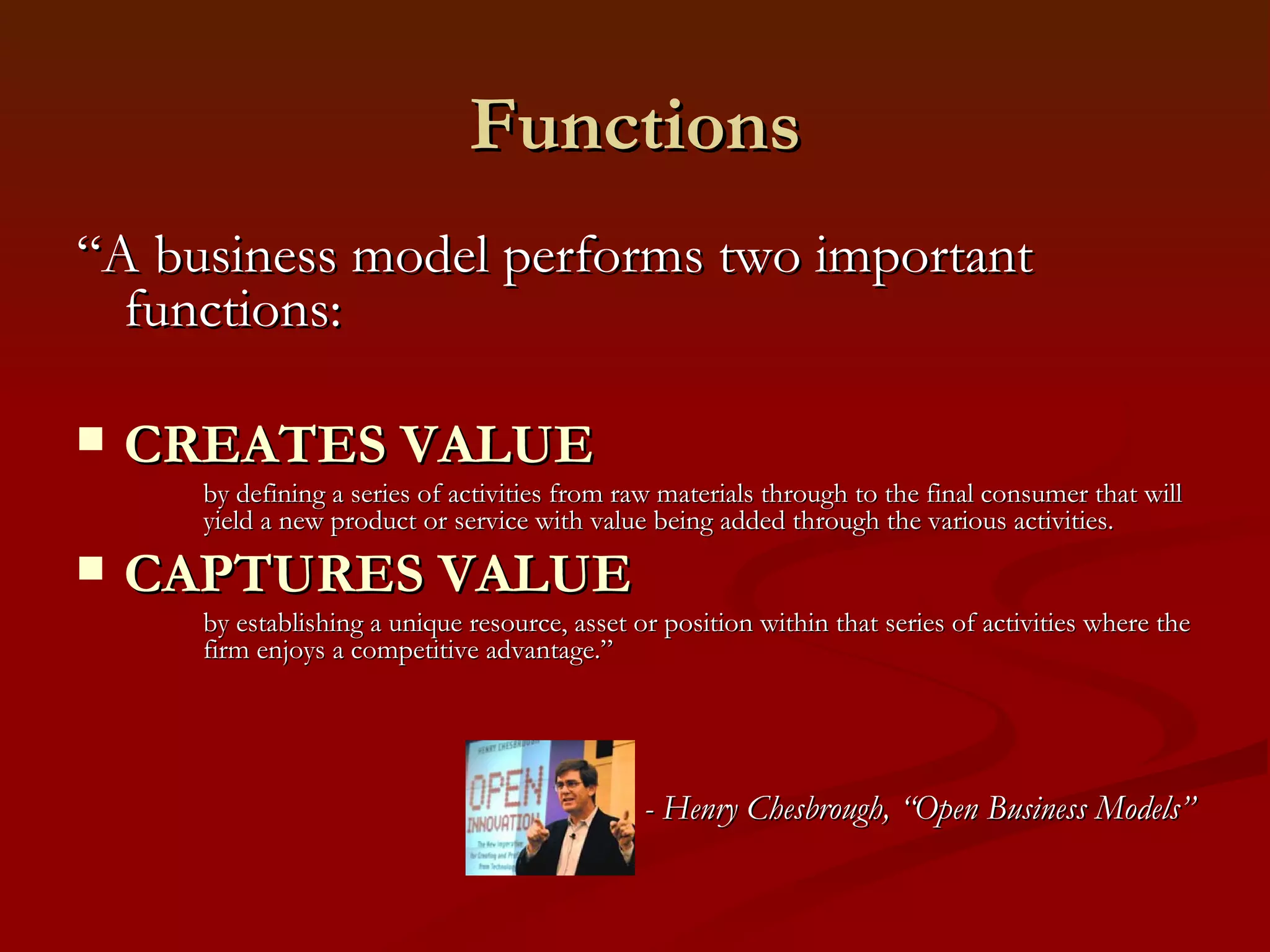
Functions “ A business model performs two important functions: CREATES VALUE   by defining a series of activities from raw materials through to the final consumer that will  yield a new product or service with value being added through the various activities.  CAPTURES VALUE by establishing a unique resource, asset or position within that series of activities where the  firm enjoys a competitive advantage.” - Henry Chesbrough, “Open Business Models”
“ Founder” Business Model As per Rich Schefren, a true “Founder” business model must also perform two more functions: CREATE PROFIT FOR THE BUSINESS FOUNDER(S) So that eventually business start growing without the Founder(s)’ participation CREATE BENEFITS FOR THE WHOLE PARTNER NETWORK This includes all participants, such as partners,  employees, outsourcers, affiliates and customers of the business
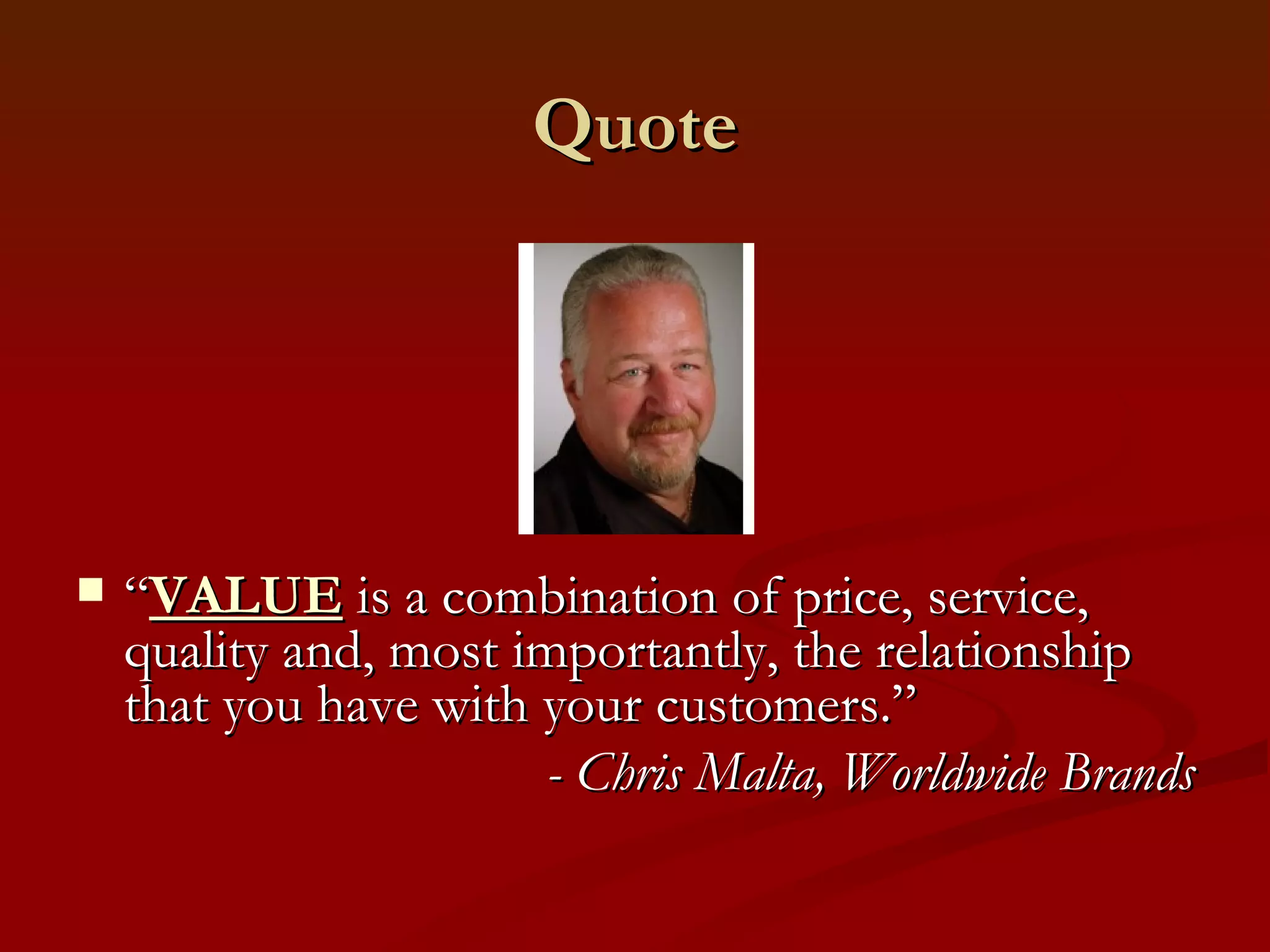
Quote “ VALUE  is a combination of price, service, quality and, most importantly, the relationship that you have with your customers.” - Chris Malta, Worldwide Brands
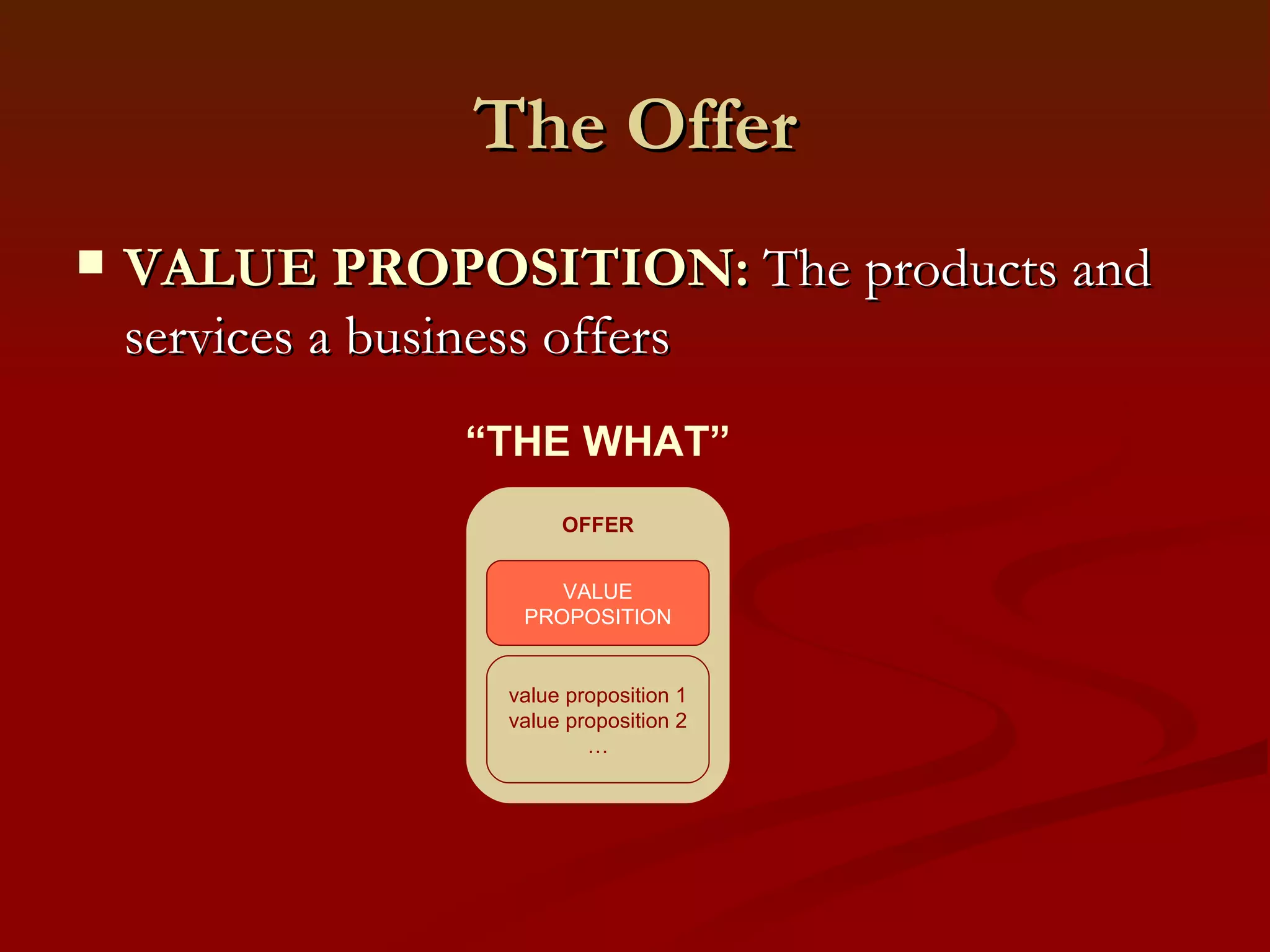
The Offer VALUE PROPOSITION:  The products and services a business offers  VALUE PROPOSITION value proposition 1 value proposition 2 … OFFER “ THE WHAT”
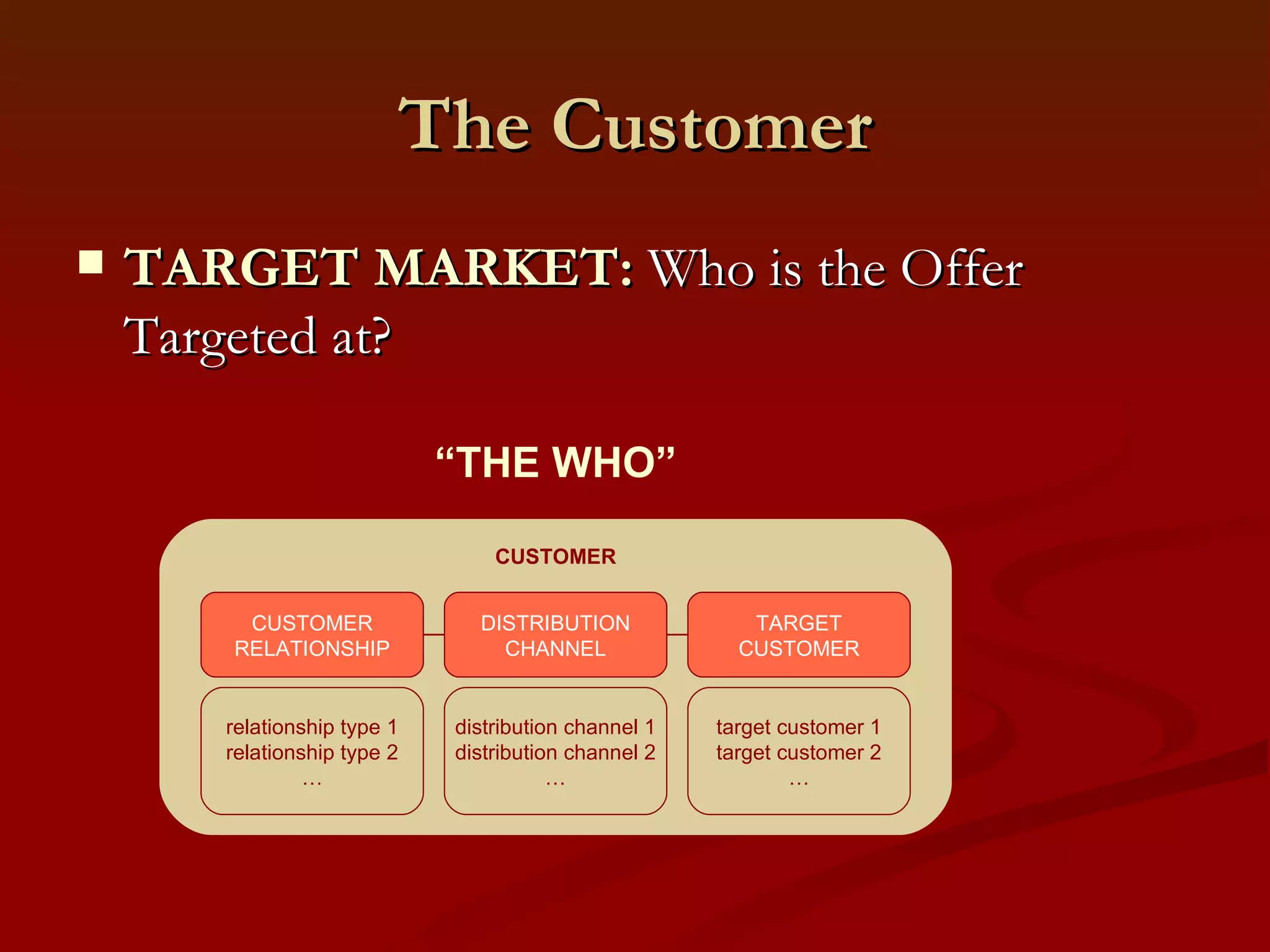
The Customer TARGET MARKET:  Who is the Offer Targeted at? value proposition 1 value proposition 2 … “ THE WHO” value proposition 1 value proposition 2 … target customer 1 target customer 2 … OFFER TARGET CUSTOMER DISTRIBUTION CHANNEL distribution channel 1 distribution channel 2 … target customer 1 target customer 2 … CUSTOMER CUSTOMER RELATIONSHIP relationship type 1 relationship type 2 …
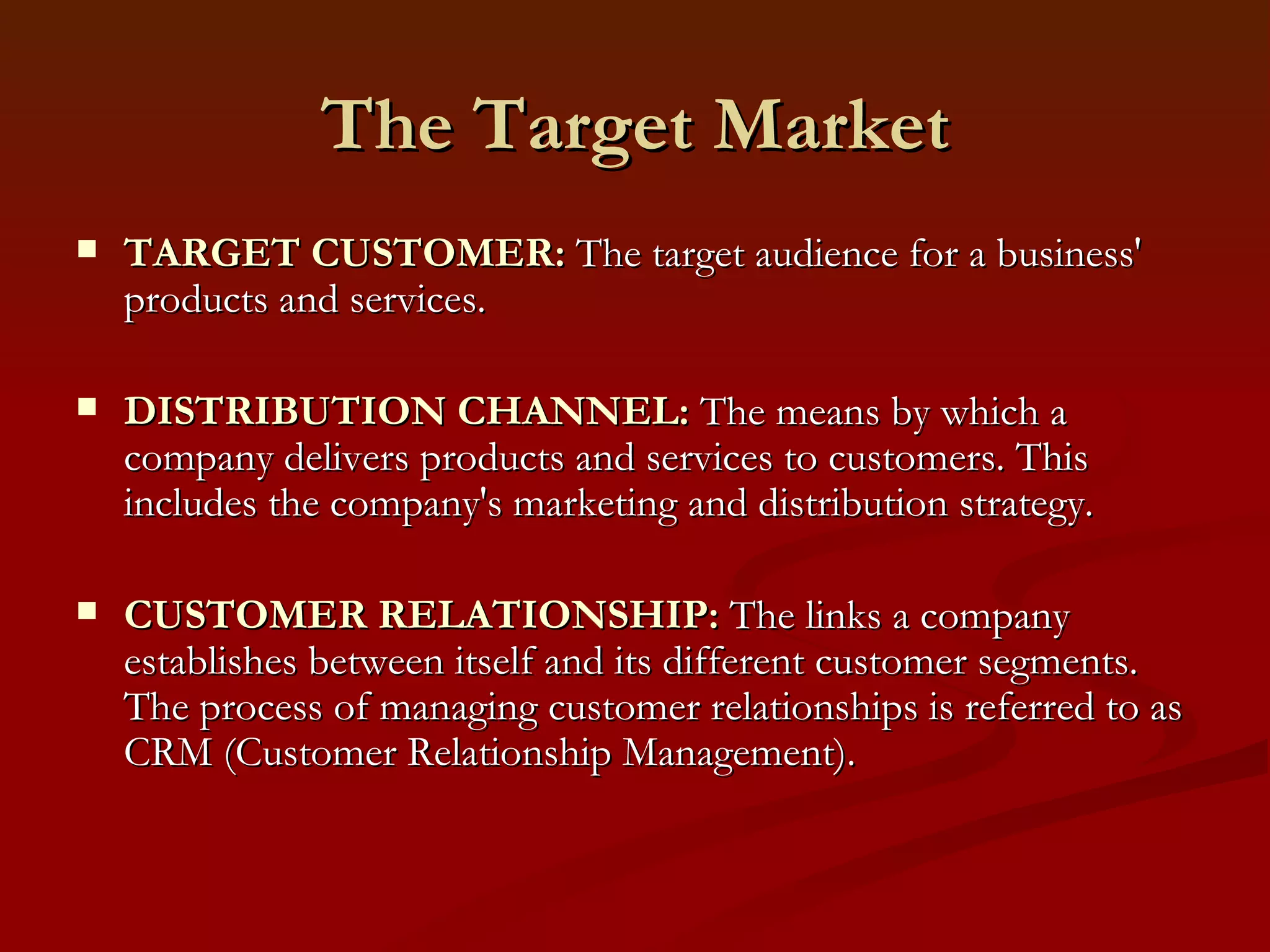
The Target Market TARGET CUSTOMER:  The target audience for a business' products and services.  DISTRIBUTION CHANNEL:  The means by which a company delivers products and services to customers. This includes the company's marketing and distribution strategy.  CUSTOMER RELATIONSHIP:  The links a company establishes between itself and its different customer segments. The process of managing customer relationships is referred to as CRM (Customer Relationship Management).
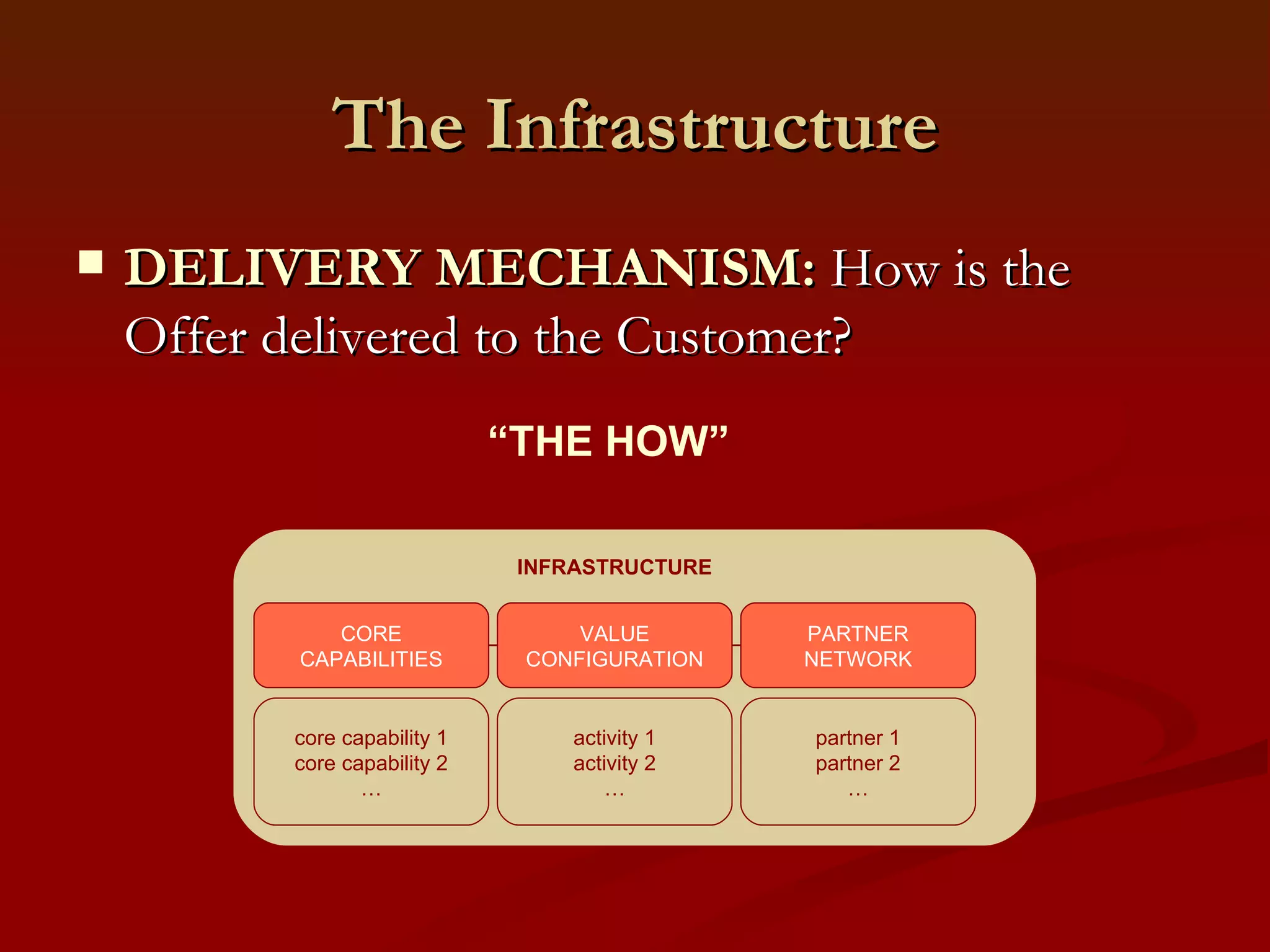
The Infrastructure DELIVERY MECHANISM:  How is the Offer delivered to the Customer? value proposition 1 value proposition 2 … “ THE HOW” value proposition 1 value proposition 2 … target customer 1 target customer 2 … OFFER value proposition 1 value proposition 2 … distribution channel 1 distribution channel 2 … target customer 1 target customer 2 … OFFER VALUE CONFIGURATION CORE CAPABILITIES core capability 1 core capability 2 … activity 1 activity 2 … INFRASTRUCTURE PARTNER NETWORK partner 1 partner 2 …
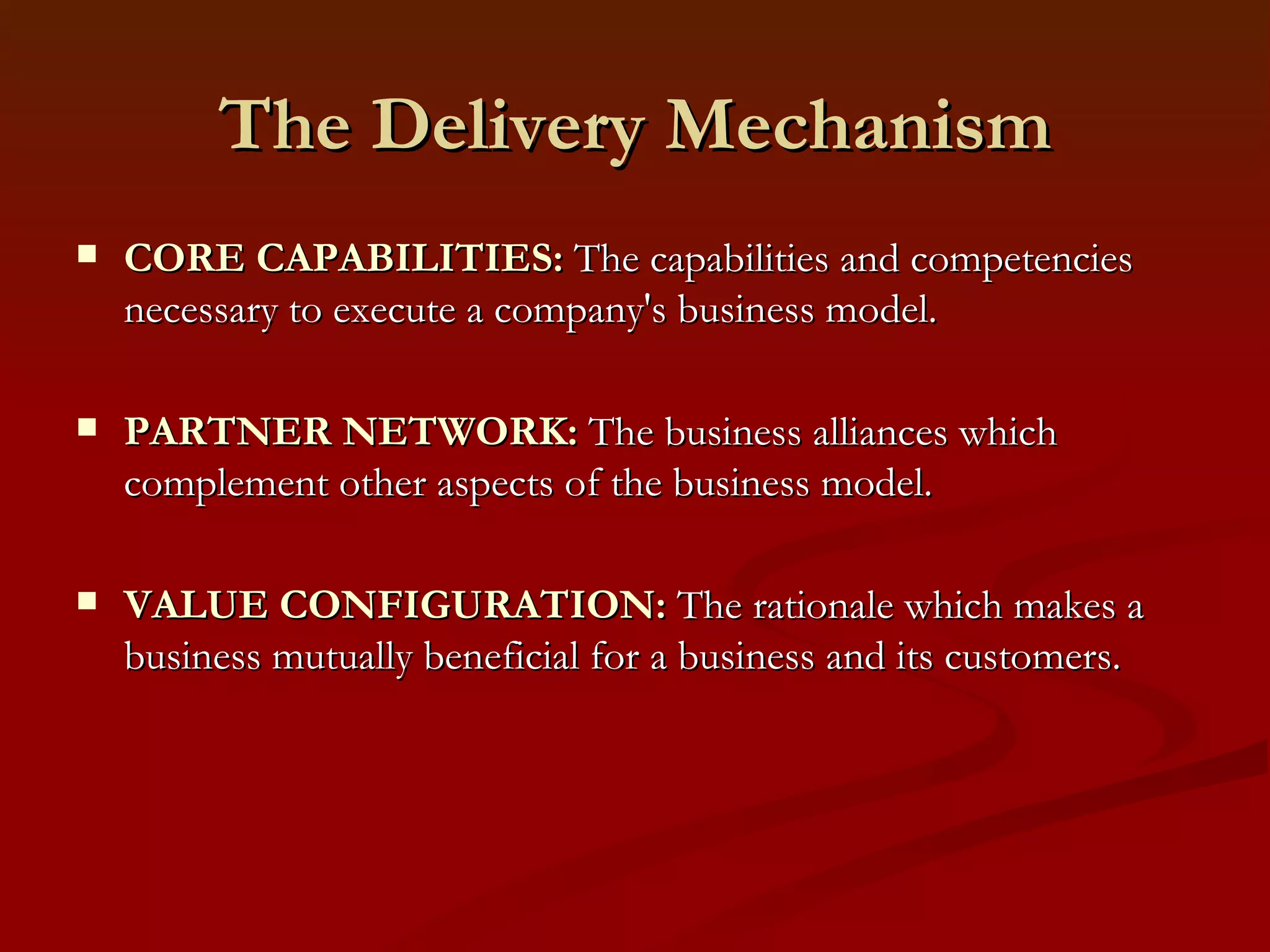
The Delivery Mechanism CORE CAPABILITIES:  The capabilities and competencies necessary to execute a company's business model.  PARTNER NETWORK:  The business alliances which complement other aspects of the business model.  VALUE CONFIGURATION:  The rationale which makes a business mutually beneficial for a business and its customers.
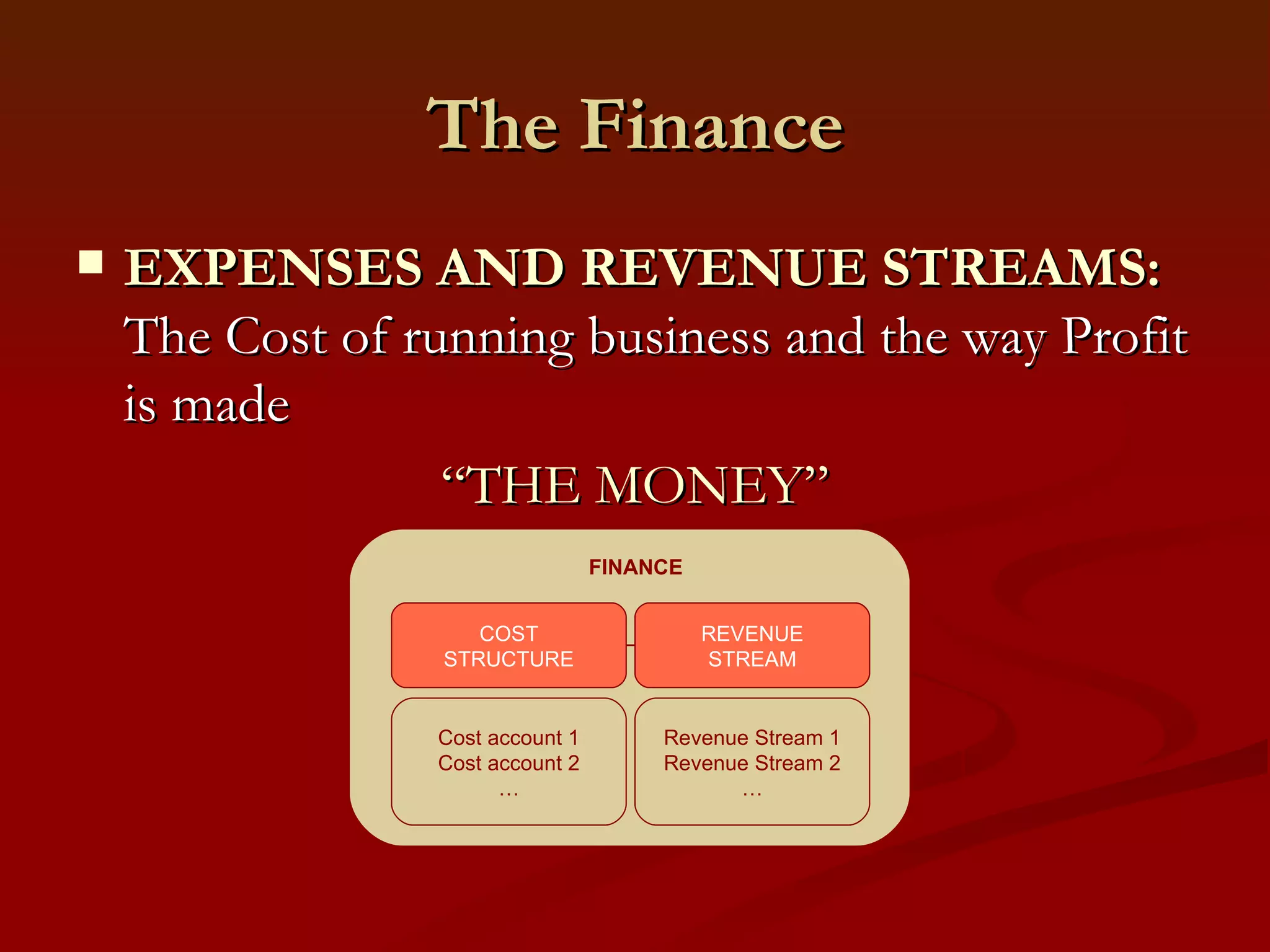
The Finance EXPENSES AND REVENUE STREAMS:  The Cost of running business and the way Profit is made “ THE MONEY” value proposition 1 value proposition 2 … value proposition 1 value proposition 2 … target customer 1 target customer 2 … OFFER value proposition 1 value proposition 2 … distribution channel 1 distribution channel 2 … target customer 1 target customer 2 … OFFER COST STRUCTURE Cost account 1 Cost account 2 … FINANCE REVENUE STREAM Revenue Stream 1 Revenue Stream 2 …
VALUE PROPOSITION COST STRUCTURE CUSTOMER RELATIONSHIP TARGET CUSTOMER DISTRIBUTION CHANNEL VALUE CONFIGURATION CORE CAPABILITIES PARTNER NETWORK REVENUE STREAMS gives an overall view of a company's bundle of products and services portrays the network of cooperative agreements with other companies describes the channels to communicate and get in touch with customers describes the arrangement of activities and resources explains the relationships a company establishes with its customers sums up the monetary consequences to run a business model describes the revenue streams through which money is earned describes the customers a company wants to offer value to outlines the capabilities required to run a company's business model INFRASTRUCTURE CUSTOMER OFFER FINANCE Business Model Summary by Dr. Alex Osterwalder, PhD.
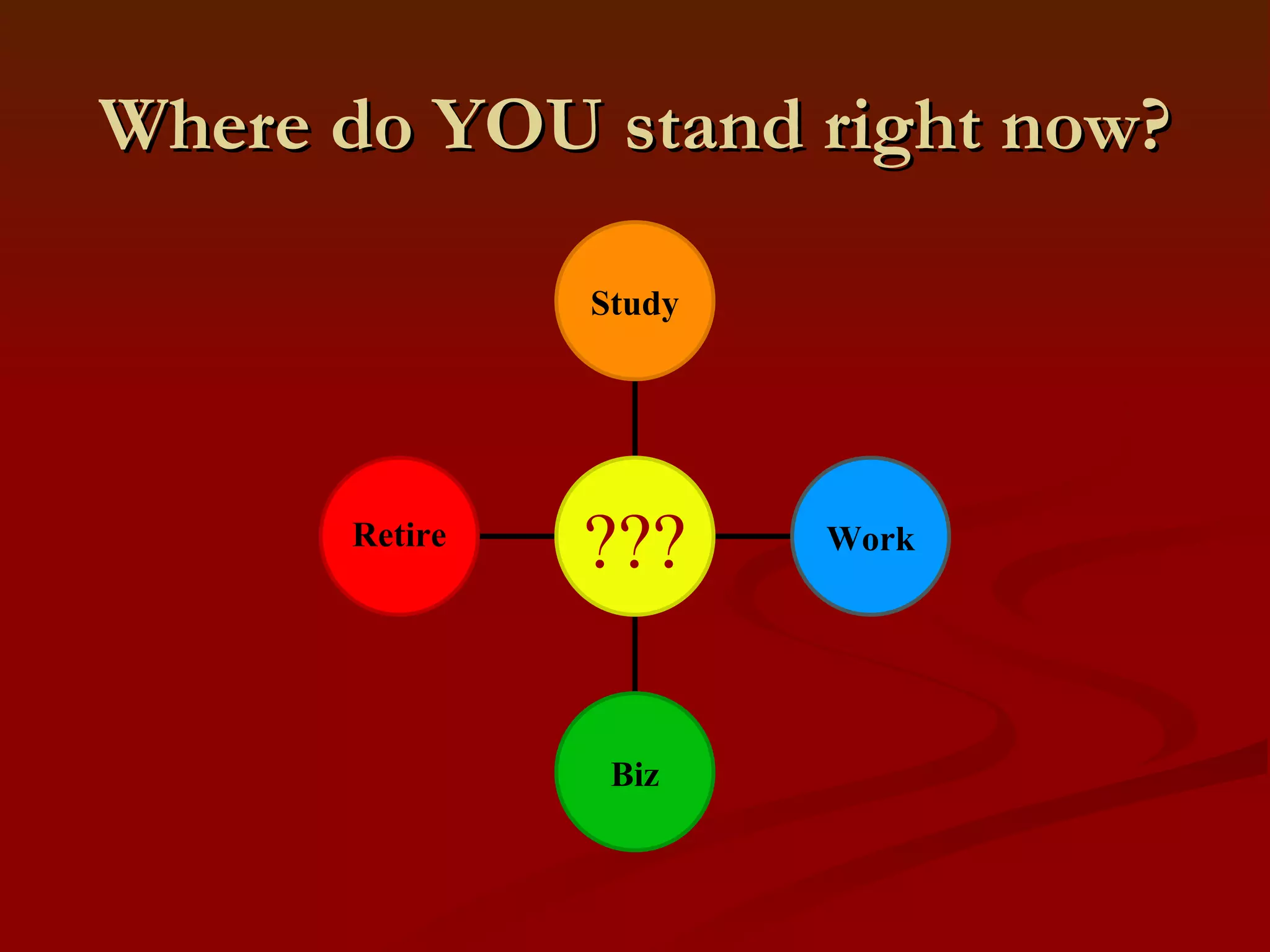
Where do YOU stand right now? Retire Biz Work Study ???
Where do you go from here?
CLICK HERE TO GO TO PART TWO

Pros and Cons of Business Models - Part One

  • 1.
    Pros and Consof Business Models By Val A. Slastnikov, Business Models Expert © 2010 Digitizer Group. All rights reserved
  • 2.
    PART ONE (TheBoring Part)
  • 3.
    Business Model Definition, Components and Types
  • 4.
    Definition The term BUSINESS MODEL describes a broad range of informal and formal models that are used by enterprises to represent various aspects of business, including its purpose, offerings, strategies, infrastructure, organizational structures, trading practices and operational processes and policies. - Wikipedia, Online Encyclopedia
  • 5.
    Explanation BUSINESS MODEL: a conceptual tool that contains a big set of elements and their relationships and allows expressing the business logic of a specific firm. BUSINESS MODEL: a description of the value a company offers to one or several segments of customers and of the architecture of the firm and its network of partners for creating, marketing, and delivering this value and relationship capital, to generate profitable and sustainable revenue streams.
  • 6.
    Business as aModel VALUE PROPOSITION COST STRUCTURE CUSTOMER RELATIONSHIP TARGET CUSTOMER DISTRIBUTION CHANNEL VALUE CONFIGURATION CORE CAPABILITIES PARTNER NETWORK REVENUE STREAMS INFRASTRUCTURE CUSTOMER OFFER FINANCE Business Model Design Template by Dr. Alex Osterwalder, PhD.
  • 7.
    Business as aSystem FINANCE Business Flowchart by Rich Schefren Input Output Suppliers & Vendors Customers & Affiliates Your Business Systems Tasks Processes
  • 8.
    Functions “ Abusiness model performs two important functions: CREATES VALUE by defining a series of activities from raw materials through to the final consumer that will yield a new product or service with value being added through the various activities. CAPTURES VALUE by establishing a unique resource, asset or position within that series of activities where the firm enjoys a competitive advantage.” - Henry Chesbrough, “Open Business Models”
  • 9.
    “ Founder” BusinessModel As per Rich Schefren, a true “Founder” business model must also perform two more functions: CREATE PROFIT FOR THE BUSINESS FOUNDER(S) So that eventually business start growing without the Founder(s)’ participation CREATE BENEFITS FOR THE WHOLE PARTNER NETWORK This includes all participants, such as partners, employees, outsourcers, affiliates and customers of the business
  • 10.
    Quote “ VALUE is a combination of price, service, quality and, most importantly, the relationship that you have with your customers.” - Chris Malta, Worldwide Brands
  • 11.
    The Offer VALUEPROPOSITION: The products and services a business offers VALUE PROPOSITION value proposition 1 value proposition 2 … OFFER “ THE WHAT”
  • 12.
    The Customer TARGETMARKET: Who is the Offer Targeted at? value proposition 1 value proposition 2 … “ THE WHO” value proposition 1 value proposition 2 … target customer 1 target customer 2 … OFFER TARGET CUSTOMER DISTRIBUTION CHANNEL distribution channel 1 distribution channel 2 … target customer 1 target customer 2 … CUSTOMER CUSTOMER RELATIONSHIP relationship type 1 relationship type 2 …
  • 13.
    The Target MarketTARGET CUSTOMER: The target audience for a business' products and services. DISTRIBUTION CHANNEL: The means by which a company delivers products and services to customers. This includes the company's marketing and distribution strategy. CUSTOMER RELATIONSHIP: The links a company establishes between itself and its different customer segments. The process of managing customer relationships is referred to as CRM (Customer Relationship Management).
  • 14.
    The Infrastructure DELIVERYMECHANISM: How is the Offer delivered to the Customer? value proposition 1 value proposition 2 … “ THE HOW” value proposition 1 value proposition 2 … target customer 1 target customer 2 … OFFER value proposition 1 value proposition 2 … distribution channel 1 distribution channel 2 … target customer 1 target customer 2 … OFFER VALUE CONFIGURATION CORE CAPABILITIES core capability 1 core capability 2 … activity 1 activity 2 … INFRASTRUCTURE PARTNER NETWORK partner 1 partner 2 …
  • 15.
    The Delivery MechanismCORE CAPABILITIES: The capabilities and competencies necessary to execute a company's business model. PARTNER NETWORK: The business alliances which complement other aspects of the business model. VALUE CONFIGURATION: The rationale which makes a business mutually beneficial for a business and its customers.
  • 16.
    The Finance EXPENSESAND REVENUE STREAMS: The Cost of running business and the way Profit is made “ THE MONEY” value proposition 1 value proposition 2 … value proposition 1 value proposition 2 … target customer 1 target customer 2 … OFFER value proposition 1 value proposition 2 … distribution channel 1 distribution channel 2 … target customer 1 target customer 2 … OFFER COST STRUCTURE Cost account 1 Cost account 2 … FINANCE REVENUE STREAM Revenue Stream 1 Revenue Stream 2 …
  • 17.
    VALUE PROPOSITION COSTSTRUCTURE CUSTOMER RELATIONSHIP TARGET CUSTOMER DISTRIBUTION CHANNEL VALUE CONFIGURATION CORE CAPABILITIES PARTNER NETWORK REVENUE STREAMS gives an overall view of a company's bundle of products and services portrays the network of cooperative agreements with other companies describes the channels to communicate and get in touch with customers describes the arrangement of activities and resources explains the relationships a company establishes with its customers sums up the monetary consequences to run a business model describes the revenue streams through which money is earned describes the customers a company wants to offer value to outlines the capabilities required to run a company's business model INFRASTRUCTURE CUSTOMER OFFER FINANCE Business Model Summary by Dr. Alex Osterwalder, PhD.
  • 18.
    Where do YOUstand right now? Retire Biz Work Study ???
  • 19.
    Where do yougo from here?
  • 20.
    CLICK HERE TOGO TO PART TWO