

2/21/2015 1
2/21/2015 2
2/21/2015 3
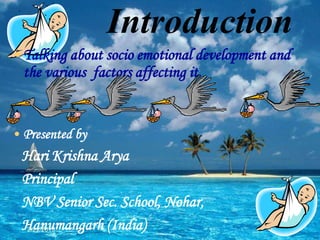
Introduction
•Talking about socio emotional development and
the various factors affecting it.
• Presented by
Hari Krishna Arya
Principal
NBV Senior Sec. School, Nohar,
Hanumangarh (India)
2/21/2015 4
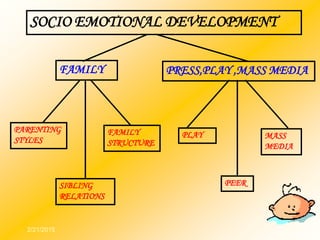
SOCIO EMOTIONAL DEVELOPMENT
FAMILY PRESS,PLAY ,MASS MEDIA
PARENTING
STYLES
FAMILY
STRUCTURE
SIBLING
RELATIONS
PEER
PLAY MASS
MEDIA
2/21/2015 5
•Human infant cannot sustain on its
own & requires intensive care and
attention.
•Humans are social animals.
2/21/2015 6
• Crying and smiling are the primary
ways by which the child needs to
interact.
•Children’s survival depends
upon forming affective
relationships with others.
2/21/2015 7
Family
After birth three factors seem important:
•Way parents interact with the baby.
•No. of brothers and sisters.
•Type of family and child’s relationship with the family members.
2/21/2015 8
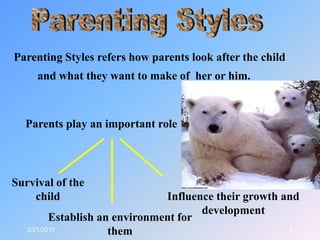
Parenting Styles refers how parents look after the child
and what they want to make of her or him.
Parents play an important role
Survival of the
child
Establish an environment for
them
Influence their growth and
development
2/21/2015 9
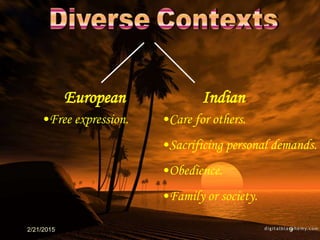
European Indian
•Care for others.
•Sacrificing personal demands.
•Obedience.
•Family or society.
•Free expression.
2/21/2015 10
Influence
Teach
Control
2/21/2015 11
2/21/2015 12
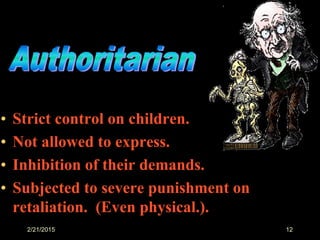
• Strict control on children.
• Not allowed to express.
• Inhibition of their demands.
• Subjected to severe punishment on
retaliation. (Even physical.).
2/21/2015 13
 Perform moderately well in
school.
 Have poorer skill.
 Lower self esteem.
 High level of depression.
2/21/2015 14
 Permissive Parents.
 Little Punishment.
 Few Demands.
 Allow Children to Make
their own demands.
2/21/2015 15
 Show Problem Behavior.
 Perform Well in School.
 High Social Skill.
 Lower Levels of
Depression.
2/21/2015 16
• Balance between parent’s demanding-
ness and emotional responsiveness.
• Recognition of child’s autonomy.
• Set clear standards for behavior and
enforce rules using demands and
sanctions when necessary.
• Discuss issues openly.
2/21/2015 17
 More socially and instrumentally
competitive.
 Make children independent ,self
confident.
 Socially responsive.
 Able to control aggression.
 Hold positive opinion about themselves.
2/21/2015 18
Parents are not committed to their
role as parents.
Harsh, unresponsive,
unsupportive.
Ignore or neglect the child.
2/21/2015 19
 Development of the child is not
optimum.
 Socially independent, aggressive.
 Very bad and far lasting impact on
the development of the child.
 Low positive and negative behavior.
 Usually disliked and infrequently
nominated as best friends.
2/21/2015 20
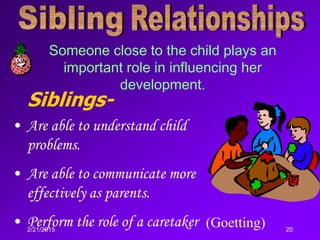
Someone close to the child plays an
important role in influencing her
development.
Siblings-
• Are able to understand child
problems.
• Are able to communicate more
effectively as parents.
• Perform the role of a caretaker (Goetting)
2/21/2015 21
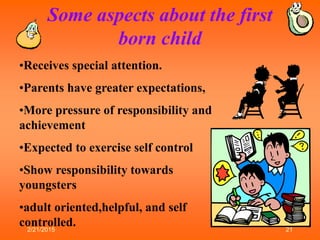
Some aspects about the first
born child
•Receives special attention.
•Parents have greater expectations,
•More pressure of responsibility and
achievement
•Expected to exercise self control
•Show responsibility towards
youngsters
•adult oriented,helpful, and self
controlled.
2/21/2015 22
2/21/2015 23
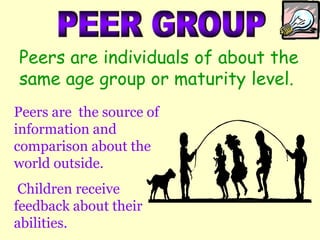
Peers are individuals of about the
same age group or maturity level.
Peers are the source of
information and
comparison about the
world outside.
Children receive
feedback about their
abilities.
2/21/2015 24
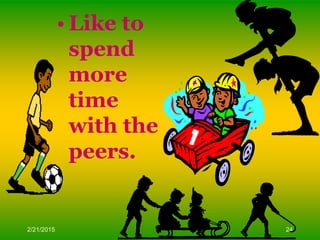
• Like to
spend
more
time
with the
peers.
2/21/2015 25
•Problems
and
disorders
like dropping
out and
delinquent
behavior are
result of
social
isolation.
2/21/2015 26
Popular children- greatly liked
by peers.
Average children-moderately
liked.
Rejected children -actively
disliked.
Controversial children-
frequently disliked.
2/21/2015 27
Pleasurable activity essential
for healthy development.
Increases affiliation with
peers.
Releases tensions and excess
physical energy.
Increases exploration.
Children interact more with
each other.
2/21/2015 28
Television can have a positive
influence by-
Presenting ,motivating educational
programmes.
Providing healthy entertainment
,different types of information etc.
Can have a negative influence
by-
• Taking them away from studies.
2/21/2015 29
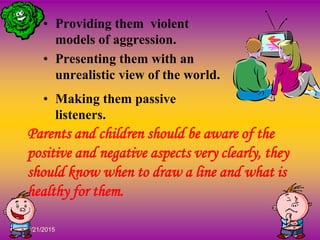
• Providing them violent
models of aggression.
• Presenting them with an
unrealistic view of the world.
• Making them passive
listeners.
Parents and children should be aware of the
positive and negative aspects very clearly, they
should know when to draw a line and what is
healthy for them.
2/21/2015 30
I owe my thanks to INSPECTORATUL
SCOLAR JUDETEAN, BRASOV and
SCOALA GIMNAZIALA NR. 11 “ST. O.
IOSIF, BRASOV for giving me this
opportunity to work on this project

Parental care & child development

  • 1.
  • 2.
  • 3.
    2/21/2015 3 Introduction •Talking aboutsocio emotional development and the various factors affecting it. • Presented by Hari Krishna Arya Principal NBV Senior Sec. School, Nohar, Hanumangarh (India)
  • 4.
    2/21/2015 4 SOCIO EMOTIONALDEVELOPMENT FAMILY PRESS,PLAY ,MASS MEDIA PARENTING STYLES FAMILY STRUCTURE SIBLING RELATIONS PEER PLAY MASS MEDIA
  • 5.
    2/21/2015 5 •Human infantcannot sustain on its own & requires intensive care and attention. •Humans are social animals.
  • 6.
    2/21/2015 6 • Cryingand smiling are the primary ways by which the child needs to interact. •Children’s survival depends upon forming affective relationships with others.
  • 7.
    2/21/2015 7 Family After birththree factors seem important: •Way parents interact with the baby. •No. of brothers and sisters. •Type of family and child’s relationship with the family members.
  • 8.
    2/21/2015 8 Parenting Stylesrefers how parents look after the child and what they want to make of her or him. Parents play an important role Survival of the child Establish an environment for them Influence their growth and development
  • 9.
    2/21/2015 9 European Indian •Carefor others. •Sacrificing personal demands. •Obedience. •Family or society. •Free expression.
  • 10.
  • 11.
  • 12.
    2/21/2015 12 • Strictcontrol on children. • Not allowed to express. • Inhibition of their demands. • Subjected to severe punishment on retaliation. (Even physical.).
  • 13.
    2/21/2015 13  Performmoderately well in school.  Have poorer skill.  Lower self esteem.  High level of depression.
  • 14.
    2/21/2015 14  PermissiveParents.  Little Punishment.  Few Demands.  Allow Children to Make their own demands.
  • 15.
    2/21/2015 15  ShowProblem Behavior.  Perform Well in School.  High Social Skill.  Lower Levels of Depression.
  • 16.
    2/21/2015 16 • Balancebetween parent’s demanding- ness and emotional responsiveness. • Recognition of child’s autonomy. • Set clear standards for behavior and enforce rules using demands and sanctions when necessary. • Discuss issues openly.
  • 17.
    2/21/2015 17  Moresocially and instrumentally competitive.  Make children independent ,self confident.  Socially responsive.  Able to control aggression.  Hold positive opinion about themselves.
  • 18.
    2/21/2015 18 Parents arenot committed to their role as parents. Harsh, unresponsive, unsupportive. Ignore or neglect the child.
  • 19.
    2/21/2015 19  Developmentof the child is not optimum.  Socially independent, aggressive.  Very bad and far lasting impact on the development of the child.  Low positive and negative behavior.  Usually disliked and infrequently nominated as best friends.
  • 20.
    2/21/2015 20 Someone closeto the child plays an important role in influencing her development. Siblings- • Are able to understand child problems. • Are able to communicate more effectively as parents. • Perform the role of a caretaker (Goetting)
  • 21.
    2/21/2015 21 Some aspectsabout the first born child •Receives special attention. •Parents have greater expectations, •More pressure of responsibility and achievement •Expected to exercise self control •Show responsibility towards youngsters •adult oriented,helpful, and self controlled.
  • 22.
  • 23.
    2/21/2015 23 Peers areindividuals of about the same age group or maturity level. Peers are the source of information and comparison about the world outside. Children receive feedback about their abilities.
  • 24.
    2/21/2015 24 • Liketo spend more time with the peers.
  • 25.
    2/21/2015 25 •Problems and disorders like dropping outand delinquent behavior are result of social isolation.
  • 26.
    2/21/2015 26 Popular children-greatly liked by peers. Average children-moderately liked. Rejected children -actively disliked. Controversial children- frequently disliked.
  • 27.
    2/21/2015 27 Pleasurable activityessential for healthy development. Increases affiliation with peers. Releases tensions and excess physical energy. Increases exploration. Children interact more with each other.
  • 28.
    2/21/2015 28 Television canhave a positive influence by- Presenting ,motivating educational programmes. Providing healthy entertainment ,different types of information etc. Can have a negative influence by- • Taking them away from studies.
  • 29.
    2/21/2015 29 • Providingthem violent models of aggression. • Presenting them with an unrealistic view of the world. • Making them passive listeners. Parents and children should be aware of the positive and negative aspects very clearly, they should know when to draw a line and what is healthy for them.
  • 30.
    2/21/2015 30 I owemy thanks to INSPECTORATUL SCOLAR JUDETEAN, BRASOV and SCOALA GIMNAZIALA NR. 11 “ST. O. IOSIF, BRASOV for giving me this opportunity to work on this project