Paraphrasing

BVH Library
Definition
• Paraphrasing: When you paraphrase a source,
you are simply taking the author's words and
making them your own. Paraphrasing may be
slightly shorter than the original source and is
the most commonly used method of
integrating an author's words into one's own
work.
Why paraphrase?
• Avoid plagiarism without over-quoting.
• Force yourself to fully comprehend the
material being paraphrased.
How to paraphrase:
1.

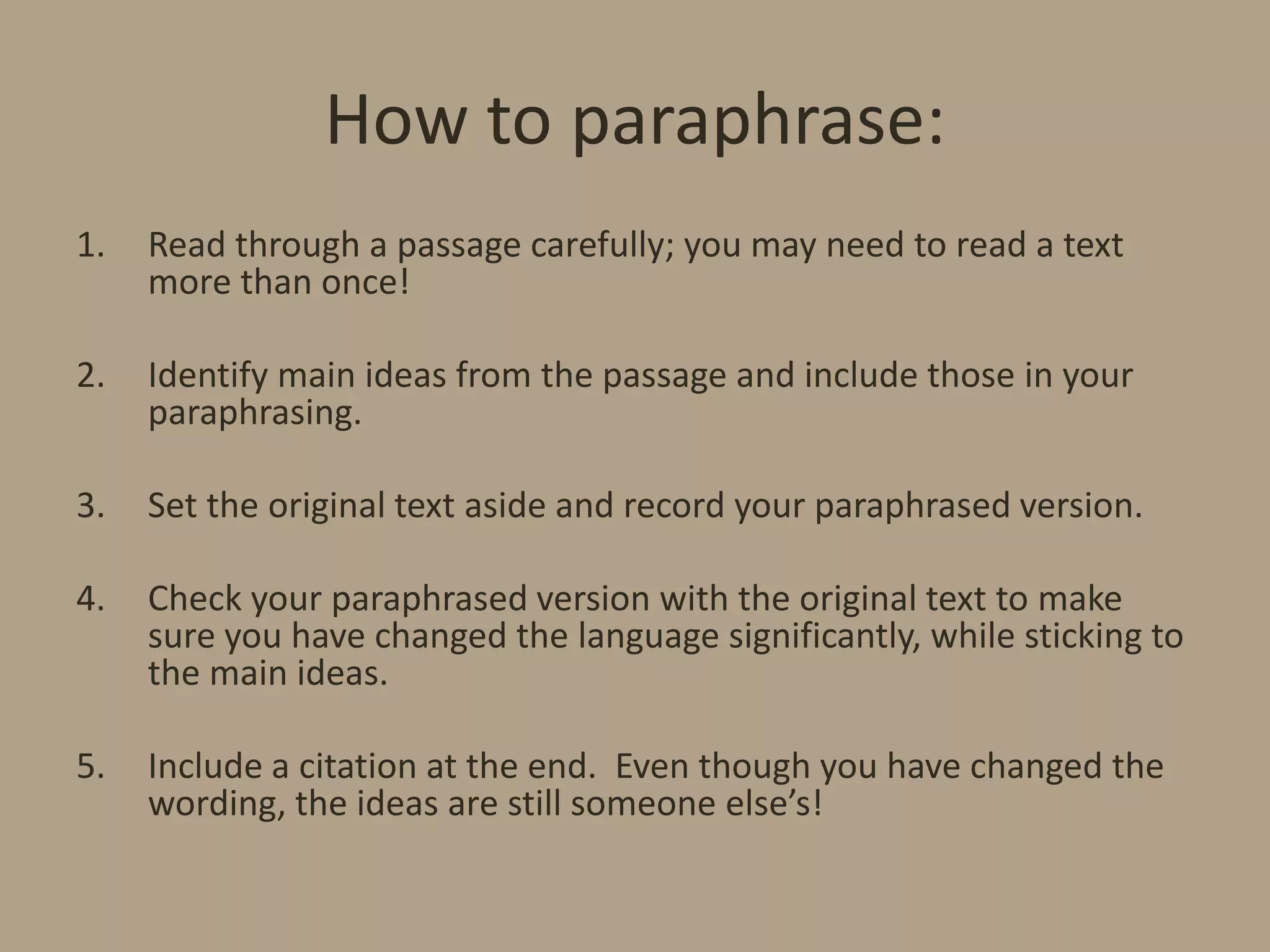
Read through a passage carefully; you may need to read a text
more than once!

2.

Identify main ideas from the passage and include those in your
paraphrasing.

3.

Set the original text aside and record your paraphrased version.

4.

Check your paraphrased version with the original text to make
sure you have changed the language significantly, while sticking to
the main ideas.

5.

Include a citation at the end. Even though you have changed the
wording, the ideas are still someone else’s!
Common paraphrasing pitfalls:
• The following common mistakes will result in
plagiarism:
– Not changing the order of the wording or ideas.
– Not changing the language or word choice
significantly enough.
– Failure to accurately cite the source.
Practice: Is it Plagiarism?
(All examples taken from the University of Indiana Writing Lab, www.indiana.edu)

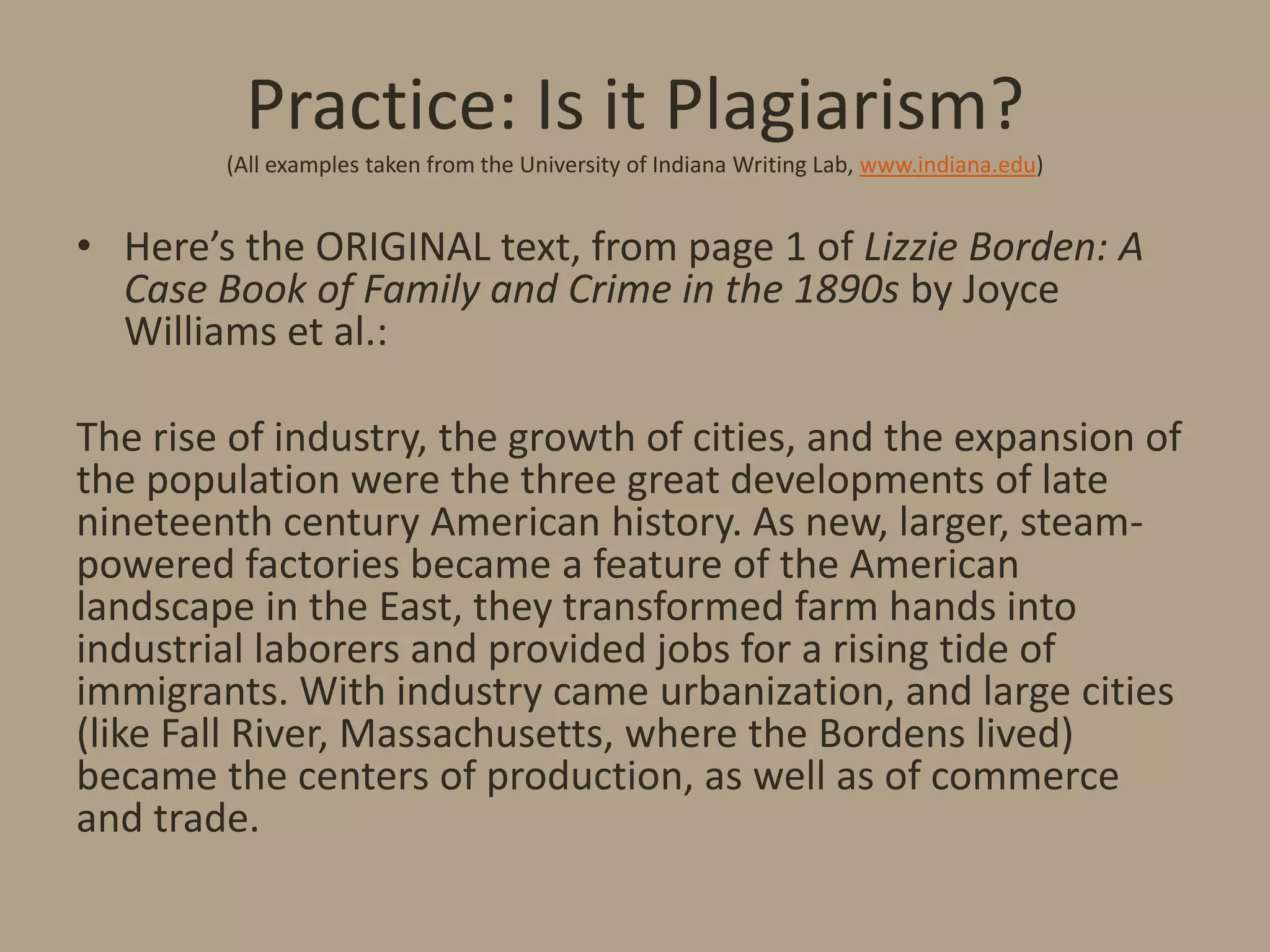
• Here’s the ORIGINAL text, from page 1 of Lizzie Borden: A
Case Book of Family and Crime in the 1890s by Joyce
Williams et al.:
The rise of industry, the growth of cities, and the expansion of
the population were the three great developments of late
nineteenth century American history. As new, larger, steampowered factories became a feature of the American
landscape in the East, they transformed farm hands into
industrial laborers and provided jobs for a rising tide of
immigrants. With industry came urbanization, and large cities
(like Fall River, Massachusetts, where the Bordens lived)
became the centers of production, as well as of commerce
and trade.
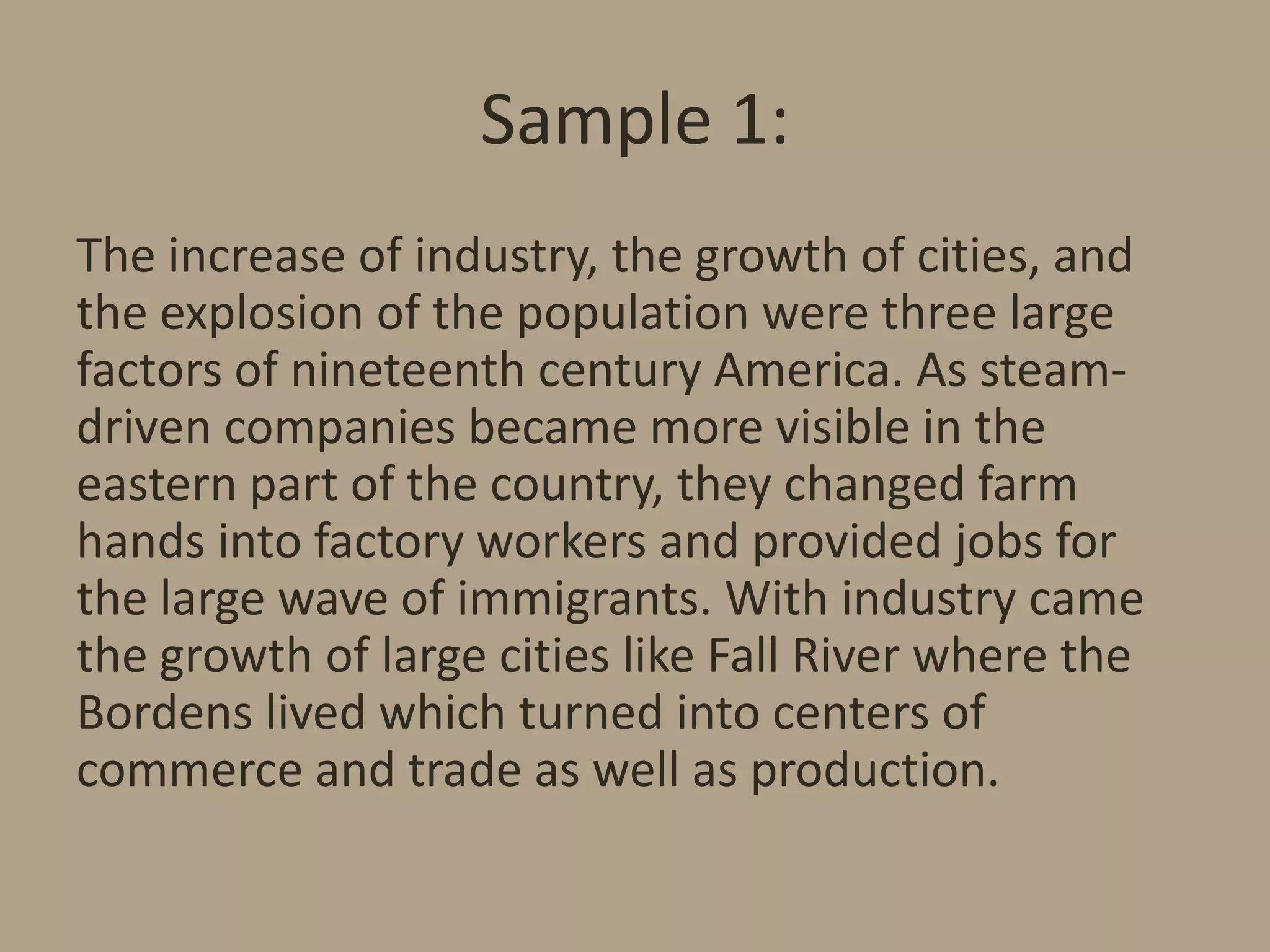
Sample 1:
The increase of industry, the growth of cities, and
the explosion of the population were three large
factors of nineteenth century America. As steamdriven companies became more visible in the
eastern part of the country, they changed farm
hands into factory workers and provided jobs for
the large wave of immigrants. With industry came
the growth of large cities like Fall River where the
Bordens lived which turned into centers of
commerce and trade as well as production.
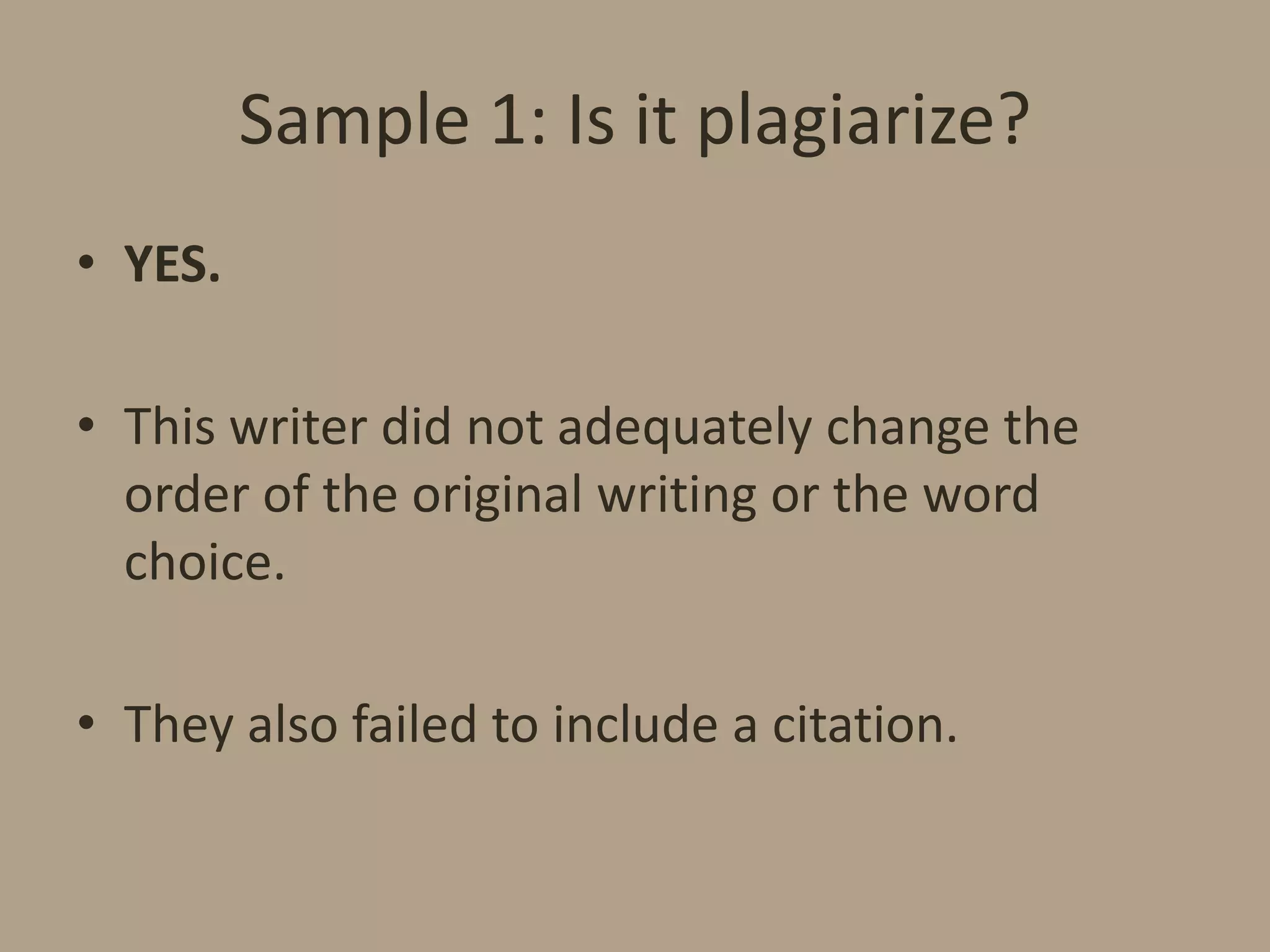
Sample 1: Is it plagiarize?
• YES.
• This writer did not adequately change the
order of the original writing or the word
choice.
• They also failed to include a citation.
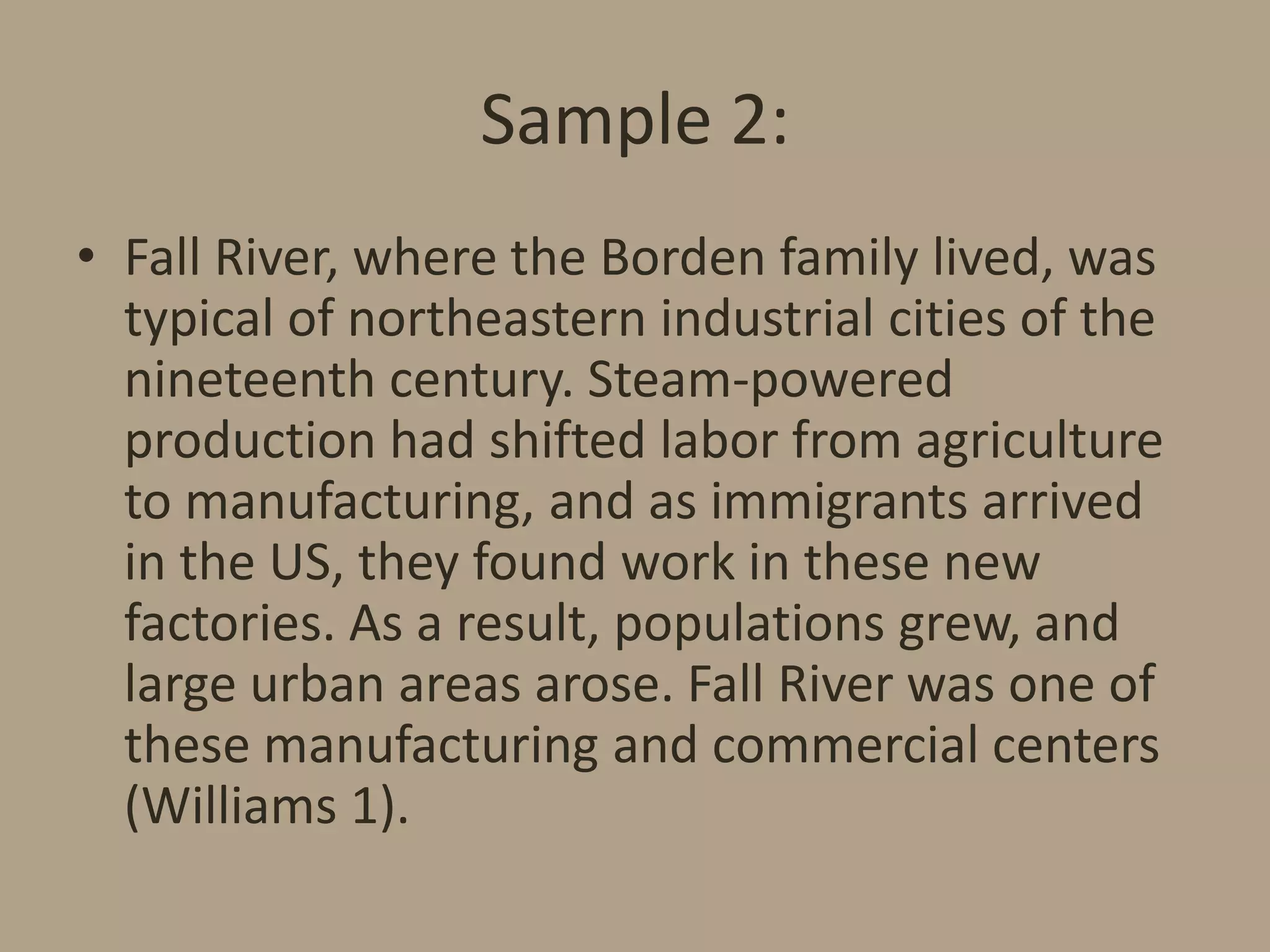
Sample 2:
• Fall River, where the Borden family lived, was
typical of northeastern industrial cities of the
nineteenth century. Steam-powered
production had shifted labor from agriculture
to manufacturing, and as immigrants arrived
in the US, they found work in these new
factories. As a result, populations grew, and
large urban areas arose. Fall River was one of
these manufacturing and commercial centers
(Williams 1).
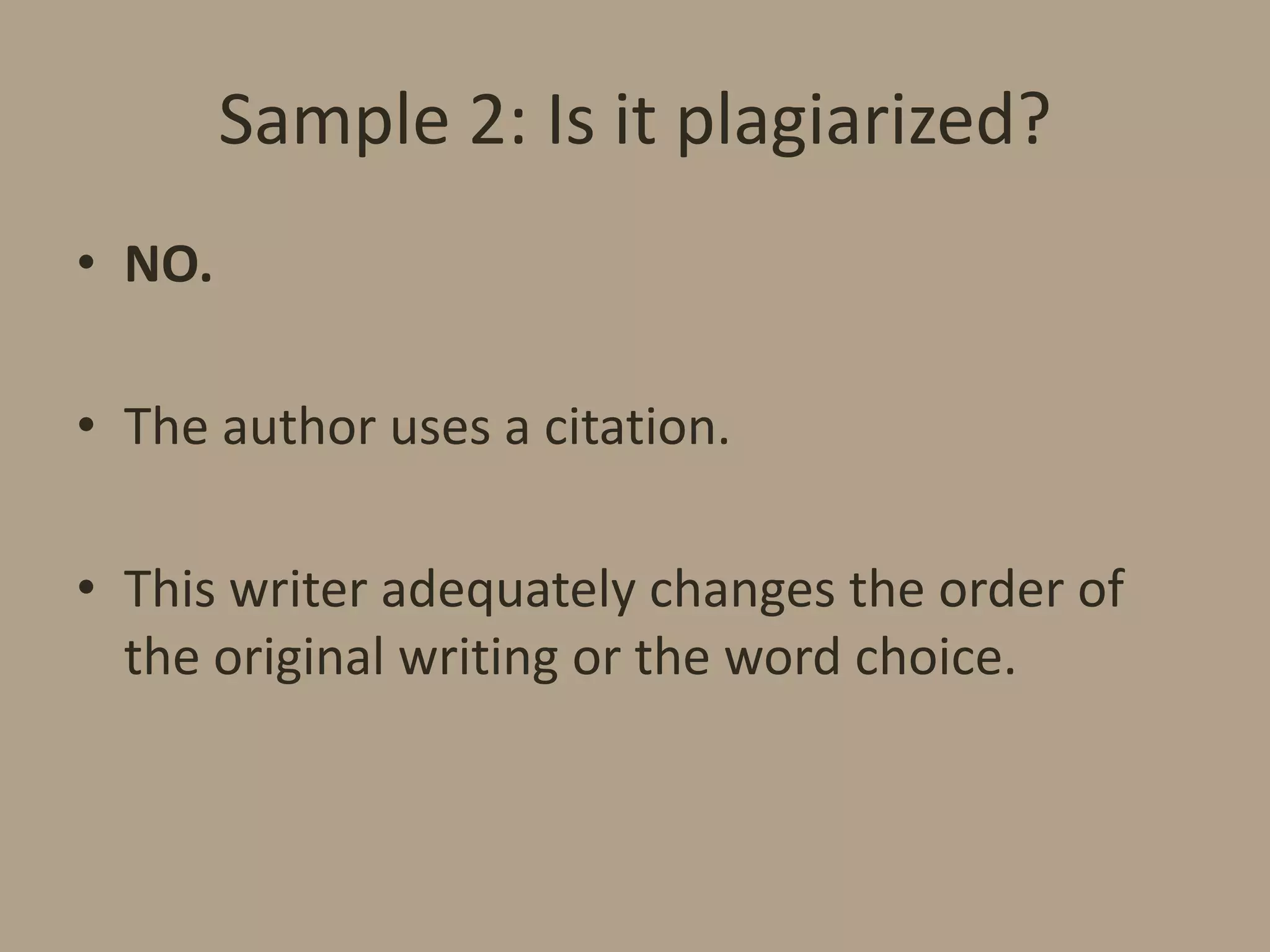
Sample 2: Is it plagiarized?
• NO.
• The author uses a citation.
• This writer adequately changes the order of
the original writing or the word choice.
Guided Practice:
• Take a passage from your own research that you
would like to incorporate into your essay.
• Paraphrase the passage using the guidelines
discussed in this presentation.
• When you have finished, trade with a partner and
evaluate one another’s work.
– Did the significantly chance the wording and sentence
structure?
– Did they include a citation?

Paraphrasing

  • 1.
  • 2.
    Definition • Paraphrasing: Whenyou paraphrase a source, you are simply taking the author's words and making them your own. Paraphrasing may be slightly shorter than the original source and is the most commonly used method of integrating an author's words into one's own work.
  • 3.
    Why paraphrase? • Avoidplagiarism without over-quoting. • Force yourself to fully comprehend the material being paraphrased.
  • 4.
    How to paraphrase: 1. Readthrough a passage carefully; you may need to read a text more than once! 2. Identify main ideas from the passage and include those in your paraphrasing. 3. Set the original text aside and record your paraphrased version. 4. Check your paraphrased version with the original text to make sure you have changed the language significantly, while sticking to the main ideas. 5. Include a citation at the end. Even though you have changed the wording, the ideas are still someone else’s!
  • 5.
    Common paraphrasing pitfalls: •The following common mistakes will result in plagiarism: – Not changing the order of the wording or ideas. – Not changing the language or word choice significantly enough. – Failure to accurately cite the source.
  • 6.
    Practice: Is itPlagiarism? (All examples taken from the University of Indiana Writing Lab, www.indiana.edu) • Here’s the ORIGINAL text, from page 1 of Lizzie Borden: A Case Book of Family and Crime in the 1890s by Joyce Williams et al.: The rise of industry, the growth of cities, and the expansion of the population were the three great developments of late nineteenth century American history. As new, larger, steampowered factories became a feature of the American landscape in the East, they transformed farm hands into industrial laborers and provided jobs for a rising tide of immigrants. With industry came urbanization, and large cities (like Fall River, Massachusetts, where the Bordens lived) became the centers of production, as well as of commerce and trade.
  • 7.
    Sample 1: The increaseof industry, the growth of cities, and the explosion of the population were three large factors of nineteenth century America. As steamdriven companies became more visible in the eastern part of the country, they changed farm hands into factory workers and provided jobs for the large wave of immigrants. With industry came the growth of large cities like Fall River where the Bordens lived which turned into centers of commerce and trade as well as production.
  • 8.
    Sample 1: Isit plagiarize? • YES. • This writer did not adequately change the order of the original writing or the word choice. • They also failed to include a citation.
  • 9.
    Sample 2: • FallRiver, where the Borden family lived, was typical of northeastern industrial cities of the nineteenth century. Steam-powered production had shifted labor from agriculture to manufacturing, and as immigrants arrived in the US, they found work in these new factories. As a result, populations grew, and large urban areas arose. Fall River was one of these manufacturing and commercial centers (Williams 1).
  • 10.
    Sample 2: Isit plagiarized? • NO. • The author uses a citation. • This writer adequately changes the order of the original writing or the word choice.
  • 11.
    Guided Practice: • Takea passage from your own research that you would like to incorporate into your essay. • Paraphrase the passage using the guidelines discussed in this presentation. • When you have finished, trade with a partner and evaluate one another’s work. – Did the significantly chance the wording and sentence structure? – Did they include a citation?