BY
K. THANGA MALLIKA
I M.Sc., MICROBIOLOGY
 GENE : A gene is a sequence of DNA or RNA that
codes for a molecule that has a function.
 GENOME : The complete set of genes or genetic
material present in a cell or organism.
 It is the process by which information is converted
into the structures and functions of a cell by a process
 During gene expression, the DNA is first copied into
RNA. The RNA can be directly functional or be the
intermediate template for a protein synthesis.
Gene expression can be seen through several techniques:
1. cDNA microarray
2. Microarray
3. SAGE
 A microarray is a set of short Expressed Sequence Tags
(ESTs) made from a cDNA library of a set of known
gene loci.
 The ESTs are spotted onto a coverslip sized glass plate,
as 8×12 array.
 Microarrays are of many thousand ESTs are possible.
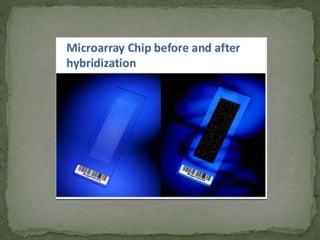
 DNA microarray is also known as DNA chip or
biochip.
 DNA microarrays are solid supports, usually of glass
or silicon, upon which DNA is attached in an
organized grid fashion.
 Each spot of DNA is called a probe, represents a single
gene.
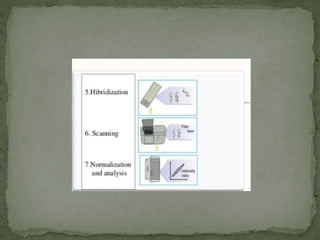
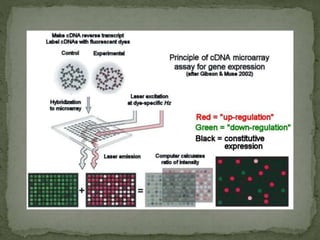
 The principles behind microarrays is hybridization
between two DNA strands.
 Using this technology, the presence of one genomic or
cDNA sequence in 1,00,000 or more sequences can be
screened in a hybridization.
Types of DNA chips:
1. cDNA based microarray
2. Oligonucleotide based microarray
 Gene expression
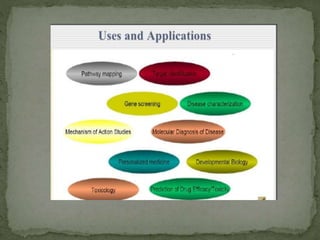
 Disease diagnosis
 Drug discovery
 Toxicological research
 Comparative genomic hybridization
 Gene expression profiling
 This type of chips are prepared by using cDNA, it is
called cDNA chips or cDNA microarray or probe DNA.
 The cDNAs are amplified by using PCR.
 Then these are immobilized on to a solid support
made up of nylon filter of glass slide (1×3 inches).
 The probe DNA are looked into a spotting spin by
capillary action.
 The small volume of this DNA preparation is spotted
on solid surface making physical contact between
these two.
 DNA is delivered mechanically or by robotic manner.
SAGE: Serial Analysis of Gene expression
 SAGE is an approach that allows rapid and detailed
analysis of overall gene expression patters.
 SAGE provides quantitative and comprehensive
expression profiling in a given cell population.
 An overview of a cell’s complete gene activity.
 SAGE is mainly based upon two principles:
representation of mRNA by short sequence tags and
concentration of these tags for cloning to allow the
efficient sequencing tags.
 To explain the gene expression profile of the cell, they
would have to conduct several cDNA sequencing
reactions.
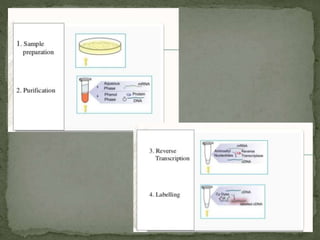
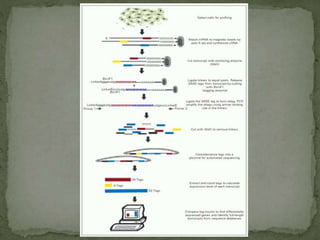
 Isolation of mRNA of a sample (eg: tumor).
 Linkers are added to each and the RNA is converted to
cDNA by RT-PCR.
 Following this, the linkers, containing restriction sites
are digested with the appropriate restriction enzymes
and the sticky ends are ligated together to form
concatamers.
SAGE resources:
 SAGE data
 SAGE tag to gene maps
 SAGE Protocol and software
Useful links:
 SAGE gene
 Download cancer SAGE data
 University of Tokyo
 Used in comparative expression studies to identify
differences in gene expression between two or more
cellular sources .
 Gene discovery.
 Analysis of cardiovascular gene expression.
 Profiling of human diseases.
 Provides quantitative data on both known and
unknown genes.
Parallel analysis of gene expression

Parallel analysis of gene expression

  • 1.
    BY K. THANGA MALLIKA IM.Sc., MICROBIOLOGY
  • 2.
     GENE :A gene is a sequence of DNA or RNA that codes for a molecule that has a function.  GENOME : The complete set of genes or genetic material present in a cell or organism.
  • 3.
     It isthe process by which information is converted into the structures and functions of a cell by a process  During gene expression, the DNA is first copied into RNA. The RNA can be directly functional or be the intermediate template for a protein synthesis.
  • 5.
    Gene expression canbe seen through several techniques: 1. cDNA microarray 2. Microarray 3. SAGE
  • 6.
     A microarrayis a set of short Expressed Sequence Tags (ESTs) made from a cDNA library of a set of known gene loci.  The ESTs are spotted onto a coverslip sized glass plate, as 8×12 array.  Microarrays are of many thousand ESTs are possible.
  • 7.
     DNA microarrayis also known as DNA chip or biochip.  DNA microarrays are solid supports, usually of glass or silicon, upon which DNA is attached in an organized grid fashion.  Each spot of DNA is called a probe, represents a single gene.
  • 9.
     The principlesbehind microarrays is hybridization between two DNA strands.  Using this technology, the presence of one genomic or cDNA sequence in 1,00,000 or more sequences can be screened in a hybridization.
  • 13.
    Types of DNAchips: 1. cDNA based microarray 2. Oligonucleotide based microarray
  • 14.
     Gene expression Disease diagnosis  Drug discovery  Toxicological research  Comparative genomic hybridization  Gene expression profiling
  • 15.
     This typeof chips are prepared by using cDNA, it is called cDNA chips or cDNA microarray or probe DNA.  The cDNAs are amplified by using PCR.  Then these are immobilized on to a solid support made up of nylon filter of glass slide (1×3 inches).
  • 16.
     The probeDNA are looked into a spotting spin by capillary action.  The small volume of this DNA preparation is spotted on solid surface making physical contact between these two.  DNA is delivered mechanically or by robotic manner.
  • 18.
    SAGE: Serial Analysisof Gene expression  SAGE is an approach that allows rapid and detailed analysis of overall gene expression patters.  SAGE provides quantitative and comprehensive expression profiling in a given cell population.  An overview of a cell’s complete gene activity.
  • 19.
     SAGE ismainly based upon two principles: representation of mRNA by short sequence tags and concentration of these tags for cloning to allow the efficient sequencing tags.  To explain the gene expression profile of the cell, they would have to conduct several cDNA sequencing reactions.
  • 20.
     Isolation ofmRNA of a sample (eg: tumor).  Linkers are added to each and the RNA is converted to cDNA by RT-PCR.  Following this, the linkers, containing restriction sites are digested with the appropriate restriction enzymes and the sticky ends are ligated together to form concatamers.
  • 22.
    SAGE resources:  SAGEdata  SAGE tag to gene maps  SAGE Protocol and software Useful links:  SAGE gene  Download cancer SAGE data  University of Tokyo
  • 23.
     Used incomparative expression studies to identify differences in gene expression between two or more cellular sources .  Gene discovery.  Analysis of cardiovascular gene expression.  Profiling of human diseases.  Provides quantitative data on both known and unknown genes.