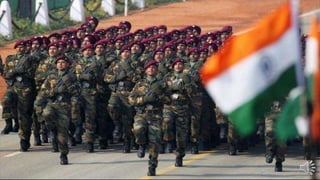
THE INDIAN ARMY PARACHUTE
REGIMENT – THE HEROES OF
SKY
INTRODUCTION
• The first Indian airborne formation was the 50 Independent Parachute Brigade raised on 29
October 1941 with 151 British, 152 Indian, and 153 Gurkha Parachute Battalions and other
support units.
• Lt (later Col Retd) AG Rangaraj, MVC, of the Indian Medical Service and RMO of the 152
Indian Para Bn, became the first Indian along with Hav Maj Mathura Singh to make a
parachute descent.
• In 1942-43, the formation saw limited action at Nara against the Pathan tribals in NWFP and
some intelligence-gathering missions in Burma, utilizing their somewhat-limited airborne
capabilities.
• Later, in March 1944, less the British battalion (which was transferred to Britain and renamed
the 156th Para Bn and formed part of the 4th Parachute Brigade of the 1st Airborne Division),
the brigade, less 154 Gurkha Para Bn, saw extensive action at Sangshak and later in the
Imphal Plains on the Burmese border against two reinforced Japanese divisions.
DETAILS
• Active: 1952 - Present
• Country: India India
• Allegiance: Indian Army
• Type: Parachute infantry and Special Forces
• Role: Airborne/Special Forces
• Size: 17 Battalions (9 Special Forces, 5 Special Forces Airborne , 2 Territorial Army and 1
Rashtriya Rifles)
• Regimental Centre: Bangalore, Karnataka
• Nickname: The Paras (red devil)
• Colors: Maroon and sky blue
• Equipment: TAR 21 (Primary)
INSIGNIA
• The regimental badge for the Parachute Regiment is an open parachute, partially behind a circle
with the word “Parachute” at the top and a scroll at the bottom with the word “Regiment”; wings are
spread out from the circle, and a dagger is superimposed on the parachute and upper portion of the
circle; the whole in silver metal.
• The special forces, which form part of the Parachute Regiment, have a distinct insignia called
Balidaan, which has a commando dagger point downwards, with upward-extending wings extending
from the blade and a scroll superimposed on the blade with “Balidaan” inscribed in Devanagiri; the
whole in silver metal on an upright red plastic rectangle.
• There remains a single airborne brevet: an open parachute in white, with light blue wings extended
from it, the whole on a grey-green drab background. (Some other variants have existed for
ceremonial/mess uniforms.
• There is also a small enameled version (white parachute with blue, yellow, or red wings) worn on the
left pocket as Jump Indicator Wings.
• The small enameled badge has now been replaced by a brass badge with stars at the bottom of the
parachute, with one star denoting 25 jumps, two stars 50 and three stars 100.
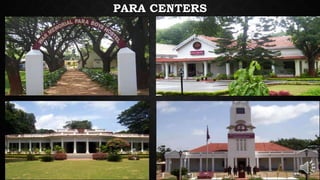
PARA CENTERS
PARA BATTALIONS
There are 10 Units under the parachute regiment:
• 1 PARA (SF)
• 2 PARA (SF)
• 3 PARA (SF)
• 4 PARA (SF)
• 5 PARA
• 6 PARA
• 7 PARA
• 9 PARA (SF)
• 10 PARA (SF)
• 21 PARA (SF)
OPERATION VIJAY
• In 1999, nine out of ten parachute battalions were deployed for OP
Vijay in Kargil, which bears testimony to the operational profile of
the regiment.
• While elements of the parachute brigade (6 PARA & 7 PARA
)cleared the Mushkoh Valley intrusions, 5 Para was actively
involved in the forgotten sector Batalik, where it exhibited great
courage and tenacity, and was awarded the COAS unit citation.
KASHMIR OPERATIONS
• Both 50th and 77th Parachute Brigades saw extensive action in the Kashmir operations of
1947-49.
• The three parachute battalions and the support units of the 50th Para Bde saw extensive action
in the 1947-48 war in Kashmir and the battalions won a battle honour each in their respective
sectors.
• The brigade commander, Brig. Mohd. Usman, was killed in action on July 3, 1948, and awarded
the Mahavir Chakra posthumously.
• 60 Parachute Field Ambulance as part of the 50 Para Bde also saw action in Kashmir where it
raised and maintained the now famous Cariappa Hospital catering to the needs of numerous
units in its vicinity and constantly faced shortages due to the war situation and inclement
weather conditions.
• The unit's performance like other units of the parachute brigade was beyond all expectations
and resulted in the awarding of numerous gallantry awards, including a Vir Chakra to Capt V.
Rangaswami, the surgeon.
REFERENCES
• http://www.indianparachuteregiment.kar.nic.in/units.htm
• http://en.wikipedia.org/wiki/Parachute_Regiment_(India)
• http://3.bp.blogspot.com/_XteWQWb98p4/TBJ_IY75ajI/AAAAAAAAB0Q/AaQ2FAug
w7I/s400/11+Paratroopers+Hi+Res.jpg
• http://www.outlookindia.com/images/parachute_regiment_20060213.jpg
THANK YOU

Parachute regiment

  • 1.
    THE INDIAN ARMYPARACHUTE REGIMENT – THE HEROES OF SKY
  • 2.
    INTRODUCTION • The firstIndian airborne formation was the 50 Independent Parachute Brigade raised on 29 October 1941 with 151 British, 152 Indian, and 153 Gurkha Parachute Battalions and other support units. • Lt (later Col Retd) AG Rangaraj, MVC, of the Indian Medical Service and RMO of the 152 Indian Para Bn, became the first Indian along with Hav Maj Mathura Singh to make a parachute descent. • In 1942-43, the formation saw limited action at Nara against the Pathan tribals in NWFP and some intelligence-gathering missions in Burma, utilizing their somewhat-limited airborne capabilities. • Later, in March 1944, less the British battalion (which was transferred to Britain and renamed the 156th Para Bn and formed part of the 4th Parachute Brigade of the 1st Airborne Division), the brigade, less 154 Gurkha Para Bn, saw extensive action at Sangshak and later in the Imphal Plains on the Burmese border against two reinforced Japanese divisions.
  • 4.
    DETAILS • Active: 1952- Present • Country: India India • Allegiance: Indian Army • Type: Parachute infantry and Special Forces • Role: Airborne/Special Forces • Size: 17 Battalions (9 Special Forces, 5 Special Forces Airborne , 2 Territorial Army and 1 Rashtriya Rifles) • Regimental Centre: Bangalore, Karnataka • Nickname: The Paras (red devil) • Colors: Maroon and sky blue • Equipment: TAR 21 (Primary)
  • 6.
    INSIGNIA • The regimentalbadge for the Parachute Regiment is an open parachute, partially behind a circle with the word “Parachute” at the top and a scroll at the bottom with the word “Regiment”; wings are spread out from the circle, and a dagger is superimposed on the parachute and upper portion of the circle; the whole in silver metal. • The special forces, which form part of the Parachute Regiment, have a distinct insignia called Balidaan, which has a commando dagger point downwards, with upward-extending wings extending from the blade and a scroll superimposed on the blade with “Balidaan” inscribed in Devanagiri; the whole in silver metal on an upright red plastic rectangle. • There remains a single airborne brevet: an open parachute in white, with light blue wings extended from it, the whole on a grey-green drab background. (Some other variants have existed for ceremonial/mess uniforms. • There is also a small enameled version (white parachute with blue, yellow, or red wings) worn on the left pocket as Jump Indicator Wings. • The small enameled badge has now been replaced by a brass badge with stars at the bottom of the parachute, with one star denoting 25 jumps, two stars 50 and three stars 100.
  • 7.
  • 8.
    PARA BATTALIONS There are10 Units under the parachute regiment: • 1 PARA (SF) • 2 PARA (SF) • 3 PARA (SF) • 4 PARA (SF) • 5 PARA • 6 PARA • 7 PARA • 9 PARA (SF) • 10 PARA (SF) • 21 PARA (SF)
  • 10.
    OPERATION VIJAY • In1999, nine out of ten parachute battalions were deployed for OP Vijay in Kargil, which bears testimony to the operational profile of the regiment. • While elements of the parachute brigade (6 PARA & 7 PARA )cleared the Mushkoh Valley intrusions, 5 Para was actively involved in the forgotten sector Batalik, where it exhibited great courage and tenacity, and was awarded the COAS unit citation.
  • 12.
    KASHMIR OPERATIONS • Both50th and 77th Parachute Brigades saw extensive action in the Kashmir operations of 1947-49. • The three parachute battalions and the support units of the 50th Para Bde saw extensive action in the 1947-48 war in Kashmir and the battalions won a battle honour each in their respective sectors. • The brigade commander, Brig. Mohd. Usman, was killed in action on July 3, 1948, and awarded the Mahavir Chakra posthumously. • 60 Parachute Field Ambulance as part of the 50 Para Bde also saw action in Kashmir where it raised and maintained the now famous Cariappa Hospital catering to the needs of numerous units in its vicinity and constantly faced shortages due to the war situation and inclement weather conditions. • The unit's performance like other units of the parachute brigade was beyond all expectations and resulted in the awarding of numerous gallantry awards, including a Vir Chakra to Capt V. Rangaswami, the surgeon.
  • 14.
    REFERENCES • http://www.indianparachuteregiment.kar.nic.in/units.htm • http://en.wikipedia.org/wiki/Parachute_Regiment_(India) •http://3.bp.blogspot.com/_XteWQWb98p4/TBJ_IY75ajI/AAAAAAAAB0Q/AaQ2FAug w7I/s400/11+Paratroopers+Hi+Res.jpg • http://www.outlookindia.com/images/parachute_regiment_20060213.jpg
  • 15.