UNIT 101
ISRAEL’S SUPER SPECIAL FORCE!!
Introduction
 Unit 101 was an Israeli special operations unit founded and led by Ariel Sharon on
orders from Prime Minister David Ben-Gurion in August 1953.
 It was created to retaliate against a spate of Palestinian violence against Israeli
civilians.
According to Sharon, Gurion told him that "the Palestinians must learn that they
will pay a high price for Israeli lives".
Its commander was major Sharon, his deputy in command was Shlomo Baum.
Unit 101 established small unit manoeuvres, activation and insertion tactics that
are utilized even today.
Beside Sayeret MATKAL, Unit 101 is considered to be the unit with the most
influence on the Israeli infantry oriented units including both special and
conventional units.
Uniqueness
 It was the first time the IDF formed a brand new SF
unit from scratch, rather then modify a previously
exiting infantry oriented unit, like with the Golany
brigade Special Reconnaissance Platoon.
 It was the first time the IDF formed a unit that
received its orders directly from the IDF General Staff
(the IDF High Command - MATKAL) and not by a
lower sub-command.
Mission
 Direct action;
 Strategic reconnaissance;
 Unconventional warfare;
 Counterterrorism;
 Activities specified by Government.
Operations
 Immediately after the foundation of Unit 101 in 1953, it began a series of
retaliatory operations targeting bases and villages which served as bases for the
infiltrators.
 On one of its first missions, the unit attacked the refugee camp in El-Bureij in
Gaza Strip.
 The mission was aimed at Col. Mustafa Hafez, the chief of Egyptian intelligence in
the Gaza Strip (and according to some, the Strip's de-facto ruler) who stood behind
many of the early violent infiltrations into Israel.
 Only two months later, in October, a heavy shadow was cast on the unit,
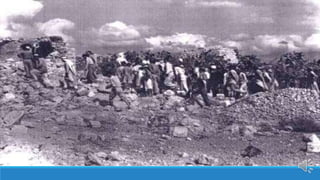
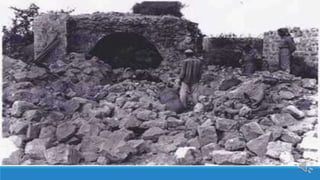
following its raid into the village of Qibya, in the northern West Bank then a part of
Jordan.
 Up to 70 innocent civilians were killed in this operation. The mode of operation
was similar to that of El-Bureig, but on a larger scale.
Aftermath
 The widely condemned attack on Qibya made the Israeli leadership forbid the IDF to
directly target innocent civilians in the future.
 By January 1954, the unit was disbanded and merged into the Paratroopers Brigade,
and unit commander Ariel Sharon became the commander of the merged brigade.
 The unit existed independently five months, and three more years as a core inside the
paratrooper brigade, before being disbanded after the 1956 Suez War.
 Beginning with 1954, the unit's activities were mostly confined to military targets.
 In particular, up to 20 such attacks were carried out in 1955-1956, culminating in the
Kalkiliya Police raid of October 1956 - a battle by a position of the Arab Legion in one of
the old British police forts, during which 18 Israeli soldiers and up to a hundred
Legionnaires died.
References
http://en.specwar.info/special-
forces/israel/unit-101/
http://en.wikipedia.org/wiki/Unit_101
THANK YOU

Unit 101, Israel - Bane of Israel's Enemies

  • 1.
  • 3.
    Introduction  Unit 101was an Israeli special operations unit founded and led by Ariel Sharon on orders from Prime Minister David Ben-Gurion in August 1953.  It was created to retaliate against a spate of Palestinian violence against Israeli civilians. According to Sharon, Gurion told him that "the Palestinians must learn that they will pay a high price for Israeli lives". Its commander was major Sharon, his deputy in command was Shlomo Baum. Unit 101 established small unit manoeuvres, activation and insertion tactics that are utilized even today. Beside Sayeret MATKAL, Unit 101 is considered to be the unit with the most influence on the Israeli infantry oriented units including both special and conventional units.
  • 5.
    Uniqueness  It wasthe first time the IDF formed a brand new SF unit from scratch, rather then modify a previously exiting infantry oriented unit, like with the Golany brigade Special Reconnaissance Platoon.  It was the first time the IDF formed a unit that received its orders directly from the IDF General Staff (the IDF High Command - MATKAL) and not by a lower sub-command.
  • 7.
    Mission  Direct action; Strategic reconnaissance;  Unconventional warfare;  Counterterrorism;  Activities specified by Government.
  • 9.
    Operations  Immediately afterthe foundation of Unit 101 in 1953, it began a series of retaliatory operations targeting bases and villages which served as bases for the infiltrators.  On one of its first missions, the unit attacked the refugee camp in El-Bureij in Gaza Strip.  The mission was aimed at Col. Mustafa Hafez, the chief of Egyptian intelligence in the Gaza Strip (and according to some, the Strip's de-facto ruler) who stood behind many of the early violent infiltrations into Israel.  Only two months later, in October, a heavy shadow was cast on the unit, following its raid into the village of Qibya, in the northern West Bank then a part of Jordan.  Up to 70 innocent civilians were killed in this operation. The mode of operation was similar to that of El-Bureig, but on a larger scale.
  • 10.
    Aftermath  The widelycondemned attack on Qibya made the Israeli leadership forbid the IDF to directly target innocent civilians in the future.  By January 1954, the unit was disbanded and merged into the Paratroopers Brigade, and unit commander Ariel Sharon became the commander of the merged brigade.  The unit existed independently five months, and three more years as a core inside the paratrooper brigade, before being disbanded after the 1956 Suez War.  Beginning with 1954, the unit's activities were mostly confined to military targets.  In particular, up to 20 such attacks were carried out in 1955-1956, culminating in the Kalkiliya Police raid of October 1956 - a battle by a position of the Arab Legion in one of the old British police forts, during which 18 Israeli soldiers and up to a hundred Legionnaires died.
  • 11.
  • 12.