PANIC DISORDER
AND
GENERALIZED ANXIETY
DISORDER
PREPARED BY
KANKANA
CHAKRABORTY
COLLEGE OF NURSING
AIIMS PATNA
PANIC DISORDER
DEFINITION
• This disorder is characterized by recurrent panic attacks, the onset of which is
unpredictable, and manifested by intense apprehension, fear, or terror, often
associated with feelings of impending doom and accompanied by intense physical
discomfort.
PANIC ATTACK
 Panic attack is an episode of intense fear or apprehension with a sudden onset. Such symptoms develop
abruptly and usually reach its peak within 10 - 15 minutes.
 At least four of the following symptoms must be present to identify the presence of a panic attack.
● Palpitations, pounding heart, or accelerated heart rate
● Sweating
● Trembling or shaking
● Sensations of shortness of breath or smothering
● Feeling of choking
● Chest pain or discomfort
● Nausea or abdominal distress
● Feeling dizzy, unsteady, lightheaded, or faint
● Derealization or depersonalization
● Fear of losing control or going crazy
● Fear of dying
● Paresthesias (numbness or tingling sensations)
● Chills or hot flash
EPIDEMIOLOGY
• 3% to 5% of the population.
• More common in women.
• The age of onset is usually between 15 and 24.
ETIOLOGY OF
PANIC DISORDER AND GAD
• Biological Aspects
• Psychological Aspects
BIOLOGICAL ASPECTS
Genetics :The concordance rate for identical twins is 30 percent, and the risk for
the disorder in a close relative is 10 to 20 percent.
Neuroanatomical : Structural brain imaging studies in patients with panic
disorder have implicated pathological involvement in the temporal lobes,
particularly the hippocampus and the amygdala.
Biochemical : Abnormal elevations of blood lactate have been noted in clients
with panic disorder.
Neurochemical : Stronger evidence exists for the involvement of the
neurotransmitter norepinephrine in the etiology of panic disorder (Daniels & Yerkes,
2006). Norepinephrine is known to mediate arousal, and it causes hyper arousal and
anxiety.
Alteration in GABA level may lead to production of anxiety.
CONTD….
Medical conditions :
● Abnormalities in the hypothalamic–pituitary–adrenal and hypothalamic–pituitary thyroid
axes
● Acute myocardial infarction
● Pheochromocytomas
● Substance intoxication and withdrawal (cocaine, alcohol, marijuana, opioids)
● Hypoglycemia
● Caffeine intoxication
● Mitral valve prolapse
● Complex partial seizures
PSYCHOLOGICAL ASPECTS
Psychodynamic theory : The psychodynamic view focuses on the inability of the
ego to intervene when conflict occurs between the id and the superego, producing
anxiety.
Learning factor : The learning theorists have tried to explain panic attacks as
learnt phenomena – specifically as responses to conditioned stimuli.
Cognitive theory : According to this theory , anxiety is related to cognitive
distortions and negative automatic thoughts
DIAGNOSIS
• Tests to rule out organic or pharmacologic basis for symptoms
• Serum glucose measurements to rule out hypoglycemia
• TFT to rule out hyperthyroidism
• Urine and serum toxicology tests to rule out presence of psychoactive substances
such as barbiturates , caffeine, and amphetamines.
• Based on ICD 10 criteria
TREATMENT MODALITIES
Pharmacotherapy:
 Benzodiazepines — alprazolam , clonazepam
 Antidepressants
 Betablockers -- propranolol
Behavioural therapy:
 Relaxation techniques
 Deep breathing exercise
 Positive verbalization or guided imagery
 Listening calm music
Cognitive therapy:
 Replacing negative thoughts with more realistic ,positive ways
 Helping to identify possible triggers of panic attacks
 Identify and evaluate thoughts that precede anxiety and restructures them
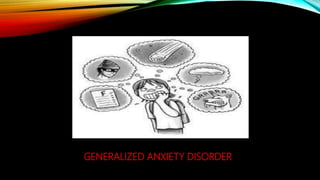
GENERALIZED ANXIETY DISORDER
• GAD is characterized by chronic , unrealistic, and excessive anxiety and worry.
• Symptoms have existed for 6 months or longer and can not be attributed to specific
organic factors ,such as caffeine intoxication and hyperthyroidism.
COURSE AND PREVALENCE
• Onset occurring after age 20 years
• 1 year prevalence rate for GAD is 3 % and life time rate 5%
SYMPTOMS OF GAD
• The DSM IV TR identifies the following symptoms associated with GAD
Excessive anxiety and worry about a number of events that the individual finds
difficult to control
Restlessness or feeling keyed up
Being easily fatigued
Difficulty concentrating or mind “going back”
Irritability
Muscle tension
Sleep disturbances(difficulty falling asleep)
• Depressive symptoms are common
PSYCHOLOGICAL SYMPTOMS
• Fearful anticipation
• Irritability
• Sensitivity to noise
• Restlessness
• Poor concentration
• Worrying thoughts
• Apprehension
PHYSICAL SYMPTOMS
Gastrointestinal:
• Dry mouth
• Difficulty swallowing
• Epigastric discomfort
• Frequent or loose motions
Respiratory:
• Constriction in the chest
• Difficulty inhaling
Cardiovascular:
• Palpitation
• Discomfort in chest
Genitourinary:
• Frequency or urgent micturition
• Failure of erection
• Menstrual discomfort
Neuromuscular:
• Tremor
• Tinnitus
• Dizziness
• Headache
Sleeping disturbances:
• Insomnia
• Night terror
Other symptoms:
• Depression
• Obsessions
• Depersonalization
• Derealization
TREATMENT OF GAD
Behavioural therapy :
 Biofeedback
 Relaxation techniques – Jacobson’s progressive muscle relaxation technique, yoga,
pranayama, meditation.
 Supportive psychotherapy
Cognitive therapy : by restructuring thoughts.
Pharmacotherapy :
 Antianxiety agents – Benzodiazepines (alprazolam, clonazepam)
 Beta blockers – propranolol
NURSING DIAGNOSIS
• Panic Anxiety
• Powerlessness
• Fear
• Social Isolation
• Ineffective Coping
• Ineffective Role Performance
Panic disorder and gad

Panic disorder and gad

  • 1.
    PANIC DISORDER AND GENERALIZED ANXIETY DISORDER PREPAREDBY KANKANA CHAKRABORTY COLLEGE OF NURSING AIIMS PATNA
  • 2.
  • 3.
    DEFINITION • This disorderis characterized by recurrent panic attacks, the onset of which is unpredictable, and manifested by intense apprehension, fear, or terror, often associated with feelings of impending doom and accompanied by intense physical discomfort.
  • 4.
    PANIC ATTACK  Panicattack is an episode of intense fear or apprehension with a sudden onset. Such symptoms develop abruptly and usually reach its peak within 10 - 15 minutes.  At least four of the following symptoms must be present to identify the presence of a panic attack. ● Palpitations, pounding heart, or accelerated heart rate ● Sweating ● Trembling or shaking ● Sensations of shortness of breath or smothering ● Feeling of choking ● Chest pain or discomfort ● Nausea or abdominal distress ● Feeling dizzy, unsteady, lightheaded, or faint ● Derealization or depersonalization ● Fear of losing control or going crazy ● Fear of dying ● Paresthesias (numbness or tingling sensations) ● Chills or hot flash
  • 5.
    EPIDEMIOLOGY • 3% to5% of the population. • More common in women. • The age of onset is usually between 15 and 24.
  • 6.
    ETIOLOGY OF PANIC DISORDERAND GAD • Biological Aspects • Psychological Aspects
  • 7.
    BIOLOGICAL ASPECTS Genetics :Theconcordance rate for identical twins is 30 percent, and the risk for the disorder in a close relative is 10 to 20 percent. Neuroanatomical : Structural brain imaging studies in patients with panic disorder have implicated pathological involvement in the temporal lobes, particularly the hippocampus and the amygdala. Biochemical : Abnormal elevations of blood lactate have been noted in clients with panic disorder. Neurochemical : Stronger evidence exists for the involvement of the neurotransmitter norepinephrine in the etiology of panic disorder (Daniels & Yerkes, 2006). Norepinephrine is known to mediate arousal, and it causes hyper arousal and anxiety. Alteration in GABA level may lead to production of anxiety.
  • 8.
    CONTD…. Medical conditions : ●Abnormalities in the hypothalamic–pituitary–adrenal and hypothalamic–pituitary thyroid axes ● Acute myocardial infarction ● Pheochromocytomas ● Substance intoxication and withdrawal (cocaine, alcohol, marijuana, opioids) ● Hypoglycemia ● Caffeine intoxication ● Mitral valve prolapse ● Complex partial seizures
  • 9.
    PSYCHOLOGICAL ASPECTS Psychodynamic theory: The psychodynamic view focuses on the inability of the ego to intervene when conflict occurs between the id and the superego, producing anxiety. Learning factor : The learning theorists have tried to explain panic attacks as learnt phenomena – specifically as responses to conditioned stimuli. Cognitive theory : According to this theory , anxiety is related to cognitive distortions and negative automatic thoughts
  • 10.
    DIAGNOSIS • Tests torule out organic or pharmacologic basis for symptoms • Serum glucose measurements to rule out hypoglycemia • TFT to rule out hyperthyroidism • Urine and serum toxicology tests to rule out presence of psychoactive substances such as barbiturates , caffeine, and amphetamines. • Based on ICD 10 criteria
  • 11.
    TREATMENT MODALITIES Pharmacotherapy:  Benzodiazepines— alprazolam , clonazepam  Antidepressants  Betablockers -- propranolol Behavioural therapy:  Relaxation techniques  Deep breathing exercise  Positive verbalization or guided imagery  Listening calm music Cognitive therapy:  Replacing negative thoughts with more realistic ,positive ways  Helping to identify possible triggers of panic attacks  Identify and evaluate thoughts that precede anxiety and restructures them
  • 12.
  • 13.
    GENERALIZED ANXIETY DISORDER •GAD is characterized by chronic , unrealistic, and excessive anxiety and worry. • Symptoms have existed for 6 months or longer and can not be attributed to specific organic factors ,such as caffeine intoxication and hyperthyroidism.
  • 14.
    COURSE AND PREVALENCE •Onset occurring after age 20 years • 1 year prevalence rate for GAD is 3 % and life time rate 5%
  • 15.
    SYMPTOMS OF GAD •The DSM IV TR identifies the following symptoms associated with GAD Excessive anxiety and worry about a number of events that the individual finds difficult to control Restlessness or feeling keyed up Being easily fatigued Difficulty concentrating or mind “going back” Irritability Muscle tension Sleep disturbances(difficulty falling asleep) • Depressive symptoms are common
  • 16.
    PSYCHOLOGICAL SYMPTOMS • Fearfulanticipation • Irritability • Sensitivity to noise • Restlessness • Poor concentration • Worrying thoughts • Apprehension
  • 17.
    PHYSICAL SYMPTOMS Gastrointestinal: • Drymouth • Difficulty swallowing • Epigastric discomfort • Frequent or loose motions Respiratory: • Constriction in the chest • Difficulty inhaling Cardiovascular: • Palpitation • Discomfort in chest Genitourinary: • Frequency or urgent micturition • Failure of erection • Menstrual discomfort Neuromuscular: • Tremor • Tinnitus • Dizziness • Headache Sleeping disturbances: • Insomnia • Night terror Other symptoms: • Depression • Obsessions • Depersonalization • Derealization
  • 18.
    TREATMENT OF GAD Behaviouraltherapy :  Biofeedback  Relaxation techniques – Jacobson’s progressive muscle relaxation technique, yoga, pranayama, meditation.  Supportive psychotherapy Cognitive therapy : by restructuring thoughts. Pharmacotherapy :  Antianxiety agents – Benzodiazepines (alprazolam, clonazepam)  Beta blockers – propranolol
  • 19.
    NURSING DIAGNOSIS • PanicAnxiety • Powerlessness • Fear • Social Isolation • Ineffective Coping • Ineffective Role Performance