MGA
 PANGKAT
ETNIKO SA
PILIPINAS
ANG 7 PANGUNAHING PANGKAT ETNIKO SA
PILIPINAS

  1.ILOKANO
  2.PANGASINENSE
  3.KAPAMPANGAN
  4.TAGALOG
  5.BIKOLANO
  6.BISAYA
  7.MORO/MUSLIM
MGA
PANGKAT
ETNIKO SA
 LUZON
AETA
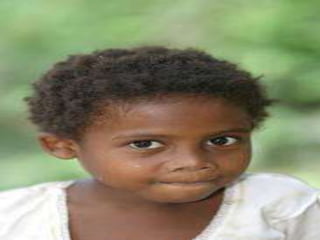
   The Aeta (Ayta, pronounced EYE-tə), or Agta, are
    an indigenous people who live in scattered, isolated
    mountainous parts of Luzon, Philippines. They are
    considered to be Negritos, who are dark to very
    dark brown-skinned and tend to have features such
    as a small stature, small frame, curly to kinky afro-
    like textured hair with a higher frequency of
    naturally lighter hair color (blondism) relative to the
    general population, small nose, and dark brown
    eyes. They are thought to be among the earliest
    inhabitants of the Philippines, preceding the
    Austronesian migrations.
 The Aeta  were included in the group of
 people termed "Negrito" during Spanish
 colonial rules as Negritos. Various Aeta
 groups in northern Luzon are known as
 "Pugut" or "Pugot," a name designated by
 their Ilocano-speaking neighbors, and
 which is the colloquial term for those with
 darker complexions. In Ilocano, the word
 also means "goblin" or "forest spirit."
 Most Negritos of northern Luzon consider
 these terms offensive.
MANGYAN
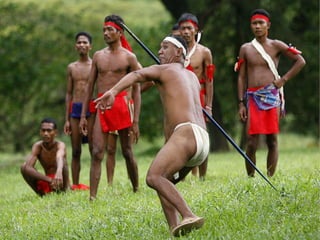
   Mangyan is the generic name for the eight indigenous groups
    found in the Philippine island of Mindoro, each with its own
    tribal name, language, and customs. The total population may
    be around 100,000, but no official statistics are available
    because of the difficulties of counting remote and reclusive
    tribal groups, many of which have no contact with the outside
    world.
   The ethnic groups from north to south of the island are: Iraya,
    Alangan, Tadyawan, Tawbuid (called Batangan by lowlanders
    on the west of the island), Buhid, Hanunoo. An additional
    group on the south coast is labelled Ratagnon. They appear
    to be intermarried with lowlanders. The group known on the
    east of Mindoro as Bangon may be a subgroup of Tawbuid, as
    they speak the 'western' dialect of that language. They also
    have an alphabet which is called the Ambahan.
   Mangyan are mainly subsistence agriculturalists, planting a
    variety of sweet potato, upland (dry cultivation) rice, and taro.
    They also trap small animals and wild pig. Many who live in
    close contact with lowland Filipinos sell cash crops such as
    bananas and ginger.
   Their languages are mutually unintelligible, though they share
    some vocabulary. Tawbuid and Buhid are closely related, and
    are unusual among Philippine languages in having an /f/
    phoneme. Tawbuid is divided into eastern and western
    dialects. Western Tawbuid may be the only Philippine
    language to have no glottal phonemes, having neither /h/ or
    /ʔ/. They use Hanunó'o script to write.
   Their traditional religious world view is animistic. Around 10%
    have embraced Christianity, both Roman Catholicism and
    Evangelical Protestantism. New Testaments have been
    published in six of the languages.
IFUGAO
   Ifugao is a landlocked province of the Philippines in the
    Cordillera Administrative Region in Luzon. Covering a total
    land area of 262,820 hectares, the province of Ifugao is
    located in a mountainous region characterized by rugged
    terrain, river valleys, and massive forests. Its capital is Lagawe
    and borders Benguet to the west, Mountain Province to the
    north, Isabela to the east, and Nueva Vizcaya to the south.
   It is named after the term "i-pugo" which means "i"
    (from/people) and "pugo" (hill), thus it means people of the hill.
   The Rice Terraces of the Philippine Cordilleras and Banaue
    Rice Terraces are the main tourist attractions in the province.
    These 2000-year-old terraces were carved into the mountains,
    without the aid of machinery, they used their "bare" hands to
    provide level steps where the natives can plant rice. In 1995,
    they were declared as a UNESCO World Heritage Site.
KALINGA
 The Province of Kalinga (Ilokano: Probinsya ti
 Kalinga), (Tagalog: Lalawigan ng Kalinga, Tagalog
                         ɐ]),
 pronunciation: [kɐˈliŋ is a landlocked province
 of the Philippines in the Cordillera Administrative
 Region in Luzon. Its capital is Tabuk and borders
 Mountain Province to the south, Abra to the west,
 Isabela to the east, Cagayan to the northeast, and
 Apayao to the north. Prior to 1995, Kalinga and
 Apayao used to be a single province named Kalinga-
 Apayao, until they were split into two to better
 service the needs of individual native tribes in the
 provinces.
IVATAN
 The Ivatans are a Filipino ethnolinguistic group
  predominant in the Batanes Islands of the Philippines.
  The origins of the Ivatans remained untraced among
  scholars, although evidences suggest that they are
  Christians who lived in the islands between northern
  Luzon and Taiwan. Ivatans were free before they were
  colonized by the Spaniards.
 The culture of the Ivatans is partly influenced by the
  environmental condition of Batanes. Unlike the old-
  type nipa huts common in the Philippines, Ivatans
  have adopted their now-famous stone houses made of
  limestone, designed to protect against the hostile
  climate.
ILONGOT
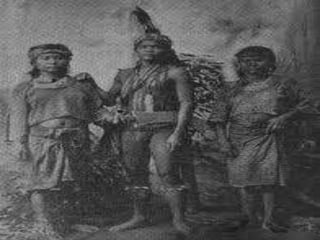
   The Ilongots (or Ibilao) are a tribe who inhabit the
    southern Sierra Madre (Philippines) and Caraballo
    Mountains, on the east side of Luzon Island in the
    Philippines, primarily in the provinces of Nueva Vizcaya
    and Nueva Ecija and along the mountain border between
    the provinces of Quirino and Aurora. An alternative name
    of this tribe and its language is "Bugkalot". Presently,
    there are about 2,500 Ilongots. The Ilongots tend to
    inhabit areas close to rivers, as they provide a
    foodsource and a means for transportation. Their
    language is the Ilongot language, currently spoken by
    about 50,000 people.
 InMichelle Rosaldo’s study in 1980 of the Ilongots ,
 she described “gender differences related to the
 positive cultural value placed on adventure, travel,
 and knowledge of the external world.” Ilongot men,
 more often than women, visited distant places. They
 acquired knowledge of the outside world, amassed
 experiences there, and returned in order to share
 their knowledge, adventures, and feelings in a public
 oratory in order to pass on their knowledge to others.
 The Ilongot men received acclaim as a result of their
 experiences. Because they lacked external
 experience on which to base knowledge and
 expression, Ilongot women had inferior prestige.
 On  the basis of Michelle Rosaldo’s study and
  findings of other stateless societies,
  anthropologists must distinguish between
  prestige systems and actual power within a
  society. Just because a male has a high level of
  prestige, he may not own much economic or
  political power compared to others that are less
  prestigious within the society.
 Renato Rosaldo went on to study headhunting
  among the Ilongots in his book Ilongot
  Headhunting, 1883-1974: A Study in Society
  and History.
   Because of the early experiences of boys living in a close
    relationship with both parents, who each participate in
    "motherly" roles, they are relatively unconcerned about the
    need for achievement or even defaming women. Men
    involved in household chores do not claim submission to
    their wives. In social life, the Ilongots show little
    stratification and sexual inequality but it is certainly present.
    It is minimized by the fact that women have the right, as well
    as feel confident enough, to speak their minds. Finally, we
    find the home gender relations based on equality, focusing on
    cooperation instead of competition and there is a real
    intimacy between husband and wife. Rosaldo's conclusion is
    that perhaps the most egalitarian societies are those where no
    sex order authority exists, and where the focus of social life
    itself is the home.
 THAT’S ALL FOR TODAY!!!
 I HOPE YOU LIKE IT <3


   BY: ALEXANDRA R. HERNANDEZ <3 <3

Pangkat-etniko

  • 1.
  • 2.
    ANG 7 PANGUNAHINGPANGKAT ETNIKO SA PILIPINAS  1.ILOKANO  2.PANGASINENSE  3.KAPAMPANGAN  4.TAGALOG  5.BIKOLANO  6.BISAYA  7.MORO/MUSLIM
  • 3.
  • 4.
    AETA  The Aeta (Ayta, pronounced EYE-tə), or Agta, are an indigenous people who live in scattered, isolated mountainous parts of Luzon, Philippines. They are considered to be Negritos, who are dark to very dark brown-skinned and tend to have features such as a small stature, small frame, curly to kinky afro- like textured hair with a higher frequency of naturally lighter hair color (blondism) relative to the general population, small nose, and dark brown eyes. They are thought to be among the earliest inhabitants of the Philippines, preceding the Austronesian migrations.
  • 5.
     The Aeta were included in the group of people termed "Negrito" during Spanish colonial rules as Negritos. Various Aeta groups in northern Luzon are known as "Pugut" or "Pugot," a name designated by their Ilocano-speaking neighbors, and which is the colloquial term for those with darker complexions. In Ilocano, the word also means "goblin" or "forest spirit." Most Negritos of northern Luzon consider these terms offensive.
  • 7.
    MANGYAN  Mangyan is the generic name for the eight indigenous groups found in the Philippine island of Mindoro, each with its own tribal name, language, and customs. The total population may be around 100,000, but no official statistics are available because of the difficulties of counting remote and reclusive tribal groups, many of which have no contact with the outside world.  The ethnic groups from north to south of the island are: Iraya, Alangan, Tadyawan, Tawbuid (called Batangan by lowlanders on the west of the island), Buhid, Hanunoo. An additional group on the south coast is labelled Ratagnon. They appear to be intermarried with lowlanders. The group known on the east of Mindoro as Bangon may be a subgroup of Tawbuid, as they speak the 'western' dialect of that language. They also have an alphabet which is called the Ambahan.
  • 8.
    Mangyan are mainly subsistence agriculturalists, planting a variety of sweet potato, upland (dry cultivation) rice, and taro. They also trap small animals and wild pig. Many who live in close contact with lowland Filipinos sell cash crops such as bananas and ginger.  Their languages are mutually unintelligible, though they share some vocabulary. Tawbuid and Buhid are closely related, and are unusual among Philippine languages in having an /f/ phoneme. Tawbuid is divided into eastern and western dialects. Western Tawbuid may be the only Philippine language to have no glottal phonemes, having neither /h/ or /ʔ/. They use Hanunó'o script to write.  Their traditional religious world view is animistic. Around 10% have embraced Christianity, both Roman Catholicism and Evangelical Protestantism. New Testaments have been published in six of the languages.
  • 10.
    IFUGAO  Ifugao is a landlocked province of the Philippines in the Cordillera Administrative Region in Luzon. Covering a total land area of 262,820 hectares, the province of Ifugao is located in a mountainous region characterized by rugged terrain, river valleys, and massive forests. Its capital is Lagawe and borders Benguet to the west, Mountain Province to the north, Isabela to the east, and Nueva Vizcaya to the south.  It is named after the term "i-pugo" which means "i" (from/people) and "pugo" (hill), thus it means people of the hill.  The Rice Terraces of the Philippine Cordilleras and Banaue Rice Terraces are the main tourist attractions in the province. These 2000-year-old terraces were carved into the mountains, without the aid of machinery, they used their "bare" hands to provide level steps where the natives can plant rice. In 1995, they were declared as a UNESCO World Heritage Site.
  • 12.
    KALINGA  The Provinceof Kalinga (Ilokano: Probinsya ti Kalinga), (Tagalog: Lalawigan ng Kalinga, Tagalog ɐ]), pronunciation: [kɐˈliŋ is a landlocked province of the Philippines in the Cordillera Administrative Region in Luzon. Its capital is Tabuk and borders Mountain Province to the south, Abra to the west, Isabela to the east, Cagayan to the northeast, and Apayao to the north. Prior to 1995, Kalinga and Apayao used to be a single province named Kalinga- Apayao, until they were split into two to better service the needs of individual native tribes in the provinces.
  • 14.
    IVATAN  The Ivatansare a Filipino ethnolinguistic group predominant in the Batanes Islands of the Philippines. The origins of the Ivatans remained untraced among scholars, although evidences suggest that they are Christians who lived in the islands between northern Luzon and Taiwan. Ivatans were free before they were colonized by the Spaniards.  The culture of the Ivatans is partly influenced by the environmental condition of Batanes. Unlike the old- type nipa huts common in the Philippines, Ivatans have adopted their now-famous stone houses made of limestone, designed to protect against the hostile climate.
  • 16.
    ILONGOT  The Ilongots (or Ibilao) are a tribe who inhabit the southern Sierra Madre (Philippines) and Caraballo Mountains, on the east side of Luzon Island in the Philippines, primarily in the provinces of Nueva Vizcaya and Nueva Ecija and along the mountain border between the provinces of Quirino and Aurora. An alternative name of this tribe and its language is "Bugkalot". Presently, there are about 2,500 Ilongots. The Ilongots tend to inhabit areas close to rivers, as they provide a foodsource and a means for transportation. Their language is the Ilongot language, currently spoken by about 50,000 people.
  • 17.
     InMichelle Rosaldo’sstudy in 1980 of the Ilongots , she described “gender differences related to the positive cultural value placed on adventure, travel, and knowledge of the external world.” Ilongot men, more often than women, visited distant places. They acquired knowledge of the outside world, amassed experiences there, and returned in order to share their knowledge, adventures, and feelings in a public oratory in order to pass on their knowledge to others. The Ilongot men received acclaim as a result of their experiences. Because they lacked external experience on which to base knowledge and expression, Ilongot women had inferior prestige.
  • 18.
     On the basis of Michelle Rosaldo’s study and findings of other stateless societies, anthropologists must distinguish between prestige systems and actual power within a society. Just because a male has a high level of prestige, he may not own much economic or political power compared to others that are less prestigious within the society.  Renato Rosaldo went on to study headhunting among the Ilongots in his book Ilongot Headhunting, 1883-1974: A Study in Society and History.
  • 19.
    Because of the early experiences of boys living in a close relationship with both parents, who each participate in "motherly" roles, they are relatively unconcerned about the need for achievement or even defaming women. Men involved in household chores do not claim submission to their wives. In social life, the Ilongots show little stratification and sexual inequality but it is certainly present. It is minimized by the fact that women have the right, as well as feel confident enough, to speak their minds. Finally, we find the home gender relations based on equality, focusing on cooperation instead of competition and there is a real intimacy between husband and wife. Rosaldo's conclusion is that perhaps the most egalitarian societies are those where no sex order authority exists, and where the focus of social life itself is the home.
  • 21.
     THAT’S ALLFOR TODAY!!!  I HOPE YOU LIKE IT <3  BY: ALEXANDRA R. HERNANDEZ <3 <3