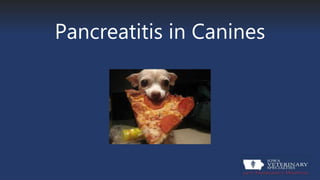
Pancreatitis in Canines
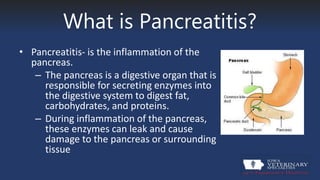
What is Pancreatitis?
• Pancreatitis- is the inflammation of the
pancreas.
– The pancreas is a digestive organ that is
responsible for secreting enzymes into
the digestive system to digest fat,
carbohydrates, and proteins.
– During inflammation of the pancreas,
these enzymes can leak and cause
damage to the pancreas or surrounding
tissue
Risk Factors
• In many cases, the causes of pancreatitis are unknown,
but there are things that can increase the risk of it
developing
– Eating human food or garbage
• High fat foods
– Obesity
– Liver disease
– Small intestine disease
– Adrenal gland disease
– May develop after abdominal trauma or surgery
– Most common in middle-aged to older dogs
Symptoms
• Severe lethargy
• Vomiting
• Dehydration
• Abdominal pain
• Fever
• Icterus- yellow coloring of skin and whites of the
eyes
Diagnostics
• Physical exam
• History
• Radiographs and routine blood tests maybe required to
rule out other diseases
• Specialized test
– Canine pancreas-specific lipase test (cPL)
• Abnormal test may suggest Pancreatitis
• An abdominal ultrasound to confirm inflammation of the
pancreas
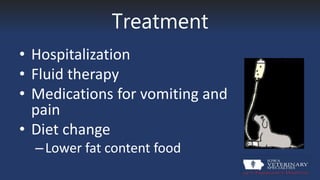
Treatment
• Hospitalization
• Fluid therapy
• Medications for vomiting and
pain
• Diet change
–Lower fat content food
Prognosis
• Good for most patients
• Guarded prognosis with severe
pancreatitis and systemic conditions
–Death may occur in severe cases
• Can be difficult to predict
Example of Pancreatitis
• “Lucy”
– Mixed breed canine, spayed female, 6 years old
• History
– Owner was awoken by Lucy
– Lucy was shaking and panting. She was not acting herself and
vomited once
– No diarrhea and not wanting to eat or drink
– The owner said she had fed her a few french fries last night
“Lucy”
• Physical exam
– Unremarkable exam. Lucy is overweight and has mild to moderate dental tartar
– Recommend radiographs, blood work, and a cPL test (Canine Pancreas-specific
Lipase)
• Diagnostics
– Radiographs: One view showed abnormal ingesta in stomach, but not seen in other
views. Decided to retake radiographs 8-12 hours later
• Second set of radiographs showed no signs of material in the stomach
– Blood work: Leukocytosis (high white blood cells), slight hyperglycemia (high
glucose), and hypercholesterolemia (high cholesterol)
– cPL- Abnormal
“Lucy”
• Treatment
–Fluid therapy
–Anti-vomiting medication
–Hospitalization
–Pain management
–Bland diet
“Lucy”
• Lucy improved on fluids, medication, and began to
eat chicken
• The second radiographs showed no signs of
abnormal material in the stomach
• The exact cause of symptoms is uncertain, but
suspected acute pancreatitis
• Lucy was sent home and started on a low fat diet
after 3-5 days of a bland diet
Conclusion
• Pancreatitis is a difficult disease to
diagnose, predict, and prevent
• It is extremely important to immediately
contact your veterinarian or emergency
services if your pet exhibits abnormal
behavior or symptoms

Canine Pancreatitis

  • 1.
  • 2.
    What is Pancreatitis? •Pancreatitis- is the inflammation of the pancreas. – The pancreas is a digestive organ that is responsible for secreting enzymes into the digestive system to digest fat, carbohydrates, and proteins. – During inflammation of the pancreas, these enzymes can leak and cause damage to the pancreas or surrounding tissue
  • 3.
    Risk Factors • Inmany cases, the causes of pancreatitis are unknown, but there are things that can increase the risk of it developing – Eating human food or garbage • High fat foods – Obesity – Liver disease – Small intestine disease – Adrenal gland disease – May develop after abdominal trauma or surgery – Most common in middle-aged to older dogs
  • 4.
    Symptoms • Severe lethargy •Vomiting • Dehydration • Abdominal pain • Fever • Icterus- yellow coloring of skin and whites of the eyes
  • 5.
    Diagnostics • Physical exam •History • Radiographs and routine blood tests maybe required to rule out other diseases • Specialized test – Canine pancreas-specific lipase test (cPL) • Abnormal test may suggest Pancreatitis • An abdominal ultrasound to confirm inflammation of the pancreas
  • 6.
    Treatment • Hospitalization • Fluidtherapy • Medications for vomiting and pain • Diet change –Lower fat content food
  • 7.
    Prognosis • Good formost patients • Guarded prognosis with severe pancreatitis and systemic conditions –Death may occur in severe cases • Can be difficult to predict
  • 8.
    Example of Pancreatitis •“Lucy” – Mixed breed canine, spayed female, 6 years old • History – Owner was awoken by Lucy – Lucy was shaking and panting. She was not acting herself and vomited once – No diarrhea and not wanting to eat or drink – The owner said she had fed her a few french fries last night
  • 9.
    “Lucy” • Physical exam –Unremarkable exam. Lucy is overweight and has mild to moderate dental tartar – Recommend radiographs, blood work, and a cPL test (Canine Pancreas-specific Lipase) • Diagnostics – Radiographs: One view showed abnormal ingesta in stomach, but not seen in other views. Decided to retake radiographs 8-12 hours later • Second set of radiographs showed no signs of material in the stomach – Blood work: Leukocytosis (high white blood cells), slight hyperglycemia (high glucose), and hypercholesterolemia (high cholesterol) – cPL- Abnormal
  • 10.
    “Lucy” • Treatment –Fluid therapy –Anti-vomitingmedication –Hospitalization –Pain management –Bland diet
  • 11.
    “Lucy” • Lucy improvedon fluids, medication, and began to eat chicken • The second radiographs showed no signs of abnormal material in the stomach • The exact cause of symptoms is uncertain, but suspected acute pancreatitis • Lucy was sent home and started on a low fat diet after 3-5 days of a bland diet
  • 12.
    Conclusion • Pancreatitis isa difficult disease to diagnose, predict, and prevent • It is extremely important to immediately contact your veterinarian or emergency services if your pet exhibits abnormal behavior or symptoms