PANCREATIC TUMORS
BY
Dr.NILESH SINHA
{Associate Professor}
DEPT. OF GENERAL SURGERY
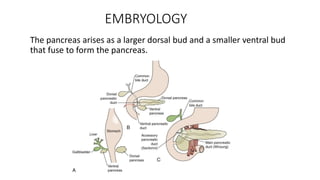
EMBRYOLOGY
The pancreas arises as a larger dorsal bud and a smaller ventral bud
that fuse to form the pancreas.
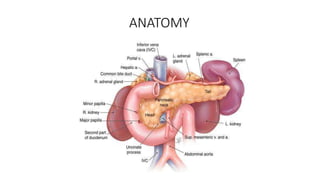
ANATOMY
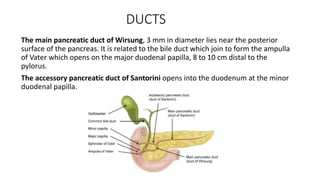
DUCTS
The main pancreatic duct of Wirsung, 3 mm in diameter lies near the posterior
surface of the pancreas. It is related to the bile duct which join to form the ampulla
of Vater which opens on the major duodenal papilla, 8 to 10 cm distal to the
pylorus.
The accessory pancreatic duct of Santorini opens into the duodenum at the minor
duodenal papilla.
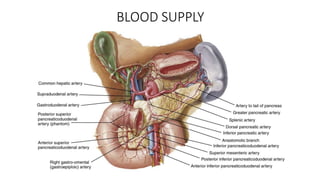
BLOOD SUPPLY
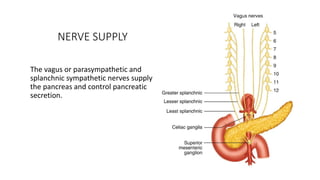
NERVE SUPPLY
The vagus or parasympathetic and
splanchnic sympathetic nerves supply
the pancreas and control pancreatic
secretion.
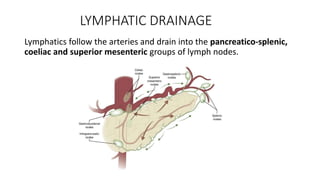
LYMPHATIC DRAINAGE
Lymphatics follow the arteries and drain into the pancreatico-splenic,
coeliac and superior mesenteric groups of lymph nodes.
FUNCTIONS
1. Digestive: Trypsin breaks down proteins to lower peptides. Amylase
hydrolyses starch and glycogen to disaccharides. Lipase breaks
down fat into fatty acids and glycerol.
• Normal serum amylase – 25 to 115 U/L
• Normal serum lipase – 73 to 393 U/L
2. Endocrine: Insulin helps in utilizations of sugar in the cells. Deficiency
of insulin results in hyperglycaemia and is called diabetes mellitus.
3. Pancreatic juice: It provides appropriate alkaline medium (pH 8) for
the activity of the pancreatic enzymes.
BENIGN EXOCRINE
PANCREATIC NEOPLASMS
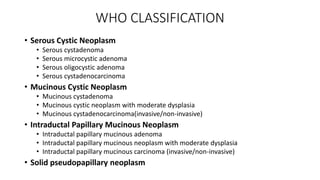
WHO CLASSIFICATION
• Serous Cystic Neoplasm
• Serous cystadenoma
• Serous microcystic adenoma
• Serous oligocystic adenoma
• Serous cystadenocarcinoma
• Mucinous Cystic Neoplasm
• Mucinous cystadenoma
• Mucinous cystic neoplasm with moderate dysplasia
• Mucinous cystadenocarcinoma(invasive/non-invasive)
• Intraductal Papillary Mucinous Neoplasm
• Intraductal papillary mucinous adenoma
• Intraductal papillary mucinous neoplasm with moderate dysplasia
• Intraductal papillary mucinous carcinoma (invasive/non-invasive)
• Solid pseudopapillary neoplasm
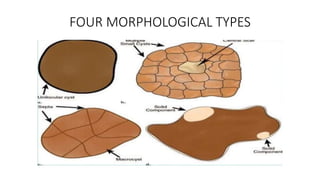
FOUR MORPHOLOGICAL TYPES
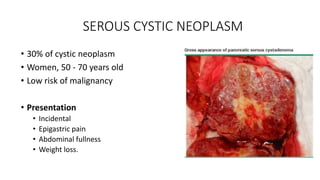
SEROUS CYSTIC NEOPLASM
• 30% of cystic neoplasm
• Women, 50 - 70 years old
• Low risk of malignancy
• Presentation
• Incidental
• Epigastric pain
• Abdominal fullness
• Weight loss.
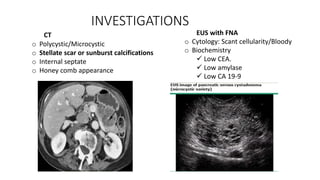
INVESTIGATIONS
EUS with FNA
o Cytology: Scant cellularity/Bloody
o Biochemistry
 Low CEA.
 Low amylase
 Low CA 19-9
CT
o Polycystic/Microcystic
o Stellate scar or sunburst calcifications
o Internal septate
o Honey comb appearance
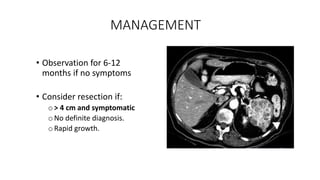
MANAGEMENT
• Observation for 6-12
months if no symptoms
• Consider resection if:
o> 4 cm and symptomatic
oNo definite diagnosis.
oRapid growth.
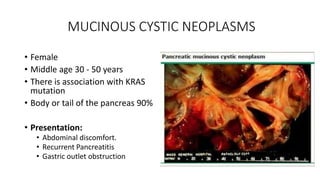
MUCINOUS CYSTIC NEOPLASMS
• Female
• Middle age 30 - 50 years
• There is association with KRAS
mutation
• Body or tail of the pancreas 90%
• Presentation:
• Abdominal discomfort.
• Recurrent Pancreatitis
• Gastric outlet obstruction
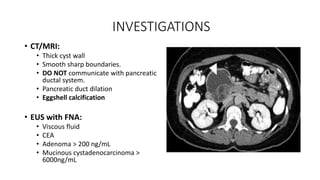
INVESTIGATIONS
• CT/MRI:
• Thick cyst wall
• Smooth sharp boundaries.
• DO NOT communicate with pancreatic
ductal system.
• Pancreatic duct dilation
• Eggshell calcification
• EUS with FNA:
• Viscous fluid
• CEA
• Adenoma > 200 ng/mL
• Mucinous cystadenocarcinoma >
6000ng/mL
MANAGEMENT
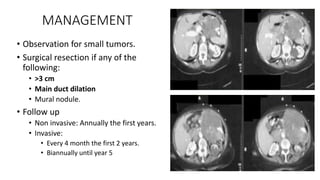
• Observation for small tumors.
• Surgical resection if any of the
following:
• >3 cm
• Main duct dilation
• Mural nodule.
• Follow up
• Non invasive: Annually the first years.
• Invasive:
• Every 4 month the first 2 years.
• Biannually until year 5
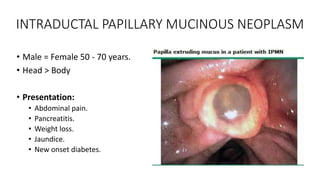
INTRADUCTAL PAPILLARY MUCINOUS NEOPLASM
• Male = Female 50 - 70 years.
• Head > Body
• Presentation:
• Abdominal pain.
• Pancreatitis.
• Weight loss.
• Jaundice.
• New onset diabetes.
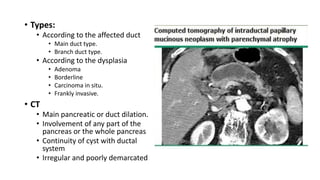
• Types:
• According to the affected duct
• Main duct type.
• Branch duct type.
• According to the dysplasia
• Adenoma
• Borderline
• Carcinoma in situ.
• Frankly invasive.
• CT
• Main pancreatic or duct dilation.
• Involvement of any part of the
pancreas or the whole pancreas
• Continuity of cyst with ductal
system
• Irregular and poorly demarcated
MALIGNANT EXOCRINE
PANCREATIC NEOPLASMS
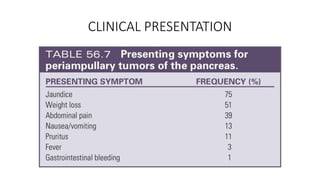
CLINICAL PRESENTATION
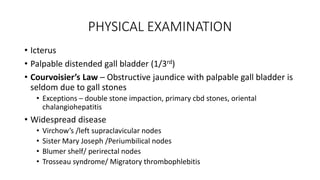
PHYSICAL EXAMINATION
• Icterus
• Palpable distended gall bladder (1/3rd)
• Courvoisier’s Law – Obstructive jaundice with palpable gall bladder is
seldom due to gall stones
• Exceptions – double stone impaction, primary cbd stones, oriental
chalangiohepatitis
• Widespread disease
• Virchow’s /left supraclavicular nodes
• Sister Mary Joseph /Periumbilical nodes
• Blumer shelf/ perirectal nodes
• Trosseau syndrome/ Migratory thrombophlebitis
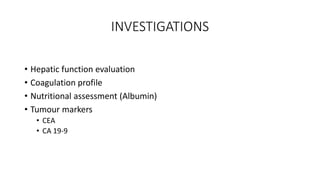
INVESTIGATIONS
• Hepatic function evaluation
• Coagulation profile
• Nutritional assessment (Albumin)
• Tumour markers
• CEA
• CA 19-9
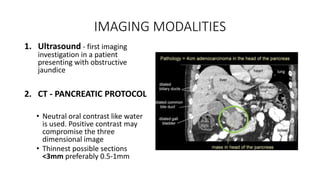
IMAGING MODALITIES
1. Ultrasound - first imaging
investigation in a patient
presenting with obstructive
jaundice
2. CT - PANCREATIC PROTOCOL
• Neutral oral contrast like water
is used. Positive contrast may
compromise the three
dimensional image
• Thinnest possible sections
<3mm preferably 0.5-1mm
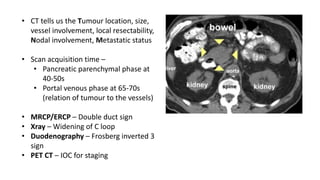
• CT tells us the Tumour location, size,
vessel involvement, local resectability,
Nodal involvement, Metastatic status
• Scan acquisition time –
• Pancreatic parenchymal phase at
40-50s
• Portal venous phase at 65-70s
(relation of tumour to the vessels)
• MRCP/ERCP – Double duct sign
• Xray – Widening of C loop
• Duodenography – Frosberg inverted 3
sign
• PET CT – IOC for staging
SURGERY
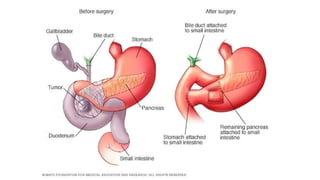
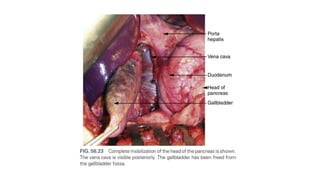
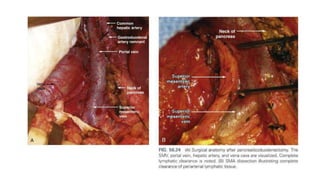
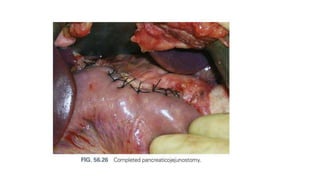
• For tumors involving the head of the pancreas, pancreaticoduo-
denectomy is the procedure of choice.
• Walter Kausch was the first to successfully perform
pancreaticoduodenectomy in Berlin 1912.
• Allen Whipple popularized the operation in US in 1935.
• Operative mortality of >25% and morbidity of >50%
• Tumors arising in the body and tail of the pancreas are rarely
resectable at the time of presentation. The survival is significantly
shorter because of the more advanced nature of resected tumors.
• Involvement of the celiac axis is a contraindication to resection.
• For resectable tumors, distal pancreatectomy and en bloc
splenectomy should be performed.
• The distal pancreas and spleen are devascularized and the neck of the
pancreas is divided.
• Laparoscopic distal pancreatectomy (LDP) is increasingly used for
benign conditions and its use for the treatment of PDAC remains to
be fully validated although it has shown significantly increased
mortality.
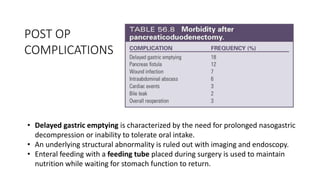
• Delayed gastric emptying is characterized by the need for prolonged nasogastric
decompression or inability to tolerate oral intake.
• An underlying structural abnormality is ruled out with imaging and endoscopy.
• Enteral feeding with a feeding tube placed during surgery is used to maintain
nutrition while waiting for stomach function to return.
POST OP
COMPLICATIONS
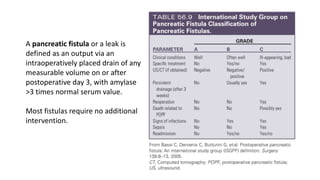
A pancreatic fistula or a leak is
defined as an output via an
intraoperatively placed drain of any
measurable volume on or after
postoperative day 3, with amylase
>3 times normal serum value.
Most fistulas require no additional
intervention.
CHEMOTHERAPY
• More than 80% of patients with pancreatic cancer present with locally
advanced or metastatic disease and are primarily managed with
chemotherapy.
• Gemcitabine has been the standard of care for the treatment of
metastatic pancreatic.
• A regimen that has shown greater efficacy than gemcitabine is
FOLFIRINOX (5-FU, oxaliplatin, irinotecan, and leucovorin)
• FOLFIRINOX is being used as the neoadjuvant regimen of choice in
patients with borderline resectable pancreatic cancer and has good
performance status who can tolerate this aggressive regimen.
PALLIATIVE THERAPY
• Biliary obstruction
ERCP with metal stent placement
Roux-en-Y hepaticojejunostomy.
• Delayed gastric emptying
Endoscopic stenting
Preventive gastrojejunostomy
• Pain relief
Antiinflammatories/ long-acting opioids
Celiac nerve block
CT-guided percutaneous neurolysis
ENDOCRINE
PANCREATIC NEOPLASMS
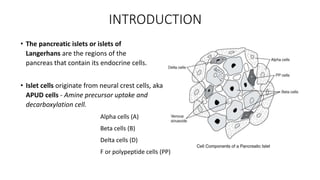
INTRODUCTION
• The pancreatic islets or islets of
Langerhans are the regions of the
pancreas that contain its endocrine cells.
• Islet cells originate from neural crest cells, aka
APUD cells - Amine precursor uptake and
decarboxylation cell.
Alpha cells (A)
Beta cells (B)
Delta cells (D)
F or polypeptide cells (PP)
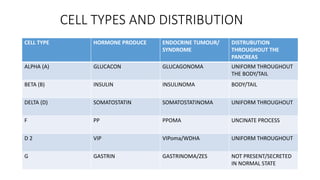
CELL TYPES AND DISTRIBUTION
CELL TYPE HORMONE PRODUCE ENDOCRINE TUMOUR/
SYNDROME
DISTRUBUTION
THROUGHOUT THE
PANCREAS
ALPHA (A) GLUCACON GLUCAGONOMA UNIFORM THROUGHOUT
THE BODY/TAIL
BETA (B) INSULIN INSULINOMA BODY/TAIL
DELTA (D) SOMATOSTATIN SOMATOSTATINOMA UNIFORM THROUGHOUT
F PP PPOMA UNCINATE PROCESS
D 2 VIP VIPoma/WDHA UNIFORM THROUGHOUT
G GASTRIN GASTRINOMA/ZES NOT PRESENT/SECRETED
IN NORMAL STATE
RISK FACTORS
• SYNDROMIC
• MEN 1 (Wermer syndrome)- parathyroid hyperplasia, pituitary tumours, pancreatic
endocrine tumours (30-80 % of patient with MEN 1)
• Von Hippel-Lindau
• Neurofibromatosis
• Tuberous sclerosis complex (TSC)
• GENETICS
• Homozygous deletion or silencing of 5′ CpG island methylation; > 90% of gastrinomas
and non-functioning pancreatic tumours.
• LOH (loss of heterozygosity) at chromosome 11q – functional tumours
• LOH at chromosome 6q – nonfunctional tumours
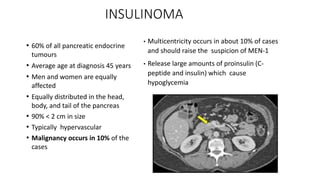
INSULINOMA
• 60% of all pancreatic endocrine
tumours
• Average age at diagnosis 45 years
• Men and women are equally
affected
• Equally distributed in the head,
body, and tail of the pancreas
• 90% < 2 cm in size
• Typically hypervascular
• Malignancy occurs in 10% of the
cases
• Multicentricity occurs in about 10% of cases
and should raise the suspicion of MEN-1
• Release large amounts of proinsulin (C-
peptide and insulin) which cause
hypoglycemia
• CATECHOLAMINE RELEASE causes
trembling, sweating, palpitations,
nervousness, hunger, weight gain
• NEUROGLYCOPENIC SYMPTOMS like
headache lethargy dizziness diplopia
amnesia
• WHIPPLE'S TRIAD
- low glucose level (<50 mg/dL)
- symptoms of hypoglycemia
- symptoms resolve with
administration of glucose
• LABORATORY STUDIES
• low glucose l levels (< 50 mg/dL)
• insulin levels > 7 U/mL
• C-peptide to confirm endogenous
source of insulin (marker of insulin
secretion)
• DIAGNOSIS
• CT and MRI for larger tumors
• EUS can detect small tumors (<2 cm in
size)
• Angiography showing a “blush”
CLINICAL FEATURES INVESTIGATIONS
GASTRINOMA
• 2nd most common
• Mean age of patients is 50 years
• Slight male predominance (60%)
• Gastrinomas produce ZES (Zollinger Ellison
syndrome) by overproduction of gastrin
• Over 60% are malignant (Most common
malignant endocrine pancreatic tumour
is gastrinoma)
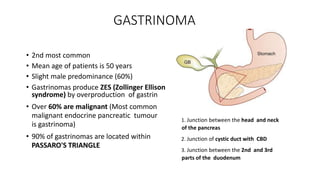
• 90% of gastrinomas are located within
PASSARO'S TRIANGLE
1. Junction between the head and neck
of the pancreas
2. Junction of cystic duct with CBD
3. Junction between the 2nd and 3rd
parts of the duodenum
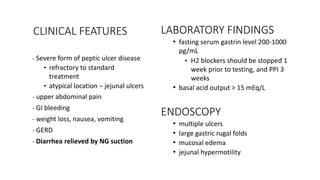
LABORATORY FINDINGS
• fasting serum gastrin level 200-1000
pg/mL
• H2 blockers should be stopped 1
week prior to testing, and PPI 3
weeks
• basal acid output > 15 mEq/L
ENDOSCOPY
• multiple ulcers
• large gastric rugal folds
• mucosal edema
• jejunal hypermotility
- Severe form of peptic ulcer disease
• refractory to standard
treatment
• atypical location – jejunal ulcers
- upper abdominal pain
- GI bleeding
- weight loss, nausea, vomiting
- GERD
- Diarrhea relieved by NG suction
CLINICAL FEATURES
VIPOMA
• VIPomas originate from neoplastic D2 cells aka WDHA or
Verner- Morrison syndrome
• Exceedingly rare tumors
• Bimodal age distribution
• most patients are middle aged
• 10% < 10 years
• Usually solitary located in body or tail
• 2/3rd are malignant
CLINICAL FEATURES
Profuse, watery, iso-osmotic secretory diarrhea
• May exceed 3 L/day
• Independent of food intake
• Doesn't resolve with NG suction
• Devoid of blood, fat, or inflammatory cells
• Weight loss
• Crampy abdominal pain
• Dehydration
• Electrolyte abnormalities
• Metabolic acidosis (due loss of large amount of
bicarbonate from pancreatic secretion )
WDHA
• Watery
• Diarrhea
• Hypokalemia
• Achlorhydria
LABORATORY FINDINGS
Serum levels of VIP > 150 pg/mL
after an overnight fast
LOCALIZATION
CT or SRS
Intraoperative U/S will localize most
tumors
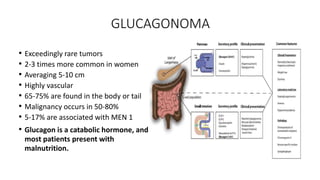
GLUCAGONOMA
• Exceedingly rare tumors
• 2-3 times more common in women
• Averaging 5-10 cm
• Highly vascular
• 65-75% are found in the body or tail
• Malignancy occurs in 50-80%
• 5-17% are associated with MEN 1
• Glucagon is a catabolic hormone, and
most patients present with
malnutrition.
CLINICAL PRESENTATION
• Weight loss
• Hyperglycemia, with 76-94% having
diabetes
• Normochromic normocytic anemia
• Fat-soluble vitamin deficiency
• Hypoaminoacidemia
• Thromboembolism
• Diarrhea
• Vulvovaginitis
LABORATORY FINDINGS
Fasting glucagon level > 50
pmol/L
LOCALIZATION
CT easily detects them
Angiography is also successful
because of vascularity
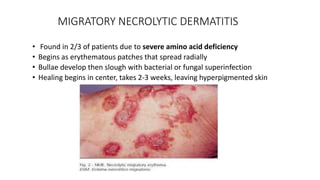
MIGRATORY NECROLYTIC DERMATITIS
• Found in 2/3 of patients due to severe amino acid deficiency
• Begins as erythematous patches that spread radially
• Bullae develop then slough with bacterial or fungal superinfection
• Healing begins in center, takes 2-3 weeks, leaving hyperpigmented skin
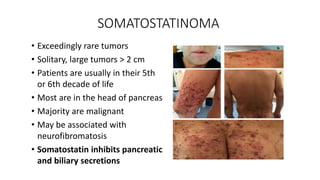
SOMATOSTATINOMA
• Exceedingly rare tumors
• Solitary, large tumors > 2 cm
• Patients are usually in their 5th
or 6th decade of life
• Most are in the head of pancreas
• Majority are malignant
• May be associated with
neurofibromatosis
• Somatostatin inhibits pancreatic
and biliary secretions
LABORATORY
Elevated somatostatin
levels
• DIAGNOSIS
CT
CLINICAL FEATURES
• Steatorrhea
• Cholelithiasis
• Diabetes
• Hypochlorhydria
• They present gallstones due to bile stasis,
diabetes due to inhibition of insulin secretion,
and steatorrhea due to inhibition of pancreatic
exocrine secretion and bile secretion
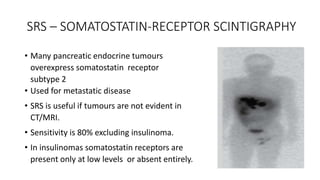
SRS – SOMATOSTATIN-RECEPTOR SCINTIGRAPHY
• Many pancreatic endocrine tumours
overexpress somatostatin receptor
subtype 2
• Used for metastatic disease
• SRS is useful if tumours are not evident in
CT/MRI.
• Sensitivity is 80% excluding insulinoma.
• In insulinomas somatostatin receptors are
present only at low levels or absent entirely.
ROLE OF TUMOUR MARKERS
• A variety of tumor markers have been proposed for functional and
non-functional pNETs.
• The most common of these is chromogranin A (CgA), an acid
soluble protein that is found in secretory granules of
neuroendocrine cells, CgA is sensitive with elevated levels present
in 72-100% of patients.
• Others such as neuron-specific enolase (NSE), pancreatic
polypeptide, pancreastatin, and human chorionic gonadotropin
have been proposed but less sensitive.
CYTOREDUCTIVE SURGERY
Most pNETs have a relatively indolent course compared to other pancreatic
neoplasms, and that tumor debulking, while not curative, provides the theoretical
advantages of symptom control in functional tumors.
TARGETTED THERAPY
• Everolimus an oral mTOR signaling inhibitor, has shown some effect in treating
pNETs.
• Sunitinib is an oral tyrosine kinase inhibitor that is known to target VEGF
receptors.
THANK YOU

Pancreatic tumors.pptx

  • 1.
    PANCREATIC TUMORS BY Dr.NILESH SINHA {AssociateProfessor} DEPT. OF GENERAL SURGERY
  • 2.
    EMBRYOLOGY The pancreas arisesas a larger dorsal bud and a smaller ventral bud that fuse to form the pancreas.
  • 3.
  • 4.
    DUCTS The main pancreaticduct of Wirsung, 3 mm in diameter lies near the posterior surface of the pancreas. It is related to the bile duct which join to form the ampulla of Vater which opens on the major duodenal papilla, 8 to 10 cm distal to the pylorus. The accessory pancreatic duct of Santorini opens into the duodenum at the minor duodenal papilla.
  • 5.
  • 6.
    NERVE SUPPLY The vagusor parasympathetic and splanchnic sympathetic nerves supply the pancreas and control pancreatic secretion.
  • 7.
    LYMPHATIC DRAINAGE Lymphatics followthe arteries and drain into the pancreatico-splenic, coeliac and superior mesenteric groups of lymph nodes.
  • 8.
    FUNCTIONS 1. Digestive: Trypsinbreaks down proteins to lower peptides. Amylase hydrolyses starch and glycogen to disaccharides. Lipase breaks down fat into fatty acids and glycerol. • Normal serum amylase – 25 to 115 U/L • Normal serum lipase – 73 to 393 U/L 2. Endocrine: Insulin helps in utilizations of sugar in the cells. Deficiency of insulin results in hyperglycaemia and is called diabetes mellitus. 3. Pancreatic juice: It provides appropriate alkaline medium (pH 8) for the activity of the pancreatic enzymes.
  • 9.
  • 10.
    WHO CLASSIFICATION • SerousCystic Neoplasm • Serous cystadenoma • Serous microcystic adenoma • Serous oligocystic adenoma • Serous cystadenocarcinoma • Mucinous Cystic Neoplasm • Mucinous cystadenoma • Mucinous cystic neoplasm with moderate dysplasia • Mucinous cystadenocarcinoma(invasive/non-invasive) • Intraductal Papillary Mucinous Neoplasm • Intraductal papillary mucinous adenoma • Intraductal papillary mucinous neoplasm with moderate dysplasia • Intraductal papillary mucinous carcinoma (invasive/non-invasive) • Solid pseudopapillary neoplasm
  • 11.
  • 12.
    SEROUS CYSTIC NEOPLASM •30% of cystic neoplasm • Women, 50 - 70 years old • Low risk of malignancy • Presentation • Incidental • Epigastric pain • Abdominal fullness • Weight loss.
  • 13.
    INVESTIGATIONS EUS with FNA oCytology: Scant cellularity/Bloody o Biochemistry  Low CEA.  Low amylase  Low CA 19-9 CT o Polycystic/Microcystic o Stellate scar or sunburst calcifications o Internal septate o Honey comb appearance
  • 14.
    MANAGEMENT • Observation for6-12 months if no symptoms • Consider resection if: o> 4 cm and symptomatic oNo definite diagnosis. oRapid growth.
  • 15.
    MUCINOUS CYSTIC NEOPLASMS •Female • Middle age 30 - 50 years • There is association with KRAS mutation • Body or tail of the pancreas 90% • Presentation: • Abdominal discomfort. • Recurrent Pancreatitis • Gastric outlet obstruction
  • 16.
    INVESTIGATIONS • CT/MRI: • Thickcyst wall • Smooth sharp boundaries. • DO NOT communicate with pancreatic ductal system. • Pancreatic duct dilation • Eggshell calcification • EUS with FNA: • Viscous fluid • CEA • Adenoma > 200 ng/mL • Mucinous cystadenocarcinoma > 6000ng/mL
  • 17.
    MANAGEMENT • Observation forsmall tumors. • Surgical resection if any of the following: • >3 cm • Main duct dilation • Mural nodule. • Follow up • Non invasive: Annually the first years. • Invasive: • Every 4 month the first 2 years. • Biannually until year 5
  • 18.
    INTRADUCTAL PAPILLARY MUCINOUSNEOPLASM • Male = Female 50 - 70 years. • Head > Body • Presentation: • Abdominal pain. • Pancreatitis. • Weight loss. • Jaundice. • New onset diabetes.
  • 19.
    • Types: • Accordingto the affected duct • Main duct type. • Branch duct type. • According to the dysplasia • Adenoma • Borderline • Carcinoma in situ. • Frankly invasive. • CT • Main pancreatic or duct dilation. • Involvement of any part of the pancreas or the whole pancreas • Continuity of cyst with ductal system • Irregular and poorly demarcated
  • 20.
  • 21.
  • 22.
    PHYSICAL EXAMINATION • Icterus •Palpable distended gall bladder (1/3rd) • Courvoisier’s Law – Obstructive jaundice with palpable gall bladder is seldom due to gall stones • Exceptions – double stone impaction, primary cbd stones, oriental chalangiohepatitis • Widespread disease • Virchow’s /left supraclavicular nodes • Sister Mary Joseph /Periumbilical nodes • Blumer shelf/ perirectal nodes • Trosseau syndrome/ Migratory thrombophlebitis
  • 23.
    INVESTIGATIONS • Hepatic functionevaluation • Coagulation profile • Nutritional assessment (Albumin) • Tumour markers • CEA • CA 19-9
  • 24.
    IMAGING MODALITIES 1. Ultrasound- first imaging investigation in a patient presenting with obstructive jaundice 2. CT - PANCREATIC PROTOCOL • Neutral oral contrast like water is used. Positive contrast may compromise the three dimensional image • Thinnest possible sections <3mm preferably 0.5-1mm
  • 25.
    • CT tellsus the Tumour location, size, vessel involvement, local resectability, Nodal involvement, Metastatic status • Scan acquisition time – • Pancreatic parenchymal phase at 40-50s • Portal venous phase at 65-70s (relation of tumour to the vessels) • MRCP/ERCP – Double duct sign • Xray – Widening of C loop • Duodenography – Frosberg inverted 3 sign • PET CT – IOC for staging
  • 26.
    SURGERY • For tumorsinvolving the head of the pancreas, pancreaticoduo- denectomy is the procedure of choice. • Walter Kausch was the first to successfully perform pancreaticoduodenectomy in Berlin 1912. • Allen Whipple popularized the operation in US in 1935. • Operative mortality of >25% and morbidity of >50%
  • 31.
    • Tumors arisingin the body and tail of the pancreas are rarely resectable at the time of presentation. The survival is significantly shorter because of the more advanced nature of resected tumors. • Involvement of the celiac axis is a contraindication to resection. • For resectable tumors, distal pancreatectomy and en bloc splenectomy should be performed. • The distal pancreas and spleen are devascularized and the neck of the pancreas is divided. • Laparoscopic distal pancreatectomy (LDP) is increasingly used for benign conditions and its use for the treatment of PDAC remains to be fully validated although it has shown significantly increased mortality.
  • 32.
    • Delayed gastricemptying is characterized by the need for prolonged nasogastric decompression or inability to tolerate oral intake. • An underlying structural abnormality is ruled out with imaging and endoscopy. • Enteral feeding with a feeding tube placed during surgery is used to maintain nutrition while waiting for stomach function to return. POST OP COMPLICATIONS
  • 33.
    A pancreatic fistulaor a leak is defined as an output via an intraoperatively placed drain of any measurable volume on or after postoperative day 3, with amylase >3 times normal serum value. Most fistulas require no additional intervention.
  • 34.
    CHEMOTHERAPY • More than80% of patients with pancreatic cancer present with locally advanced or metastatic disease and are primarily managed with chemotherapy. • Gemcitabine has been the standard of care for the treatment of metastatic pancreatic. • A regimen that has shown greater efficacy than gemcitabine is FOLFIRINOX (5-FU, oxaliplatin, irinotecan, and leucovorin) • FOLFIRINOX is being used as the neoadjuvant regimen of choice in patients with borderline resectable pancreatic cancer and has good performance status who can tolerate this aggressive regimen.
  • 35.
    PALLIATIVE THERAPY • Biliaryobstruction ERCP with metal stent placement Roux-en-Y hepaticojejunostomy. • Delayed gastric emptying Endoscopic stenting Preventive gastrojejunostomy • Pain relief Antiinflammatories/ long-acting opioids Celiac nerve block CT-guided percutaneous neurolysis
  • 36.
  • 37.
    INTRODUCTION • The pancreaticislets or islets of Langerhans are the regions of the pancreas that contain its endocrine cells. • Islet cells originate from neural crest cells, aka APUD cells - Amine precursor uptake and decarboxylation cell. Alpha cells (A) Beta cells (B) Delta cells (D) F or polypeptide cells (PP)
  • 38.
    CELL TYPES ANDDISTRIBUTION CELL TYPE HORMONE PRODUCE ENDOCRINE TUMOUR/ SYNDROME DISTRUBUTION THROUGHOUT THE PANCREAS ALPHA (A) GLUCACON GLUCAGONOMA UNIFORM THROUGHOUT THE BODY/TAIL BETA (B) INSULIN INSULINOMA BODY/TAIL DELTA (D) SOMATOSTATIN SOMATOSTATINOMA UNIFORM THROUGHOUT F PP PPOMA UNCINATE PROCESS D 2 VIP VIPoma/WDHA UNIFORM THROUGHOUT G GASTRIN GASTRINOMA/ZES NOT PRESENT/SECRETED IN NORMAL STATE
  • 39.
    RISK FACTORS • SYNDROMIC •MEN 1 (Wermer syndrome)- parathyroid hyperplasia, pituitary tumours, pancreatic endocrine tumours (30-80 % of patient with MEN 1) • Von Hippel-Lindau • Neurofibromatosis • Tuberous sclerosis complex (TSC) • GENETICS • Homozygous deletion or silencing of 5′ CpG island methylation; > 90% of gastrinomas and non-functioning pancreatic tumours. • LOH (loss of heterozygosity) at chromosome 11q – functional tumours • LOH at chromosome 6q – nonfunctional tumours
  • 40.
    INSULINOMA • 60% ofall pancreatic endocrine tumours • Average age at diagnosis 45 years • Men and women are equally affected • Equally distributed in the head, body, and tail of the pancreas • 90% < 2 cm in size • Typically hypervascular • Malignancy occurs in 10% of the cases • Multicentricity occurs in about 10% of cases and should raise the suspicion of MEN-1 • Release large amounts of proinsulin (C- peptide and insulin) which cause hypoglycemia
  • 41.
    • CATECHOLAMINE RELEASEcauses trembling, sweating, palpitations, nervousness, hunger, weight gain • NEUROGLYCOPENIC SYMPTOMS like headache lethargy dizziness diplopia amnesia • WHIPPLE'S TRIAD - low glucose level (<50 mg/dL) - symptoms of hypoglycemia - symptoms resolve with administration of glucose • LABORATORY STUDIES • low glucose l levels (< 50 mg/dL) • insulin levels > 7 U/mL • C-peptide to confirm endogenous source of insulin (marker of insulin secretion) • DIAGNOSIS • CT and MRI for larger tumors • EUS can detect small tumors (<2 cm in size) • Angiography showing a “blush” CLINICAL FEATURES INVESTIGATIONS
  • 42.
    GASTRINOMA • 2nd mostcommon • Mean age of patients is 50 years • Slight male predominance (60%) • Gastrinomas produce ZES (Zollinger Ellison syndrome) by overproduction of gastrin • Over 60% are malignant (Most common malignant endocrine pancreatic tumour is gastrinoma) • 90% of gastrinomas are located within PASSARO'S TRIANGLE 1. Junction between the head and neck of the pancreas 2. Junction of cystic duct with CBD 3. Junction between the 2nd and 3rd parts of the duodenum
  • 43.
    LABORATORY FINDINGS • fastingserum gastrin level 200-1000 pg/mL • H2 blockers should be stopped 1 week prior to testing, and PPI 3 weeks • basal acid output > 15 mEq/L ENDOSCOPY • multiple ulcers • large gastric rugal folds • mucosal edema • jejunal hypermotility - Severe form of peptic ulcer disease • refractory to standard treatment • atypical location – jejunal ulcers - upper abdominal pain - GI bleeding - weight loss, nausea, vomiting - GERD - Diarrhea relieved by NG suction CLINICAL FEATURES
  • 44.
    VIPOMA • VIPomas originatefrom neoplastic D2 cells aka WDHA or Verner- Morrison syndrome • Exceedingly rare tumors • Bimodal age distribution • most patients are middle aged • 10% < 10 years • Usually solitary located in body or tail • 2/3rd are malignant
  • 45.
    CLINICAL FEATURES Profuse, watery,iso-osmotic secretory diarrhea • May exceed 3 L/day • Independent of food intake • Doesn't resolve with NG suction • Devoid of blood, fat, or inflammatory cells • Weight loss • Crampy abdominal pain • Dehydration • Electrolyte abnormalities • Metabolic acidosis (due loss of large amount of bicarbonate from pancreatic secretion ) WDHA • Watery • Diarrhea • Hypokalemia • Achlorhydria LABORATORY FINDINGS Serum levels of VIP > 150 pg/mL after an overnight fast LOCALIZATION CT or SRS Intraoperative U/S will localize most tumors
  • 46.
    GLUCAGONOMA • Exceedingly raretumors • 2-3 times more common in women • Averaging 5-10 cm • Highly vascular • 65-75% are found in the body or tail • Malignancy occurs in 50-80% • 5-17% are associated with MEN 1 • Glucagon is a catabolic hormone, and most patients present with malnutrition.
  • 47.
    CLINICAL PRESENTATION • Weightloss • Hyperglycemia, with 76-94% having diabetes • Normochromic normocytic anemia • Fat-soluble vitamin deficiency • Hypoaminoacidemia • Thromboembolism • Diarrhea • Vulvovaginitis LABORATORY FINDINGS Fasting glucagon level > 50 pmol/L LOCALIZATION CT easily detects them Angiography is also successful because of vascularity
  • 48.
    MIGRATORY NECROLYTIC DERMATITIS •Found in 2/3 of patients due to severe amino acid deficiency • Begins as erythematous patches that spread radially • Bullae develop then slough with bacterial or fungal superinfection • Healing begins in center, takes 2-3 weeks, leaving hyperpigmented skin
  • 49.
    SOMATOSTATINOMA • Exceedingly raretumors • Solitary, large tumors > 2 cm • Patients are usually in their 5th or 6th decade of life • Most are in the head of pancreas • Majority are malignant • May be associated with neurofibromatosis • Somatostatin inhibits pancreatic and biliary secretions
  • 50.
    LABORATORY Elevated somatostatin levels • DIAGNOSIS CT CLINICALFEATURES • Steatorrhea • Cholelithiasis • Diabetes • Hypochlorhydria • They present gallstones due to bile stasis, diabetes due to inhibition of insulin secretion, and steatorrhea due to inhibition of pancreatic exocrine secretion and bile secretion
  • 51.
    SRS – SOMATOSTATIN-RECEPTORSCINTIGRAPHY • Many pancreatic endocrine tumours overexpress somatostatin receptor subtype 2 • Used for metastatic disease • SRS is useful if tumours are not evident in CT/MRI. • Sensitivity is 80% excluding insulinoma. • In insulinomas somatostatin receptors are present only at low levels or absent entirely.
  • 52.
    ROLE OF TUMOURMARKERS • A variety of tumor markers have been proposed for functional and non-functional pNETs. • The most common of these is chromogranin A (CgA), an acid soluble protein that is found in secretory granules of neuroendocrine cells, CgA is sensitive with elevated levels present in 72-100% of patients. • Others such as neuron-specific enolase (NSE), pancreatic polypeptide, pancreastatin, and human chorionic gonadotropin have been proposed but less sensitive.
  • 53.
    CYTOREDUCTIVE SURGERY Most pNETshave a relatively indolent course compared to other pancreatic neoplasms, and that tumor debulking, while not curative, provides the theoretical advantages of symptom control in functional tumors. TARGETTED THERAPY • Everolimus an oral mTOR signaling inhibitor, has shown some effect in treating pNETs. • Sunitinib is an oral tyrosine kinase inhibitor that is known to target VEGF receptors.
  • 54.