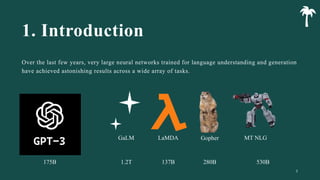
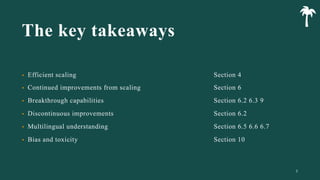
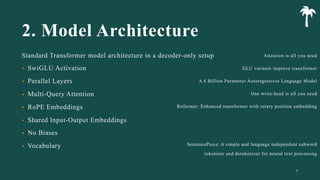
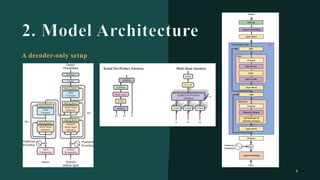
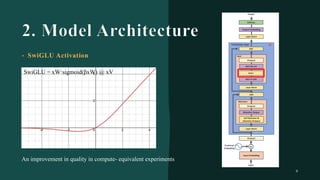
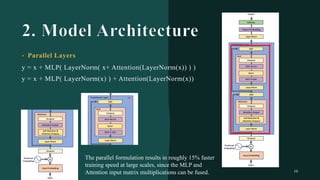
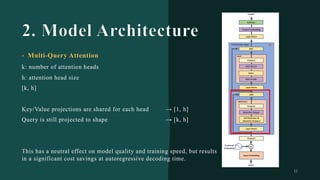
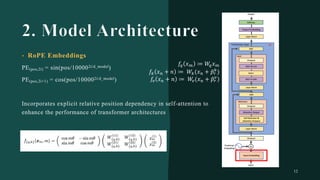
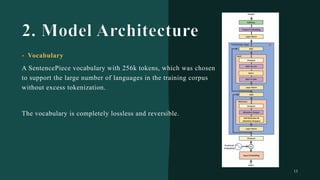
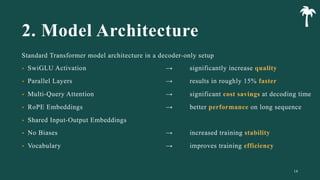
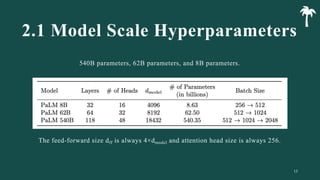
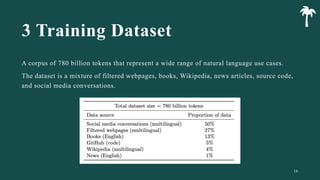
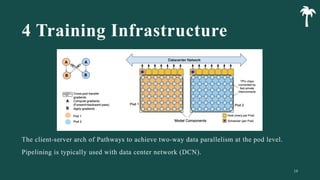
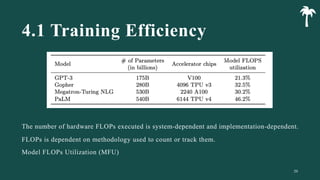
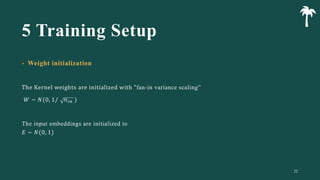
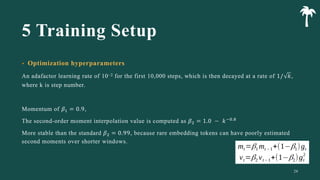
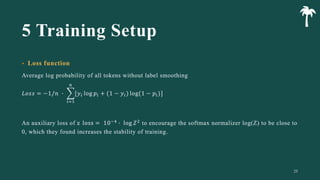
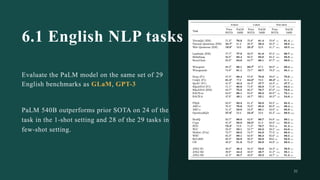
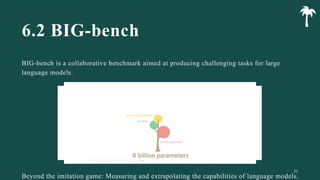
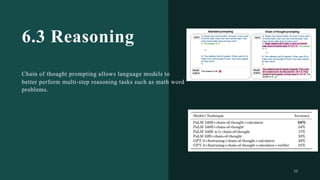
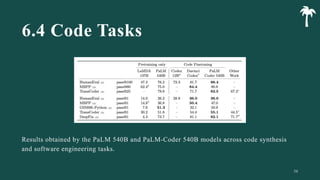
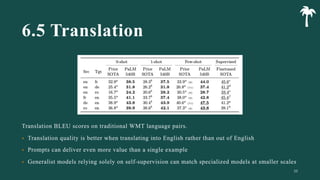
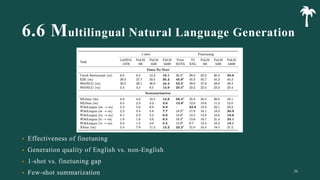
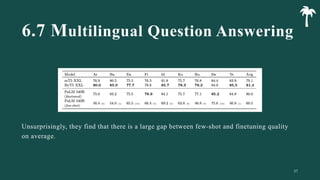
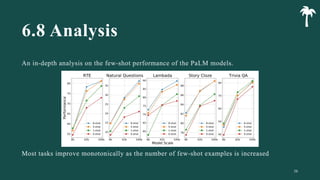
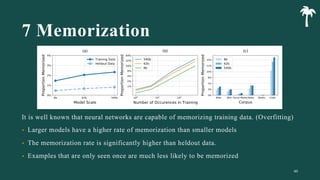
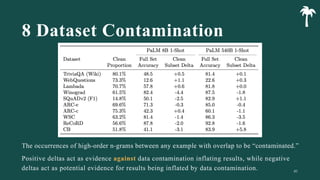
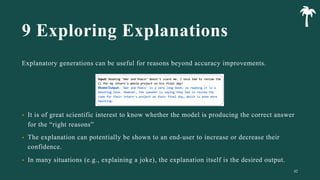
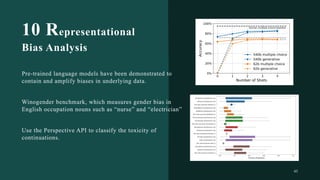
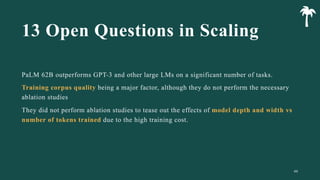
대규모 언어 모델은 적은 양의 학습 데이터로도 탁월한 성능을 발휘하여 다양한 자연어 처리 작업에서 매우 유용하게 사용됩니다. 이에 대한 이해를 더하기 위해, 구글은 PaLM이라는 5400억 개의 매개변수를 가진 언어 모델을 새로 개발하여, 다양한 자연어 이해 및 생성 작업에서 최첨단의 성능을 보여주고 있습니다. 이 모델은 Pathways라는 새로운 ML 시스템을 이용하여 6144개의 TPU v4 칩을 사용하여 학습되었습니다. PaLM은 다양한 과제에서 뛰어난 성능을 보이며, 특히 멀티스텝 추론 작업에서 최고의 성능을 발휘하여 인간 수준 이상의 결과를 달성하였습니다. 또한 다국어 작업과 소스 코드 생성 작업에서도 강력한 성능을 보이며, 편향성 및 독성에 대한 종합적인 분석과 모델 규모에 따른 학습 데이터 기억력 연구에 대한 결과도 제공합니다. 마지막으로, 대규모 언어 모델에 대한 윤리적 고민과 이를 완화하기 위한 전략에 대해 논의합니다.












![제 23회 보아즈(BOAZ) 빅데이터 컨퍼런스 - [북적북적] : 데이터 기반 독립출판사,서점 경영지원 대시보드](https://cdn.slidesharecdn.com/ss_thumbnails/1-1boaz23rdconference-260203093712-78abc1a0-thumbnail.jpg?width=640&height=640&fit=bounds)
![제 23회 보아즈(BOAZ) 빅데이터 컨퍼런스 - [OnLog]: Real-time Edge-to-Cloud Data Pipeline fo...](https://cdn.slidesharecdn.com/ss_thumbnails/3-4boaz23rdconferenceonlog-260204093729-11983ba7-thumbnail.jpg?width=640&height=640&fit=bounds)
![제 23회 보아즈(BOAZ) 빅데이터 컨퍼런스 - [SimAI] : Omni_모든 콘텐츠 운영을 하나로](https://cdn.slidesharecdn.com/ss_thumbnails/1-4boaz23rdconferencesimai-260203101225-d673a594-thumbnail.jpg?width=640&height=640&fit=bounds)
![제 23회 보아즈(BOAZ) 빅데이터 컨퍼런스 - [JJAI] : Re:Buy - 고객 행동 패턴 기반 재구매 시점 예측 개인화 CRM 시스템](https://cdn.slidesharecdn.com/ss_thumbnails/1-3boaz23rdconferencejjai-260203100705-ab1ce027-thumbnail.jpg?width=640&height=640&fit=bounds)
![제 23회 보아즈(BOAZ) 빅데이터 컨퍼런스 - [백 투 더 엔지] : 분산환경 주문 이벤트 처리 플랫폼](https://cdn.slidesharecdn.com/ss_thumbnails/1-2boaz23rdconference-260203100241-73ce0aa8-thumbnail.jpg?width=640&height=640&fit=bounds)
![제 23회 보아즈(BOAZ) 빅데이터 컨퍼런스 - [F4] : 시켜줘, 금잔디 명예 플로리스트](https://cdn.slidesharecdn.com/ss_thumbnails/3-3boaz23rdconferencef4-260204011323-1cb48ec9-thumbnail.jpg?width=640&height=640&fit=bounds)
![제 23회 보아즈(BOAZ) 빅데이터 컨퍼런스 - [If Lab] : 실시간 투표 커뮤니티 서비스 기반 데이터 파이프라인 구축 및 성능 검증](https://cdn.slidesharecdn.com/ss_thumbnails/2-1boaz23rdconferenceiflab-260203101556-e51663dd-thumbnail.jpg?width=640&height=640&fit=bounds)
![제 23회 보아즈(BOAZ) 빅데이터 컨퍼런스 - [셋이어때] : 헬퍼잇](https://cdn.slidesharecdn.com/ss_thumbnails/2-3boaz23rdconference-260203102432-6c8c7ed6-thumbnail.jpg?width=640&height=640&fit=bounds)
![제 23회 보아즈(BOAZ) 빅데이터 컨퍼런스 - [어벤정스] : ToonP](https://cdn.slidesharecdn.com/ss_thumbnails/2-2boaz23rdconference-260203102006-3a01358e-thumbnail.jpg?width=640&height=640&fit=bounds)
![제 23회 보아즈(BOAZ) 빅데이터 컨퍼런스 - [픽미] : 디저트 큐레이팅 플랫폼, 딸기로픽을 위한 데이터 기반 의사결정 프로세스 구축](https://cdn.slidesharecdn.com/ss_thumbnails/3-2boaz23rdconference-260203102931-15458767-thumbnail.jpg?width=640&height=640&fit=bounds)