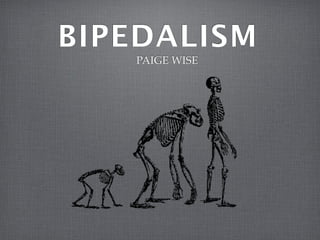
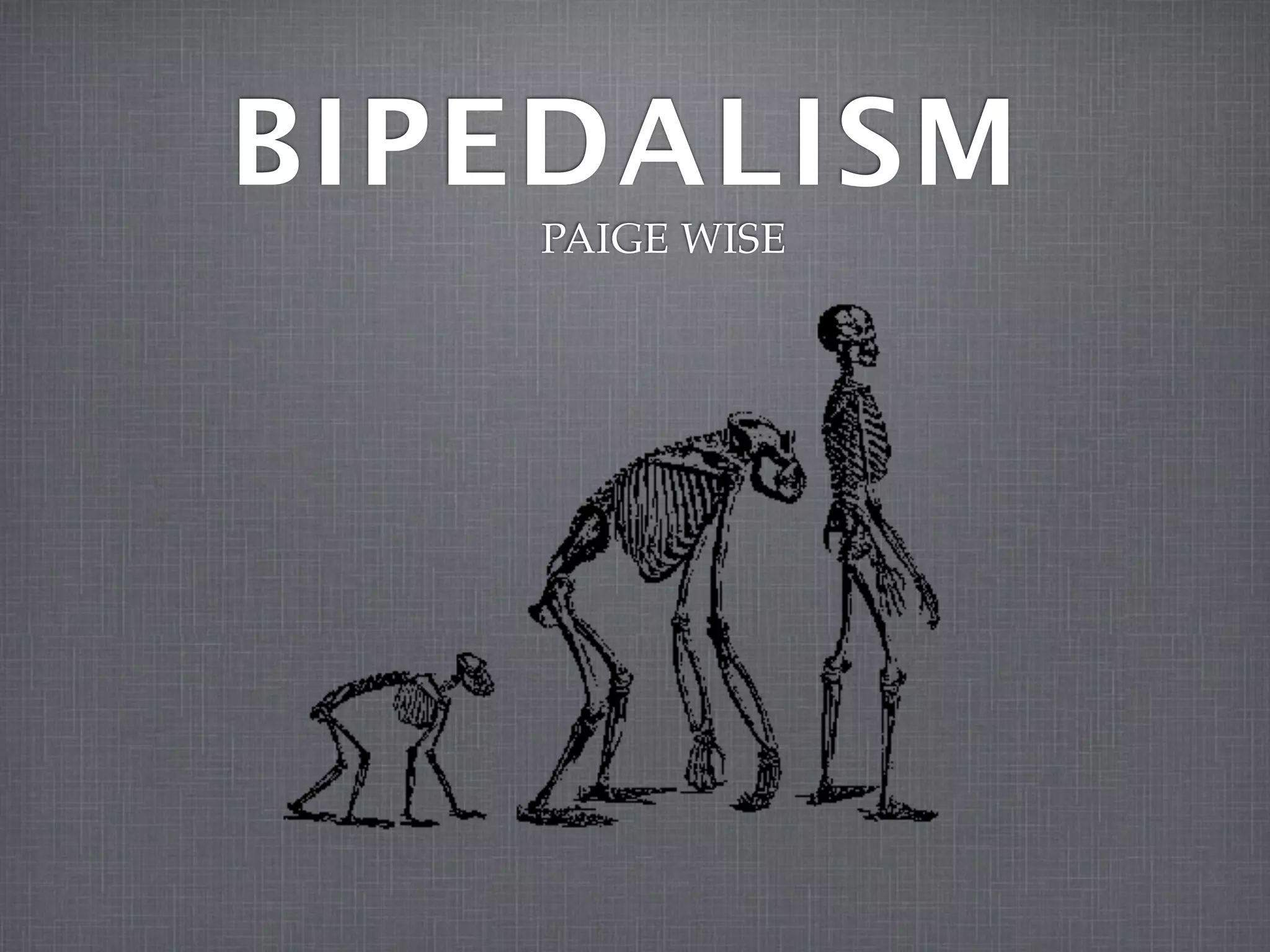
BIPEDALISM
   PAIGE WISE
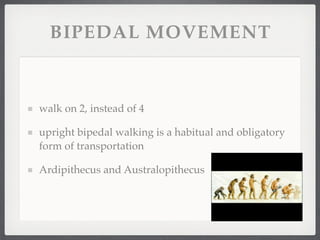
BIPEDAL MOVEMENT


walk on 2, instead of 4

upright bipedal walking is a habitual and obligatory
form of transportation

Ardipithecus and Australopithecus
PARTS OF THE BODY

Neck, Skull, Rib Cage, Pelvis, and Limbs

Rib Cage - cone-like shape

Pelvis - basin-like shape

Lower Limbs - lengthen and angle inward

Major structures are all stack on top of each other,
supporting the next feature up
HOW DOES IT WORK?


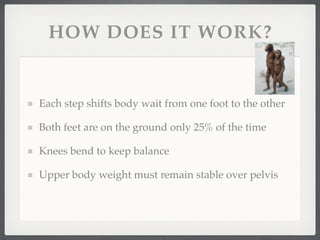
Each step shifts body wait from one foot to the other

Both feet are on the ground only 25% of the time

Knees bend to keep balance

Upper body weight must remain stable over pelvis
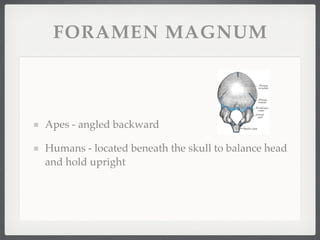
FORAMEN MAGNUM


Apes - angled backward

Humans - located beneath the skull to balance head
and hold upright
SPINE


Apes - have no lumbar curve to pull upper body back
over pelvis

Humans - Additional lumbar curve that positions
body inward, over pelvis
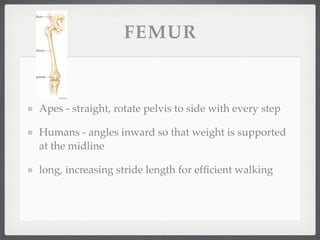
FEMUR


Apes - straight, rotate pelvis to side with every step

Humans - angles inward so that weight is supported
at the midline

long, increasing stride length for efficient walking
KNEE


Apes - more mobile knee (climbing)

more rotation

Humans - stable during walking, reduction of
rotation
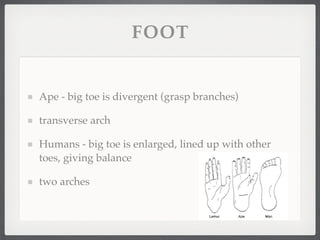
FOOT


Ape - big toe is divergent (grasp branches)

transverse arch

Humans - big toe is enlarged, lined up with other
toes, giving balance

two arches
HOMINIDS
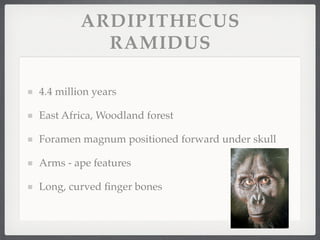
ARDIPITHECUS
           RAMIDUS

4.4 million years

East Africa, Woodland forest

Foramen magnum positioned forward under skull

Arms - ape features

Long, curved finger bones
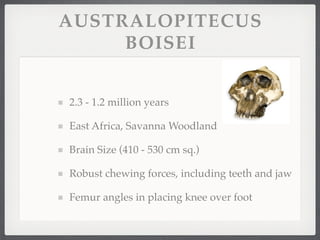
AUSTRALOPITECUS
     BOISEI


2.3 - 1.2 million years

East Africa, Savanna Woodland

Brain Size (410 - 530 cm sq.)

Robust chewing forces, including teeth and jaw

Femur angles in placing knee over foot
HOMO SAPIENS


100,000 years - present

Large brain size (1000-1700 cm 3)

Small, generalized teeth

Modern body proportions

Fully bipedal anatomy

Paige Wise

  • 1.
    BIPEDALISM PAIGE WISE
  • 2.
    BIPEDAL MOVEMENT walk on2, instead of 4 upright bipedal walking is a habitual and obligatory form of transportation Ardipithecus and Australopithecus
  • 3.
    PARTS OF THEBODY Neck, Skull, Rib Cage, Pelvis, and Limbs Rib Cage - cone-like shape Pelvis - basin-like shape Lower Limbs - lengthen and angle inward Major structures are all stack on top of each other, supporting the next feature up
  • 4.
    HOW DOES ITWORK? Each step shifts body wait from one foot to the other Both feet are on the ground only 25% of the time Knees bend to keep balance Upper body weight must remain stable over pelvis
  • 5.
    FORAMEN MAGNUM Apes -angled backward Humans - located beneath the skull to balance head and hold upright
  • 6.
    SPINE Apes - haveno lumbar curve to pull upper body back over pelvis Humans - Additional lumbar curve that positions body inward, over pelvis
  • 7.
    FEMUR Apes - straight,rotate pelvis to side with every step Humans - angles inward so that weight is supported at the midline long, increasing stride length for efficient walking
  • 8.
    KNEE Apes - moremobile knee (climbing) more rotation Humans - stable during walking, reduction of rotation
  • 9.
    FOOT Ape - bigtoe is divergent (grasp branches) transverse arch Humans - big toe is enlarged, lined up with other toes, giving balance two arches
  • 10.
  • 11.
    ARDIPITHECUS RAMIDUS 4.4 million years East Africa, Woodland forest Foramen magnum positioned forward under skull Arms - ape features Long, curved finger bones
  • 12.
    AUSTRALOPITECUS BOISEI 2.3 - 1.2 million years East Africa, Savanna Woodland Brain Size (410 - 530 cm sq.) Robust chewing forces, including teeth and jaw Femur angles in placing knee over foot
  • 13.
    HOMO SAPIENS 100,000 years- present Large brain size (1000-1700 cm 3) Small, generalized teeth Modern body proportions Fully bipedal anatomy