EVOLUTION OF JAWS AND TMJ
CONTENTS
INTRODUCTION
HISTORY
EVOLUTION OF JAWS
EVOLUTION OF MAXILLA
EVOLUTION OF MANDIBLE
EVOLUTION OF TMJ
CONCLUSION
REFERENCE
INTRODUCTION1,2,6
Human masticatory, system, which consists of maxilla, mandible,
teeth, temporomandibular joint, and the masticatory muscles, is
functionally involved in not only feeding, but also speech.
Just like all other anatomical features of our species, the masticatory
system has also evolved during the history of men.
Knowledge of the evolutionary development of the skull, face, and
jaws is helpful in understanding the complex events involved in
cephalogenesis (formation of the head).
Eolutionary changes in the midface, mandible and
temporomandibular joint can be best studied from various group of
mammals.
The primates are an extraordinarily diverse group of mammals. Over
50 extant genera and 200 species are recognized.
Maximum life spans extend from 8.8 years in the dwarf lemur to 120
years or so in humans.
Ecological diversity is also well recognized: some primates inhabit
very narrow niches, whereas others, most notably the human, survive
in virtually every climate and habitat on earth.
Scientists have traditionally used physical characteristics that reflect
shared and adaptive histories in classifying primates placing them
into various families, genera and species.
Humans and their immediate ancestors have traditionally been placed
in their own family Homonidea ( based on similarities in their
anatomy)
Genetic codes has revealed the specific genetic links between living
primate species.
These data indicates that humans and the African ape are more closely
related than either group is to the orangutans.
In recognition to their relationship orangutans, chimpanzees and
gorillas as well as humans now placed into family hominidae.
Subfamily ponginae used to just refer to orangutans, homininae
include gorillas, chimpanzees and humans
Humans and their ancestors are then placed into their own tribe
hominini (hominin)
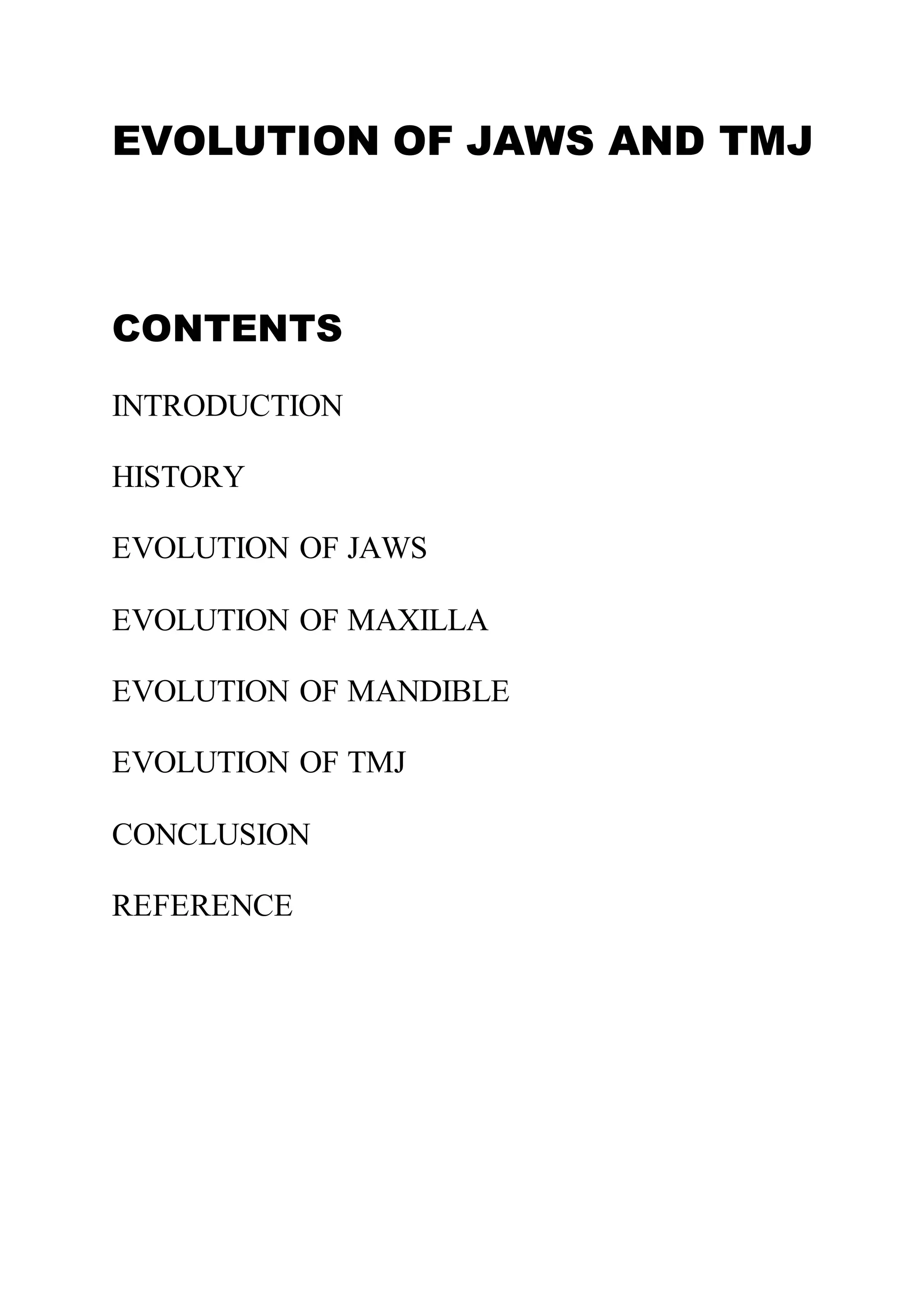
ERA/EPOC
H
REPRESENTIVE
SPECIES
BOUNDARIES OF FOSSIL
RECORD
APPEARENC
E
DISAPPEAREN
CE
Paleocene Plesiadapis
(rodent like
primate)
55mya 60mya
Eocene Notharctus
Adapis
(early prosimians)
58mya
58mya
36mya
36mya
Oligocene Aegyptopithecus
(first true ape)
35mya 25mya
Miocene Proconsul
(dryopthecine ape)
19-20mya 13-16mya
Pliocene A. anamensis
A. afarensis
A. africanus
A. aethiopicusb
4.2mya
3.8mya
3.05mya
2.7mya
3.9mya
2.95mya
2.0-2.3mya
2.3mya
Pleistocene A. robustusb
P. boiseic
H. habilis
H. erectus
H.s.neanderthalens
is
Homo sapiens
1.8-2.0mya
2.1-2.3mya
2.0-2.4mya
1.6-1.8mya
1,00,000-
2,30,000yr
40,000yr
1.5mya
1.3mya
1.45mya
5,00,000yr
30,000yr
HISTORY3
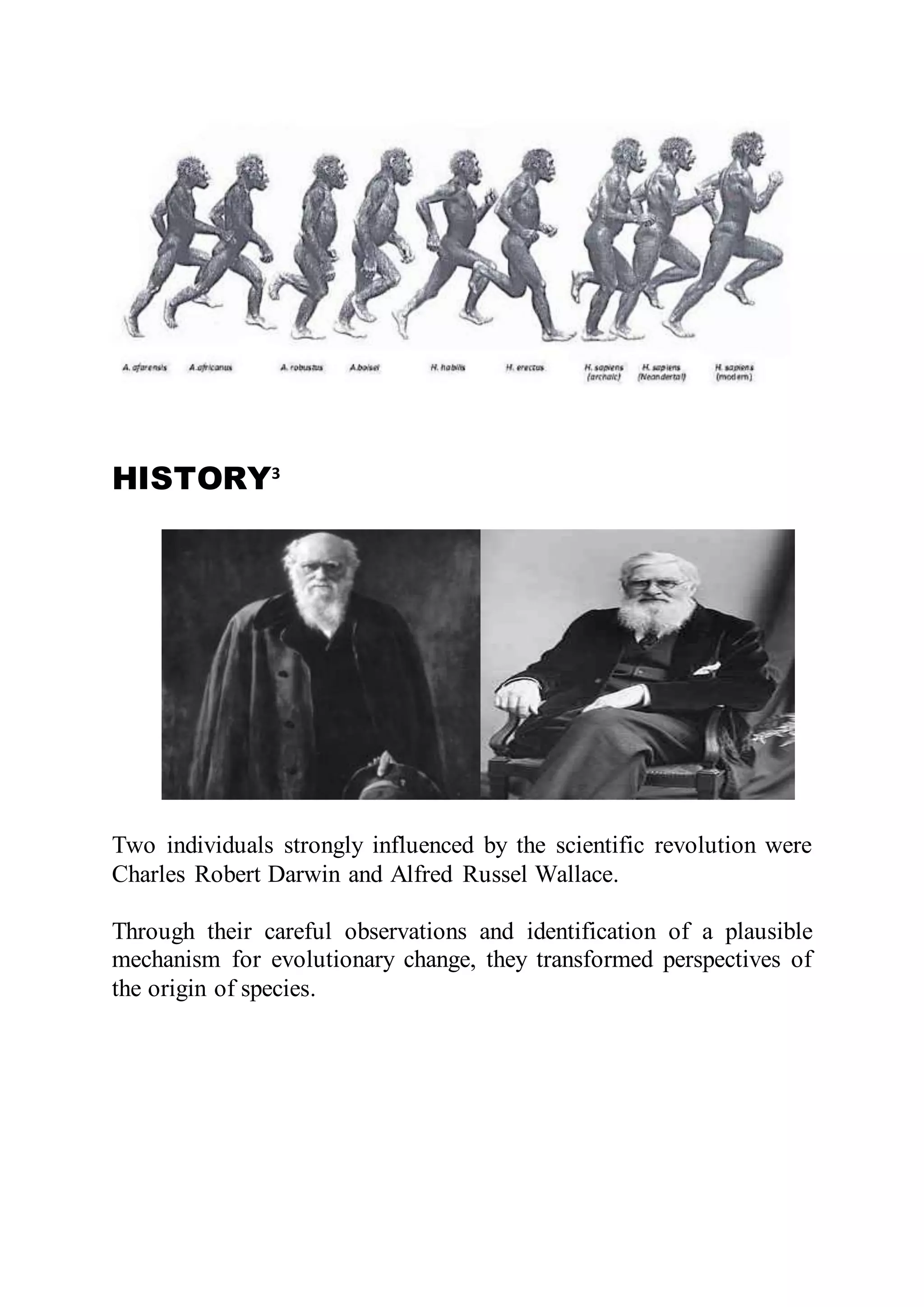
Two individuals strongly influenced by the scientific revolution were
Charles Robert Darwin and Alfred Russel Wallace.
Through their careful observations and identification of a plausible
mechanism for evolutionary change, they transformed perspectives of
the origin of species.
Darwin and Wallace independently developed an explanation of why
this variation occurs and the basic mechanism of evolution. This
mechanism is known as natural selection.
Natural selection is defined as genetic change in a population
resulting from differential reproductive success.
Beginning in 1831, Darwin travelled for five years on a British ship,
the HMS Beagle, on a voyage around the world.
He collected numerous plant and animal species from many different
environments
In the 1840s and 1850s, Wallace observed different species of plants
and animals during an expedition to the Amazon and later continued
his observations in Southeast.
Darwin and Wallace reasoned that certain individuals in a species
may be born with particular characteristics or traits that make them
better able to survive
For example, certain seeds in a plant species may naturally produce
more seeds than others, or some frogs in a single population may have
colouring that blends in with the environment better than others,
making them less likely to be eaten by predators
With these advantageous characteristics, certain species are more
likely to reproduce and, subsequently, pass on these traits to their
offspring.
Darwin called this process natural selection because nature, or the
demands of the environment, actually determines which individuals
(or which traits) survive.
EVOLUTION OF JAWS6,7
Analysis of gene expression patterns in the jaw primordia of mouse
and bird embryos at times before overt cellular differentiation shows
that most, if not all, genes are similarly expressed in the two species
Although there are specific genetic pathways involved in tooth and
jaw development, tooth morphogenesis shares many key genes with
jaw skeletal morphogenesis.
Disruptions that affect dental patterning also produces abnormal
skeletal development of the jaws.
The jaws of humans are smaller than today’s great apes.
Investigations on fossils have also shown the evidence of a decrease
in the size of the masticatory system in the hominins which are
accepted to be the ancestors of Homo Sapiens.
Researchers have stated that this decrease was mostly due to the
changes in the dietary habits of the species.
The protruding chin is one of the evolutionary features which separate
Homo sapiens from our ancestors. A protruding chin was absent in
archaic humans.
Many studies have been performed on the function and biomechanical
basis on the formation of the chin. Some authors have claimed that the
chin provided resistance to bending forces on the mandible.
Some others stated that the chin had no functional importance
Masticatory system related biomechanical forces were believed to
play a role on the formation of the human chin.
EVOLUTION OF MAXILLA2
The maxilla houses the upper dentition, but also provides an
important foundation of the midface.
It serves as a buttress that resists mechanical forces, and it responds
morphologically to those forces.
In nonhuman primates, the maxilla also includes the paired
premaxilla.
The size, shape, and growth patterns of the teeth and dental arch also
contribute to maxillary shape and hence to midfacial morphology.
Enlow (1966) demonstrated this in comparing the growth of animals
that possess snouts and those that do not.
Growth of the maxillary arch is completely depository in the
macaque, resulting in pronounced forward growth of the snout.
In humans, the forward portion of the maxillary arch undergoes
resorptive growth, which results in downward rather than forward
growth, and a flattened face.
The influence of the cartilaginous nasal septum upon maxillary
growth has been postulated under conditions of normal development.
The vertically hypoplastic maxilla of the chimpanzee is said to have
diverged from the general mammalian pattern of prominent midface
and snout.
The infant chimpanzee has a flat face resembling that of modern
humans. With growth, it becomes more prognathic, but is still small
when compared to other mammals.
These facial differences are probably related to variations in diet, in
that species with higher faces eat increased quantities of hard foods
such as seeds or grains.
The forces of chewing are essentially resisted by the maxilla, a
process that is manifest in both extinct and extant species.
In A.africanus, for example, blunt ridges of bone extending along the
nasal apertures to the alveolar process of the maxillae are known as
anterior pillars; these and the clivus form a morphological unit called
the nasoalveolar triangular frame
In robust forms, a unique feature is the zygomaticomaxillary steps,
which are prominent ridges that coincide with the
zygomaticomaxillary sutures
Early humans experienced a reduction in the size of the masticatory
apparatus,and with it, a decrease in maxillary buttressing that persists
among modern humans.
Homo habilis had a maxilla that was smaller than the
australopithecines, but within the range of H. erectus and H. sapiens.
The Neanderthals diverged from this major evolutionary trend; with
increased use of the anterior dentition, a significant midfacial
prognathism evolved
The size of the maxillary dental arches has been ascertained for old
world monkeys and differs according to diet.
Maxillary arch dimensions have also been shown to discriminate
between monkeys, apes, fossil hominids and modern humans.
Diet can have an effect on the size of the dental arcade for example
maxillary arch breadth decreases with chronic ingestion of soft food
Hard palate and the upper dentition of gorilla (left) and modern human (right)
EVOLUTION OF MANDIBLE2
The mandible, while not part of the midface, interacts intimately with
midfacial structures from a developmental, functional, and
evolutionary standpoint.
Two primary changes occurred during the early evolution of the
mandible:
(1) the angular, articular, and quadrate jaw bones of reptiles evolved
into the bones of the middle ear.
(2) the volume of tooth-bearing bone expanded to comprise, at least in
mammals, virtually the entire mandible.
Other modifications—for example, displacement of the temporal
region of the cranium, lowering of the face,and widening of the lower
jaw— occurred for reasons thought to be related to changes in
posture, locomotion, and mastication.
Among the primates, the mandible shows extraordinary phenotypic
variability in both extinct and extant species.
Mandibular form, function, and articulation are related closely to diet
and consequent requirements for mastication.
Differences in mandibular shape and condylar position and relation to
the occlusal plane among the australopithecines and early Homo are
thought to be the result of changes in diet.
This shift from a soft, chiefly frugivorous diet to a diet characterized
by harder foodstuffs began in the middle Miocene, and was manifest
by thickened molar enamel, enlarged incisors, and dramatically
enlarged jaws.
A hard diet is also thought to promote vertical growth of the mandible
and anterior translocation of the maxilla, and in this way influence
growth of the entire craniofacial skeleton.
Fusion of the mandibular symphysis is an important evolutionary
feature, though not limited to primates, and has been linked in some
studies to increased stresses of mastication.
However, among the Adapidae (small North American and European
Eocene primates), increased levels of symphyseal fusion are
associated with robust jaws and larger body size, rather than dietary
effect
The mandible of great apes is larger than that of humans . The rami
are taller, and because of the apes’ prognathic condition, the
mandibular bodies are longer.
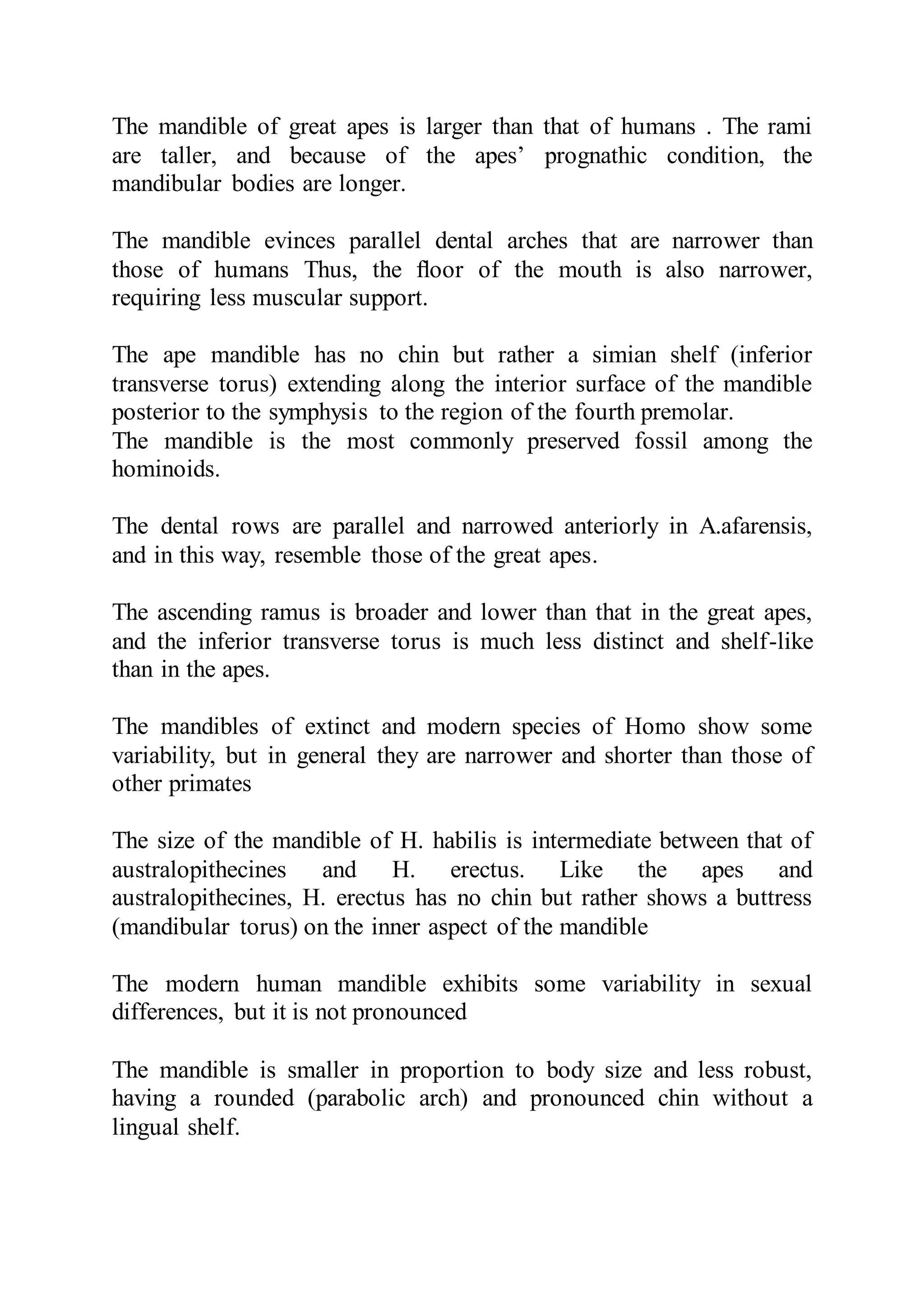
The mandible evinces parallel dental arches that are narrower than
those of humans Thus, the floor of the mouth is also narrower,
requiring less muscular support.
The ape mandible has no chin but rather a simian shelf (inferior
transverse torus) extending along the interior surface of the mandible
posterior to the symphysis to the region of the fourth premolar.
The mandible is the most commonly preserved fossil among the
hominoids.
The dental rows are parallel and narrowed anteriorly in A.afarensis,
and in this way, resemble those of the great apes.
The ascending ramus is broader and lower than that in the great apes,
and the inferior transverse torus is much less distinct and shelf-like
than in the apes.
The mandibles of extinct and modern species of Homo show some
variability, but in general they are narrower and shorter than those of
other primates
The size of the mandible of H. habilis is intermediate between that of
australopithecines and H. erectus. Like the apes and
australopithecines, H. erectus has no chin but rather shows a buttress
(mandibular torus) on the inner aspect of the mandible
The modern human mandible exhibits some variability in sexual
differences, but it is not pronounced
The mandible is smaller in proportion to body size and less robust,
having a rounded (parabolic arch) and pronounced chin without a
lingual shelf.
In fact, the modern human is the only primate to exhibit a true chin—
a structure that seems to have acquired the role of strengthening the
symphyseal arch, which is a function held by the simian shelf in
nonhuman primates.
The loss of the simian shelf has been related to the acquisition of
speech, but it is more likely to be related to dietary changes and
reduction of sagittal and occipital crests.
Superior view of chimpanzee (left) and human (right) mandibles. Difference in size
an shape are evident. Note the characteristic parallel dental arch in the
chimpanzee and the parabolic arch in humans.
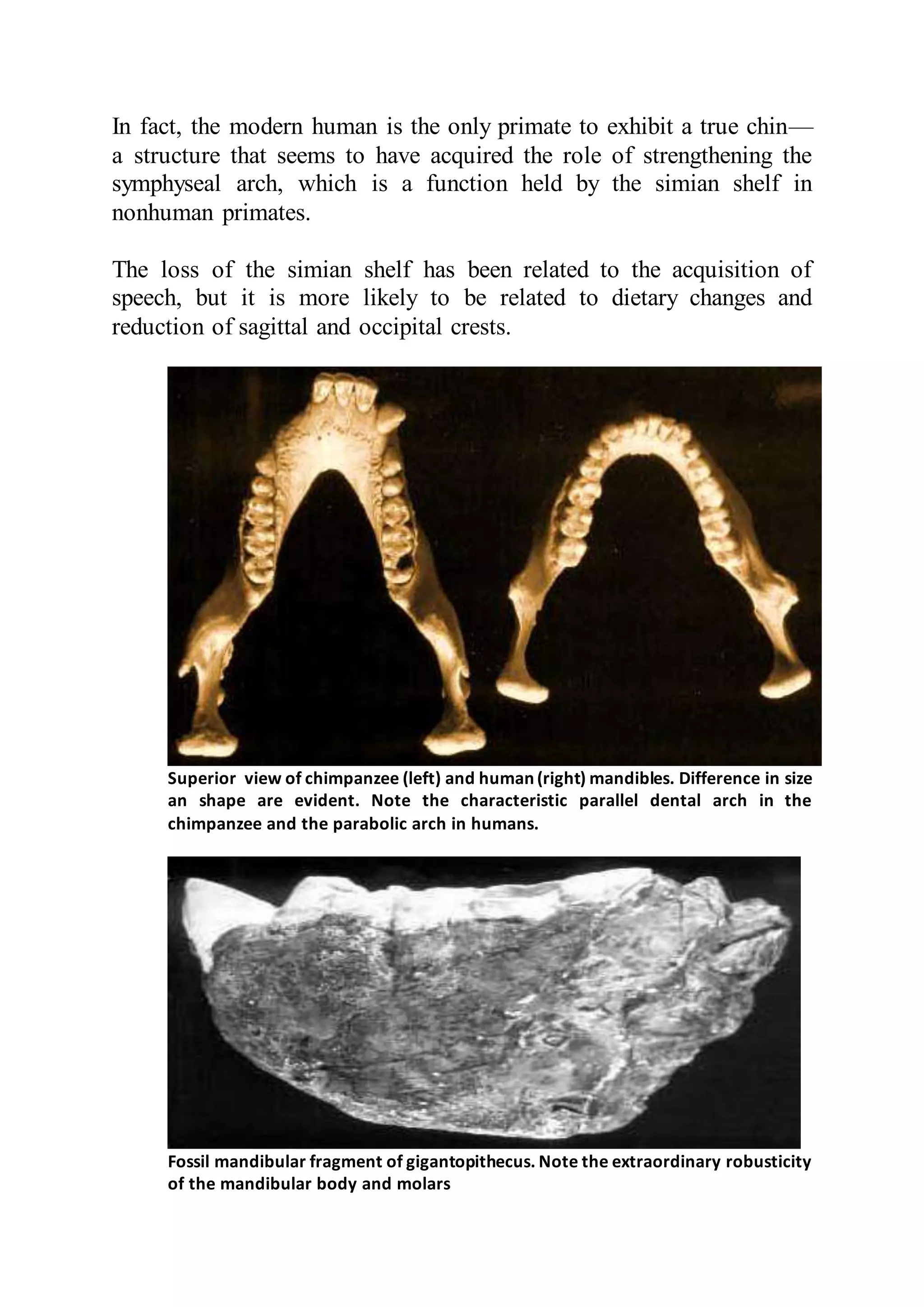
Fossil mandibular fragment of gigantopithecus. Note the extraordinary robusticity
of the mandibular body and molars
EVOLUTION OF TMJ4,5,8
The temporomandibular joint is a unique feature of the mammalia no
other vertebrates have it.
TMJ is a unique joint in which translatory as well as rotational
movements are possible, and where both the ends of bone articulate in
the same plane with that of other bone.
It is also called as ginglymodiarthroidal type of joint wherein it has
sliding movement between bony surfaces, in addition to hinge
movement, common to diarthroidal joint.
TMJ shows remarkable morphological and functional variation in
different species, reflecting not only the great mammalian adaptive
radiation in feeding mechanisms, but also freedom from constraints,
such as bearing body weight.
The most extreme evolutionary variants include:
(1) loss of the synovial cavity in some baleen whales
(2) loss (or possibly primitive absence) of the disk in monotremes,
some marsupials, and some edentates
(3) variations in the orientation of the joint cavity from parasagittal
(many rodents) to transverse (many carnivorans)
(4) reversal of the usual convex/concave relationship
The striking anatomical differences in TMJs are clearly tied to
biomechanics. The features mentioned above are either correlates of
loading or movement or both.
Loading of the TMJ is a reaction force arising from the contraction of
jaw muscles; its magnitude depends strongly on the position of the
bite point relative to the muscle action line.
The evolution of the TMJ is thought to have coincided with a period
of low reaction loads with higher loading having evolved repeatedly
in different lineages including our own
Rodents fall in the category of minimal TMJ loading, especially
during chewing.
In contrast, carnivorans such as dogs probably sustain TMJ loads that
are higher than those in primates.
Opening of the jaw usually involves a combination of forward sliding
and rotation around a transverse axis.
But some carnivorans have lost the ability to slide and some
specialized anteaters instead use a rotation around the long axis of the
curved mandible.
Similarly, transverse movement is usually accomplished by moving
one condyle forward and the other one backward, but carnivorans use
a combination of lateral sliding and rotation around the long axis of
the mandible.
Tmj are anthromorphs apes are distinctively flat, the articular fossa is
wide and shallow while the articular eminence is wide and low.
A typical feature human evolution is the connection between the
development of articular eminence and the combined rotational
translational movements in TMJ.
AMPHIBIA
The single joint for the double jaws. The jaws of these creatures were
used only for protection. The skull became kinetic, new movable
joints appeared within the cranium.
This ingenious device was a shuttling pterygopalatine component
coordinated with joints between the frontal and nasal bones.
In the carnivorous Pelycosauria, with which we are more directly
concerned since they include the ancestors of all the later
mammal-like reptiles and so of the mammals, the teeth are all of a
simple blade-like form.
They have distal and mesial cutting edges, often serrated like a bread
saw.
This demonstrates that the sharpening of the teeth by direct tooth-to-
tooth contact which is so important in there in mammals, did not take
place in these mammal-like reptiles.
The skull of a primitive amphibia tends to be long, wide and
remarkably flat. The first notable change from the amphibian
structure was the disappearance of the otic notch that supported the
tympanum of the primitive ear.
REPTILIA
Reptiles cannot chew. In general, they use their teeth only to seize
their prey, and if this cannot be swallowed whole, it is torn apart by a
number of animals or by a single animal ‘worrying’ it.
The group of reptiles which later gave rise to mammals - the
‘mammallike reptiles diverged at an early stage from the main
reptilian stem, and by the Permian, some 250 million years ago, were
widespread and might reasonably be regarded as the ‘Lords of
Creation
Later their place has been taken by the dinosaurs, which remained the
dominant group.
In this group of tiny mammal-like reptiles, a number of changes took
place, all probably associated with the acquisition of the ability to
maintain a body temperature above that of their surroundings.
This increased their activity and their ability to avoid their enemies,
but it carried the penalty that it vastly increased the food requirement
Reptilia have loss of bony parts. In the Pelycosauria, the lower jaw is
of an essentially reptilian form.
The tooth bearing bone or dentary has a strictly limited extension
distal to the tooth row; the other bones of the jaw are well-developed
and comprise the posterior third of the jaw.
Amphibian Jaw (A) Amphibian (B) Reptile (C) Mammals like reptile (D)
Mammal
MAMMALIAN ARCHITECTURAL THEME4
Viscerocranium - provides roofs and walls to the upper food way
Neurocranium - houses the brain whereas the mandible is a long,
straight, level bar with its fulcrum, the jaw joint at the backend.
This is the basic characteristic of mammalian skull, from it, two
adaptive feeding modifications labeled carnivores as opposed to
herbivores exist.
The early American forms are grouped as the Pelycosauria,
comprising carnivorous, piscivorous and herbivorous forms.
The specialization of the teeth and masticatory apparatus is such in
herbivorous forms that their capacity for further evolution is limited.
Major evolutionary changes are always initiated by carnivorous or
insectivorous forms.
Austrolopithecus africanus skull:
The jaws protrude sharply housing a short cheek teeth.
The upper jaw has outstanding canine buttresses whereas the lower
jaw is fairly shallow.
The zygomatic arches are quite slender.
Teeth are broad , spatulate, bulky
Austrolopithecus africanus skull
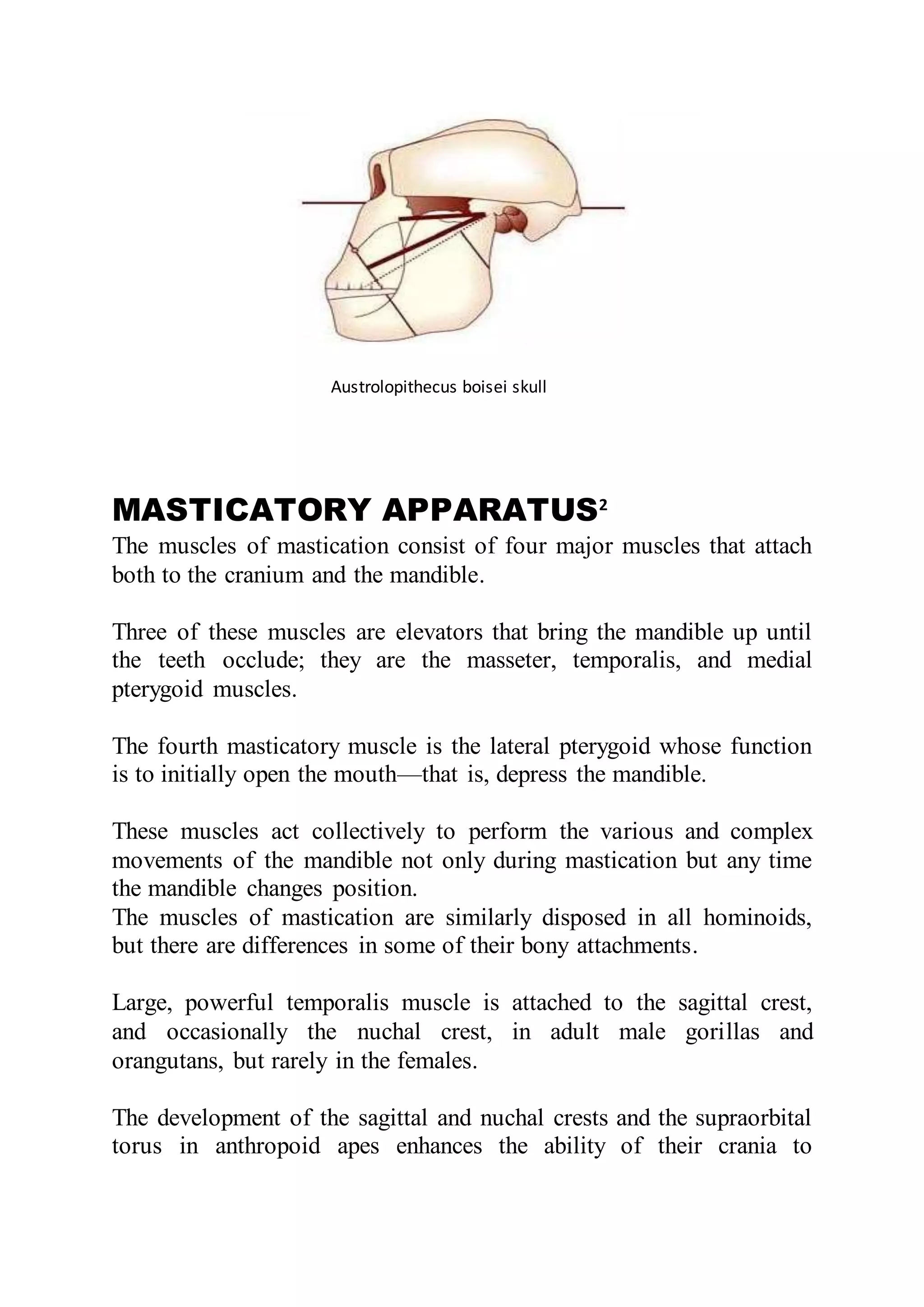
Austrolopithecus boisei skull:
The skull dorsum is deeply vaulted.
The supraorbital ridges are bulky.
Jaws are severely retruded, no canine buttresses, and massive
zygomatic buttresses give the face a “dished” in frontal plane.
The teeth are smaller and occlusal surfaces are more than three times
greater than in modern man.
Austrolopithecus boisei skull
MASTICATORY APPARATUS2
The muscles of mastication consist of four major muscles that attach
both to the cranium and the mandible.
Three of these muscles are elevators that bring the mandible up until
the teeth occlude; they are the masseter, temporalis, and medial
pterygoid muscles.
The fourth masticatory muscle is the lateral pterygoid whose function
is to initially open the mouth—that is, depress the mandible.
These muscles act collectively to perform the various and complex
movements of the mandible not only during mastication but any time
the mandible changes position.
The muscles of mastication are similarly disposed in all hominoids,
but there are differences in some of their bony attachments.
Large, powerful temporalis muscle is attached to the sagittal crest,
and occasionally the nuchal crest, in adult male gorillas and
orangutans, but rarely in the females.
The development of the sagittal and nuchal crests and the supraorbital
torus in anthropoid apes enhances the ability of their crania to
withstand the power of their cranial and facial muscles that is far in
excess of that in humans.
The neurocranial portion of the modern human skull has enlarged pari
passu with reduction of the facial skeleton to obviate the development
of such superstructures.
H. erectus deviated from this trend in having an occipital crest or
torus to which large nuchal muscles attached
Adult male orangutan. Note the prominent saggital and nuchal (occipital) crests
CONCLUSION
A great deal is known of the ways in which craniofacial structures
develop and evolve.
However a great deal also remains unknown. Evolution is indeed a
vast mosaic and thus it is unclear if a single or true primate form has
evolved.
The evolution of human masticatory complex is strongly related to
diet, the use of tools and fire and finally speech has a more important
part in evolution of mankind than the dentists know.
REFERENCES
1 A.Richard Ten Cate, Antonio Nanci. Embryology of the head, face,
and oral cavity. In: Antonio Nanci, editor. Text Book of oral histology
development, structure and function.7th edition. Missouri: Mosby’s
Publishers; 2008. P. 32-3.
2 Joseph R. Siebert, Daris R. Swindler. Evolutionary changes in the
midface and mandible: establishing the primate form. In Mark P.
Mooney and Michael I. Siegel, editor. Understanding Craniofacial
Anomalies. 1st edition. USA: Wiley-Liss Publishers; 2002. P. 345-78.
3 Melvin R. Ember, Carol R. Ember, Peter N. Pergrine. Human
Evolution. Human Evolution And Culture.
4 Sujatha M. Byahatti. Evolution, Epidemiology And Etiology Of
Temporomandibular Joint Disorders. Journal of Indian Academy of
Oral Medicine and Radiology 2010;22(4):S13-18.
5 Kermack KA. Evolution of Mammalian Dental Structures. Proc.roy.
Soc 1972;65:389-392.
6 Melanie McCollum, Pault T. Sharpe. Evolution and development of
teeth. J. Anat 2001;199:153-159.
7 Yusuf Emes, Buket Ayber, Serhat Yalcin. On The Evolution of
Human Jaws and Teeth: A Review. Bull Int Assoc Paleodont
2011;5(1):37-47.
8 Tomislav Badel, Ivana Savic-Pavicin, Dijana Zadravec, Miljenko
Marotti, Ivan Krolo, Durdica Grbesa et al. Temporomandibular joint
development and functional disorders related to clinical otologic
symptomatology. Acta Clin Croat 2011;50:51-60.

Evolution of jaws and tmj

  • 1.
    EVOLUTION OF JAWSAND TMJ CONTENTS INTRODUCTION HISTORY EVOLUTION OF JAWS EVOLUTION OF MAXILLA EVOLUTION OF MANDIBLE EVOLUTION OF TMJ CONCLUSION REFERENCE
  • 2.
    INTRODUCTION1,2,6 Human masticatory, system,which consists of maxilla, mandible, teeth, temporomandibular joint, and the masticatory muscles, is functionally involved in not only feeding, but also speech. Just like all other anatomical features of our species, the masticatory system has also evolved during the history of men. Knowledge of the evolutionary development of the skull, face, and jaws is helpful in understanding the complex events involved in cephalogenesis (formation of the head). Eolutionary changes in the midface, mandible and temporomandibular joint can be best studied from various group of mammals. The primates are an extraordinarily diverse group of mammals. Over 50 extant genera and 200 species are recognized. Maximum life spans extend from 8.8 years in the dwarf lemur to 120 years or so in humans. Ecological diversity is also well recognized: some primates inhabit very narrow niches, whereas others, most notably the human, survive in virtually every climate and habitat on earth. Scientists have traditionally used physical characteristics that reflect shared and adaptive histories in classifying primates placing them into various families, genera and species. Humans and their immediate ancestors have traditionally been placed in their own family Homonidea ( based on similarities in their anatomy) Genetic codes has revealed the specific genetic links between living primate species.
  • 3.
    These data indicatesthat humans and the African ape are more closely related than either group is to the orangutans. In recognition to their relationship orangutans, chimpanzees and gorillas as well as humans now placed into family hominidae. Subfamily ponginae used to just refer to orangutans, homininae include gorillas, chimpanzees and humans Humans and their ancestors are then placed into their own tribe hominini (hominin) ERA/EPOC H REPRESENTIVE SPECIES BOUNDARIES OF FOSSIL RECORD APPEARENC E DISAPPEAREN CE Paleocene Plesiadapis (rodent like primate) 55mya 60mya Eocene Notharctus Adapis (early prosimians) 58mya 58mya 36mya 36mya Oligocene Aegyptopithecus (first true ape) 35mya 25mya Miocene Proconsul (dryopthecine ape) 19-20mya 13-16mya Pliocene A. anamensis A. afarensis A. africanus A. aethiopicusb 4.2mya 3.8mya 3.05mya 2.7mya 3.9mya 2.95mya 2.0-2.3mya 2.3mya Pleistocene A. robustusb P. boiseic H. habilis H. erectus H.s.neanderthalens is Homo sapiens 1.8-2.0mya 2.1-2.3mya 2.0-2.4mya 1.6-1.8mya 1,00,000- 2,30,000yr 40,000yr 1.5mya 1.3mya 1.45mya 5,00,000yr 30,000yr
  • 5.
    HISTORY3 Two individuals stronglyinfluenced by the scientific revolution were Charles Robert Darwin and Alfred Russel Wallace. Through their careful observations and identification of a plausible mechanism for evolutionary change, they transformed perspectives of the origin of species.
  • 6.
    Darwin and Wallaceindependently developed an explanation of why this variation occurs and the basic mechanism of evolution. This mechanism is known as natural selection. Natural selection is defined as genetic change in a population resulting from differential reproductive success. Beginning in 1831, Darwin travelled for five years on a British ship, the HMS Beagle, on a voyage around the world. He collected numerous plant and animal species from many different environments In the 1840s and 1850s, Wallace observed different species of plants and animals during an expedition to the Amazon and later continued his observations in Southeast. Darwin and Wallace reasoned that certain individuals in a species may be born with particular characteristics or traits that make them better able to survive For example, certain seeds in a plant species may naturally produce more seeds than others, or some frogs in a single population may have colouring that blends in with the environment better than others, making them less likely to be eaten by predators With these advantageous characteristics, certain species are more likely to reproduce and, subsequently, pass on these traits to their offspring. Darwin called this process natural selection because nature, or the demands of the environment, actually determines which individuals (or which traits) survive.
  • 7.
    EVOLUTION OF JAWS6,7 Analysisof gene expression patterns in the jaw primordia of mouse and bird embryos at times before overt cellular differentiation shows that most, if not all, genes are similarly expressed in the two species Although there are specific genetic pathways involved in tooth and jaw development, tooth morphogenesis shares many key genes with jaw skeletal morphogenesis. Disruptions that affect dental patterning also produces abnormal skeletal development of the jaws. The jaws of humans are smaller than today’s great apes. Investigations on fossils have also shown the evidence of a decrease in the size of the masticatory system in the hominins which are accepted to be the ancestors of Homo Sapiens. Researchers have stated that this decrease was mostly due to the changes in the dietary habits of the species. The protruding chin is one of the evolutionary features which separate Homo sapiens from our ancestors. A protruding chin was absent in archaic humans. Many studies have been performed on the function and biomechanical basis on the formation of the chin. Some authors have claimed that the chin provided resistance to bending forces on the mandible. Some others stated that the chin had no functional importance Masticatory system related biomechanical forces were believed to play a role on the formation of the human chin.
  • 8.
    EVOLUTION OF MAXILLA2 Themaxilla houses the upper dentition, but also provides an important foundation of the midface. It serves as a buttress that resists mechanical forces, and it responds morphologically to those forces. In nonhuman primates, the maxilla also includes the paired premaxilla. The size, shape, and growth patterns of the teeth and dental arch also contribute to maxillary shape and hence to midfacial morphology. Enlow (1966) demonstrated this in comparing the growth of animals that possess snouts and those that do not. Growth of the maxillary arch is completely depository in the macaque, resulting in pronounced forward growth of the snout. In humans, the forward portion of the maxillary arch undergoes resorptive growth, which results in downward rather than forward growth, and a flattened face. The influence of the cartilaginous nasal septum upon maxillary growth has been postulated under conditions of normal development. The vertically hypoplastic maxilla of the chimpanzee is said to have diverged from the general mammalian pattern of prominent midface and snout. The infant chimpanzee has a flat face resembling that of modern humans. With growth, it becomes more prognathic, but is still small when compared to other mammals. These facial differences are probably related to variations in diet, in that species with higher faces eat increased quantities of hard foods such as seeds or grains.
  • 9.
    The forces ofchewing are essentially resisted by the maxilla, a process that is manifest in both extinct and extant species. In A.africanus, for example, blunt ridges of bone extending along the nasal apertures to the alveolar process of the maxillae are known as anterior pillars; these and the clivus form a morphological unit called the nasoalveolar triangular frame In robust forms, a unique feature is the zygomaticomaxillary steps, which are prominent ridges that coincide with the zygomaticomaxillary sutures Early humans experienced a reduction in the size of the masticatory apparatus,and with it, a decrease in maxillary buttressing that persists among modern humans. Homo habilis had a maxilla that was smaller than the australopithecines, but within the range of H. erectus and H. sapiens. The Neanderthals diverged from this major evolutionary trend; with increased use of the anterior dentition, a significant midfacial prognathism evolved The size of the maxillary dental arches has been ascertained for old world monkeys and differs according to diet. Maxillary arch dimensions have also been shown to discriminate between monkeys, apes, fossil hominids and modern humans. Diet can have an effect on the size of the dental arcade for example maxillary arch breadth decreases with chronic ingestion of soft food
  • 10.
    Hard palate andthe upper dentition of gorilla (left) and modern human (right) EVOLUTION OF MANDIBLE2 The mandible, while not part of the midface, interacts intimately with midfacial structures from a developmental, functional, and evolutionary standpoint. Two primary changes occurred during the early evolution of the mandible: (1) the angular, articular, and quadrate jaw bones of reptiles evolved into the bones of the middle ear.
  • 11.
    (2) the volumeof tooth-bearing bone expanded to comprise, at least in mammals, virtually the entire mandible. Other modifications—for example, displacement of the temporal region of the cranium, lowering of the face,and widening of the lower jaw— occurred for reasons thought to be related to changes in posture, locomotion, and mastication. Among the primates, the mandible shows extraordinary phenotypic variability in both extinct and extant species. Mandibular form, function, and articulation are related closely to diet and consequent requirements for mastication. Differences in mandibular shape and condylar position and relation to the occlusal plane among the australopithecines and early Homo are thought to be the result of changes in diet. This shift from a soft, chiefly frugivorous diet to a diet characterized by harder foodstuffs began in the middle Miocene, and was manifest by thickened molar enamel, enlarged incisors, and dramatically enlarged jaws. A hard diet is also thought to promote vertical growth of the mandible and anterior translocation of the maxilla, and in this way influence growth of the entire craniofacial skeleton. Fusion of the mandibular symphysis is an important evolutionary feature, though not limited to primates, and has been linked in some studies to increased stresses of mastication. However, among the Adapidae (small North American and European Eocene primates), increased levels of symphyseal fusion are associated with robust jaws and larger body size, rather than dietary effect
  • 12.
    The mandible ofgreat apes is larger than that of humans . The rami are taller, and because of the apes’ prognathic condition, the mandibular bodies are longer. The mandible evinces parallel dental arches that are narrower than those of humans Thus, the floor of the mouth is also narrower, requiring less muscular support. The ape mandible has no chin but rather a simian shelf (inferior transverse torus) extending along the interior surface of the mandible posterior to the symphysis to the region of the fourth premolar. The mandible is the most commonly preserved fossil among the hominoids. The dental rows are parallel and narrowed anteriorly in A.afarensis, and in this way, resemble those of the great apes. The ascending ramus is broader and lower than that in the great apes, and the inferior transverse torus is much less distinct and shelf-like than in the apes. The mandibles of extinct and modern species of Homo show some variability, but in general they are narrower and shorter than those of other primates The size of the mandible of H. habilis is intermediate between that of australopithecines and H. erectus. Like the apes and australopithecines, H. erectus has no chin but rather shows a buttress (mandibular torus) on the inner aspect of the mandible The modern human mandible exhibits some variability in sexual differences, but it is not pronounced The mandible is smaller in proportion to body size and less robust, having a rounded (parabolic arch) and pronounced chin without a lingual shelf.
  • 13.
    In fact, themodern human is the only primate to exhibit a true chin— a structure that seems to have acquired the role of strengthening the symphyseal arch, which is a function held by the simian shelf in nonhuman primates. The loss of the simian shelf has been related to the acquisition of speech, but it is more likely to be related to dietary changes and reduction of sagittal and occipital crests. Superior view of chimpanzee (left) and human (right) mandibles. Difference in size an shape are evident. Note the characteristic parallel dental arch in the chimpanzee and the parabolic arch in humans. Fossil mandibular fragment of gigantopithecus. Note the extraordinary robusticity of the mandibular body and molars
  • 14.
    EVOLUTION OF TMJ4,5,8 Thetemporomandibular joint is a unique feature of the mammalia no other vertebrates have it. TMJ is a unique joint in which translatory as well as rotational movements are possible, and where both the ends of bone articulate in the same plane with that of other bone. It is also called as ginglymodiarthroidal type of joint wherein it has sliding movement between bony surfaces, in addition to hinge movement, common to diarthroidal joint. TMJ shows remarkable morphological and functional variation in different species, reflecting not only the great mammalian adaptive radiation in feeding mechanisms, but also freedom from constraints, such as bearing body weight. The most extreme evolutionary variants include: (1) loss of the synovial cavity in some baleen whales (2) loss (or possibly primitive absence) of the disk in monotremes, some marsupials, and some edentates (3) variations in the orientation of the joint cavity from parasagittal (many rodents) to transverse (many carnivorans) (4) reversal of the usual convex/concave relationship The striking anatomical differences in TMJs are clearly tied to biomechanics. The features mentioned above are either correlates of loading or movement or both. Loading of the TMJ is a reaction force arising from the contraction of jaw muscles; its magnitude depends strongly on the position of the bite point relative to the muscle action line. The evolution of the TMJ is thought to have coincided with a period of low reaction loads with higher loading having evolved repeatedly in different lineages including our own
  • 15.
    Rodents fall inthe category of minimal TMJ loading, especially during chewing. In contrast, carnivorans such as dogs probably sustain TMJ loads that are higher than those in primates. Opening of the jaw usually involves a combination of forward sliding and rotation around a transverse axis. But some carnivorans have lost the ability to slide and some specialized anteaters instead use a rotation around the long axis of the curved mandible. Similarly, transverse movement is usually accomplished by moving one condyle forward and the other one backward, but carnivorans use a combination of lateral sliding and rotation around the long axis of the mandible. Tmj are anthromorphs apes are distinctively flat, the articular fossa is wide and shallow while the articular eminence is wide and low. A typical feature human evolution is the connection between the development of articular eminence and the combined rotational translational movements in TMJ. AMPHIBIA The single joint for the double jaws. The jaws of these creatures were used only for protection. The skull became kinetic, new movable joints appeared within the cranium. This ingenious device was a shuttling pterygopalatine component coordinated with joints between the frontal and nasal bones.
  • 16.
    In the carnivorousPelycosauria, with which we are more directly concerned since they include the ancestors of all the later mammal-like reptiles and so of the mammals, the teeth are all of a simple blade-like form. They have distal and mesial cutting edges, often serrated like a bread saw. This demonstrates that the sharpening of the teeth by direct tooth-to- tooth contact which is so important in there in mammals, did not take place in these mammal-like reptiles. The skull of a primitive amphibia tends to be long, wide and remarkably flat. The first notable change from the amphibian structure was the disappearance of the otic notch that supported the tympanum of the primitive ear. REPTILIA Reptiles cannot chew. In general, they use their teeth only to seize their prey, and if this cannot be swallowed whole, it is torn apart by a number of animals or by a single animal ‘worrying’ it. The group of reptiles which later gave rise to mammals - the ‘mammallike reptiles diverged at an early stage from the main reptilian stem, and by the Permian, some 250 million years ago, were widespread and might reasonably be regarded as the ‘Lords of Creation Later their place has been taken by the dinosaurs, which remained the dominant group. In this group of tiny mammal-like reptiles, a number of changes took place, all probably associated with the acquisition of the ability to maintain a body temperature above that of their surroundings.
  • 17.
    This increased theiractivity and their ability to avoid their enemies, but it carried the penalty that it vastly increased the food requirement Reptilia have loss of bony parts. In the Pelycosauria, the lower jaw is of an essentially reptilian form. The tooth bearing bone or dentary has a strictly limited extension distal to the tooth row; the other bones of the jaw are well-developed and comprise the posterior third of the jaw. Amphibian Jaw (A) Amphibian (B) Reptile (C) Mammals like reptile (D) Mammal MAMMALIAN ARCHITECTURAL THEME4 Viscerocranium - provides roofs and walls to the upper food way Neurocranium - houses the brain whereas the mandible is a long, straight, level bar with its fulcrum, the jaw joint at the backend. This is the basic characteristic of mammalian skull, from it, two adaptive feeding modifications labeled carnivores as opposed to herbivores exist.
  • 18.
    The early Americanforms are grouped as the Pelycosauria, comprising carnivorous, piscivorous and herbivorous forms. The specialization of the teeth and masticatory apparatus is such in herbivorous forms that their capacity for further evolution is limited. Major evolutionary changes are always initiated by carnivorous or insectivorous forms. Austrolopithecus africanus skull: The jaws protrude sharply housing a short cheek teeth. The upper jaw has outstanding canine buttresses whereas the lower jaw is fairly shallow. The zygomatic arches are quite slender. Teeth are broad , spatulate, bulky Austrolopithecus africanus skull Austrolopithecus boisei skull: The skull dorsum is deeply vaulted. The supraorbital ridges are bulky. Jaws are severely retruded, no canine buttresses, and massive zygomatic buttresses give the face a “dished” in frontal plane. The teeth are smaller and occlusal surfaces are more than three times greater than in modern man.
  • 19.
    Austrolopithecus boisei skull MASTICATORYAPPARATUS2 The muscles of mastication consist of four major muscles that attach both to the cranium and the mandible. Three of these muscles are elevators that bring the mandible up until the teeth occlude; they are the masseter, temporalis, and medial pterygoid muscles. The fourth masticatory muscle is the lateral pterygoid whose function is to initially open the mouth—that is, depress the mandible. These muscles act collectively to perform the various and complex movements of the mandible not only during mastication but any time the mandible changes position. The muscles of mastication are similarly disposed in all hominoids, but there are differences in some of their bony attachments. Large, powerful temporalis muscle is attached to the sagittal crest, and occasionally the nuchal crest, in adult male gorillas and orangutans, but rarely in the females. The development of the sagittal and nuchal crests and the supraorbital torus in anthropoid apes enhances the ability of their crania to
  • 20.
    withstand the powerof their cranial and facial muscles that is far in excess of that in humans. The neurocranial portion of the modern human skull has enlarged pari passu with reduction of the facial skeleton to obviate the development of such superstructures. H. erectus deviated from this trend in having an occipital crest or torus to which large nuchal muscles attached Adult male orangutan. Note the prominent saggital and nuchal (occipital) crests CONCLUSION A great deal is known of the ways in which craniofacial structures develop and evolve. However a great deal also remains unknown. Evolution is indeed a vast mosaic and thus it is unclear if a single or true primate form has evolved. The evolution of human masticatory complex is strongly related to diet, the use of tools and fire and finally speech has a more important part in evolution of mankind than the dentists know.
  • 21.
    REFERENCES 1 A.Richard TenCate, Antonio Nanci. Embryology of the head, face, and oral cavity. In: Antonio Nanci, editor. Text Book of oral histology development, structure and function.7th edition. Missouri: Mosby’s Publishers; 2008. P. 32-3. 2 Joseph R. Siebert, Daris R. Swindler. Evolutionary changes in the midface and mandible: establishing the primate form. In Mark P. Mooney and Michael I. Siegel, editor. Understanding Craniofacial Anomalies. 1st edition. USA: Wiley-Liss Publishers; 2002. P. 345-78. 3 Melvin R. Ember, Carol R. Ember, Peter N. Pergrine. Human Evolution. Human Evolution And Culture. 4 Sujatha M. Byahatti. Evolution, Epidemiology And Etiology Of Temporomandibular Joint Disorders. Journal of Indian Academy of Oral Medicine and Radiology 2010;22(4):S13-18. 5 Kermack KA. Evolution of Mammalian Dental Structures. Proc.roy. Soc 1972;65:389-392. 6 Melanie McCollum, Pault T. Sharpe. Evolution and development of teeth. J. Anat 2001;199:153-159. 7 Yusuf Emes, Buket Ayber, Serhat Yalcin. On The Evolution of Human Jaws and Teeth: A Review. Bull Int Assoc Paleodont 2011;5(1):37-47. 8 Tomislav Badel, Ivana Savic-Pavicin, Dijana Zadravec, Miljenko Marotti, Ivan Krolo, Durdica Grbesa et al. Temporomandibular joint development and functional disorders related to clinical otologic symptomatology. Acta Clin Croat 2011;50:51-60.