The War to End War
           1917-1918

            Lecture
           Chapter 30
 The American Pageant, 13th edition
Quickwrite
 What was the goal of the Committee
  of Public Information, and how did it
  achieve it?
                  OR
 What was the purpose of Wilson’s
  Fourteen Points Address?
US Enters the War
   What led the US to finally enter the war in
    April, 1917?
   How prepared was the US for battle in
    Europe?
US Enters the War
   Zimmerman Note
       German foreign secretary Zimmerman sent telegram
        offering German-Mexican alliance
            Suggested return of old Mexican territory if US was defeated
            Intercepted by British & passed on to US
        Americans furious; adds to anti-German anger
   Unrestricted submarine warfare
       New submarine attacks push the US to declare war
            Four unarmed US merchant vessels sunk in two weeks
   US declares war on Germany on April 6,
    1917
   The US was not prepared for war
       Wilson inspired the populace with the call “to
        make the world safe for democracy”
The Fourteen Points
   What was the purpose of Wilson’s Fourteen
    Points Address?
   How did the Fourteen Points address
    colonial issues?
   What was the most important of the
    Fourteen Points?
The Fourteen Points
   Purpose of the Fourteen Points
       Offer solutions to long-standing issues that had
        led to WW1
       Perhaps lead to a quick conclusion to the war
Key Themes of the Fourteen Points
   Abolish secret treaties
   Freedom of the seas
   Removal of economic barriers
   Reduction of armaments
   Shifting of colonial claims to address
    colonists’ and imperialists’ concerns
More Key Themes of the Fourteen
Points
   Eventual self-determination of minority
    nationalities
   International organization for shared
    security
       Led to the League of Nations (predecessor to the
        United Nations)
The US War Effort
   What was the goal of the Committee of
    Public Information, and how did it achieve it?
   What was the effect of the war on
       German-Americans?
       American civil liberties?
       The labor movement?
       African-Americans?
       American women?
Committee on Public Information
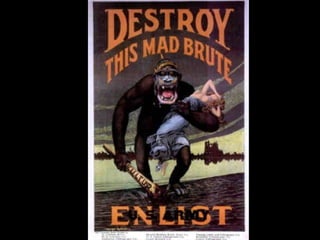
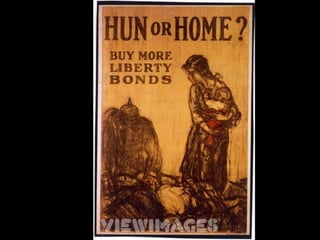
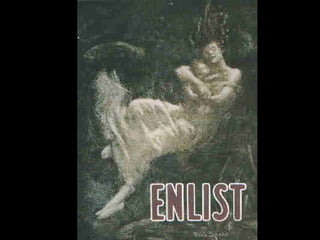
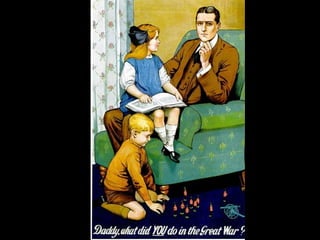
   Propaganda committee to convince Americans to
    support the war, led by George Creel
       And other countries to support Wilson’s goals
   Forms of propaganda
       Army of 75,000 patriotic speechgivers
       Posters
       Leaflets and pamphlets
       Anti-German movies
       Patriotic and pro-military songs (Over There)
   Sold program so well that disappointment was
    great when not all Wilson’s goals were fulfilled
Over There                        12 Over There.m4p


   Johnnie, get your gun, get your gun, get your gun,
    Take it on the run, on the run, on the run,
    Hear them calling you and me, ev'ry son of liberty
    Hurry right away, no delay, go today
    Make your Daddy glad to have had such a lad,
    Tell your sweetheart not to pine, to be proud her boy's in line

    Over there, over there!
    Send the word, send the word, over there!
    That the Yanks are coming, the Yanks are coming,
    The drums rum-tumming ev'rywhere!
    So prepare, say a prayer, send the word, send the word to beware!
    We'll be over, we're coming over,
    And we won't come back 'til it's over
    Over There!
…Over There
Johnnie, get your gun, get your gun, get your gun,
Johnnie show the Hun you're a son of a gun!
Hoist the flag and let her fly,
Yankee Doodle do or die
Pack your little kit, show your grit, do your bit
Yankees to the ranks from the towns and the tanks
Make your mother proud of you and the old Red White and Blue

Over there, over there,
Send the word, send the word, over there!
That the Yanks are coming, the Yanks are coming,
The drums rum-tumming ev'ry where
So prepare, say a prayer, send the word, send the word to beware
We'll be over, we're coming over,
And we won't come back 'til it's over
Over There!
German Americans
   Most German Americans supported US, but
    fears spread anti-German fervor and led to
    sometimes mistreatment
       A few tarred and feathered, beaten; one lynched
       German foods renamed “liberty cabbage” and
        liberty steak” while German music etc ignored
            (no Beethoven or Wagner)
Civil Liberties
   Espionage Act of 1917 & Sedition Act of 1918
       Led to 1900 prosecutions directed mostly at German-
        Americans, anti-war activists, and social radicals
            Socialist leader Eugene Debs and Labor Leader Bill
             Haywood each sentenced to 10 years
       Criticism of government often censored or punished
       Schenk vs. U.S.
            Supreme Court case supported censorship by saying
             that freedom of speech could be revoked when it
             posed a “clear and present danger”
“Labor Will Win the War”
   War effort built up by US workers
   National Labor War Board mostly treated workers
    fairly
       Worked to avoid labor disputes
       Pushed concessions for higher wages & 8-hour day
   AF of L supported the war; IWW did not
       AF of L skilled workers wages rose 20%
       IWW unskilled workers (Wobblies) often badly treated
   Still about 6,000 strikes during WW1
       Steelworkers strike the biggest in US history (250,000
        workers out)
African-Americans
   First major African-American migration
    north occurred during WW1
       10,000s went north for wartime jobs, most stayed
            Beginning of the “Great Migration”
       Led to race riots in some communities
            East St. Louis, MO
            Chicago: two weeks of violence led to 23 blacks
             and 15 whites killed
Women & the War Effort
   Women’s Movement split between pro- and
    anti-war feminists
       But pro-war women in the majority
       Gained them much gratitude and respect from
        president who had previously ignored call for woman
        suffrage (finally achieved in 1920)
   1000s of women worked in factories replacing
    men at war, or served as nurses at the front
       Most returned home after war
Home Front War Effort
   Home Front efforts largely voluntary
       “heatless Mondays”, “meatless Tuesdays”, etc.
       Victory Gardens in backyards
        farm production increased 25%
       Liberty Bonds
Over There, Over There
   What was the difference between the
    expectation and the reality of war for the
    American soldiers?
   How important was the arrival of the
    Americans to the Allied victory?
Over There, Over There
   Conscription (or Draft) Law was reluctantly
    passed by Congress
       4 million men joined or were drafted
            Sent over with minimal training
       More than 10,000 women also joined as support
        staff
       African-American men served in segregated
        units under white officers, mostly as support staff
        (construction, shiploading, etc)
   Though poorly trained and late in arriving,
    US soldiers tipped the balance in the Allies’
    favor
       Through relatively few Americans died, several
        battles were fierce and deadly (Argonne Forest)
   Germans surrender Nov 11, 1918 due to
       sheer number of Americans arrived…and
        expected
       exhaustion of their own forces and resources
After Armistice
   What was the result of the 1918 U.S.
    elections and how did it affect Wilson’s
    position at the Treaty conference?
   What led to Wilson’s downfall at home and
    abroad?
   What were some of the main ideas of the
    final Treaty of Versailles?
After Armistice
   Wilson was at the peak of popularity, but his partisan
    campaigning led to a narrow Republican win in
    Congress
   Wilson arrived at Treaty negotiations politically weaker
    due to Democratic election losses
       Made matters worse by only inviting one Republican to the
        Treaty meetings
   Despite all his efforts, only one of his Fourteen Points
    was adopted by Allies: the League of Nations
       Germany was seriously punished for its key role
       Colonies simply switched from one imperialist to another etc
   Wilson campaigned around the country to get
    public support for Treaty of Versailles
       Wilson collapsed while on his campaign, then had a
        stroke; virtually immobile back at the White House
   Republican Senator Henry Cabot Lodge
    presented compromises to Wilson for Treaty
    agreement, but Wilson refused
       Lodge asked to add list of reservations over US
        sovereignty (objected to League of Nations)
       Treaty vote failed to get 2/3 required vote in the
        Senate
       US never signed Treaty of Versailles
Aftermath
   US voters turned out Democrats in next
    election
       Republican Warren G Harding elected president
        in 1920
       Led to more conservative politics and
        isolationism of the 1920s
   Without US support, Treaty of Versailles
    and League of Nations ultimately fail
       Hitler and Germany rise again 20 years later

Pageant 13th Ch 30 lecture

  • 1.
    The War toEnd War 1917-1918 Lecture Chapter 30 The American Pageant, 13th edition
  • 2.
    Quickwrite  What wasthe goal of the Committee of Public Information, and how did it achieve it? OR  What was the purpose of Wilson’s Fourteen Points Address?
  • 3.
    US Enters theWar  What led the US to finally enter the war in April, 1917?  How prepared was the US for battle in Europe?
  • 4.
    US Enters theWar  Zimmerman Note  German foreign secretary Zimmerman sent telegram offering German-Mexican alliance  Suggested return of old Mexican territory if US was defeated  Intercepted by British & passed on to US  Americans furious; adds to anti-German anger  Unrestricted submarine warfare  New submarine attacks push the US to declare war  Four unarmed US merchant vessels sunk in two weeks
  • 5.
    US declares war on Germany on April 6, 1917  The US was not prepared for war  Wilson inspired the populace with the call “to make the world safe for democracy”
  • 6.
    The Fourteen Points  What was the purpose of Wilson’s Fourteen Points Address?  How did the Fourteen Points address colonial issues?  What was the most important of the Fourteen Points?
  • 7.
    The Fourteen Points  Purpose of the Fourteen Points  Offer solutions to long-standing issues that had led to WW1  Perhaps lead to a quick conclusion to the war
  • 8.
    Key Themes ofthe Fourteen Points  Abolish secret treaties  Freedom of the seas  Removal of economic barriers  Reduction of armaments  Shifting of colonial claims to address colonists’ and imperialists’ concerns
  • 9.
    More Key Themesof the Fourteen Points  Eventual self-determination of minority nationalities  International organization for shared security  Led to the League of Nations (predecessor to the United Nations)
  • 10.
    The US WarEffort  What was the goal of the Committee of Public Information, and how did it achieve it?  What was the effect of the war on  German-Americans?  American civil liberties?  The labor movement?  African-Americans?  American women?
  • 11.
    Committee on PublicInformation  Propaganda committee to convince Americans to support the war, led by George Creel  And other countries to support Wilson’s goals  Forms of propaganda  Army of 75,000 patriotic speechgivers  Posters  Leaflets and pamphlets  Anti-German movies  Patriotic and pro-military songs (Over There)  Sold program so well that disappointment was great when not all Wilson’s goals were fulfilled
  • 12.
    Over There 12 Over There.m4p  Johnnie, get your gun, get your gun, get your gun, Take it on the run, on the run, on the run, Hear them calling you and me, ev'ry son of liberty Hurry right away, no delay, go today Make your Daddy glad to have had such a lad, Tell your sweetheart not to pine, to be proud her boy's in line Over there, over there! Send the word, send the word, over there! That the Yanks are coming, the Yanks are coming, The drums rum-tumming ev'rywhere! So prepare, say a prayer, send the word, send the word to beware! We'll be over, we're coming over, And we won't come back 'til it's over Over There!
  • 13.
    …Over There Johnnie, getyour gun, get your gun, get your gun, Johnnie show the Hun you're a son of a gun! Hoist the flag and let her fly, Yankee Doodle do or die Pack your little kit, show your grit, do your bit Yankees to the ranks from the towns and the tanks Make your mother proud of you and the old Red White and Blue Over there, over there, Send the word, send the word, over there! That the Yanks are coming, the Yanks are coming, The drums rum-tumming ev'ry where So prepare, say a prayer, send the word, send the word to beware We'll be over, we're coming over, And we won't come back 'til it's over Over There!
  • 18.
    German Americans  Most German Americans supported US, but fears spread anti-German fervor and led to sometimes mistreatment  A few tarred and feathered, beaten; one lynched  German foods renamed “liberty cabbage” and liberty steak” while German music etc ignored  (no Beethoven or Wagner)
  • 19.
    Civil Liberties  Espionage Act of 1917 & Sedition Act of 1918  Led to 1900 prosecutions directed mostly at German- Americans, anti-war activists, and social radicals  Socialist leader Eugene Debs and Labor Leader Bill Haywood each sentenced to 10 years  Criticism of government often censored or punished  Schenk vs. U.S.  Supreme Court case supported censorship by saying that freedom of speech could be revoked when it posed a “clear and present danger”
  • 20.
    “Labor Will Winthe War”  War effort built up by US workers  National Labor War Board mostly treated workers fairly  Worked to avoid labor disputes  Pushed concessions for higher wages & 8-hour day  AF of L supported the war; IWW did not  AF of L skilled workers wages rose 20%  IWW unskilled workers (Wobblies) often badly treated  Still about 6,000 strikes during WW1  Steelworkers strike the biggest in US history (250,000 workers out)
  • 21.
    African-Americans  First major African-American migration north occurred during WW1  10,000s went north for wartime jobs, most stayed  Beginning of the “Great Migration”  Led to race riots in some communities  East St. Louis, MO  Chicago: two weeks of violence led to 23 blacks and 15 whites killed
  • 22.
    Women & theWar Effort  Women’s Movement split between pro- and anti-war feminists  But pro-war women in the majority  Gained them much gratitude and respect from president who had previously ignored call for woman suffrage (finally achieved in 1920)  1000s of women worked in factories replacing men at war, or served as nurses at the front  Most returned home after war
  • 23.
    Home Front WarEffort  Home Front efforts largely voluntary  “heatless Mondays”, “meatless Tuesdays”, etc.  Victory Gardens in backyards  farm production increased 25%  Liberty Bonds
  • 24.
    Over There, OverThere  What was the difference between the expectation and the reality of war for the American soldiers?  How important was the arrival of the Americans to the Allied victory?
  • 25.
    Over There, OverThere  Conscription (or Draft) Law was reluctantly passed by Congress  4 million men joined or were drafted  Sent over with minimal training  More than 10,000 women also joined as support staff  African-American men served in segregated units under white officers, mostly as support staff (construction, shiploading, etc)
  • 26.
    Though poorly trained and late in arriving, US soldiers tipped the balance in the Allies’ favor  Through relatively few Americans died, several battles were fierce and deadly (Argonne Forest)  Germans surrender Nov 11, 1918 due to  sheer number of Americans arrived…and expected  exhaustion of their own forces and resources
  • 27.
    After Armistice  What was the result of the 1918 U.S. elections and how did it affect Wilson’s position at the Treaty conference?  What led to Wilson’s downfall at home and abroad?  What were some of the main ideas of the final Treaty of Versailles?
  • 28.
    After Armistice  Wilson was at the peak of popularity, but his partisan campaigning led to a narrow Republican win in Congress  Wilson arrived at Treaty negotiations politically weaker due to Democratic election losses  Made matters worse by only inviting one Republican to the Treaty meetings  Despite all his efforts, only one of his Fourteen Points was adopted by Allies: the League of Nations  Germany was seriously punished for its key role  Colonies simply switched from one imperialist to another etc
  • 29.
    Wilson campaigned around the country to get public support for Treaty of Versailles  Wilson collapsed while on his campaign, then had a stroke; virtually immobile back at the White House  Republican Senator Henry Cabot Lodge presented compromises to Wilson for Treaty agreement, but Wilson refused  Lodge asked to add list of reservations over US sovereignty (objected to League of Nations)  Treaty vote failed to get 2/3 required vote in the Senate  US never signed Treaty of Versailles
  • 30.
    Aftermath  US voters turned out Democrats in next election  Republican Warren G Harding elected president in 1920  Led to more conservative politics and isolationism of the 1920s  Without US support, Treaty of Versailles and League of Nations ultimately fail  Hitler and Germany rise again 20 years later