Downloaded 10 times
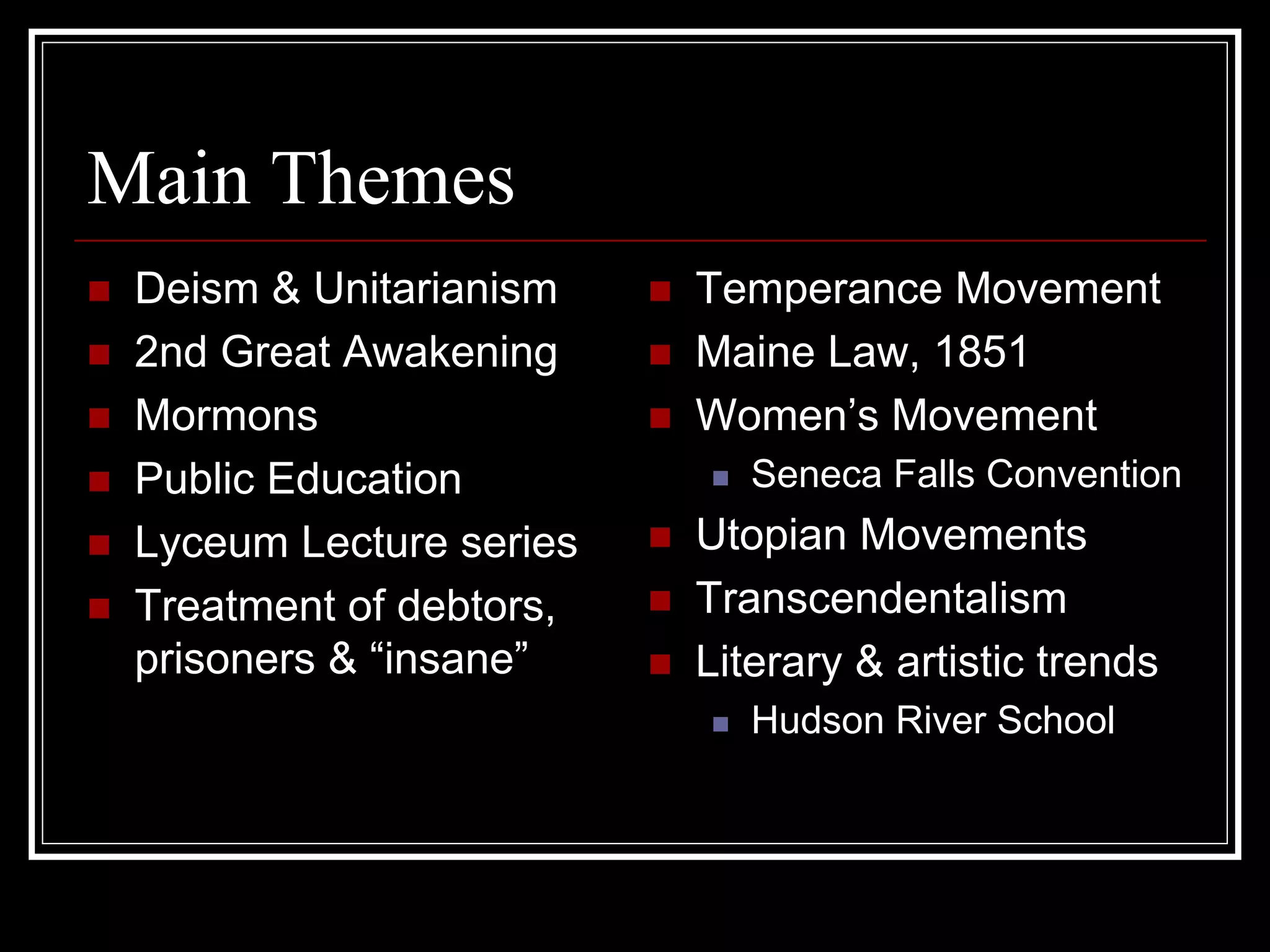


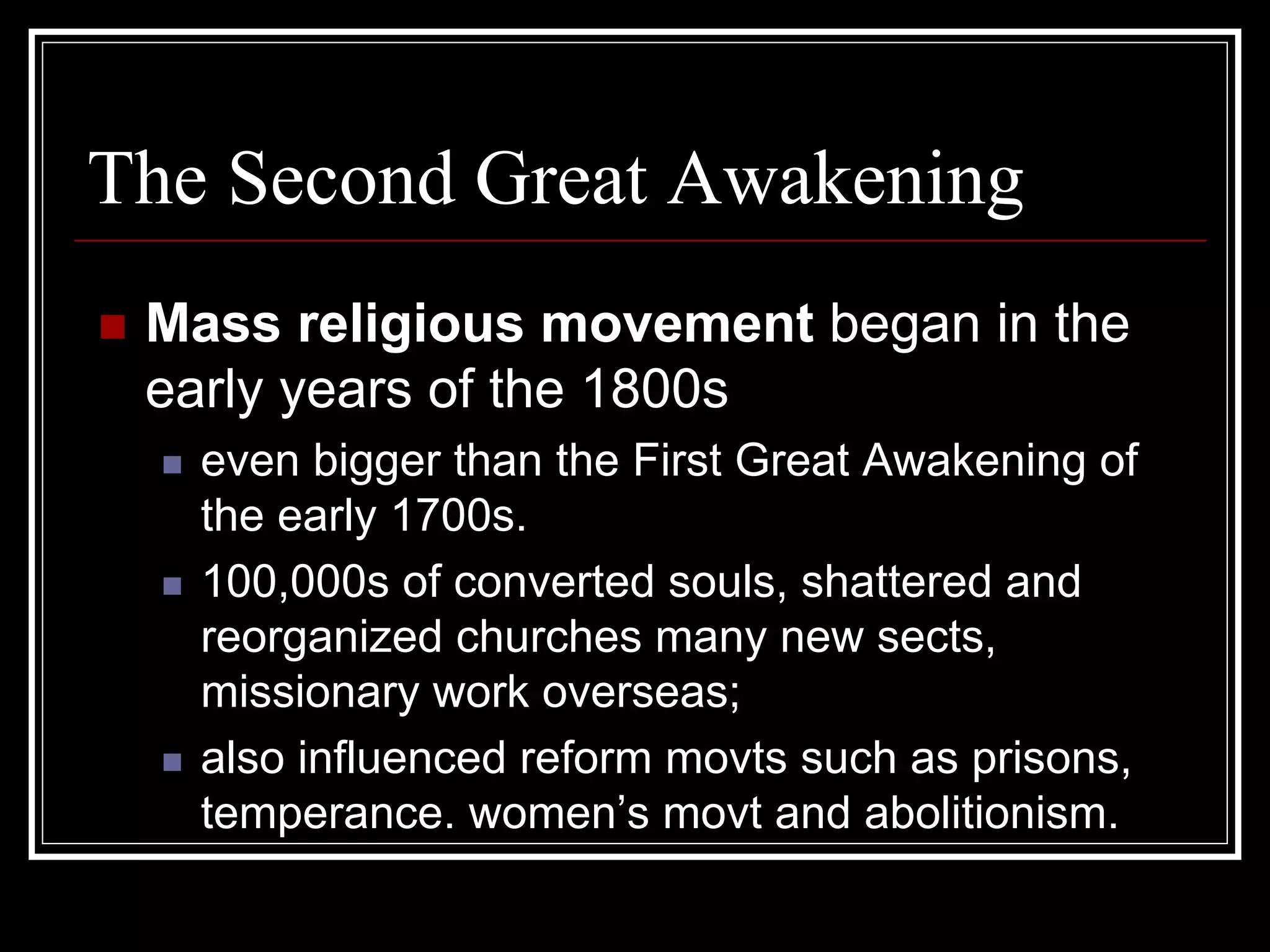
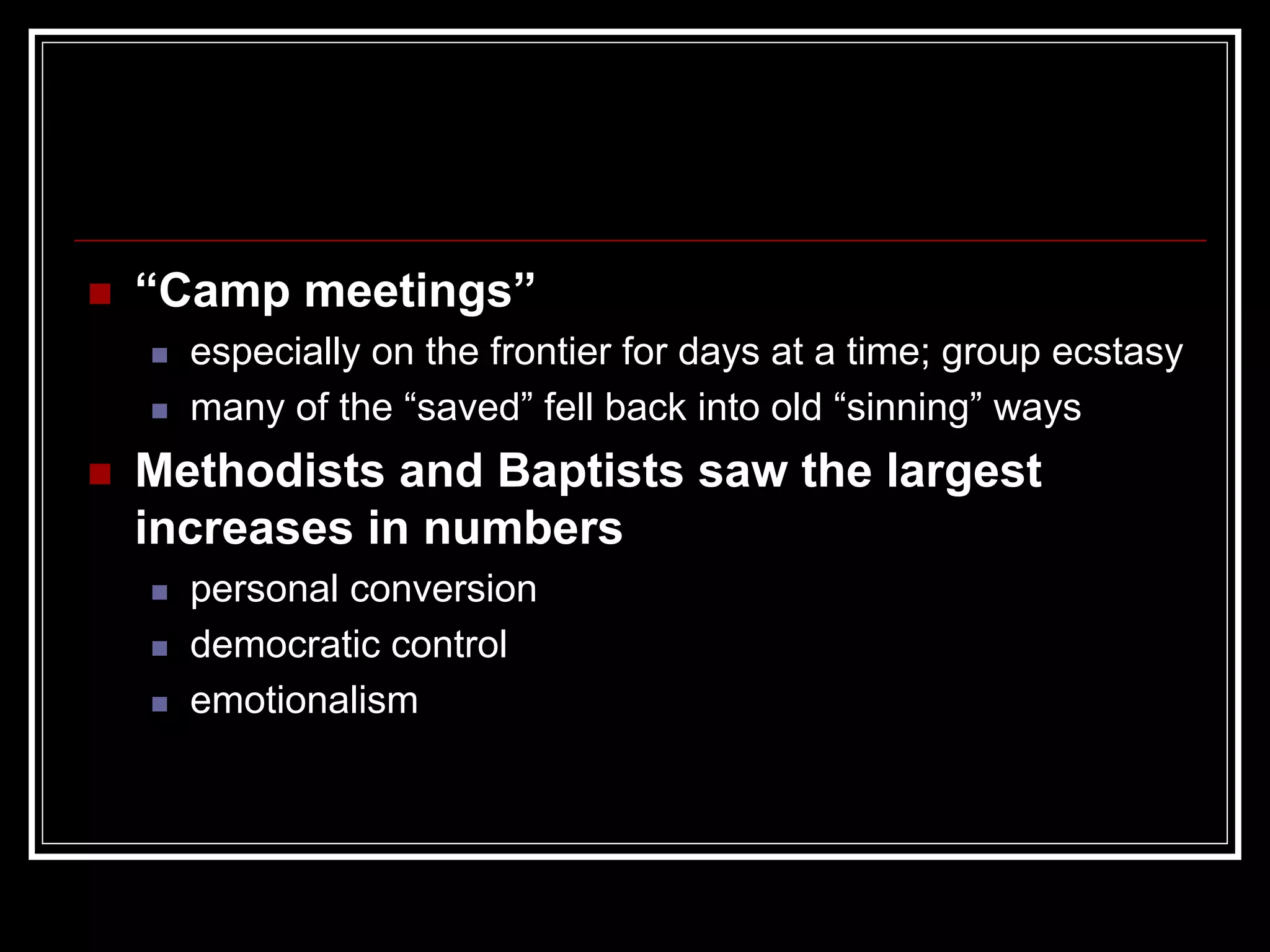


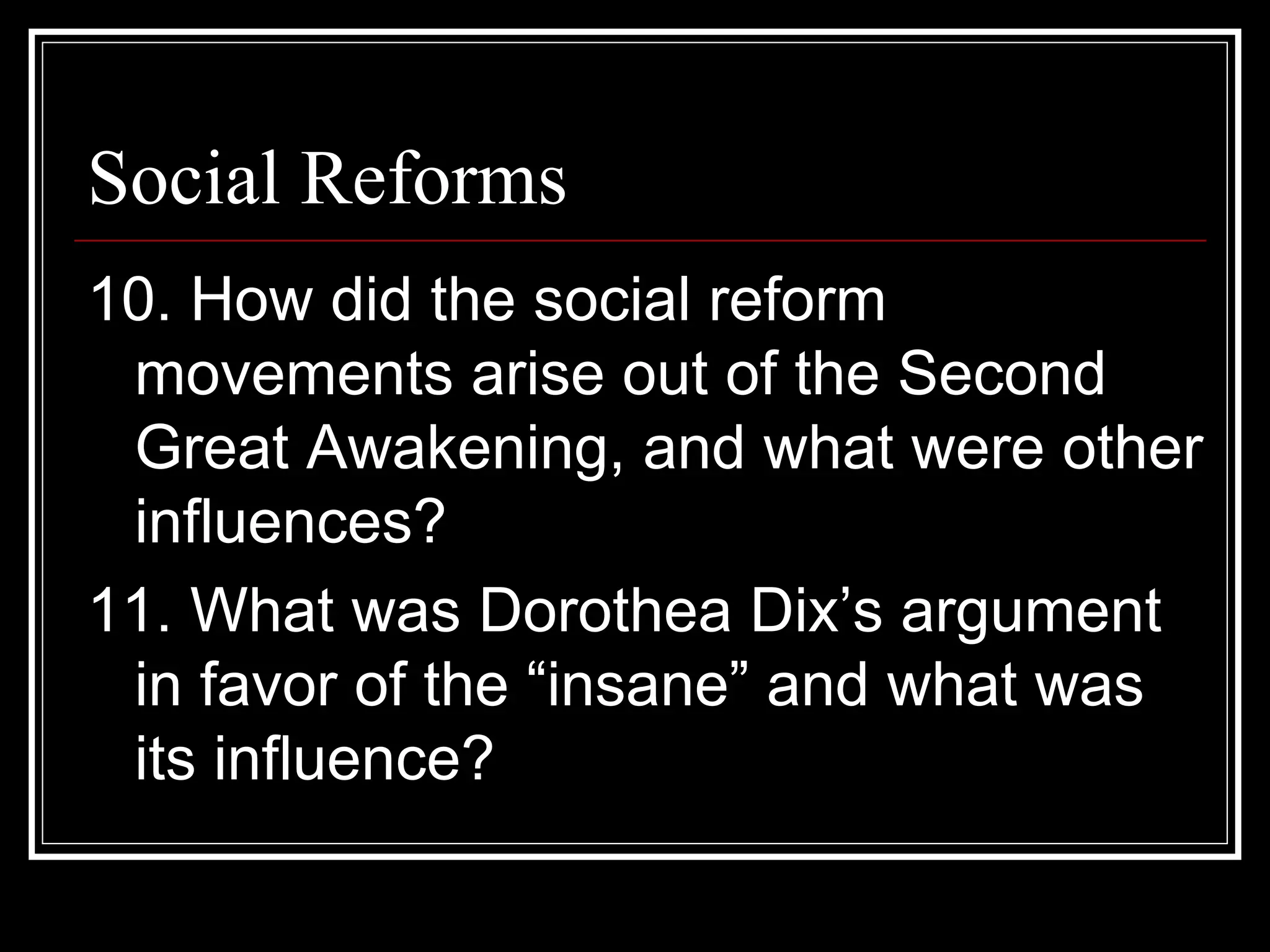








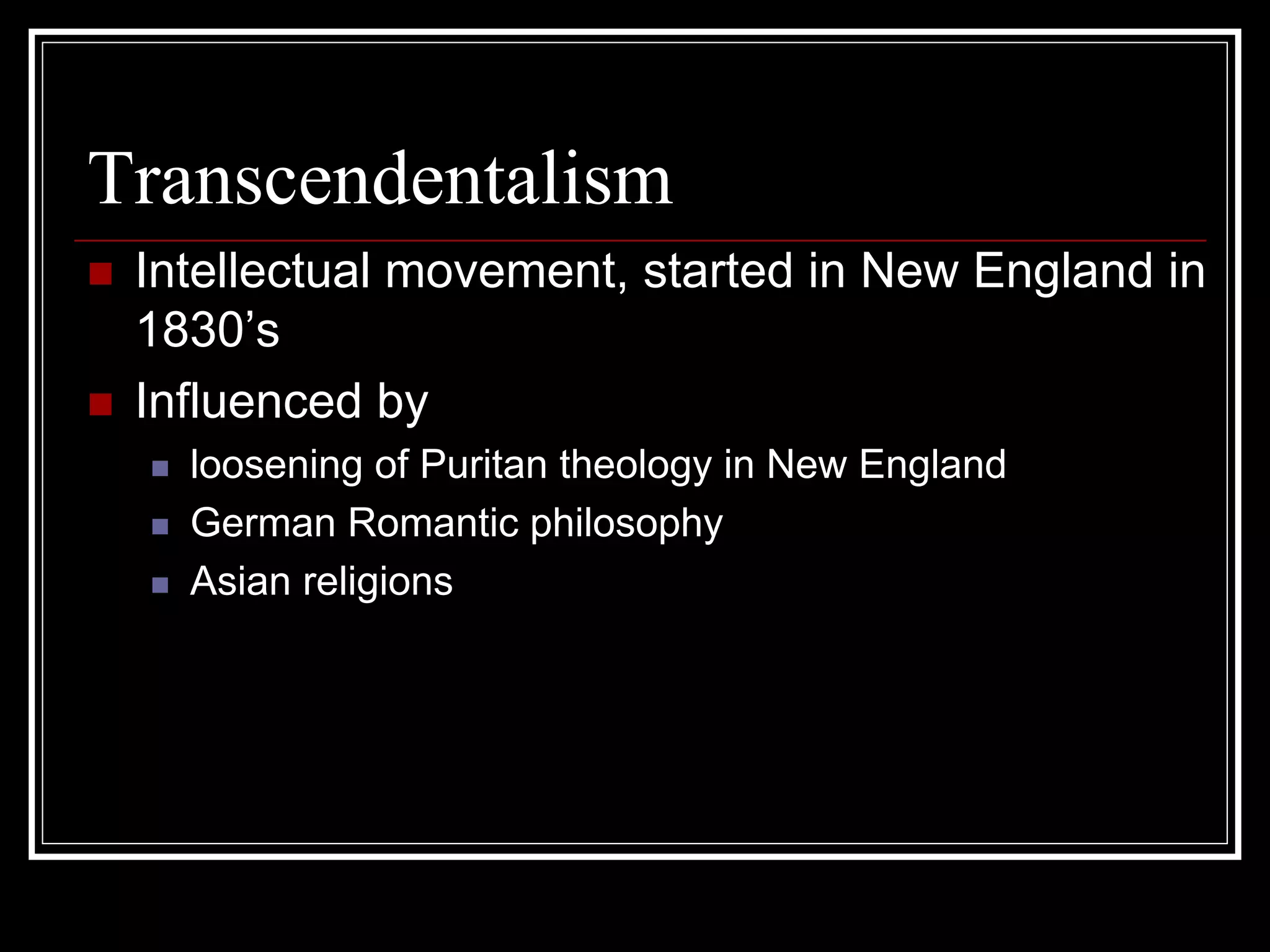
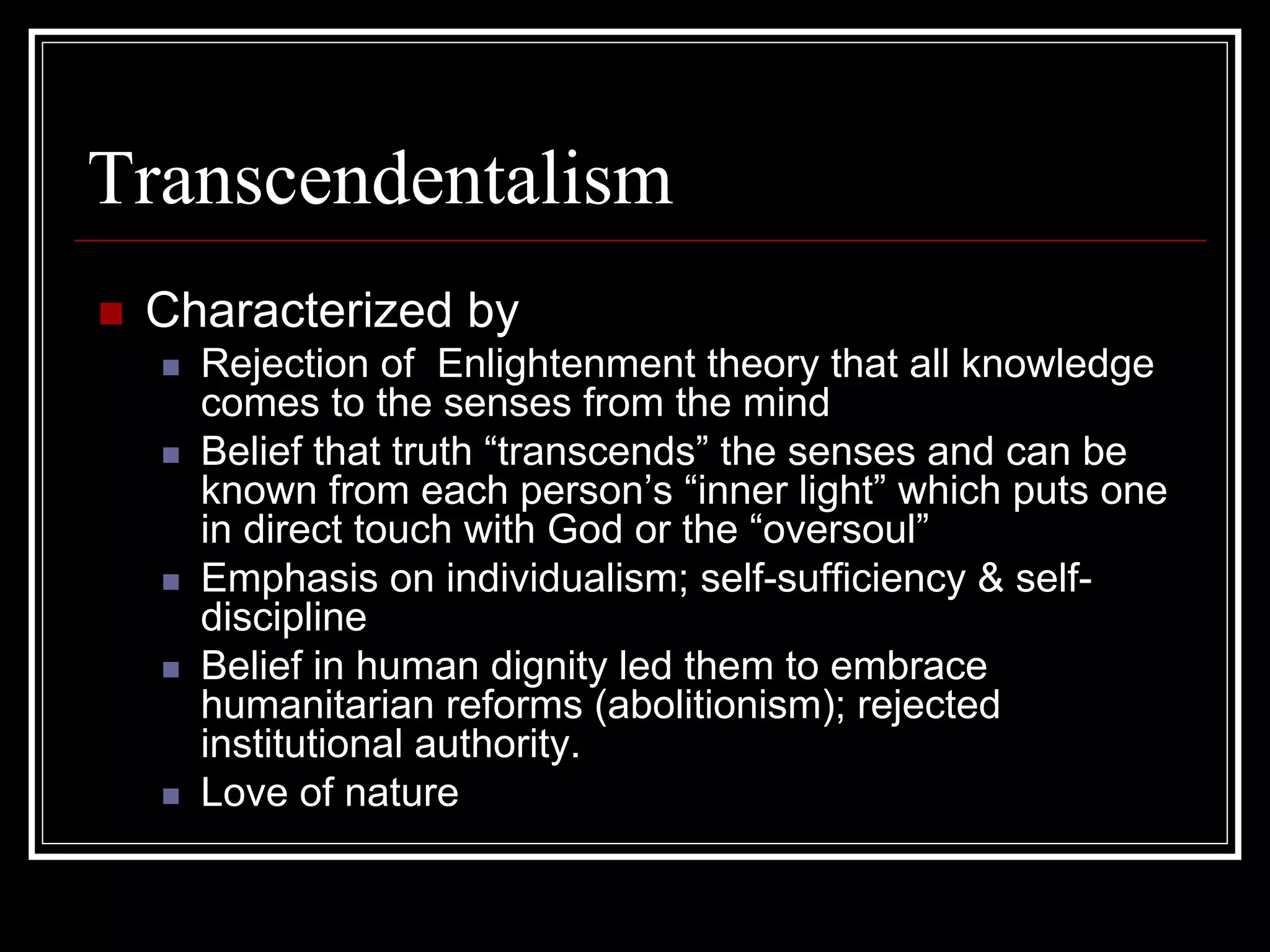

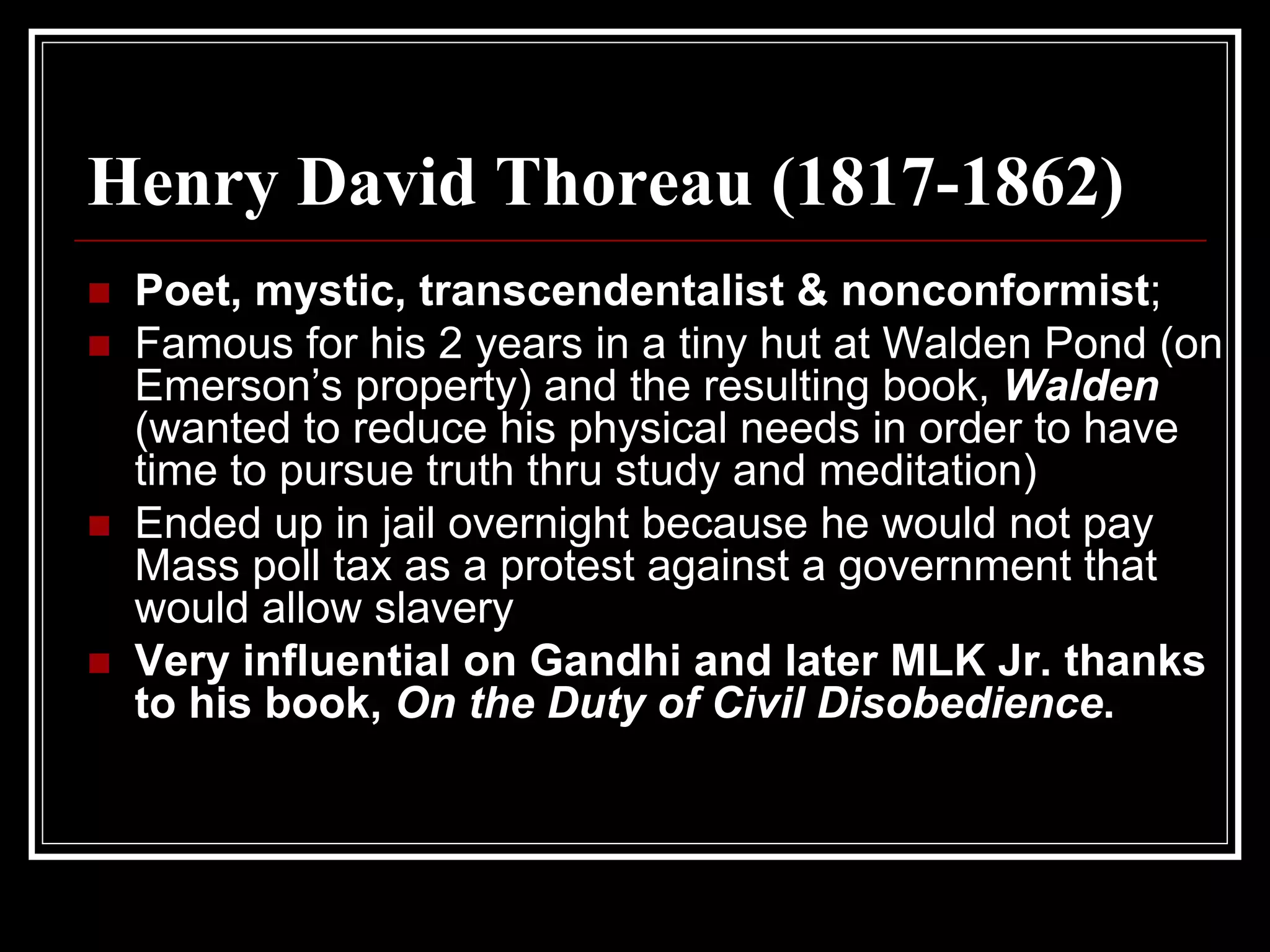


The document summarizes social, religious, and cultural developments in the United States between 1790-1860. Key points include: 1) The Second Great Awakening led to growth in Methodist and Baptist denominations and influenced social reform movements. Deism and Unitarianism also grew. 2) Reforms addressed issues like prisons, debtors, the mentally ill, temperance, and women's rights. Dorothea Dix advocated for humane treatment of the mentally ill. 3) The Transcendentalist movement, led by Ralph Waldo Emerson and Henry David Thoreau, rejected religious institutions and emphasized individualism, self-reliance, and a connection with nature.


