
PATRIOTISM .
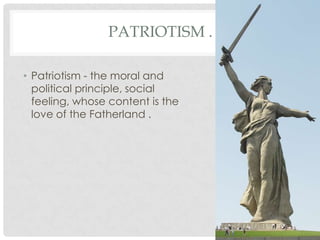
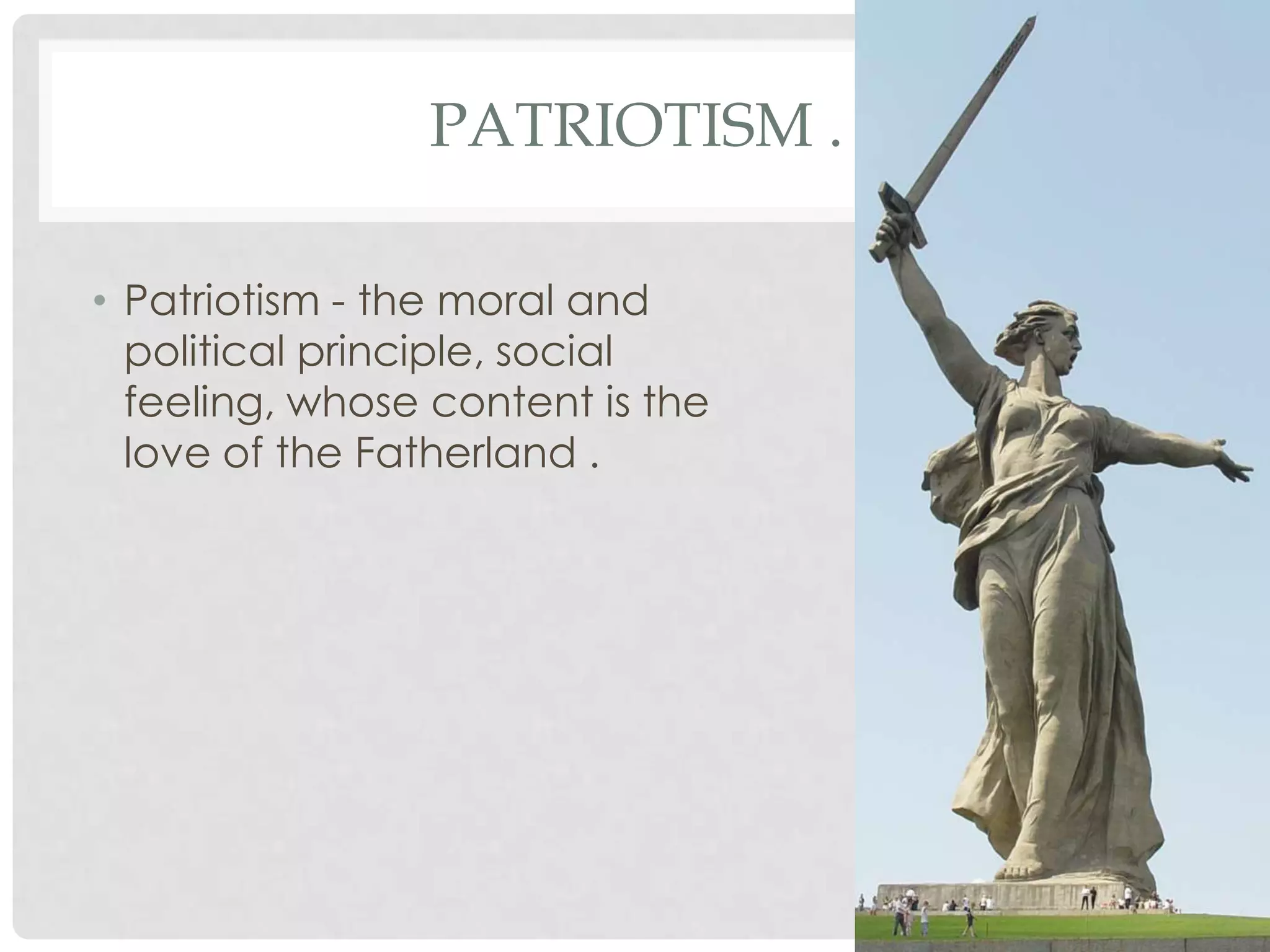
• Patriotism - the moral and
political principle, social
feeling, whose content is the
love of the Fatherland .
• Patriotism is formed in large territorial units organized
on the basis of social identity population
1) imperial patriotism - to maintain a sense of loyalty
to the empire and its government;
2) national patriotism - is of a sense of love for the
nation.
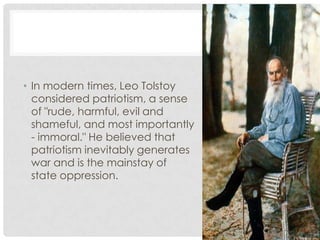
• In modern times, Leo Tolstoy
considered patriotism, a sense
of "rude, harmful, evil and
shameful, and most importantly
- immoral." He believed that
patriotism inevitably generates
war and is the mainstay of
state oppression.
COSMOPOLITISM .
• Cosmopolitanism - a cosmopolitan man of the
world) - the ideology of world citizenship that places
the interests of humanity as a whole above the
interests of individual nation or state, and considers
man as a free individual within the Earth.
• Cosmopolitanism originated in ancient Greece, the
idea of ​​world citizenship expressed Socrates .
• In the Middle Ages cosmopolitanism had a religious
character and viewed in an effort to create a
Catholic papal theocracy, but not developed in
theoretical terms.
• Revival of cosmopolitanism occurs in the XX century
in the wake of strong social upheavals associated
with the wars and revolutions
LASHIN VASILY .

Patriotism .

  • 1.
    PATRIOTISM . • Patriotism- the moral and political principle, social feeling, whose content is the love of the Fatherland .
  • 2.
    • Patriotism isformed in large territorial units organized on the basis of social identity population 1) imperial patriotism - to maintain a sense of loyalty to the empire and its government; 2) national patriotism - is of a sense of love for the nation.
  • 3.
    • In moderntimes, Leo Tolstoy considered patriotism, a sense of "rude, harmful, evil and shameful, and most importantly - immoral." He believed that patriotism inevitably generates war and is the mainstay of state oppression.
  • 4.
    COSMOPOLITISM . • Cosmopolitanism- a cosmopolitan man of the world) - the ideology of world citizenship that places the interests of humanity as a whole above the interests of individual nation or state, and considers man as a free individual within the Earth.
  • 5.
    • Cosmopolitanism originatedin ancient Greece, the idea of ​​world citizenship expressed Socrates . • In the Middle Ages cosmopolitanism had a religious character and viewed in an effort to create a Catholic papal theocracy, but not developed in theoretical terms. • Revival of cosmopolitanism occurs in the XX century in the wake of strong social upheavals associated with the wars and revolutions
  • 6.