COLLAPSIBLE TUBES :MATERIALS
SHUHAIBA. K
2ND YR MFT
Shuhaiba Backer
COLLAPSIBLE TUBE
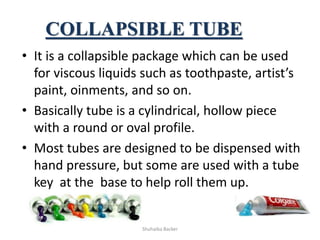
• It is a collapsible package which can be used
for viscous liquids such as toothpaste, artist’s
paint, oinments, and so on.
• Basically tube is a cylindrical, hollow piece
with a round or oval profile.
• Most tubes are designed to be dispensed with
hand pressure, but some are used with a tube
key at the base to help roll them up.
Shuhaiba Backer
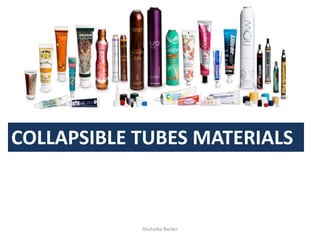
COLLAPSIBLE TUBES MATERIALS
Shuhaiba Backer
ALUMINIUM
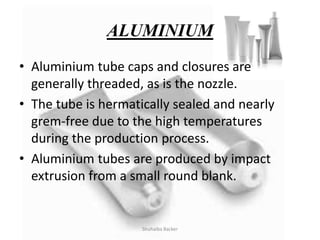
• Aluminium tube caps and closures are
generally threaded, as is the nozzle.
• The tube is hermatically sealed and nearly
grem-free due to the high temperatures
during the production process.
• Aluminium tubes are produced by impact
extrusion from a small round blank.
Shuhaiba Backer
• Designs can be printed on to the tube using
wet-in-wet offset printing method.
• The filled content can be squeezed out by
finger pressure.
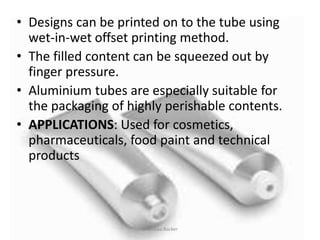
• Aluminium tubes are especially suitable for
the packaging of highly perishable contents.
• APPLICATIONS: Used for cosmetics,
pharmaceuticals, food paint and technical
products
Shuhaiba Backer
Shuhaiba Backer
PLASTIC
• Tubes can also be produced in plastic, most
commonly polyethylene.
• Plastic tubes are popular for cosmetics such
as hand creams, and also some foodstuffs.
• The plastic tube retains its shape after each
squeeze unlike laminate tubes such as
toothpaste tubes.
Shuhaiba Backer
• Plastic tubes can be highly decorated or have a
special additive such as soft touch to make the
tube more appealing during use or at the point
of sale.
• Plastic tubes are produced by extrusion.
• Tube printing using specialized printing
machines such as silk screen printing applies
the desired decoration.
• Multi- layer plastic tubes have become
increasingly popular; they isolate the contents
better from the air, allowing them to be used
for a wider range of products, such as food.Shuhaiba Backer
Shuhaiba Backer
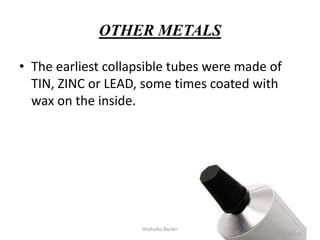
OTHER METALS
• The earliest collapsible tubes were made of
TIN, ZINC or LEAD, some times coated with
wax on the inside.
Shuhaiba Backer
Shuhaiba Backer

Packaging material : collapsible tubes

  • 1.
    COLLAPSIBLE TUBES :MATERIALS SHUHAIBA.K 2ND YR MFT Shuhaiba Backer
  • 2.
    COLLAPSIBLE TUBE • Itis a collapsible package which can be used for viscous liquids such as toothpaste, artist’s paint, oinments, and so on. • Basically tube is a cylindrical, hollow piece with a round or oval profile. • Most tubes are designed to be dispensed with hand pressure, but some are used with a tube key at the base to help roll them up. Shuhaiba Backer
  • 3.
  • 4.
    ALUMINIUM • Aluminium tubecaps and closures are generally threaded, as is the nozzle. • The tube is hermatically sealed and nearly grem-free due to the high temperatures during the production process. • Aluminium tubes are produced by impact extrusion from a small round blank. Shuhaiba Backer
  • 5.
    • Designs canbe printed on to the tube using wet-in-wet offset printing method. • The filled content can be squeezed out by finger pressure. • Aluminium tubes are especially suitable for the packaging of highly perishable contents. • APPLICATIONS: Used for cosmetics, pharmaceuticals, food paint and technical products Shuhaiba Backer
  • 6.
  • 7.
    PLASTIC • Tubes canalso be produced in plastic, most commonly polyethylene. • Plastic tubes are popular for cosmetics such as hand creams, and also some foodstuffs. • The plastic tube retains its shape after each squeeze unlike laminate tubes such as toothpaste tubes. Shuhaiba Backer
  • 8.
    • Plastic tubescan be highly decorated or have a special additive such as soft touch to make the tube more appealing during use or at the point of sale. • Plastic tubes are produced by extrusion. • Tube printing using specialized printing machines such as silk screen printing applies the desired decoration. • Multi- layer plastic tubes have become increasingly popular; they isolate the contents better from the air, allowing them to be used for a wider range of products, such as food.Shuhaiba Backer
  • 9.
  • 10.
    OTHER METALS • Theearliest collapsible tubes were made of TIN, ZINC or LEAD, some times coated with wax on the inside. Shuhaiba Backer
  • 11.