General introduction
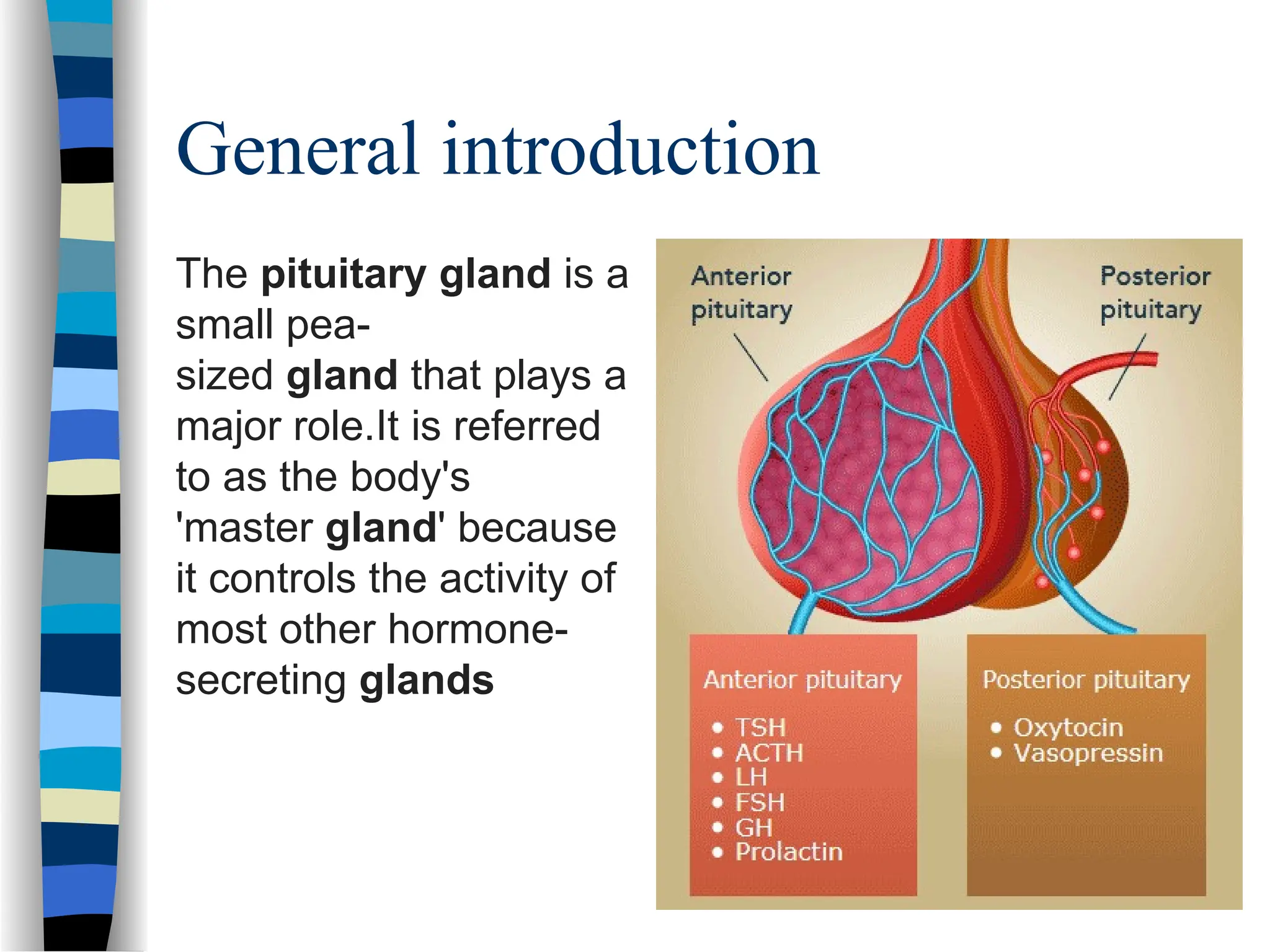
The pituitarygland is a
small pea-
sized gland that plays a
major role.It is referred
to as the body's
'master gland' because
it controls the activity of
most other hormone-
secreting glands
3.
Cont;
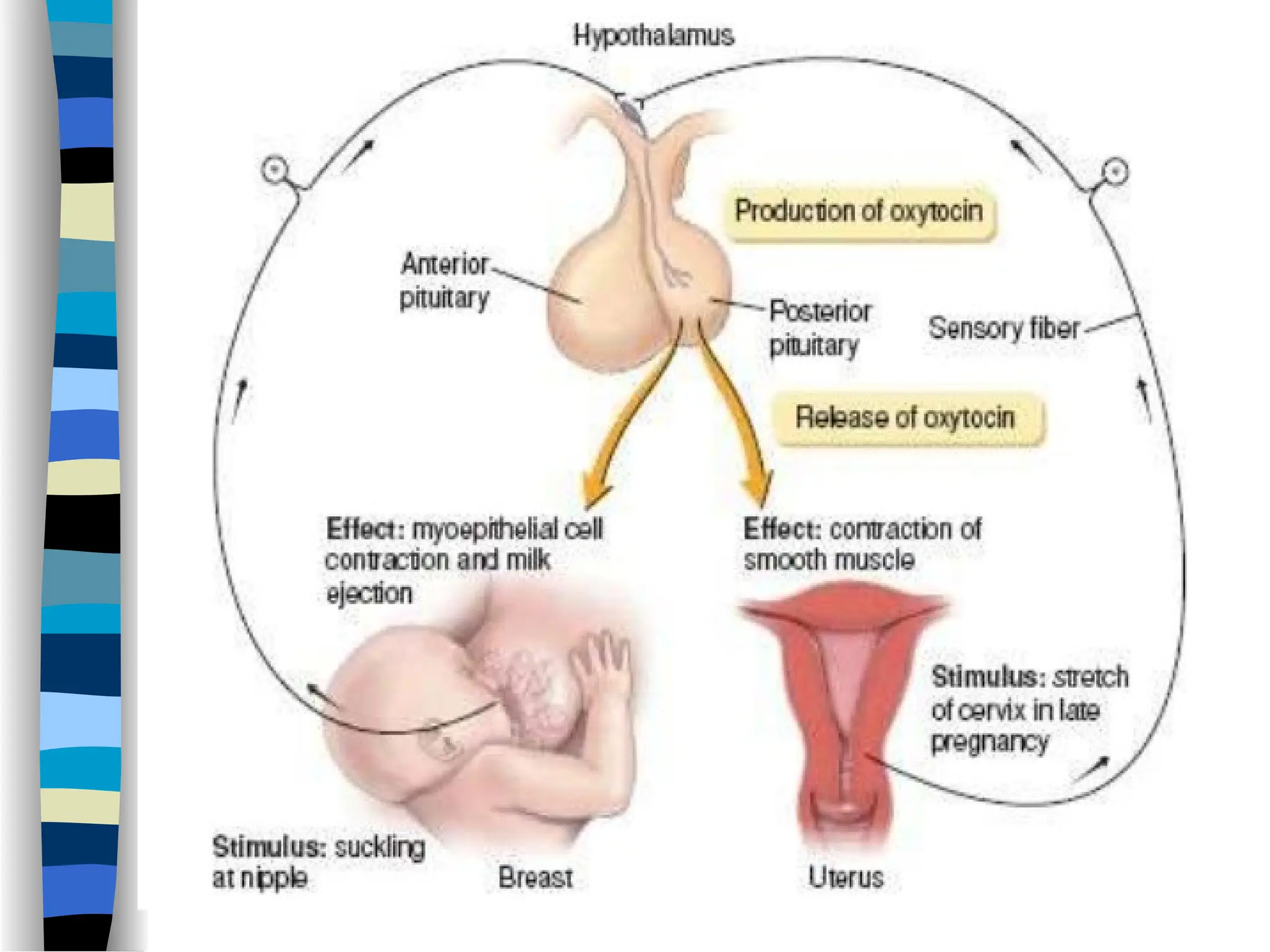
• Oxytocin issecreted mainly by paraventricular nucleus and
supraoptic nuclei.
• Transported from hypothalamus to posterior pituitary
through nerve fiber of hypothalamus hypophyseal tract.
• It stores in nerve endings.
• When stimuli reach the posterior pituitary from
hypothalamus oxytocin is released in blood
• Secreted in both males and females.
• Can not re-enter in to brain because it can not cross blood
brain barrier.
4.
Action
(in females)
Onmammary glands:
1. Cause ejection of milk from mammary glands.
2. Cause contraction of myoepithilial cells and flow of milk
from alveoli of mammary glands to the exterior through
duct system.
3. The process by which milk is ejected from alveoli is
called milk ejection reflex.(one of neuro endocrine
reflexes).
On uterus:
It affects differently on pregnant uterus and on non
pregnant uterus.
6.
Cont;
On pregnantuterus:
1. Throughout the period of pregnancy oxytocin
secretion is inhibited by both estrogen and
progesterone.
2. At the end of pregnancy the secretions of both
hormones is decreased and suddenly the secretion of
oxytocin increases.
3. It cause contraction of uterus and help in expulsion of
fetus by positive feedback reflex.
On non pregnant uterus:
1. It facilitate the transport of sperms from the female
genital tract to fallopian tubes by producing uterine
contraction during the sexual intercourse.
7.
Action
(in males)
Inmales release of oxytocin increase during
ejaculation.
It facilitates release of sperms in to urethra by
causing contraction of smooth muscle fibers in
reproductive tract.
8.
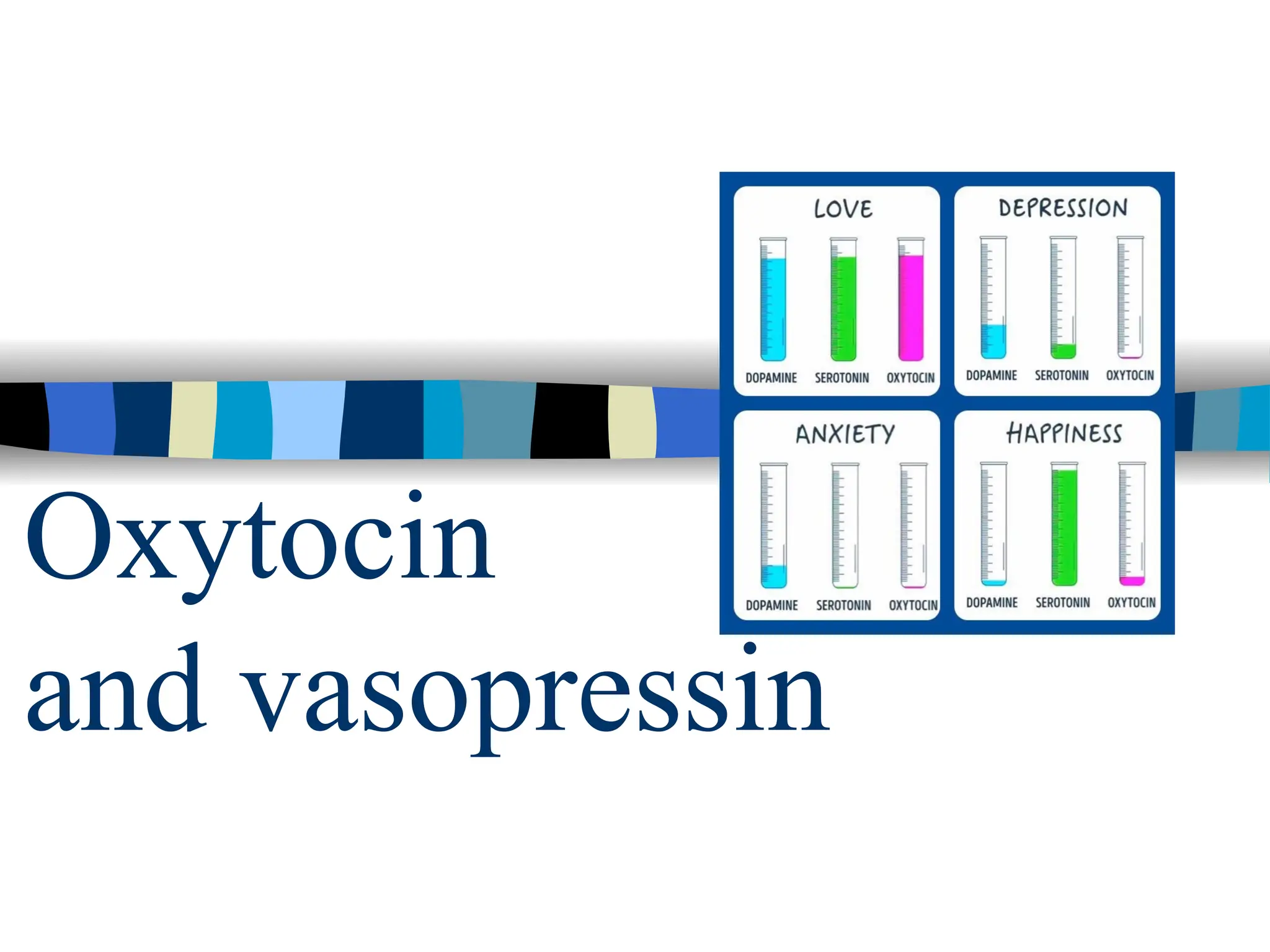
Oxytocin
(the multitasking lovehormone)
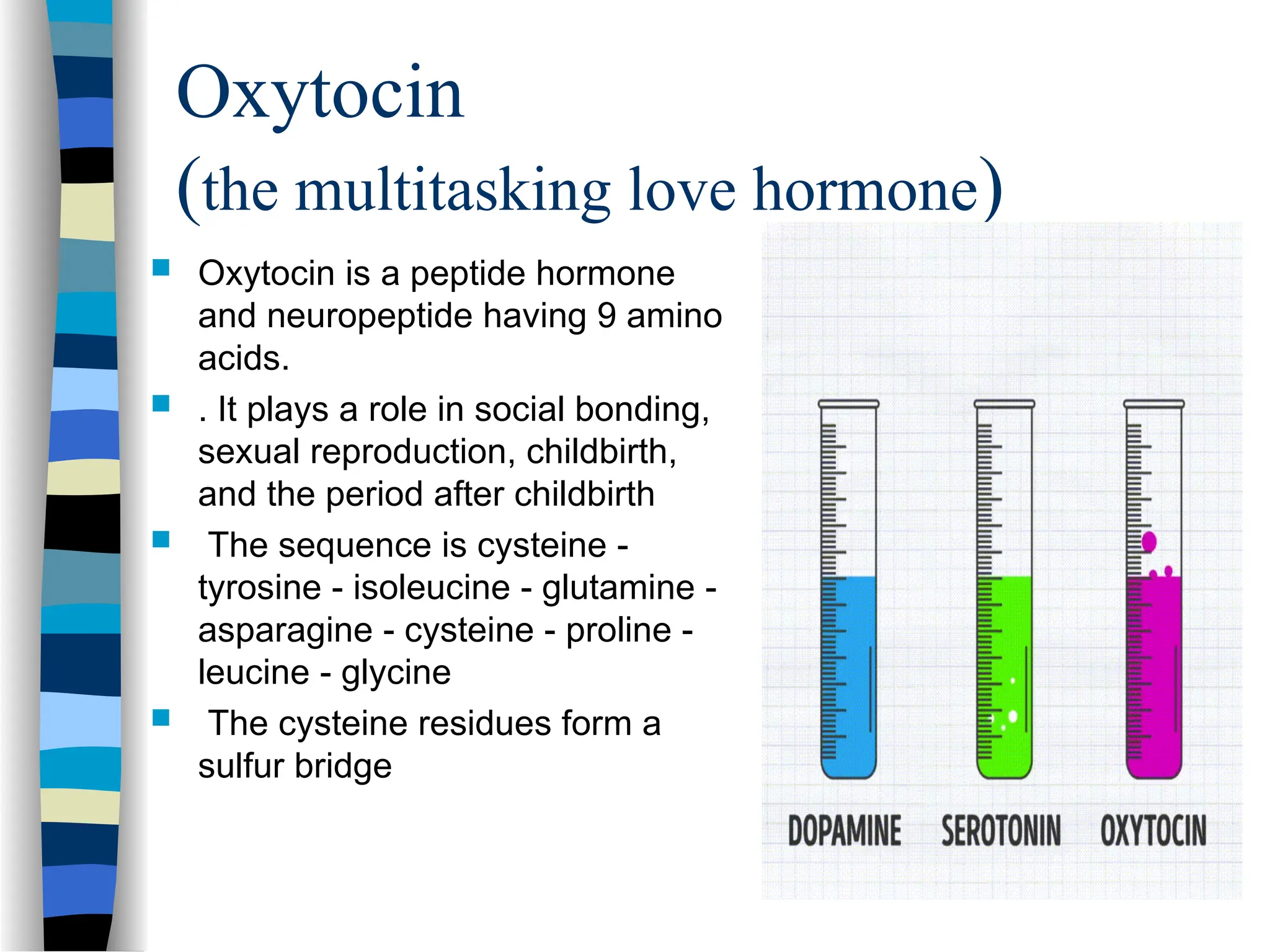
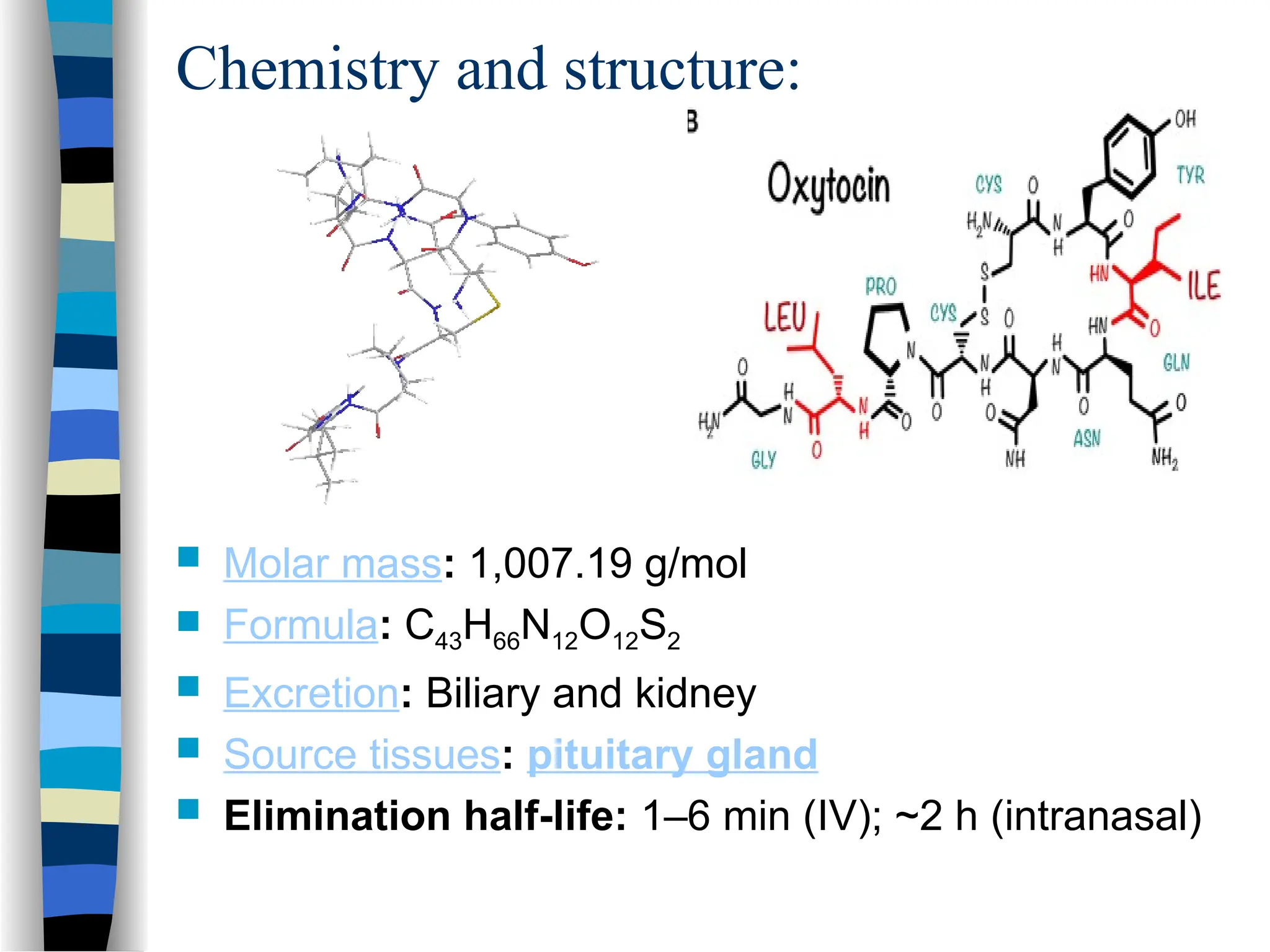
Oxytocin is a peptide hormone
and neuropeptide having 9 amino
acids.
. It plays a role in social bonding,
sexual reproduction, childbirth,
and the period after childbirth
The sequence is cysteine -
tyrosine - isoleucine - glutamine -
asparagine - cysteine - proline -
leucine - glycine
The cysteine residues form a
sulfur bridge
Chemistry and structure:
Molar mass: 1,007.19 g/mol
Formula: C43H66N12O12S2
Excretion: Biliary and kidney
Source tissues: pituitary gland
Elimination half-life: 1–6 min (IV); ~2 h (intranasal)
11.
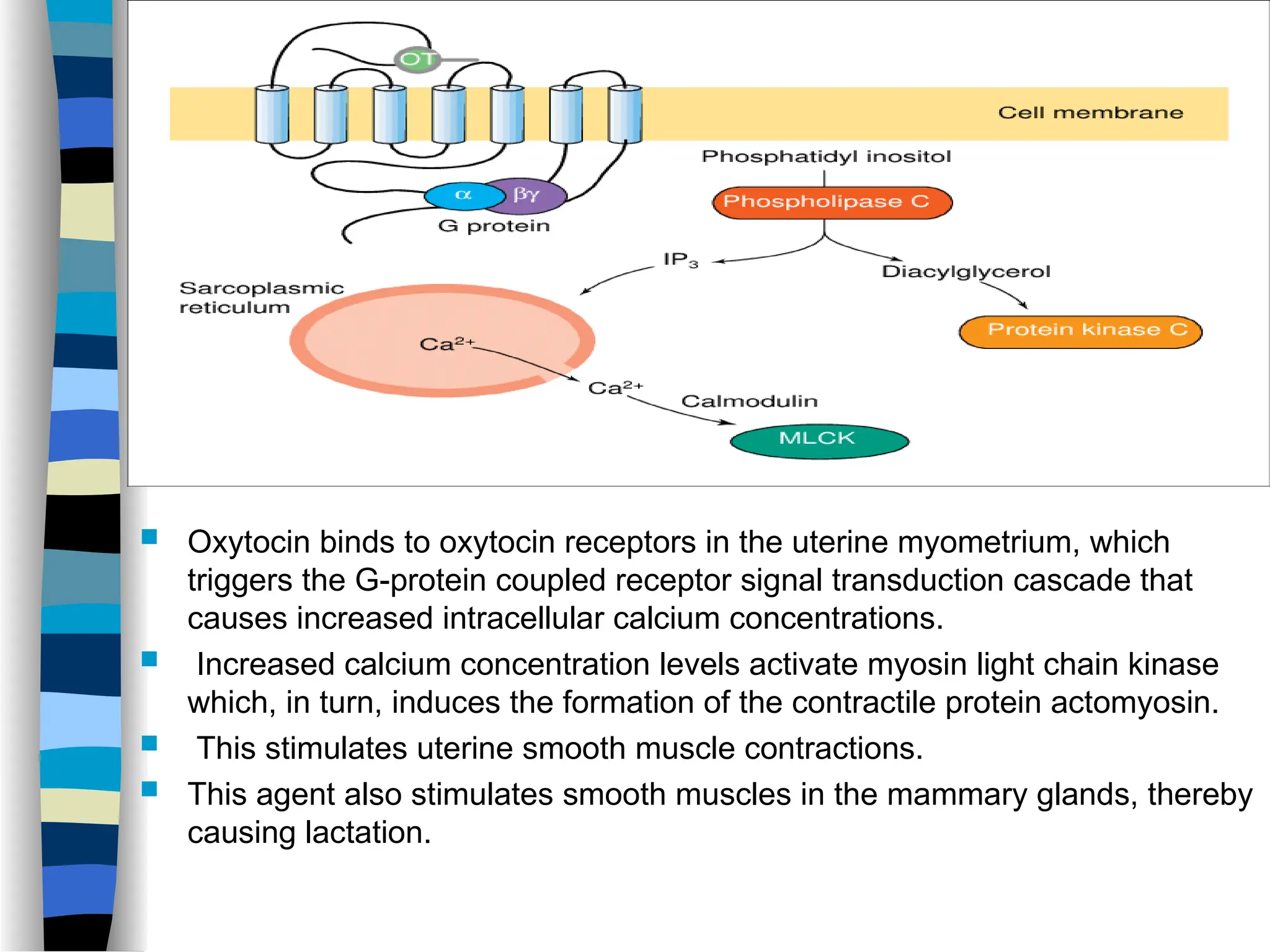
Oxytocin bindsto oxytocin receptors in the uterine myometrium, which
triggers the G-protein coupled receptor signal transduction cascade that
causes increased intracellular calcium concentrations.
Increased calcium concentration levels activate myosin light chain kinase
which, in turn, induces the formation of the contractile protein actomyosin.
This stimulates uterine smooth muscle contractions.
This agent also stimulates smooth muscles in the mammary glands, thereby
causing lactation.
12.
Adverse effects:
Oxytocinis relatively safe when used at recommended
doses. Potential side effects include:
Central nervous system: Subarachnoid hemorrhage,
seizures;
Cardiovascular: Increased heart rate, blood
pressure, systemic venous return, cardiac output, and
arrhythmias
Genitourinary: Impaired uterine blood flow, pelvic
hematoma, tetanic uterine contractions, uterine
rupture, postpartum hemorrhage
Vasopressin
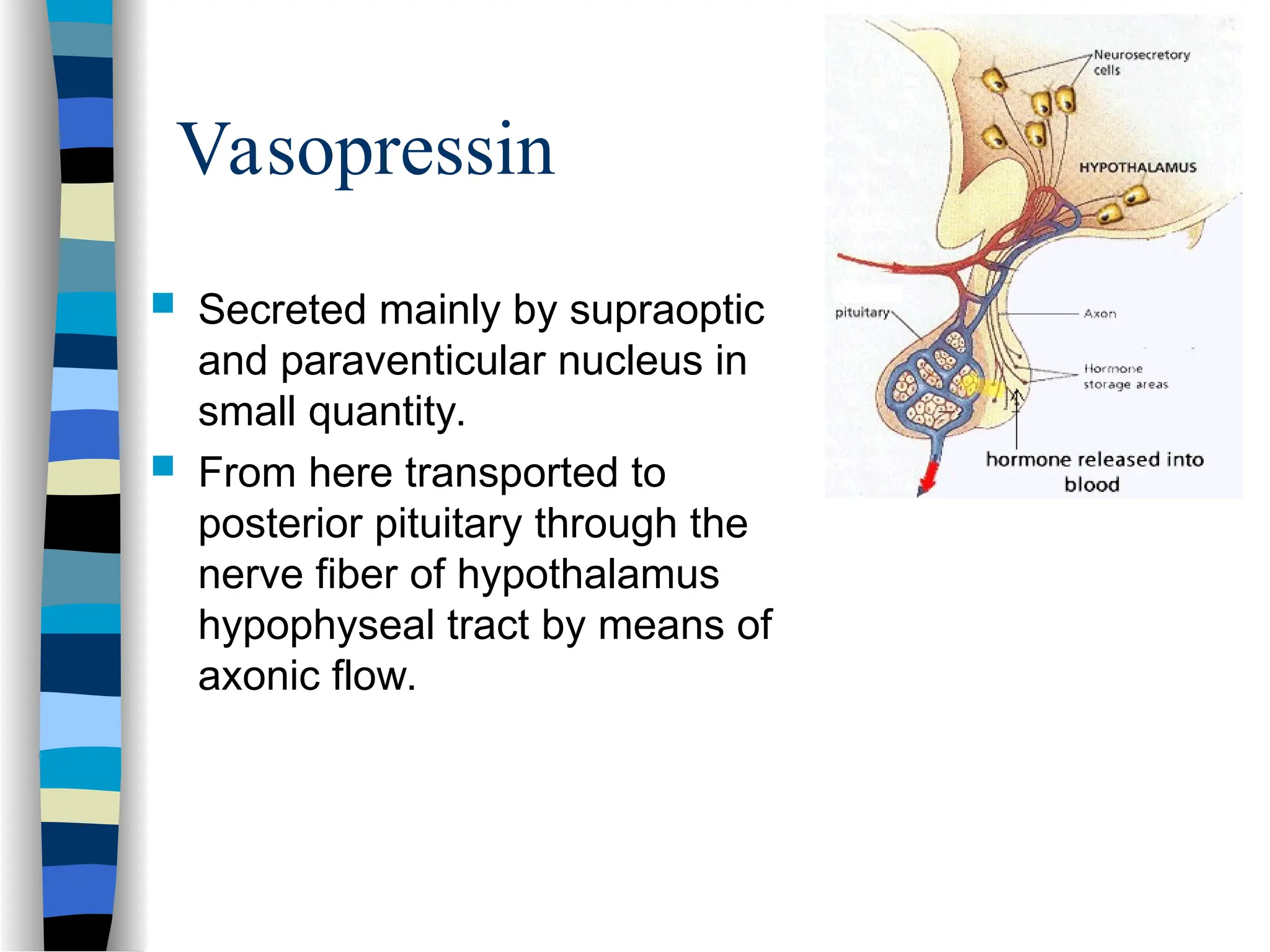
Secreted mainlyby supraoptic
and paraventicular nucleus in
small quantity.
From here transported to
posterior pituitary through the
nerve fiber of hypothalamus
hypophyseal tract by means of
axonic flow.
15.
Actions
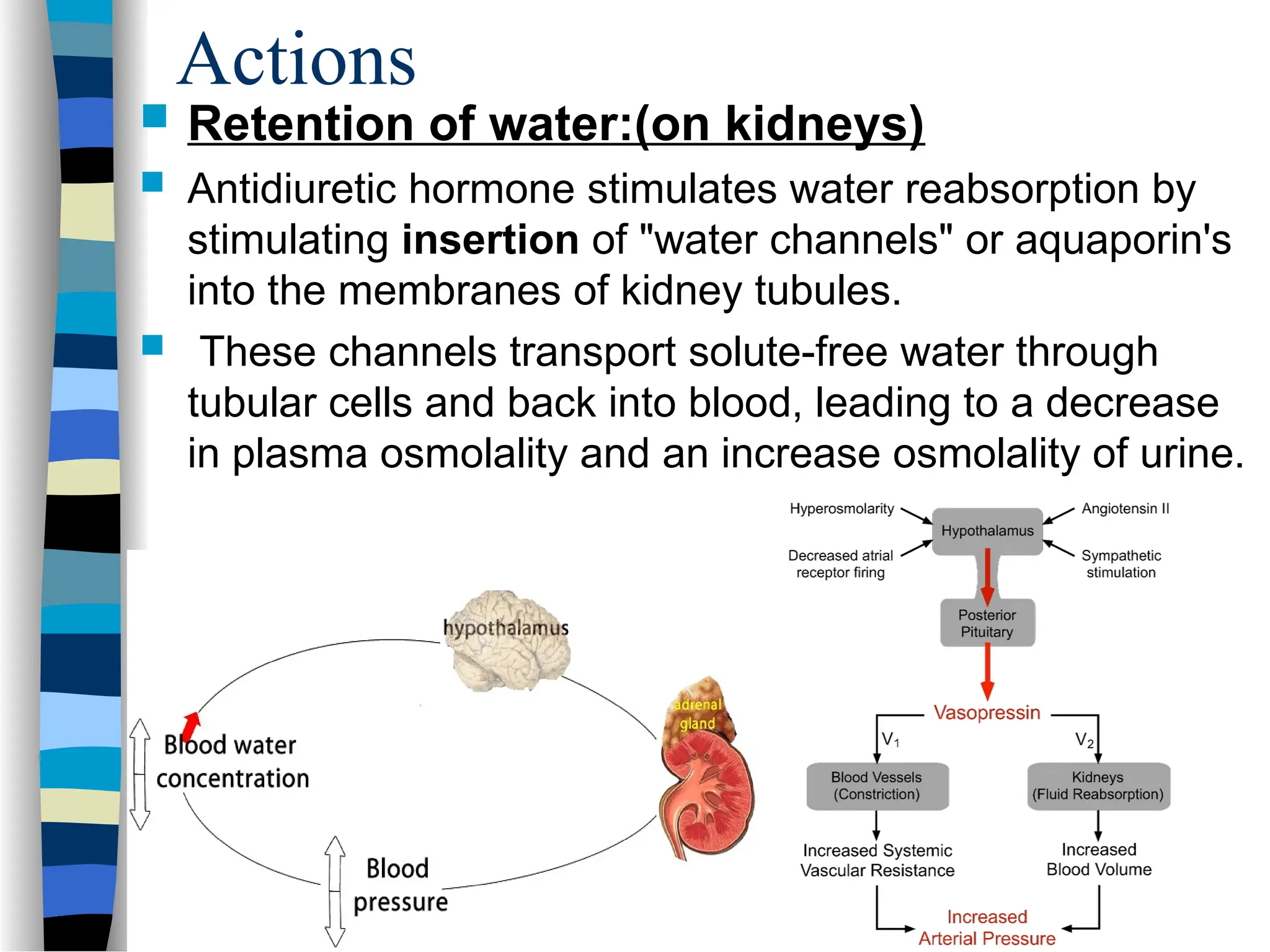
Retention ofwater:(on kidneys)
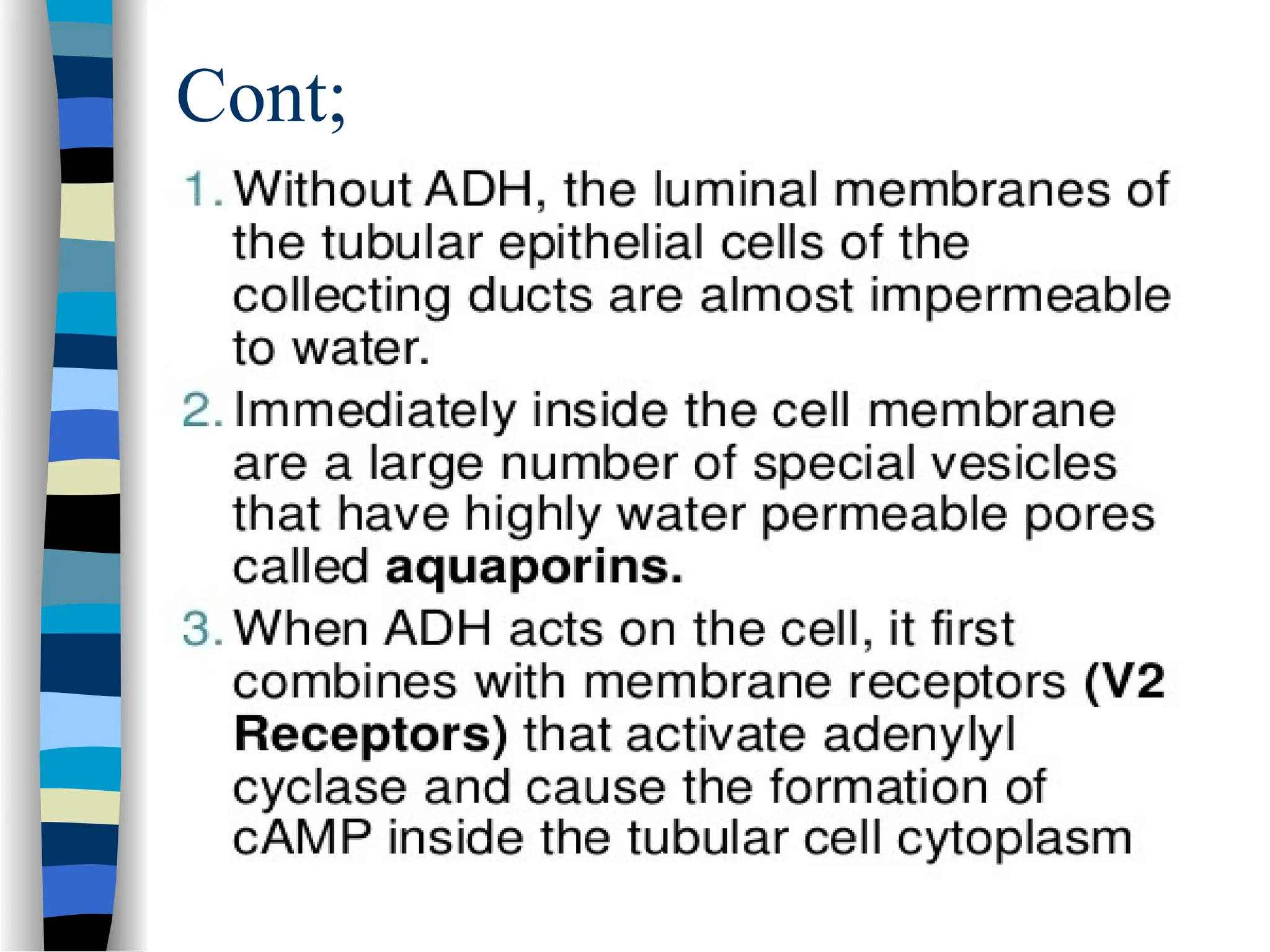
Antidiuretic hormone stimulates water reabsorption by
stimulating insertion of "water channels" or aquaporin's
into the membranes of kidney tubules.
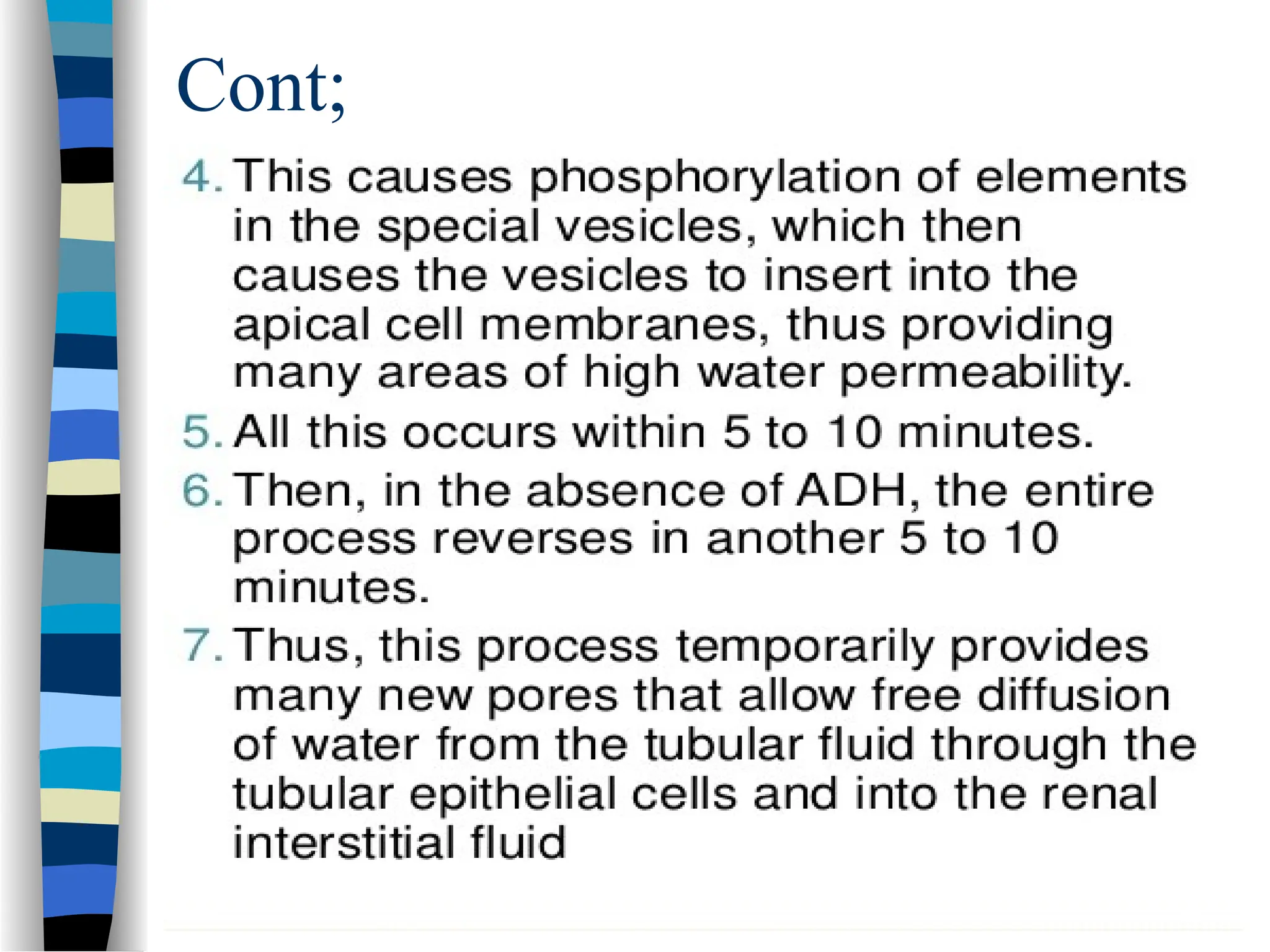
These channels transport solute-free water through
tubular cells and back into blood, leading to a decrease
in plasma osmolality and an increase osmolality of urine.
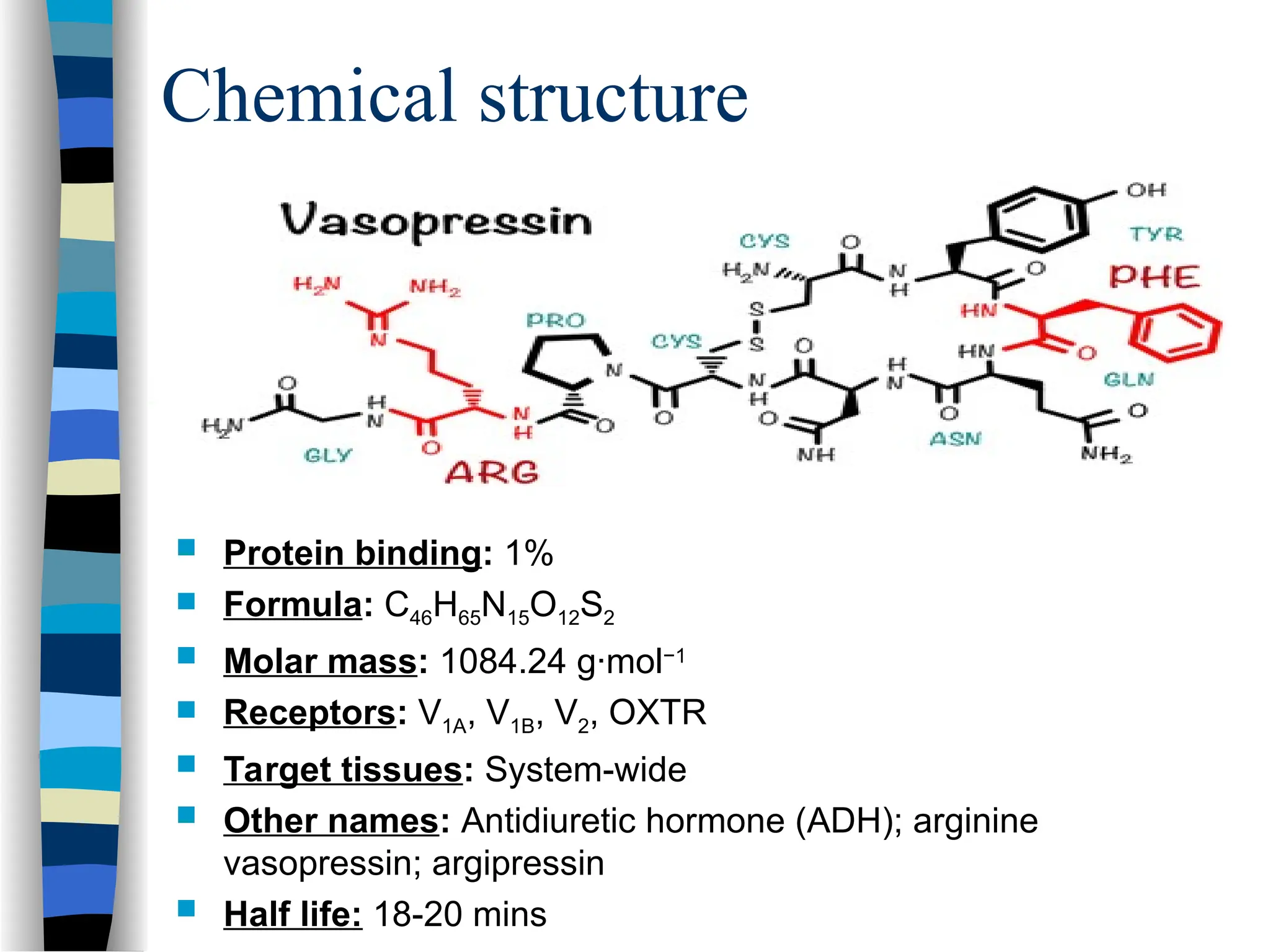
Vasopressin isa peptide hormone.
The vasopressins are peptides consisting of nine amino
acids (nonapeptides).
The amino acid sequence of arginine vasopressin is
Cys-Tyr-Phe-Gln-Asn-Cys-Pro-Arg-Gly, with the cysteine
residues forming a sulfur bridge.
Vasopressin, also called antidiuretic hormone, arginine
vasopressin or argipressin, is a hormone synthesized as
a peptide prohormone in neurons in the hypothalamus,
and is converted to AVP.
Vasopressin
SAR
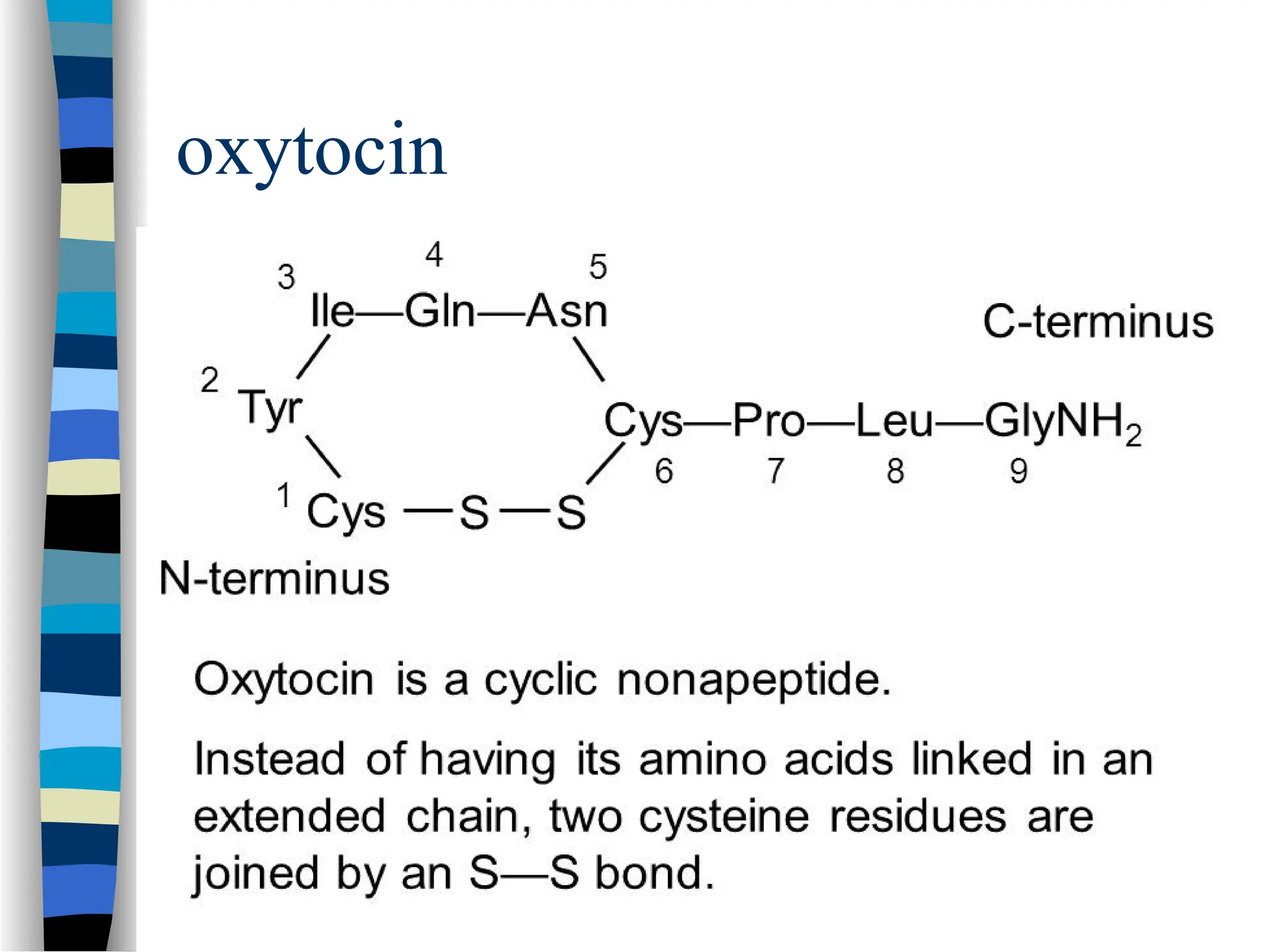
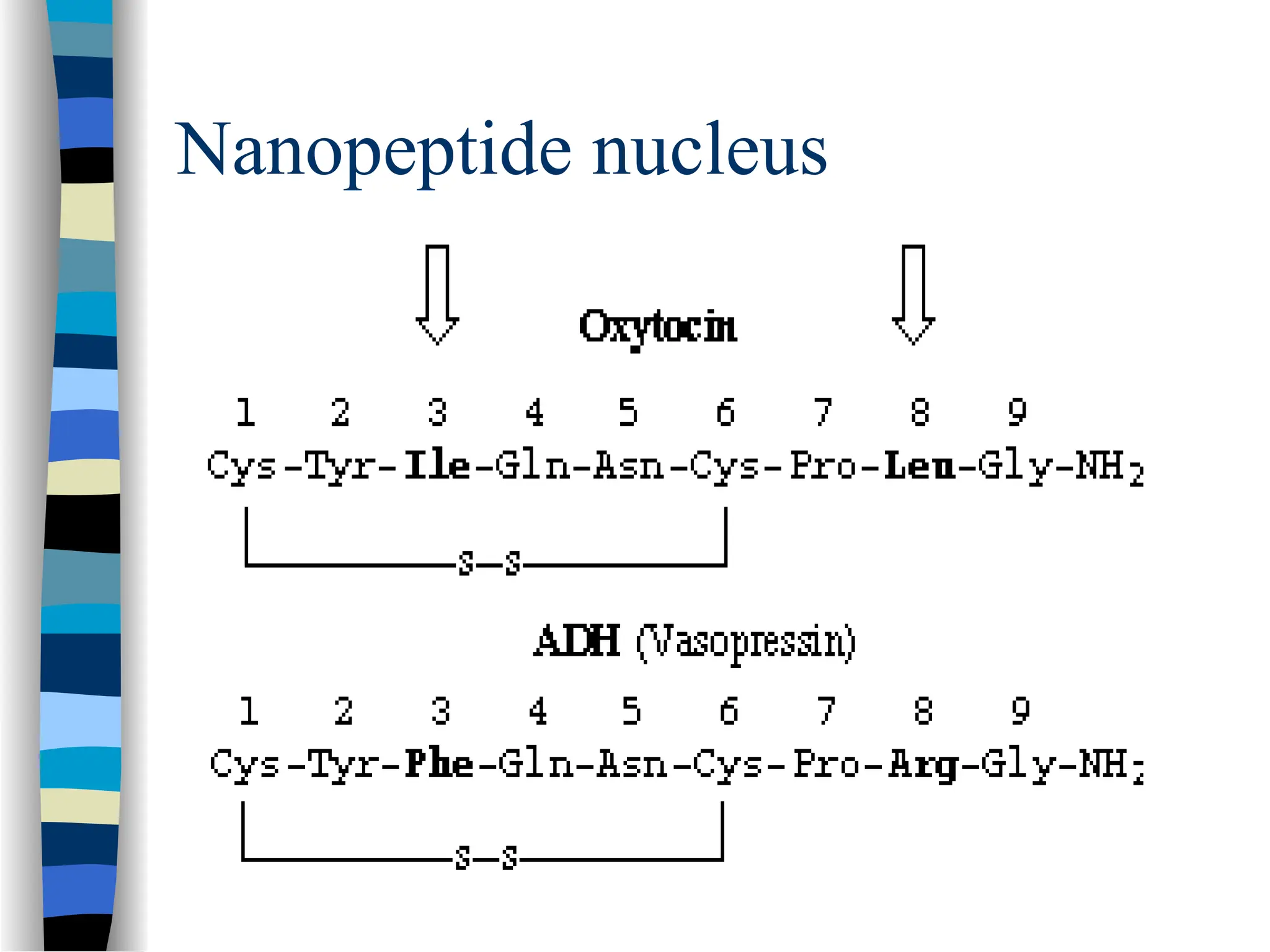
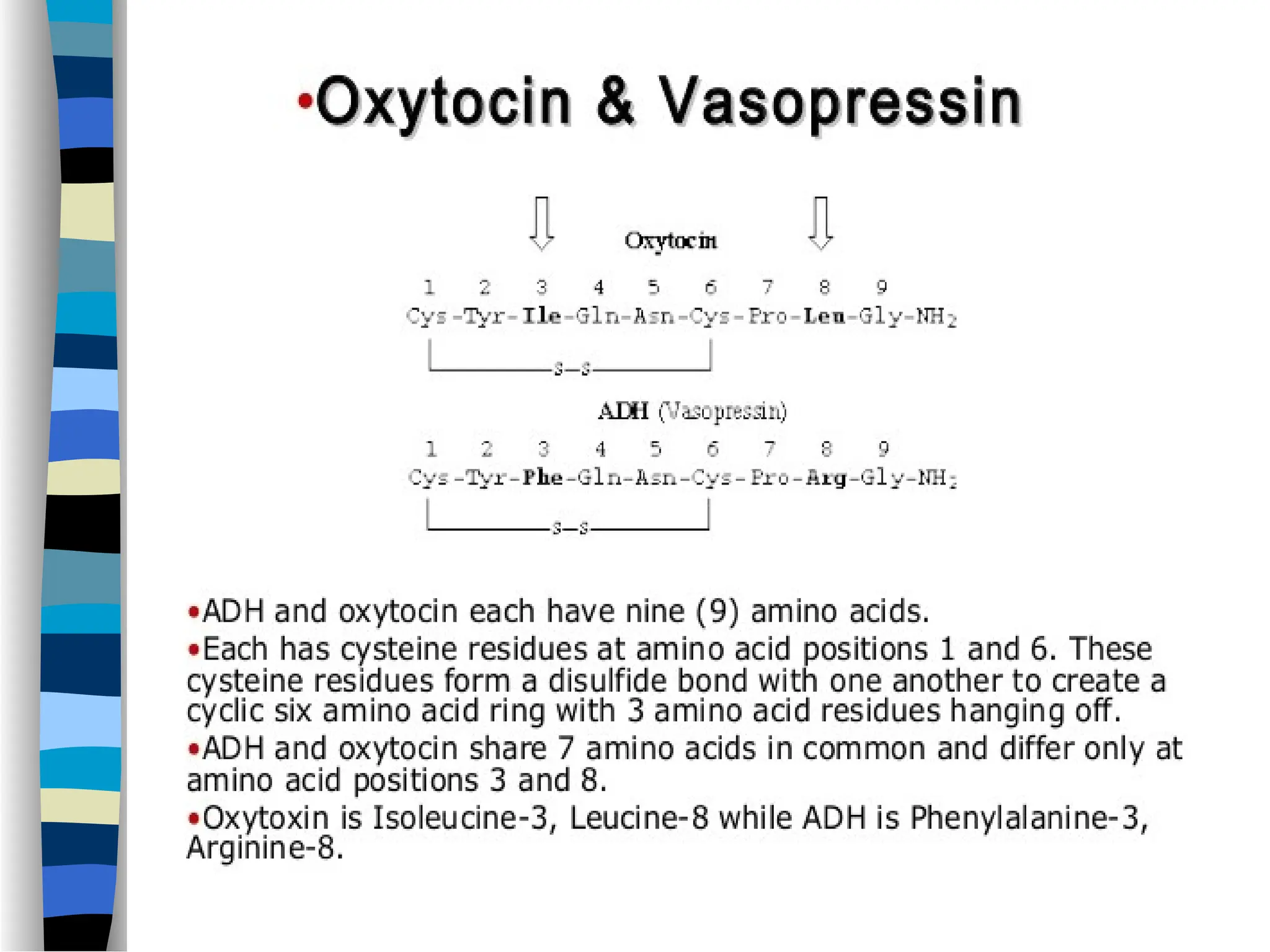
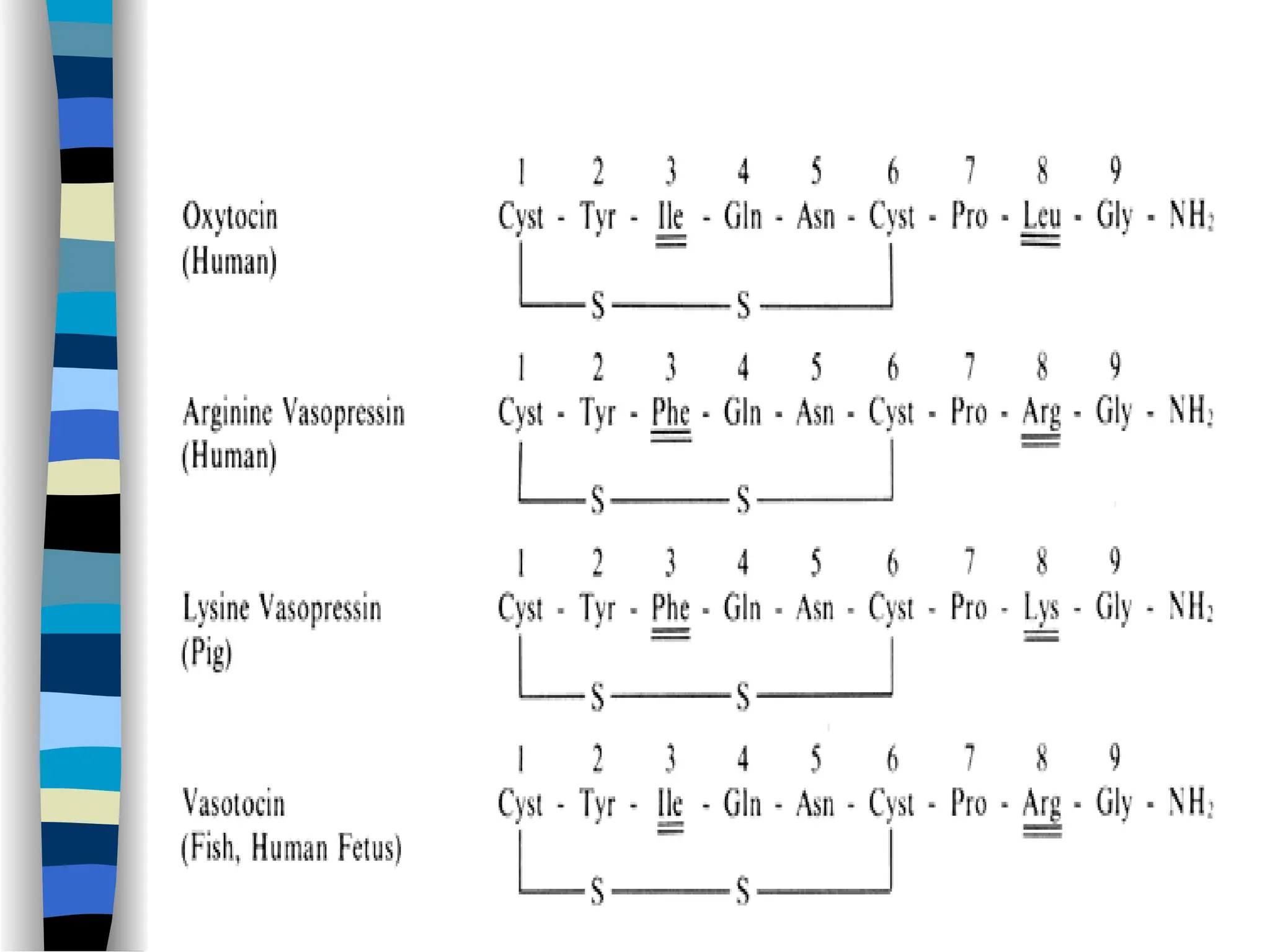
Oxytocin isa peptide of nine amino acids (a
nonapeptide). The sequence is cysteine - tyrosine -
isoleucine - glutamine - asparagine - cysteine - proline -
leucine - glycine (CYIQNCPLG). The cysteine residues
form a sulfur bridge. Oxytocin has a molecular mass of
1007 daltons. One international unit (IU) of oxytocin is
the equivalent of about 2 micrograms of pure peptide.
The structure of oxytocin is very similar to that of
vasopressin (cysteine - tyrosine - phenylalanine -
glutamine - asparagine - cysteine - proline - arginine -
glycine), also a nonapeptide with a sulfur bridge, whose
sequence differs from oxytocin by 2 amino acids
28.
Research on oxytocin
Oxytocin increase trust in human
Trust pervades human societies. Trust is indispensable in
friendship, love, families and organizations, and plays a key role
in economic exchange and politics.
. In the absence of trust
among trading partners, market transactions break down.
https://www.nature.com/articles/nature03701
29.
Research on vasopressin
vasopressin has been a hot topic in a very different
field: social behavior. And recently it has emerged as
a possible target for treating autism spectrum
disorders (ASD), which are characterized by social,
behavioral and communication impairments.
https://www.scientificamerican.com/article/vasopressin-
emerges-as-hormone-of-interest-in-autism-research/




![POSTERIOR PITUTARY HORMONES AND THEIR ACTIONS [Autosaved].pptx](https://cdn.slidesharecdn.com/ss_thumbnails/posteriorpitutaryhormonesandtheiractionsautosaved-250727051631-c85075b8-thumbnail.jpg?width=640&height=640&fit=bounds)


