DR Y SREENIVASA VARMA, MBBS, MBA, PhD
Medical Director
BalagangadharaVarmaMedical Research Centre, Chennai 600100.
HEALTH
WHO Definition of Health
“Health is a state of complete physical, mental and
social wellbeing and not merely the absence of
disease or infirmity”
All care, service, training, research etc, to evaluate,
diagnose, treat and follow up on maintenance of
required health, prevent illness as well as improve
health.
“HOSPITAL” is a part of the Healthcare Service.
Healthcare Domain
“Growth in national income by itself is
not enough, if the benefits do not
manifest themselves in the form of
more food, better access to health and
education”
Amartyo K Sen
Healthcare in India
Primary Challenge - Access
70 % of India’s population lives in
rural areas, but 80 % of doctors,
and 60 % of hospitals are in urban
areas.
Finance allocation
Health Expenditure in India
2004–05
Health Expenditure in India
2008-09
Type of
Expenditure
Distribution of total
Health Expenditure
(%)
Share of
GDP (%)
Distribution of total
Health Expenditure
(%)
Share of
GDP (%)
Public
Expenditure
19.67 0.84 27 1.1
Private
Expenditure
78.05 3.32 72 3.0
External Flow 2.28 0.10 2 0.1
Total Health
Expenditure
100 4.25 100 4.1
Types and Settings of Services
Shi & Singh 2008
Types of Healthcare Services Delivery Settings
Preventive Care Public Health Programs
Community Programs
Personal Lifestyles
Primary Care Physician Office/Clinic
Self-Care
Alternative Medicine
Specialized Care Specialist Clinics
Chronic Care Primary Care Settings
Specialist Provider Clinics
Home Health
Long-term Care Facilities
Self-Care
Alternative Medicine
Prevention Triangles
Population Oriented Prevention
Clinical Preventive Services
Primary Medical Care
Secondary Medical Care
Tertiary Medical Care
Relative
Investment
Tertiary
Prevention
Secondary
Prevention
Primary
Prevention 2% of spending
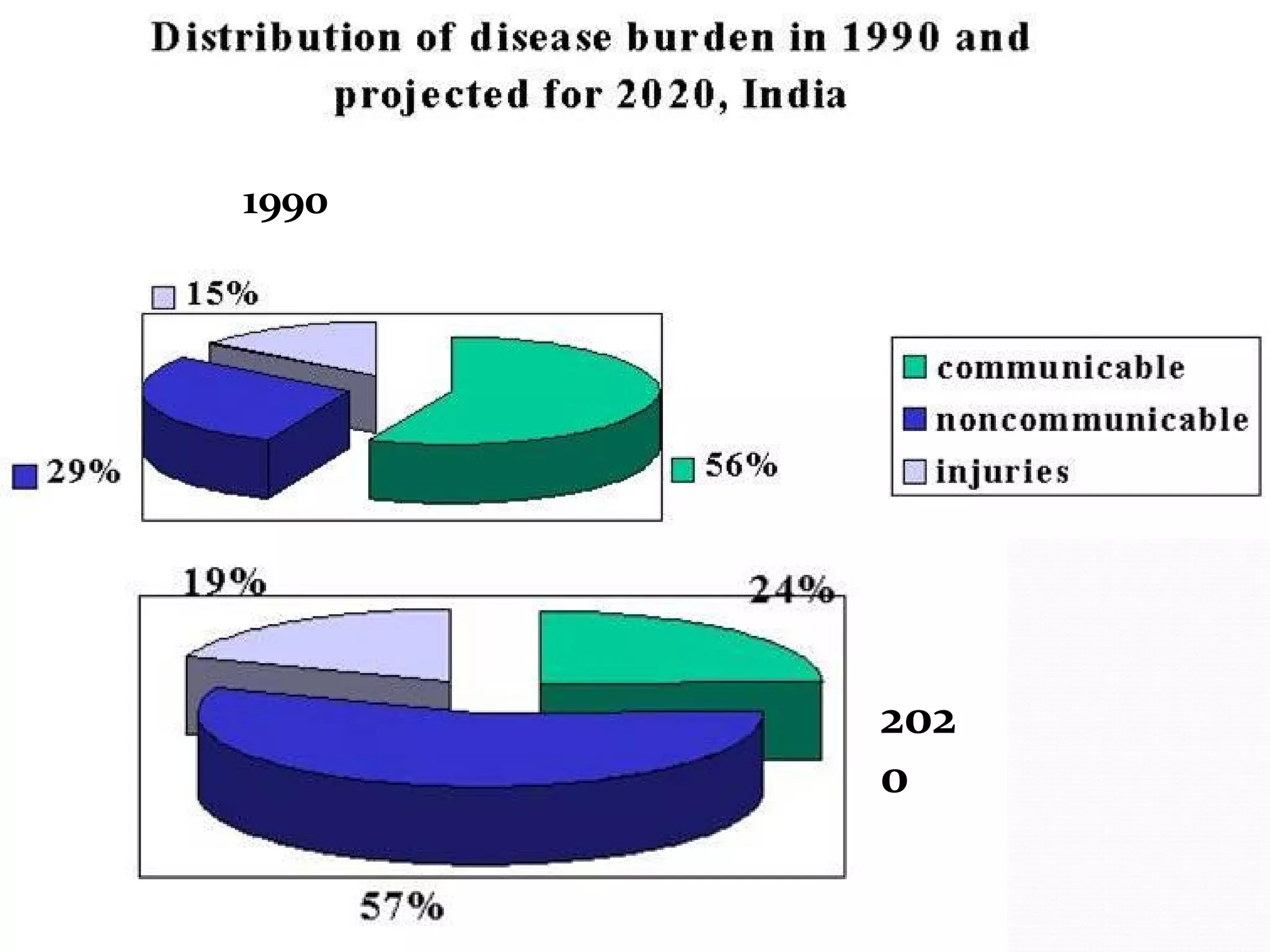
India faces the twin epidemic of
1.Communicable diseases
related to poor implementation of the public
health programs, lack of health awareness.
2.Non communicable diseases.
related to demographic transition , life style
changes & increase in life expectancy
202
0
1990
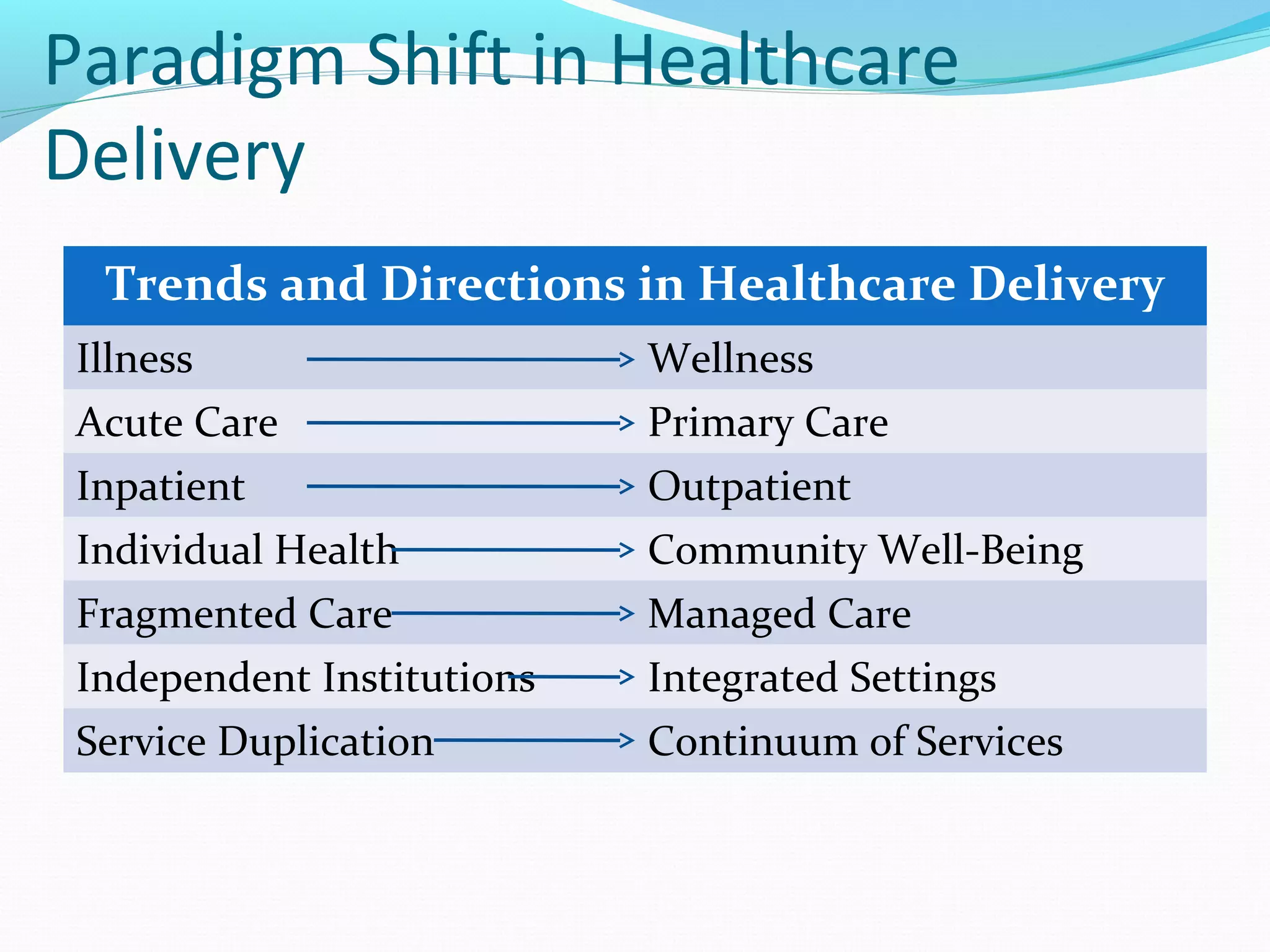
Paradigm Shift in Healthcare
Delivery
Trends and Directions in Healthcare Delivery
Illness Wellness
Acute Care Primary Care
Inpatient Outpatient
Individual Health Community Well-Being
Fragmented Care Managed Care
Independent Institutions Integrated Settings
Service Duplication Continuum of Services
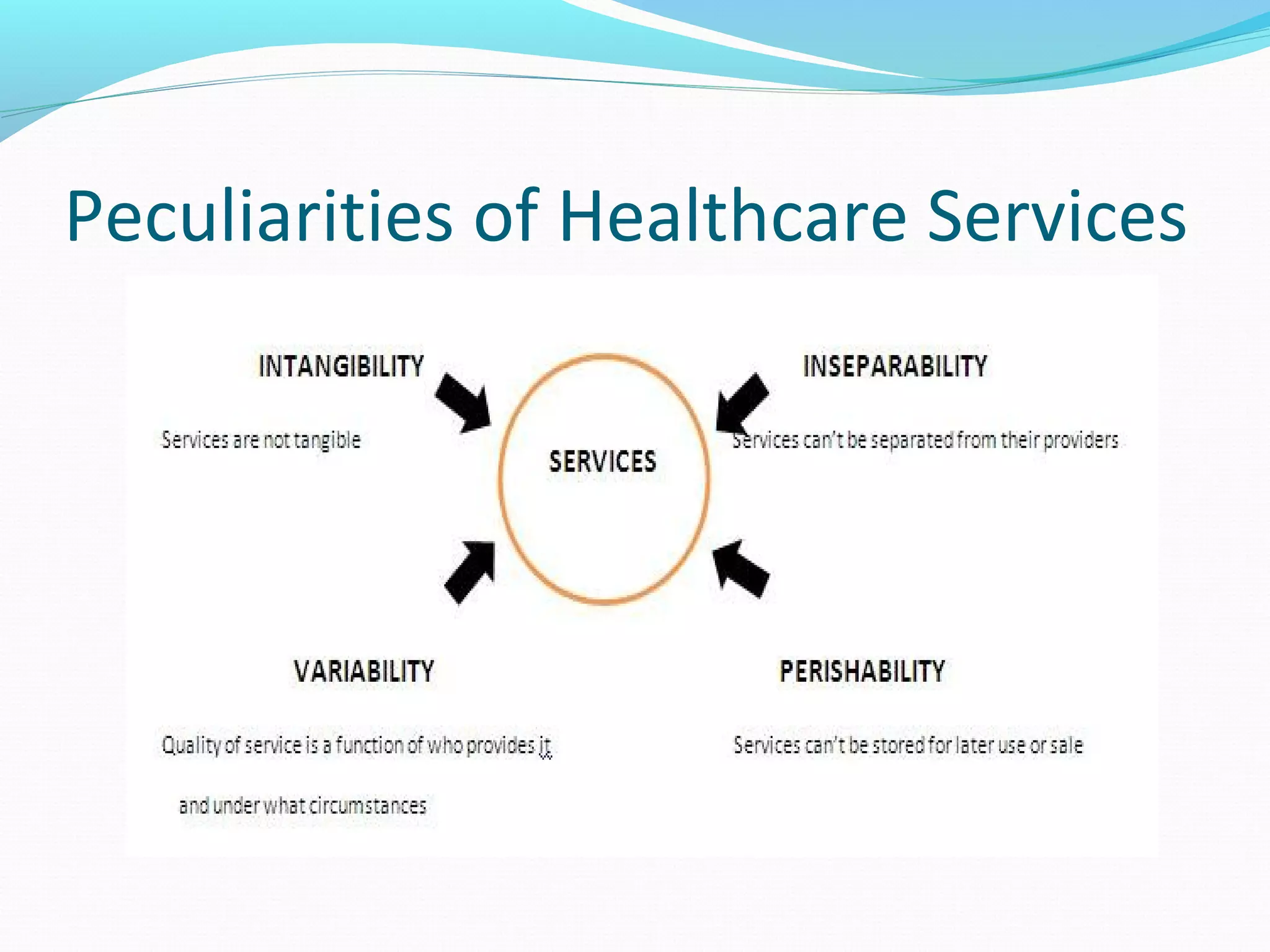
Peculiarities of Healthcare Services
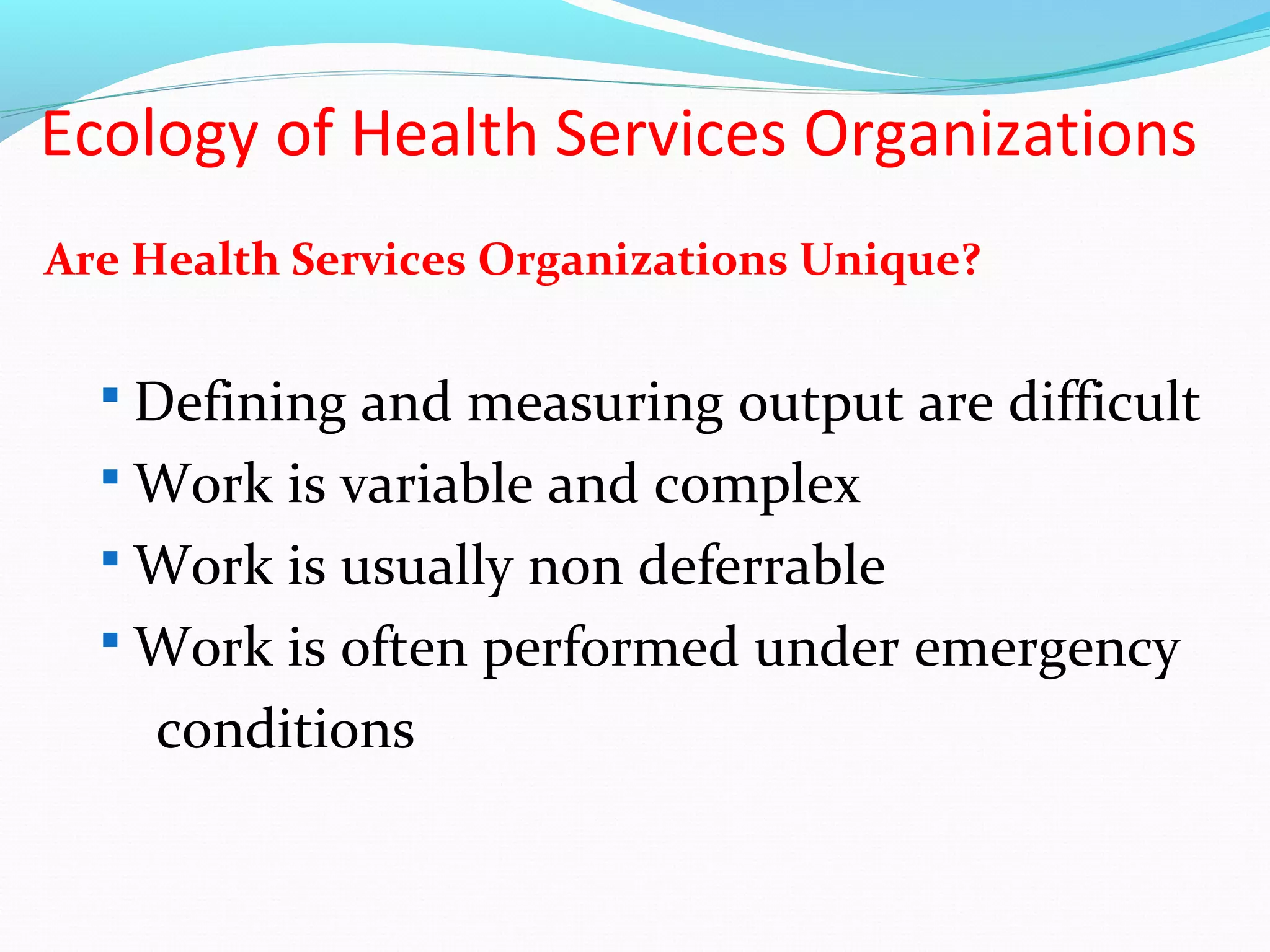
Ecology of Health Services Organizations
Are Health Services Organizations Unique?
 Defining and measuring output are difficult
 Work is variable and complex
 Work is usually non deferrable
 Work is often performed under emergency
conditions
Ecology of Health Services Organizations
Are Health Services Organizations Unique?
Work must be precise and errorless
Services are interdependent and require
coordination
Require extreme degree of specialization
Ecology of Health Services Organizations
Are Health Services Organizations Unique?
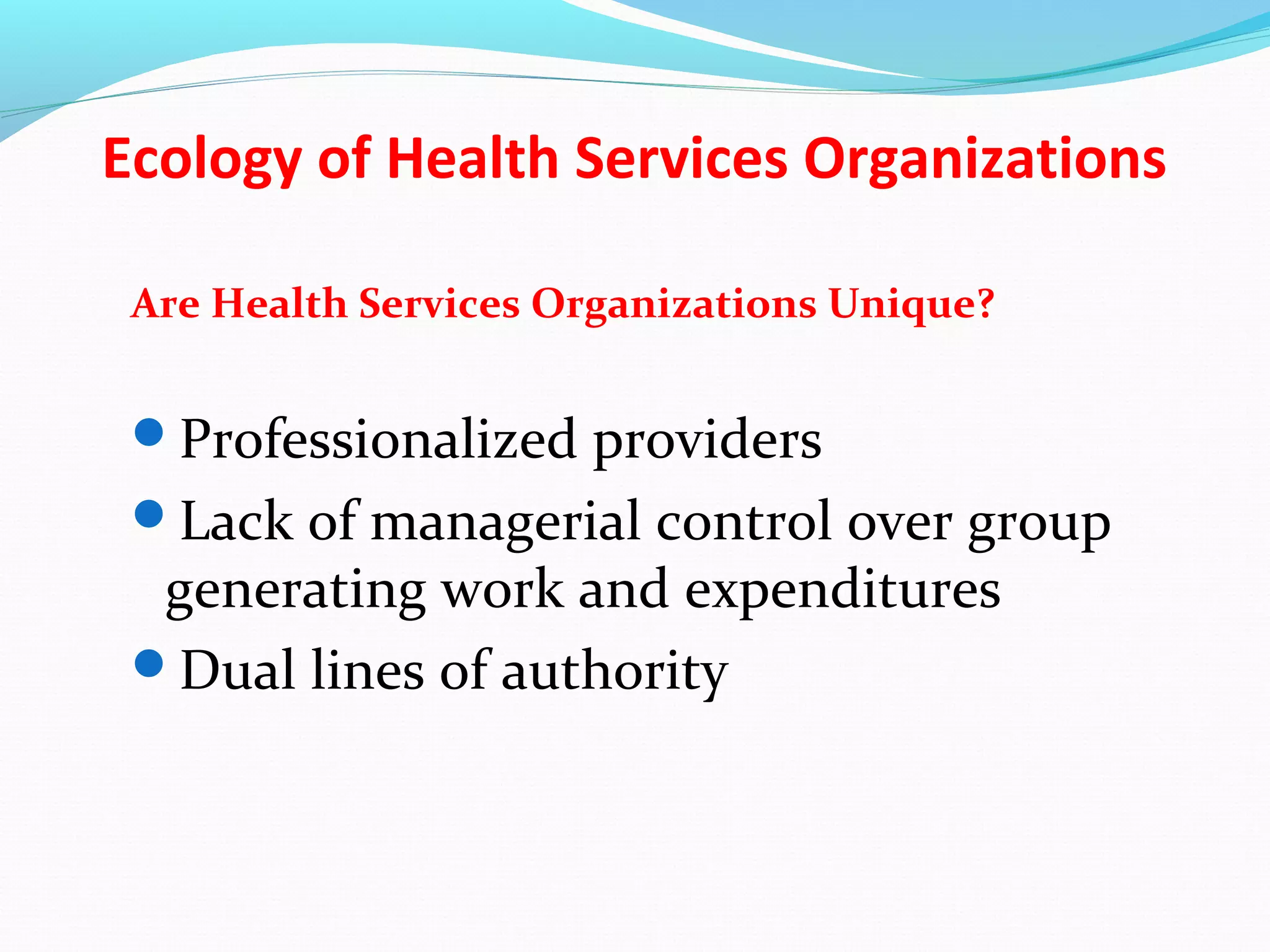
Professionalized providers
Lack of managerial control over group
generating work and expenditures
Dual lines of authority
Labor
Material
Machines
Managemen
t
Capital
Goods or
Services
OUTPU
T
INPUT
Transformatio
n
Process
Feedback
System Overview
Health System Framework
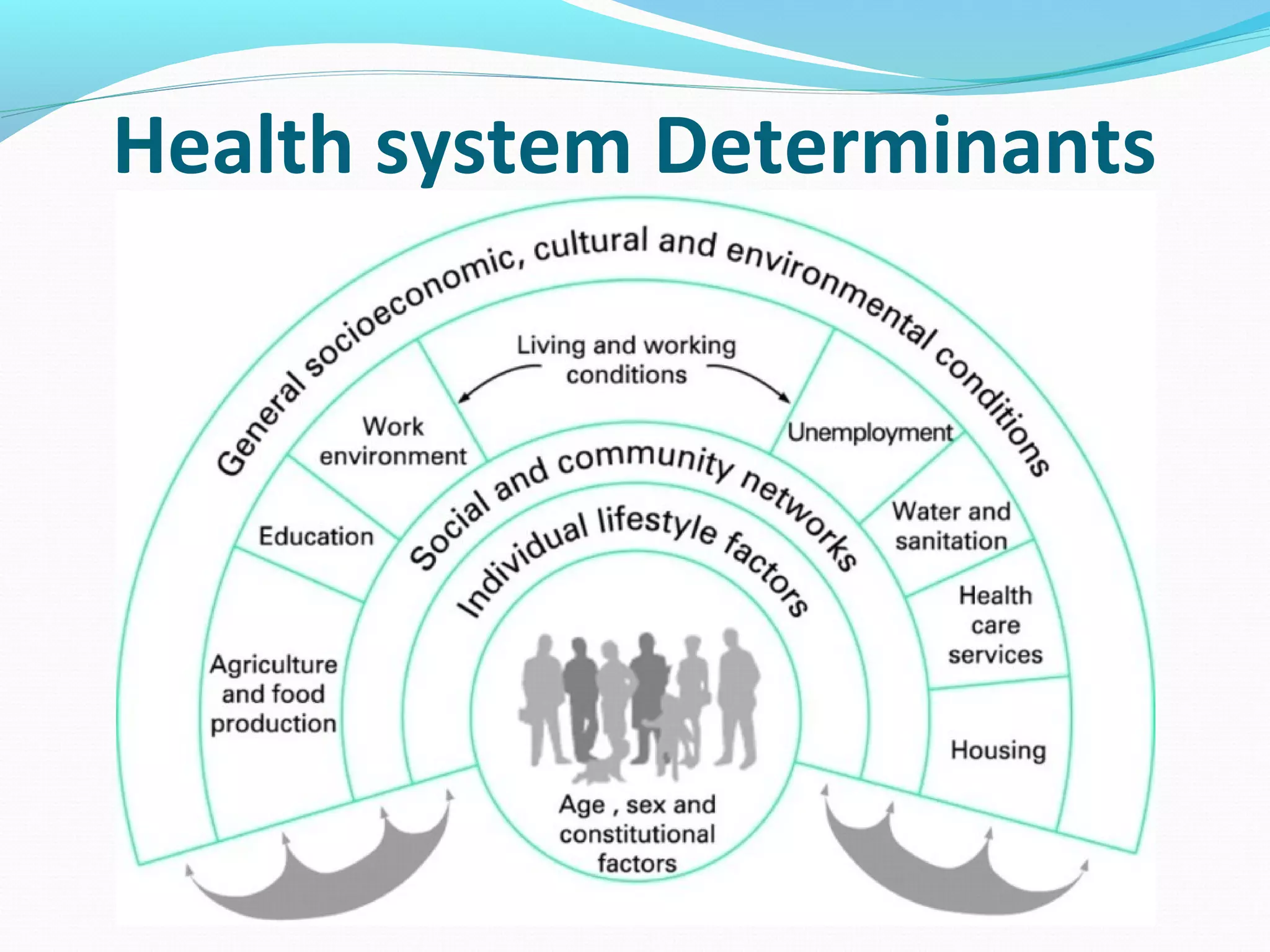
Health system Determinants
Healthcare Management
• Enormous gaps remain, however, between
the potential of health systems and their
actual performance
• There is far too much variations in outcomes
among various healthcare organisations
which seems to have the same resources.
• The resources devoted to health systems are
very unequally distributed, and not at all in
proportion to the distribution of health
problems.
Management really matters
Heal t hcare
Management pract i ce
i s s t rongl y rel at ed
t o:
Clinical outcomes
Patient satisfaction
1. Patient care – Quality management
2. Organisational structure
3. Manpower utilization
4. Technology management
5. Utilization management
6. Cost & financing of operations
7. Marketing of healthcare services
8. Corrective action & Follow-up
Change Concepts
Manage variation
Eliminate waste
Improve work force
Manage time
Optimize inventory
Enhance producer / customer relationship
Change the work environment
Focus on core processes
The Changing Healthcare System
Attributes to high performing health systems
Goals of Healthcare Delivery
System
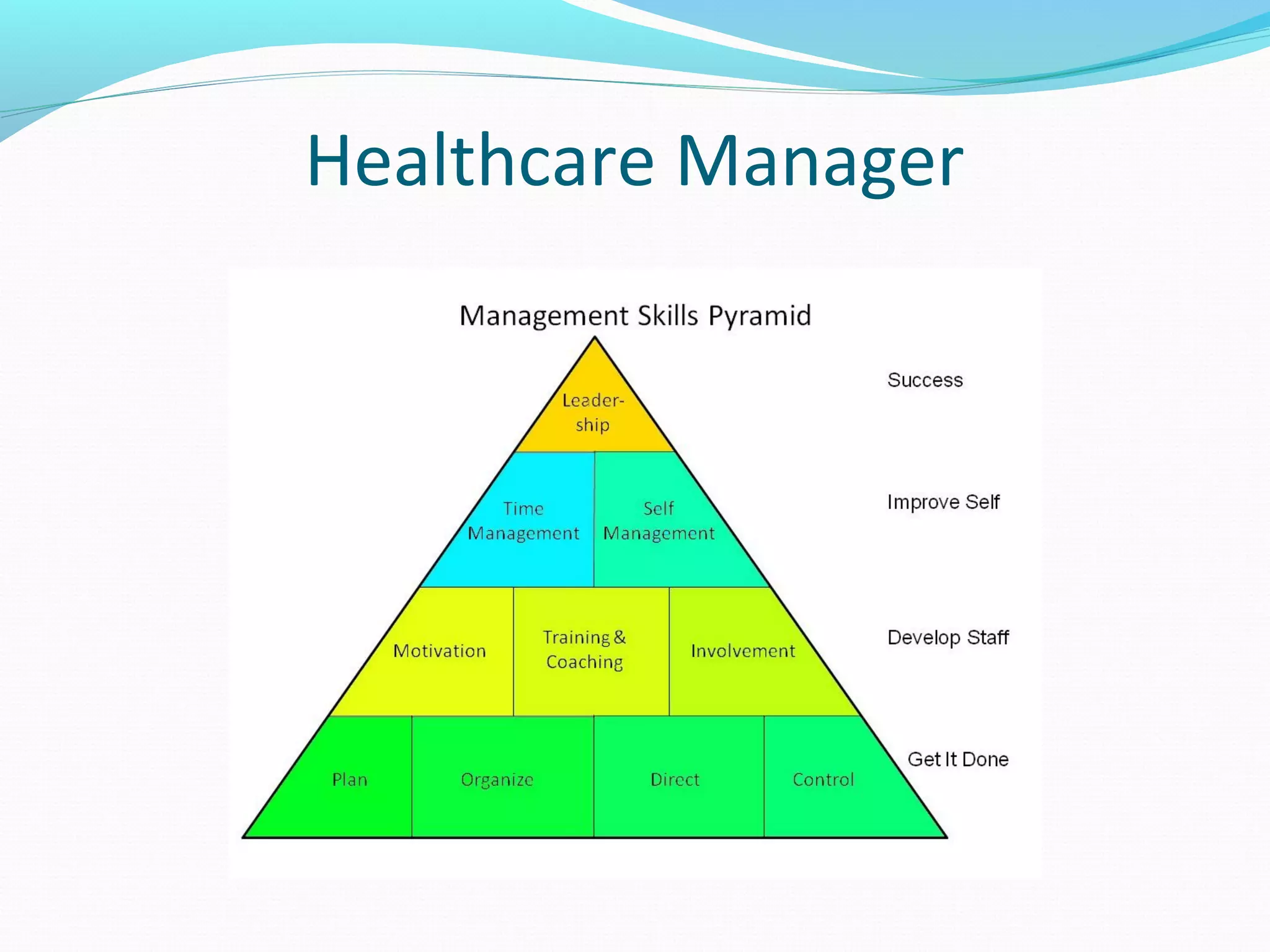
Healthcare Manager
Essentially
- Facilitator
- Team member
Role Of Healthcare Manager
Professional strategist
Resourceful leadership
Healthcare Manager
Healthcare Manager
Healthcare Manager
Healthcare- the way ahead
Conceptual framework of Healthcare Delivery
Role of management techniques :
Improve the quality, safety, efficiency,
and effectiveness of healthcare using
knowledge-based tools, techniques,
and programs for system
improvement.
Basic Model of Strategic
Management in Healthcare
Goal of Healthcare Management
Overview on healthcare management

Overview on healthcare management

  • 1.
    DR Y SREENIVASAVARMA, MBBS, MBA, PhD Medical Director BalagangadharaVarmaMedical Research Centre, Chennai 600100.
  • 2.
    HEALTH WHO Definition ofHealth “Health is a state of complete physical, mental and social wellbeing and not merely the absence of disease or infirmity”
  • 3.
    All care, service,training, research etc, to evaluate, diagnose, treat and follow up on maintenance of required health, prevent illness as well as improve health. “HOSPITAL” is a part of the Healthcare Service.
  • 5.
  • 6.
    “Growth in nationalincome by itself is not enough, if the benefits do not manifest themselves in the form of more food, better access to health and education” Amartyo K Sen
  • 7.
    Healthcare in India PrimaryChallenge - Access 70 % of India’s population lives in rural areas, but 80 % of doctors, and 60 % of hospitals are in urban areas.
  • 8.
    Finance allocation Health Expenditurein India 2004–05 Health Expenditure in India 2008-09 Type of Expenditure Distribution of total Health Expenditure (%) Share of GDP (%) Distribution of total Health Expenditure (%) Share of GDP (%) Public Expenditure 19.67 0.84 27 1.1 Private Expenditure 78.05 3.32 72 3.0 External Flow 2.28 0.10 2 0.1 Total Health Expenditure 100 4.25 100 4.1
  • 9.
    Types and Settingsof Services Shi & Singh 2008 Types of Healthcare Services Delivery Settings Preventive Care Public Health Programs Community Programs Personal Lifestyles Primary Care Physician Office/Clinic Self-Care Alternative Medicine Specialized Care Specialist Clinics Chronic Care Primary Care Settings Specialist Provider Clinics Home Health Long-term Care Facilities Self-Care Alternative Medicine
  • 10.
    Prevention Triangles Population OrientedPrevention Clinical Preventive Services Primary Medical Care Secondary Medical Care Tertiary Medical Care Relative Investment Tertiary Prevention Secondary Prevention Primary Prevention 2% of spending
  • 12.
    India faces thetwin epidemic of 1.Communicable diseases related to poor implementation of the public health programs, lack of health awareness. 2.Non communicable diseases. related to demographic transition , life style changes & increase in life expectancy
  • 13.
  • 16.
    Paradigm Shift inHealthcare Delivery Trends and Directions in Healthcare Delivery Illness Wellness Acute Care Primary Care Inpatient Outpatient Individual Health Community Well-Being Fragmented Care Managed Care Independent Institutions Integrated Settings Service Duplication Continuum of Services
  • 17.
  • 18.
    Ecology of HealthServices Organizations Are Health Services Organizations Unique?  Defining and measuring output are difficult  Work is variable and complex  Work is usually non deferrable  Work is often performed under emergency conditions
  • 19.
    Ecology of HealthServices Organizations Are Health Services Organizations Unique? Work must be precise and errorless Services are interdependent and require coordination Require extreme degree of specialization
  • 20.
    Ecology of HealthServices Organizations Are Health Services Organizations Unique? Professionalized providers Lack of managerial control over group generating work and expenditures Dual lines of authority
  • 22.
  • 23.
  • 24.
  • 25.
  • 26.
  • 27.
  • 28.
    • Enormous gapsremain, however, between the potential of health systems and their actual performance • There is far too much variations in outcomes among various healthcare organisations which seems to have the same resources. • The resources devoted to health systems are very unequally distributed, and not at all in proportion to the distribution of health problems.
  • 29.
    Management really matters Healt hcare Management pract i ce i s s t rongl y rel at ed t o: Clinical outcomes Patient satisfaction
  • 30.
    1. Patient care– Quality management 2. Organisational structure 3. Manpower utilization 4. Technology management 5. Utilization management 6. Cost & financing of operations 7. Marketing of healthcare services 8. Corrective action & Follow-up
  • 31.
    Change Concepts Manage variation Eliminatewaste Improve work force Manage time Optimize inventory Enhance producer / customer relationship Change the work environment Focus on core processes
  • 32.
  • 33.
    Attributes to highperforming health systems
  • 34.
    Goals of HealthcareDelivery System
  • 35.
  • 36.
    Role Of HealthcareManager Professional strategist Resourceful leadership
  • 37.
  • 38.
  • 39.
  • 40.
  • 41.
    Conceptual framework ofHealthcare Delivery
  • 42.
    Role of managementtechniques : Improve the quality, safety, efficiency, and effectiveness of healthcare using knowledge-based tools, techniques, and programs for system improvement.
  • 43.
    Basic Model ofStrategic Management in Healthcare
  • 44.

Editor's Notes

  • #2 Introduction of speaker Introducton to topic