
Overlap syndrome 
Dr Yasser M Fouad 
Professor of Gastroenterology and Hepatology 
Head of Tropical Medicine Department 
Minia University
Types of overlap syndromes 
- Systemic sclerosis with other CT diseases 
- Myelodysplasia/myeloproliferative disorder 
- Atrial arrhythmia and Brughada syndrome 
- Chronic Asthma and chronic obstructive sleep apnea syndrome 
- Functional dyspepsia-IBS syndrome 
- Hepatic overlap syndrome
Hepatic overlap syndromes
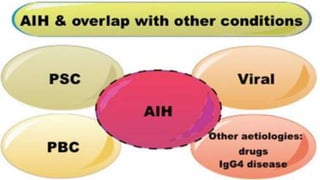
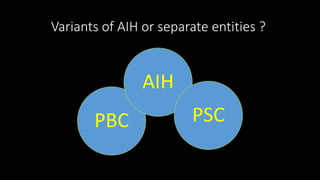
Variants of AIH or separate entities ? 
PBC 
AIH 
PSC
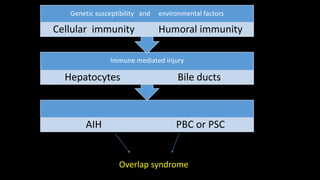
Genetic susceptibility and environmental factors 
Cellular immunity Humoral immunity 
Immune mediated injury 
Hepatocytes Bile ducts 
AIH PBC or PSC 
Overlap syndrome
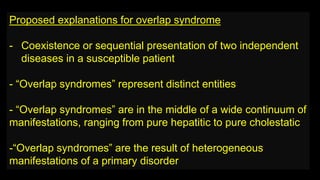
Proposed explanations for overlap syndrome 
- Coexistence or sequential presentation of two independent 
diseases in a susceptible patient 
- “Overlap syndromes” represent distinct entities 
- “Overlap syndromes” are in the middle of a wide continuum of 
manifestations, ranging from pure hepatitic to pure cholestatic 
-“Overlap syndromes” are the result of heterogeneous 
manifestations of a primary disorder
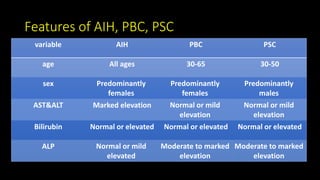
Features of AIH, PBC, PSC 
variable AIH PBC PSC 
age All ages 30-65 30-50 
Predominantly 
males 
Predominantly 
females 
Predominantly 
females 
sex 
Normal or mild 
elevation 
Normal or mild 
elevation 
AST&ALT Marked elevation 
Bilirubin Normal or elevated Normal or elevated Normal or elevated 
Moderate to marked 
elevation 
Moderate to marked 
elevation 
Normal or mild 
elevated 
ALP
Features of AIH, PBC, PSC 
variable AIH PBC PSC 
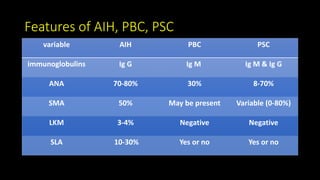
immunoglobulins Ig G Ig M Ig M & Ig G 
ANA 70-80% 30% 8-70% 
SMA 50% May be present Variable (0-80%) 
LKM 3-4% Negative Negative 
SLA 10-30% Yes or no Yes or no
Features of AIH, PBC, PSC 
variable AIH PBC PSC 
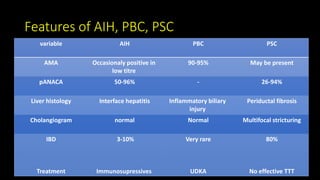
Occasionaly positive in 90-95% May be present 
low titre 
AMA 
pANACA 50-96% - 26-94% 
Inflammatory biliary Periductal fibrosis 
injury 
Liver histology Interface hepatitis 
Cholangiogram normal Normal Multifocal stricturing 
80% 
No effective TTT 
Very rare 
UDKA 
3-10% 
Immunosupressives 
IBD 
Treatment
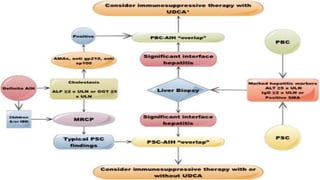
Primary biliary cirrhosis AIH overlap syndrome 
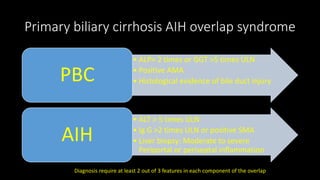
• ALP˃ 2 times or GGT ˃5 times ULN 
• Positive AMA 
• Histological evidence of bile duct injury PBC 
• ALT ˃ 5 times ULN 
• Ig G ˃2 times ULN or positive SMA 
• Liver biopsy: Moderate to severe 
Periportal or periseptal inflammation 
AIH 
Diagnosis require at least 2 out of 3 features in each component of the overlap
Autoimmune hepatitis – PSC overlap 
syndrome 
AIH-PSC 
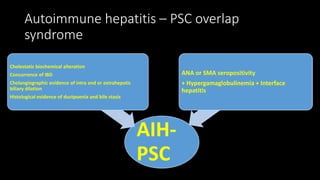
Cholestatic biochemical alteration 
Concurrence of IBD 
Cholangiographic evidence of intra and or extrahepatic 
biliary dilation 
Histological evidence of ductpoenia and bile stasis 
ANA or SMA seropositivity 
+ Hypergamaglobulinemia + Interface 
hepatitis
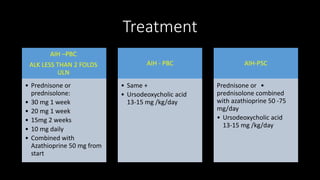
Treatment 
AIH –PBC 
ALK LESS THAN 2 FOLDS 
ULN 
• Prednisone or 
prednisolone: 
• 30 mg 1 week 
• 20 mg 1 week 
• 15mg 2 weeks 
• 10 mg daily 
• Combined with 
Azathioprine 50 mg from 
start 
AIH - PBC 
• Same + 
• Ursodeoxycholic acid 
13-15 mg /kg/day 
AIH-PSC 
Prednisone or • 
prednisolone combined 
with azathioprine 50 -75 
mg/day 
• Ursodeoxycholic acid 
13-15 mg /kg/day
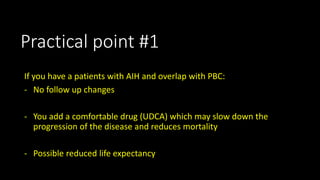
Practical point #1 
If you have a patients with AIH and overlap with PBC: 
- No follow up changes 
- You add a comfortable drug (UDCA) which may slow down the 
progression of the disease and reduces mortality 
- Possible reduced life expectancy
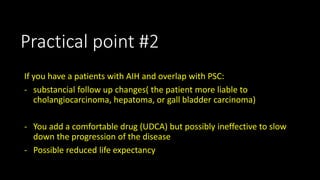
Practical point #2 
If you have a patients with AIH and overlap with PSC: 
- substancial follow up changes( the patient more liable to 
cholangiocarcinoma, hepatoma, or gall bladder carcinoma) 
- You add a comfortable drug (UDCA) but possibly ineffective to slow 
down the progression of the disease 
- Possible reduced life expectancy
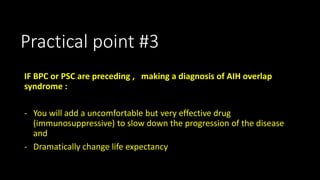
Practical point #3 
IF BPC or PSC are preceding , making a diagnosis of AIH overlap 
syndrome : 
- You will add a uncomfortable but very effective drug 
(immunosuppressive) to slow down the progression of the disease 
and 
- Dramatically change life expectancy
Thank You

Overlap syndrome

  • 1.
    Overlap syndrome DrYasser M Fouad Professor of Gastroenterology and Hepatology Head of Tropical Medicine Department Minia University
  • 2.
    Types of overlapsyndromes - Systemic sclerosis with other CT diseases - Myelodysplasia/myeloproliferative disorder - Atrial arrhythmia and Brughada syndrome - Chronic Asthma and chronic obstructive sleep apnea syndrome - Functional dyspepsia-IBS syndrome - Hepatic overlap syndrome
  • 3.
  • 5.
    Variants of AIHor separate entities ? PBC AIH PSC
  • 6.
    Genetic susceptibility andenvironmental factors Cellular immunity Humoral immunity Immune mediated injury Hepatocytes Bile ducts AIH PBC or PSC Overlap syndrome
  • 7.
    Proposed explanations foroverlap syndrome - Coexistence or sequential presentation of two independent diseases in a susceptible patient - “Overlap syndromes” represent distinct entities - “Overlap syndromes” are in the middle of a wide continuum of manifestations, ranging from pure hepatitic to pure cholestatic -“Overlap syndromes” are the result of heterogeneous manifestations of a primary disorder
  • 8.
    Features of AIH,PBC, PSC variable AIH PBC PSC age All ages 30-65 30-50 Predominantly males Predominantly females Predominantly females sex Normal or mild elevation Normal or mild elevation AST&ALT Marked elevation Bilirubin Normal or elevated Normal or elevated Normal or elevated Moderate to marked elevation Moderate to marked elevation Normal or mild elevated ALP
  • 9.
    Features of AIH,PBC, PSC variable AIH PBC PSC immunoglobulins Ig G Ig M Ig M & Ig G ANA 70-80% 30% 8-70% SMA 50% May be present Variable (0-80%) LKM 3-4% Negative Negative SLA 10-30% Yes or no Yes or no
  • 10.
    Features of AIH,PBC, PSC variable AIH PBC PSC Occasionaly positive in 90-95% May be present low titre AMA pANACA 50-96% - 26-94% Inflammatory biliary Periductal fibrosis injury Liver histology Interface hepatitis Cholangiogram normal Normal Multifocal stricturing 80% No effective TTT Very rare UDKA 3-10% Immunosupressives IBD Treatment
  • 11.
    Primary biliary cirrhosisAIH overlap syndrome • ALP˃ 2 times or GGT ˃5 times ULN • Positive AMA • Histological evidence of bile duct injury PBC • ALT ˃ 5 times ULN • Ig G ˃2 times ULN or positive SMA • Liver biopsy: Moderate to severe Periportal or periseptal inflammation AIH Diagnosis require at least 2 out of 3 features in each component of the overlap
  • 12.
    Autoimmune hepatitis –PSC overlap syndrome AIH-PSC Cholestatic biochemical alteration Concurrence of IBD Cholangiographic evidence of intra and or extrahepatic biliary dilation Histological evidence of ductpoenia and bile stasis ANA or SMA seropositivity + Hypergamaglobulinemia + Interface hepatitis
  • 13.
    Treatment AIH –PBC ALK LESS THAN 2 FOLDS ULN • Prednisone or prednisolone: • 30 mg 1 week • 20 mg 1 week • 15mg 2 weeks • 10 mg daily • Combined with Azathioprine 50 mg from start AIH - PBC • Same + • Ursodeoxycholic acid 13-15 mg /kg/day AIH-PSC Prednisone or • prednisolone combined with azathioprine 50 -75 mg/day • Ursodeoxycholic acid 13-15 mg /kg/day
  • 14.
    Practical point #1 If you have a patients with AIH and overlap with PBC: - No follow up changes - You add a comfortable drug (UDCA) which may slow down the progression of the disease and reduces mortality - Possible reduced life expectancy
  • 15.
    Practical point #2 If you have a patients with AIH and overlap with PSC: - substancial follow up changes( the patient more liable to cholangiocarcinoma, hepatoma, or gall bladder carcinoma) - You add a comfortable drug (UDCA) but possibly ineffective to slow down the progression of the disease - Possible reduced life expectancy
  • 16.
    Practical point #3 IF BPC or PSC are preceding , making a diagnosis of AIH overlap syndrome : - You will add a uncomfortable but very effective drug (immunosuppressive) to slow down the progression of the disease and - Dramatically change life expectancy
  • 18.