

Overcoming Barriers to Physical
Activity & Exercise
Physical Education 7 – 3rd Quarter | Topic 5
Prepared by: Eddie San Z. Peñalosa
Why do need to be sedentary? Advancements in technology and labor-
saving devices have afforded us greater ease and convenience at work,
school, and at home. These have resulted in more free time, which we either
fill up with more work, or spend in recreation. However, passive forms of
recreation, such as watching television, computer use and video games, have
dominated or pursuits. All of these, along with personal variables like one’s
thoughts and feelings, make people resistant to being physically active.
As a student, most of your time is spent meeting the demands of your
studies. Staying in the classroom, attending meetings, and using the
computer to complete your assignments are characterized by prolonged
sitting. With your busy schedule, exercise is often not a priority. Most of us
recognize the benefits of a healthy lifestyle, but common excuses for being
sedentary include: lack of time, tiredness, avoidance of or low tolerance for
discomfort, and lack of skill and/or confidence in playing or exercising.
Barriers to Overcome
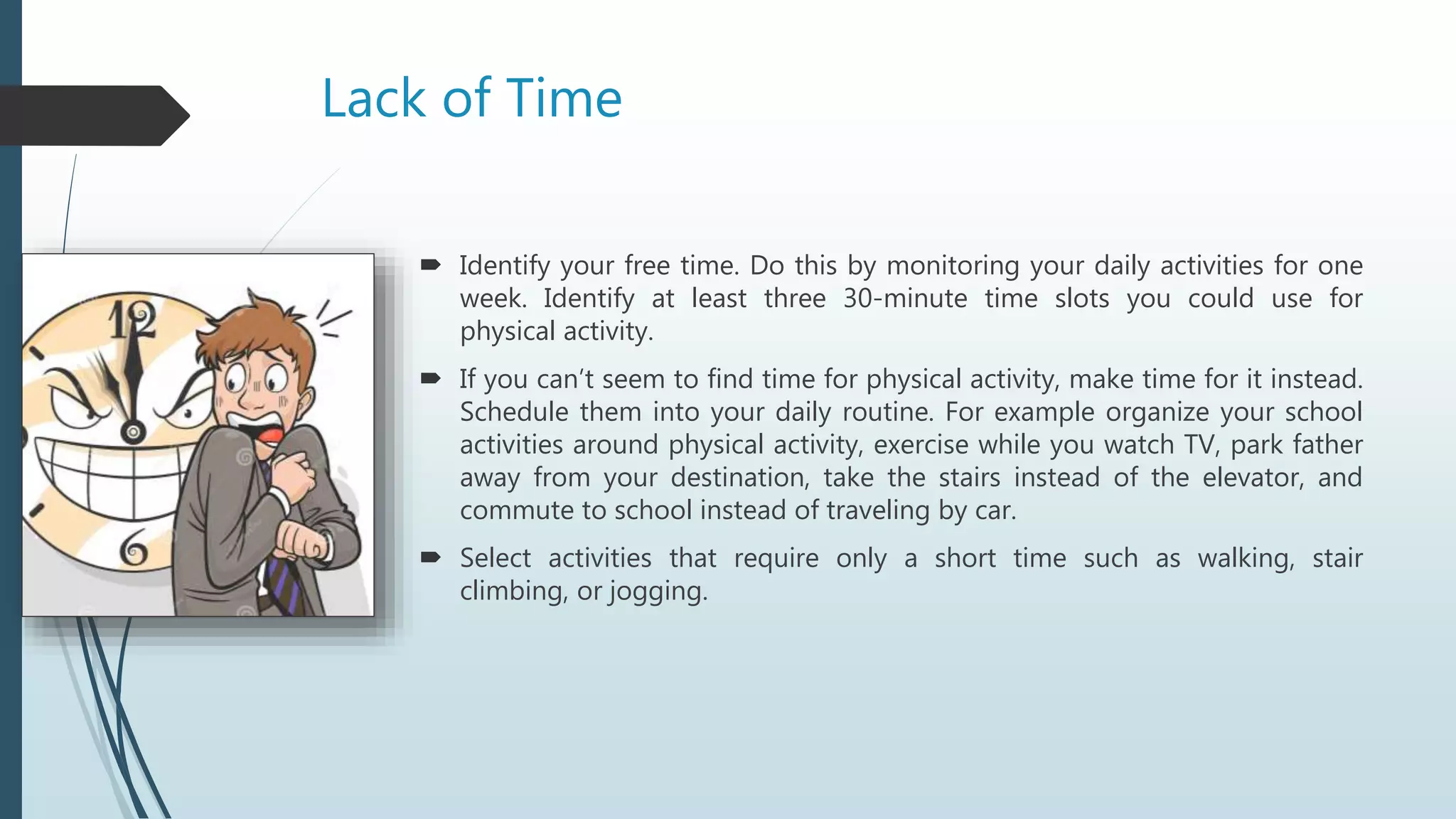
Lack of Time
 Identify your free time. Do this by monitoring your daily activities for one
week. Identify at least three 30-minute time slots you could use for
physical activity.
 If you can’t seem to find time for physical activity, make time for it instead.
Schedule them into your daily routine. For example organize your school
activities around physical activity, exercise while you watch TV, park father
away from your destination, take the stairs instead of the elevator, and
commute to school instead of traveling by car.
 Select activities that require only a short time such as walking, stair
climbing, or jogging.
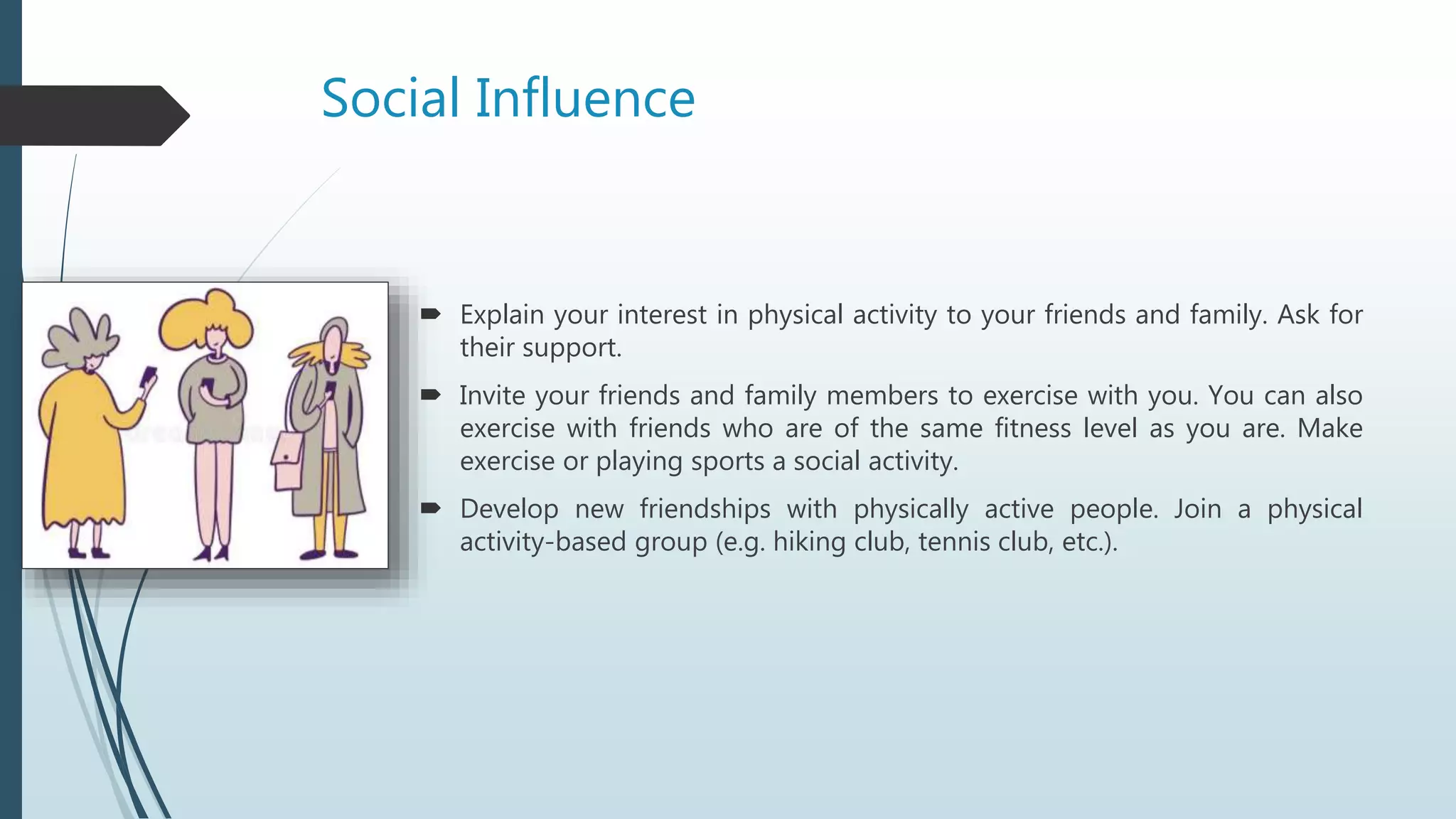
Social Influence
 Explain your interest in physical activity to your friends and family. Ask for
their support.
 Invite your friends and family members to exercise with you. You can also
exercise with friends who are of the same fitness level as you are. Make
exercise or playing sports a social activity.
 Develop new friendships with physically active people. Join a physical
activity-based group (e.g. hiking club, tennis club, etc.).
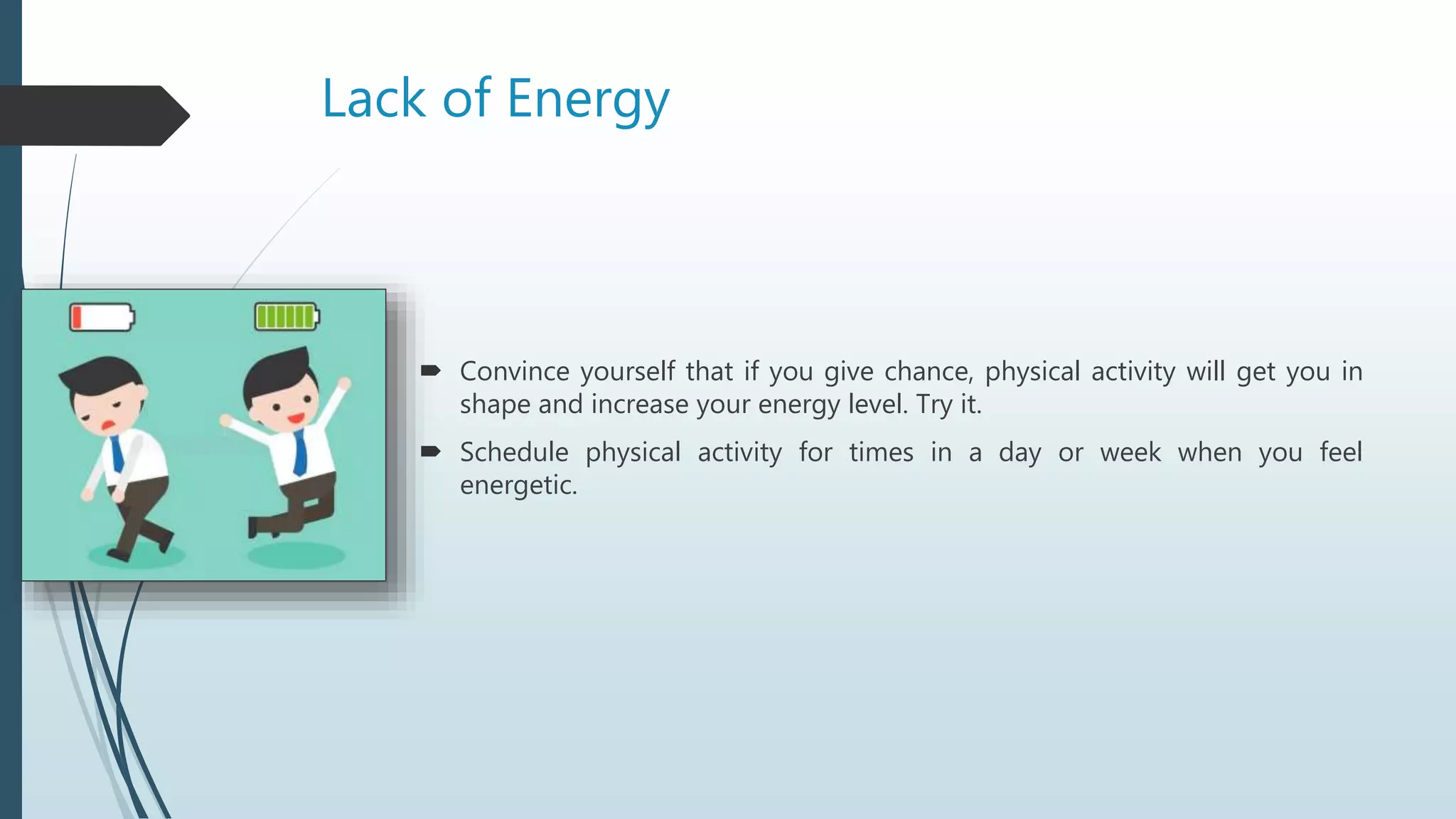
Lack of Energy
 Convince yourself that if you give chance, physical activity will get you in
shape and increase your energy level. Try it.
 Schedule physical activity for times in a day or week when you feel
energetic.
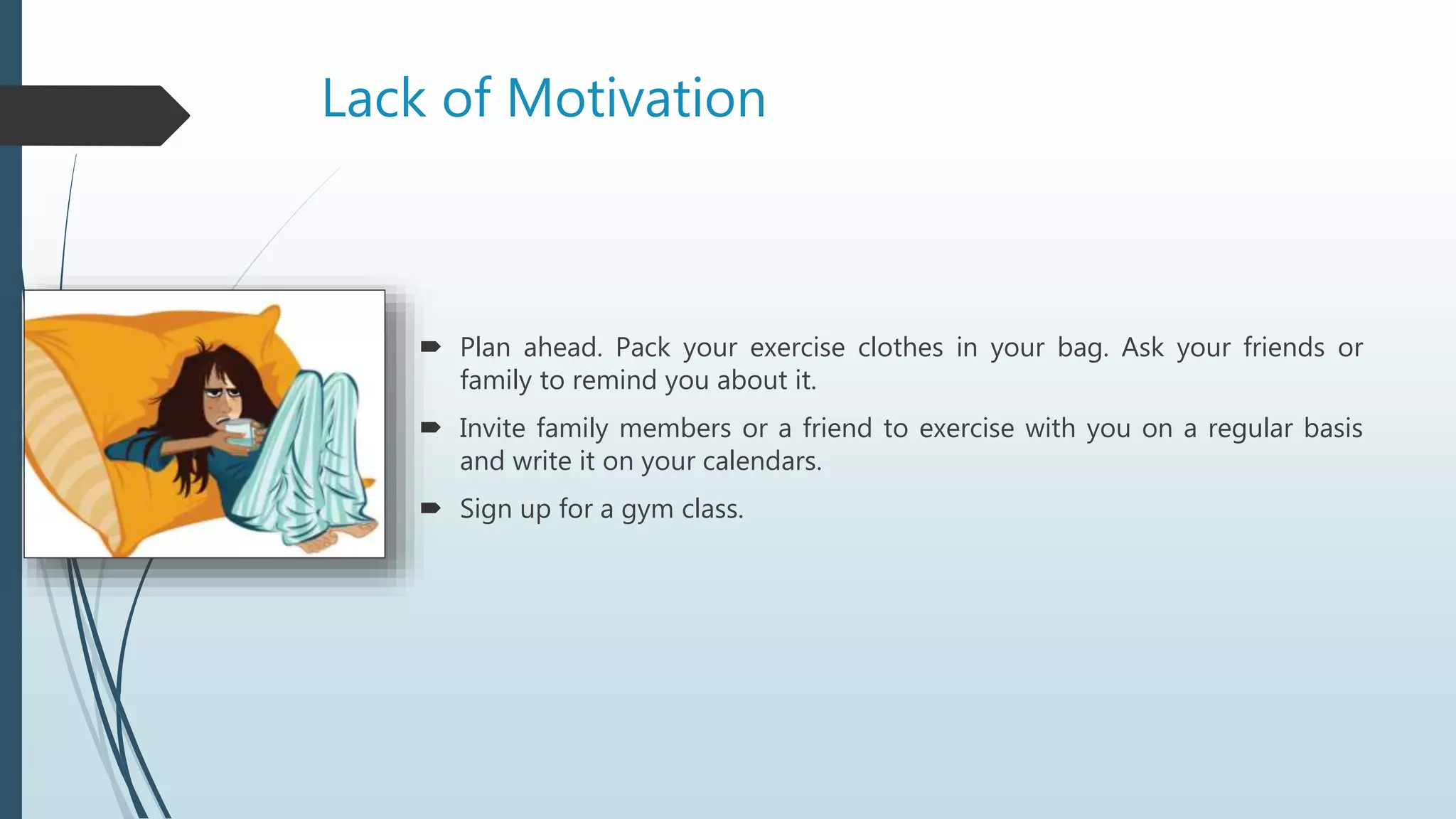
Lack of Motivation
 Plan ahead. Pack your exercise clothes in your bag. Ask your friends or
family to remind you about it.
 Invite family members or a friend to exercise with you on a regular basis
and write it on your calendars.
 Sign up for a gym class.
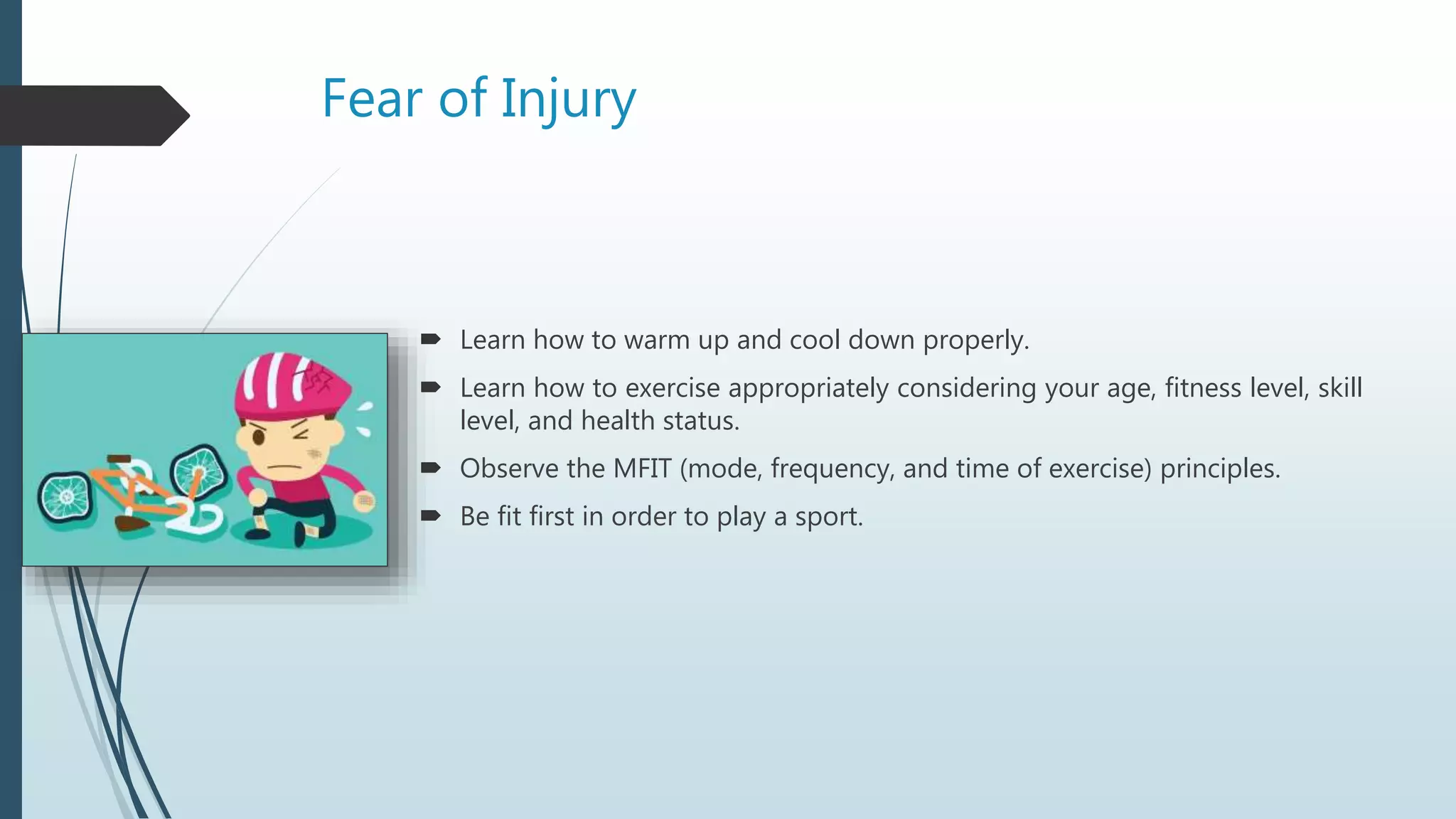
Fear of Injury
 Learn how to warm up and cool down properly.
 Learn how to exercise appropriately considering your age, fitness level, skill
level, and health status.
 Observe the MFIT (mode, frequency, and time of exercise) principles.
 Be fit first in order to play a sport.
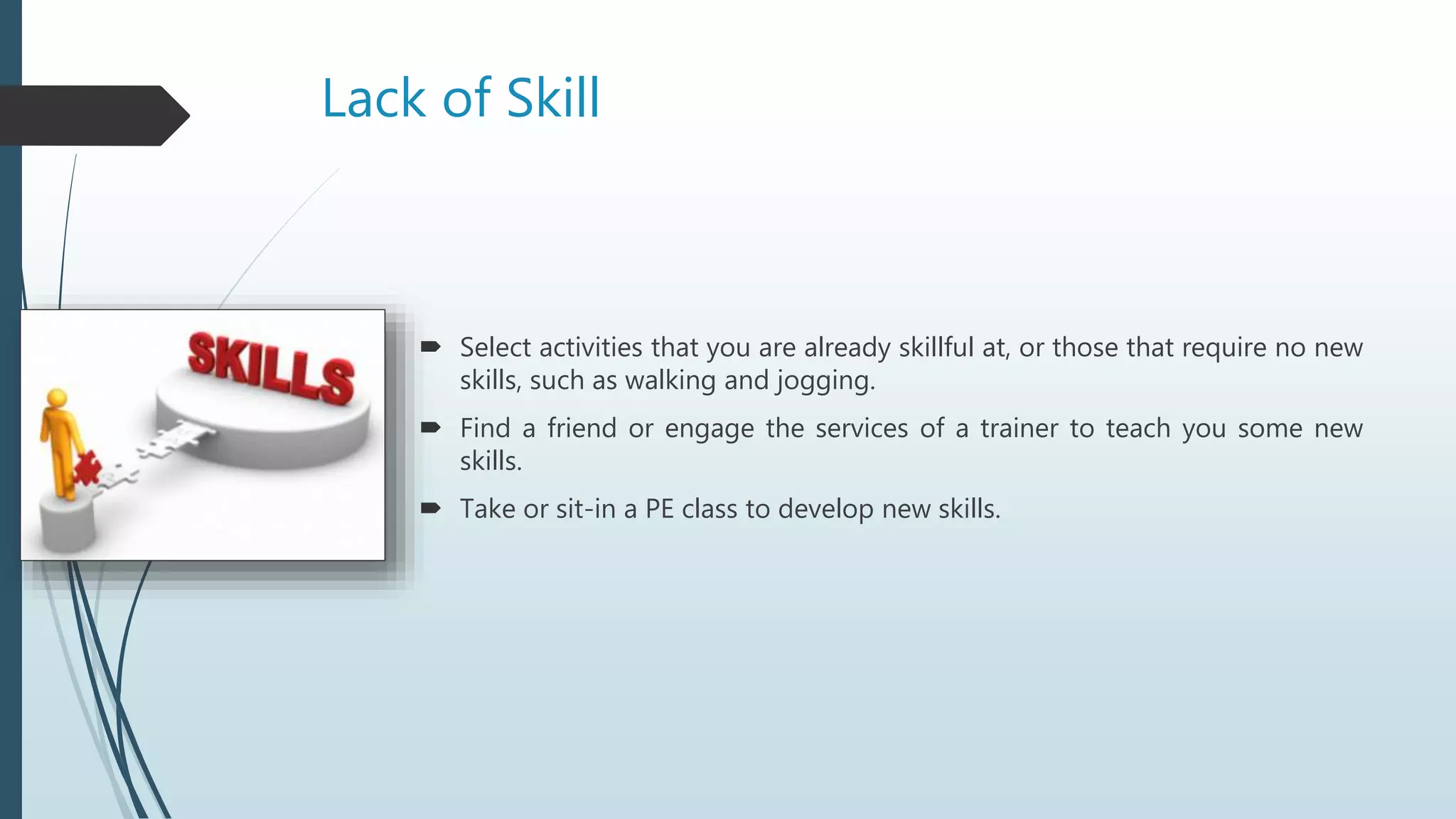
Lack of Skill
 Select activities that you are already skillful at, or those that require no new
skills, such as walking and jogging.
 Find a friend or engage the services of a trainer to teach you some new
skills.
 Take or sit-in a PE class to develop new skills.
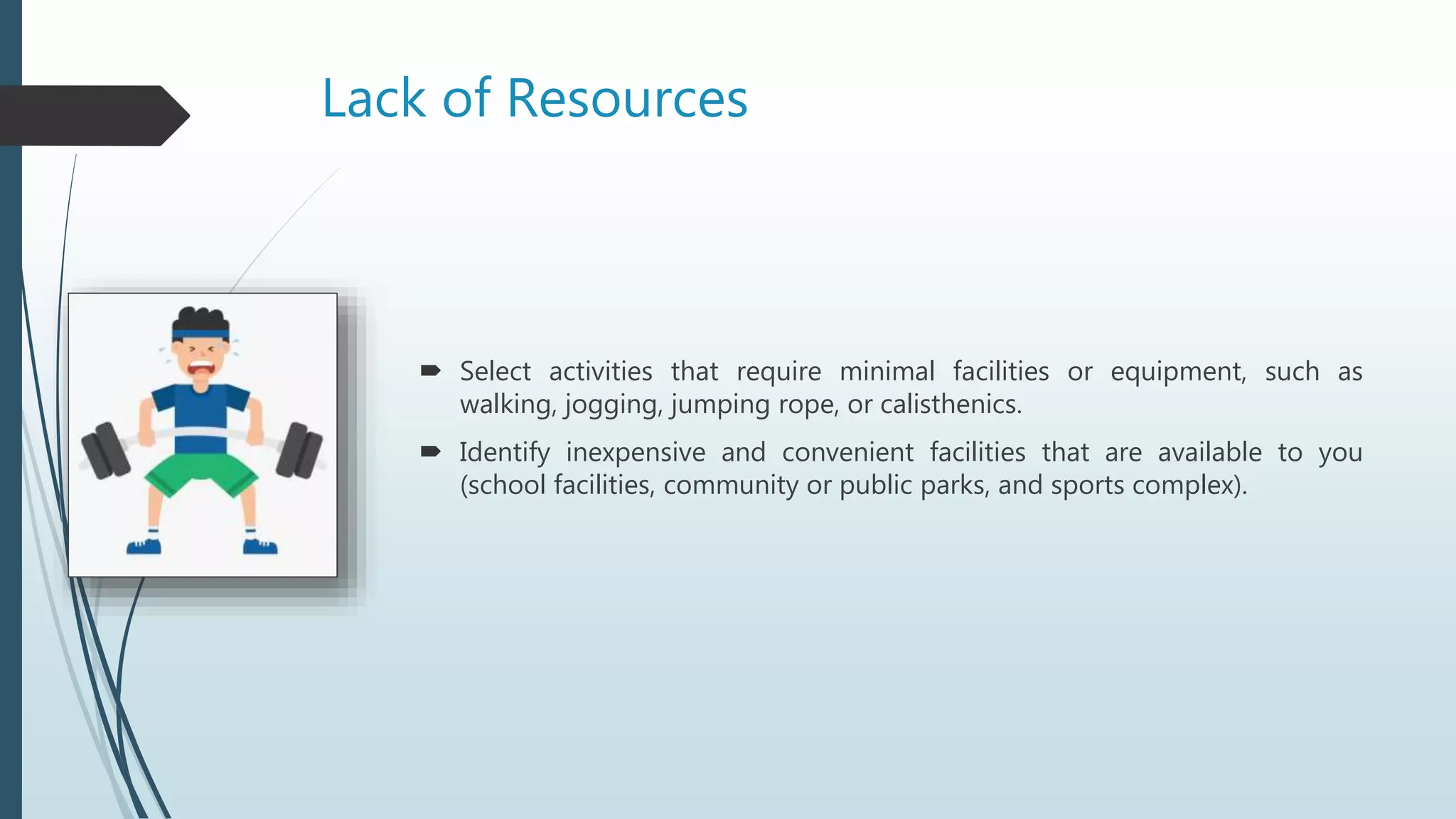
Lack of Resources
 Select activities that require minimal facilities or equipment, such as
walking, jogging, jumping rope, or calisthenics.
 Identify inexpensive and convenient facilities that are available to you
(school facilities, community or public parks, and sports complex).
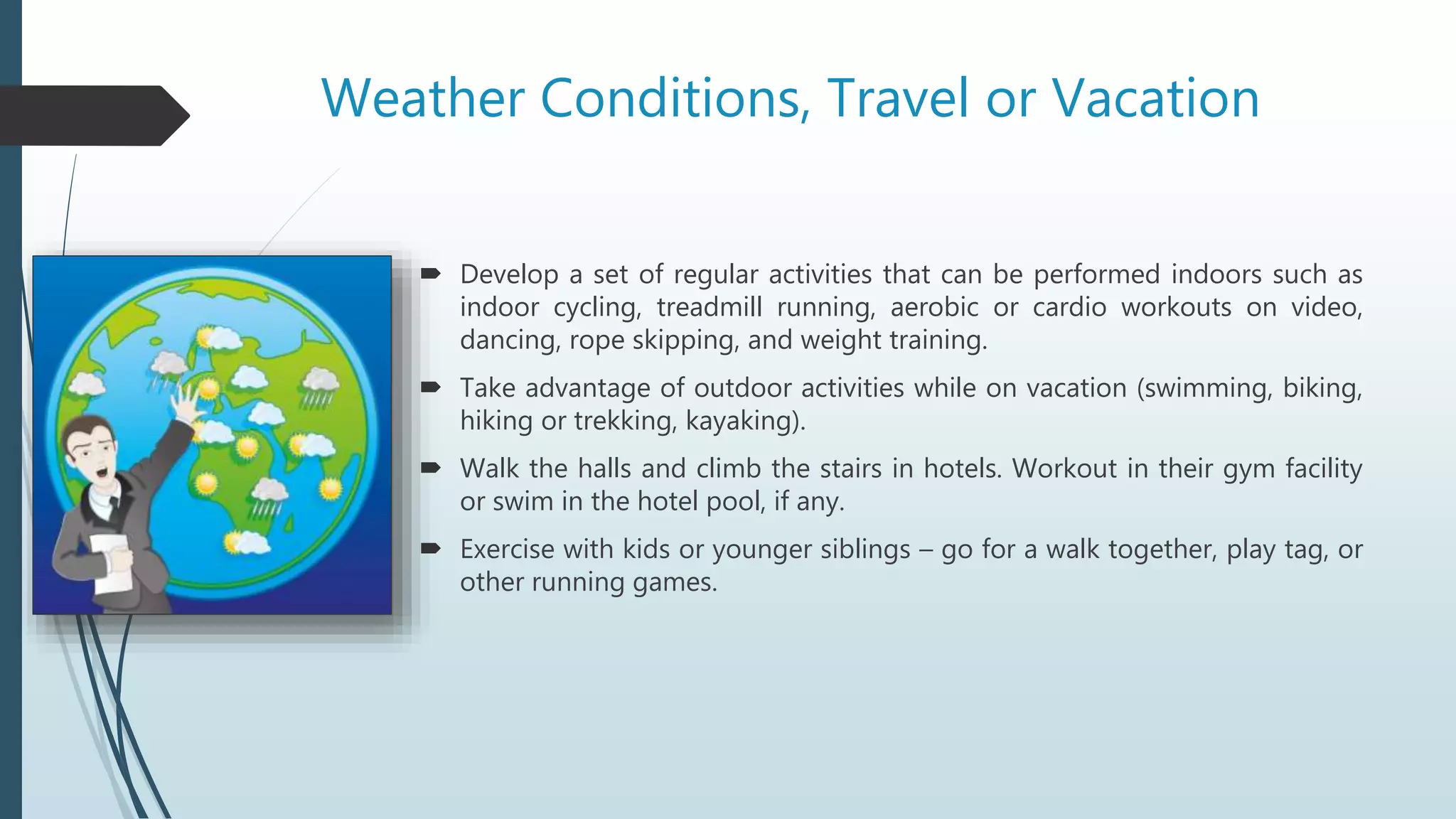
Weather Conditions, Travel or Vacation
 Develop a set of regular activities that can be performed indoors such as
indoor cycling, treadmill running, aerobic or cardio workouts on video,
dancing, rope skipping, and weight training.
 Take advantage of outdoor activities while on vacation (swimming, biking,
hiking or trekking, kayaking).
 Walk the halls and climb the stairs in hotels. Workout in their gym facility
or swim in the hotel pool, if any.
 Exercise with kids or younger siblings – go for a walk together, play tag, or
other running games.
Thank You for Listening

Overcoming Barriers to Physical Activity and Exercise

  • 1.
    Overcoming Barriers toPhysical Activity & Exercise Physical Education 7 – 3rd Quarter | Topic 5 Prepared by: Eddie San Z. Peñalosa
  • 2.
    Why do needto be sedentary? Advancements in technology and labor- saving devices have afforded us greater ease and convenience at work, school, and at home. These have resulted in more free time, which we either fill up with more work, or spend in recreation. However, passive forms of recreation, such as watching television, computer use and video games, have dominated or pursuits. All of these, along with personal variables like one’s thoughts and feelings, make people resistant to being physically active.
  • 3.
    As a student,most of your time is spent meeting the demands of your studies. Staying in the classroom, attending meetings, and using the computer to complete your assignments are characterized by prolonged sitting. With your busy schedule, exercise is often not a priority. Most of us recognize the benefits of a healthy lifestyle, but common excuses for being sedentary include: lack of time, tiredness, avoidance of or low tolerance for discomfort, and lack of skill and/or confidence in playing or exercising.
  • 4.
  • 5.
    Lack of Time Identify your free time. Do this by monitoring your daily activities for one week. Identify at least three 30-minute time slots you could use for physical activity.  If you can’t seem to find time for physical activity, make time for it instead. Schedule them into your daily routine. For example organize your school activities around physical activity, exercise while you watch TV, park father away from your destination, take the stairs instead of the elevator, and commute to school instead of traveling by car.  Select activities that require only a short time such as walking, stair climbing, or jogging.
  • 6.
    Social Influence  Explainyour interest in physical activity to your friends and family. Ask for their support.  Invite your friends and family members to exercise with you. You can also exercise with friends who are of the same fitness level as you are. Make exercise or playing sports a social activity.  Develop new friendships with physically active people. Join a physical activity-based group (e.g. hiking club, tennis club, etc.).
  • 7.
    Lack of Energy Convince yourself that if you give chance, physical activity will get you in shape and increase your energy level. Try it.  Schedule physical activity for times in a day or week when you feel energetic.
  • 8.
    Lack of Motivation Plan ahead. Pack your exercise clothes in your bag. Ask your friends or family to remind you about it.  Invite family members or a friend to exercise with you on a regular basis and write it on your calendars.  Sign up for a gym class.
  • 9.
    Fear of Injury Learn how to warm up and cool down properly.  Learn how to exercise appropriately considering your age, fitness level, skill level, and health status.  Observe the MFIT (mode, frequency, and time of exercise) principles.  Be fit first in order to play a sport.
  • 10.
    Lack of Skill Select activities that you are already skillful at, or those that require no new skills, such as walking and jogging.  Find a friend or engage the services of a trainer to teach you some new skills.  Take or sit-in a PE class to develop new skills.
  • 11.
    Lack of Resources Select activities that require minimal facilities or equipment, such as walking, jogging, jumping rope, or calisthenics.  Identify inexpensive and convenient facilities that are available to you (school facilities, community or public parks, and sports complex).
  • 12.
    Weather Conditions, Travelor Vacation  Develop a set of regular activities that can be performed indoors such as indoor cycling, treadmill running, aerobic or cardio workouts on video, dancing, rope skipping, and weight training.  Take advantage of outdoor activities while on vacation (swimming, biking, hiking or trekking, kayaking).  Walk the halls and climb the stairs in hotels. Workout in their gym facility or swim in the hotel pool, if any.  Exercise with kids or younger siblings – go for a walk together, play tag, or other running games.
  • 13.
    Thank You forListening