Outsourcing Decision
Support: Survey
 By
 Rajkumar Shrestha
 Rajdhani Model
College, Old Baneshwor
Content
 Meaning of Outsourcing and Why Outsource
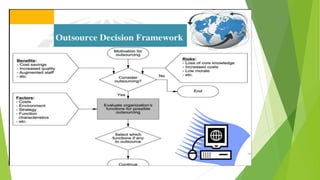
 Outsource Decision Framework
 Categories of motivation for Outsourcing
 Areas of outsourcing
 Advantages of Outsourcing
 Potential Risks Of Outsourcing
 Potential Factors of Outsourcing
 Lesson Learn
 Conclusion
What is Outsource???
It is a practice used by different
organizations to reduce cots by
transferring portions of work to outside
suppliers rather than completing it
internally. It is effective cost- saving
strategy when it used properly.
Why Outsource?
Provide services that are
scalable, secure and efficient
while improving overall service
and reducing costs.
Categories of Motivation for outsourcing
 Cost Driven Outsourcing
Desire to save indirect cost may also drive outsourcing
Some organizations outsource to achieve better control.
 Strategy-driven Outsourcing
This results in a so-called “Virtual organization” where functions are
outsourced to multiple vendors under one agreement. Together the
suppliers perform an integrate set of services.
 Politically-driven Outsourcing
There is different purpose of organization. For Public & Private
Organization.
Areas of Outsourcing
 Call Centers
 Finance & Accounting Outsourcing
 Procurement Outsourcing
 Textiles
 Manufacturing
 Human Resource Management
Advantages of Outsourcing
 Cost Savings and Reduced Capital Expenditure
 Increased Speed & Productivity
 Access to latest technology/ Infrastructure
 Access to Skills and talent
 Increase focus on core function
 Copy Competitors & Reduce Politic pressures
 Better Management
Potential Risks of Outsourcing
 Hidden Cost and Less Flexibility
 Poor Contract or poor selection of Partner
 Threat to Security & Confidentiality
 Loss of managerial control
 Quality problems
 Lack of customer focus
 Lose talent inside within the company
Potential Factors to Consider
Strategic Factor
Cost Factor
Functional Characteristics
Environmental Factor
Conclusion
 Organizations expect to achieve many different
benefits through successful outsourcing, although
there are significant risks.
 Outsourcing is often undertaken to provide
enterprises a competitive advantage by
delegating business process to external agencies
and realizing the benefits of low labor, better
quality and improved innovation.
Lesson learn
Outsourcing means a process of
stimulating people to action to
accomplished desired goal. If we use it
properly then it will save the cost as
well as reduced Capital Expenditure
with Speed & Productivity by using
latest technology.
Any Queries?
Thank You!!!

Outsourcing- MBA/ MBS- Masters level

  • 1.
    Outsourcing Decision Support: Survey By  Rajkumar Shrestha  Rajdhani Model College, Old Baneshwor
  • 2.
    Content  Meaning ofOutsourcing and Why Outsource  Outsource Decision Framework  Categories of motivation for Outsourcing  Areas of outsourcing  Advantages of Outsourcing  Potential Risks Of Outsourcing  Potential Factors of Outsourcing  Lesson Learn  Conclusion
  • 3.
    What is Outsource??? Itis a practice used by different organizations to reduce cots by transferring portions of work to outside suppliers rather than completing it internally. It is effective cost- saving strategy when it used properly.
  • 4.
    Why Outsource? Provide servicesthat are scalable, secure and efficient while improving overall service and reducing costs.
  • 6.
    Categories of Motivationfor outsourcing  Cost Driven Outsourcing Desire to save indirect cost may also drive outsourcing Some organizations outsource to achieve better control.  Strategy-driven Outsourcing This results in a so-called “Virtual organization” where functions are outsourced to multiple vendors under one agreement. Together the suppliers perform an integrate set of services.  Politically-driven Outsourcing There is different purpose of organization. For Public & Private Organization.
  • 7.
    Areas of Outsourcing Call Centers  Finance & Accounting Outsourcing  Procurement Outsourcing  Textiles  Manufacturing  Human Resource Management
  • 8.
    Advantages of Outsourcing Cost Savings and Reduced Capital Expenditure  Increased Speed & Productivity  Access to latest technology/ Infrastructure  Access to Skills and talent  Increase focus on core function  Copy Competitors & Reduce Politic pressures  Better Management
  • 9.
    Potential Risks ofOutsourcing  Hidden Cost and Less Flexibility  Poor Contract or poor selection of Partner  Threat to Security & Confidentiality  Loss of managerial control  Quality problems  Lack of customer focus  Lose talent inside within the company
  • 10.
    Potential Factors toConsider Strategic Factor Cost Factor Functional Characteristics Environmental Factor
  • 12.
    Conclusion  Organizations expectto achieve many different benefits through successful outsourcing, although there are significant risks.  Outsourcing is often undertaken to provide enterprises a competitive advantage by delegating business process to external agencies and realizing the benefits of low labor, better quality and improved innovation.
  • 13.
    Lesson learn Outsourcing meansa process of stimulating people to action to accomplished desired goal. If we use it properly then it will save the cost as well as reduced Capital Expenditure with Speed & Productivity by using latest technology.
  • 14.
  • 15.

Editor's Notes

  • #7 Desire to save indirect cost may also drive outsourcing Some organizations outsource to achieve better control.