1
Out lines
 Introduction
 What is sniffer?
 Introduction of cellular systems
 Working of Sniffer
 Advantages and disadvantages of Sniffer.
Introduction
 Each and every day thousands of mobiles get misplaced or
  lost.

 To prevent unauthorized person from making and receiving
  the calls we use this technique.

 Effective way for the blocking of the lost mobile with the help
  of International Mobile Equipment Identifier (IMEI).

 The device can be called as a mobile Base station that includes
  Sniffer.
What is Sniffer ?
 The main scope is to detect the lost mobiles.

 For the detection of lost mobile SNIFFER plays a vital
  role.

 The Sniffer is basically a transceiver that works in the
  different frequency that we are commonly used.

 The sniffer device has to be designed for easy mobility
  for the purpose of detection.
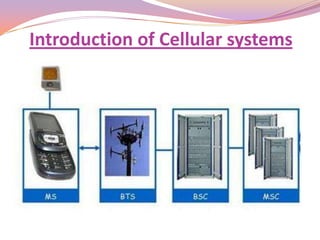
Introduction of Cellular systems
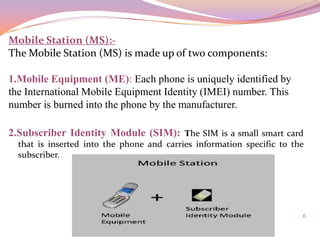
Mobile Station (MS):-
The Mobile Station (MS) is made up of two components:

1.Mobile Equipment (ME): Each phone is uniquely identified by
the International Mobile Equipment Identity (IMEI) number. This
number is burned into the phone by the manufacturer.

2.Subscriber Identity Module (SIM): The SIM is a small smart card
  that is inserted into the phone and carries information specific to the
  subscriber.


                                                                        6
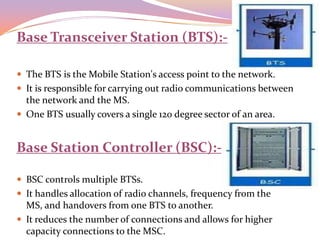
Base Transceiver Station (BTS):-

 The BTS is the Mobile Station's access point to the network.
 It is responsible for carrying out radio communications between
  the network and the MS.
 One BTS usually covers a single 120 degree sector of an area.


Base Station Controller (BSC):-

 BSC controls multiple BTSs.
 It handles allocation of radio channels, frequency from the
  MS, and handovers from one BTS to another.
 It reduces the number of connections and allows for higher
  capacity connections to the MSC.
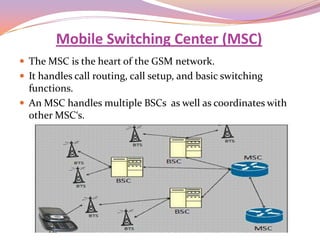
Mobile Switching Center (MSC)
 The MSC is the heart of the GSM network.
 It handles call routing, call setup, and basic switching
  functions.
 An MSC handles multiple BSCs as well as coordinates with
  other MSC‘s.
IMEI
 International Mobile Equipment Identity.

 15 digit unique code that is used to identify the GSM
  phone.

 When a phone is switched on, this unique IMEI
  number is transmitted and checked against a data
  base of black listed phones in the network’s EIR .

 To know the IMEI number the *#06# has to be pressed.
DESIGNING FOR THE SNIFFER
 The sniffer device can be called as a mobile base
 station that includes   the   following   important
 components:-


     1. Sniffer base station.
     2. Unidirectional antenna.
     3. Tracking software.
SNIFFER BASE STATION

 The sniffer is a small base station, it includes
 transceiver section.

 It should operate at a frequency that is much different
 from the frequency of the current cell in which the
 operation of detection is being carried out.
UNIDIRECTIONAL ANTENNA
 The directional antenna acts as the eyes for the sniffer
 for the purpose of the detecting the lost mobile phones.

 Antenna is a device which works at specified frequencies
 range for transmitting or receiving the data signal.

 In general, antennas transmit power depending on lobe
 pattern which varies from one antenna to the other.
SOFTWARE FOR THE TRACKING
 The software is used for the tracking of the lost mobile
  phones.
 Main feature of this software is to create the data base and this
  is mainly done using a Random Access Memory.
 The software has the input as the IMEI number of the lost
  mobile phone from the RAM.
 After getting the input from the lost device that might respond
  to the signal sent by the sniffer.
WORKING OF THE SNIFFER DEVICE

o If the connection of the lost mobile is Established with the
  BTS, The MSC collects it’s IMEI number.

o If these number are matched with the reported lost no’s .

o It transferred the connection to the sniffer device.

o Searching can perform with the GPS system for more
  accurate , fast detection and location can be tracked.
ADVANTAGES
 This method is used for finding the lost mobiles effectively.


 Cost effective.


 Low power consumption.


 Easy to design.
CONCLUSION
 In today’s life Mobile phones are the mainly used device for
  communication ,so large no. of complaints regarding the
  mobile phone that lost are comes.

 This method appears to be complex but for large scale
  detection the overall effective cost of the design down.

 There are certain boundary conditions like the power of
  the mobile should be good enough etc.. but this method
  can be improved by using modern technologies.
Thank you


17

Outes

  • 1.
  • 2.
    Out lines  Introduction What is sniffer?  Introduction of cellular systems  Working of Sniffer  Advantages and disadvantages of Sniffer.
  • 3.
    Introduction  Each andevery day thousands of mobiles get misplaced or lost.  To prevent unauthorized person from making and receiving the calls we use this technique.  Effective way for the blocking of the lost mobile with the help of International Mobile Equipment Identifier (IMEI).  The device can be called as a mobile Base station that includes Sniffer.
  • 4.
    What is Sniffer?  The main scope is to detect the lost mobiles.  For the detection of lost mobile SNIFFER plays a vital role.  The Sniffer is basically a transceiver that works in the different frequency that we are commonly used.  The sniffer device has to be designed for easy mobility for the purpose of detection.
  • 5.
  • 6.
    Mobile Station (MS):- TheMobile Station (MS) is made up of two components: 1.Mobile Equipment (ME): Each phone is uniquely identified by the International Mobile Equipment Identity (IMEI) number. This number is burned into the phone by the manufacturer. 2.Subscriber Identity Module (SIM): The SIM is a small smart card that is inserted into the phone and carries information specific to the subscriber. 6
  • 7.
    Base Transceiver Station(BTS):-  The BTS is the Mobile Station's access point to the network.  It is responsible for carrying out radio communications between the network and the MS.  One BTS usually covers a single 120 degree sector of an area. Base Station Controller (BSC):-  BSC controls multiple BTSs.  It handles allocation of radio channels, frequency from the MS, and handovers from one BTS to another.  It reduces the number of connections and allows for higher capacity connections to the MSC.
  • 8.
    Mobile Switching Center(MSC)  The MSC is the heart of the GSM network.  It handles call routing, call setup, and basic switching functions.  An MSC handles multiple BSCs as well as coordinates with other MSC‘s.
  • 9.
    IMEI  International MobileEquipment Identity.  15 digit unique code that is used to identify the GSM phone.  When a phone is switched on, this unique IMEI number is transmitted and checked against a data base of black listed phones in the network’s EIR .  To know the IMEI number the *#06# has to be pressed.
  • 10.
    DESIGNING FOR THESNIFFER  The sniffer device can be called as a mobile base station that includes the following important components:- 1. Sniffer base station. 2. Unidirectional antenna. 3. Tracking software.
  • 11.
    SNIFFER BASE STATION The sniffer is a small base station, it includes transceiver section.  It should operate at a frequency that is much different from the frequency of the current cell in which the operation of detection is being carried out.
  • 12.
    UNIDIRECTIONAL ANTENNA  Thedirectional antenna acts as the eyes for the sniffer for the purpose of the detecting the lost mobile phones.  Antenna is a device which works at specified frequencies range for transmitting or receiving the data signal.  In general, antennas transmit power depending on lobe pattern which varies from one antenna to the other.
  • 13.
    SOFTWARE FOR THETRACKING  The software is used for the tracking of the lost mobile phones.  Main feature of this software is to create the data base and this is mainly done using a Random Access Memory.  The software has the input as the IMEI number of the lost mobile phone from the RAM.  After getting the input from the lost device that might respond to the signal sent by the sniffer.
  • 14.
    WORKING OF THESNIFFER DEVICE o If the connection of the lost mobile is Established with the BTS, The MSC collects it’s IMEI number. o If these number are matched with the reported lost no’s . o It transferred the connection to the sniffer device. o Searching can perform with the GPS system for more accurate , fast detection and location can be tracked.
  • 15.
    ADVANTAGES  This methodis used for finding the lost mobiles effectively.  Cost effective.  Low power consumption.  Easy to design.
  • 16.
    CONCLUSION  In today’slife Mobile phones are the mainly used device for communication ,so large no. of complaints regarding the mobile phone that lost are comes.  This method appears to be complex but for large scale detection the overall effective cost of the design down.  There are certain boundary conditions like the power of the mobile should be good enough etc.. but this method can be improved by using modern technologies.
  • 17.