© Food – a fact of life 2013
Nutrients
Complete the table below.
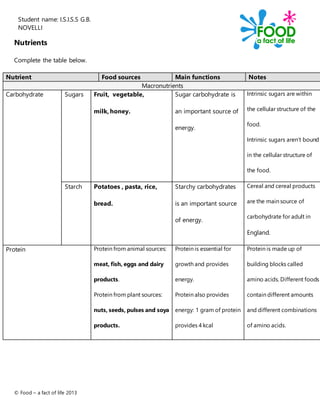
Nutrient Food sources Main functions Notes
Macronutrients
Carbohydrate Sugars Fruit, vegetable,
milk, honey.
Sugar carbohydrate is
an important source of
energy.
Intrinsic sugars are within
the cellular structure of the
food.
Intrinsic sugars aren’t bound
in the cellular structure of
the food.
Starch Potatoes , pasta, rice,
bread.
Starchy carbohydrates
is an important source
of energy.
Cereal and cereal products
are the main source of
carbohydrate for adult in
England.
Protein Protein from animal sources:
meat, fish, eggs and dairy
products.
Protein from plant sources:
nuts, seeds, pulses and soya
products.
Protein is essential for
growth and provides
energy.
Protein also provides
energy: 1 gram of protein
provides 4 kcal
Protein is made up of
building blocks called
amino acids. Different foods
contain different amounts
and different combinations
of amino acids.
Student name: I.S.I.S.S G.B.
NOVELLI
Date:
© Food – a fact of life 2013
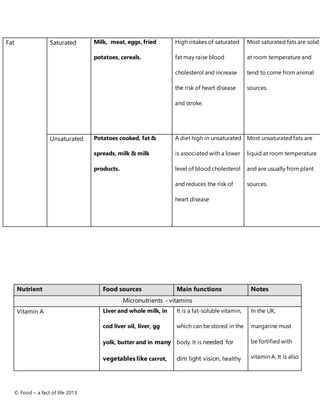
Fat Saturated Milk, meat, eggs, fried
potatoes, cereals.
High intakes of saturated
fat may raise blood
cholesterol and increase
the risk of heart disease
and stroke.
Most saturated fats are solid
at room temperature and
tend to come from animal
sources.
Unsaturated Potatoes cooked, fat &
spreads, milk & milk
products.
A diet high in unsaturated
is associated with a lower
level of blood cholesterol
and reduces the risk of
heart disease
Most unsaturated fats are
liquid at room temperature
and are usually from plant
sources.
Nutrient Food sources Main functions Notes
Micronutrients - vitamins
Vitamin A Liver and whole milk, in
cod liver oil, liver, gg
yolk, butter and in many
vegetables like carrot,
It is a fat-soluble vitamin,
which can be stored in the
body. It is needed for
dim light vision, healthy
In the UK,
margarine must
be fortified with
vitamin A. It is also
© Food – a fact of life 2013
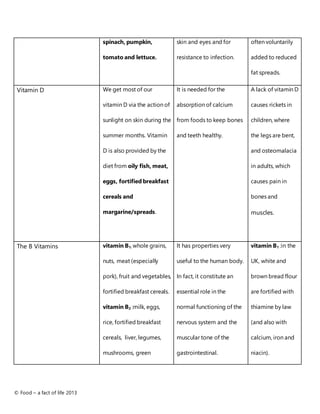
spinach, pumpkin,
tomato and lettuce.
skin and eyes and for
resistance to infection.
often voluntarily
added to reduced
fat spreads.
Vitamin D We get most of our
vitamin D via the action of
sunlight on skin during the
summer months. Vitamin
D is also provided by the
diet from oily fish, meat,
eggs, fortified breakfast
cereals and
margarine/spreads.
It is needed for the
absorption of calcium
from foods to keep bones
and teeth healthy.
A lack of vitamin D
causes rickets in
children, where
the legs are bent,
and osteomalacia
in adults, which
causes pain in
bones and
muscles.
The B Vitamins vitamin B1: whole grains,
nuts, meat (especially
pork), fruit and vegetables,
fortified breakfast cereals.
vitamin B2 :milk, eggs,
rice, fortified breakfast
cereals, liver, legumes,
mushrooms, green
It has properties very
useful to the human body.
In fact, it constitute an
essential role in the
normal functioning of the
nervous system and the
muscular tone of the
gastrointestinal.
vitamin B1 :in the
UK, white and
brown bread flour
are fortified with
thiamine by law
(and also with
calcium, iron and
niacin).
© Food – a fact of life 2013
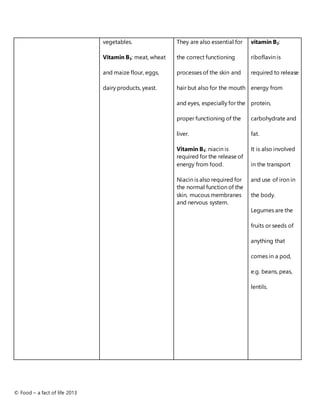
vegetables.
Vitamin B3: meat, wheat
and maize flour, eggs,
dairy products, yeast.
They are also essential for
the correct functioning
processes of the skin and
hair but also for the mouth
and eyes, especially for the
proper functioning of the
liver.
Vitamin B3: niacin is
required for the release of
energy from food.
Niacin is also required for
the normal function of the
skin, mucous membranes
and nervous system.
vitamin B2:
riboflavin is
required to release
energy from
protein,
carbohydrate and
fat.
It is also involved
in the transport
and use of iron in
the body.
Legumes are the
fruits or seeds of
anything that
comes in a pod,
e.g. beans, peas,
lentils.
© Food – a fact of life 2013
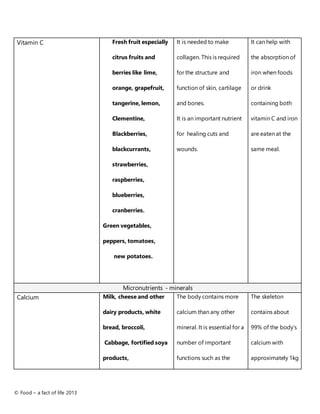
Vitamin C Fresh fruit especially
citrus fruits and
berries like lime,
orange, grapefruit,
tangerine, lemon,
Clementine,
Blackberries,
blackcurrants,
strawberries,
raspberries,
blueberries,
cranberries.
Green vegetables,
peppers, tomatoes,
new potatoes.
It is needed to make
collagen. This is required
for the structure and
function of skin, cartilage
and bones.
It is an important nutrient
for healing cuts and
wounds.
It can help with
the absorption of
iron when foods
or drink
containing both
vitamin C and iron
are eaten at the
same meal.
Micronutrients - minerals
Calcium Milk, cheese and other
dairy products, white
bread, broccoli,
Cabbage, fortified soya
products,
The body contains more
calcium than any other
mineral. It is essential for a
number of important
functions such as the
The skeleton
contains about
99% of the body’s
calcium with
approximately 1kg
© Food – a fact of life 2013
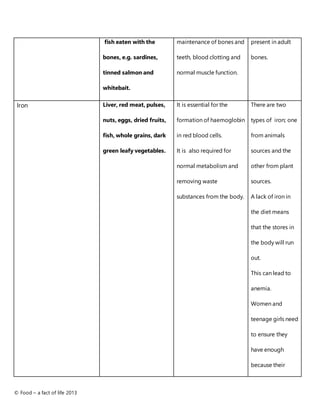
fish eaten with the
bones, e.g. sardines,
tinned salmon and
whitebait.
maintenance of bones and
teeth, blood clotting and
normal muscle function.
present in adult
bones.
Iron Liver, red meat, pulses,
nuts, eggs, dried fruits,
fish, whole grains, dark
green leafy vegetables.
It is essential for the
formation of haemoglobin
in red blood cells.
It is also required for
normal metabolism and
removing waste
substances from the body.
There are two
types of iron; one
from animals
sources and the
other from plant
sources.
A lack of iron in
the diet means
that the stores in
the body will run
out.
This can lead to
anemia.
Women and
teenage girls need
to ensure they
have enough
because their
© Food – a fact of life 2013
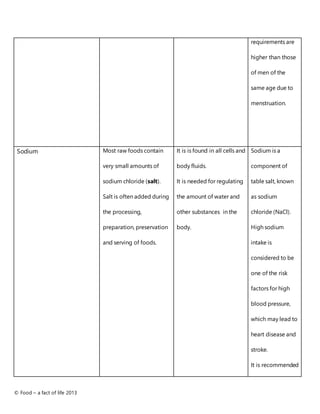
requirements are
higher than those
of men of the
same age due to
menstruation.
Sodium Most raw foods contain
very small amounts of
sodium chloride (salt).
Salt is often added during
the processing,
preparation, preservation
and serving of foods.
It is is found in all cells and
body fluids.
It is needed for regulating
the amount of water and
other substances in the
body.
Sodium is a
component of
table salt, known
as sodium
chloride (NaCl).
High sodium
intake is
considered to be
one of the risk
factors for high
blood pressure,
which may lead to
heart disease and
stroke.
It is recommended
© Food – a fact of life 2013
that adults and
children 11 years
and over not to
have more than
6g of salt per day.
Young children
should eat less.

OUR TABLE OF NUTRIENTS:

  • 1.
    © Food –a fact of life 2013 Nutrients Complete the table below. Nutrient Food sources Main functions Notes Macronutrients Carbohydrate Sugars Fruit, vegetable, milk, honey. Sugar carbohydrate is an important source of energy. Intrinsic sugars are within the cellular structure of the food. Intrinsic sugars aren’t bound in the cellular structure of the food. Starch Potatoes , pasta, rice, bread. Starchy carbohydrates is an important source of energy. Cereal and cereal products are the main source of carbohydrate for adult in England. Protein Protein from animal sources: meat, fish, eggs and dairy products. Protein from plant sources: nuts, seeds, pulses and soya products. Protein is essential for growth and provides energy. Protein also provides energy: 1 gram of protein provides 4 kcal Protein is made up of building blocks called amino acids. Different foods contain different amounts and different combinations of amino acids. Student name: I.S.I.S.S G.B. NOVELLI Date:
  • 2.
    © Food –a fact of life 2013 Fat Saturated Milk, meat, eggs, fried potatoes, cereals. High intakes of saturated fat may raise blood cholesterol and increase the risk of heart disease and stroke. Most saturated fats are solid at room temperature and tend to come from animal sources. Unsaturated Potatoes cooked, fat & spreads, milk & milk products. A diet high in unsaturated is associated with a lower level of blood cholesterol and reduces the risk of heart disease Most unsaturated fats are liquid at room temperature and are usually from plant sources. Nutrient Food sources Main functions Notes Micronutrients - vitamins Vitamin A Liver and whole milk, in cod liver oil, liver, gg yolk, butter and in many vegetables like carrot, It is a fat-soluble vitamin, which can be stored in the body. It is needed for dim light vision, healthy In the UK, margarine must be fortified with vitamin A. It is also
  • 3.
    © Food –a fact of life 2013 spinach, pumpkin, tomato and lettuce. skin and eyes and for resistance to infection. often voluntarily added to reduced fat spreads. Vitamin D We get most of our vitamin D via the action of sunlight on skin during the summer months. Vitamin D is also provided by the diet from oily fish, meat, eggs, fortified breakfast cereals and margarine/spreads. It is needed for the absorption of calcium from foods to keep bones and teeth healthy. A lack of vitamin D causes rickets in children, where the legs are bent, and osteomalacia in adults, which causes pain in bones and muscles. The B Vitamins vitamin B1: whole grains, nuts, meat (especially pork), fruit and vegetables, fortified breakfast cereals. vitamin B2 :milk, eggs, rice, fortified breakfast cereals, liver, legumes, mushrooms, green It has properties very useful to the human body. In fact, it constitute an essential role in the normal functioning of the nervous system and the muscular tone of the gastrointestinal. vitamin B1 :in the UK, white and brown bread flour are fortified with thiamine by law (and also with calcium, iron and niacin).
  • 4.
    © Food –a fact of life 2013 vegetables. Vitamin B3: meat, wheat and maize flour, eggs, dairy products, yeast. They are also essential for the correct functioning processes of the skin and hair but also for the mouth and eyes, especially for the proper functioning of the liver. Vitamin B3: niacin is required for the release of energy from food. Niacin is also required for the normal function of the skin, mucous membranes and nervous system. vitamin B2: riboflavin is required to release energy from protein, carbohydrate and fat. It is also involved in the transport and use of iron in the body. Legumes are the fruits or seeds of anything that comes in a pod, e.g. beans, peas, lentils.
  • 5.
    © Food –a fact of life 2013 Vitamin C Fresh fruit especially citrus fruits and berries like lime, orange, grapefruit, tangerine, lemon, Clementine, Blackberries, blackcurrants, strawberries, raspberries, blueberries, cranberries. Green vegetables, peppers, tomatoes, new potatoes. It is needed to make collagen. This is required for the structure and function of skin, cartilage and bones. It is an important nutrient for healing cuts and wounds. It can help with the absorption of iron when foods or drink containing both vitamin C and iron are eaten at the same meal. Micronutrients - minerals Calcium Milk, cheese and other dairy products, white bread, broccoli, Cabbage, fortified soya products, The body contains more calcium than any other mineral. It is essential for a number of important functions such as the The skeleton contains about 99% of the body’s calcium with approximately 1kg
  • 6.
    © Food –a fact of life 2013 fish eaten with the bones, e.g. sardines, tinned salmon and whitebait. maintenance of bones and teeth, blood clotting and normal muscle function. present in adult bones. Iron Liver, red meat, pulses, nuts, eggs, dried fruits, fish, whole grains, dark green leafy vegetables. It is essential for the formation of haemoglobin in red blood cells. It is also required for normal metabolism and removing waste substances from the body. There are two types of iron; one from animals sources and the other from plant sources. A lack of iron in the diet means that the stores in the body will run out. This can lead to anemia. Women and teenage girls need to ensure they have enough because their
  • 7.
    © Food –a fact of life 2013 requirements are higher than those of men of the same age due to menstruation. Sodium Most raw foods contain very small amounts of sodium chloride (salt). Salt is often added during the processing, preparation, preservation and serving of foods. It is is found in all cells and body fluids. It is needed for regulating the amount of water and other substances in the body. Sodium is a component of table salt, known as sodium chloride (NaCl). High sodium intake is considered to be one of the risk factors for high blood pressure, which may lead to heart disease and stroke. It is recommended
  • 8.
    © Food –a fact of life 2013 that adults and children 11 years and over not to have more than 6g of salt per day. Young children should eat less.