NUTRITION CLASS FOR SCHOOL
STUDENTS
IAP TRIVANDRUM
&
IAP KERALA
NATIONAL NUTRITION MONTH SEPT 2020
Nutrition
· Nutrient: substance used by the body
for growth, maintenance, and repair
· Categories of nutrients:
·Carbohydrates
·Lipids
·Proteins
·Vitamins
·Minerals
·Water
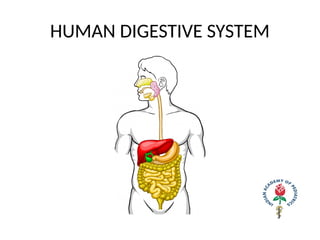
HUMAN DIGESTIVE SYSTEM
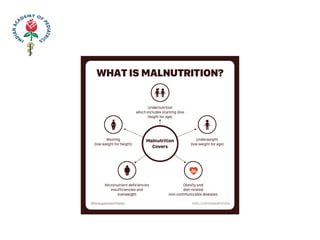
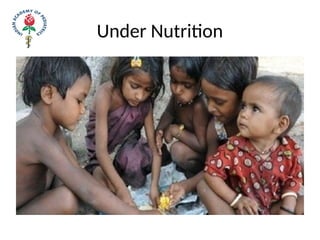
Under Nutrition
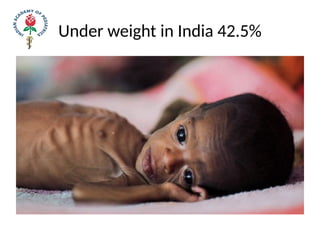
Under weight in India 42.5%
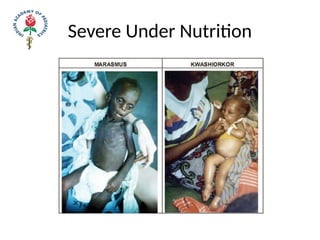
Severe Under Nutrition
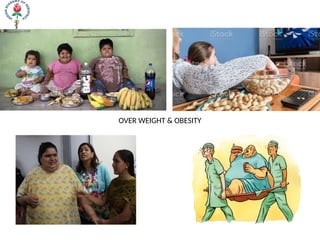
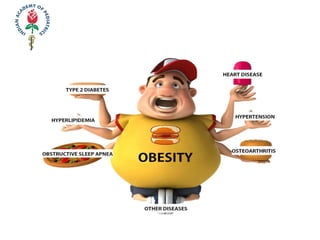
OVER WEIGHT & OBESITY
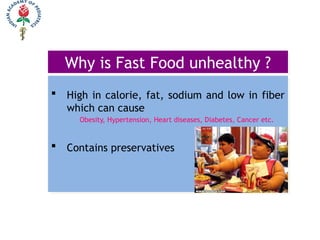
Why is Fast Food unhealthy ?
 High in calorie, fat, sodium and low in fiber
which can cause
Obesity, Hypertension, Heart diseases, Diabetes, Cancer etc.
 Contains preservatives
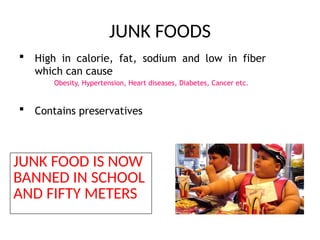
JUNK FOODS
 High in calorie, fat, sodium and low in fiber
which can cause
Obesity, Hypertension, Heart diseases, Diabetes, Cancer etc.
 Contains preservatives
JUNK FOOD IS NOW
BANNED IN SCHOOL
AND FIFTY METERS
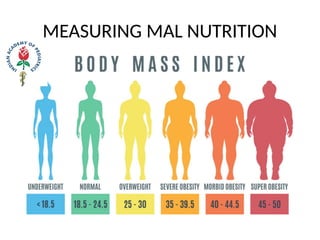
MEASURING MAL NUTRITION
Adults should aim for a healthy body weight
for their height and try to keep it at that level.
The Body Mass Index (BMI) is a good indicator
if a person is underweight, overweight or a
healthy weight.
To calculate BMI (kg/m2
), divide weight (kg) by
height (m) x height (m).
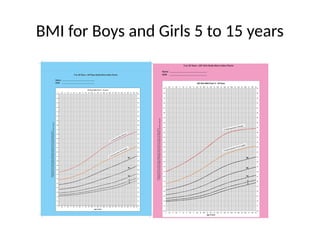
BMI for Boys and Girls 5 to 15 years
ADOLESCENT HEALTH
• Adolescence is a period of rapid growth and
development and is when puberty occurs.
• The demand for energy and most nutrients
are relatively high
Adolescence:
The Vulnerable Life Stage
• Adolescence
• 15-20% increase in height
• 50% of peak bone mass is attained
• Up to 50% of adult body weight is gained
• Moderately active adolescent girl- 2300
cal/day (WHO 2018)
• Adolescent boy- 2800 cal/day
Nutrient Requirements
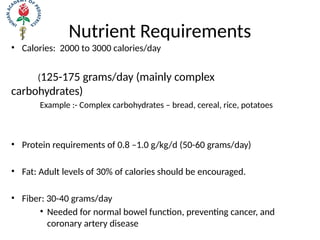
• Calories: 2000 to 3000 calories/day
(125-175 grams/day (mainly complex
carbohydrates)
Example :- Complex carbohydrates – bread, cereal, rice, potatoes
• Protein requirements of 0.8 –1.0 g/kg/d (50-60 grams/day)
• Fat: Adult levels of 30% of calories should be encouraged.
• Fiber: 30-40 grams/day
• Needed for normal bowel function, preventing cancer, and
coronary artery disease
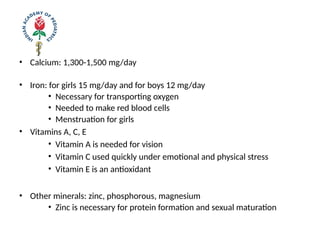
• Calcium: 1,300-1,500 mg/day
• Iron: for girls 15 mg/day and for boys 12 mg/day
• Necessary for transporting oxygen
• Needed to make red blood cells
• Menstruation for girls
• Vitamins A, C, E
• Vitamin A is needed for vision
• Vitamin C used quickly under emotional and physical stress
• Vitamin E is an antioxidant
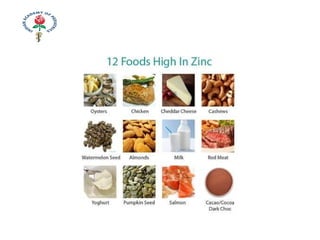
• Other minerals: zinc, phosphorous, magnesium
• Zinc is necessary for protein formation and sexual maturation
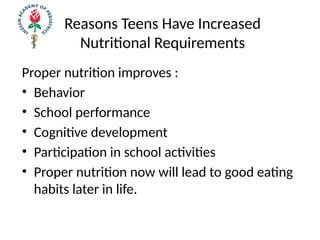
Reasons Teens Have Increased
Nutritional Requirements
Proper nutrition improves :
• Behavior
• School performance
• Cognitive development
• Participation in school activities
• Proper nutrition now will lead to good eating
habits later in life.
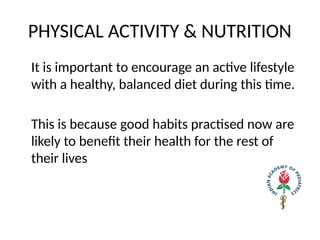
PHYSICAL ACTIVITY & NUTRITION
It is important to encourage an active lifestyle
with a healthy, balanced diet during this time.
This is because good habits practised now are
likely to benefit their health for the rest of
their lives
RECTIFICATION OF MALNUTRITION
Critical Thinking Question:
Why does your body need food?
Answer:
Food has two main functions:
1) Food provides raw materials for cells to build
new molecules for growth and reproduction
2) Food provides energy
Nutrients
• Many cells of the body (ex. liver cells) can
convert one molecule into another based on
what is needed
• Essential nutrients: must be provided by the
diet because they can’t be created through
conversions
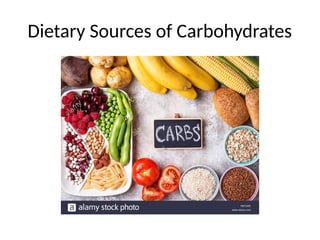
Dietary Sources of Carbohydrates
Dietary Requirements of Carbohydrates
Excesses:
• Obesity
• Nutritional deficits (“empty calories”)
• Gastrointestinal problems (constipation)
Deficits:
• Tissue wasting (muscle breakdown)
• Metabolic acidosis (fat breakdown)
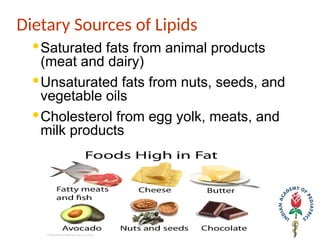
Dietary Sources of Lipids
·Saturated fats from animal products
(meat and dairy)
·Unsaturated fats from nuts, seeds, and
vegetable oils
·Cholesterol from egg yolk, meats, and
milk products
Trans fats
• “Healthy” vegetable oils that have been
“hydrogenated” to make them more solid
• Used in many snack and junk foods
• Increases shelf life of foods (they don’t get rancid)
• Have the most negative effect on cholesterol –
raises the bad cholesterol and lowers the good
cholesterol.
Dietary Requirements of Lipids
· 30% or less of total caloric intake
· Saturated fats should be less than 10% of total
calories
· Cholesterol should be less than 250 mg (ex. one
egg yolk)
Body Uses of Proteins
· Major component of structural materials
(skin, nails, muscles)
· Regulate chemical reactions (enzymes)
Dietary Requirements of Proteins
· Depends on age, size, and metabolic rate
·0.8 grams per kilogram of body weight
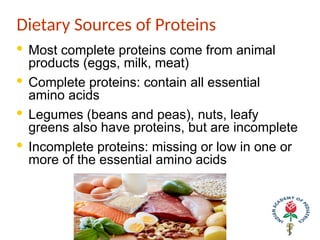
Dietary Sources of Proteins
· Most complete proteins come from animal
products (eggs, milk, meat)
· Complete proteins: contain all essential
amino acids
· Legumes (beans and peas), nuts, leafy
greens also have proteins, but are incomplete
· Incomplete proteins: missing or low in one or
more of the essential amino acids
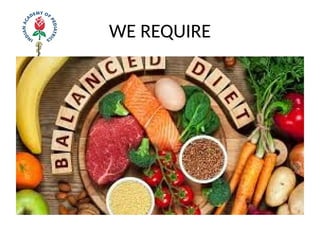
WE REQUIRE
MICRO
NUTRIENTS
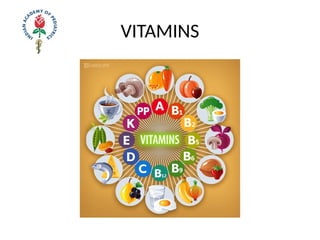
VITAMINS
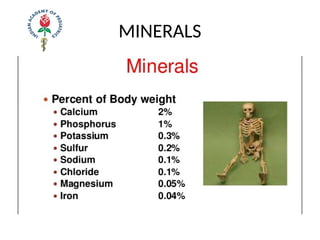
MINERALS
Minerals
· Body requires moderate amounts of 7 minerals
(Ca, P, K, S, Na, Cl, Mg) and trace amounts of
about 12 others
· Make up 4% of the body weight, mostly due to
Ca and P in bones
· Provide strength to certain structures
Minerals
· Vital components to many biological compounds
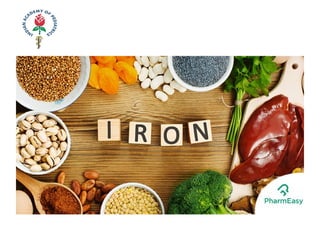
(ex. iron (Fe) in hemoglobin)
· Important electrolytes (sodium/chloride ions)
· Found in mostly vegetables, legumes, milk, and
meats
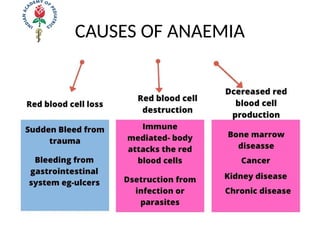
CAUSES OF ANAEMIA
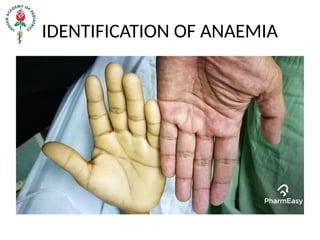
IDENTIFICATION OF ANAEMIA
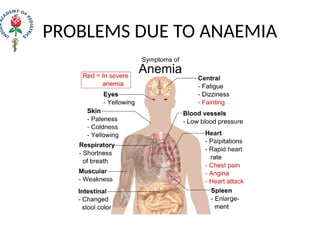
PROBLEMS DUE TO ANAEMIA
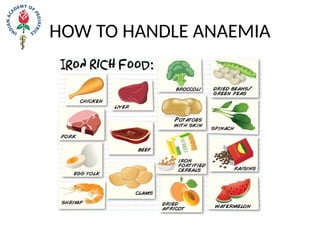
HOW TO HANDLE ANAEMIA
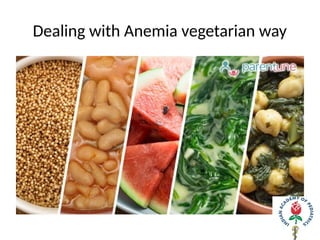
Dealing with Anemia vegetarian way
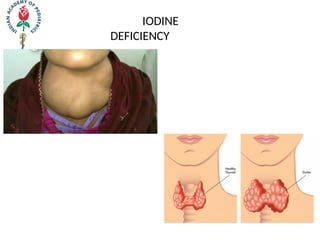
IODINE
DEFICIENCY
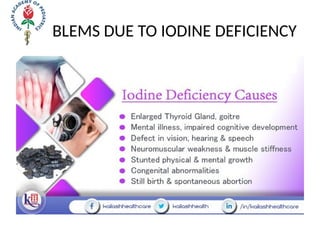
PROBLEMS DUE TO IODINE DEFICIENCY
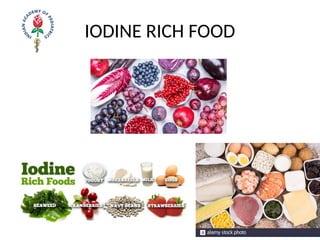
IODINE RICH FOOD
CALCIUM
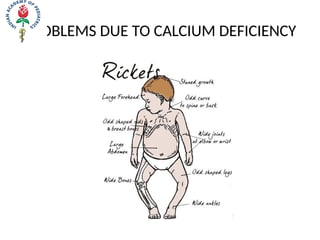
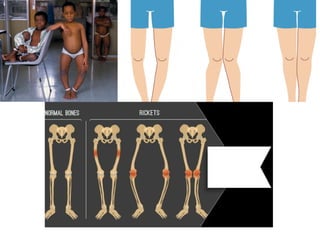
PROBLEMS DUE TO CALCIUM DEFICIENCY
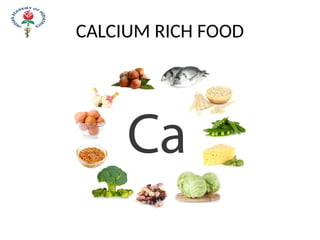
CALCIUM RICH FOOD
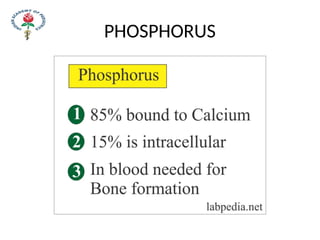
PHOSPHORUS
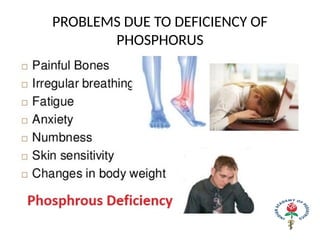
PROBLEMS DUE TO DEFICIENCY OF
PHOSPHORUS
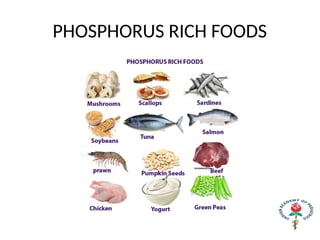
PHOSPHORUS RICH FOODS
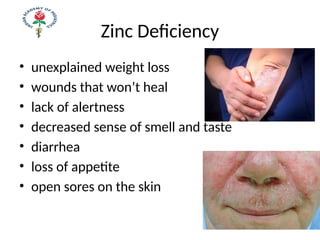
Zinc Deficiency
• unexplained weight loss
• wounds that won’t heal
• lack of alertness
• decreased sense of smell and taste
• diarrhea
• loss of appetite
• open sores on the skin
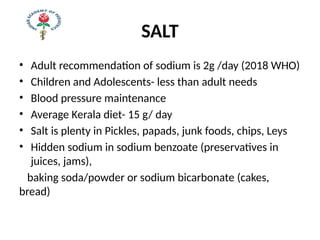
SALT
• Adult recommendation of sodium is 2g /day (2018 WHO)
• Children and Adolescents- less than adult needs
• Blood pressure maintenance
• Average Kerala diet- 15 g/ day
• Salt is plenty in Pickles, papads, junk foods, chips, Leys
• Hidden sodium in sodium benzoate (preservatives in
juices, jams),
baking soda/powder or sodium bicarbonate (cakes,
bread)
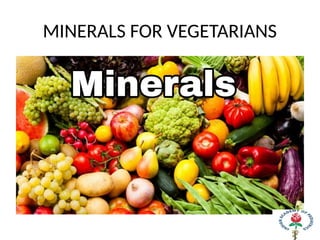
MINERALS FOR VEGETARIANS
VITAMINS
Vitamins
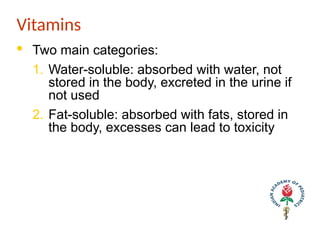
· Two main categories:
1. Water-soluble: absorbed with water, not
stored in the body, excreted in the urine if
not used
2. Fat-soluble: absorbed with fats, stored in
the body, excesses can lead to toxicity
Vitamins
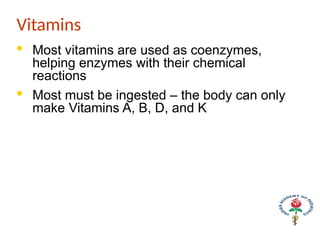
· Most vitamins are used as coenzymes,
helping enzymes with their chemical
reactions
· Most must be ingested – the body can only
make Vitamins A, B, D, and K
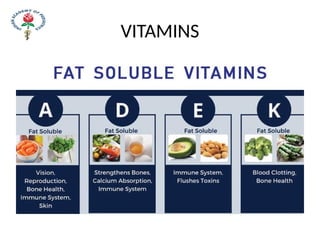
VITAMINS
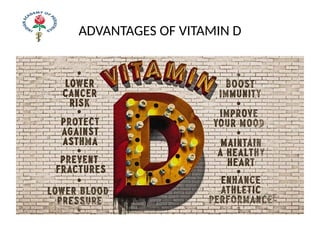
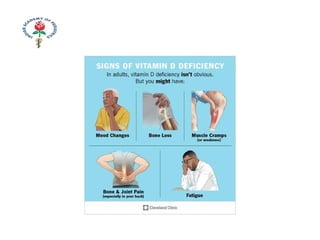
ADVANTAGES OF VITAMIN D
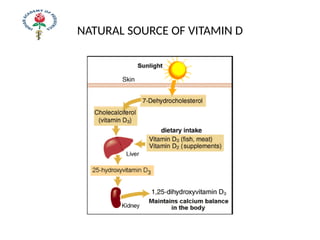
NATURAL SOURCE OF VITAMIN D
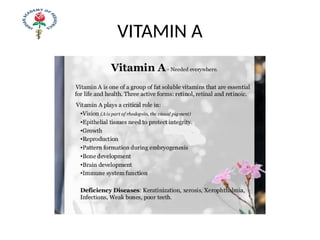
VITAMIN A
VITAMIN A RICH FOOD
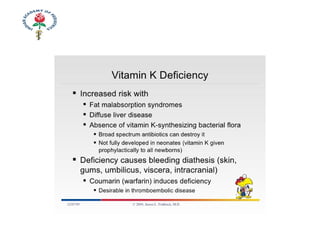
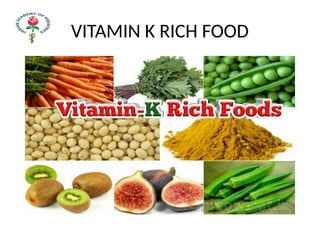
VITAMIN K RICH FOOD
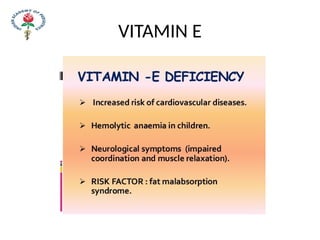
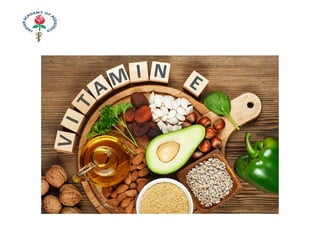
VITAMIN E
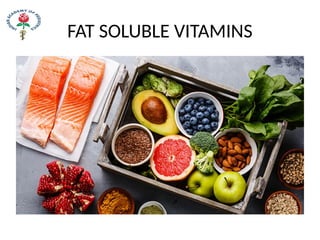
FAT SOLUBLE VITAMINS
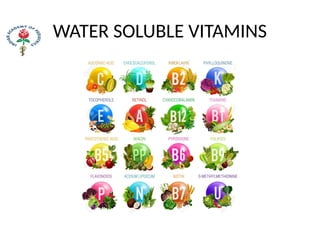
WATER SOLUBLE VITAMINS
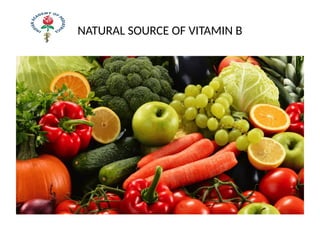
NATURAL SOURCE OF VITAMIN B
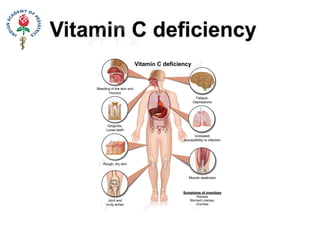
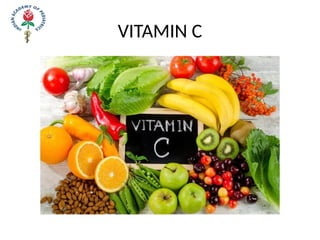
VITAMIN C
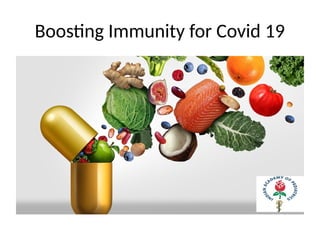
Boosting Immunity for Covid 19
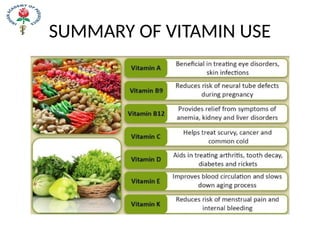
SUMMARY OF VITAMIN USE
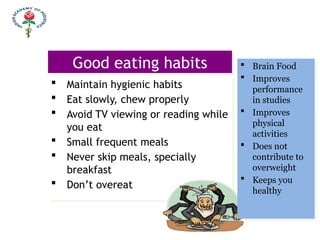
Good eating habits
 Maintain hygienic habits
 Eat slowly, chew properly
 Avoid TV viewing or reading while
you eat
 Small frequent meals
 Never skip meals, specially
breakfast
 Don’t overeat
 Brain Food
 Improves
performance
in studies
 Improves
physical
activities
 Does not
contribute to
overweight
 Keeps you
healthy
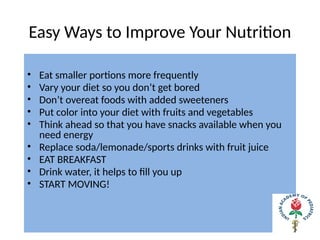
Easy Ways to Improve Your Nutrition
• Eat smaller portions more frequently
• Vary your diet so you don’t get bored
• Don’t overeat foods with added sweeteners
• Put color into your diet with fruits and vegetables
• Think ahead so that you have snacks available when you
need energy
• Replace soda/lemonade/sports drinks with fruit juice
• EAT BREAKFAST
• Drink water, it helps to fill you up
• START MOVING!
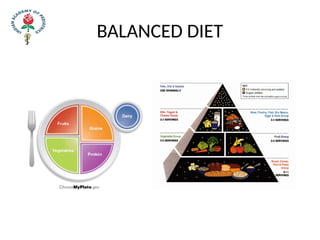
BALANCED DIET
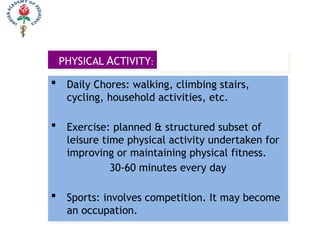
PHYSICAL ACTIVITY:
 Daily Chores: walking, climbing stairs,
cycling, household activities, etc.
 Exercise: planned & structured subset of
leisure time physical activity undertaken for
improving or maintaining physical fitness.
30-60 minutes every day
 Sports: involves competition. It may become
an occupation.
Key points
 Proper Nutrition & Regular Physical Activity are
very important for
• Growth
• Prevention of illness
• Future health
THANKS
• Dr KE Elizabeth - National Advisor Pediatric and
Adolescent Nutrition
• Dr M Narayanan - State President
• Dr Balachander D - State Secretary
• Dr Krishna Mohan - State Treasurer
• Dr Bennet xylem P - Trivandrum President
• Dr Priya Sreenivasan - Trivandrum Secretary
• Dr Praveen KS - Trivandrum Treasurer
IAP KERALA 2020

Nutrition for School students. Final.pptx

  • 1.
    NUTRITION CLASS FORSCHOOL STUDENTS IAP TRIVANDRUM & IAP KERALA
  • 2.
  • 3.
    Nutrition · Nutrient: substanceused by the body for growth, maintenance, and repair · Categories of nutrients: ·Carbohydrates ·Lipids ·Proteins ·Vitamins ·Minerals ·Water
  • 4.
  • 6.
  • 7.
    Under weight inIndia 42.5%
  • 8.
  • 9.
  • 10.
    Why is FastFood unhealthy ?  High in calorie, fat, sodium and low in fiber which can cause Obesity, Hypertension, Heart diseases, Diabetes, Cancer etc.  Contains preservatives
  • 11.
    JUNK FOODS  Highin calorie, fat, sodium and low in fiber which can cause Obesity, Hypertension, Heart diseases, Diabetes, Cancer etc.  Contains preservatives JUNK FOOD IS NOW BANNED IN SCHOOL AND FIFTY METERS
  • 13.
  • 14.
    Adults should aimfor a healthy body weight for their height and try to keep it at that level. The Body Mass Index (BMI) is a good indicator if a person is underweight, overweight or a healthy weight. To calculate BMI (kg/m2 ), divide weight (kg) by height (m) x height (m).
  • 15.
    BMI for Boysand Girls 5 to 15 years
  • 16.
    ADOLESCENT HEALTH • Adolescenceis a period of rapid growth and development and is when puberty occurs. • The demand for energy and most nutrients are relatively high
  • 17.
    Adolescence: The Vulnerable LifeStage • Adolescence • 15-20% increase in height • 50% of peak bone mass is attained • Up to 50% of adult body weight is gained • Moderately active adolescent girl- 2300 cal/day (WHO 2018) • Adolescent boy- 2800 cal/day
  • 18.
    Nutrient Requirements • Calories:2000 to 3000 calories/day (125-175 grams/day (mainly complex carbohydrates) Example :- Complex carbohydrates – bread, cereal, rice, potatoes • Protein requirements of 0.8 –1.0 g/kg/d (50-60 grams/day) • Fat: Adult levels of 30% of calories should be encouraged. • Fiber: 30-40 grams/day • Needed for normal bowel function, preventing cancer, and coronary artery disease
  • 19.
    • Calcium: 1,300-1,500mg/day • Iron: for girls 15 mg/day and for boys 12 mg/day • Necessary for transporting oxygen • Needed to make red blood cells • Menstruation for girls • Vitamins A, C, E • Vitamin A is needed for vision • Vitamin C used quickly under emotional and physical stress • Vitamin E is an antioxidant • Other minerals: zinc, phosphorous, magnesium • Zinc is necessary for protein formation and sexual maturation
  • 20.
    Reasons Teens HaveIncreased Nutritional Requirements Proper nutrition improves : • Behavior • School performance • Cognitive development • Participation in school activities • Proper nutrition now will lead to good eating habits later in life.
  • 21.
    PHYSICAL ACTIVITY &NUTRITION It is important to encourage an active lifestyle with a healthy, balanced diet during this time. This is because good habits practised now are likely to benefit their health for the rest of their lives
  • 22.
  • 23.
    Critical Thinking Question: Whydoes your body need food? Answer: Food has two main functions: 1) Food provides raw materials for cells to build new molecules for growth and reproduction 2) Food provides energy
  • 24.
    Nutrients • Many cellsof the body (ex. liver cells) can convert one molecule into another based on what is needed • Essential nutrients: must be provided by the diet because they can’t be created through conversions
  • 25.
    Dietary Sources ofCarbohydrates
  • 26.
    Dietary Requirements ofCarbohydrates Excesses: • Obesity • Nutritional deficits (“empty calories”) • Gastrointestinal problems (constipation) Deficits: • Tissue wasting (muscle breakdown) • Metabolic acidosis (fat breakdown)
  • 27.
    Dietary Sources ofLipids ·Saturated fats from animal products (meat and dairy) ·Unsaturated fats from nuts, seeds, and vegetable oils ·Cholesterol from egg yolk, meats, and milk products
  • 28.
    Trans fats • “Healthy”vegetable oils that have been “hydrogenated” to make them more solid • Used in many snack and junk foods • Increases shelf life of foods (they don’t get rancid) • Have the most negative effect on cholesterol – raises the bad cholesterol and lowers the good cholesterol.
  • 29.
    Dietary Requirements ofLipids · 30% or less of total caloric intake · Saturated fats should be less than 10% of total calories · Cholesterol should be less than 250 mg (ex. one egg yolk)
  • 30.
    Body Uses ofProteins · Major component of structural materials (skin, nails, muscles) · Regulate chemical reactions (enzymes)
  • 31.
    Dietary Requirements ofProteins · Depends on age, size, and metabolic rate ·0.8 grams per kilogram of body weight
  • 32.
    Dietary Sources ofProteins · Most complete proteins come from animal products (eggs, milk, meat) · Complete proteins: contain all essential amino acids · Legumes (beans and peas), nuts, leafy greens also have proteins, but are incomplete · Incomplete proteins: missing or low in one or more of the essential amino acids
  • 34.
  • 35.
  • 36.
  • 37.
  • 38.
    Minerals · Body requiresmoderate amounts of 7 minerals (Ca, P, K, S, Na, Cl, Mg) and trace amounts of about 12 others · Make up 4% of the body weight, mostly due to Ca and P in bones · Provide strength to certain structures
  • 39.
    Minerals · Vital componentsto many biological compounds (ex. iron (Fe) in hemoglobin) · Important electrolytes (sodium/chloride ions) · Found in mostly vegetables, legumes, milk, and meats
  • 41.
  • 42.
  • 43.
  • 44.
  • 45.
    Dealing with Anemiavegetarian way
  • 46.
  • 47.
    PROBLEMS DUE TOIODINE DEFICIENCY
  • 48.
  • 49.
  • 50.
    PROBLEMS DUE TOCALCIUM DEFICIENCY
  • 52.
  • 53.
  • 54.
    PROBLEMS DUE TODEFICIENCY OF PHOSPHORUS
  • 55.
  • 56.
    Zinc Deficiency • unexplainedweight loss • wounds that won’t heal • lack of alertness • decreased sense of smell and taste • diarrhea • loss of appetite • open sores on the skin
  • 58.
    SALT • Adult recommendationof sodium is 2g /day (2018 WHO) • Children and Adolescents- less than adult needs • Blood pressure maintenance • Average Kerala diet- 15 g/ day • Salt is plenty in Pickles, papads, junk foods, chips, Leys • Hidden sodium in sodium benzoate (preservatives in juices, jams), baking soda/powder or sodium bicarbonate (cakes, bread)
  • 59.
  • 60.
  • 61.
    Vitamins · Two maincategories: 1. Water-soluble: absorbed with water, not stored in the body, excreted in the urine if not used 2. Fat-soluble: absorbed with fats, stored in the body, excesses can lead to toxicity
  • 62.
    Vitamins · Most vitaminsare used as coenzymes, helping enzymes with their chemical reactions · Most must be ingested – the body can only make Vitamins A, B, D, and K
  • 63.
  • 64.
  • 66.
  • 67.
  • 68.
  • 70.
  • 71.
  • 73.
  • 74.
  • 77.
  • 80.
  • 81.
  • 82.
  • 83.
    Good eating habits Maintain hygienic habits  Eat slowly, chew properly  Avoid TV viewing or reading while you eat  Small frequent meals  Never skip meals, specially breakfast  Don’t overeat  Brain Food  Improves performance in studies  Improves physical activities  Does not contribute to overweight  Keeps you healthy
  • 84.
    Easy Ways toImprove Your Nutrition • Eat smaller portions more frequently • Vary your diet so you don’t get bored • Don’t overeat foods with added sweeteners • Put color into your diet with fruits and vegetables • Think ahead so that you have snacks available when you need energy • Replace soda/lemonade/sports drinks with fruit juice • EAT BREAKFAST • Drink water, it helps to fill you up • START MOVING!
  • 85.
  • 86.
    PHYSICAL ACTIVITY:  DailyChores: walking, climbing stairs, cycling, household activities, etc.  Exercise: planned & structured subset of leisure time physical activity undertaken for improving or maintaining physical fitness. 30-60 minutes every day  Sports: involves competition. It may become an occupation.
  • 87.
    Key points  ProperNutrition & Regular Physical Activity are very important for • Growth • Prevention of illness • Future health
  • 88.
    THANKS • Dr KEElizabeth - National Advisor Pediatric and Adolescent Nutrition • Dr M Narayanan - State President • Dr Balachander D - State Secretary • Dr Krishna Mohan - State Treasurer • Dr Bennet xylem P - Trivandrum President • Dr Priya Sreenivasan - Trivandrum Secretary • Dr Praveen KS - Trivandrum Treasurer IAP KERALA 2020