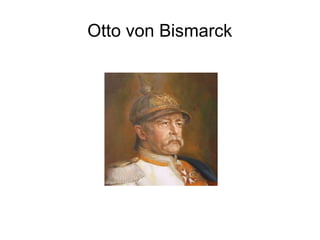
Otto von Bismarck
Early Years

Otto Eduard Leopold von Bismarck,

Born April 1, 1815 in Schoenhausen, Prussia

Father – Ferdinand von Bismarck-Schoenhausen – a
fifth generation Junker (landowning noble)

Mother – Wilhelmine Mencken came from a family of
successful academics
(history.com/topics/Otto-von-Bismarck)

(www.thelatinlibrary.com/imperialism/notes/bismarck)
Today- Schoenhausen
belongs to Germany
Schloss (castle) Schoenhausen -
This was Bismarcks place of birth
Education

His Mother enrolled Otto von Bismarck to Progressive Plamann
institute in Berlin at age 7

After 5 years at the institute he went to Frederick Wilhelm
Gymnasium for 3 years and took his abitur (university entrance
exam) in 1832

His mother encouraged him to go to university of Goettingen in the
Kingdom of Hannover to take the study of law

I lived in Hannover. The city today has a street named after Otto
von Bismarck (Bismarckstrasse)
www.thelatinlibrary.com/imperialism/notes/Bismarck

As a young man he was known as a heavy drinker with no
real direction in life

In his early 30s he changed from being an atheist to being
religious.

He got married in 1847 and got involved in politics

He became a substitute member of the Prussian Parliament
(history1800s.about.com/od/leaders/a/bismarck.bio.htm)
(History.com/topics/Otto-von-Bismarck)

Germany became a modern,unified nation
under the leadership of “Iron Chancellor” Otto
von Bismarck (1815-1898)

He first ruled Prussia and than all Germany
between 1862 and 1890
Blood and Iron Speech

His statement of his Blood and Iron speech of late September 1862
became notorious

“The great Question of the day will not be decided by speeches and
resolutions but by blood and Iron.”

He later complained that his words were taken out of context.

Blood and iron became a popular nickname for his politics
(history1800s.about.com/od/leaders/a/bismarckbio.htm)
Unification of Germany

From 1851 to 1862 Bismarck served a series of ambassadorships
at German confederation in Frankfurt, St Petersburg and Paris

Wilhelm I became Prussia King in 1861 and made Bismarck his
chief minister a year later

1864 – Bismark began a series of wars to get Prussian power in
europe

1864 – attacked Denmark to gain German speaking territories and 2
years later provoked Kaiser Franz Joseph I into starting the Austro-
Prussian war (1866)

Austrian Empire was defeated

Franco-Prussian War (1870-71)

Bismarck stirred political tensions between France and Prussia

He edited a telegram from Wilhelm the first to make both countries
feel insulted by the other.

France declared war – Prussians and Germans won

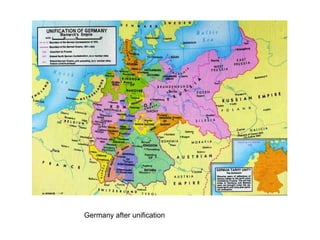
Prussia annexed the French border provinces of Alsace and
Lorraine and crowned Wilhelm emperor of unified Germany (second
Reich) in the Hall of Mirrors in Versialle
(History.com/topics/Otto-von-Bismarck)
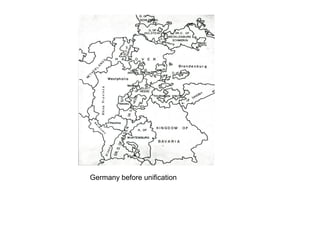
Germany before unification
Germany after unification
Germany was unified

Wilhelm and Bismarck turned to entrenching their
power

1870 Bismarck pursued a Kulturkampf (culture war)
against catholics who made up 36 percent of
Germany's population

He placed parochial schools under state control and
expelled the Jesuits

1880s – Bismarck set aside his conservative impulses to
counter socialists

He created Europe's first modern welfare state

He established national healthcare (1883) accident
insurance (1884) and old age pensions (1889)

1885 Bismarck hosted the Berlin Conference which
ended the scramble of Africa

This divided the continent between European powers and
established German colonies in Cameroon, Togoland
and East and Southwest Africa.
(History.com/topics/Otto-von Bismarck)
Germany and social insurance

Germany became the first nation in the world to adopt an old
age social insurance program in 1889 designed by Otto von
Bismarck

Idea was first put forward, at Bismarcks behest, in 1881 by
Germany's Emperor Wilhelm the first in a letter to the
parliament

Letter states: Those who are disabled from work by age and
invalidity have a well grounded claim to care from the state

Bismarck was motivated to introduce social insurance in
Germany in order to promote well being of workers to keep
the German economy in maximum efficiency.
Germany and social insurance

The social insurance system provides
contributory retirement and disability benefits.

Participation is mandatory

Contribution is taken from Employee,
employer and the government

1927 an unemployment insurance was added
to the system to make it complete

(www.ssa.gov/history/ottob.html).
Bismarcks Final Years

His wife Johanna died 1894

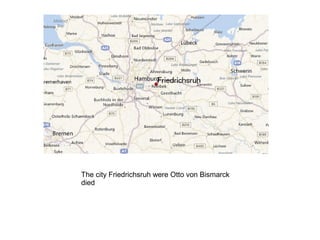
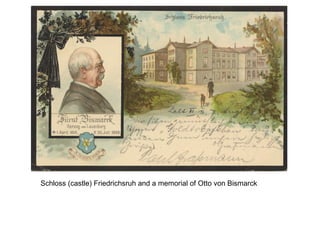
He lived in Friedrichsruh, alone, resentful and bored

The Kaiser came to see him in 1897

By than, Bismarck was confined to a wheelchair

1898 he developed an inflammation of the lungs

He had difficulty breathing and laid in bed most of the time

July 30th 1898 – He had a relapse and his family gathered round
his bed

At last, he drank off a glass and cried “vorwaerts” (forward) and
sank down his pillow. At about 11 o clock, his daughter saw he was
no longer breathing
(www.Historytoday.com)
The city Friedrichsruh were Otto von Bismarck
died
Schloss (castle) Friedrichsruh and a memorial of Otto von Bismarck
references

www.History.com/topics/Otto-von-Bismarck

www.History1800s.about.com/od/leaders/a/Bismarckbio.htm

www.thelatinlibrary.com/imperialism/notes/bismarck

www.ssa.gov/history/ottob.html

http://www.historytoday.com/richard-cavendish/death-
bismarck

Ottovon bismarck 1

  • 1.
  • 2.
    Early Years  Otto EduardLeopold von Bismarck,  Born April 1, 1815 in Schoenhausen, Prussia  Father – Ferdinand von Bismarck-Schoenhausen – a fifth generation Junker (landowning noble)  Mother – Wilhelmine Mencken came from a family of successful academics (history.com/topics/Otto-von-Bismarck)  (www.thelatinlibrary.com/imperialism/notes/bismarck)
  • 3.
    Today- Schoenhausen belongs toGermany Schloss (castle) Schoenhausen - This was Bismarcks place of birth
  • 4.
    Education  His Mother enrolledOtto von Bismarck to Progressive Plamann institute in Berlin at age 7  After 5 years at the institute he went to Frederick Wilhelm Gymnasium for 3 years and took his abitur (university entrance exam) in 1832  His mother encouraged him to go to university of Goettingen in the Kingdom of Hannover to take the study of law  I lived in Hannover. The city today has a street named after Otto von Bismarck (Bismarckstrasse) www.thelatinlibrary.com/imperialism/notes/Bismarck
  • 5.
     As a youngman he was known as a heavy drinker with no real direction in life  In his early 30s he changed from being an atheist to being religious.  He got married in 1847 and got involved in politics  He became a substitute member of the Prussian Parliament (history1800s.about.com/od/leaders/a/bismarck.bio.htm) (History.com/topics/Otto-von-Bismarck)
  • 6.
     Germany became amodern,unified nation under the leadership of “Iron Chancellor” Otto von Bismarck (1815-1898)  He first ruled Prussia and than all Germany between 1862 and 1890
  • 7.
    Blood and IronSpeech  His statement of his Blood and Iron speech of late September 1862 became notorious  “The great Question of the day will not be decided by speeches and resolutions but by blood and Iron.”  He later complained that his words were taken out of context.  Blood and iron became a popular nickname for his politics (history1800s.about.com/od/leaders/a/bismarckbio.htm)
  • 8.
    Unification of Germany  From1851 to 1862 Bismarck served a series of ambassadorships at German confederation in Frankfurt, St Petersburg and Paris  Wilhelm I became Prussia King in 1861 and made Bismarck his chief minister a year later  1864 – Bismark began a series of wars to get Prussian power in europe  1864 – attacked Denmark to gain German speaking territories and 2 years later provoked Kaiser Franz Joseph I into starting the Austro- Prussian war (1866)  Austrian Empire was defeated
  • 9.
     Franco-Prussian War (1870-71)  Bismarckstirred political tensions between France and Prussia  He edited a telegram from Wilhelm the first to make both countries feel insulted by the other.  France declared war – Prussians and Germans won  Prussia annexed the French border provinces of Alsace and Lorraine and crowned Wilhelm emperor of unified Germany (second Reich) in the Hall of Mirrors in Versialle (History.com/topics/Otto-von-Bismarck)
  • 10.
  • 11.
  • 12.
    Germany was unified  Wilhelmand Bismarck turned to entrenching their power  1870 Bismarck pursued a Kulturkampf (culture war) against catholics who made up 36 percent of Germany's population  He placed parochial schools under state control and expelled the Jesuits
  • 13.
     1880s – Bismarckset aside his conservative impulses to counter socialists  He created Europe's first modern welfare state  He established national healthcare (1883) accident insurance (1884) and old age pensions (1889)  1885 Bismarck hosted the Berlin Conference which ended the scramble of Africa  This divided the continent between European powers and established German colonies in Cameroon, Togoland and East and Southwest Africa. (History.com/topics/Otto-von Bismarck)
  • 14.
    Germany and socialinsurance  Germany became the first nation in the world to adopt an old age social insurance program in 1889 designed by Otto von Bismarck  Idea was first put forward, at Bismarcks behest, in 1881 by Germany's Emperor Wilhelm the first in a letter to the parliament  Letter states: Those who are disabled from work by age and invalidity have a well grounded claim to care from the state  Bismarck was motivated to introduce social insurance in Germany in order to promote well being of workers to keep the German economy in maximum efficiency.
  • 15.
    Germany and socialinsurance  The social insurance system provides contributory retirement and disability benefits.  Participation is mandatory  Contribution is taken from Employee, employer and the government  1927 an unemployment insurance was added to the system to make it complete  (www.ssa.gov/history/ottob.html).
  • 16.
    Bismarcks Final Years  Hiswife Johanna died 1894  He lived in Friedrichsruh, alone, resentful and bored  The Kaiser came to see him in 1897  By than, Bismarck was confined to a wheelchair  1898 he developed an inflammation of the lungs  He had difficulty breathing and laid in bed most of the time  July 30th 1898 – He had a relapse and his family gathered round his bed  At last, he drank off a glass and cried “vorwaerts” (forward) and sank down his pillow. At about 11 o clock, his daughter saw he was no longer breathing (www.Historytoday.com)
  • 17.
    The city Friedrichsruhwere Otto von Bismarck died
  • 18.
    Schloss (castle) Friedrichsruhand a memorial of Otto von Bismarck
  • 19.