By – Sanjay Ekka (110)
Definition
• Inflammation of leptomeninges (pia and
arachnoid) usually with bacterial invasion of csf
in subarachnoid space
• Most common intracranial complication
• Follow Acute Otitis media (AOM)in children and
infants
• And chronic suppurative Otitis media (csom) in
adults.
Mode of Infection
• Blood borne – most common in Infants and
children
• Bone erosion
• Retrograde thrombophelbitis
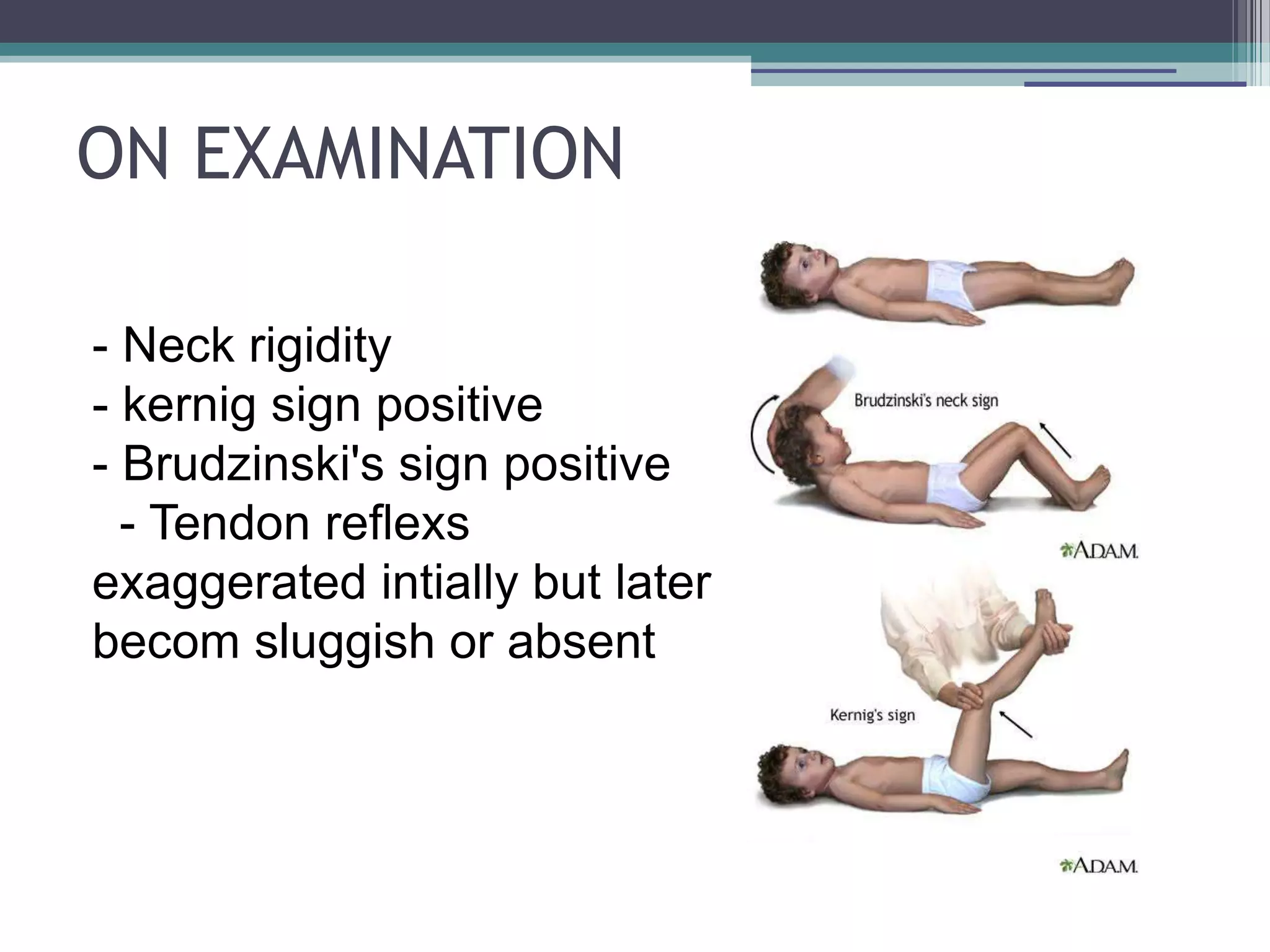
ON EXAMINATION
- Neck rigidity
- kernig sign positive
- Brudzinski's sign positive
- Tendon reflexs
exaggerated intially but later
becom sluggish or absent
• Symptom and signs of meningitis are due to
▫ 1 . Presence of infection
▫ 2. Raised ICP
▫ 3.Meningeal and cerebral irritation
1. Fever (102-104 ) with chills and rigor
2. Headache
3. Neck Rigidity
4. Photophobia and mental irritability
5. Nausea and Vomiting
6. Drowsiness - may progress to delirium or coma
7. Cranial Nerve Palsies and Hemiplegia
Diagnosis
• CT or MRI
• Lumber Puncture
• CSF examination
▫ Turbid , Cell count
▫ Predominant polymorphs
▫ Raised protein
▫ Reduced sugar
▫ Culture and sensitivity
Treatment
• Medical
▫ Antimicrobial Therapy against causative organism
▫ Corticosteroids and antibiotics combination helps
reduce neurological or audiological complications
• Surgical
▫ Meningistis after AOM
 Myringotomy or cortical mastoidectomy
▫ Meningitis after CSOM with Cholesteatoma
 Radical or modified radical mastoidectomy

Otogenic Meningitis -Sanjay Ekka (110).ppt

  • 1.
    By – SanjayEkka (110)
  • 2.
    Definition • Inflammation ofleptomeninges (pia and arachnoid) usually with bacterial invasion of csf in subarachnoid space • Most common intracranial complication • Follow Acute Otitis media (AOM)in children and infants • And chronic suppurative Otitis media (csom) in adults.
  • 3.
    Mode of Infection •Blood borne – most common in Infants and children • Bone erosion • Retrograde thrombophelbitis
  • 4.
    ON EXAMINATION - Neckrigidity - kernig sign positive - Brudzinski's sign positive - Tendon reflexs exaggerated intially but later becom sluggish or absent
  • 5.
    • Symptom andsigns of meningitis are due to ▫ 1 . Presence of infection ▫ 2. Raised ICP ▫ 3.Meningeal and cerebral irritation 1. Fever (102-104 ) with chills and rigor 2. Headache 3. Neck Rigidity 4. Photophobia and mental irritability 5. Nausea and Vomiting 6. Drowsiness - may progress to delirium or coma 7. Cranial Nerve Palsies and Hemiplegia
  • 6.
    Diagnosis • CT orMRI • Lumber Puncture • CSF examination ▫ Turbid , Cell count ▫ Predominant polymorphs ▫ Raised protein ▫ Reduced sugar ▫ Culture and sensitivity
  • 7.
    Treatment • Medical ▫ AntimicrobialTherapy against causative organism ▫ Corticosteroids and antibiotics combination helps reduce neurological or audiological complications • Surgical ▫ Meningistis after AOM  Myringotomy or cortical mastoidectomy ▫ Meningitis after CSOM with Cholesteatoma  Radical or modified radical mastoidectomy