OSTEOPOROSIS
Dr Anam Ilyas
LEARNING OBJECTIVES
uDescribe osteoporosis
uDescribe pathophysiology of postmenopausal and
senile osteoporosis
uOutline morphological features of osteoporosis
uEnumerate lab tests for diagnosis
OSTEOPOROSIS
Osteo – bone, Porosis- porous
uOsteoporosis is reduced bone density, which
causes a micro architectural deterioration of bone
tissue and leads to an increase risk of fracture
uPrevalence of osteoporosis increases with the age
DISEASES ASSOCIATED WITH DECREASED
BONE MASS
OSTEOPOROSIS
• “PEAK” bone mass is early adulthood
• Normal decline, slow
• Osteoporosis is accelerated bone loss
• At least 2.5 standard deviation below
peak bone mass
• Age related bone loss is 0.7%/year
• Osteoporosis is a disease
characterized by porous bones and a
reduced bone mass.
• Localized (disuse osteoporosis)
• Generalized osteoporosis
– primary or secondary
Categories of Generalized
Osteoporosis
PRIMARY
– Postmenopausal
– Senile
– Idiopathic
SECONDARY
– Endocrine
– Neoplasia
– Gastrointestinal
– Drugs
– Miscellaneous
PATHOPHYSIOLOGY
Pathogenesis.
• Age-related changes in bone cells and
matrix
• Reduced physical activity
• Genetic factors are also important
• The body's calcium nutritional state is
important
• Hormonal influences.
MORPHOLOGY (OSTEOPOROSIS)
uThinning of individual trabeculae
uLoss of normal trabecular network
uMineralisation is normal
Morphology
• In postmenopausal
– mainly bones or portions of bones with
increased surface area
• cancellous compartment of vertebral bodies.
The trabecular plates become perforated,
thinned, and lose their interconnections,
leading to progressive microfractures and
eventual vertebral collapse.
• In senile osteoporosis
– the cortex is thinned by subperiosteal and
endosteal resorption, and the haversian
systems are widened
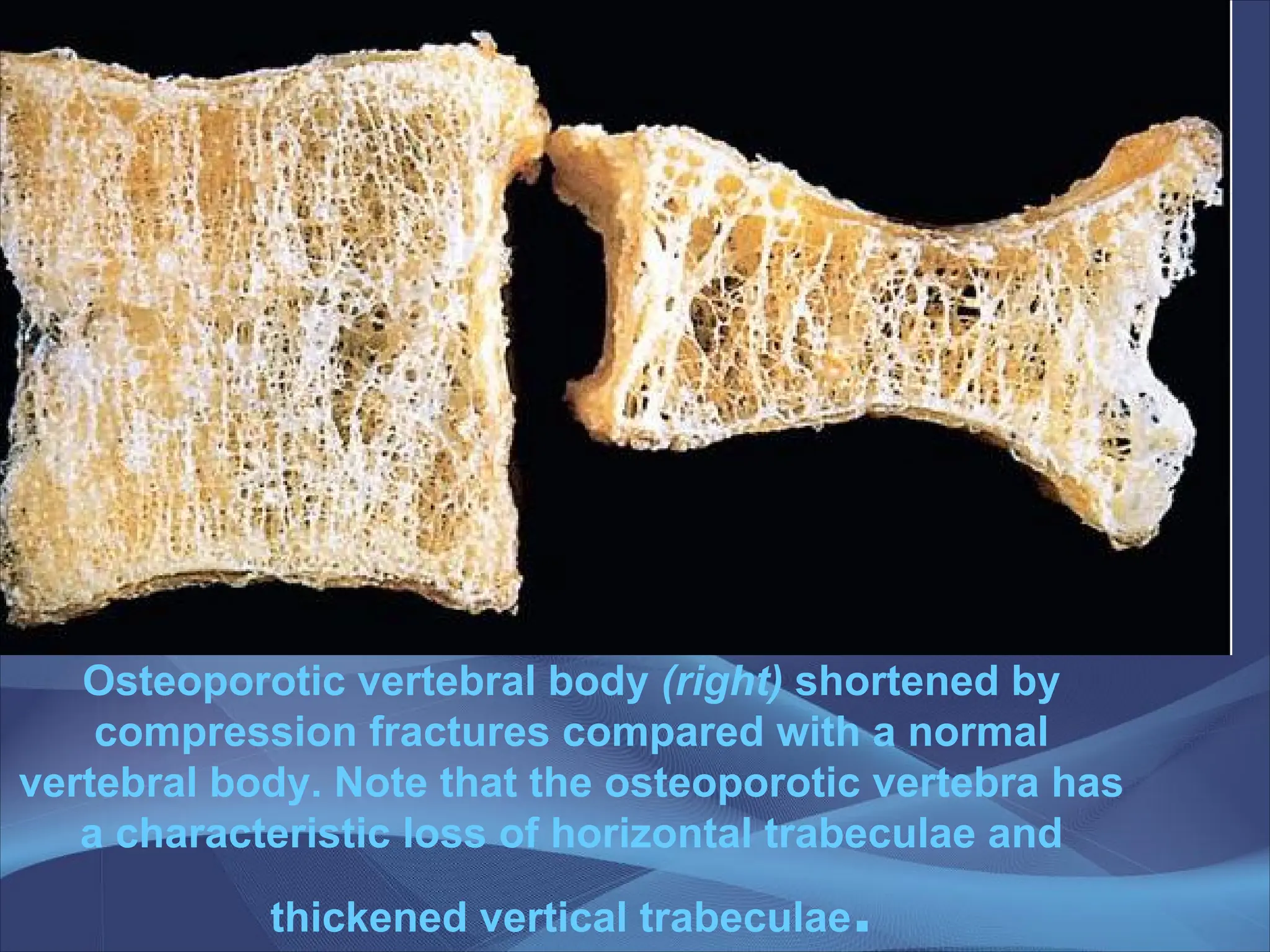
Osteoporotic vertebral body (right) shortened by
compression fractures compared with a normal
vertebral body. Note that the osteoporotic vertebra has
a characteristic loss of horizontal trabeculae and
thickened vertical trabeculae.
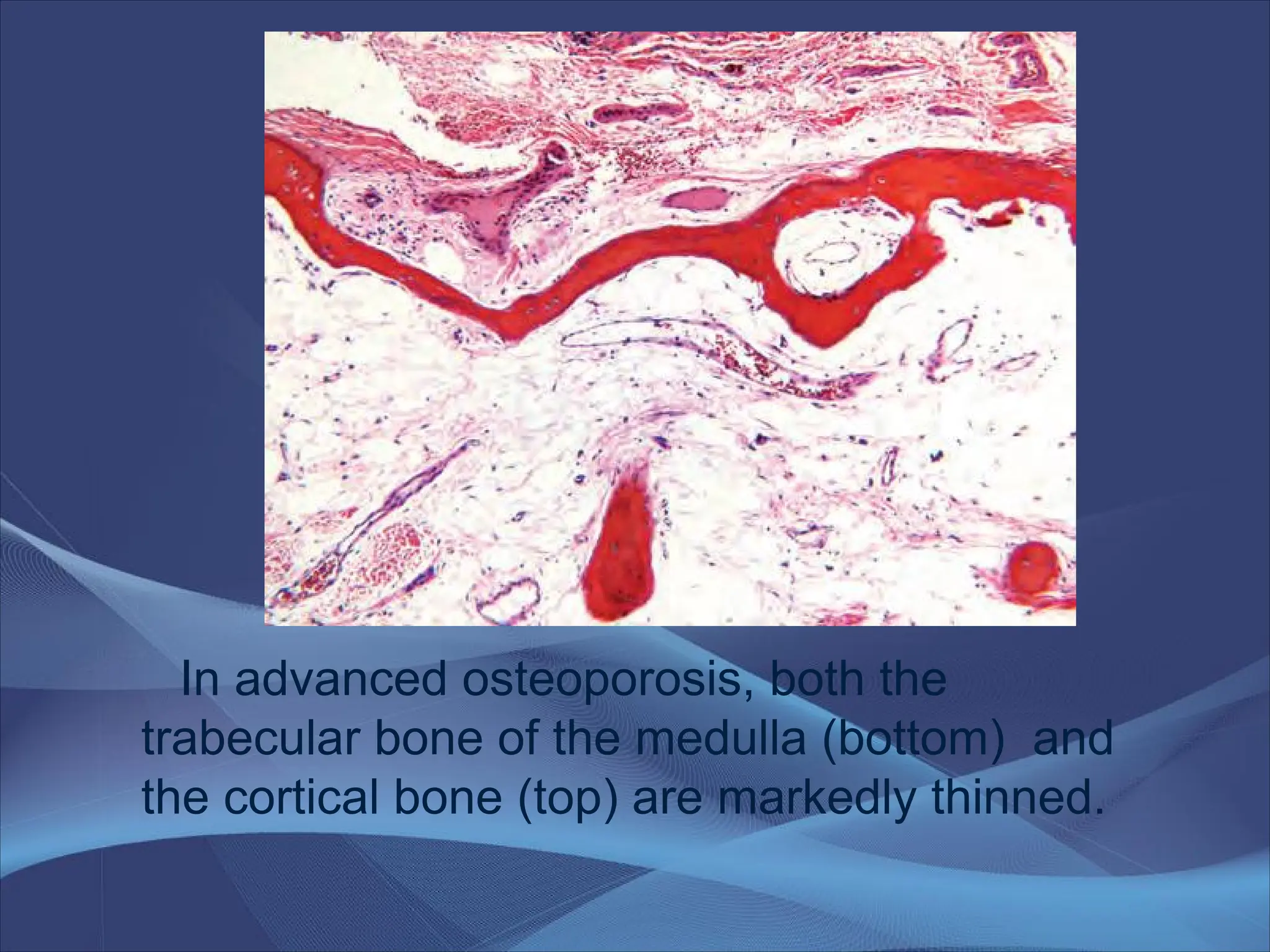
In advanced osteoporosis, both the
trabecular bone of the medulla (bottom) and
the cortical bone (top) are markedly thinned.
Clinical Manifestations
• depend on which bones are involved.
– Vertebral fractures
– Thoracic and lumbar regions are painful,
and when multiple can cause significant
loss of height
– various deformities
• lumbar lordosis and kyphoscoliosis.
• Complications of fractures
• pulmonary embolism and pneumonia
Difference b/w osteoporosis and
diseases associated with abnormal
mineral homeostasis
DIFFERENCES OSTEOPOROSIS OSTEOMALACIA RICKETS
Gender Female >male Female > male Male ,female equally
affected
Age group Adult Adult Children
Pathogenesis Deficient matrix
Normal mineralization
Normal matrix Normal matrix
Deficient mineralization of defective mineralization of
new osteoid bone bone and cartilage of
epiphyseal growth plate
C/F Pain after fracture
Muscle normal
Generalized chronic ache
Muscle weakness
Skeletal deformities
Pathological fractures
common
Pathological fractures
common
Micro fractures unusual
DIFFERENCES OSTEOPOROSIS OSTEOMALACIA RICKETS
Serum Ca Normal to low low low
Serum PO4 Normal to low low low
ALP Raised (post fracture) Raised Raised
Vit D Normal to low (secondary
causes)
Low /Normal Low /Normal
Parathyroid hormone Normal to raised Raised Raised
X ray findings Reduce bone density Osteopenia
Loosers zone or
Pseudo fractures
Cupping and brush like
appearance of epiphysea
end
Widening of growth plate
LAB TEST FOR DIAGNOSIS OF
OSTEOPOROSIS
uSerum calcium level
uVitamin D level
uPTH (parathyroid hormone level)
uLiver function tests
uRenal function tests
uThyroid function tests
Summary (causes of osteoporosis)
Osteoporosis Pathology Lecture 2020 MBBS

Osteoporosis Pathology Lecture 2020 MBBS

  • 1.
  • 3.
    LEARNING OBJECTIVES uDescribe osteoporosis uDescribepathophysiology of postmenopausal and senile osteoporosis uOutline morphological features of osteoporosis uEnumerate lab tests for diagnosis
  • 4.
    OSTEOPOROSIS Osteo – bone,Porosis- porous uOsteoporosis is reduced bone density, which causes a micro architectural deterioration of bone tissue and leads to an increase risk of fracture uPrevalence of osteoporosis increases with the age
  • 5.
    DISEASES ASSOCIATED WITHDECREASED BONE MASS OSTEOPOROSIS • “PEAK” bone mass is early adulthood • Normal decline, slow • Osteoporosis is accelerated bone loss • At least 2.5 standard deviation below peak bone mass • Age related bone loss is 0.7%/year
  • 6.
    • Osteoporosis isa disease characterized by porous bones and a reduced bone mass. • Localized (disuse osteoporosis) • Generalized osteoporosis – primary or secondary
  • 7.
    Categories of Generalized Osteoporosis PRIMARY –Postmenopausal – Senile – Idiopathic SECONDARY – Endocrine – Neoplasia – Gastrointestinal – Drugs – Miscellaneous
  • 8.
  • 9.
    Pathogenesis. • Age-related changesin bone cells and matrix • Reduced physical activity • Genetic factors are also important • The body's calcium nutritional state is important • Hormonal influences.
  • 13.
    MORPHOLOGY (OSTEOPOROSIS) uThinning ofindividual trabeculae uLoss of normal trabecular network uMineralisation is normal
  • 16.
    Morphology • In postmenopausal –mainly bones or portions of bones with increased surface area • cancellous compartment of vertebral bodies. The trabecular plates become perforated, thinned, and lose their interconnections, leading to progressive microfractures and eventual vertebral collapse. • In senile osteoporosis – the cortex is thinned by subperiosteal and endosteal resorption, and the haversian systems are widened
  • 18.
    Osteoporotic vertebral body(right) shortened by compression fractures compared with a normal vertebral body. Note that the osteoporotic vertebra has a characteristic loss of horizontal trabeculae and thickened vertical trabeculae.
  • 19.
    In advanced osteoporosis,both the trabecular bone of the medulla (bottom) and the cortical bone (top) are markedly thinned.
  • 20.
    Clinical Manifestations • dependon which bones are involved. – Vertebral fractures – Thoracic and lumbar regions are painful, and when multiple can cause significant loss of height – various deformities • lumbar lordosis and kyphoscoliosis. • Complications of fractures • pulmonary embolism and pneumonia
  • 21.
    Difference b/w osteoporosisand diseases associated with abnormal mineral homeostasis
  • 22.
    DIFFERENCES OSTEOPOROSIS OSTEOMALACIARICKETS Gender Female >male Female > male Male ,female equally affected Age group Adult Adult Children Pathogenesis Deficient matrix Normal mineralization Normal matrix Normal matrix Deficient mineralization of defective mineralization of new osteoid bone bone and cartilage of epiphyseal growth plate C/F Pain after fracture Muscle normal Generalized chronic ache Muscle weakness Skeletal deformities Pathological fractures common Pathological fractures common Micro fractures unusual
  • 23.
    DIFFERENCES OSTEOPOROSIS OSTEOMALACIARICKETS Serum Ca Normal to low low low Serum PO4 Normal to low low low ALP Raised (post fracture) Raised Raised Vit D Normal to low (secondary causes) Low /Normal Low /Normal Parathyroid hormone Normal to raised Raised Raised X ray findings Reduce bone density Osteopenia Loosers zone or Pseudo fractures Cupping and brush like appearance of epiphysea end Widening of growth plate
  • 24.
    LAB TEST FORDIAGNOSIS OF OSTEOPOROSIS uSerum calcium level uVitamin D level uPTH (parathyroid hormone level) uLiver function tests uRenal function tests uThyroid function tests
  • 25.
    Summary (causes ofosteoporosis)