CellsDiffusion and Osmosis
Cells have to control what leaves and what enters the cytoplasm.
Concentration GradientWater and solutes move according to their concentration gradientEverything naturally moves away from where it is concentrated and towards where it is less concentratedThis natural movement is called diffusion.
Concentration gradientsConcentration gradients form when there is a difference in concentration between two placesDiffusion takes place until the concentration reaches equilibrium
Diffusion naturally tries to equalize concentration of water and solutes
Carbon dioxide naturally diffuses out of animal cells because animal cells produce CO2 as they make energy from food.The concentration inside is higher, so the net movement of CO2 is outward.
Movement of CO2 and O2Oxygen naturally diffuses into animal cells because they use up oxygen as they turn food into energyCarbon dioxide builds up as cells use the oxygenThe concentration of oxygen outside is higher, so the net movement of O2 is inward.The concentration of CO2 is higher inside the cell and has a net movement outside the cell.
The cell membrane does not stop the diffusion of CO2, O2, or water molecules
CO2, O2, and H2O are small moleculesthey each move down their individual concentration gradients until equilibrium is reached.
Salts and sugars cannot get through the bilayer, but water canThis makes the cell membrane semipermeable.The movement of water through a semipermeable membrane that blocks solutes from moving is called osmosis.
Osmosis is the diffusion of water through a semipermeable membrane
OsmosisOsmosis is used by plants to lift water upward. All the plants cells must do is maintain a higher solute concentration inside their cells.
Osmosis can pull water into of a cell if the cell is placed in an environment with a lower solute concentration
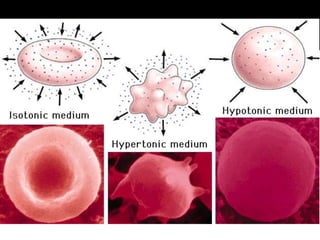
Hypotonic SolutionsHypotonic means lower solute concentrationanimal cells can rupture in hypotonic environmentsplant cells are protected from rupture by their strong cell walls
Osmosis can also pull water out of a cell if the cell is placed in an environment with a higher solute concentration
Hypertonic SolutionsHypertonic means higher concentration of solutesA cell placed in a hypertonic environment will lose water and shrink.Plant cells plasmolyze when placed in very salty water.
Isotonic SolutionsIsotonic means balancedCells in an isotonic environment experience no net flow of water due to osmosis.The water flowing in is balanced by the water flowing out
Red Blood Cells in a Range of Solutions
SummaryHypertonic = higher = dehydrating environment, cells shrinkHypotonic = lower = bloating environment, cells swellIsotonic = equal =homeostatic environment, cells “happy”
Hypertonic, Hypotonic, and Isotonic ExamplesSolution ExamplesQuick Osmosis Movie
Experiment VideosIodine Ziplock ExperimentLettuce ExperimentEgg Experiment

Osmosis Diffusion

  • 1.
  • 2.
    Cells have tocontrol what leaves and what enters the cytoplasm.
  • 3.
    Concentration GradientWater andsolutes move according to their concentration gradientEverything naturally moves away from where it is concentrated and towards where it is less concentratedThis natural movement is called diffusion.
  • 4.
    Concentration gradientsConcentration gradientsform when there is a difference in concentration between two placesDiffusion takes place until the concentration reaches equilibrium
  • 5.
    Diffusion naturally triesto equalize concentration of water and solutes
  • 6.
    Carbon dioxide naturallydiffuses out of animal cells because animal cells produce CO2 as they make energy from food.The concentration inside is higher, so the net movement of CO2 is outward.
  • 7.
    Movement of CO2and O2Oxygen naturally diffuses into animal cells because they use up oxygen as they turn food into energyCarbon dioxide builds up as cells use the oxygenThe concentration of oxygen outside is higher, so the net movement of O2 is inward.The concentration of CO2 is higher inside the cell and has a net movement outside the cell.
  • 8.
    The cell membranedoes not stop the diffusion of CO2, O2, or water molecules
  • 9.
    CO2, O2, andH2O are small moleculesthey each move down their individual concentration gradients until equilibrium is reached.
  • 10.
    Salts and sugarscannot get through the bilayer, but water canThis makes the cell membrane semipermeable.The movement of water through a semipermeable membrane that blocks solutes from moving is called osmosis.
  • 11.
    Osmosis is thediffusion of water through a semipermeable membrane
  • 12.
    OsmosisOsmosis is usedby plants to lift water upward. All the plants cells must do is maintain a higher solute concentration inside their cells.
  • 13.
    Osmosis can pullwater into of a cell if the cell is placed in an environment with a lower solute concentration
  • 14.
    Hypotonic SolutionsHypotonic meanslower solute concentrationanimal cells can rupture in hypotonic environmentsplant cells are protected from rupture by their strong cell walls
  • 15.
    Osmosis can alsopull water out of a cell if the cell is placed in an environment with a higher solute concentration
  • 16.
    Hypertonic SolutionsHypertonic meanshigher concentration of solutesA cell placed in a hypertonic environment will lose water and shrink.Plant cells plasmolyze when placed in very salty water.
  • 17.
    Isotonic SolutionsIsotonic meansbalancedCells in an isotonic environment experience no net flow of water due to osmosis.The water flowing in is balanced by the water flowing out
  • 18.
    Red Blood Cellsin a Range of Solutions
  • 20.
    SummaryHypertonic = higher= dehydrating environment, cells shrinkHypotonic = lower = bloating environment, cells swellIsotonic = equal =homeostatic environment, cells “happy”
  • 21.
    Hypertonic, Hypotonic, andIsotonic ExamplesSolution ExamplesQuick Osmosis Movie
  • 22.
    Experiment VideosIodine ZiplockExperimentLettuce ExperimentEgg Experiment